
Business
Accenture: Bears Are On Wrong Side Of High-ARR AI SaaS-Ification Trend




The Dow Jones Industrial Average and other major indexes rose Friday, as the stock market looked to rebound from the previous session’s sell-off stoked by geopolitical concerns. With risk appetite rising, bitcoin climbed to a three-month high and thrust crypto-linked companies higher on stock market today. The cryptocurrency’s price has spiked up roughly 20% for the week. Just after Friday’s…
Copyright ©2026 Investor’s Business Daily, LLC. All rights reserved. 87990cbe856818d5eddac44c7b1cdeb8

More than 53,000 British businesses are in critical financial distress and at risk of collapse, with companies that depend on consumer spending under particular pressure as economic uncertainty weighs on confidence.
The number of firms in critical distress rose 9 per cent to 53,756 in the three months to the end of June, compared with 49,309 a year earlier, according to the latest Red Flag report from BTG, the insolvency and restructuring group formerly known as Begbies Traynor.
“The persistent rate of critical and significant financial distress in the UK is a clear sign that businesses are walking a tightrope as we move through the second half of 2026,” said Julie Palmer, managing partner at BTG.
All but one of the 22 sectors covered by the research recorded an increase in companies under critical distress. Leisure and culture businesses were worst affected, with a 27.1 per cent rise year-on-year to 1,478, while hotel and accommodation businesses saw a 26.6 per cent increase to 510. The number of sports and health clubs in critical distress rose 21 per cent to 980, and food and drug retailers were up 18.4 per cent to 2,350.
BTG defines companies in critical distress as those facing severe liquidity shortages, active creditor enforcement, or formal legal action such as winding-up petitions. Those in significant distress show clear financial pressure but remain operational, with time to restructure, refinance or cut costs.
Significant distress rose 1.1 per cent year-on-year to 674,030 firms. The sectors with the highest numbers in that category included support services, construction, and real estate and property services.
The figures follow a run of high-profile casualties and warnings. Ardmore, one of the construction industry’s go-to contractors, moved to appoint administrators in June. Mothercare, the struggling retailer of baby products, warned last week of “material uncertainty”, citing ongoing risks around its debt refinancing, pension deficit negotiations and weak trading.
London topped both distress lists, with 204,851 businesses in significant distress and 17,718 in critical distress. Outside the capital, the southeast, the Midlands and the northwest had the greatest number of businesses in both categories among the English regions.
The report also highlighted the scale of overdue tax liabilities. BTG found that HMRC was owed around £27 billion in corporation tax, VAT and PAYE at the end of 2025, underlining the pressure facing indebted companies as creditor enforcement activity increases. An earlier edition of the research had already warned that a new wave of zombie companies faced collapse as that tax backlog was pursued.
Creditors are increasingly turning to the courts. Ministry of Justice data cited in the report recorded 6,411 winding-up petitions last year, a 15.7 per cent increase on the previous year.
Ric Traynor, executive chairman at BTG, said: “There appears to be no relief in sight for distressed UK businesses. Whilst the extent of the impact is still unknown, the escalation in winding-up petitions is an ominous sign. Sadly, when confidence and spending remain subdued, I expect the resulting shockwaves to be felt across many other industries later this year and into 2027.”
For owners of smaller firms, the detail matters as much as the headline number. The sharpest rises are concentrated in sectors that rely on discretionary consumer spending, and the growth in winding-up petitions points to creditors, HMRC among them, being less willing to wait for payment. Traynor’s warning that the shockwaves will spread to other industries suggests suppliers and landlords to those sectors should be watching their own debtor books closely.

Jamie Young
Jamie Young is Senior Reporter at Business Matters, covering SME finance, employment law and Westminster policy since 2016. He has reported on every Budget and Autumn Statement since 2018, helped make sense of the ‘covid era’ and the bounce-back loan scheme from launch through the fraud investigations, and broke the magazine’s coverage of the 2024 late-payment reforms. He joined Business Matters straight from completing his BA in Administration from Exeter University and is NCTJ-qualified. Reach him at jyoung@cbmeg.co.uk

Royal Mail has once again missed its delivery targets for first and second class post, but said it is making progress towards the goals as its turnaround plan continues.
The postal service delivered 85% of first class deliveries the next day between March and June, up from 76% in the same three months of 2025, but below regulator Ofcom’s 90% target.
Second class mail was delivered within three days 91% of the time, another improvement from the previous year, but short of Ofcom’s 95% target.
Royal Mail said the results are “encouraging and show that the work we are doing to improve the service is having an impact”.
Royal Mail, which is owned by International Distribution Services (IDS), has struggled with rising competition in the delivery market, fewer people sending letters and fines from the regulator for missing targets in recent years.
But it said that, compared with the same period last year, the portion of first class mail delivered next-day had risen significantly while the amount of second class mail delivered within three days had improved slightly.
Chief operating officer Jamie Stephenson said: “These results are encouraging and show that the work we are doing to improve the service is having an impact.
“First Class performance is well ahead of where we expected to be at this stage of our Improvement Plan, while Second Class is tracking in line with the plan.”
Stephenson added that there is “more to do”, pointing to a £500m investment plan to improve the firm over the next five years. The plan includes a commitment to meet Ofcom’s delivery targets by May 2027.
The postal service has faced years of criticism from politicians and the public over the slowness of its letter delivery.
It is currently under investigation by Ofcom for the second year running for failure to meet its delivery targets.
The regulator fined it a record £21m in October last year for missing targets in 2024-25.
In March, postal workers from across the UK told the BBC they were being asked to move or hide mail from senior bosses so it looks like delivery targets were being met.
The firm apologised to Gloucester residents where post was sometimes delayed for months, admitting its service there was “totally unacceptable”.
Most recently, people in Worcestershire hit out over postal delays, complaining of weeks-long delays for important post to arrive, with some missing hospital appointments.
Royal Mail recently said it aims to meet regulator Ofcom’s targets by May 2027 as part of a turnaround plan costing around £500m in the next five years.
“We know there is more to do,” Stephenson wrote in a statement. “We are investing £500 million over five years and making significant changes across our network… None of this progress would be possible without the continued hard work of our frontline colleagues, including through the recent extreme heat.”
IDS was bought in 2025 by Czech billionaire Daniel Kretinsky.
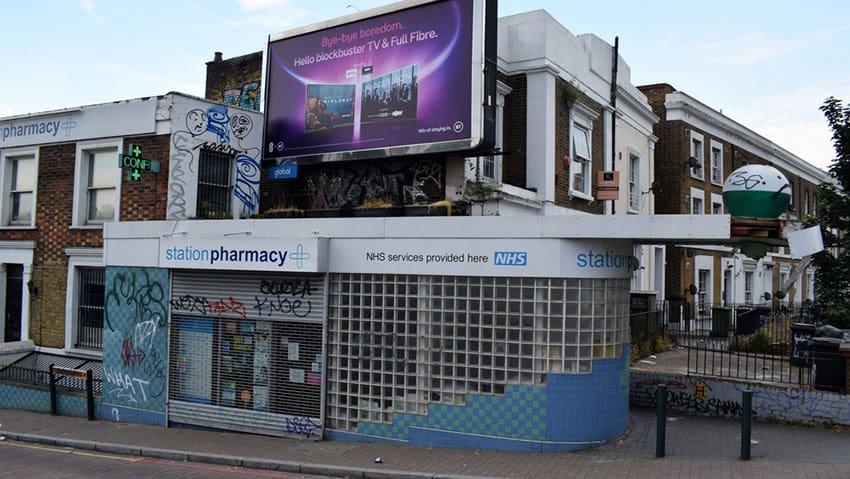
Hundreds of pharmacies are facing closure because of soaring business rates, with owners warning that high taxes are forcing them to cut services for vulnerable patients.
Almost half of the 420 pharmacy owners surveyed by the National Pharmacy Association (NPA) said they were considering shutting down their practices because of higher business rates bills. The trade body found 55 per cent were considering moving to cheaper premises, raising fears that some rural and coastal communities could be left without a local branch.
Pharmacies, many of which are family-run businesses, are unable to offset the higher tax burden by raising prices, which are fixed by the NHS. Roughly 90 per cent of pharmacies’ income comes from the health service, the NPA said, leaving owners with no commercial lever to pull when fixed costs rise.
Prime Minister Andy Burnham has made lowering business rates for high-street businesses a key pillar of his summer policy blitz, announcing a 20 per cent reduction for pubs, clubs and live music venues from April next year. Pharmacies have been excluded from the relief.
The tax squeeze has intensified since business rates were increased for many properties after Rachel Reeves’s second Budget. Bills have also been affected by the latest revaluation of commercial property, which fed new rateable values into bills from April. GPs and NHS dentists, meanwhile, have their business rates reimbursed.
Onkar Singh, who runs 20 pharmacies across the Black Country, Staffordshire, Herefordshire and Worcestershire, has seen his business rates bill rise by roughly 20 to 30 per cent in the past year. His total bill is now about £250,000.
He has closed two of his pharmacies in the past two years and reduced opening hours across virtually his entire estate. He has also been forced to cut back services, such as offering free medicine deliveries to elderly patients.
Singh said: “The last three years have been the worst period in my 30 years of pharmacy.
“People are having to close a lifetime’s worth of work and effort, and having to close or reduce hours or dip into their pension pot just to keep going for their communities.”
The NPA survey found that 92 per cent of pharmacies said their rates bill was preventing them from investing in their workforce or renovations. Some pharmacists have warned that their bills have tripled, echoing the anger among small firms over the revaluation that prompted thousands to write to the then chancellor.
Singh said the impact was particularly painful because pharmacies were often being asked to fill gaps elsewhere in the NHS.
He said: “It is frustrating that pubs and restaurants get the headlines, but pharmacies are actually delivering care.
“The NHS accepted that pharmacy did an exceptional job, but in terms of funding and support with business rates we seem to be forgotten.”
The NPA said 44 pharmacies had already closed this year, leaving the national network at its smallest since 2006. Nine in 10 council areas have lost at least one pharmacy since 2022.
Olivier Picard, the chairman of the trade group, said pharmacies should receive the same rates treatment as GPs and dentists, arguing that they provide an essential health service.
A government spokesperson said: “Pharmacies already benefit from our wider business rates reforms, including permanently lower multipliers and our £4.3bn package to support ratepayers, and the government has increased funding for the sector by £340m this year as part of our shift to bring care closer to home.”
For owners of other high-street businesses, the pharmacy case is a reminder that rates relief is being targeted sector by sector, as with the £150m package for town centres that business leaders dismissed as a sticking plaster, rather than applied across the board. Firms whose prices are set by a third party, whether that is the NHS, a franchisor or a long-term contract, have no way of passing the increase on, and the NPA’s finding that 92 per cent of pharmacies have shelved investment shows where the money goes instead.
Jamie Young
Jamie Young is Senior Reporter at Business Matters, covering SME finance, employment law and Westminster policy since 2016. He has reported on every Budget and Autumn Statement since 2018, helped make sense of the ‘covid era’ and the bounce-back loan scheme from launch through the fraud investigations, and broke the magazine’s coverage of the 2024 late-payment reforms. He joined Business Matters straight from completing his BA in Administration from Exeter University and is NCTJ-qualified. Reach him at jyoung@cbmeg.co.uk
Business
Dropbox Down Now? Users Report Access Issues as Monitors Show Cloud Storage Service Mostly Operational

Some Dropbox users reported difficulty accessing the popular cloud storage and file-sharing service in recent days, though independent monitoring tools have largely characterized the platform as operational, illustrating the kind of mixed signals that often accompany scattered or localized service disruptions.
Dropbox, which offers online backup, file sharing and file synchronization across desktop, mobile and web platforms, relies on a dedicated application to keep files synced between users’ devices and its cloud-based storage servers. Any disruption to that syncing infrastructure can leave users temporarily unable to access, upload or share files stored on the platform.
Independent status-tracking services have offered a range of readings on Dropbox’s recent performance. According to UptimeRobot, the most recent automated check of Dropbox’s core infrastructure, conducted Aug. 18 from North American servers, did not detect any unusual response times or error codes. IncidentHub similarly listed Dropbox as currently operational as of a check performed Aug. 20, though the service noted Dropbox had recorded one confirmed outage across one component within the preceding 30 days. According to that same tracker, all of Dropbox’s major components, including its API, Dash platform, desktop application, DocSend service, MCP server and mobile application, showed normal operational status as of the most recent check.
StatusGator’s tracking similarly found no evidence of a widespread, ongoing disruption. The service reported that its most recent check, conducted July 27 at 9:14 a.m. UTC, found Dropbox operational, with no user-submitted outage reports logged in the preceding 24-hour period at that time. According to StatusGator, the most recent officially acknowledged Dropbox outage occurred on July 23, 2026, a date that multiple independent monitoring services have cited as the platform’s last confirmed service disruption prior to this week.
Despite that general pattern of operational status across most monitoring tools, individual user complaints have continued to surface on various outage-tracking and community platforms. According to VeePN’s Dropbox status tracker, isolated reports of access problems can occur even when broader monitoring infrastructure shows the service functioning normally, particularly when an issue is limited to a specific feature, such as login functionality or file syncing, rather than affecting the platform as a whole. The service noted that a genuine, widespread outage is typically identifiable by a sudden, simultaneous spike in user reports combined with failures detected across multiple independent monitoring regions, whereas a more limited or localized problem tends to show a much smaller and more contained pattern of complaints.
Dropbox’s own community forums have continued to reflect periodic user frustration with connectivity and syncing issues. According to StatusGator, one longtime Dropbox user described ongoing difficulty accessing the service over an extended period, writing in a forum post that they had been unable to connect to the platform for several months despite repeated attempts, a complaint that predates this week’s reports but illustrates the kind of individual, sustained access problems that can sometimes persist even when broader service monitoring shows no confirmed platform-wide outage.
Dropbox has a documented history of both brief, isolated outages and larger, more disruptive incidents affecting users broadly. In May 2025, the service experienced a global outage lasting approximately two hours, according to Tom’s Guide, which began around 10:45 a.m. Pacific time and prompted a sudden spike of roughly 1,500 user reports on the outage-tracking service Downdetector. During that incident, users reported being unable to access their files or upload new content across Dropbox’s browser, desktop and mobile applications simultaneously. Dropbox acknowledged the issue relatively quickly at the time and began investigating, ultimately implementing a fix by around 12:45 p.m. Pacific, though it took an additional 30 to 40 minutes for the company’s official status page to fully return to a normal, all-green operational status. The precise cause of that particular global outage was not disclosed publicly at the time.
Dropbox’s status page has, on rare occasions, displayed unusual or informal incident descriptions during past outages. Historical incident records associated with the company’s status page have included candid, sometimes lighthearted internal updates during active outages, such as one earlier incident in which engineers described database issues using informal language while working to restore service, a pattern reflecting Dropbox’s historically more casual internal communication style during active technical incidents, even as the underlying disruptions themselves were treated with appropriate urgency by the company’s engineering teams.
For users currently experiencing difficulty accessing Dropbox, monitoring services have generally recommended a standard set of troubleshooting steps before assuming a broader, platform-wide outage is underway. According to UptimeRobot’s guidance, users should first attempt to access Dropbox from an alternative browser, device or network, such as a mobile hotspot, and consider disabling any active VPN connection, clearing their device’s DNS cache, or restarting their router. If the service loads successfully through any of those alternative methods, the underlying issue is more likely to be local to the user’s specific device or network rather than reflecting a confirmed, company-wide Dropbox outage.
Given the discrepancy between scattered individual user reports and the largely operational readings recorded by independent monitoring services this week, it remains possible that any access issues experienced by Dropbox users reflect a more limited or intermittent disruption rather than a broad, platform-wide outage comparable to the company’s more significant service disruptions in the past. As of this report, Dropbox had not issued a public statement acknowledging any specific, ongoing service disruption beyond the previously confirmed July 23 incident, and the company’s official status page, along with the majority of independent third-party monitoring tools, continued to reflect normal operational status across the platform’s core components as of the most recent available checks.
Business
COVID-19 Cases Growing in All 50 States as ‘Nimbus’ Variant Drives Late-Summer Surge Nationwide
COVID-19 infections are growing or likely growing in all 50 states, according to the latest estimates from the Centers for Disease Control and Prevention, marking a dramatic nationwide expansion of the virus’s seasonal summer wave just as students return to school and Americans wrap up summer travel.
As of Aug. 12, 2026, the CDC’s Current Epidemic Trends model estimated that COVID-19 infections were growing or likely growing in 50 states and declining or likely declining in zero states, with the agency reporting no estimate available for Iowa due to insufficient data. According to the CDC’s own modeling summary, that leaves the entire country, apart from Iowa’s data gap, showing an upward trajectory in transmission for the first time this summer.
The shift represents a striking reversal from conditions just weeks earlier. According to Newsweek, on July 22 the CDC had estimated infections were growing or likely growing in only 37 states, with 11 states showing little change in transmission at the time. By mid-August, those stable pockets had disappeared entirely from the map, with 47 states now classified as “Growing” and New Hampshire, Rhode Island and the District of Columbia categorized as “Likely Growing.” In many states, the CDC estimates there is greater than a 99% probability that infections are actively increasing.
The reversal is even more pronounced compared with earlier this summer. According to a report from Political.org, the CDC had estimated infections were declining or likely declining in 41 states, with growth seen in just one state, as recently as June 2. The speed of that turnaround reflects a now-familiar seasonal pattern public health officials have observed for several consecutive years.
Andrew Pekosz, a professor of molecular microbiology and immunology at Johns Hopkins Bloomberg School of Public Health, described the current surge as consistent with an established late-summer pattern. “This looks like a pattern that has been documented in the past few years,” Pekosz told Newsweek, referring to the recurring late-summer and early-fall increase in COVID-19 transmission the country has experienced in recent years.
Dr. John Brooks, an infectious disease physician at Emory University in Atlanta who previously worked at the CDC, offered a similar assessment while acknowledging the psychological gap between public perception and current data. “I think most of us kind of feel like it’s fading away and are certainly very grateful for that,” Brooks said. “But nationally we’re seeing it ticking up pretty much everywhere.”
Wastewater surveillance data has provided further confirmation of the trend’s scale. Amanda Bidwell, scientific program manager for WastewaterSCAN, told Today.com that viral concentrations detected in wastewater samples have risen sharply this month. “So far in August, SARS-CoV-2 concentrations are up 106% compared to July 2026,” Bidwell said, adding that the West and South currently show the highest concentrations nationally.
Despite the widespread geographic growth, health officials have emphasized that overall COVID-19 activity remains comparatively low and that the surge has not translated into a significant strain on hospitals. According to the CDC, as of Aug. 14, the amount of acute respiratory illness prompting people to seek medical care remains very low overall, even as COVID-19 activity specifically is increasing in the West and South. Emergency department visits tied to COVID-19 have similarly remained low, according to multiple outlets citing CDC data.
Dr. Patrick Koo, division chief of pulmonology and critical care at Erlanger Hospital, said fewer patients are seeking emergency care for COVID-19 compared with earlier phases of the pandemic, attributing the shift both to the virus’s evolution and to more people managing mild illness at home. “The virus has, of course, gone through multiple passes and mutations, and therefore the symptoms of COVID-19 are now much much milder compared to what we saw during the pandemic, so I think that if we take proper precautions and you know try to practice good hand hygiene to stay away from others that are sick for until they get better, of course, and that would minimize a lot of the transmission,” Koo said. He added that current seasonal patterns should not cause alarm. “We do see periodic rises in certain months usually in the summer and then also in the winter as well so and so I think that there’s no there’s nothing to be alarmed about COVID-19 right now,” Koo said.
The current wave has been driven primarily by a variant known as NB.1.8.1, commonly referred to as “Nimbus,” a descendant of the JN.1 Omicron lineage that had already accounted for an estimated 43% of circulating cases by late June, according to Political.org’s reporting. Separately, a more heavily mutated strain known as BA.3.2, nicknamed “Cicada,” has been spreading globally since emerging earlier this year, though it has not gained significant traction within the United States. According to Today.com, roughly 15% of current U.S. cases are attributed to the Cicada variant, even as no major new mutation has driven the current wave beyond the continued spread of Nimbus.
Public health researchers have noted that COVID-19’s biannual surge pattern, occurring in both summer and winter, remains distinct from more familiar seasonal illnesses such as influenza, which typically peaks only during colder months. The precise biological reason behind COVID-19’s dual seasonality remains unclear, according to reporting from Political.org, though experts have pointed to a combination of factors, including waning immunity following winter infections, increased indoor gatherings in air-conditioned spaces during hot summer months, and continued summer travel patterns, as likely contributors to the recurring late-July and August peaks the country has now experienced for three consecutive years.
Symptoms associated with the current wave remain broadly consistent with those seen in earlier omicron-lineage variants, typically appearing within two to 14 days of exposure. According to the CDC, common symptoms continue to include fever, cough, fatigue, congestion, sore throat, and loss of taste or smell, among other cold- and flu-like signs.
As students return to classrooms and colder weather approaches in the coming months, health officials are likely to continue monitoring whether the current nationwide growth trend persists, plateaus or begins to recede, following the pattern of prior late-summer surges. This story includes information on a virus that can pose greater risk to certain populations. If you are concerned about COVID-19 symptoms or exposure, particularly if you are immunocompromised, elderly or otherwise at higher risk, consult a health care provider for personalized guidance.

PEO: An 8% Yielding Income Powerhouse To Buy Now

WA’s foremost Jewish faith leader has criticised parliament house for hosting a pro-Palestine event.

BMO starts chip stocks coverage: Here are its preferred picks


MINNEAPOLIS – Target Corp. is benefiting from a shift in its food and beverage strategy, the company said. Category sales ticked up to $6 billion during the second quarter ended Aug. 1, up from $5.6 billion during the same period as the previous year.
“Earlier this year, I talked about our ambition to make food a destination, not simply a category a guest shops while they’re in our stores, but a reason they choose to come to Target,” said Cara Sylvester, chief merchandising officer, during an Aug. 19 conference call with securities analysts. “We recently completed our largest food transition in more than a decade, changing the presentation of nearly half of our center store grocery assortment, adding new and unique offerings, and reimagining end caps and in-aisle presentation to make discovery easier.”
As part of the reset, the retailer added space for products perceived as trendy, like snacks, global foods and functional coffee.
“The response has been really encouraging,” Sylvester said. “Snacks, beverages, and candy were already among our largest categories by sales, and these transitions are building on that strength.”
She said snack sales are 15% ahead of last year, with “outstanding momentum” from protein bars, meat sticks and better-for-you snacks.
“Just as importantly, we’re pairing that innovation with incredible value,” she said. “That’s merchandising authority in action, understanding where the guest is going and moving with speed to get there, bringing together trend, quality, differentiation, and affordability in a way that’s uniquely Target.”
The retailer’s net income for the quarter was $1.9 billion, equal to $4.13 per share on the common stock, and an improvement over the second quarter of 2025 when the company earned $935 million, equal to $2.05 per share. A $994 million tariff refund drove the surge in earnings. Adjusted earnings per share with the refund stripped out were $2.46 per share.
Quarterly sales rose 5% to $26.5 billion from $25.2 billion the year before.

Bitcoin short-seller staged a $6 million liquidation

Ronaldinho to make football comeback aged 46

Watching TikTok Videos and Instagram Reels Deactivates the Brain's Cognitive Control Network





-

 Fashion7 days ago
Weekend Open Thread: Ann Taylor
-

 Sports6 days ago
Birmingham 2026: Day 6 Timetable for Irish Athletes
-
 NewsBeat6 days ago
Myanmar says over 300,000 Rohingya refugees verified for repatriation as exodus enters ninth year
-

 Business3 days ago
SMA Solar Technology AG (SMTGY) Q2 2026 Earnings Call Transcript
-

 Politics6 days ago
SEQ Code: The Three Letter Boarding Pass Code That Could Give You The Worst Seat
-

 Crypto World6 days ago
Pi Network Protocol 27 endgame: last upgrade before what?
-

 Tech3 days ago
Qwen3.8-27B runs frontier-class coding agents and reasoning locally, no cloud API required
-

 Crypto World4 days ago
OCC Greenlights Trump Family Crypto Firm for Trust Charter
-
 Tech6 days ago
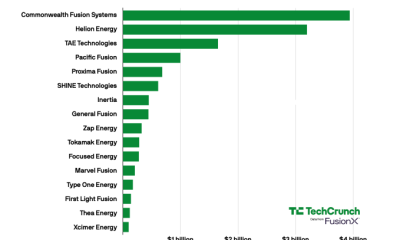
Every fusion startup that has raised over $100M
-
 Entertainment6 days ago
Marvel Studios Reveals New X-Men Cast Including Adam Driver and Sadie Sink
-
 Business6 days ago
Monarch Mutual Fund set to enter MF space with maiden overnight fund; files draft with Sebi
-

 Fashion7 days ago
Weekly News Update, 8.14.26 – Corporette.com
-

 Fashion7 days ago
Silver bangles for women – Newbridge Silverware
-

 Business6 days ago
Facebook Down Now? Users Report Login And Loading Problems As Outage Trackers Monitor Ongoing Issues
-

 Business6 days ago
Cristiano Ronaldo’s Secret Wedding Deepens As Presenter Claims Family Learned ’30 Seconds’ Before
-

 News Videos1 day ago
Don’t Leave Your Financial Future To Chance | August 19, 2026
-

 Crypto World5 days ago
Data of 54K Wallet Users Leaked, Clarity Odds Just 10%: Hodler’s Digest, Aug. 16
-

 Fashion7 days ago
Cart Confidential Vol. 44 – Julia Berolzheimer
-

 Crypto World4 days ago
NAVI Prime launches institutional lending framework on Sui
-

 Politics5 days ago
Britain is facing a housing disaster
You must be logged in to post a comment Login