
Business
Almost half of households do not see benefits of economic growth, report says


Almost half of people in Britain live in areas where economic growth does not translate into a better quality of life with a “stark” North-South divide in the spending power of households, a new report finds.
Researchers at consultancy firm PwC said every region the north of England, midlands and Wales had a lower spending power than the country’s average, with London and the South East comfortably above.
The findings come as Prime Minister Andy Burnham has pledged to tackle the cost of living and regional inequalities in order to boost living standards.
But questions remain over the new PM’s economic policies with surges in UK government borrowing costs set to impact public spending choices.
The report released on Thursday said the equivalent of 12.5 million households – 46% – lived in parts of the country where economic growth, often seen through increased business investment and job opportunities, were not leading to better living standards.
It said households in the north east of England had a spending power 6.6% below the national average, equivalent to £1,542 less a year. The north west was £1,493 less, while Yorkshire and the Humber were worst off with spending power down £1,917 comparatively.
Meanwhile, households in the South East were found to have spending power 9% above the national average, worth an additional £2,154 a year, followed by London.
Household spending power is seen as a good measure of whether economic growth is improving living standards.
PwC says it measures this by looking at income after taxes and housing costs, and takes into account the size and makeup of a household – which is aimed at giving a better idea of the money available to meet other expenses.
The UK has seen years of weak growth, although the economy expanded by 1.2% in the first six months of this year, according to official figures.
Most countries want economic growth because it usually means people spend more, extra jobs are created, more tax is paid to the government and workers get better pay rises.
All this together, in theory, leaves people better off – but it takes time for the benefits to be felt, and it does not necessarily benefit everyone. According to PwC, “only a fraction” of a rise in GDP – which a measures economic growth – leads to increased spending power.
Researchers said while there was a clear North-South divide in the spending power of households, there were also such examples of spending power differences within areas deemed better off, such as London and the south east.
For example, Richmond’s average annual disposable income was the highest in London at £35,448 – almost double the £18,384 recorded in neighbouring Hammersmith and Fulham.
“The research shows just how differently prosperity is experienced across the UK, with stark variations not only between regions but on each other’s doorstep,” said Rachel Taylor, government and health industries leader at PwC.

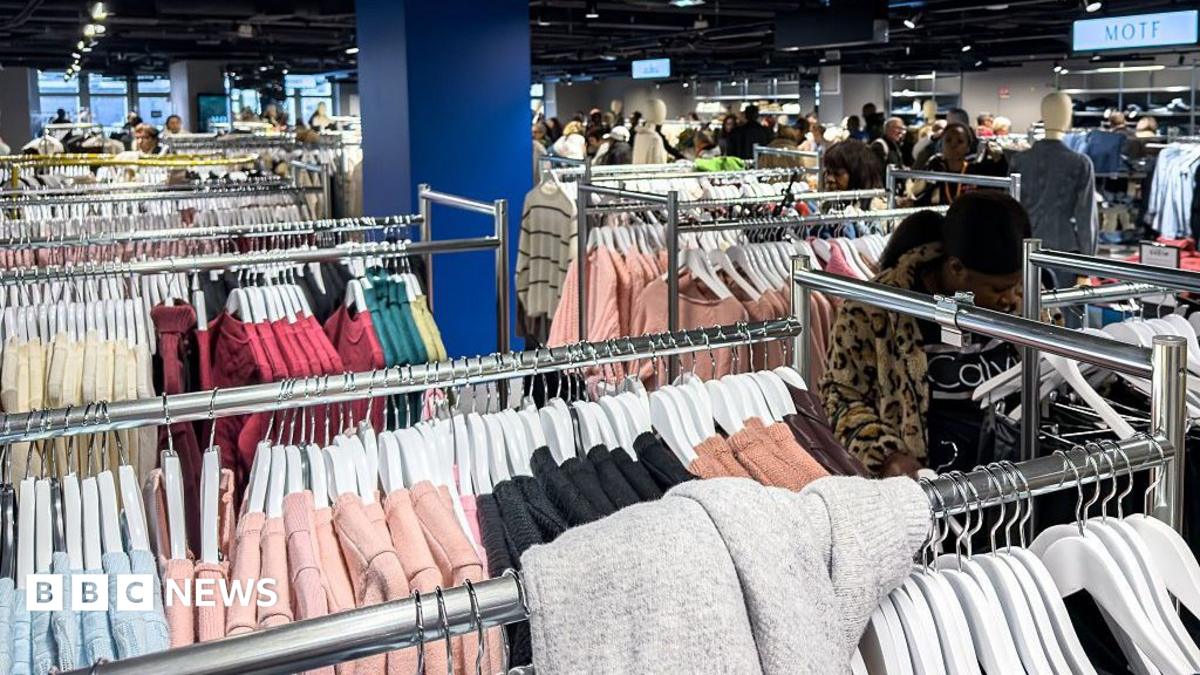
France has started imposing fees on fast fashion items which could reach almost €20 per garment by 2030, as the government tries to curb sales of cheap clothing sold by e-commerce sites.
The levy, which came into force on Tuesday, follows a new law passed in June to regulate so-called “ultra-fast fashion” companies such as Shein, Temu and AliExpress.
The e-commerce giants, known for selling large volumes of cheap apparel, have been criticised by French officials for driving a surge in fast fashion.
China’s commerce ministry has described the French law as discriminatory and a trade barrier, saying it could violate World Trade Organization (WTO) principles.
French minister Mathieu Lefevre said the “harmful effects of ultra-fast fashion” on the environment and economy were “well known”.
In July, Lefevre’s office said the levy would not apply to retailers such as H&M or Zara, prompting some to say that the measure appeared to spare European companies.
Under the legislation, ultra-fast fashion will be determined according to two factors: the volume of clothing placed on the market and the cost of repairing garments relative to their purchase price.
The per-item fee will vary on a set scale according to how each product scores on both these standards.
For 2026, the charges range from a €0.50 (£0.43) levy on underwear to €2 (£1.71) for T-shirts, to €9 (£7.71) for jeans and €12 (£10.28) for a jacket.
The levy could reach up to €19.50 (£16.71/$22.60) per item by 2030, though the cap remains at 50% of the product’s pre-tax price.

Read more: ICICI Bank raises $17.9 billion through FCNR(B) window, boosts lending liquidity
The rupee closed at 94.97, versus its previous close of 94.95, and traded in a narrow range of 94.89 and 94.98. Its showing stood in sharp relief to a fresh bout of volatility in equities, where the Nifty slumped below the 24,000 mark at close for the first time in six weeks. State run banks, on behalf of the RBI, were likely selling dollars at weaker levels to contain further depreciation past the 95 per dollar mark, traders said.

Japan services growth hits five-month high, PMI shows
Matternet CEO Andreas Raptopoulos discusses the race to scale drone delivery and the future of U.S. airspace economy on ‘Mornings with Maria.’
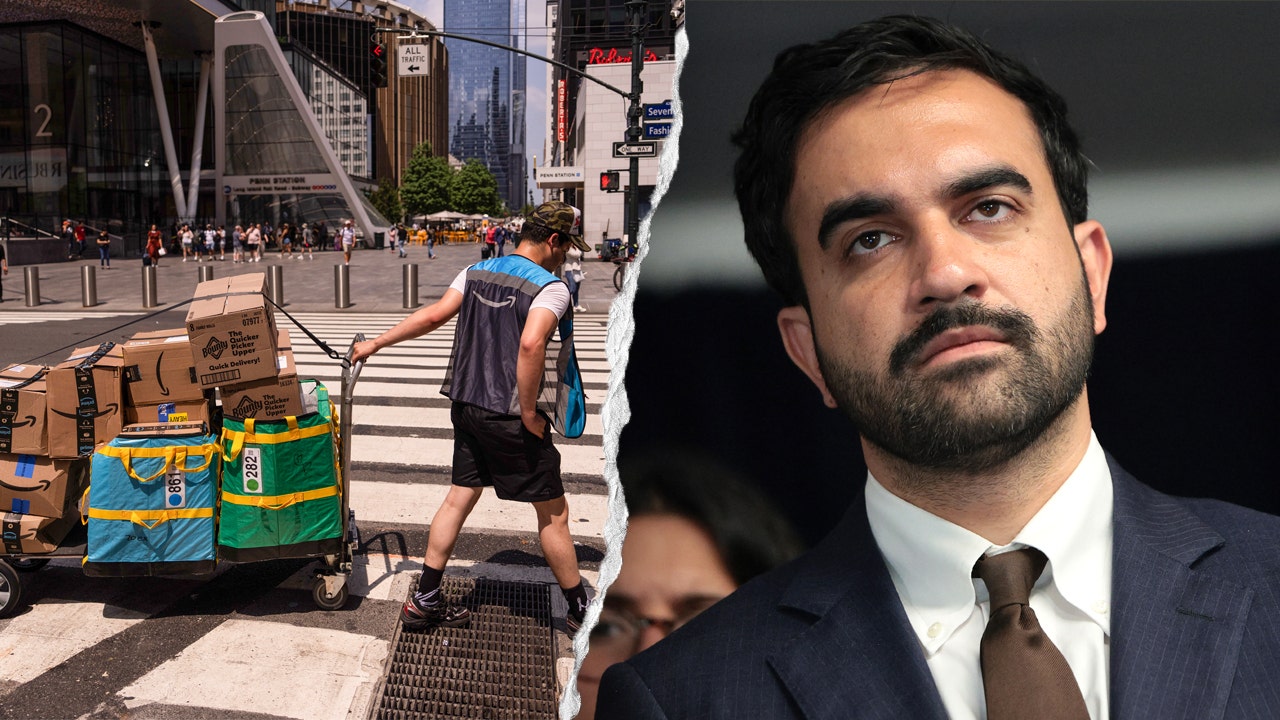
A Democratic-socialist policy backed by Mayor Zohran Mamdani could cost New York City households an extra $664 a year, Amazon warned Fox News Digital, as a union-backed push to require delivery companies to directly employ certain workers could drive some delivery operations out of the five boroughs.
“We’ve made clear to every Council member: we’re not looking to leave New York City and our goal has been — and continues to be — to work collaboratively with them,” an Amazon spokesperson told Fox Digital. “Our priority is to continue creating good jobs and supporting our employees in New York City. We’re equally committed to the local small business partners who work with us every day to provide fast, reliable delivery for New Yorkers.”
Amazon has publicly opposed Intro 0518, known as the Delivery Protection Act, which was introduced by Democratic-socialist City Councilmember Tiffany Cabán and backed by Mamdani. The bill would ban large shipping companies like Amazon from using third-party contractors for last-mile deliveries.
Amazon has publicly opposed Intro 0518-2026, known as the Delivery Protection Act, which was introduced by Democratic socialist New York City Council Member Tiffany Cabán and backed by Mamdani. The bill would require operators of certain last-mile facilities to directly employ workers performing core services, including delivery, while restricting subcontracting for that work.
“Corporations like Amazon build billion-dollar business models by insulating themselves from accountability through a system of exploitative subcontracting,” Mayor Mamdani’s office said in a press release.
AMAZON DISRUPTING ITSELF, REBUILDING CUSTOMER SHOPPING EXPERIENCE AROUND A.I. FROM GROUND UP
“Through delivery subcontractors, corporations dictate hiring standards, delivery routes, steep productivity quotas and workplace expectations while denying that the workers making those deliveries are employees,” it continued. “The result is a system that leaves workers vulnerable and corporations free to avoid accountability for reckless conditions on city streets.”
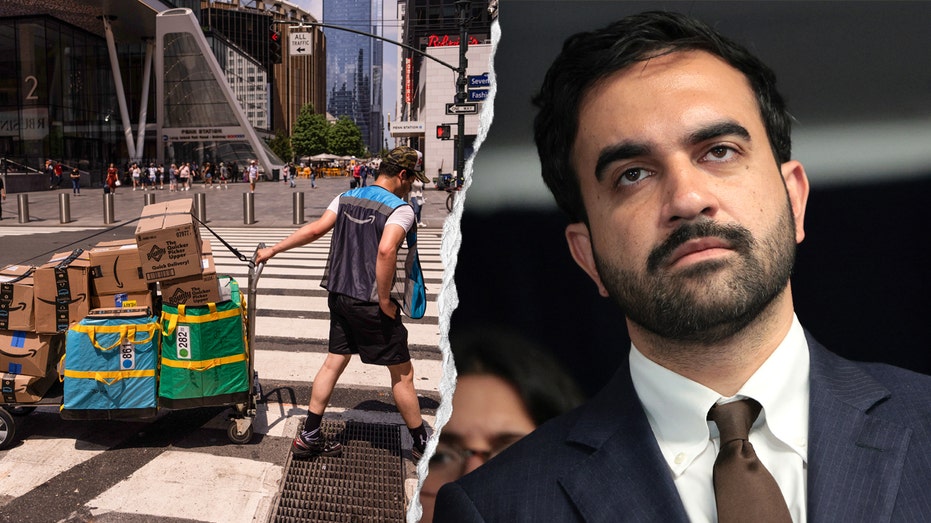
Amazon delivery service partners’ jobs are at risk due to a Mamdani-backed bill that would ban third-party contractors. (Getty Images)
Amazon cited an analysis by consulting firm AKRF, commissioned by the Five Borough Jobs Campaign, that projected the legislation could increase delivery costs for consumers.
“This bill would drive delivery costs up by forcing facilities farther from customers — increasing per-route travel time, fuel, and labor while reducing packages delivered per route — with full relocation modeling a 267% cost increase per package for deliveries currently handled by NYC facilities, service-level declines of 10 to 21%, and an additional $664 in annual delivery costs passed through to every New York City household,” the spokesperson told Fox News Digital.
“As written, this legislation would put more than 40 [delivery service partners] and their 5,000-plus employees at risk — while likely resulting in slower, more expensive delivery for millions of New York City customers,” they added. “We’re evaluating all options to try and limit this impact, including the potential relocation of operations and delivery facilities outside of New York City.”
New York City Mayor Zohran Mamdani faces criticism for skipping a crucial Pied-à-terre tax hearing, opting instead to submit a written statement. Panelists on ‘Mornings with Maria’ debate the political fallout of the decision.
That means moving outside the five boroughs to New Jersey, Long Island or Westchester to avoid city licensing mandates.
“Many of the small business owners in this coalition are minorities and first-generation Americans who beat the odds to become entrepreneurs in New York City,” the New York Delivers Coalition — who joins Amazon in opposition of the bill — also told Fox Digital. “We built our businesses from the ground up in our own communities, often starting with ourselves or family members as our first employees. Today, many of us employ more than 100 New Yorkers, including people who have faced barriers to traditional employment and have built careers and financial security through these jobs. Intro 0518 puts all of that — the businesses we built, the jobs we created, and the futures our employees are building — at risk.”
“We are small business owners in New York City, and we want the City Council to understand that many last-mile delivery companies are real, independent small businesses that hire from the communities we deliver in. We hire our own W-2 employees, manage our own teams and payroll,” the coalition said. “Large corporations like Amazon have the resources to adapt to sweeping new mandates. It’s the independent small businesses they contract with that would be forced to shut down, putting the jobs of over 10,000 local New Yorkers at risk.”
FOX Business correspondent Madison Alworth reports on the retail giant’s autonomous drone technology, pricing structure and competition with Walmart.
Neither the New York City Council, Cabán nor Mayor Mamdani’s office immediately returned Fox News Digital’s request for comment.
GET FOX BUSINESS ON THE GO BY CLICKING HERE
“We’ve invited every member to visit our delivery stations and meet DSPs and their employees,” Amazon said. “We hope Councilmember Cabán will do so — we’ve asked her directly — but haven’t gotten a response yet.”
“Our message is simple: come see how our businesses actually work. Visit one of our facilities, ride along on a delivery route, and talk directly to our employees about their jobs and what’s at stake,” the coalition said. “We want a seat at the table before decisions are made that could put our businesses and employees out of work.”
DIY store B&Q and the fast food chain Five Guys are among hundreds of UK businesses named by the government for paying staff below the minimum wage.
More than 600 employers were ordered to pay affected workers the outstanding wages, with £4m returned to workers, according to the Department for Business and Trade.
The firms have also been issued penalties worth £7m.
B&Q said the underpayments were unintentional and the result of calculations involving geographical allowances, while Five Guys blamed “technical differences in how payroll regulations were applied”.
The list of 658 businesses includes shops, restaurants, nurseries, social care providers and a handful of NHS trusts. The government did not say over what time period the underpayments spanned.
Minimum wage is £12.71 for staff aged 21 and over. For 18 to 20 year olds the rate is £10.85, and for under 18s and apprentices it is £8.
B&Q underpaid 4,530 workers a total of more than £456,000, according to the government.
B&Q said in response: “The shortfalls in payments were unintentional. They relate to calculations involving geographical allowances which are paid in addition to minimum hourly rates. All affected colleagues were quickly paid in full in July 2025.”
Five Guys, named in the list as owing over £54,000 to 3,699 staff, said “technical differences in how payroll regulations were applied” led to its underpayments, which were identified in a review by the HMRC, the UK’s revenue and tax authority.
“We worked closely and transparently with HMRC throughout the process and have made all required payments to affected current and former employees,” the company said.
St George’s, Epsom and St Helier Hospital Group failed to pay over £123,000 to 75 workers, according to the list, which also says St George’s University Hospitals in Wandsworth, London, underpaid 55 workers.
A spokesman for the two hospital trusts said that “no colleagues were underpaid”.
“This relates to a technical compliance issue where part of their salary for a non tax-deductable ‘salary sacrifice’ (for example, towards childcare) was not counted towards the national minimum wage, even though their gross salary was above the national minimum wage,” he said.
A spokesperson said apprentices at Norfolk Community Health and Care NHS Trust were inadvertently underpaid between 2019 and 2023.
They said while their pay met the requirements for their contracted hours, meetings, handovers and time spent changing into uniform hadn’t been accounted for, adding the trust has since changed policies and practices.
The other trust named has been contacted for comment.
There were also several nursing homes on the list, and multiple childcare providers.
Business Secretary Jonathan Reynolds said the government was determined to stamp out the practice of “short-changing your staff”.
“The best businesses know that looking after your workers isn’t just the right thing to do, it’s the smart thing to do,” he said.
Kate Dearden, minister for the future of work, said: “Underpaying your staff is illegal, and we will not let workers foot the bill for their boss failing to follow the rules.”
“Every employer should check their payroll now and reach out to Acas if they need further support,” she added.
The first 10 employers on the government’s list, which was sorted by the amount of wages not paid, are:
1. B&Q Ltd, failed to pay £456,934.72 to 4,530 workers.
2. Elysium Healthcare Holdings 3 Ltd, Borehamwood, failed to pay £330,048.81 to 1,095 workers.
3. St George’s, Epsom and St Helier Hospital Group, failed to pay £123,331.97 to 75 workers.
4. Support Staff Services Limited, Slough, failed to pay £119,715.13 to 323 workers.
5. Forest Holidays Ltd, Moira, failed to pay £100,308.68 to 598 workers.
6. St George’s University Hospitals NHS Foundation Trust, London (Wandsworth), failed to pay £77,498.91 to 55 workers.
7. Lanes Group Limited, Leeds, failed to pay £67,893.34 to 297 workers.
8. UK Care Team Ltd, Leicester, LE19, failed to pay £67,082.76 to 99 workers.
9. Five Guys JV Limited, London (Royal Borough of Kensington and Chelsea), failed to pay £54,642.47 to 3,699 workers.
10. Merlin Cinemas Limited, Redruth, failed to pay £50,198.75 to 181 workers.
The list marks the first “naming round” since the Fair Work Agency was set up in April under the Employment Rights Act.
As well as enforcing the minimum wage, the agency also will soon tackle practices of denying workers holiday and sick pay.
Chair of the agency’s advisory board, Matthew Taylor, said naming employers which underpay staff was an important reminder that “paying the minimum wage is not optional – it is the law”.
He said: “Most employers want to do the right thing, and we will support them to comply, but those who fall short should expect robust enforcement to protect workers and maintain a fair playing field for responsible businesses.”
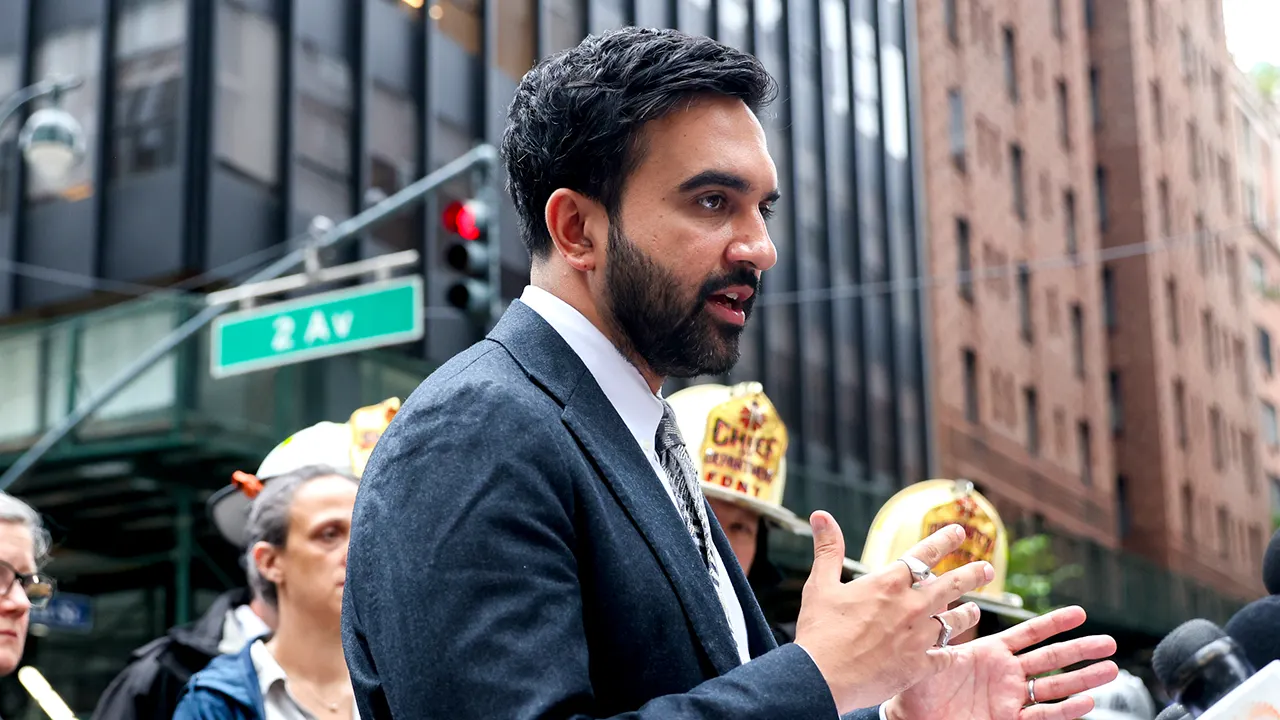
New York City public school students under 9th Grade will be banned from using generative AI for at least one year, Mayor Zohran Mamdani announced Wednesday.
New York City public school students under 9th Grade will be banned from using generative AI for at least one year, Mayor Zohran Mamdani announced Wednesday.
Mamdani announced the new rule during a news conference Wednesday morning, saying it is part of a “comprehensive AI policy” for the city’s schools. The ban is only a “one-year moratorium” on AI use for students under 9th Grade, and is not a lasting ban for elementary and middle school students.
“AI has grown from something on the pages of a sci-fi novel into something present in nearly every aspect of our lives,” Mamdani said. “But just because technology is everywhere doesn’t mean that it belongs everywhere.”
“When it comes to AI in our schools, we hold an obligation to do the same,” he continued. “The tech industry wants us to believe that AI in early education is not only inevitable, but that it is necessary. We do not see it that way. I have yet to see a study showing that AI is beneficial for students in elementary and middle school.”
HARVARD RESEARCH FELLOW SAYS HIGHER EDUCATION MUST RETHINK WHAT STUDENTS LEARN IN AI ERA
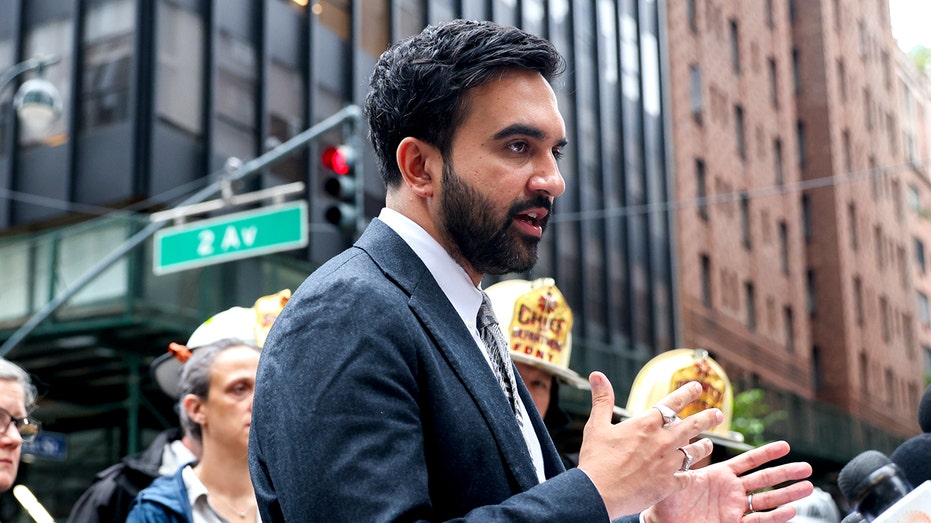
Zohran Mamdani, mayor of New York, speaks to members of the media on July 7, 2026. (Michael Nagle/Bloomberg via Getty Images / Getty Images)
Mamdani went on to thank New York Gov. Kathy Hochul for her efforts toward banning cell phones and social media platforms in schools. He argued these policies are aimed at protecting students from the harmful effects of technology until they are equipped to deal with them.
TOO MUCH SCREEN TIME MAY TRIGGER LASTING BRAIN DELAYS, TOP HEALTH OFFICIAL WARNS
“Whether we like it or not, our teenagers are growing up in an AI-saturated world. We cannot pretend that that world does not exist,” Mamdani said, saying high school students will learn about AI and “its opportunities and its pitfalls.”
He said students will participate in five separate AI programs, but cautioned that AI will never replace the reliance on student-teacher interaction.
WILLIAM BENNETT, JON HAGE: AI CAN MIMIC A TEACHER, BUT IT CANNOT SHEPHERD A SOUL

New York State Governor Kathy Hochul’s AI data center pause is drawing criticism from lawmakers and industry leaders. (James Carbone/Newsday RM / Getty Images)
The announcement comes the same week Mamdani picked a fight with a teachers union over a proposed pay increase for city teachers. Mamdani’s office sued to block the pay raise after City Hall approved it last month, arguing the bill violates state law by preventing public employees from negotiating compensation.
United Federation of Teachers, which endorsed Mamdani in the mayoral election, intervened in the case last week.
MAMDANI SAYS EVEN IF HE CAN GET ALONG WITH TRUMP, HE STILL DEMANDS THAT ‘ICE SHOULD BE ABOLISHED’
“We knew this lawsuit was a possibility, and we were prepared,” UFT President Michael Mulgrew told Fox News Digital in a statement. “The RESPECT check law, which was unanimously passed by City Council on July 16, was carefully drafted to make sure that it did not violate the state’s Taylor Law, which governs collective bargaining.”
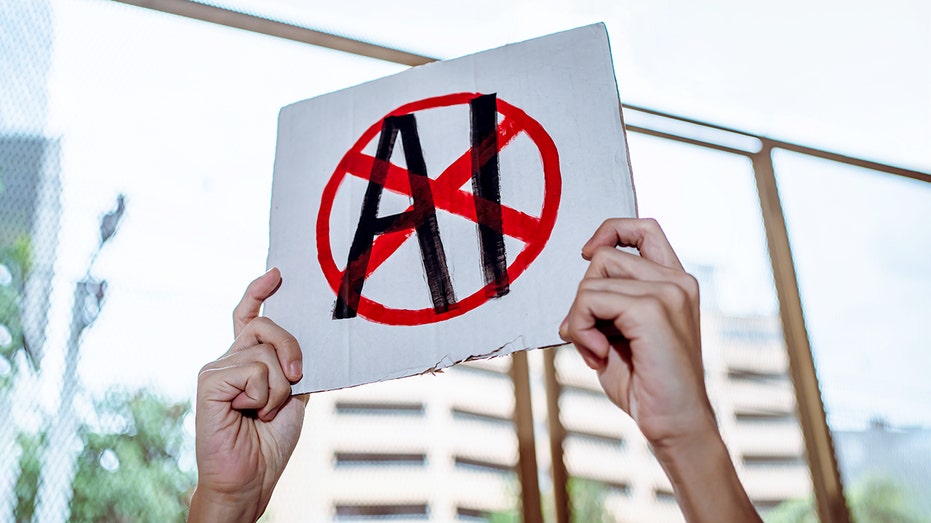
A stock image of a protester holding an anti-AI sign (iStock / iStock)
GET FOX BUSINESS ON THE GO BY CLICKING HERE
He added: “The City Council would not have introduced — let alone passed — this bill if it were illegal, and we would not have supported a bill that threatened our collective bargaining rights. This moment is an opportunity for Mayor Mamdani to create a new, fairer system and build the kind of city he said he wanted to lead. This administration must keep its promises, and we won’t stop until it does.”

Aliev, who had worked in finance before doing her MBA, was wary of first impressions at the firm.
“If you judge a book by its cover, it’s very easy to be like ‘oh, young girl, Wall Street background, coming in here and telling me what to do’… I was really conscious about that,” she says. “And I really didn’t want to come off that way to my team.”
Aliev says her approach was initially to just observe and learn. “Not coming in and telling them ‘this is how things are going to be’.”
The practice of a young entrepreneur borrowing money to buy a company and become its boss is known as entrepreneurship by acquisition or “search-fund investing”.
The would-be business owner sets up a fund, called a search fund, and aims to attract money from both institutional investors and wealthy individuals.
At the last count, in 2023, a record 94 search funds, external were found to have been launched that year in the US, with $682m (£505m) said to have been invested in funds and the companies they bought across 2022 and 2023.
In turn, there are now investment companies in the US that specialise in backing young entrepreneurs and their search funds, such as Search Fund Partners, Aspect Investors and Anacapa Partners.
They are attracted by reported high rates of return. For while some people may question the wisdom of putting a 20-something in charge of an established business, a report by Yale School of Management found that “juicy returns by any standard”, external are available, and funds generally “remained relatively stable”.
For existing business owners, selling to a younger entrepreneur is a chance to move on and perhaps retire. For would-be company leaders the aim is to grow the business for perhaps five to 10 years, before selling at a profit.
Now more than two years since taking over at Life Support Systems, and 30-years-old, Aliev has led the takeover of a competitor, which she says has doubled the size of the business.
She says that this focus on growth has been welcomed by most employees. One, Meaghan Richardson, says: “It can be a little bit challenging sometimes for those of us who have been here a long time… but it’s been really great since she’s come in because she’s just turned a lot of stuff around, which is really exciting.”
But not everyone has been happy with Aliev’s new approach. Some workers have left and she has made others redundant as “they just didn’t want to work in a growth company”.
Elsewhere, entrepreneurship by acquisition can end in failure.
Scott Duncan, who gained his MBA from Harvard Business School, was back in 2018 seeking an established business to acquire and run. He secured investment to buy F&M Tool and Die, a company in Massachusetts that makes industrial parts.
It looked great on paper, and seemed to be a strong fit given his previous work in engineering.
Aged 31 when he took over the company, he said his first day was “terrifying”. “All of the employees had been doing this for decades. I was this newcomer and I had really no idea what was going on. So, they were really perplexed by me as well.”
Very quickly, things started to unravel in what would be a seven-year struggle to keep the business afloat.
Skilled employees left the business, including one who started a low-cost competitor and took an important customer with him. Others proved resistant to change, and Duncan realised it would be impossible to fill the previous owner’s shoes.
“This whole organisation had built up around him, his personality,” he says. “I bought a business that was very difficult for anyone except for that guy to run.”
After this difficult start, the Covid pandemic, the rise of cheaper Chinese competition and even a flooded workshop were among challenges in a battle for survival that lasted until 2025. Duncan describes it as “death by a thousand cuts”.
In February last year, he was left with little choice but to shut the business down. “I brought everybody into the conference room. I had to grab a chair and sit down in it because I was physically unable to stand. I thought I was going to pass out, but all the employees came in and I said, ‘we’re shutting the doors’.”
Duncan, now a 39-year-old husband and father of two daughters, also had to file for personal bankruptcy. “I was a shell of a human being,” he says.

Check out what’s clicking on FoxBusiness.com.
The U.S. Mint on Wednesday started selling $1 coins that feature President Donald Trump’s face.
“Available for purchase today at 12PM ET: 2026 President Donald J. Trump $1 Coin. These coins are also in circulation, so check your pocket change. Collect them today!” the U.S. Mint declared in a Wednesday morning post on X.
But the Trump-emblazoned coins cost a pretty penny — they are priced significantly higher than their $1 face value.
TREASURY UNVEILS $1 GOLD COIN WITH TRUMP’S IMAGE ON FRONT

The U.S. Mint is now offering these $1 Trump coins for sale. (United States Mint on X)
A roll of 25 coins is priced at a whopping $61, while the price for a bag of 100 coins is $154.50, according to the Mint’s website.
Fox News Digital reached out to the White House on Wednesday.
TRUMP URGES BIPARTISAN FEDERAL TAX INCENTIVE TO BRING FILM, TV PRODUCTION BACK TO US

President Donald Trump speaks to reporters before boarding Air Force One at Joint Base Andrews, Md., on Aug. 21, 2026. (Saul Loeb/AFP via Getty Images)
The front of the coin features the word “LIBERTY” over Trump’s likeness, and the years “1776 ~ 2026” below the president’s visage. The words “IN GOD WE TRUST” appear next to Trump’s head on the coin.
“Celebrate a historic American milestone, the official United States Mint-issued Semiquincentennial $1 Coin was struck to honor 250 years of great American heritage,” the page where the coins will be available for purchase states.
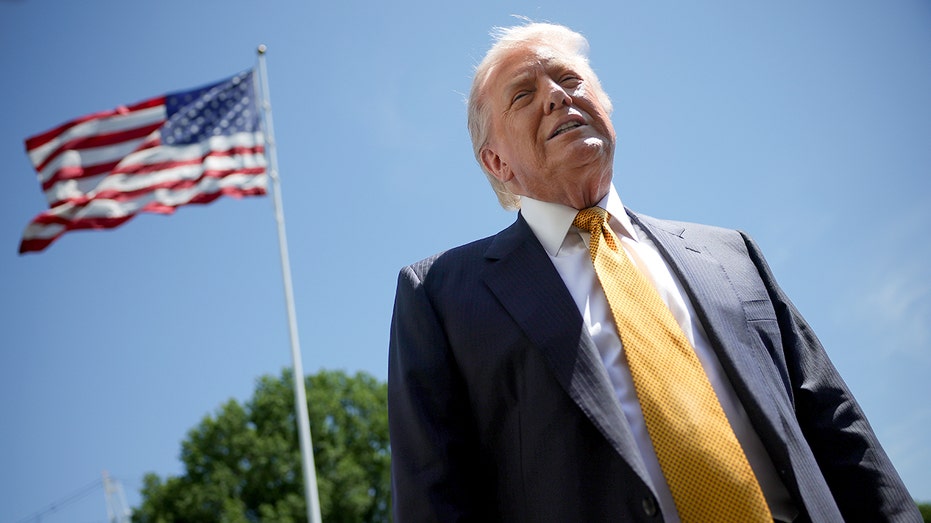
President Donald Trump speaks to the press as he departs the White House on May 12, 2026, in Washington, D.C. (Kevin Dietsch/Getty Images)
CLICK HERE TO GET FOX BUSINESS ON THE GO
“The coins — minted at the Philadelphia Mint — have circulating finishes but have never been placed into circulation. However, they may be still used as legal tender,” the product page notes.
Matternet CEO Andreas Raptopoulos discusses the race to scale drone delivery and the future of U.S. airspace economy on ‘Mornings with Maria.’
Uber is cutting roughly 10% of its workforce, or about 3,300 jobs, in an effort to streamline operations, the company announced on Wednesday.
The ride-hailing giant’s CEO, Dara Khosrowshahi, said in a memo to employees that the company is removing management layers, simplifying teams and refining where its teams are based.
“The changes we’re making today are designed to do two things: make Uber simpler and faster, and create more capacity to invest in our future,” Khosrowshahi said.
“A leaner organization will mean clearer ownership, faster decisions, and more time spent building rather than coordinating,” he said. “It will also generate savings that we intend to reinvest in growth, innovation, and the capabilities that will matter most over the coming years.”
HERTZ, UBER TEAM UP TO BUILD ROBOTAXI FLEETS IN MAJOR MOBILITY PUSH
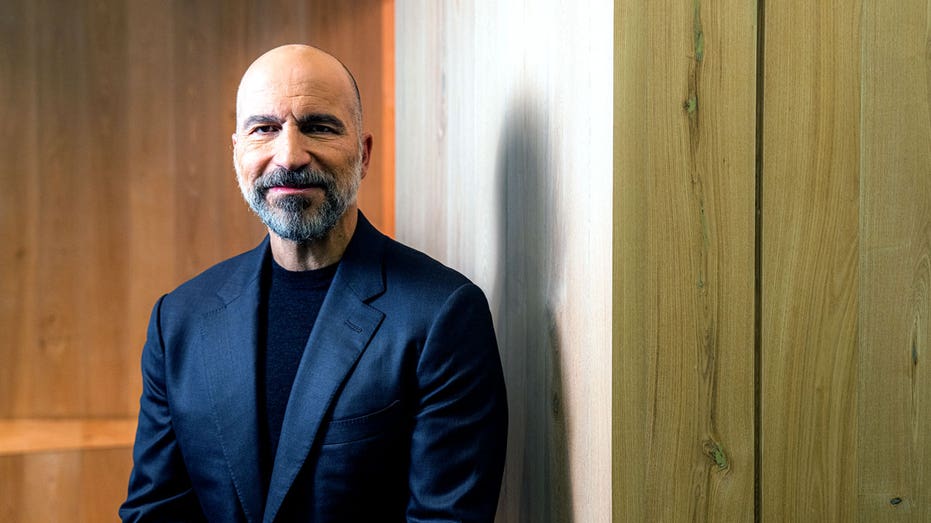
CEO Dara Khosrowshahi said that the company is removing management layers, simplifying teams and refining where its teams are based. (Lam Yik/Bloomberg via Getty Images)
Khosrowshahi said Uber’s revenue has nearly tripled in the last roughly five years, but said the company’s expansion has also brought “more complexity.”
“That growth has also brought complexity: more layers, more coordination, more fragmented ownership, and in some cases structures that made sense when businesses were smaller but no longer serve us well at our current scale,” he said.
As part of the restructuring, Uber said it has reduced the number of employees sitting seven or more layers below the CEO by 20% and has cut the number of “micro-teams” – those with only one to two direct reports – by nearly 50%.
UBER, RIVIAN INK $1.25B DEAL TO PUT THOUSANDS OF ROBOTAXIS ON US STREETS
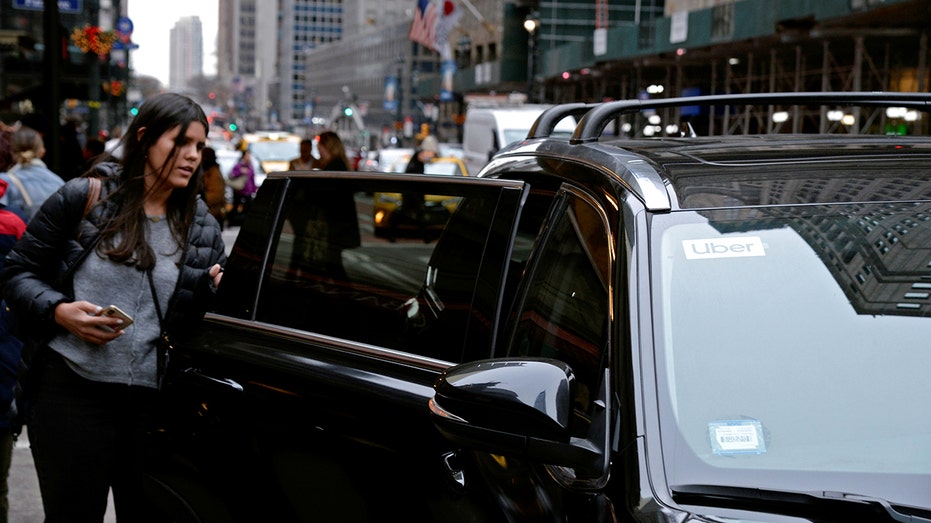
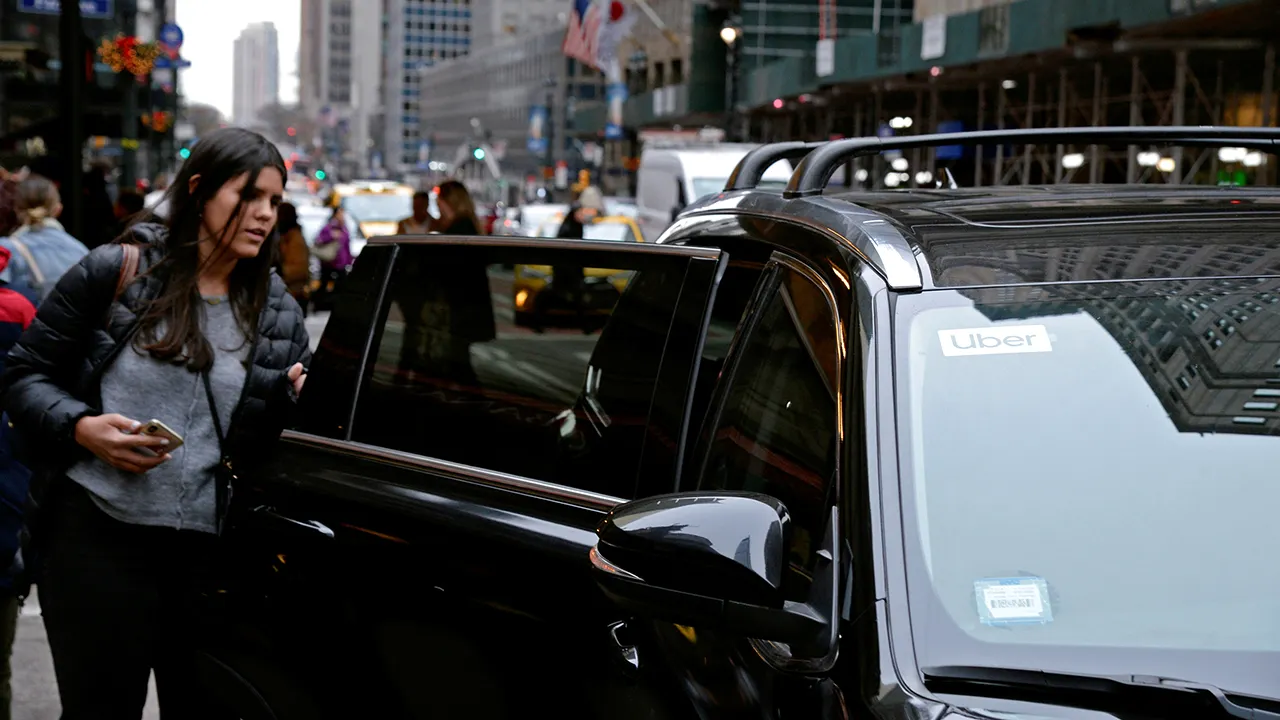
Khosrowshahi said Uber’s revenue has nearly tripled in the last roughly five years, but wrote that that expansion has also brought “more complexity.” (Jefferson Siegel/Reuters)
“The outcome is a simpler org chart geared toward building versus managing,” Khosrowshahi said.
The company is also combining some teams where “fragmentation was creating duplication and slowing decisions,” according to Khosrowshahi.
Uber also said it will concentrate teams in a smaller number of key hubs, including New York and San Francisco. The company is asking the majority of its remote workers to relocate to an office and said that going forward, only about 1% of employees will be remote.
LAX APPROVES RIDESHARE FEE HIKE THAT COULD PUSH UBER AND LYFT FARES SHARPLY HIGHER
The company is also combining some teams where “fragmentation was creating duplication and slowing decisions,” according to Khosrowshahi. (David Paul Morris/Bloomberg via Getty Images)
Uber will continue requiring employees to work from an office three days per week, according to Khosrowshahi.
GET FOX BUSINESS ON THE GO BY CLICKING HERE
“I realize this is a lot of change, but we decided it was better to make one big shift rather than multiple small ones,” Khosrowshahi said. “We also know organizational changes can be hugely distracting, and our job is to create an environment that allows you to focus and do your best work. With these decisions now made, our focus is on the future.”

There is another, less tangible ingredient: Lady Beckham herself.
The woman who once seemed almost comically aloof has become increasingly willing to show the person behind the brand. She’s been known to post videos demonstrating her beauty products – often with wet hair, seemingly filmed in her bathroom.
Lisa Maynard-Atem, a business strategy adviser, said this has been crucial.
“She hasn’t abandoned the polish or aspiration that you expect from a luxury brand, but she has added personality,” she said. “That creates connection and people buy into brands emotionally as well as commercially.”
Maynard-Atem added that Lady Beckham’s openness about the firm’s struggles has also helped.
“By acknowledging the losses and some of the mistakes that were made, she makes the eventual turnaround more credible. The failure hasn’t been edited out of the story. It has become part of the story,” she said.
Luxury fashion remains a competitive business, and one profitable year is no guarantee of future success.
The key is to keep innovating, according to Bedford.
“Success changes with the trends and probably the biggest factor is the creative director,” she said.
“Fashion is not an easy industry to enter and certainly not for the faint of heart. The founders who last are the ones who treat setbacks as information to learn and then build from, rather than something to hide.”

Saket Soni Wants to Protect the Workers Rebuilding Communities After Disaster
Lucky Lincoln Gaming Nears $200 Million in Illinois Revenue

#CPA #study #tabs #index #colours #highlighters #accounting #financial reporting





-

 Fashion5 days ago
Weekend Open Thread: Maeve – Corporette.com
-

 Crypto World6 days ago
Bitcoin’s 22% rally now needs real demand to outlast Treasury liquidity boost
-

 Business6 days ago
Apple Confirms September 9 Keynote and Reveals Its Full Pre-Order Schedule
-

 Business6 days ago
Salesforce Stock Soars 19% as Blowout Earnings and Agentforce AI Growth Silence Software Skeptics
-

 Business5 days ago
Onto Innovation Stock: AI’s Next Bottleneck Is Yield (NYSE:ONTO)
-

 Crypto World7 days ago
NVIDIA revenue hits $96.2B as AI demand doubles
-

 Crypto World5 days ago
Bitcoin price tests $82K resistance as Brandt stays long
-
 Tech4 days ago
Hugging Face built a $4.5 billion empire on free AI models. Now Nvidia is buying it for $12.9 billion
-

 Business5 days ago
iPhone 18 Pro Pre-Orders Could Shift to Saturday as Apple Reportedly Avoids September 11 Anniversary
-

 Tech7 days ago
Claude Cowork gets its own browser that doesn’t touch your tabs, bookmarks, or saved passwords
-

 Crypto World6 days ago
Truflation calls for Fed rate cut after PCE forecast
-
 News Videos4 days ago
Charlie Munger on Robinhood: No one should believe that Robinhood’s trades are free
-

 Crypto World7 days ago
GENIUS Act missed its deadline as OCC writes rules anyway
-

 Tech5 days ago
PaperCut releases second emergency patch for exploited flaws
-

 Tech6 days ago
The fix for the AI agent that hijacked a company’s DNS: it can propose the change, but it can’t approve it
-

 Tech4 days ago
Tamagotchi Ring Takes the 30-Year Digital Pet and Places it on Your Finger
-
 Entertainment6 days ago
‘Adults’ Creators Break Down Season 2’s Most Shocking Moments and Tease a Potential Season 3
-

 Tech4 days ago
As the influencer economy drives retail sales, Seattle startup raises $22M to play matchmaker
-

 Business7 days ago
AI Assistant Startup Instinct Rockets to $2.5 Billion Valuation in Weeks Amid Investor Feeding Frenzy
-
 NewsBeat4 days ago
Trump posts AI video of ‘Lake America’ being protected by an army of bequiffed ‘Donald Ducks’
You must be logged in to post a comment Login