Connect with us
DAPA Banner
DAPA Coin
DAPA
COIN PAYMENT ASSET
PRIVACY · BLOCKDAG · HOMOMORPHIC ENCRYPTION · RUST
ElGamal Encrypted MINE DAPA
🚫 GENESIS SOLD OUT
DAPAPAY COMING

Business

Apple sues OpenAI over trade secret theft claims

Published

on

Apple has announced a delay in the launch of three new artificial intelligence (AI) features in Europe due to regulatory challenges posed by the European Union's Digital Markets Act (DMA).

Apple has filed a lawsuit against OpenAI, alleging the ChatGPT maker poached its employees and coaxed them into handing over confidential designs and tightly held trade secrets to build a rival hardware device, a dramatic rupture between two firms that were partners barely two years ago.

“Recently, significant evidence has emerged suggesting individuals employed by OpenAI wrongfully took Apple’s secret and confidential information regarding our unreleased technologies, processes and products,” an Apple spokesperson said in an email.

The complaint, filed on Friday, pulls no punches. “OpenAI’s nascent hardware business now rests on the shakiest of foundations, rotten to its core by its illegal reliance on misappropriated trade secrets,” Apple wrote.

Among those named is Tang Yew Tan, OpenAI’s chief hardware officer and a former Apple vice-president, who is accused of taking information about Apple suppliers with him and encouraging interviewees to divulge confidential material.

“He has directed job candidates still working for Apple to bring ‘actual parts’ from Apple to their interviews for ‘show and tell’ sessions in which he and his team at OpenAI can elicit still more Apple confidential information,” reads the complaint.

Advertisement

Another former Apple employee, Chang Liu, is accused of leaving with an Apple laptop and using an authentication bug to breach the company’s internal network, downloading “dozens of Apple’s confidential hardware-related files”.

Drew Pusateri, a spokesperson for OpenAI, said the company was reviewing the court filing. “We have no interest in other companies’ trade secrets,” he added. “We remain focused on building innovative technology that empowers people everywhere.”

From partners to plaintiffs

The lawsuit is a sharp turnaround for two companies that announced a major partnership in 2024, when Apple agreed to integrate ChatGPT into the operating systems of iPhones, iPads and Macs. When Apple showcased its revamped Siri voice assistant last month, however, its AI component was built on Google’s Gemini model instead.

Tensions began to simmer when OpenAI spent $6.4bn acquiring io Products, the hardware startup founded by former Apple design guru Jony Ive, which is also named in the suit. The litigation lands at an awkward moment for OpenAI, which is preparing one of the largest stock market flotations the technology sector has ever seen.

Advertisement

Apple is seeking damages and a court order blocking OpenAI from possessing or using its trade secrets.

The lesson for UK business owners

If a company with Apple’s security apparatus and legal firepower can allegedly watch its secrets walk out of the door with departing staff, smaller firms should pay attention. Loss of intellectual property remains one of the biggest threats to any business, and in most SMEs the crown jewels sit in far fewer heads, with far fewer safeguards.

In the UK, trade secrets are protected under the common law of confidence and the Trade Secrets (Enforcement, etc.) Regulations 2018, but only where a business can show it took reasonable steps to keep the information secret. The Intellectual Property Office advises limiting access to those who need it, setting clear expectations and using non-disclosure agreements.

For owner-managers, the practical basics are cheaper than any courtroom: watertight confidentiality clauses in employment contracts, exit procedures that revoke system access on day one, and a clear record of who can see what. The do’s and don’ts of protecting intellectual property are well established, and almost all of them work best before a dispute rather than during one.

Advertisement

Apple v OpenAI will be fought by armies of Californian lawyers. For everyone else, the smarter money is on making sure the show and tell never happens.


Jamie Young

Jamie Young

Jamie is Senior Reporter at Business Matters, bringing over a decade of experience in UK SME business reporting.
Jamie holds a degree in Business Administration and regularly participates in industry conferences and workshops.

When not reporting on the latest business developments, Jamie is passionate about mentoring up-and-coming journalists and entrepreneurs to inspire the next generation of business leaders.

Advertisement
Continue Reading
Click to comment

You must be logged in to post a comment Login

Leave a Reply

Business

Thai Baht Stays Range-Bound as Inflation Eases and BoT Holds Steady

Published

on

Thai Baht Stays Range-Bound as Inflation Eases and BoT Holds Steady
  • Thailand’s headline inflation eased to 2.4% year-on-year in June, falling below consensus and remaining within the Bank of Thailand’s 1–3% target range. Core inflation edged up slightly to 1.2%, while energy and non-food prices moderated. The Ministry of Commerce maintained its 2026 inflation forecast at 1.5–2.5%.
  • Commerzbank analyst Charlie Lay expects the BoT to hold its policy rate at 1% through its August meeting and potentially through year-end. With inflation dynamics viewed as manageable, USD/THB is expected to remain range-bound near recent highs, though risks from energy price rebounds or El Niño-related food pressures could alter the outlook.

Thai inflation eased to 2.4% yoy in June, within BoT’s target range. Core inflation rose to 1.2%. Commerzbank’s Charlie Lay expects BoT to hold rates at 1% through August’s meeting and possibly year-end, supporting steady USD/THB near range highs.


Key Points

USD/THB Trend: Edged higher on easing Thai inflation data, supporting expectations of a steady BoT policy stance.

Inflation Data: June inflation eased to 2.4% yoy from 2.8% in May; core inflation rose slightly to 1.2% yoy; energy and non-food prices moderated.

Policy Outlook: Data reinforces case for BoT to hold rates at 1% through August meeting and possibly year-end, barring energy or food price shocks.

Inflation Trends Support Stable Currency Outlook

Thailand’s headline inflation eased for a second straight month in June, falling to 2.4% year-on-year from 2.8% in May, coming in below the Bloomberg consensus of 2.7%. This keeps inflation comfortably within the Bank of Thailand’s (BoT) target range of 1-3%, with a year-to-date average of just 1.1%. According to Commerzbank’s Charlie Lay, this moderation follows a steady pickup since April, after negative readings persisted from April 2025 through March 2026. Food prices remained stable at 1% yoy, while non-food prices slowed to 3.3% from 4%, largely due to decelerating energy costs, which dropped to 13.7% yoy from 18.1% previously.

Advertisement

Core Inflation and Policy Forecasts Remain Contained

Core inflation, excluding food and energy, ticked up slightly to 1.2% yoy, surpassing the 1.1% consensus estimate but still modest. The Ministry of Commerce has maintained its 2026 inflation forecast at 1.5-2.5%, citing supportive factors such as lower electricity tariffs and ample meat supplies that should help offset price pressures. Inflation is expected to remain above 2% for much of the second half of the year, partly due to a favorable base effect from last year’s weaker figures. However, easing energy costs are projected to further moderate overall price growth, reinforcing a relatively stable macroeconomic backdrop for Thailand heading into the latter half of 2026.


BoT Likely to Maintain Rates Amid Manageable Risks

Given these trends, Commerzbank expects the BoT to hold its policy rate at 1% during its upcoming meeting on 26 August, with the possibility of maintaining this stance through year-end. The central bank appears to view current inflation dynamics as manageable and supportive of broader economic activity, rather than warranting tightening. Nonetheless, risks remain, particularly from a potential rebound in global energy prices or unexpected food price increases linked to El Niño weather patterns. These factors could pressure inflation upward, though policymakers currently see limited urgency to adjust rates. As a result, USD/THB is expected to stay within recent trading ranges, with the currency pair currently hovering near its range highs as markets price in continued policy stability from the BoT.

Source : Thai Baht: Range-bound after inflation data against dollar – Commerzbank

Advertisement
Continue Reading

Business

OBR warns stealth taxes could push two million out of work

Published

on

Burnham signals tax movement with business rates cut for pubs & high street firms

Britain’s workforce could shrink by two million people if governments keep leaning on stealth taxes, the Office for Budget Responsibility has warned, in analysis that lands squarely on the desk of prime minister-in-waiting Andy Burnham and should alarm every employer in the country.

The fiscal watchdog’s latest long-term sustainability report concludes that repeated tax rises under both Conservative and Labour governments are inflicting growing damage on the economy, with each fresh raid delivering diminishing returns. It also cautioned that stealth tax raids would become harder to sustain as AI threatens to eliminate one in ten jobs.

For small business owners already wrestling with recruitment, the central finding is stark. If future governments permanently uprated income tax thresholds in line with prices rather than earnings, two-thirds of all workers, more than 20 million people, would become higher-rate taxpayers within a few decades. That is every full-time worker, even those on the minimum wage

Under that scenario, the OBR estimates “labour supply could fall by around two million” workers by 2075. For those people, work would simply no longer pay. For the firms hoping to hire them, the labour pool gets shallower still.

The mechanism is one SME employers know well. Rishi Sunak froze income tax thresholds in cash terms until 2028 and Rachel Reeves extended the policy into the next decade. OBR data show the freeze is already set to pull five million more people into the higher and additional rate bands, and fiscal drag is already pushing millions of Britons into higher tax brackets, among them nurses, teachers and supermarket managers. For business owners, that means staff demanding higher gross pay just to stand still, at a time when payroll costs are climbing anyway.

Advertisement

David Miles, an executive member of the OBR, said stealth raids might look politically easier than raising headline rates, but the cost is real. “It would be painful, because … if you carry on doing that decade after decade, it isn’t too far down the road until the great majority of people are higher rate taxpayers,” he said. That would affect people’s “willingness to work, willingness to stay in the UK [and] to save, to pay taxes if income tax rates rose by that amount. So it’s not a painless road to go down”.

The backdrop is grim. National debt is close to £3tn, around 95 per cent of GDP, and the watchdog has previously warned that debt could hit almost 300 per cent of GDP within 50 years. The OBR says Burnham, or any future prime minister, could face tax rises or spending cuts worth as much as £120bn to stabilise debt at current levels. Business Matters reported last year that the watchdog was already warning of significant tax rises ahead; this report suggests the well is running dry.

The tax burden is on course to reach a peacetime high of 38.5 per cent of GDP by the start of the next decade, and Miles warned Britain was “catching up” with higher-tax continental Europe. Of relying on further rises, including proposals from Burnham allies for wealth taxes, he said: “It’s not that the pain just increases a little bit, it starts increasing exponentially.”

That leaves spending. Many point to the pension triple lock, which the OBR says is making “a very significant contribution” to upward pressure on spending. Linking it to inflation alone would save £160bn a year in today’s money by 2075. Lord O’Neill of Gatley, tipped as Burnham’s key economic adviser, has called the lock “bonkers”. Burnham has committed to keeping it.

Advertisement

Jeremy Hunt, the former chancellor, put it bluntly: “The OBR makes it clear that unless we tackle the triple lock we will end up with totally unsustainable levels of both tax and debt.”

For the SMEs that employ most of Britain’s private sector workforce, the message is uncomfortable. Whoever occupies Number 10, the era of quiet tax rises doing the heavy lifting is ending, and the bill is heading somewhere.


Jamie Young

Jamie Young

Jamie is Senior Reporter at Business Matters, bringing over a decade of experience in UK SME business reporting.
Jamie holds a degree in Business Administration and regularly participates in industry conferences and workshops.

When not reporting on the latest business developments, Jamie is passionate about mentoring up-and-coming journalists and entrepreneurs to inspire the next generation of business leaders.

Advertisement

Continue Reading

Business

Regis bows out of $5.6b Vault battle

Published

on

Regis bows out of $5.6b Vault battle

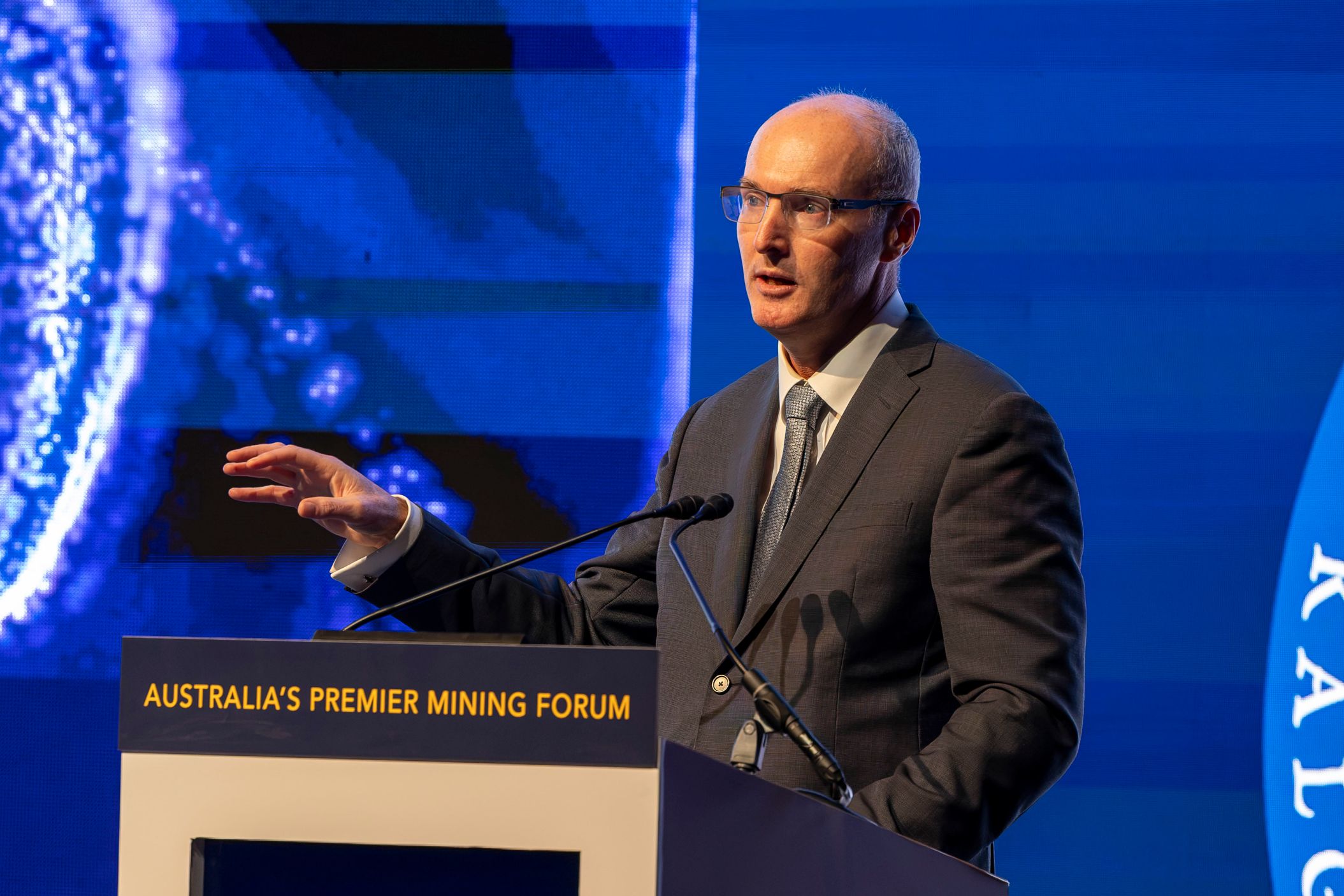
Regis Resources has bowed out of the battle for goldmining peer Vault Minerals, opting not to match a bid by Raleigh Finlayson’s Genesis Minerals for the company.

Continue Reading

Business

Dollar jumps on renewed Middle East attacks, Hormuz closure

Published

on


Dollar jumps on renewed Middle East attacks, Hormuz closure

Continue Reading

Business

Wall Street ends higher as investors turn to earnings

Published

on

Wall Street ends higher as investors turn to earnings

The ‌S&P 500 has risen to end just short of a record high as a blockbuster Nasdaq debut of South Korea’s SK Hynix fuelled optimism ‌about memory-chip makers.

Continue Reading

Business

Reeves warns Burnham of shocks ahead of No 10 handover

Published

on

Reeves warns Burnham of shocks ahead of No 10 handover

Rachel Reeves has warned Andy Burnham that he will be hit by “shocks and challenges” from the moment he walks into Downing Street, urging the prime minister-in-waiting to arrive with a “worked through plan”, advice that business owners bruised by two years of policy surprises may permit themselves a wry smile over.

In what could be one of her final major interviews as chancellor, Reeves told BBC One’s Sunday with Laura Kuenssberg: “It is important that when Andy walks through that door he has a worked-through plan, because governing is hard in Britain, and lots of challenges and shocks will come his way.”

For the UK’s 5.5 million small firms, the handover is now all but a formality. Burnham has been backed by 322 of Labour’s 403 MPs, one short of the number that would make a rival challenge mathematically impossible. If no one else enters the contest, he becomes Labour leader on 17 July and prime minister on 20 July.

That gives business owners barely a week to prepare for a new occupant of No 10, and, in all likelihood, a new chancellor. The question of who takes the keys to No 11 matters as much to SMEs as the identity of the prime minister, given the autumn Budget will land within months of the handover.

Burnham has already sketched out what he calls the “biggest rebalancing of power Britain has ever seen”, including a new No 10 North hub to push power and resources out of Whitehall. He has hinted at an early cost of living package, accepting that “people can’t wait for ever for change”. For high street firms, his most concrete offer so far is a pledged 20 per cent business rates cut for pubs and hospitality businesses, funded by higher levies on online retailers’ warehouses.

Advertisement

He will need to win the sector round. Exclusive research shared with Business Matters found eight in ten SME owners fear what a Burnham premiership would mean for their business, unease rooted in his interventionist instincts as much as any specific policy.

Reeves, for her part, insisted her successor inherits a healthier economy than the one she took on. “Andy will take over an economy that is much stronger than the one I inherited from the Tories just two years ago,” she said, pointing to a strategy designed “to return stability to the economy, to enable interest rates to come down”. The Bank of England held Bank Rate at 3.75 per cent in June, down from its recent peaks but with the next decision not due until 30 July.

The picture on the ground is less flattering. The latest ONS figures show real household disposable income per head fell in the first quarter, and the country’s debts are expected to be higher at the end of this parliament than when Labour took power, a squeeze that feeds directly into weak consumer demand for small firms.

Reeves conceded the government had lost the confidence of MPs and the public because “people are impatient for change”, and admitted she was “absolutely certain, if we could go back two years, there are choices that I made that would be different”.

Advertisement

Former transport secretary Louise Haigh, a key Burnham ally, said he had been planning for this moment “for at least the last year”. Reeves saw nothing wrong in that: “It’s perfectly reasonable for people to have ambition … And I want him to be ready for that.”

Her more personal advice, drawn from the day she was photographed in tears at prime minister’s questions, was simpler: “Don’t cry on national television.”

For business owners, the message is the same one Reeves gave Burnham. The next fortnight will settle who governs. What matters is whether the plan survives the first shock.


Jamie Young

Jamie Young

Jamie is Senior Reporter at Business Matters, bringing over a decade of experience in UK SME business reporting.
Jamie holds a degree in Business Administration and regularly participates in industry conferences and workshops.

When not reporting on the latest business developments, Jamie is passionate about mentoring up-and-coming journalists and entrepreneurs to inspire the next generation of business leaders.

Advertisement

Continue Reading

Business

AH Realty Trust: An Unsafe 8% Dividend, But A Strong Long-Term Buy (NYSE:AHRT)

Published

on

AH Realty Trust: An Unsafe 8% Dividend, But A Strong Long-Term Buy (NYSE:AHRT)

This article was written by

I’m Luuk Wierenga, an economics teacher from the Netherlands with a strong passion for income investing. As a REIT specialist I specialize in identifying Real Estate Investment Trusts (REITs) that are temporarily out-of-favor with Mr. Market. I use fundamental economic insights to assess the true intrinsic value of a stock. My investment horizon is long-term, and my strategy revolves around contrarian and deep-value opportunities. I also contribute to the investing group High Dividend Opportunities led by Rida Morwa and a team of other top Seeking Alpha income investing analysts. The service focuses on sustainable income through a variety of high yield investments with a targeted safe +9% yield. Features include: model portfolio with buy/sell alerts, preferred and baby bond portfolios for more conservative investors, vibrant and active chat with access to the service’s leaders, dividend and portfolio trackers, and regular market updates. The service philosophy focuses on community, education, and the belief that nobody should invest alone.

Analyst’s Disclosure: I/we have a beneficial long position in the shares of AHRT either through stock ownership, options, or other derivatives. I wrote this article myself, and it expresses my own opinions. I am not receiving compensation for it (other than from Seeking Alpha). I have no business relationship with any company whose stock is mentioned in this article.

Seeking Alpha’s Disclosure: Past performance is no guarantee of future results. No recommendation or advice is being given as to whether any investment is suitable for a particular investor. Any views or opinions expressed above may not reflect those of Seeking Alpha as a whole. Seeking Alpha is not a licensed securities dealer, broker or US investment adviser or investment bank. Our analysts are third party authors that include both professional investors and individual investors who may not be licensed or certified by any institute or regulatory body.

Advertisement
Continue Reading

Business

Fed, oil risks to keep rupee under pressure; 93 unlikely: ET Poll

Published

on

Fed, oil risks to keep rupee under pressure; 93 unlikely: ET Poll
Mumbai: The Indian rupee is expected to recover only marginally in coming months, rising to just above 94 to the dollar by end-September and then weakening to below 95 by the end of December, according to an ET poll of economists.

The muted outlook marks a shift from expectations immediately after the Reserve Bank of India announced measures to attract foreign currency inflows, when economists had projected the rupee could strengthen to 92.50-92.75.

Any move towards 93 is likely to be brief, suggests the poll of nine economists, with persistent dollar demand, external risks and geopolitical tensions likely to cap gains. The rupee ended 95.32 per dollar Friday.

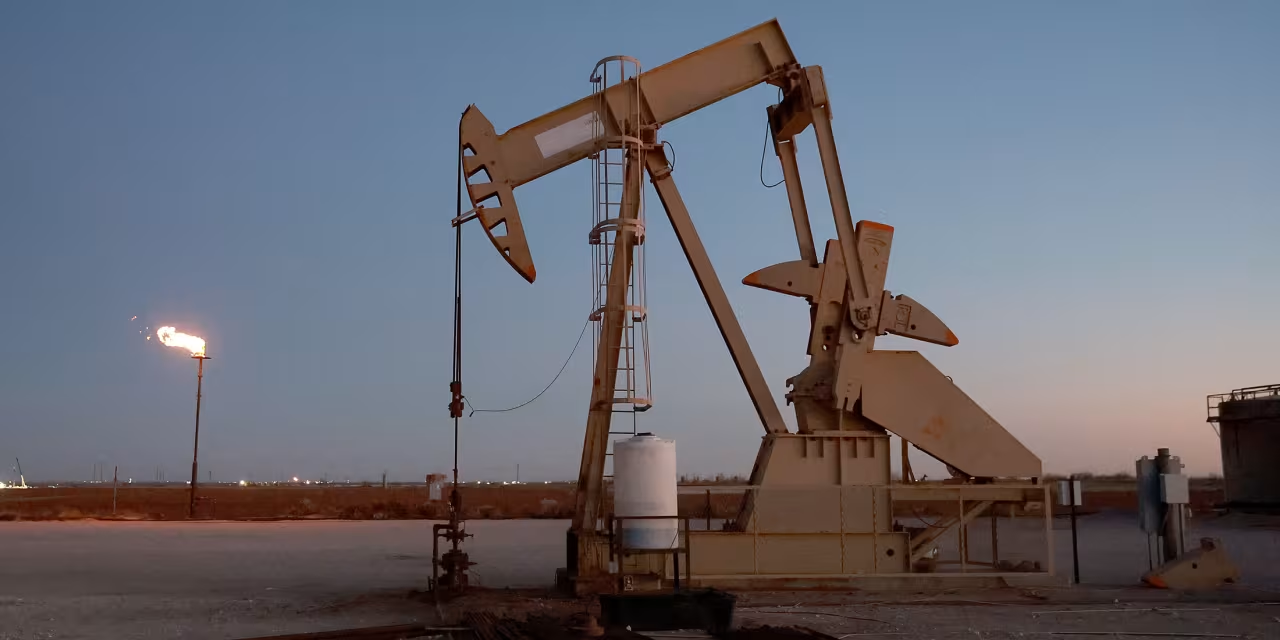
Two developments have altered the outlook for the rupee. Shifts in US economic data have reinforced expectations of Federal Reserve rate hikes this year, supporting the dollar and limiting capital flows into emerging markets such as India. At the same time, a precarious truce between the US and Iran has left oil markets highly sensitive to geopolitical developments, with even minor hostilities pushing up crude prices and adding pressure on the rupee.

Advertisement
Street Tempers Rupee View on Global CuesAgencies

Muted recovery Economists see rupee ending Sept just above 94 and Dec near 95, despite RBI’s dollar-inflow actions

“The floor for USD/INR for now is firmly established at 94.00-94.50, especially as the dollar has shown some appreciation bias recently,” said Yes Bank chief economist Indranil Pan. Expectations that the rupee’s upside will be limited comes despite anticipated dollar inflows from FCNR(B) deposits and the scheme for external commercial borrowing.


The central bank, in early June, offered a concessional swap facility for ECBs and FCNR(B)deposits to attract dollar inflows. Economists estimate these measures could attract between $40 billion and $70 billion over the coming months.
“The dollar index and geopolitics affecting crude oil prices are primary factors I will watch out for. But yes, we were initially looking at a possible rupee appreciation towards 93 levels, but those levels look a little remote now unless sustained FPI flows in equity emerge,” said Upasana Bhardwaj, chief economist at Kotak Mahindra Bank.”A sub-94 level cannot be ruled out, but that may be brief, because global risks from geopolitics and Fed rate hike remain and the Reserve Bank of India will likely step in to curb major appreciation in the INR in case of sustained inflows,” Bhardwaj said.

The rupee has depreciated 0.5% so far in fiscal 2027, partially recovering from a record low of 96.96 in late May when it was down 2.2%. In FY26, the local currency had weakened nearly 11%. Canara Bank chief economist Madhavan Kutty G also expects only modest appreciation in the rupee, but attributes it to an additional factor.

He believes the RBI’s FCNR(B) deposit and ECB scheme are unlikely to attract the scale of dollar inflows that some economists anticipate, reducing the ability of the measures to support the currency. He expects inflows of $35 billion from the RBI schemes.

“Even when the cease fire was stable around mid-June, the rupee appreciated to only 94.30 levels. Additionally, I don’t know if dollar inflows would be as high as expected because US yields are now rising,” Kutty said.

Advertisement

The rupee had risen to an eight-week high to close at 94.32 on June 19. “Yes, the balance of payments is expected to be positive in Q2, but this surplus is manufactured and that too at a high cost,” he said, adding: “So, how will the rupee appreciate?” Economists are largely unanimous that while the rupee may not see significant gains, a steep depreciation like that witnessed in April and May is also unlikely. RBI’s measures have effectively put a floor for currency depreciation, by improving the prospects for foreign currency inflows.

Continue Reading

Business

EasyJet agrees to surprise takeover bid as rival US firm swoops in

Published

on

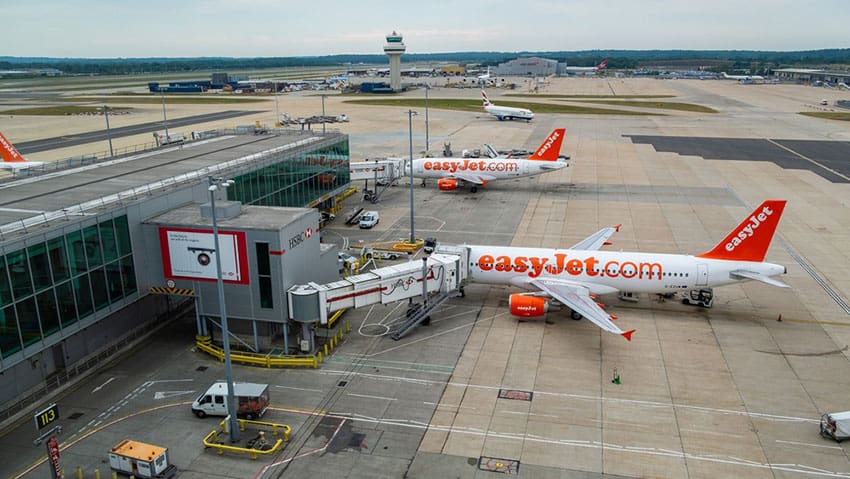
People climb steps onto an easyJet plane.

Susannah Streeter, chief investment strategist at Wealth Club, said Apollo was focusing on EasyJet’s potential.

“While the carrier has been buffeted recently by higher fuel costs and geopolitical turbulence, it has built a resilient European network, a strong balance sheet and, crucially, a fast-growing holidays business. That’s likely to be one of Apollo’s biggest attractions.”

“Package holidays generate higher margins and more predictable revenues than airline tickets alone,” she added.

“For passengers, it’s very much business as usual for now, with flights, bookings and loyalty schemes unaffected while any deal works its way through the regulatory process.”

Advertisement

Conroy Gaynor, senior consumer analyst at Bloomberg Intelligence, said while Apollo has “more explicitly” backed EasyJet’s growth model, “the need to improve the airline margin suggests any success in lowering costs won’t necessary translate to lower fares”.

The latest statement from EasyJet does not mean a deal has been confirmed. Apollo has been set a deadline of 17:00 on 7 August to either make a firm bid for EasyJet or walk away. Castlelake’s deadline to make a firm offer is 3 August.

Apollo’s move came after Castlelake had made a series of offers for EasyJet, which had initially been rebuffed by the carrier after it accused the US firm of trying to buy it “on the cheap”.

However, on Sunday, EasyJet said it had reached an agreement in principle with Castlelake, over a potential takeover offer worth around £5.2bn.

Advertisement
Continue Reading

Business

Why switching to save money is easier than you might think

Published

on

Amelia Lord is a white woman in her late 20s. She has shoulder length brown hair partly pulled back in a ponytail with frontpieces either side of her face. She has defined eyebrows and is wearing makeup, has a central nose ring and earrings, and is smiling at the camera. She wears a sleeveless black top. She is holding a pair of books and stands in front of a bookshelf with collections of books on it, including titles by Rebecca Yarros and the Harry Potter series by JK Rowling.

Changing your broadband or energy supplier, or even your bank, for a better deal is simpler than it used to be.

Continue Reading

Trending

Copyright © 2025