


Connect with us
DAPA Banner
DAPA Coin
DAPA
COIN PAYMENT ASSET
PRIVACY · BLOCKDAG · HOMOMORPHIC ENCRYPTION · RUST
ElGamal Encrypted MINE DAPA
🚫 GENESIS SOLD OUT
DAPAPAY COMING

Business

Asian stocks rally on Gulf breakthrough hopes, oil hits two-month lows

Published

on

Asian stocks rally on Gulf breakthrough hopes, oil hits two-month lows
Asian stocks joined a global rally on Friday on hopes a Middle East peace deal may finally materialise, while the dollar and bond yields dropped and oil prices fell to two-month lows, tempering inflation fears.

All eyes are on the hotly-awaited market debut of Elon Musk’s SpaceX, which has made history with the biggest-ever initial public offering. The IPO raised a record $75 billion, valuing the rocket and spacecraft manufacturer at $1.77 ‌trillion and making ⁠Musk the ⁠world’s first trillionaire.

President Donald Trump said on Thursday that a peace deal could be signed as soon as this weekend, hours after threatening more strikes on Iran. He said negotiations with Tehran had advanced to the highest levels of Iran’s leadership and had been approved by a broad coalition of regional powers.

Trump’s remarks follow repeated bouts of optimism from the president that have failed to yield a deal, rattling market sentiment.

Advertisement

Nonetheless, “This does look perhaps a bit more tangible than we have had,” said Ray Attrill, head of FX strategy at the National Australia Bank.


“If we hear something from Iran that sounds positive, the odds (of a peace deal) are clearly going to flip quite dramatically.”
The ⁠deal, if ‌confirmed, would be the most significant diplomatic breakthrough yet to end the three-month-old war, which has sent global energy prices sharply higher. The European Central Bank had to raise interest rates for the first time in nearly three years to ⁠nip war-driven inflation in the bud. Oil prices slumped to two-month lows on the news of an agreement. U.S. West Texas Intermediate (WTI) crude futures fell 1.9% to $86.08 a barrel, on top of a 2.6% drop overnight. Brent dropped 1.5% at $89.08 per barrel, having fallen nearly 3% overnight.

Japan’s Nikkei rose 4.3%, while Australia’s resources-heavy shares climbed 1.8%. South Korea’s KOSPI surged 8.3%.

Overnight, Wall Street rallied with the three major indexes registering their biggest daily gains since April 8 when the U.S. and Iran agreed to a temporary ceasefire. The Nasdaq jumped 2.5%, helped by expectations of a strong market debut of Musk’s SpaceX.

Data showed that U.S. producer prices increased more than expected in May, leading to the largest annual gain in 3-1/2 years as ‌the Middle East conflict drove up energy prices. On the labor market front, the number of Americans filing claims for unemployment benefits increased marginally last week, pointing to continued labor market resilience in early June.

Advertisement

Treasuries gained as hopes of a peace deal in the Gulf led markets ⁠to trim bets of a rate hike from the Federal Reserve this year. Pricing for a hike in October has come back to 36% from 51%.

Two-year Treasury yields were steady at 4.066% on Friday, having slumped 6 basis points overnight. The benchmark 10-year Treasury yields held at 4.4631%, after falling almost 8 bps overnight.

The dollar nursed losses on lower yields. The dollar index , which measures the greenback against its major peers, held at 99.78, having lost 0.4% overnight.

It edged up 0.1% to 160.19 yen, after retreating 0.4% on the prior session. Traders are still on high alert for any intervention from Japanese authorities as the yen stays below the critical 160 level.

Advertisement

Precious metals caught some relief from the lower dollar. Spot gold rose 0.2% to $4,222 an ounce, following a 3.5% jump overnight, while spot silver rose 0.3% to $67.52 an ounce, after a 5.8% gain. (Reporting by Stella Qiu Editing by Shri Navaratnam)

Continue Reading
Click to comment

You must be logged in to post a comment Login

Leave a Reply

Business

Yum Brands sells Pizza Hut to LongRange Capital and Yum China

Published

on

Yum Brands sells Pizza Hut to LongRange Capital and Yum China

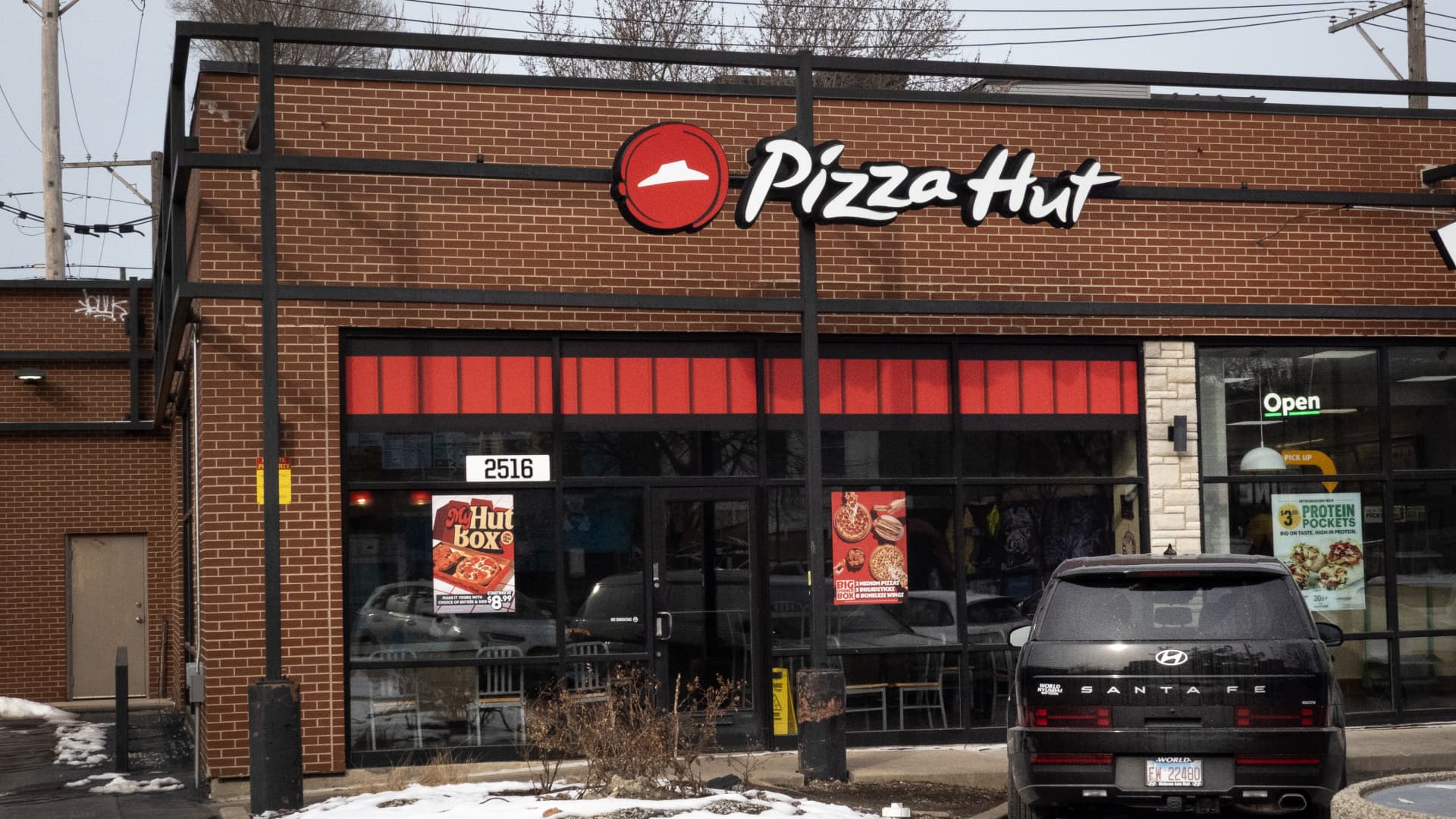
A sign hangs above the front of a Pizza Hut restaurant on Feb. 9, 2026 in Chicago, Illinois.

Scott Olson | Getty Images

Yum Brands on Tuesday announced it is selling Pizza Hut to private equity firm LongRange Capital for roughly $1.5 billion.

Advertisement

The deal excludes the pizza chain’s locations in mainland China; Yum China will acquire those in a separate transaction for about $1.2 billion.

The deals cap off years of struggles for Pizza Hut, which has weighed on Yum’s overall financial performance. In the U.S., the pizza chain has transitioned from the sit-down format and salad bars of yore to focus on delivery and carryout — far behind the curve. Rival Domino’s Pizza has gobbled up market share from Pizza Hut for years; third-party delivery apps like DoorDash have further stolen sales from the chain.

Shares of Yum were up nearly 2% in morning trading Tuesday.

In November, Yum said it was exploring strategic options for Pizza Hut. On Tuesday, the company said its leadership team and board determined that selling Pizza Hut would provide “the strongest path” to maximize shareholder value and give the pizza chain an ownership structure “tailored to its distinct markets, competitive strengths and long-term priorities.”

Advertisement

Across both deals, Yum expects to receive about $2.3 billion in net proceeds after taxes, closing adjustments and fees, excluding a possible earnout of $75 million by 2030 from LongRange. Yum also anticipates one-time expenses of about $85 million during the rest of 2026 tied to the transactions.

The company’s management will provide more details about the financial impact of the transactions during Yum’s second-quarter conference call on July 30. Yum expects the sales to close in the third quarter, subject to regulatory approval.

Brothers Dan and Frank Carney founded Pizza Hut in 1958 in Wichita, Kansas. A year later, they were franchising the concept.

In 1969, Pizza Hut went public. Just two years later, it was the biggest pizza chain in the world, although it lost that title in 2017 to Domino’s.

Advertisement

The deal severs Pizza Hut’s decades-long ties to Taco Bell and KFC, its sister brands in Yum’s portfolio.

PepsiCo bought Pizza Hut in 1977, marking the beverage giant’s entry into the restaurant business. By 1986, it also owned Taco Bell and KFC. When Pepsi spun off its restaurant unit in 1997, the holding company was dubbed Tricon Global Restaurants — later renamed to Yum.

At the end of 2025, Pizza Hut had nearly 20,000 locations across 108 countries and territories and reported $12.8 billion in annual system sales, according to regulatory filings from Yum. The U.S. is its biggest market, representing about 40% of its system sales, followed by China with roughly 20% of its system sales.

Correction: The headline was updated to reflect that the $2.7 billion sale value includes deals with both LongRange Capital and Yum China.

Advertisement
Choose CNBC as your preferred source on Google and never miss a moment from the most trusted name in business news.
Continue Reading

Business

Nestle USA completes removal of artificial colors from portfolio

Published

on

Nestle USA completes removal of artificial colors from portfolio

The company started its reformulation initiative a year ago. 

Continue Reading

Business

Yum Brands to sell Pizza Hut for $2.7B as company sharpens focus on Taco Bell, KFC growth

Published

on

Yum Brands in exclusive talks to sell Pizza Hut to LongRange Capital

Yum Brands announced on Tuesday that it is selling Pizza Hut to private equity firm LongRange Capital for $2.7 billion.

The transaction would mark a significant shift for one of America’s most recognizable pizza chains and underscores growing consolidation across the restaurant industry as operators navigate slowing consumer demand and higher costs.

Advertisement
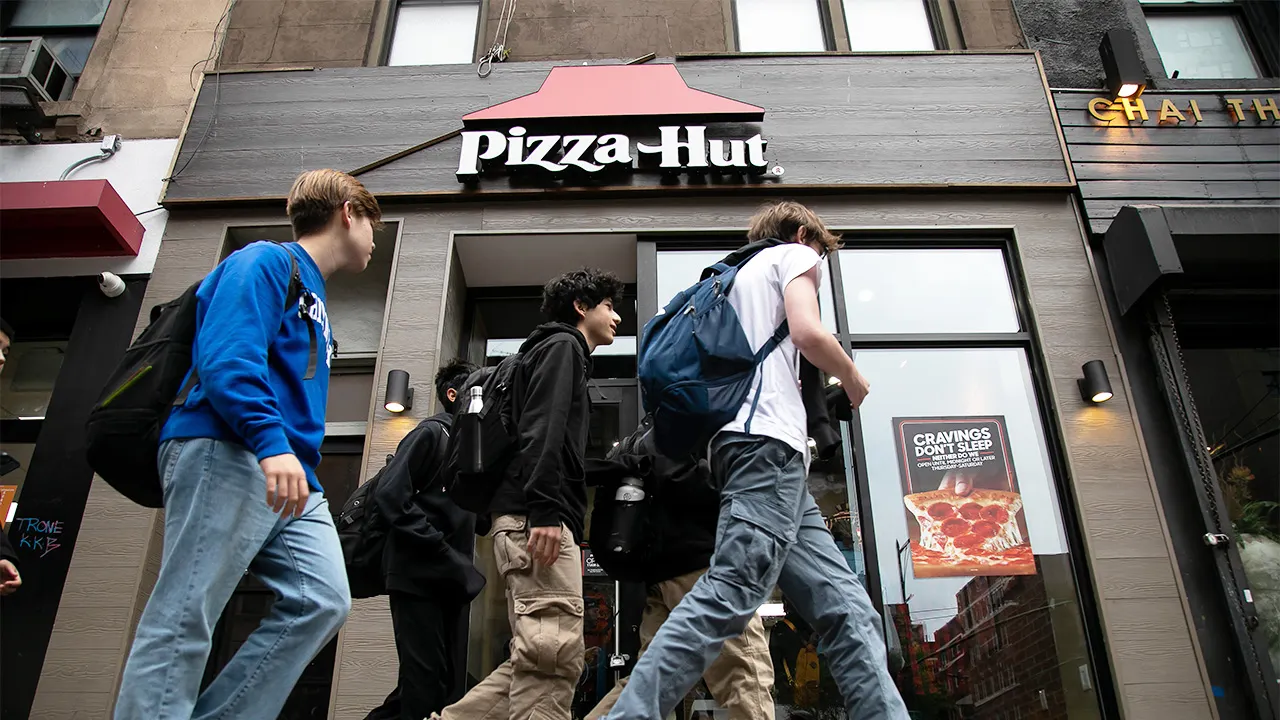
pizza hut location in nyc

A Pizza Hut restaurant in New York. (Michael Nagle/Bloomberg via Getty Images)

Yum said last year it was evaluating strategic alternatives for Pizza Hut, including a potential sale, as the chain worked to reverse a prolonged sales slump.

This is a breaking news story. Please check back for updates.

Advertisement
Continue Reading

Business

Goldman Sachs BDC: Why The Worst May Not Be Over For Income Investors (NYSE:GSBD)

Published

on

Goldman Sachs BDC: Why The Worst May Not Be Over For Income Investors (NYSE:GSBD)

This article was written by

Roberts Berzins has over a decade of experience in the financial management helping top-tier corporates shape their financial strategies and execute large-scale financings. He has also made significant efforts to institutionalize REIT framework in Latvia to boost the liquidity of pan-Baltic capital markets. Other policy-level work includes the development of national SOE financing guidelines and framework for channeling private capital into affordable housing stock. Roberts is a CFA Charterholder, ESG investing certificate holder, has had an internship in Chicago board of trade (albeit, being resident and living in Latvia), and is actively involved in “thought-leadership” activities to support the development of pan-Baltic capital markets.

Analyst’s Disclosure: I/we have no stock, option or similar derivative position in any of the companies mentioned, and no plans to initiate any such positions within the next 72 hours. I wrote this article myself, and it expresses my own opinions. I am not receiving compensation for it (other than from Seeking Alpha). I have no business relationship with any company whose stock is mentioned in this article.

Seeking Alpha’s Disclosure: Past performance is no guarantee of future results. No recommendation or advice is being given as to whether any investment is suitable for a particular investor. Any views or opinions expressed above may not reflect those of Seeking Alpha as a whole. Seeking Alpha is not a licensed securities dealer, broker or US investment adviser or investment bank. Our analysts are third party authors that include both professional investors and individual investors who may not be licensed or certified by any institute or regulatory body.

Advertisement
Continue Reading

Business

Victor Goh-linked company to divest long-vacant North Freo site

Published

on

Victor Goh-linked company to divest long-vacant North Freo site

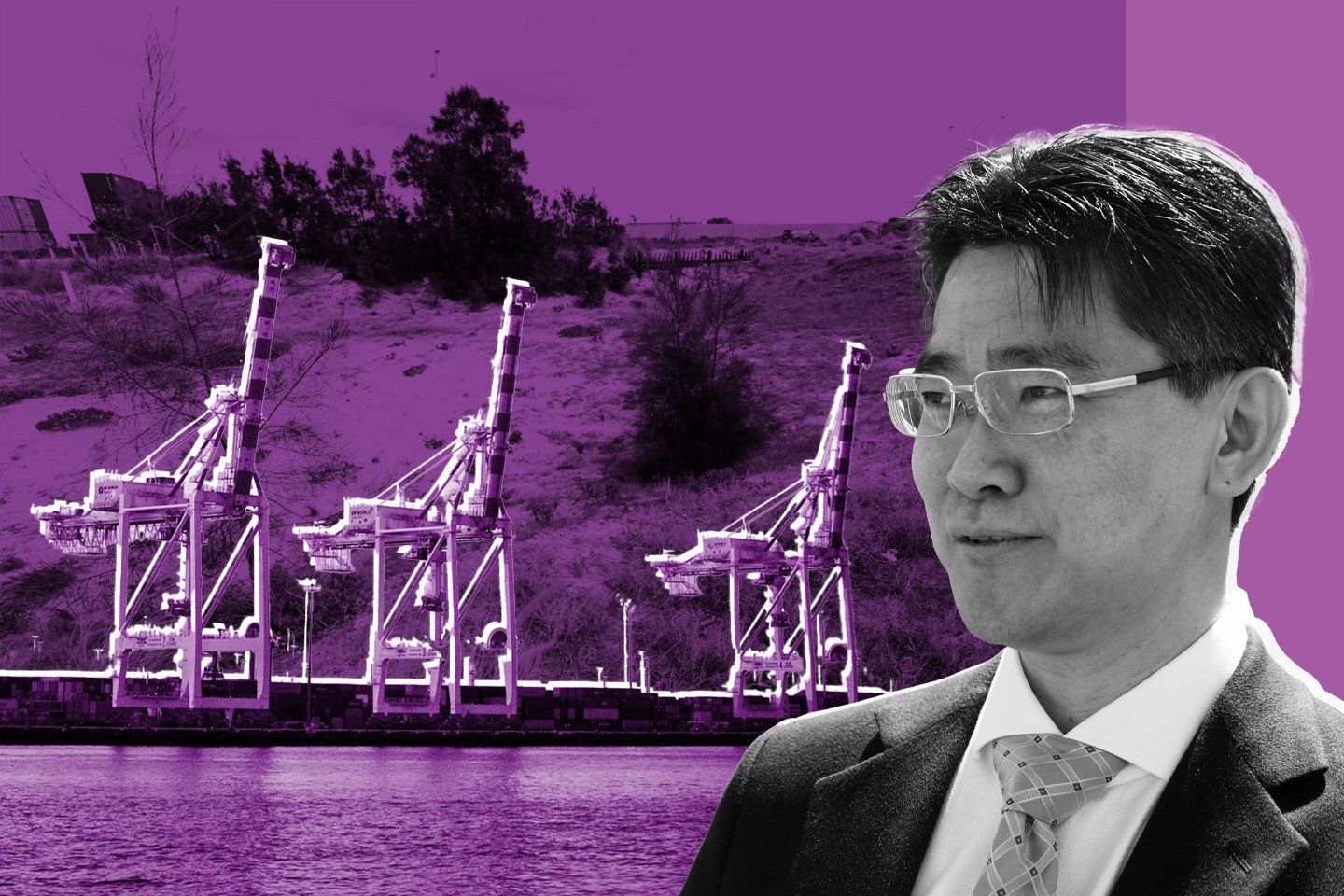
A North Fremantle site with views of Leighton Beach and links to elusive Malaysian developer Victor Goh is set to sell, after it sat vacant for more than a decade.

Continue Reading

Business

US and Iran Sign Electronic MoU to End War as Trump Orders Strait of Hormuz Reopened

Published

on

During his presidency Donald Trump referred to cryptocurrencies as a scam, but has since radically changed his position

WASHINGTON — The United States and Iran have signed a memorandum of understanding to end their conflict, with President Donald Trump announcing the immediate lifting of the naval blockade and the full reopening of the Strait of Hormuz by Friday, marking a significant de-escalation after more than three months of fighting that disrupted global energy markets.

The agreement, signed electronically, was confirmed by both sides on Monday. It ends military operations on all fronts, including in Lebanon, and sets the stage for 60 days of technical talks on Iran’s nuclear program and potential sanctions relief. The deal was mediated with assistance from Pakistan and is scheduled for formal signing in Switzerland on Friday.

Trump described the agreement as complete in a statement, authorizing the immediate removal of the blockade. “The deal with the Islamic Republic of Iran is now complete,” he posted on Truth Social. “Congratulations to all! I hereby fully authorize the toll-free opening of the Strait of Hormuz, and, simultaneously herewith, authorize the immediate removal of the Naval blockade. Ships of the world, start your engines. Let the oil flow!”

US officials told Reuters and AFP that the MoU was signed by Trump, Vice President JD Vance and Iranian Parliament Speaker Mohammad Bagher Ghalibaf. The document is described as a general framework, roughly a page and a half long, focusing on ceasefire implementation and initial confidence-building measures.

Advertisement

Key Provisions and Areas of Agreement

Iran’s National Security Council stated that the deal ends fighting across all fronts and lifts the US naval blockade on Iranian ports. Both sides have indicated that follow-up negotiations on the nuclear program and sanctions relief will occur during the 60-day period after the formal signing.

Vance emphasized in interviews that there has been no immediate sanctions relief or release of frozen assets. “There hasn’t been a single dollar of sanctions relief or unfrozen assets” from Washington or its allies, he told US media. He also confirmed there would be no tolls on traffic in the Strait of Hormuz during the initial 60-day window.

Iranian officials framed the agreement as a victory for Tehran following what they described as “historic resistance.” Ghalibaf wrote on X that the country had taken a “great step toward final victory.” Iranian media reported that at least three oil tankers and other ships carrying goods for Iran had already crossed the strait following the announcement.

Advertisement

Reactions in Iran, US and Israel

In Iran, the deal has been portrayed positively by state media, with officials highlighting the end of the blockade and the prospect of restored oil exports. However, some analysts note that full recovery of shipping through the strait may take time due to mine clearance, insurance costs and the need for incident-free transits.

In the United States, reactions have been sharply divided along partisan lines. Republicans have largely welcomed the agreement as a diplomatic success, while Democrats have criticized it. Senator Richard Blumenthal likened the outcome to the UK’s Suez Canal crisis, suggesting it represented a strategic setback. Republican Senator John Thune said he expected Congress to be briefed and potentially vote on aspects of the deal.

Israel has expressed reservations. Prime Minister Benjamin Netanyahu stated that Israeli troops would continue to occupy southern Lebanon despite the broader agreement. Members of his cabinet have called for continued operations against Hezbollah, indicating that Israel does not consider itself bound by the US-Iran framework on all issues.

Advertisement

In Lebanon, the ceasefire has been welcomed, though Israeli attacks continued on Monday, killing at least one person. Thousands of displaced Lebanese have begun returning to southern areas amid ongoing exchanges of fire.

Global and Economic Repercussions

Ukrainian Foreign Minister Andrii Sybiha welcomed the MoU, hoping it would encourage renewed US efforts to end the war with Russia. Japanese officials expressed concern about continued Israeli actions in southern Lebanon.

Oil prices rose modestly following the announcement, with Brent crude gaining 0.3% to $83.42 per barrel and West Texas Intermediate rising 0.3% to $81.12 per barrel. Traders remain cautious, noting that full resumption of shipping could take weeks due to logistical challenges.

Advertisement

The International Energy Agency and shipping experts have warned that undersea mines, elevated insurance premiums and the need for verified safe passages mean recovery will be gradual rather than immediate. Saman Rezaei, head of Iran’s merchant marine union, told Al Jazeera that the transit system “will never return to its pre-war condition,” emphasizing the need for sustainable peace.

Path to the Agreement and Next Steps

The conflict, which began more than 100 days ago, involved direct US and Israeli actions against Iran. Back-channel diplomacy intensified in recent weeks, leading to the current framework. The MoU serves as an initial step rather than a comprehensive settlement, with 60 days allocated for deeper negotiations on nuclear issues.

Questions remain about the handling of nuclear material, the timeline for sanctions relief and verification mechanisms. Both sides have expressed cautious optimism, but implementation will require sustained engagement and international oversight.

Advertisement

For the United States, the deal represents a foreign policy achievement amid domestic political considerations. For Iran, it offers relief from economic isolation and the prospect of normalized trade. Regional actors, particularly Israel and Lebanon, will continue to influence the stability of the agreement.

As the world watches the situation unfold, the focus shifts to the formal signing in Switzerland and the critical 60-day period that follows. Success in these talks could mark a turning point for Middle East stability, while any setbacks risk renewed tensions in a region long plagued by conflict.

The US-Iran memorandum of understanding brings a tentative end to active hostilities, but its long-term impact will depend on the commitment of all parties to the follow-up process. For now, the reopening of the Strait of Hormuz offers hope for economic recovery and reduced global energy risks, though challenges remain in translating the agreement into lasting peace.

Advertisement
Continue Reading

Business

CapitalandCentric targets more Hull city centre regeneration after Albion Square revamp

Published

on

Business Live

CapitalandCentric, the developer behind the multimillion-pound Albion Square regeneration in Hull city centre, says the project could be the first of many schemes it delivers in the city

A CGI of how the Albion Square development will look

A CGI of how the Albion Square redevelopment will look(Image: Capital&Centric)

The ambitious transformation of Hull city centre’s Albion Square could hopefully prove the “first of many” regeneration schemes by a well-regarded developer, according to one of its founders. Last month, social regeneration specialists CapitalandCentric, co-founded by Tim Heatley and Adam Higgins, were confirmed as the preferred lead development partner for the sweeping overhaul of Albion Square by Hull City Council.

North West-based CapitalandCentric is currently advancing 14 neighbourhood schemes across the UK, having already delivered 11 projects in major cities including Liverpool, Manchester and Sheffield. The firm boasts an impressive pipeline of regeneration developments comprising more than 6,000 homes, with a combined value of nearly £2bn — including ambitious multimillion-pound proposals for Hull city centre.

The developer has built a formidable reputation for breathing new life into areas, creating thriving destinations in which people can live, work and socialise. Co-founder Tim Heatley confirmed the firm is eager to deliver hundreds of homes — in excess of 200 properties available for rent — alongside a range of other amenities as part of the Albion Square development.

He said: “It probably seems like this has happened all of a sudden but we’ve actually been looking to try and do something in Hull for a long time. Hull suits our strategy of investing and thinking long-term about how we can transform often overlooked, or under-invested, places.

Advertisement

“Hull definitely is on that list – it’s punching below its weight in some ways. It could be much more than it currently it and it hasn’t had the benefit of some of the core cities’ investment. The scale of project was important and an ability to be able to move at pace as well to make something happen, and it’s got a huge public area, so Albion Square had the right hallmarks for us of a CapitalandCentric project.”, reports Hull Live.

“It’s in excess of 200, possibly up to 300 homes and there will be other other things around them – restaurants, bars and cafes. We’re not necessarily looking at additional retail because we feel places are often over-retailed. I think there’s lots of opportunities for retail that exists in the square and around it, but as we are an operator as much as a developer, we’re going to provide additional facilities to the residents.

“So that will include things like a mini cinema space, a gym and a residents’ lounge area and things like a yoga and pilates studio, and other similar sorts of things. There will perhaps be some roof terraces, public squares and public spaces, and perhaps some private gardens as well.”

CapitalandCentric keeps its rental values at lower, more accessible levels in towns and cities requiring regeneration, compared to those in more established urban centres such as Leeds. It is this business model that enables the Manchester-based firm to deliver its developments.

Advertisement

Mr Heatley added: “In terms of demographics and rental values, Stoke on Trent is a good example. Rents are much lower than they are in core cities, such as Manchester and Leeds. We have to think long term about how we can make it viable. How is it feasible to do these sorts of scale of projects and to that kind of quality, especially with super energy efficient, and great amenities, great facilities and all the furnishings? That’s the challenge.

“We think about it over several years. Rather than build it and then flog it off to highest bidder or separate them out, we’re going to keep all of the completed project together, and we will rent them out, with rents that are affordable to local working people, and hopefully attract new people to live in Hull as well.

“It’s important to attract new people, to want to live in Hull. So if we can keep the rent affordable, and focus on people that might be downsizers, young professionals or young families, then we can start to change the perception of that part of Hull a lot and make it feel like a great place to live.

“For our business to succeed, we’ve got to make sure that it is accessible in terms of pricing. Over time, if we’ve done a good job of regeneration, I think the rent will improve and over several years, a profit for us will emerge – because we do have to make a profit if we’re going to do this.”

Advertisement

Mr Heatley is eager for Albion Square to mark only the beginning of the firm’s involvement with Hull. The company already has two developments in Liverpool, while Manchester is home to six.

He added: “Wherever we have started, whatever city we’ve started to develop, we have continued to develop and still are now. That’s a really good test of ‘are we doing a good job?’ Do people like what we do? And is it successful? So hopefully it’s the first of many things we will do in Hull.”
Continue Reading

Business

Do online saving methods really work?

Published

on

Do online saving methods really work?

Do online saving methods really work?

Continue Reading

Business

Micron: Playing The Expectations Game

Published

on

Micron: Playing The Expectations Game

Micron: Playing The Expectations Game

Continue Reading

Business

Why is Thames Water in so much trouble?

Published

on

Why is Thames Water in so much trouble?

Thames Water’s lenders have submitted a new rescue plan to save the firm, but how did it end up in this state?

Continue Reading

Trending

Copyright © 2025