
Business
At Close of Business podcast August 6 2026

Yes. Corporate subscriptions are available for teams and organisations, with discounted rates as user numbers increase. Pricing starts from $1,625 + GST per user.
Get in touch
to discuss the right option for your organisation.
Business News subscriptions are used by executives, investors, consultants and professionals who need to stay informed and make better decisions about the WA market. When you subscribe you’ll get
- Unlimited access to WA’s most trusted business journalism
- Data & Insights — detailed profiles of WA companies, people, projects and deals
- MyBN — a personalised feed based on the companies, people and sectors you follow
- Special publications and industry reports
- Daily and weekly email newsletters
Data & Insights is a research tool built specifically for the WA market. It draws on more than 30 years of Business News reporting, updated regularly to reflect what’s happening now. Use it to:
- Look up detailed profiles of WA companies, including financials, directors and ownership
- Find decision-makers and track their career movements
- Research live and completed projects across WA industries
- Monitor deals, appointments and market activity
- Access industry rankings and league tables
Data & Insights is updated daily by our dedicated research team, which uses the latest announcements, ASX filings and editorial coverage to keep our person, company, list and project records up to date.
Business News welcome all opportunities to make our dataset accurate, complete and current, so if you have an update request, please email the team at
general@businessnews.com.au, and we’d be happy to assist.
MyBN
is part of every subscription. It’s your personalised view of Business News. You can follow the companies, people, sectors and projects that matter to you, and get a news feed and alerts tailored to your interests. You can save articles to read later and retain only what you need.
Only subscribers have full access to all content on the Business News website.
If staying informed about the WA economy is part of your job, and/or you’re looking for networking opportunities in WA, Business News is built for you.
Business News subscribers are:
- Executives and directors tracking competitors, clients and market movements
- Investors and advisers researching companies, deals and industry trends
- Consultants and professionals staying across sectors relevant to their clients
- Business owners looking for leads, context and market intelligence
Most Business News publications cover national or global markets. Business News is focused entirely on Western Australia, which means the journalism, the data and the intelligence are all built around WA companies, people and projects — not adapted from a national feed. Data & Insights, included with every subscription, combines more than 30 years of WA-specific editorial research with live business data. There’s no comparable product for the WA market.
The Morning Digest Email provides a comprehensive wrap of the major headlines, relevant to WA business, and includes with a snapshot of the overnight news covering oil, gold and ASX-listed companies.
The Afternoon Wrap Email focuses on the news covered by our team of journalists during the course of the working day, including exclusive stories and analysis, all of which relates to WA business and the local economy.
The BN Weekender Email contains a wrap of the Business News from the week that was, highlighting the top stories in each area of WA business.
Sign up for free.
We’re happy to help.
Get in touch
and our team will come back to you.

The midwife said that she had to budget £250 a month to travel into work.
“They’re kicking us whilst we’re down, and I could get more as a cleaner. Some of us are doing cash-in-hand work in pubs,” she said.
“It sounds ridiculous. How can you be such a qualified professional, but you’re getting more money pulling pints behind a bar?”
The trust said that all income from the car parks went firstly towards maintenance and then “directly into patient care and services”.
Reducing bank shift wages caused more than financial issues, the midwife added.
“We’re short-staffed, we’re asking people to work outside of their specialties,” she said.
Medway Council deputy leader Teresa Murray said he wanted to meet with leadership about this issue.
“The hospital has a £47m deficit and this is their decision to make, but overall, this is not making anything any better,” she said.
Follow BBC Kent on Facebook, external, on X, external, and on Instagram, external and listen to BBC Radio Kent on Sounds. Send your story ideas to southeasttoday@bbc.co.uk, external or WhatsApp us on 08081 002250.

Losing your National Identity Card for Overseas Pakistanis (NICOP) can be stressful, especially if you live in the United Kingdom and need the document for travel, legal identification, or official work in Pakistan. A NICOP is one of the most important documents for overseas Pakistanis because it confirms your Pakistani citizenship and allows visa-free travel to Pakistan. If your card is lost, stolen, or damaged, it is important to begin the replacement process as soon as possible to avoid delays in future travel or legal matters.
Fortunately, replacing a lost NICOP is a straightforward process when you understand the required documents and application steps. This guide explains everything UK residents need to know, including the documents required, the online application process, common mistakes to avoid, and useful tips for receiving your replacement card without unnecessary delays.
Why a NICOP Is Important
A NICOP is much more than an identity card. It serves as official proof of Pakistani citizenship for Pakistanis living overseas.
Some of the main benefits include
- Visa-free travel to Pakistan
- Proof of identity for legal matters
- Property ownership verification
- Banking and financial services
- Government documentation
- Family registration purposes
Without a valid NICOP, you may experience delays when travelling or dealing with official procedures in Pakistan. Replacing a lost card quickly helps prevent unnecessary complications.
What to Do Immediately After Losing Your NICOP
The first step after discovering your NICOP is missing is to stay calm and confirm that it has actually been lost rather than misplaced.
If you cannot locate your card
- Search thoroughly through personal belongings.
- Check recent travel bags and wallets.
- Look through important document folders.
- Ask family members if they have seen it.
If you believe your NICOP has been stolen, you should keep a record of the incident. While a police report may not always be required for replacement, it can be useful if your identity is ever questioned.
It is also helpful if you have a scanned copy or photograph of your previous NICOP, although this is not always essential.
Documents You’ll Need for a Replacement
Preparing your documents before starting the application will make the process much smoother.
You may be asked to provide
- Valid Pakistani passport
- Previous NICOP details if available
- Recent passport-size photograph
- Proof of UK residence
- Supporting family documents if applicable
Ensure all uploaded documents are clear and easy to read.
Blurry images, incomplete scans, or incorrect file formats can delay the processing of your application.
Taking time to organize your paperwork before applying can significantly reduce waiting times.
Step-by-Step Process to Replace a Lost NICOP
Most overseas Pakistanis living in the UK now complete their applications online.
The general process includes:
Create Your Account
Register using your email address and verify your account.
Choose the Correct Service
Select the option for a duplicate or replacement NICOP rather than a first-time application.
Complete the Application Form
Enter your information exactly as it appears on your passport and previous records.
Upload Documents
Submit clear scanned copies of the required documents.
Complete Biometric Verification
Provide fingerprints and facial photographs according to the official instructions.
Many applicants complete these steps through Pak Id, which allows online document submission and application tracking from anywhere in the UK.
Common Mistakes That Delay Replacement Applications
Many replacement applications take longer than expected because of simple mistakes.
Some of the most common include:
Incorrect Personal Details
Always ensure names, dates of birth, and passport numbers exactly match your official records.
Poor Document Quality
Dark or blurry scans often require resubmission.
Missing Documents
Forgetting to upload supporting documents can delay verification.
Outdated Family Records
If your marital status or family information has changed, update your records before submitting your application.
Waiting Too Long
Many people postpone replacing a lost NICOP until just before travelling.
Applying early gives enough time to resolve any unexpected issues.
Finding Help While Living in the UK
Although many applicants successfully complete the replacement process themselves, some prefer additional assistance.
People searching for Nadra Card UK often want guidance with
- Duplicate NICOP applications
- Document preparation
- Record corrections
- Family registration updates
- Biometric verification
- Online application support
Receiving advice before submitting your application can reduce the likelihood of delays and improve overall accuracy.
Professional guidance is particularly useful for applicants dealing with older records or previous application rejections.
Tips for Receiving Your Replacement NICOP Faster
While processing times vary, there are several ways to help your application move smoothly.
Useful recommendations include
Apply immediately after discovering the loss.
- Double-check every detail before submission.
- Keep digital copies of all uploaded documents.
- Monitor your application status regularly.
- Respond quickly if additional information is requested.
- Ensure your passport information matches your NADRA records.
- Renew supporting documents before they expire if necessary.
Many applicants looking for Nadra Card Renewal Manchester services are seeking advice on document preparation and application reviews. Careful preparation before submitting your replacement request can help prevent avoidable delays and improve your overall experience.
Conclusion
Losing your NICOP while living in the UK can be worrying, but replacing it is a manageable process when you understand the correct steps. Acting quickly, preparing accurate documents, and carefully reviewing your application can significantly reduce delays.
Whether you need your NICOP for travel, legal identification, banking, or family matters, keeping your documentation current is essential. By gathering the required paperwork, following the online application process carefully, and avoiding common mistakes, you can replace your lost NICOP with confidence.
If you need additional guidance during the process, resources and local support related to Nadra Card UK can help you better understand the application requirements. Likewise, applicants searching for Nadra Card Renewal Manchester can benefit from practical advice on document preparation and renewal procedures. Staying organized and applying as soon as possible is the best way to ensure a smooth replacement process and continue enjoying uninterrupted access to important services as an overseas Pakistani.

Travere Therapeutics Q2 Earnings: Why I'm Downgrading To Hold (Again)

Transport for London has granted private hire vehicle licences to a fleet of autonomous cars using technology from British firm Wayve, on the condition that a qualified human driver is present and remains responsible for the vehicle. Journeys could begin later this year.
Uber said inspectors had confirmed that the vehicles met all of TfL’s policy and safety standards.
The cars being used are electric Ford Mustang Mach-Es, modified with camera pods on the roof and mirrors as well as small radar units.
The licensing completes the “triple-lock” requirement for private hire trips, under which the operator, driver and vehicle must all hold licences with the same licensing authority.
A TfL spokesperson said safety was its “top priority” and that any new vehicle licensed to carry passengers in London must align with its target of eliminating all deaths and serious injuries on London’s roads by 2041.
For the vehicles to operate without a human driver, a separate approval would be needed from the Driver and Vehicle Standards Agency. The Department for Transport opened applications in May for operators to run taxi and bus-style self-driving services under its pilot scheme.
Uber said some of the 100,000 people who signed up to express interest in experiencing robotaxis would be offered rides in the vehicles “later this summer”, ahead of a full public launch.
Caroline Russell AM, chair of the London Assembly Transport Committee, said the decision was expected. “The approval for up to 15 vehicles on a trial basis for a year, is not entirely unexpected,” she said.
“The London Assembly Transport Committee has been investigating the proposed rollout of autonomous passenger vehicles in depth for the past few months. We’ve spoken to industry experts, operators, representatives from the Taxi & Private Hire industries, Transport for London and the Department for Transport,” she said, adding that the committee had discussed the international experience of San Francisco and Oslo with experts from those cities.
“Uber and Wayve had been clear they would start by operating with a licenced private hire driver at the wheel, without actually operating in fully autonomous mode.
“The Committee still has many questions about the safeguarding of passengers, so we would not be expecting TfL to give consent at this stage for full autonomous operation. Those concerns and recommendations will be published in our report, which is due out in the next few weeks.”
The licences arrive amid growing competition to bring autonomous ride-hailing to the capital. Waymo, the self-driving arm of Alphabet, has confirmed plans to launch its own autonomous ride-hailing service in London in 2026 with fleet partner Moove, while Lyft has partnered with Baidu on UK expansion.
Wayve, the London-headquartered company whose technology powers the newly licensed fleet, signed a Memorandum of Understanding with the Department for Business and Trade in May aimed at moving automated vehicles from prototype to commercial deployment on British roads.
Ministers estimate that the autonomous vehicle sector could add £42bn to the UK economy and create close to 40,000 jobs by 2035, a figure at the centre of London’s wider contest between black cabs and driverless operators, which Business Matters has examined in depth.

Amy Ingham
Amy Ingham is a reporter at Business Matters, covering UK business news with a focus on breaking news, business policy, late payments and insolvency. She joined the magazine in 2026 after completing the NCTJ Diploma in Journalism at Harlow College’s journalism school. Her recent reporting includes British Steel’s nationalisation and its impact on SME suppliers, the decline in late payments by large firms, and Insolvency Service director disqualifications. Reach her at aingham@cbmeg.co.uk.
Business
KOSPI Plunges Nearly 5% as Chip Stock Selloff Triggers Trading Halt as SK Hynix and Samsung Tumble

SEOUL — South Korea’s benchmark KOSPI index plunged 4.58% Thursday, falling 301.88 points to close at 6,296.38, as a sharp selloff in the country’s dominant memory chipmakers triggered an automatic trading halt and rattled a market that has been one of the world’s most volatile in 2026.
The decline came during a turbulent Asian trading session in which the KOSPI briefly plunged as much as 5%, activating the exchange’s “sidecar” mechanism, an automatic circuit breaker that temporarily suspends programmatic sell orders once futures fall a set threshold within a short window. Thursday’s drop marked the latest in a string of sharp single-session swings that have defined trading on the Korea Exchange throughout the year.
Chipmakers Lead the Losses
The decline was driven overwhelmingly by South Korea’s two largest semiconductor companies, which together account for roughly half of the KOSPI’s total market capitalization. SK Hynix plunged 10.37% to close at 1,495,000 won, or approximately $1,049, while Samsung Electronics fell 6.30% to 230,500 won. The weakness in both stocks weighed heavily on the broader index given their outsized influence on its overall performance.
The selloff extended beyond Korea’s borders. Japan’s Nikkei 225 fell 617.18 points, or 0.93%, to close at 65,683.26, with Japanese memory chipmaker Kioxia slumping 10.24% to 48,740 yen, or roughly $309. SoftBank Group shares fell 4.41% to 5,695 yen even after the company reported a first-quarter net profit of 347.33 billion yen, far exceeding the market’s estimate of 165.83 billion yen, illustrating how thoroughly sector-wide pessimism overshadowed individual company results during the session.
A Global Memory Chip Reassessment
Analysts pointed to weakness in U.S. memory chip companies SanDisk and Western Digital as a key trigger behind the broader Asian selloff, with the decline in those American stocks feeding directly into the pessimism surrounding SK Hynix, Samsung and Kioxia during Thursday’s session. Other Korean companies with significant technology and industrial exposure also posted steep losses, including SK Square, down 10.2%, and SK Inc, down 9.1%, while Hyundai Motor fell 1.6%, HD Hyundai Heavy Industries slid 1.2%, and LS Electric dropped 3.8%.
Market analysts have described the pullback as reflecting renewed caution around the memory chip industry’s cyclical outlook rather than a broader systemic risk-off event across markets. Frank Benzimra, head of Asia equity strategy at Societe Generale in Hong Kong, has previously characterized similar episodes of sector-specific selling in the Korean market by noting that the stocks experiencing the steepest declines tend to be those in which investors are carrying the most leverage, adding that it remains difficult to predict when such selloffs will run their course.
A Bright Spot Amid the Selloff
Not every part of the Korean market moved in tandem with Thursday’s decline. The tech-heavy KOSDAQ index bucked the broader trend, rising a modest 0.26% even as the main KOSPI board tumbled, suggesting the selloff was concentrated primarily among the large-cap semiconductor names that dominate the KOSPI rather than reflecting broad-based selling across smaller and mid-cap Korean equities.
South Korea’s underlying economic fundamentals also offered some counterbalance to Thursday’s stock market weakness. The country reported a record current account surplus of $49.73 billion in June, driven by strong semiconductor exports, a figure that reinforced the broader strength of Korea’s export sector even as chip stock valuations came under renewed pressure. Separately, reports of progress toward an interim transit arrangement between Iran and Oman helped ease broader concerns over potential disruptions to shipping through the Strait of Hormuz, providing some support to global risk sentiment that helped limit the scale of Thursday’s losses relative to some of the market’s sharper declines earlier this year.
A Year Defined by Extreme Volatility
Thursday’s plunge is only the latest chapter in what has been an extraordinarily volatile year for Korean equities. The KOSPI reached an all-time high of 9,385.59 in June, a level that reflected a structural re-rating of Korean technology stocks amid surging global demand for AI infrastructure and memory chips. That rally was symbolically capped in late June when SK Hynix’s market capitalization briefly overtook Samsung Electronics, marking the first time in more than 25 years that any Korean company had claimed the top spot on the exchange.
Since that peak, however, the index has experienced repeated sharp reversals, including multiple single-session declines of 5% to 10% and numerous circuit breaker and sidecar activations throughout the year, a pace of volatility that market commentators have said has already exceeded the frequency seen during the 2008 global financial crisis. Despite the scale of these swings, the KOSPI has remained among the world’s best-performing major indexes for 2026 on a cumulative basis, reflecting just how dramatic the market’s earlier rally had been before this year’s series of sharp pullbacks began eroding those gains.
Retail Investors Feel the Strain
South Korea’s famously risk-tolerant retail investor base has been particularly exposed to the market’s swings, with many traders having built concentrated positions in AI-linked technology stocks using margin financing during the earlier rally. As prices have periodically reversed sharply, some investors have described a growing sense of frustration with the market’s extreme volatility, with public criticism at times directed toward government economic policy amid the repeated boom-and-bust cycles.
What Comes Next
With Thursday’s decline once again concentrated heavily in the semiconductor sector that has both driven the KOSPI’s remarkable gains and fueled its sharpest reversals this year, investors are likely to continue watching global memory chip demand signals closely in the sessions ahead. The interplay between Korea’s export-driven economic strength, reflected in its record current account surplus, and the continued volatility surrounding its dominant technology stocks is expected to remain the central tension shaping the direction of the Korean market for the remainder of 2026.

More than 120 MPs and peers have written to Chancellor John Healey calling for an urgent review of the student loan repayment system, which they say places an “unsustainable burden on the next generation of workers”.
The open letter was coordinated by the campaign group Rethink Repayment. Its cross-party signatories include Laura Trott, the Conservative shadow education secretary, and Munira Wilson, the Liberal Democrats’ education spokeswoman, as well as MPs who hold Plan 2 student loans themselves.
The letter does not single out a particular loan plan or nation. The debate has, however, centred on Plan 2 loans, taken out by students in England between September 2012 and July 2023 and still issued in Wales. More than half of graduates who responded to a Treasury Committee survey this year said they would not take out a loan again.
Plan 2 graduates repay 9 per cent of earnings above the repayment threshold.
The signatories say that “successive governments’ adjustments to repayment thresholds”, together with high interest and marginal tax rates, are “placing an unsustainable burden on the next generation of workers”.
Many middle-income graduates, the letter says, “see less than half of any hard-earned pay rise due to a combination of income tax, national insurance and student loan repayments”.
It adds: “We are united in the belief that the current repayment framework requires urgent review… to ensure it is fair, sustainable, and supportive of aspiration.”
The letter refers to a decision taken last November by then-Chancellor Rachel Reeves to freeze the Plan 2 repayment threshold at £29,385 between 2027 and 2030, rather than allowing it to rise with inflation. The freeze means graduates will start repaying sooner than they otherwise would have done, and will repay more as their salaries rise.
Campaigners want that decision reversed, a call echoed by the Treasury select committee in its report last month following its inquiry into student loans.
The committee’s report referenced a BBC investigation which found the government compared Plan 2 repayments to £30-a-month phone contracts in promotional presentations to teenagers a decade ago. This was “inaccurate for higher earners”, the report said, and “amounted to mis-selling”.
Last week, Education Secretary Lucy Powell said the interest rate on Plan 2 loans was “egregious” and that the issue was at the top of her in-tray.
Tom Gordon, Liberal Democrat MP for Harrogate and Knaresborough, who signed the letter, told the BBC he could not “see an end in sight” to his own Plan 2 repayments and expected his debt to be written off after 30 years in line with the repayment terms.
“If someone earning an MP’s salary still isn’t likely to repay their student loan in full, what chance does someone on a much lower income have?” Gordon asked, describing it as “an issue of fairness”.
“Governments have changed the repayment terms and increased interest rates after people had already signed up,” he said. “No bank or mortgage lender could retrospectively rewrite the terms of a loan like that. It simply wouldn’t be allowed. So why should the government be able to do it?”
Oliver Gardner, founder of Rethink Repayment, said the letter showed “the student loans crisis” was not “a partisan issue”.
“We believe that now is the time to create a system that is fair and that unshackles millions of graduates from mountains of student loan debt,” he said.
A Department for Education spokesperson said: “We know the system we inherited is broken and unfair, and some graduates feel the weight of this more strongly.
“We want to make sure the student loans system works better for everyone and are considering our response to the Treasury Committee’s inquiry.”
Amy Ingham
Amy Ingham is a reporter at Business Matters, covering UK business news with a focus on breaking news, business policy, late payments and insolvency. She joined the magazine in 2026 after completing the NCTJ Diploma in Journalism at Harlow College’s journalism school. Her recent reporting includes British Steel’s nationalisation and its impact on SME suppliers, the decline in late payments by large firms, and Insolvency Service director disqualifications. Reach her at aingham@cbmeg.co.uk.


Jussi Askola is the President of Leonberg Capital, a value-oriented investment boutique that consults hedge funds, family offices, and private equity firms on REIT investing. He has authored award-winning academic papers on REIT investing, has passed all three CFA exams, and has built relationships with many top REIT executives.
He is the leader of the investing group High Yield Landlord, where he shares his real-money REIT portfolio and transactions in real-time. Features of the group include: three portfolios (core, retirement, international), buy/sell alerts, and a chat room with direct access to Jussi and his team of analysts to ask questions. Learn more.
Analyst’s Disclosure: I/we have a beneficial long position in the shares of HOM.U:CA; UDR; NRR.UN; GOODO; NET.UN:CA either through stock ownership, options, or other derivatives. I wrote this article myself, and it expresses my own opinions. I am not receiving compensation for it (other than from Seeking Alpha). I have no business relationship with any company whose stock is mentioned in this article.
Seeking Alpha’s Disclosure: Past performance is no guarantee of future results. No recommendation or advice is being given as to whether any investment is suitable for a particular investor. Any views or opinions expressed above may not reflect those of Seeking Alpha as a whole. Seeking Alpha is not a licensed securities dealer, broker or US investment adviser or investment bank. Our analysts are third party authors that include both professional investors and individual investors who may not be licensed or certified by any institute or regulatory body.
Check out what’s clicking on FoxBusiness.com.
Budget Australian airline Jetstar will begin charging passengers for storing carry-on bags in the overhead compartments as part of an overhaul of the airline’s cabin baggage policy.
The new policy will take effect in February 2027, costing travelers between A$25 and A$52 ($18 and $37 USD), depending on the route, to stow large bags on a one-way flight.
Bags stowed in the compartments can weigh up to 22 pounds and will no longer be weighed by airline staff before boarding, removing the current 15-pound limit. This pre-purchase “Priority Carry-on” option also includes early boarding access.
Passengers will still be allowed to stow smaller bags such as a purse, laptop bag or backpack that falls within specified measurements under the seat in front of them at no charge.
AIRBUS JET COMPLETES 24-HOUR FLIGHT IN PUSH FOR WORLD’S LONGEST COMMERCIAL ROUTE
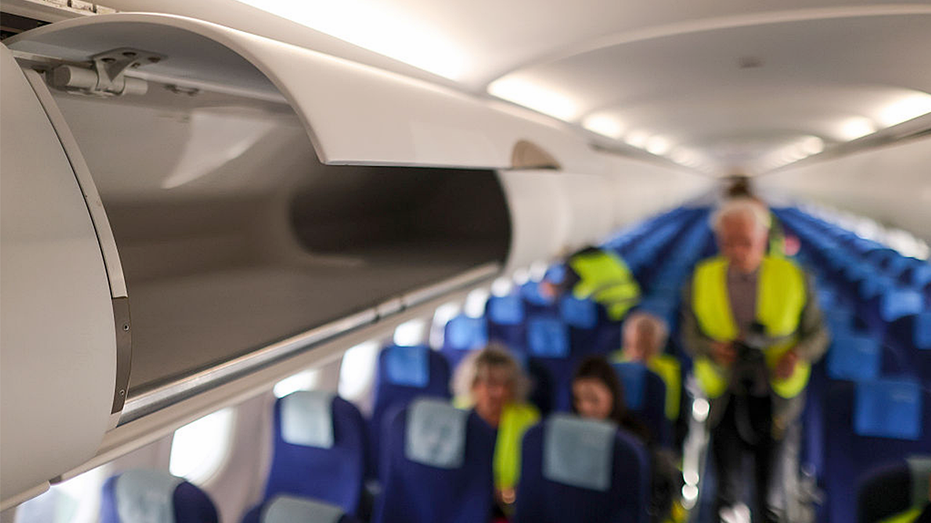
Budget Australian airline Jetstar will begin charging passengers for storing carry-on bags in the overhead compartments. (Jan Woitas/picture alliance via Getty Images / Getty Images)
Fees for baggage, excess luggage, seat selection and priority boarding make up a growing share of revenue for budget airlines. The charges have sparked criticism from some consumer groups, arguing that advertised base fares do not reflect the true cost of travel.
Jetstar’s policy shift comes after passengers and airline staff described having bags weighed at the gate and struggling to find room in overhead lockers as one of the most stressful parts of the airport experience, the company said in a statement.
The airline said the change would cut down on frustrations at boarding gates.
“By giving customers an underseat bag with the option to add Priority Carry-on, we can make better use of overhead locker space, streamline boarding and help more flights depart on time,” Jetstar CEO Stephanie Tully said in a statement, adding that the change would ensure customers only paid for what they needed.
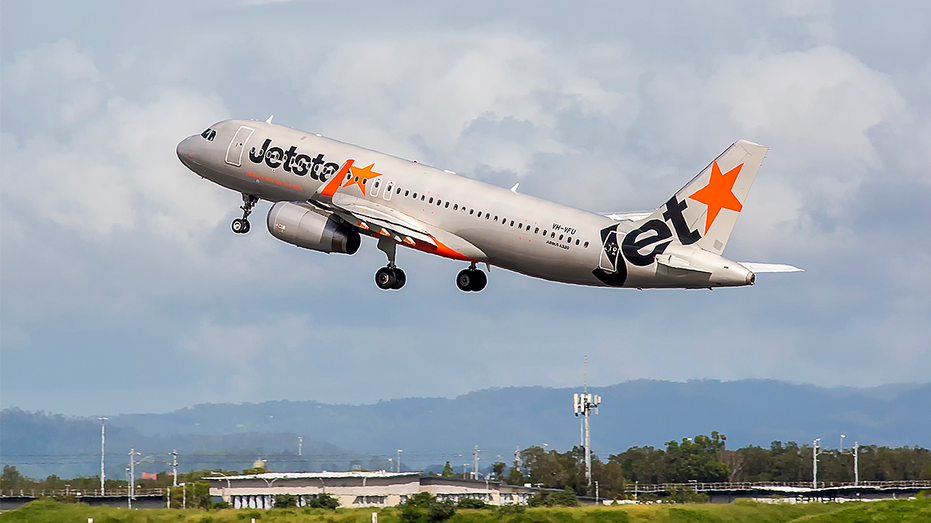
The new policy will start in February 2027, costing travelers between $18 and $37, depending on the route. (Getty Images / Getty Images)
“You only pay for what you need — traveling with less means paying less, and you can always add more if you need,” she said.
It is now the latest low-cost carrier to introduce a payment requirement for carry-on bags, as budget airlines in the U.S. and Europe often charge passengers to use the overhead compartments.
Just like other carriers around the world, Australian and New Zealand airlines already charge for checked luggage, seat selection and some dining and in-flight entertainment options, but Jetstar’s latest announcement makes it the first to charge for overhead compartments.
RYANAIR PASSENGER RECOUNTS BEING PARTLY SUCKED OUT AIRPLANE WINDOW: ‘I AM LUCKY’
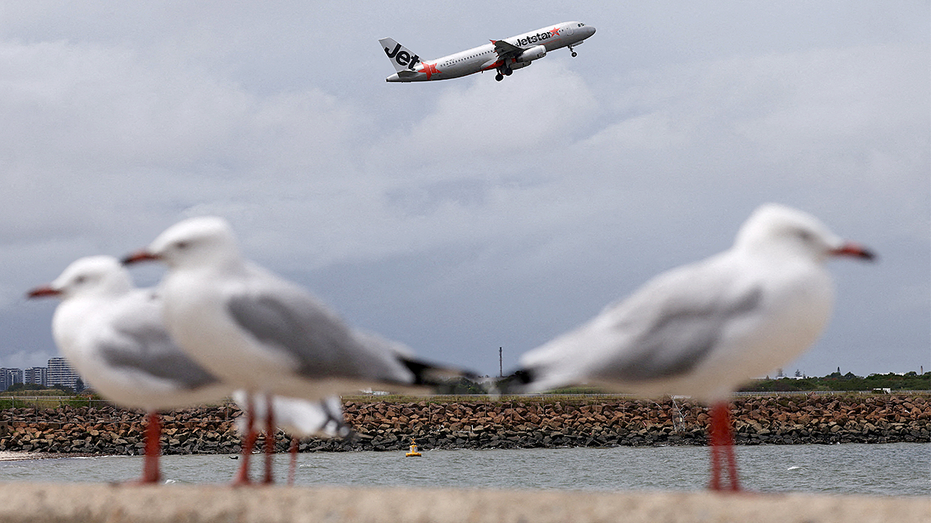
The airline said the change would cut down on frustrations at boarding gates. (REUTERS/Hollie Adams / Reuters Photos)
GET FOX BUSINESS ON THE GO BY CLICKING HERE
Australian opposition Sen. Bridget McKenzie said on social media that the new changes amounted to a “cash grab.”
Federal Transport Minister Catherine King said airlines should disclose any additional charges to passengers when they purchase their tickets to avoid any “surprises” at the airport.
“Jetstar claim this change is to keep fares affordable. It will be up to them to demonstrate that to passengers,” King said in a statement.
Reuters contributed to this report.

Andre Lavoie joined SpaceX in 2009 as an engineer, designing the pressure tanks that help power its rocket. He was paid partly in stock – a common trade-off at start-ups as a hiring incentive.
Some 17 years on, those 200,000 shares he was given are worth about $23m (£17m) – and the 63-year-old says he’s ready to start cashing them as soon as he can.
“Every chance I get going forward, I’ll sell a little bit more,” he tells the BBC.
“The shares have been going up so radically it keeps messing up my life plans – you really can’t know the future, so it’s better to sell early and in intervals.”
Lavoie is far from being the only one who has seen the value of his stake in SpaceX rocket over the years.
The company’s founder, Elon Musk, said on Fox News that SpaceX’s listing on the stock market in June had likely made “several thousand” employees millionaires – including staff “who were working on the production line”.
According to reports, there are estimated to be 4,400 new millionaires created by the listing.
Unlike most newly-listed firms, SpaceX shares are set to be released in stages: the first 20% on 6 August, with more due in batches through the rest of the year.
Whether or not shareholders decide to sell their stake at the first opportunity is a matter for individuals. Unlike Lavoie, some may choose to hold onto their shares altogether in the hope of bigger gains later.
SpaceX listed on the Nasdaq in June, in the biggest initial public offering (IPO) in history, valuing the rocket and satellite firm at more than $2 trillion.
It briefly made Elon Musk the world’s first trillionaire, before the stock cooled and his fortune slipped back below the milestone within weeks.
In its first results as a public company this week, the firm’s quarterly revenue was shown to have nearly doubled to $7.8bn (£5.8bn) from a year earlier, while its spending ballooned to $18.3bn – more than six times what it was a year ago.
Overall, SpaceX made a net loss of $143m in the three months to June, and a loss of $2bn during the first six months of the year.
Musk pushed back against sceptics on an earnings call: “I think people are really underestimating Starlink”. He predicted the satellite internet service – the one part of the company that is currently making a profit – could one day deliver a majority of the world’s internet.
But shares in the company tumbled on the back of the earnings report, with investors generally spooked by the huge amounts of money being spent on AI.
SpaceX shares fell 13.6% on Wednesday to $108.27 (£80.44) – well below the initial listing price of $135 a share.
Lavoie plans to use his money from selling some of his shares to fund a hotel he is renovating in Pontebba, Italy’s northeastern Friuli region, plus a small brewery.
He says is priority for the future is raising awareness of air pollution in the area, in partnership with a local environmental group.
Before he was hired, Lavoie was interviewed by Musk himself.
“He’s a very charming person when he wants something,” Lavoie says.
He wouldn’t be drawn on Musk’s politics – “that’s his business” – but is unreserved about the company: “I’ve always been happily supportive and impressed, and would work hard with those incredible people again.”
Some analysts value SpaceX at less than half its current stock market price, warning its ties to xAI carry real financial risk – part of a broader worry on Wall Street that sky-high valuations for AI-linked firms, including SpaceX, OpenAI and Anthropic, could prove overdone.
Sinead O’Sullivan, an economist who has previously worked for Nasa, told the BBC in June she thinks SpaceX is an “Elon Musk ego project”.
“You’re buying a share of the Elon Musk brand more than any kind of space industry,” she said.
But Ron Epstein, an aerospace analyst at Bank of America Securities, says the recent share price swings say more about the market than the company.
“A lot of it has to do with macro trends,” he says. “None of it really has anything to do with what’s going on fundamentally at the company.”
He says investors judging SpaceX purely as an AI bet are missing the point: “They’re not just a compute provider. They’re not just an AI company. It’s a far more complicated picture than that.”
SpaceX, he adds, has cut the cost of reaching orbit from around $10,000-$20,000 a kilogram to about $2,000 with its Falcon 9 rocket – “they have built a railroad to space.”
Lavoie, for his part, isn’t rattled. He says: “The solid business model of SpaceX will prove itself to be worth the investment,”even as he takes some of his own winnings off the table.

A general view of logo and signage for a Burger King, Home of the Whopper on January 29, 2026 in London, United Kingdom.
John Keeble | Getty Images
Restaurant Brands International on Thursday reported quarterly earnings that topped analysts’ expectations, fueled by strong growth for the once struggling Burger King, both domestically and abroad.
“Burger King’s performance is a great example of what’s possible when you invest in the fundamentals and execute well – an approach we’re applying across all of our brands,” Restaurant Brands CEO Josh Kobza said in a statement.
Here’s what the company reported compared with what Wall Street was expecting, based on a survey of analysts by LSEG:
- Earnings per share: $1.07 adjusted vs. $1.03 expected
- Revenue: $2.52 billion, in line with expectations
Restaurant Brands reported second-quarter net income attributable to shareholders of $507 million, or $1.45 per share, up from $189 million, or 57 cents per share, a year earlier.
Excluding transaction costs, advisory fees and other items, the company earned $1.07 per share.
Net revenue rose 4.5% to $2.52 billion.
Burger King’s U.S. same-store sales climbed 8.5%. In recent quarters, the burger chain’s turnaround has taken hold in its home market. Restaurant renovations, sharper marketing and a focus on core menu items like the Whopper have helped Burger King steal market share.
Rival McDonald’s reported U.S. same-store sales growth of just 0.8% in its second quarter, for comparison. Executives said that they were disappointed by the performance, and McDonald’s tapped a new U.S. president to help accelerate its sales.
Burger King is also seeing strong results outside of the U.S. Restaurant Brands said international Burger King restaurants saw same-store sales growth of 5.4% during the quarter.
But the rest of Restaurant Brands’ did not fare as well.
Tim Hortons’ same-store sales in Canada and overall were essentially flat for the quarter, while Popeyes Louisiana Kitchen reported U.S. same-store sales declines of 5.2%. The fried chicken chain has struggled in recent quarters as more chains compete for a smaller pool of diners, who have grown increasingly value conscious.
Hyperliquid (HYPE) in Danger: Analysts Explain Why It Could Plunge in the Short Term

Vikings Free Agent Finally Puts Pen to Paper

Abode Expands Into the New Age of Home Security With Unique Outdoor Sensors


![Build a 3-Statement Financial Model [Free Course]](https://wordupnews.com/wp-content/uploads/2026/08/1786018256_hqdefault-80x80.jpg)

-

 Fashion6 days ago
Weekend Open Thread: Wit & Wisdom
-

 Politics6 days ago
Meta enters AI-training agreement with far-right ‘propaganda rag’ Newsmax
-

 Politics4 days ago
Zack Polanski: an incitement to murder Nigel Farage?
-

 Crypto World5 days ago
MicroStrategy Post-Earnings CLARITY Act Push Could Add New Catalyst for Its Stock
-

 Crypto World5 days ago
XRP Ledger v3.3.0 brings five institutional features
-

 Politics7 days ago
Luke Littler’s dominance sparks GOAT debate
-

 Sports6 days ago
Seema Kaliramna Wins Discus Throw Bronze, Takes India’s CWG Medals Tally To 17
-

 Crypto World5 days ago
New York sues Kalshi over prediction market gambling
-

 Crypto World4 days ago
Crypto PAC spending tops $2M in Michigan House race
-

 Business3 days ago
DTCR: Deleveraging And A Hedge Fund Collapse Point To A Possible AI Bottom
-

 Business6 days ago
Trump Announces Hamas Disarmament Agreement as Iran Strikes Kuwait Air Base and US Attacks Pause Overnight
-
 Crypto World6 days ago
3 Fed Officials Just Explained Their Rate Hike Vote: Is Inflation Winning?
-

 Tech6 days ago
Gemini Spark can now use Chrome logins and saved passwords to run errands on your behalf
-

 Tech4 days ago
ESET tracks rise in malicious AI skills and adaptable malware
-

 Sports5 days ago
France Cricket implodes: letters hidden in a drawer and a board at war
-
 Tech6 days ago
Building A Reproduction PlayStation Motherboard
-
Crypto World4 days ago
XRP Ledger urges node upgrade after manifest flood
-

 Crypto World5 days ago
Moneyflip CEO charged in $40K murder-for-hire plot
-
 Sports5 days ago
Bruno Fernandes decision made as Man United ‘discuss’ striker transfer option
-

 News Videos5 days ago
Financial Crash Expert: The 90-Day Collapse Timeline They Are Desperately Hiding.
You must be logged in to post a comment Login