Connect with us
DAPA Banner
DAPA Coin
DAPA
COIN PAYMENT ASSET
PRIVACY · BLOCKDAG · HOMOMORPHIC ENCRYPTION · RUST
ElGamal Encrypted MINE DAPA
🚫 GENESIS SOLD OUT
DAPAPAY COMING

Business

BrasilAgro Stock Faces A Risk Storm, But Crop Prices Are Not Reacting (NYSE:LND)

Published

on

BrasilAgro Stock Faces A Risk Storm, But Crop Prices Are Not Reacting (NYSE:LND)

This article was written by

Long-only investment, evaluating companies from an operational, buy-and-hold perspective.Quipus Capital does not focus on market-driven dynamics and future price action. Instead, our articles focus on operational aspects, understanding the long-term earnings power of companies, the competitive dynamics of the industries where they participate, and buying companies that we would like to hold independently of how the price moves in the future. Most QC calls will be holds, and that is by design. Only a very small fraction of companies should be a buy at any point in time. However, hold articles provide important information for future investors and a healthy dose of skepticism to a relatively bullish-biased market.Disclaimer: All of the author’s articles are written on an “as is” basis and without warranty. They represent the author’s opinion only and in no way constitute professional investment advice. It is the responsibility of the reader to conduct their due diligence and seek investment advice from a licensed professional before making any investment decisions. The author disclaims all liability for any actions taken based on the information contained in any articles published.

Analyst’s Disclosure: I/we have no stock, option or similar derivative position in any of the companies mentioned, and no plans to initiate any such positions within the next 72 hours. I wrote this article myself, and it expresses my own opinions. I am not receiving compensation for it (other than from Seeking Alpha). I have no business relationship with any company whose stock is mentioned in this article.

Seeking Alpha’s Disclosure: Past performance is no guarantee of future results. No recommendation or advice is being given as to whether any investment is suitable for a particular investor. Any views or opinions expressed above may not reflect those of Seeking Alpha as a whole. Seeking Alpha is not a licensed securities dealer, broker or US investment adviser or investment bank. Our analysts are third party authors that include both professional investors and individual investors who may not be licensed or certified by any institute or regulatory body.

Advertisement
Continue Reading
Click to comment

You must be logged in to post a comment Login

Leave a Reply

Business

Robotaxi Push and Q1 Earnings Amid Volatile Trading

Published

on

Mining (iron ore)

AUSTIN, Texas — Tesla Inc. shares closed at $426.01 on May 22, 2026, up 1.95% for the session with elevated trading volume of more than 45 million shares. The stock has traded in a 52-week range of approximately $273 to $498.

Tesla reported first-quarter 2026 revenue of $22.39 billion, up 16% year-over-year. Automotive revenue reached $16.2 billion. The company posted GAAP net income of $477 million, or $0.13 per share. Non-GAAP earnings per share were $0.41, exceeding analyst estimates of $0.30.

Production totaled 408,386 vehicles in Q1, with deliveries of 358,023 vehicles. Energy storage deployment reached 8.8 GWh.

Analyst Consensus

Advertisement

As of May 2026, analysts assigned Tesla a Hold consensus rating. The average 12-month price target stood at approximately $395 to $406, with individual targets ranging from a low of $24.86 to a high of $600.

Robotaxi and FSD Developments

Tesla has expanded unsupervised Full Self-Driving operations in Texas cities. CEO Elon Musk stated the company expects broader deployment of vehicles without safety monitors across additional U.S. markets by the end of 2026.

The company continues development of the Cybercab robotaxi platform. Production timelines and regulatory approvals remain key factors in rollout plans. Tesla has integrated robotaxi-related improvements into general FSD releases.

Advertisement

Financial Position and Outlook

Tesla ended the first quarter with positive free cash flow. Capital expenditures remained elevated due to investments in AI infrastructure, manufacturing expansion and energy storage. The company highlighted progress on more affordable vehicle variants.

Management has emphasized long-term growth in autonomous driving, energy storage and robotics initiatives including Optimus. Q1 results showed margin improvement despite year-over-year delivery comparisons.

Stock Performance in 2026

Advertisement

Tesla shares reached an all-time high closing price of $489.88 in December 2025. The stock has experienced volatility in 2026, trading between the mid-$300s and mid-$400s in recent months. Year-to-date performance through mid-May reflected mixed results compared to broader market indices.

Trading activity has been influenced by updates on Full Self-Driving software, energy business growth and macroeconomic factors affecting electric vehicle demand. Options activity and short interest have remained elevated.

Industry Context

Tesla operates in a competitive electric vehicle market with expanding energy storage and autonomy segments. The company faces regulatory considerations for autonomous technology across multiple jurisdictions. Global production includes facilities in the United States, China and Germany.

Advertisement

Analysts monitor execution on robotaxi commercialization, energy deployment targets and vehicle affordability initiatives. Upcoming quarterly results and product updates are expected to provide further details on progress.

Broader Market Factors

Tesla’s valuation reflects expectations around future growth in autonomous platforms and energy solutions. The company maintains a significant market capitalization within the automotive and technology sectors. Capital returns to shareholders have included stock-based compensation programs.

Advertisement
Continue Reading

Business

Delta Air Lines’ SWOT analysis: stock navigates industry pressures

Published

on


Delta Air Lines’ SWOT analysis: stock navigates industry pressures

Continue Reading

Business

F&O Talk: Weak market breadth to keep Nifty in sideways trend. Sudeep Shah’s take on Amber, Tata Comm and 4 more stocks

Published

on

F&O Talk: Weak market breadth to keep Nifty in sideways trend. Sudeep Shah's take on Amber, Tata Comm and 4 more stocks
Domestic equity benchmarks finished in the green on Friday, supported by sustained buying in financial stocks, although gains remained limited due to heavy profit booking in pharma and healthcare counters. The Nifty advanced 64.60 points, or 0.27%, to settle at 23,719.30, while the BSE Sensex climbed 231.99 points, or 0.31%, to close at 75,415.35.

Meanwhile, the volatility gauge India VIX ended at 17.91, up by 0.49% from the last closing.

Analyst Sudeep Shah, Vice President and Head of Technical & Derivatives Research at SBI Securities, interacted with ETMarkets regarding the outlook for the Nifty and Bank Nifty, as well as an index strategy for the upcoming week. The following are the edited excerpts from his chat:

Advertisement

Q: Nifty ended with WoW gains of 0.7% but for weeks it has traded in a small range. In the absence of any favourable trigger, do you expect the sideways trade to continue?

In line with our expectations, the benchmark index Nifty continued to trade within a narrow range of nearly 542 points during the week. The index ended the week near the 23700 mark with a marginal gain of 0.27% and formed a small-bodied candle with shadows on both sides on the weekly chart, reflecting indecisiveness among market participants and the absence of strong directional conviction. However, the real story lies beneath the surface, where multiple indicators are hinting at an important development ahead.

For the last eight trading sessions, the index has been oscillating within the 23860–23262 zone. Interestingly, during all these sessions, Nifty either opened with an upside gap or a downside gap, leaving very limited opportunities for short-term traders to capture meaningful intraday moves. Owing to this prolonged consolidation, the downward slope of the 20-day and 50-day EMAs has moderated considerably. In addition, the daily RSI has been hovering in the narrow band of 44–47 over the past seven sessions, highlighting the absence of momentum. The daily ADX, currently placed at 16.86, further indicates a lack of strength in either direction. But the bigger concern is not the index movement, it is what the broader market is quietly signaling underneath.
Most importantly, the broader market structure also reflects a similar picture, as a majority of sectors continue to remain stuck in sideways consolidation phases. At the same time, market breadth has weakened notably, with momentum largely restricted to only selective stocks while the broader participation remains muted. This narrowing participation often becomes the foundation for the market’s next meaningful directional move.
Going ahead, we believe the index is likely to maintain its sideways trajectory until a decisive breakout emerges from the current range. On the upside, the 23850–23900 zone is expected to act as a strong hurdle for the index. On the downside, the 23400–23350 zone is likely to provide immediate support. The next breakout from this tightening range could decide whether the market enters a fresh trending phase or slips into another round of volatility.

Q. What is your view on Bank Nifty? Do you think Bank Nifty can cross its critical resistance of 54500 zone?


The banking benchmark index, Bank Nifty, has relatively outperformed the frontline indices over the past week. It has established a base near the 61.8% Fibonacci retracement level of its recent up move (49955–57456) and has witnessed a mild pullback thereafter.

Despite this minor retracement, the index continues to trade below its key moving averages. However, the daily RSI indicates a sideways trend, as per the RSI range shift theory. Other momentum indicators and oscillators are also reflecting a similar lack of clear directional bias.

Advertisement

Going forward, the zone of 53200–53000 is expected to act as a strong support for the index. On the upside, the 20-day EMA zone of 54350–54500 will serve as a crucial resistance. A sustained move above the 54500 level could pave the way for further upside, with the index likely to test the 50-day EMA, currently placed at 55270.

Q: For markets to stage recovery, financials must start firing at some stage. Based on the earnings season, how would you rate their Q4 performance and which stocks will be watched by you? Within the Financial space, where should one focus?


Financials are likely to be a key driver for any meaningful market recovery. The Nifty Financial Services index is currently consolidating within a narrow range of 25628–24911 over the last nine trading sessions, indicating a pause in directional momentum.

The overall setup suggests a lack of strong triggers, as both moving averages and momentum indicators are pointing towards a sideways trend. This reflects a phase of consolidation where the sector is neither showing meaningful strength nor weakness in the near term.

Advertisement

Given the current structure, the index is expected to continue trading within this range in the short term. A decisive breakout on either side of this band will be crucial, as it will likely determine the next directional move and set the tone for broader market recovery.

Q: The IT sector has emerged as the top weekly performer with Nifty IT index gaining nearly 5%. Do you think this to be a short term phenomenon or are these signs of long term bets being made now after a deep correction?


The broader trend for the Nifty IT index continues to remain weak, as it is still forming a pattern of lower tops and lower bottoms, indicating an intact bearish structure. Additionally, the index is trading below its key moving averages, which further reinforces the negative undertone. That said, the index has witnessed a strong rebound over the past week and has outperformed the frontline indices, suggesting signs of a short-term pullback rather than a confirmed trend reversal.

Going ahead, if the index sustains above the 29600 level, it may see an extension of the ongoing pullback rally. However, on the downside, a breach below 28400 could lead to a resumption of the broader downtrend.

Advertisement

Q: Another important factor that is still not being discussed much is the impact of El Nino. Agriculture sector and rural incomes are both at stake now and will impact auto (mostly two-wheelers), consumer staples and discretionary and performance of agri stocks? What is your view on these indices?


The Nifty Auto index is currently trading in a sideways phase, indicating a lack of clear directional momentum. Going ahead, a breakdown below the 25900 level could trigger selling pressure, potentially dragging the index towards the 24800 mark in the short term.

Q: One of the things now being discussed at least in social media is that the domestic investors are the reason why FIIs are having it easy to sell Indian equities i.e. their investments through MFs is giving easy exits to foreign investors. What is your view on this?

The rise of domestic investors has certainly changed the structure of Indian markets, but saying SIP and mutual fund inflows are simply giving FIIs an easy exit is an oversimplification. What we are witnessing is actually a structural shift in market ownership. Persistent SIP inflows and strong DII buying have created a stable domestic liquidity base that can absorb FII selling without causing deep market damage. From 2021 until 2026 till date, DIIs invested over ₹22.20 lakh crore into equities, while FIIs were net sellers to the tune of ₹12.65 lakh crore.

However, this domestic strength has also reduced the market’s dependence on foreign capital. Earlier, heavy FII selling would trigger sharp corrections, but now DIIs cushion the fall. FIIs are largely reallocating capital based on global interest rates, valuations, and currency trends, not because retail investors are funding their exits. In fact, resilient domestic participation reflects growing financialization of Indian household savings, which is a long-term positive for Indian equities.

Advertisement

Q: Gland Pharma, Honeywell Automation and Tata Communications were among top gainers this week, while Jain Resources, Amber Enterprises and CE Info Systems have been big losers. What should investors do with them?


Gland Pharma gave a downward sloping trendline breakout on the daily chart and sharply moved higher thereafter. The breakout was supported by a strong rise in volumes. Rising ADX suggests strengthening bullish momentum. The zone of 2200–2150 is likely to act as an immediate support, and the stock is expected to move higher as long as it trades above this zone.

Honeywell Automation India has witnessed a pullback of nearly 27% from the lows of 28,860 made on 13th May. The RSI is in a rising mode, indicating strong bullish momentum. The DI lines have widened, with DI+ placed significantly above DI- in the ADX indicator, highlighting strong buyer presence. The zone of 33,150–33,050 is expected to act as a strong support, and the stock is likely to move higher as long as it holds above this zone.

Tata Communications gave a downward sloping trendline breakout and moved sharply higher. The RSI is in a rising mode, indicating strong bullish momentum. The stock has closed above the upper Bollinger Band over the last three trading sessions, a phenomenon often associated with strong trending moves. The zone of 1800–1750 is likely to act as a strong support, and the stock is expected to remain on the higher side as long as it trades above this zone.

Advertisement

Jain Irrigation Systems has corrected sharply by around 36% from the high of 594 made on 8th May. The stock is trading significantly below its short and long-term moving averages. The RSI has slipped below the 40 mark, indicating bearish momentum. As long as the stock remains below the 430–450 zone, the outlook is likely to stay bearish.

Amber Enterprises India has corrected nearly 18% from the high of 8,974 made on 7th May. The MACD line has slipped below the zero line, indicating bearish momentum. DI- is placed above DI+ in the ADX indicator, highlighting seller dominance. As long as the stock trades below the 7,800–7,850 zone, the trend is likely to remain weak.

CE Info Systems has slipped below key short and long-term moving averages. Rising ADX suggests strengthening bearish trend momentum. The RSI has slipped below the 40 mark, indicating weakness in price momentum. The zone of 950–1000 is expected to act as a strong resistance, and the stock is likely to remain bearish as long as it trades below this zone.

(Disclaimer: The recommendations, suggestions, views, and opinions given by the experts are their own. These do not represent the views of The Economic Times.)

Advertisement
Continue Reading

Business

Is FX carry trade becoming a more important driver after U.S. rates repricing?

Published

on


Is FX carry trade becoming a more important driver after U.S. rates repricing?

Continue Reading

Business

Badger Meter, Inc. (BMI) Analyst/Investor Day Transcript

Published

on

OneWater Marine Inc. (ONEW) Q1 2026 Earnings Call Transcript

Badger Meter, Inc. (BMI) Analyst/Investor Day May 21, 2026 8:30 AM EDT

Company Participants

Bill Blank
Barbara Noverini – Senior Director of Investor Relations
Kenneth Bockhorst – Chairman, President & CEO
Robert Wrocklage – Executive Vice President of North America Municipal Utility
Kimberly Stoll
Matthew Stuyvenberg – Executive VP of SaaS, Global Commercial & International Utility
Morrice Blackwell
Eric Larson
Trino Pedraza
Joe DeVito
Daniel Weltzien – VP, CFO & Treasurer
Bill Blank

Advertisement

Conference Call Participants

Nathan Jones – Stifel, Nicolaus & Company, Incorporated, Research Division
Jae Hyun Ko – Jefferies LLC, Research Division
Andrew Krill – Deutsche Bank AG, Research Division
Ryan Connors – Northcoast Research Partners, LLC
Scott Graham – Seaport Research Partners
Quinn Fredrickson – Robert W. Baird & Co. Incorporated, Research Division
Robert Zolper – Raymond James & Associates, Inc., Research Division
Jeffrey Reive – RBC Capital Markets, Research Division
William Grippin – Barclays Bank PLC, Research Division
Stephen Lacke

Presentation

Advertisement

Bill Blank

Ladies and gentlemen, good morning. My name is Bill Blank. I’m the Director of Global Marketing and Communications for Badger Meter. And on behalf of our entire team, I’m pleased to welcome our audience here in New York City and our audience watching online around the world to Badger Meter Investor Day.

To get us started today, it’s my pleasure to introduce Barb Noverini, our Senior Director of Investor Relations. Barb?

Advertisement

Barbara Noverini
Senior Director of Investor Relations

Thank you, Bill. And once again, welcome to Badger Meter’s 2026 Investor Day. It’s really great to see a lot of familiar faces out there in the audience. And of course, hello to everybody on the webcast today.

We have a really great agenda planned for you today. You’ll be hearing from several members of our executive management team, who will take you through the evolution of our company, from a 120-year-old meter manufacturer to a hardware-enabled software platform that’s powering the digital transformation of our

Advertisement
Continue Reading

Business

IHS Holding: Deal Or No Deal, This African Tower Giant Is Mispriced At 5.5x EBITDA

Published

on

IHS Holding: Deal Or No Deal, This African Tower Giant Is Mispriced At 5.5x EBITDA

IHS Holding: Deal Or No Deal, This African Tower Giant Is Mispriced At 5.5x EBITDA

Continue Reading

Business

HP Inc HPQ Stock Surges 15% on AI PC Demand Optimism Ahead of Q2 Earnings

Published

on

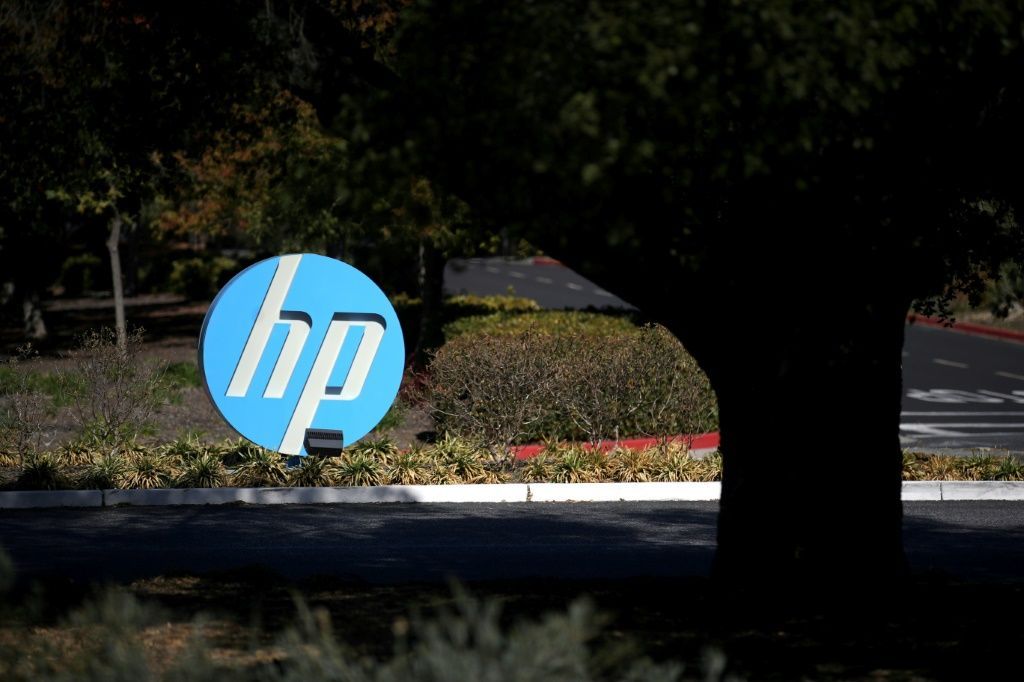
Computer and printer maker HP Inc. has been seeking to fend off a takeover bid from Xerox

PALO ALTO, Calif. — HP Inc. shares rose 15.25% to close at $25.24 on May 22, 2026, as investors positioned ahead of the company’s fiscal second-quarter 2026 earnings report scheduled for May 27.

The stock outperformed the broader technology sector, which gained about 1% on the day. Trading volume reached more than 48 million shares, well above average. In after-hours trading, shares moved slightly higher to around $25.26.

Q1 2026 Results Recap

HP reported fiscal first-quarter 2026 revenue of $14.4 billion, up 6.9% from the prior-year period. Non-GAAP diluted earnings per share were $0.81, up 9.5% year-over-year and at the high end of the company’s guidance range. GAAP diluted EPS was $0.58.

Advertisement

Personal Systems revenue contributed significantly to the top-line growth. The company highlighted strength in commercial markets and early momentum in AI-enabled PCs.

Upcoming Q2 Earnings Expectations

HP is scheduled to report fiscal Q2 2026 results after market close on May 27, 2026. Analysts project revenue of approximately $14.05 billion, representing about 6.3% year-over-year growth. The consensus estimate for non-GAAP EPS stands at $0.71.

The company previously guided for Q2 non-GAAP EPS between $0.70 and $0.76. Management has noted expectations for stronger Personal Systems revenue in the second quarter before moderating in the second half of the year.

Advertisement

AI PC and Market Trends

Investor optimism centered on demand for AI-powered personal computers. HP has introduced new AI-enabled devices and highlighted their potential to drive higher average selling prices. Industry reports indicated AI PC shipments rising as a percentage of total PC volume.

Recent analyst actions supported sentiment. JPMorgan raised its price target on HP to $22 from $19. Morgan Stanley increased its target to $17 from $16.

Dividend Announcement

Advertisement

On May 19, 2026, HP declared a quarterly dividend of $0.30 per share, payable on July 2, 2026, to shareholders of record as of June 10. The annual dividend yield stood around 4.75% based on recent share prices.

Financial Position

HP ended its fiscal first quarter with solid liquidity. The company has focused on cost management initiatives while investing in growth areas including AI PCs, printing solutions and 3D printing technology. Free cash flow and capital returns through dividends and share repurchases remained priorities.

Segment Performance

Advertisement

Personal Systems, which includes notebooks, desktops and workstations, has driven recent revenue growth. Printing segment performance has shown stability with continued emphasis on consumables and commercial solutions. The company has expanded its industrial 3D printing offerings with new accessible systems.

Analyst Views

Consensus ratings for HP Inc. have remained mixed, with several Hold recommendations alongside select Buy ratings. Price targets reflect varying expectations around PC market recovery, AI adoption rates and margin pressures from component costs.

Analysts have noted potential challenges including memory pricing volatility and competitive dynamics in the PC sector. Positive factors include the Windows 11 refresh cycle and enterprise demand for AI-capable hardware.

Advertisement

Broader Industry Context

HP operates in a PC market experiencing gradual recovery amid AI-driven upgrades. The company competes with Dell Technologies and Lenovo in personal systems while maintaining a strong position in printing. Global PC shipments showed modest year-over-year growth in recent quarters.

The stock has traded in a 52-week range between approximately $17.56 and $29.55. Year-to-date performance through May 22 reflected significant recovery from earlier 2026 levels.

Outlook Factors

Advertisement

Management has maintained focus on execution amid dynamic market conditions. Capital allocation priorities include debt management, shareholder returns and targeted investments in innovation. The upcoming earnings report will provide updated guidance for the remainder of fiscal 2026.

HP continues to emphasize its hybrid workforce solutions, sustainable product designs and expansion in commercial and consumer channels. Further details on AI PC adoption and margin trends are expected in the May 27 earnings release and conference call.

Continue Reading

Business

European shares end at more than one-month high on tech boost

Published

on

European shares end at more than one-month high on tech boost
European shares finished at their highest in over a month on Friday, led by technology stocks as risk sentiment got a lift on expectations that a deal to end the Middle East conflict could ‌be near.

The pan-European ⁠STOXX 600 ⁠ended 0.73% higher at 625.12 points and logged its biggest weekly gain in seven.

U.S. Secretary of State Marco Rubio said that there was some progress towards an agreement with Tehran but more work is required, the latest development in the U.S.-Iran impasse that has ensued since Washington suspended bombing in a fragile ceasefire in early April.

Key disagreements between Tehran and Washington involve Iran’s uranium stockpile and controls on the Strait of Hormuz. Reflecting the broader uncertainty, crude prices rose 1% to $103 a barrel.

Advertisement

Analysts expect a deal that includes opening ⁠the strategic waterway to ‌lift European equities that have lagged peers, given the region’s dependence on oil imports that have become costly since the war.


“We are neutral on Europe and euro zone equities, ⁠given their sensitivity to higher energy costs, while we view the more defensive Swiss market and European healthcare more favourably,” said Mark Haefele, chief investment officer at UBS Global Wealth Management.
AI optimism that has driven global indexes to record highs also helped the European tech index rise almost 3.2%. Chip giant Nvidia outlined strong forecasts earlier this week, suggesting strong demand for tech infrastructure. Among European chip stocks, Infineon added nearly 8%, STMicroelectronics gained 5.2% and ASML rose 4.7%.

Also aiding the sector was French President Emmanuel Macron’s comments that the government will invest an additional €1 billion ($1.16 billion) in ‌its quantum strategy and €550 million to support the microelectronics sector.

Among laggards, Puig tumbled 13.4% after the Spanish perfumery ended merger talks with U.S. cosmetics maker Estee Lauder.

Julius Baer fell 6.9% after the Swiss bank’s net new money inflows ⁠came in below expectations.

Advertisement

On the data front, German consumer sentiment recovered heading into June, while a separate reading confirmed that the economy grew by 0.3% in the first quarter of 2026. Germany’s DAX led gains among regional indexes with a 1.1% rise.

Still, other data reports have suggested price pressures are heating up. Europe’s economy commissioner Valdis Dombrovskis became the latest official to say the European Central Bank would need to react to rising inflation.

Money markets price in at least two ECB interest rate hikes before the end of the year.

Among other companies, Cartier owner Richemont reported better-than-expected fourth-quarter revenue. Shares were volatile and ended marginally lower.

Advertisement
Continue Reading

Business

Dollar near six-week high amid Iran war jitters

Published

on

Dollar near six-week high amid Iran war jitters
The dollar held near six-week highs on Friday as traders weighed the prospects of a near-term deal to end the Middle East war and assessed whether the Federal Reserve would raise interest rates if inflation continued to accelerate.

Iran’s foreign minister met with Pakistan’s interior minister to discuss proposals to end the U.S.-Israeli conflict, Iranian media reported. The two sides remain at odds over Tehran’s uranium stockpile and control of the Strait of Hormuz.

Traders are increasingly concerned that ‌ongoing energy disruptions ⁠will filter ⁠through to core consumer prices, potentially forcing a tighter monetary policy response.

“The key question now, of course, is if the Fed is going to hold,” said Noel Dixon, global macro strategist at State Street Global Advisors. So far, inflation pressures feeding into the Fed’s preferred gauge – Personal Consumption Expenditures – have remained relatively contained, Dixon said, supporting the case for keeping rates on hold.

Advertisement

However, he cautioned that “the risk to my view is that Trump resumes attacks on Iran in an aggressive fashion. That could be a catalyst for greater interest rate volatility, and that could cause the ⁠Fed to ‌panic and seriously consider a hike.”


Fed funds futures traders are pricing in 54% odds of a rate hike by December.
The dollar index, which measures the greenback against a basket of currencies including the ⁠yen and the euro,rose 0.09% to 99.28, with the euro down 0.12% at $1.1604. The pound gained 0.08% to $1.344, having shrugged off data earlier that showed retail sales dropped by the most in nearly a year in April, as consumers felt the pinch of the inflationary effects of the Iran war.

Countries more exposed to rising energy costs face mounting growth concerns, lending further support to the U.S. dollar over its peers. Australia, for instance, is grappling with shortages of jet fuel and diesel that are likely to weigh on several key industries, Dixon noted.

The Australian dollar weakened 0.27% versus the greenback to $0.7128.

UNDER PRESSURE

The U.S. dollar’s strength and persistently high oil prices have spelled ‌pain for the yen, which on Friday weakened 0.06% against the greenback to 159.1 per dollar.

Advertisement

The yen remains fragile even after what was likely intervention by Tokyo just weeks ago to prop it up – it has since surrendered nearly 75% ⁠of those gains, keeping traders on alert for further action by Japanese authorities.

“It’s just buying time, really. What they need is a change in fundamentals, and I think the best thing that could happen is a quick deal to end the Iran conflict,” said Lee Hardman, a currency strategist at MUFG.

The Bank of Japan is expected to raise borrowing costs only gradually, while other central banks – including the European Central Bank – are likely to move far more quickly, putting the yen at a disadvantage with yield-seeking investors.

Data on Friday showed Japan’s core inflation slowed to a four-year low in April, complicating the outlook for BOJ policy.

Advertisement
Continue Reading

Business

Planning SIPs for a car or house in 10 years? Experts recommend diversified equity funds for long-term goals

Published

on

Planning SIPs for a car or house in 10 years? Experts recommend diversified equity funds for long-term goals
Many first-time mutual fund investors often struggle with one key question — how should they start investing for multiple long-term goals like buying a car, purchasing a house, or building wealth while also managing market volatility? Financial experts believe the answer lies in maintaining a disciplined approach, staying diversified, and avoiding unnecessary risk-taking, especially for investors with limited market knowledge.

One such query came from Ritesh, a viewer of The Money Show, who wants to start SIP with Rs 20,000 monthly and for that he needs some mutual fund recommendation. He does not have any knowledge about mutual funds and he wants to have the strategy for his short-term goals and he wants to buy a car within 10 years and maybe a house also and he also wants to know if investing in gold ETF in the kind of situation that we are into will be a good call or not.

Also Read | First-time investors should start with balanced funds and short-duration debt in first year: Anand Radhakrishnan, Sundaram MF

According to Pankaj Mathpal, MD, Optima Money Managers, mutual funds can cater to investors across different time horizons, but the investment strategy should depend on the goal and duration.

According to him, equity mutual funds are generally better suited for long-term goals, while debt funds or conservative hybrid funds may work better for short-term requirements.

Advertisement

“Mutual funds are mainly meant for long-term investing, especially equity funds. For short-term goals, investors can consider debt funds or conservative hybrid funds,” Mathpal said.
In the case of an investor planning to invest Rs 20,000 monthly through SIPs with a 10-year investment horizon, Mathpal suggested that equity mutual funds can play an important role in wealth creation despite short-term volatility.
Based on the long-term horizon, he recommended funds such as ICICI Prudential Midcap Fund, Motilal Oswal Large and Midcap Fund, Bajaj Finserv Flexicap Fund, and HDFC Midcap Fund. “These kinds of diversified equity funds can be considered for a long-term portfolio,” he said.
However, Mathpal cautioned investors that equity investments can witness volatility in the short term, and investors should not panic during temporary market corrections.

On the question of investing in gold ETFs, Mathpal suggested avoiding fresh allocations for now. Referring to the government’s broader appeal to reduce gold imports, he noted that investments into gold ETFs eventually lead to additional physical gold purchases by fund houses.

“Considering the prime minister’s appeal as well as the current factors, my suggestion would be not to add gold ETFs right now,” he said.

The discussion also highlighted how many retail investors tend to take excessive risks during strong market phases, often investing aggressively in sectoral funds or direct stocks without fully understanding market cycles.

According to Mathpal, investors who entered markets between 2021 and 2024 experienced largely positive returns and may now wrongly assume that equity markets only move upward.

Advertisement

“Volatility is the basic nature of equity markets. Investors should understand that market corrections are normal in long-term investing,” he explained.

Also Read | Time to buy rupee assets? DSP Mutual Fund lists 5 reasons favouring Indian equities and bonds

He advised investors with limited market knowledge to avoid excessive exposure to thematic or sectoral funds, often referred to as satellite portfolios, unless they fully understand sector cycles and timing.

“Only a small portion of the portfolio should go into satellite or thematic strategies, and that too when investors understand when to enter and exit sectors,” Mathpal said.

He pointed out that many investors entered technology-focused funds at the wrong time and are now facing losses of nearly 20% in some cases.

Advertisement

For most retail investors, Mathpal recommended sticking to diversified mutual funds and multi-asset allocation funds where fund managers can actively manage asset allocation and market exposure.

“To manage risk better, investors should leave the strategy to professional fund managers and invest through diversified funds instead of taking concentrated bets on their own,” he added.

(Disclaimer: Recommendations, suggestions, views and opinions given by the experts are their own. These do not represent the views of The Economic Times)

If you have any mutual fund queries, message on ET Mutual Funds on Facebook/Twitter. We will get it answered by our panel of experts. Do share your questions on ETMFqueries@timesinternet.in alongwith your age, risk profile, and twitter handle

Advertisement
Add ET Logo as a Reliable and Trusted News Source

Continue Reading

Trending

Copyright © 2025