
Business
Canadian Commodity Plays Or American AI Stocks?




Goosehead Insurance director Serena Jones sells $2.05m in stock
Business
Bitcoin surges 23% in 1 week to trade nearly $78K as liquidity hopes, ETF inflows boost crypto markets

In the past week, Ethereum was up 29.7%. Among the major altcoins, BNB, XRP, Solana, Tron, Hyperliquid, Dogecoin, and Cardano rallied upto 56.3%. The global crypto market capitalisation went up $2.2 trillion to $2.53 trillion in one week, according to Coingecko.
Also Read | Explained: 5 reasons why skipping SIPs may affect your long-term wealth creation Nischal Shetty, Founder, WazirX said crypto markets recorded a strong weekly recovery as improving liquidity expectations outweighed pressure from elevated oil prices and long-term bond yields. Reduced expectations of further Federal Reserve tightening, Treasury buybacks and a weaker US dollar supported risk appetite.
“Bitcoin moved from a bearish technical setup into a bullish daily structure as buyers cleared the $64,000, $70,000 and $74,000 levels. Crypto ETFs recorded approximately $1.45 billion in net inflows across four consecutive sessions this week, reversing roughly $220 million in outflows during the preceding three sessions”

Shetty further said the strongest daily inflow approached $710 million which sustained return of capital coincided with rising crypto prices, indicating institutional participation and improving market confidence.
In the past 24 hours, Bitcoin was up 2.8% and Ethereum was up 3% to trade at $2,440 mark. Among the major altcoins, BNB, XRP, Solana, Tron, Hyperliquid, Dogecoin, Cardano rallies upto 19.7%. The global crypto market capitalisation went up 3.1% to $2.71 trillion, according to Coingecko.Bitcoin is trading near $78,000 after rising more than 18% from the $63,000 region earlier this week, while Ethereum is near $2,500, said Riya Sehgal, Research Analyst, Delta Exchange.
Strong Bitcoin ETF inflows have supported prices even after more than $4 billion in crypto shorts were liquidated. On-chain data also shows some distribution from long-term Bitcoin holders, so continued selling near higher levels will be worth watching, Sehgal further said.
On Bitcoin crossing $75,000 mark, SB Seker, Head of APAC, Binance said Bitcoin’s move back above the $75,000 mark is a notable sign of renewed participation after a period of heightened volatility and macro uncertainty.
Also Read | HDFC and Axis Mutual Fund resume subscriptions in gold ETFs and gold ETF FoFs
Market perspective
Prateek Gupta, Head of Business, Mudrex
Bitcoin has pushed to around $79,000, continuing to rally supported by Treasury buybacks and Trump’s White House crypto summit. A weekly close near current levels, followed by a monthly close above $80,000, could confirm a sustained rally toward $85,000. Meanwhile, $70,000 remains the key support as break below it could trigger a pullback toward $65,000.
(Disclaimer: Recommendations, suggestions, views and opinions given by the experts are their own. These do not represent the views of The Economic Times)


Maxell Agustin Aguiran is an independent equity researcher and quantitative analyst who leads a predictive analytics consulting firm. He produces rigorous, primary-source equity research focused on valuation, market-implied expectations, earnings quality, capital allocation, and asymmetric risk-reward. His process combines DCF, FCFF, residual-income, reverse-DCF, scenario, sensitivity, and price-implied expectations analysis with transparent assumptions and fully traceable calculations. Each thesis explains what the market is already pricing in, what must occur for that price to be justified, and where the greatest upside and downside risks lie. Follow for evidence-based investment research and the math behind every rating—not hype, narratives, or black-box conclusions.
Analyst’s Disclosure: I/we have no stock, option or similar derivative position in any of the companies mentioned, and no plans to initiate any such positions within the next 72 hours. I wrote this article myself, and it expresses my own opinions. I am not receiving compensation for it (other than from Seeking Alpha). I have no business relationship with any company whose stock is mentioned in this article.
Seeking Alpha’s Disclosure: Past performance is no guarantee of future results. No recommendation or advice is being given as to whether any investment is suitable for a particular investor. Any views or opinions expressed above may not reflect those of Seeking Alpha as a whole. Seeking Alpha is not a licensed securities dealer, broker or US investment adviser or investment bank. Our analysts are third party authors that include both professional investors and individual investors who may not be licensed or certified by any institute or regulatory body.

PTC Therapeutics director Schmertzler disposes of $1.8m in stock

IHS Markit (Nasdaq: INFO) is a world leader in critical information, analytics and solutions for the major industries and markets that drive economies worldwide. The company delivers next-generation information, analytics and solutions to customers in business, finance and government, improving their operational efficiency and providing deep insights that lead to well-informed, confident decisions. IHS Markit has more than 50,000 key business and government customers, including 80 percent of the Fortune Global 500 and the world’s leading financial institutions. Headquartered in London, IHS Markit is committed to sustainable, profitable growth.

Where are central banks keeping their gold?
Business
JioBlackRock Mutual Fund announces feature changes across 6 funds, including flexi cap, large cap

According to a notice cum addendum these changes in the features of schemes are for the purpose of alignment with “Part IV – Categorization and Rationalization of Mutual Fund Schemes” of the SEBI Master Circular for Mutual Funds dated March 20, 2026.
Also Read | Explained: 5 reasons why skipping SIPs may affect your long-term wealth creation
JioBlackRock Flexi Cap Fund will now invest 65-100% in equity and equity-related instruments of large cap, mid cap and small cap companies, 0-35% in money market instruments, other liquid instruments and units of mutual fund, 0-20% in units of gold and silver ETFs, and 0-10% in units issued by InvITs.
Earlier the allocation in this flexicap fund was 65-100% in equity and equity-related instruments of largecap, midcap and smallcap companies, 0-35% in debt and money market instruments and 0-10% in units issued by REITs and InvITs.
JioBlackRock Large Cap Fund will now allocate 80-100% in equity and equity-related instruments of largecap companies, 0-20% in equity and equity-related instruments of other than large cap companies, 0-20% in money market instruments, other liquid instruments and units of mutual fund, 0-20% in units of gold and silver ETFs and 0-10% in units issued by InvITs.
JioBlackRock Sector Rotation Fund, a sectoral fund, which earlier allocated its assets in equity and equity related instruments, other equity and equity related instruments and debt and money market instruments will now also allocate in money market instruments, other liquid instruments and units of mutual fund, units of gold and silver ETFs and units issued by InvITs.The JioBlackRock Arbitrage Fund which allocated its assets only in equity and equity related instruments including equity derivatives and debt and money market instruments including the margin money deployed in derivative transactions will now also allocate its money in Gold ETF, Silver ETF and ETCD.
For the JioBlackRock Liquid Fund, the 91 days reference in SID and KIM shall stand replaced with “91 calendar days” with effect from the effective date. “The Scheme will invest in Debt instruments and Money Market instruments with residual maturity upto 91 calendar days,” the notice cum addendum said.
Similarly for the JioBlackRock Overnight Fund, the 30 days reference in SID and KIM shall stand replaced as “30 calendar days” from the effective date. “The overnight fund can deploy not exceeding 5% of the net assets in G-secs and/or T-bills with a residual maturity of upto 30 calendar days for the purpose of placing the same as margin and collateral for certain transactions, according to the notice cum addendum.
The fund house also informed about change in names of its two debt funds – JioBlackRock Short Duration Fund and JioBlackRock Low Duration Fund.
Also Read | HDFC and Axis Mutual Fund resume subscriptions in gold ETFs and gold ETF FoFs
The JioBlackRock Short Duration Fund will now be called the JioBlackRock Short Term Fund, an open ended short term debt scheme investing in instruments such that the Macaulay duration of the portfolio is between 1 year to 3 years with a relatively high interest rate risk and moderate credit risk.
JioBlackRock Low Duration Fund will now be named as the JioBlackRock Ultra Short to Short Term Fund, an open ended debt scheme investing in instruments such that the Macaulay duration of the portfolio is between 6 months to 12 months with a relatively high interest rate risk and moderate credit risk.
(Disclaimer: Recommendations, suggestions, views and opinions given by the experts are their own. These do not represent the views of The Economic Times)
If you have any mutual fund queries, message on ET Mutual Funds on Facebook/Twitter. We will get it answered by our panel of experts. Do share your questions on ETMFqueries@timesinternet.in along with your age, risk profile, and Twitter handle.
 as a Reliable and Trusted News Source
Vijay Kedia’s disclosed portfolio rose 21% to Rs 1,415 crore by August 2026. Neuland Laboratories led CY26 gains at 53%, while Innovators Facade Systems fell 37%. Eimco Elecon was his latest portfolio addition, highlighting varied performance across his holdings.
Business
Will Tesla Stock Be Higher or Lower a Year From Now? Here’s What Wall Street Analysts Are Saying

Tesla shares have had a volatile year, and with the stock currently trading well below its December 2025 all-time high, investors are once again split on where the electric vehicle maker’s stock is headed over the next 12 months. Wall Street’s answer to that question depends heavily on which piece of Tesla’s sprawling business — cars, robotaxis, humanoid robots or artificial intelligence — an analyst chooses to emphasize.
As of Aug. 21, Tesla shares were trading around $349.86, according to Robinhood, well below the stock’s 52-week high of $498.83 and closer to its 52-week low of $297.38. According to Trading Economics, the stock has lost more than 5% over the past four weeks and remains up just 8.34% over the trailing 12 months, a modest gain given the scale of swings the stock has experienced along the way. Morningstar and CNN have both noted the stock is currently trading near the bottom of its 52-week range and below its 200-day moving average, technical signals some traders view as a sign of persistent underlying weakness.
The company’s most recent earnings disappointed relative to expectations. According to Pluang, Tesla’s second-quarter 2026 earnings per share came in at 33 cents, well short of the 50 cents analysts had projected, even as revenue trends remained comparatively stable. That combination, a headline earnings miss alongside a still-elevated valuation, has left analysts sharply divided over the stock’s near-term trajectory.
On the bullish side of the ledger, the median analyst view remains cautiously optimistic. According to Investing.com, 23 analysts currently recommend buying Tesla shares while five recommend selling, translating to an overall Buy rating with an average 12-month price target of $395.34, implying roughly 16% upside from current levels. That estimate broadly aligns with figures from Public.com, which cited a $422.79 consensus target among 25 analysts as of mid-August, and MarketBeat, which listed a current target of $401.74.
Investors betting on upside point to several potential catalysts. According to Morningstar, Tesla is preparing to launch its Cybercab, a vehicle built specifically for autonomous driving with no steering wheel, into its robotaxi fleet in Austin, Texas, a milestone that TipRanks reported the company was targeting for this month. Tesla has also received regulatory approval for its self-driving software in Europe, according to reporting cited by Pluang, and has continued building out its humanoid robot program, Optimus, alongside broader ambitions in AI infrastructure. Morningstar analyst Seth Goldstein has described Tesla as having “the potential to disrupt multiple industries with its technology for EVs, AVs, batteries, and humanoid robots,” reflecting the multi-pronged bull case that extends well beyond the company’s traditional car business.
At the far bullish extreme, ARK Invest’s Cathie Wood has published a model estimating Tesla’s expected value per share at $4,600 by 2026, with bull and bear case scenarios of roughly $5,800 and $2,900, respectively. ARK’s model relies heavily on assumptions about the scale and speed at which Tesla can commercialize robotaxi and AI-related revenue streams, and the firm itself has described its terminal multiple assumptions as methodologically conservative relative to what it considers Tesla’s likely growth trajectory. Such long-range, model-driven price targets differ substantially in method and time horizon from more conventional 12-month Wall Street price targets, and should be weighed with that distinction in mind.
On the bearish side, critics argue that Tesla’s stock price continues to reflect expectations for its AI and autonomy ambitions rather than the fundamentals of its core vehicle business. GLJ Research analyst Gordon Johnson holds one of the lowest published targets on the Street, at $24.86 with a Sell rating, arguing that “Tesla is fundamentally a carmaker, not an AI company.” According to FXOpen’s summary of his position, Johnson points to falling deliveries, margin pressure and intensifying competition from Chinese automaker BYD as reasons he believes Tesla’s premium valuation is not justified by its underlying automotive business, regardless of progress on autonomy or robotics.
Valuation concerns extend beyond Johnson’s bearish outlook. According to Investing.com, Tesla trades at 364 times earnings, with one fair-value estimate cited by the outlet placing the stock’s intrinsic worth closer to $245.76, roughly 30% below its recent trading price near $351. Robinhood separately listed Tesla’s price-to-earnings ratio at 326.23 as of Aug. 21, a multiple that remains dramatically higher than traditional automakers and most other large-cap technology companies, reflecting the market’s continued pricing-in of future growth from businesses, including robotaxis and Optimus, that have not yet meaningfully contributed to Tesla’s reported revenue.
The wide dispersion in published price targets underscores just how divided professional forecasters remain. According to FXOpen, published 12-month analyst targets for Tesla range from roughly $25 to $600, while algorithmic and longer-range forecasting models spread even further by 2030, reflecting deep uncertainty over how quickly, if at all, Tesla’s autonomy and robotics initiatives can scale into meaningful profit centers. LiteFinance’s compiled analyst range for the end of 2026 similarly spans from $130.33 to $374.77, illustrating a gap wide enough that reasonable, well-informed analysts continue to reach starkly different conclusions using the same available information.
Given that spread, whether Tesla stock ends up higher or lower a year from now will likely hinge on a handful of concrete, verifiable developments rather than broader sentiment alone: whether the Cybercab robotaxi launch in Austin scales smoothly and expands to additional markets, whether Optimus moves from prototype to meaningful commercial deployment, whether Tesla’s core vehicle delivery and margin trends stabilize amid rising competition from BYD and other global EV makers, and whether the company’s next several quarterly earnings reports narrow or widen the gap between Wall Street’s growth expectations and Tesla’s actual reported results.
As with any individual stock, Tesla’s share price over the coming year will be shaped by a combination of company-specific execution, broader market conditions, and investor sentiment toward high-growth technology names generally, none of which can be predicted with certainty. This article is not investment advice, and anyone considering a position in Tesla stock, in either direction, should weigh the significant disagreement among professional analysts outlined here, alongside their own research and risk tolerance, before making any investment decision.

Ukrainian drones hit warehouse of Russian online retailer Ozon in overnight strikes

Apple Reportedly Cut More Than 200 Jobs Across Vision Pro And Siri Software Teams

RICHARD KAY: Harry has cast himself as an aggrieved royal outsider like Diana… but there are vital differences between him and his mother he’d be wise to consider
Goosehead Insurance director Serena Jones sells $2.05m in stock





-

 Fashion15 hours ago
Weekend Open Thread: Madewell – Corporette.com
-

 Business4 days ago
SMA Solar Technology AG (SMTGY) Q2 2026 Earnings Call Transcript
-

 Politics7 days ago
SEQ Code: The Three Letter Boarding Pass Code That Could Give You The Worst Seat
-

 Tech4 days ago
Qwen3.8-27B runs frontier-class coding agents and reasoning locally, no cloud API required
-

 Crypto World4 days ago
OCC Greenlights Trump Family Crypto Firm for Trust Charter
-
 Tech7 days ago
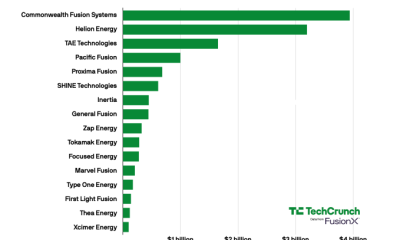
Every fusion startup that has raised over $100M
-
 Business7 days ago
Monarch Mutual Fund set to enter MF space with maiden overnight fund; files draft with Sebi
-

 News Videos2 days ago
Don’t Leave Your Financial Future To Chance | August 19, 2026
-

 Crypto World5 days ago
Data of 54K Wallet Users Leaked, Clarity Odds Just 10%: Hodler’s Digest, Aug. 16
-

 Crypto World4 days ago
NAVI Prime launches institutional lending framework on Sui
-

 Politics6 days ago
Britain is facing a housing disaster
-

 Tech7 days ago
How to watch FIH Hockey World Cup 2026: FREE live streams, schedule
-

 Tech6 days ago
What are the rumors about the AirPods Pro 4?
-

 Business6 days ago
Rebel Creamery files Chapter 11 with $23.8M Van Leeuwen judgment on appeal
-
 Tech7 days ago
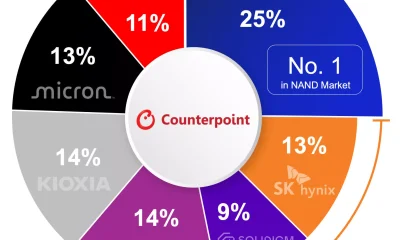
Enterprise SSDs now consume 48% of global NAND flash supply
-
 Crypto World4 days ago
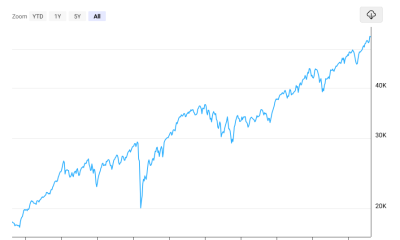
Dow’s 3-Year Winning Run Isn’t a Crash Signal, Still 49% Odds of Double-Digit Gains
-

 Business7 days ago
(VIDEO) Frozen 3 First Look Reveals Anna’s Wedding, Olaf’s New Love Interest And A Mysterious Villain
-

 Fashion7 days ago
Fashion Bomb Daily On the Scene: The 2026 MVAAFF x ESPN White Party on Martha’s Vineyard
-

 Business7 days ago
Stephen Curry Trade Rumors Persist as Warriors Insist Superstar Remains Committed to Golden State
-
 Tech5 days ago
OpenAI’s new ChatGPT feature logs your keystrokes and stores them in plain text
You must be logged in to post a comment Login