



Editor’s note: This article is intended to provide a general overview of the ETF for educational purposes only and, unlike other articles on Seeking Alpha, does not offer an investment opinion about the ETF.
Business
Carvana new sales strategy turns dealership into ‘playground’

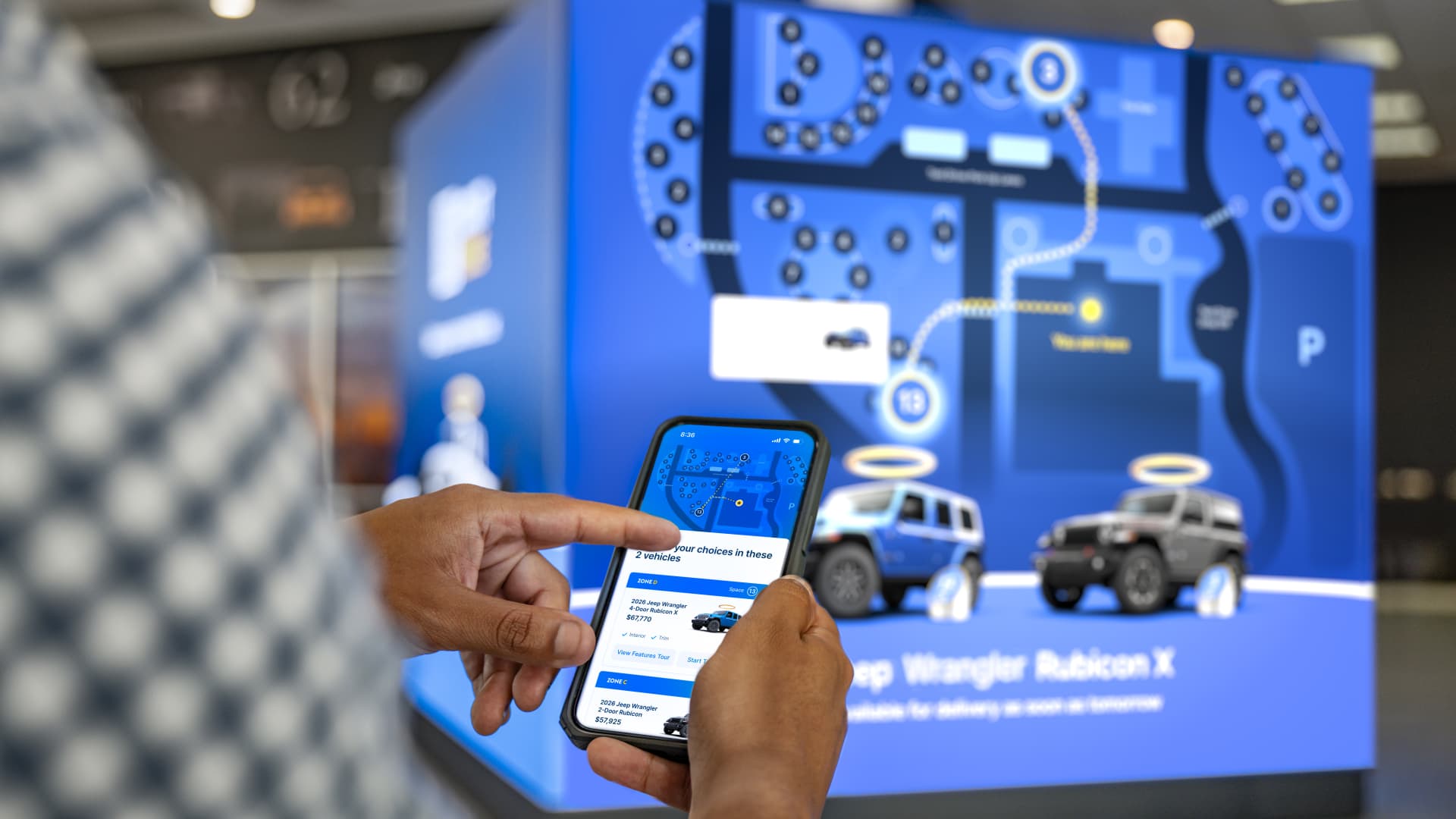
Carvana’s new vehicle franchise for Stellantis includes personalised displays and a vehicle “playground” for consumers for each of its core U.S. brands.
Courtesy Carvana
DALLAS — Carvana is aiming to bring its online strategy for selling used vehicles to sales of new cars and trucks.
But don’t expect the company to actually sell you a vehicle at one of its seven Stellantis franchised dealerships.
Instead, the online vehicle retailer said it intends to use such franchised dealerships as service locations, test drive centers and potentially “playgrounds” for consumers to decide what vehicle they would like to buy through Carvana’s online platforms, marking a stark contrast from how traditional franchised dealers handle new products.
“Every single car that we sell, whether it’s used or new, is online,” Tom Taira, Carvana president of special projects who’s leading the new vehicle operations, told CNBC during an interview at its franchise in Texas. “That’s a very inherent difference. Even coming into the store, you’re buying it online, and that’s a big difference in how people think about it.”
Through its used vehicles sales, Carvana has become the most valuable auto retailer in the U.S. with a more than $70 billion market cap. Carvana’s target with the new vehicle business is to grow its market share and customer base as well as assist used vehicle sales through trade-ins and other means, according to Taira.
If the company is successful, the strategy could cause a ripple effect across the U.S. franchised dealership model, which the National Automobile Dealers Association reports includes 16,990 retailers that topped $1.3 trillion in sales last year.
This week marks the first time Carvana has publicly talked about its plans for new vehicles since it purchased its first Chrysler-Dodge-Jeep-Ram franchised store for Stellantis early last year in Arizona. Its network has since grown to other Carvana-popular markets in Sacramento and San Diego, California; Dallas; Atlanta; Cleveland; and Boston.
“When we got into new cars, we said the only way we’re going to make this happen is to ensure that it goes the Carvana way. That we actually sell cars exactly the same way that we do to used car customers,” Taira said during a media event at its Dallas location. “Why break something that already works?”
Customers visiting Carvana’s franchised dealership in Texas are encouraged to use their smartphones and QR codes to navigate the location and new car buying process for the online vehicle retailer.
Courtesy Carvana
Carvana spent roughly $171 million on its acquisitions of new Stellantis vehicle franchised dealerships, excluding its most recent purchase of a retailer in Ohio, according to public filings. The company declined to disclose any further investments in the stores to implement its strategy.
Taira and the company also declined to disclose Carvana’s new vehicle sales so far or its future expansion plans for additional brands or other Stellantis dealerships. CNBC previously confirmed that the company has quickly grown its new vehicle sales, including a location in Arizona becoming the top-selling dealer in the country for Stellantis.
“We believe that this was worth it to us, as long as we could go out and increase share and increase the pie,” Taira said. He declined to comment on whether the new vehicle business is profitable.
To be able to integrate its new vehicle sales into its current website, as first reported by CNBC, Carvana was approved as a certified website provider for Stellantis instead of utilizing mandated third-party companies. Several franchised dealers said they believed that was a unique benefit for Carvana.
Stellantis, in an statement to CNBC, said Carvana operates as a “corporate owner” of its brands, similarly to other large publicly traded companies such as Lithia and AutoNation.
“We apply the same consistent standards and criteria to all dealer partners, and any organization that meets our qualifications is eligible to operate as a franchisee,” the automaker said, adding that Stellantis “certifies tools and services that will enhance our program and be beneficial to our network. All certified providers must complete a rigorous onboarding process and meet program standards and requirement.”
Test drives, vehicle ‘playground’
Carvana has replaced a traditional franchised dealer’s vehicle lot at a facility in Dallas with a “playground” with each Stellantis brand having a theme, including. Chrysler minivans having a soccer net.
Michael Wayland / CNBC
Carvana is using a location in Dallas as a test center for its foray into new vehicle sales. The facility looks like a traditional Stellantis dealership from the outside, but the consumer process for purchasing a vehicle and the responsibilities of its employees are unprecedented.
Couches and chairs replace cubicles and sales offices. There are no finance and insurance departments, and instead of an army of commission-based employees, the facility has associates that are paid hourly to assist customers — if they want the help.
The experience is meant to be as self-guided as a customer wants. By scanning QR codes located on 10-foot-by-10-foot screens inside the building or on vehicles and displays outside, shoppers can customize a vehicle, learn about a product’s features and conduct test drives before deciding whether to purchase anything. If they do decide to buy something, it’s online and not originated from a sales person, the company said.
The “playground” has roughly 50 vehicles divided by brand, with each having a theme. Jeep has an off-road display. Dodge has race tracks, including a Carvana-themed Charger pace car and part of a traditional track fence barrier. Chrysler minivans, meanwhile, have a soccer net and Ram’s area is truck-centric.
Customers visiting Carvana’s franchised dealership in Texas are encouraged to use their smartphones and QR codes to navigate the location and new car buying process for the online vehicle retailer.
Courtesy Carvana
Carvana is not committing to expanding the exact experience to its other franchised dealer locations, but Taira told CNBC that the overall process of online sales, vehicle testing and service are expected to be consistent throughout the locations.
“I think the business case and the case for additional stores comes out through this location first,” he told CNBC, adding that it built out the store in weeks. “Is it important for us to launch a second? No, I think what’s important is that we get this right. … There’s no giant plan to build test drive centers everywhere.”
Vehicle inventory constraints
Once a customer decides to test drive or even purchases a vehicle from the location, that’s where the process can get more complex, depending on what model a consumer wants.
Taira said the company chose to purchase Stellantis dealerships for the automaker’s breadth of brands as well as its variety of products, which can be a double-edged sword when it comes to consumers actually finding the exact vehicle they want to test drive or purchase.
Unlike a traditional dealership that stockpiles vehicles for customers to test drive before purchasing, at the Texas facility, Carvana has roughly 50 display cars on its “playground,” with twin vehicles for test drives. It had roughly 3,000 new vehicles for sale nationwide compared to more than 60,000 used models as of Wednesday morning, according to its website.
This means that a customer may not be able to test drive the exact vehicle or even model they’re purchasing, but the online process tries to match the best test drive vehicle possible with what they want. It also describes what’s the same and what’s different.

Carvana’s stock over five years.
Looking at the Texas location’s system for vehicles such as an $87,000 Ram 1500 RHO performance model, the closest thing on-site for a test drive was a roughly $61,000 Ram 1500 Big Horn with the same interior and four-door configuration but no other feature matches, including its performance engine.
It’s why traditional automotive dealers have large vehicle inventories, especially for pickup trucks that have a litany of build options and wide bandwidth of performance specs.
Taira said Carvana is continuing to take lessons learned from its year-plus experience of selling new vehicles into its day-to-day operations. He said the company is learning what vehicles to keep in stock and is working to ensure customers know they are buying a new vehicle rather than a used one.
“We’re going through all this technology. This is brand new,” Taira said. “All these things are active, meaning the amount of progression we’re going to make over the course of the next days to weeks to months.”
Taira said the company prioritizes new vehicle sales to local customers, much like it does for used vehicles, to avoid additional costs, but it does use its nationwide logistics network and more than 100 U.S. Carvana locations when necessary.
Carvana will service vehicles
A major question of Stellantis franchised dealers and Wall Street analysts before Carvana revealed its new vehicle plans was how the company planned to service the new products it sells.
Taira said the company, for the time being, will operationally run its service departments like a traditional franchised dealer, but with its guiding strategy of transparent, non-haggling pricing and “hassle-free” customer experience.
“As it relates to how you actually do service, they’re traditional. It’s a traditional setup in that way,” he told CNBC. “In that way, what we’re doing … as it relates to service, we believe the same principles that we have with selling cars.”
A map with a QR code shows the Jeep vehicle area in Carvana’s vehicle “playground” at its franchised store in Dallas, Texas. Each vehicle has a number as well as an accompanying QR code to learn about the vehicle.
Courtesy Carvana
At the end of the day, selling cars is Carvana’s core business, but servicing vehicles has historically been a lucrative market for franchised dealers, along with customer financing, which Carvana has always focused on for its business.
Much like its used vehicles, Carvana is currently only accepting cash or offering financing through the company itself, including selling consumer auto loans it originates to institutional investors and partner banks, such as Ally Financial, to maintain liquidity.
Taira did not dismiss the possibility of Carvana offering leasing or using Stellantis’ financial services, which have been highly profitable for automakers, but said the offerings would need to seamlessly integrate into its current online selling platforms.
“Part of what makes this great, this experience, is what we already know. What we already know is the system that we have in place,” he said. “That does not mean that integration isn’t something that we’re going to be as part of our learning and experimentation going forward.”
Continue Reading
Markets regulator Sebi on Wednesday issued a fresh warning to investors against trading in unlisted securities of public limited companies on unauthorized electronic platforms and websites.
In a press statement, Sebi reiterated that these digital platforms are neither recognized nor authorized by the regulator. It firmly stated that only recognized stock exchanges are permitted to provide infrastructure for fundraising and securities trading.
The regulator also strongly advised the public against sharing sensitive personal details on these websites.
No Regulatory Safety Net
Sebi cautioned investors that because these platforms operate outside its regulatory purview, any disputes arising from transactions on them will leave investors completely stranded. The regulator explicitly noted that users of these platforms will not have access to investor protection benefits and grievance redressal mechanisms.
This is not the first time the market watchdog has cracked down on gray-market digital ecosystems. Sebi noted that it has previously issued warning notices most recently in 2024.
The regulator has also previously red-flagged unauthorized virtual trading platforms offering fantasy games or paper trading, alongside unregistered online portals pushing unlisted debt securities.

The Transport Secretary had been aiming to reduce the backlog to seven weeks by this autumn.

Brazil pushes for focused rural debt relief as Senate passes broad bill

BRND.ME, the consumer brands platform formerly known as Mensa Brands, has converted from a private to a public company, as it pushes ahead with plans for a stock market listing.
The conversion follows approval from the National Company Law Tribunal (NCLT) and requisite filings with the Registrar of Companies. The company’s legal name has changed from Mensa Brand Technologies Private Limited to Mensa Brand Technologies Limited as a result.
The move comes on the heels of BRND.ME‘s cross-border merger that shifted its corporate base from Singapore to India, a process completed in under 10 months after clearances from the High Court of Singapore and the NCLT’s Chandigarh bench. Together, the two moves are aimed at aligning the company’s structure with public-market norms on governance and regulatory compliance.
BRND.ME said it is evaluating an initial public offering (IPO) over the next 12-18 months.
“Converting into a public company is an important milestone in BRND.ME‘s journey,” said Ananth Narayanan, founder and CEO. He said the company has spent the past year simplifying its corporate structure and strengthening governance, with an eye on building consumer brands out of India that can scale globally. The shift to an Indian holding structure, followed by the conversion, gives the company a base to grow with sharper focus and discipline, he added.
On the financial front, BRND.ME said it turned adjusted EBITDA profitable and operating cash-flow positive in FY26. The company posted FY26 revenue of about Rs 1,500 crore and is currently clocking an annualised run-rate of Rs 1,700-1,800 crore, driven largely by margin expansion and tighter cost controls rather than aggressive top-line growth.
Four brands anchor its portfolio: Majestic Pure, at about Rs 400 crore in annual revenue; Botanic Hearth, at roughly Rs 300 crore; and MyFitness and PartyPropz, each clocking more than Rs 200 crore annually. The company said these brands lead in their respective wellness, personal care, nutrition and lifestyle categories. International markets — the US, Canada, Europe and the Middle East — remain a key part of its growth strategy.BRND.ME, founded in 2021, is backed by investors including Accel, Norwest Venture Partners, Alpha Wave Global and Prosus.
Business
HDFC MF, ADIA among buyers as Sepia Investments offloads Rs 749 crore in Corona Remedies via block deal

Sepia Investments sold shares worth about Rs 749 crore in Corona Remedies Limited on June 17, 2026, through a block deal on the stock exchange, with a clutch of marquee institutional investors, including HDFC Mutual Fund, Aberdeen Asset Management entities, and the Abu Dhabi Investment Authority, picking up the stake.
According to block deal data for the day, Sepia Investments sold 43,28,943 shares of Corona Remedies at Rs 1,730 apiece, translating into a deal value of roughly Rs 748.9 crore. A second seller, Anchor Partners, offloaded 1,61,861 shares at the same price, worth about Rs 28 crore. Taken together, the two sellers divested shares worth approximately Rs 776.9 crore in the pharmaceutical company.
On the buy side, twelve investors picked up the shares at Rs 1,730 each. HDFC Mutual Fund was the largest buyer, acquiring 24,50,000 shares worth about Rs 423.9 crore, accounting for more than half the total deal value by itself.
Aberdeen Asian Smaller Companies Investment Trust Plc bought 4,50,868 shares worth roughly Rs 78 crore, while Aditya Birla Sun Life Mutual Fund picked up 4,90,000 shares worth about Rs 84.8 crore. The Abu Dhabi Investment Authority bought 39,130 shares worth approximately Rs 6.8 crore, through its ADIA.
Other buyers included Aberdeen Standard Sicav I – Asian Smaller Companies Fund, which picked up 2,74,132 shares worth about Rs 47.4 crore, and Invesco Mutual Fund, which bought 2,89,017 shares worth about Rs 50 crore. Kotak Mahindra Mutual Fund acquired 1,61,861 shares worth about Rs 28 crore, matching the exact quantity sold by Anchor Partners.
India Acorn ICAV – Ashoka WhiteOak Emerging Markets Equity Fund bought 1,48,686 shares worth about Rs 25.7 crore, while WhiteOak Capital Mutual Fund picked up 1,45,000 shares worth about Rs 25.1 crore. Rounding out the buy side were Ashoka WhiteOak Emerging Markets Equity ex China Fund, which bought 29,520 shares worth about Rs 5.1 crore, Factory Mutual Insurance Company, which picked up 10,670 shares worth about Rs 1.9 crore, and TCW White Oak Emerging Markets Equity Fund, the smallest buyer in the block, with 1,920 shares worth about Rs 33 lakh.
Business
InCred Money gets Sebi in-principle nod for mutual fund licence, plans launch in 6-9 months

InCred Money has received in-principle approval from capital markets regulator Sebi for its mutual fund licence application, CEO Vijay Kuppa said in a social media post. The company expects to take another six to nine months of work before it can go live with a fund.
Kuppa traced the idea back to his earlier venture, Orowealth, the direct mutual fund platform he co-founded in 2016 along with Nitin Agrawal, Yogesh Powar and Swati Aggarwal. He said the conviction that technology could widen the adoption of investment products among Indians only grew stronger at InCred Money.
InCred Capital, the institutional and wealth management arm of the InCred Group, acquired Orowealth in an all-cash deal in early 2023, bringing in assets under management of more than Rs 1,100 crore along with its technology platform and team. Kuppa took over as CEO of the newly created InCred Money, which has since built out an integrated investment platform spanning bonds, fixed deposits, alternative assets and equity broking.
A mutual fund licence, or a Digital AMC as Kuppa termed it in his post, would extend that platform into fund manufacturing rather than just distribution. He argued that the eventual winners in the wealth-tech business will be firms that combine manufacturing with distribution under one roof, serving the full range of a client’s investment needs.
Kuppa credited the milestone to nearly six months of work led by Nitin Agrawal, his former Orowealth co-founder, who now serves as CEO of the mutual fund business at InCred Money.
The approval places InCred Money among a growing list of fintech and brokerage platforms securing Sebi nod to enter fund management.
The push comes as India’s mutual fund industry has crossed Rs 75 lakh crore in assets under management, with Sebi’s new mutual funds rules, which took effect in April, aimed at easing entry for new players through routes such as MF Lite for passive strategies.In-principle approval allows InCred Money to proceed with setting up an asset management company and trustee structure, but it will still need to clear Sebi final registration requirements, including capital and governance norms, before launching schemes.
Add  as a Reliable and Trusted News Source
as a Reliable and Trusted News Source
Yum! Brands: Pizza Hut Is Off The Menu (Rating Downgrade)


Danone says Chobani is copying Oikos Pro without comparable protein density in the product.
Business
Citizens Bank Down? Online Banking Faces Intermittent Disruptions as Scheduled Maintenance Impacts Customers

Customers of Citizens Bank reported difficulties accessing online and mobile banking services Wednesday, with some users unable to log in, view balances or complete transactions amid ongoing technical issues tied to scheduled system maintenance.
The disruptions, which began affecting portions of the customer base early in the day, follow planned maintenance that started Tuesday evening and extended into Wednesday. Bank officials have advised patience as technical teams work to restore full functionality across digital platforms.
Citizens Bank’s Update Center and official communications confirmed the maintenance window, noting that digital banking access via browser and mobile app could be intermittently unavailable. The bank emphasized that core banking operations, including branch services and ATMs, remained largely unaffected.
Scope of the Outage and Customer Reports
Social media platforms and monitoring sites like Downdetector showed elevated reports of problems with the app, login processes and mobile banking throughout the morning. Users in multiple states, particularly in the Northeast where Citizens has a strong presence, described error messages, frozen dashboards and failed transfers.
One customer posted on social media: “Citizens Bank’s online banking is reportedly down for some users at the moment.” Similar complaints highlighted frustration during a busy midweek period when many rely on digital tools for bill payments and account management.
The bank has not issued a full outage declaration but acknowledged intermittent issues in its customer service alerts. Officials urged customers to use alternative channels such as branches, ATMs or telephone banking for urgent needs during the resolution period.
Maintenance Details and Expected Resolution
The scheduled work, which began around 8 p.m. Pacific Time on Tuesday and was set to conclude by early Wednesday morning in some time zones, involves critical system upgrades designed to improve long-term reliability and security. Such maintenance is routine for large financial institutions but can occasionally extend beyond initial estimates due to unforeseen complexities.
Citizens Bank, a major regional player with operations across the Northeast and beyond, serves millions of customers. Its digital platforms handle high volumes of daily transactions, making any disruption noticeable. The bank has invested heavily in technology in recent years to enhance user experience and cybersecurity defenses.
In past similar incidents, services typically resumed gradually as maintenance phases completed. Customers with pending transactions were advised to check their accounts once access returns, as confirmed items should process normally per standard banking protocols.
Impact on Customers and Alternatives
For many, the timing proved inconvenient, especially those managing payroll, bill payments or transfers mid-month. Small businesses and individuals relying on real-time access reported delays in daily operations. The bank encouraged use of its customer service lines at 800-656-6561 for assistance with account inquiries or urgent matters.
Branches remained open for in-person services, and ATMs continued to function for cash withdrawals and deposits in most locations. Mobile check deposit features and other tools may have limited availability until full restoration.
Citizens has a history of transparent communication during technical issues. Its Update Center provides real-time alerts on technology, operations and other disruptions, helping customers stay informed. Officials apologized for any inconvenience and assured that customer data and funds remain secure throughout the process.
Broader Context of Banking Technology Reliability
Financial institutions increasingly depend on robust digital infrastructure, making occasional maintenance necessary to prevent larger failures. Cybersecurity threats, system upgrades and growing transaction volumes contribute to the need for periodic downtime. Citizens, like peers such as Bank of America or Chase, aims to minimize impact through phased rollouts and backup systems.
This incident highlights ongoing challenges in delivering 24/7 digital banking. Regulators and consumer advocates emphasize the importance of clear communication and contingency plans. Customers are encouraged to set up alerts, maintain multiple access methods and monitor accounts regularly.
In response to past outages, many banks have enhanced redundancy and cloud-based solutions. Citizens has rolled out app improvements and security features in recent years, positioning its platforms competitively in a digital-first banking environment.
Advice for Affected Customers
Those experiencing issues should:
- Clear browser cache or update the mobile app.
- Try accessing via desktop if mobile is affected, or vice versa.
- Contact customer service for time-sensitive needs.
- Monitor official channels for restoration updates.
Company Background
Citizens Bank, part of Citizens Financial Group, operates as a major retail and commercial bank with a focus on the Northeast. It offers a full suite of personal and business banking products, including robust online and mobile platforms that millions use daily. The institution has emphasized digital innovation while maintaining a strong branch network.
As one of the larger regional banks in the U.S., Citizens serves diverse customer segments from individuals to small businesses. Its commitment to technology aims to deliver seamless experiences, though maintenance windows occasionally test customer patience.
Looking Ahead
Bank officials expect full restoration shortly after the maintenance window. Customers can check the official Update Center or social channels for the latest status. Citizens continues investing in infrastructure to reduce future disruptions and enhance overall digital resilience.
This episode serves as a reminder of the trade-offs in modern banking convenience. While digital tools provide round-the-clock access, periodic maintenance ensures long-term stability and security. Affected users are urged to exercise patience as teams work to resolve the matter promptly.
For the latest developments, customers should visit Citizens Bank’s website or contact support directly. The bank remains committed to minimizing impacts and restoring normal operations as quickly as possible.
halbergman/E+ via Getty Images
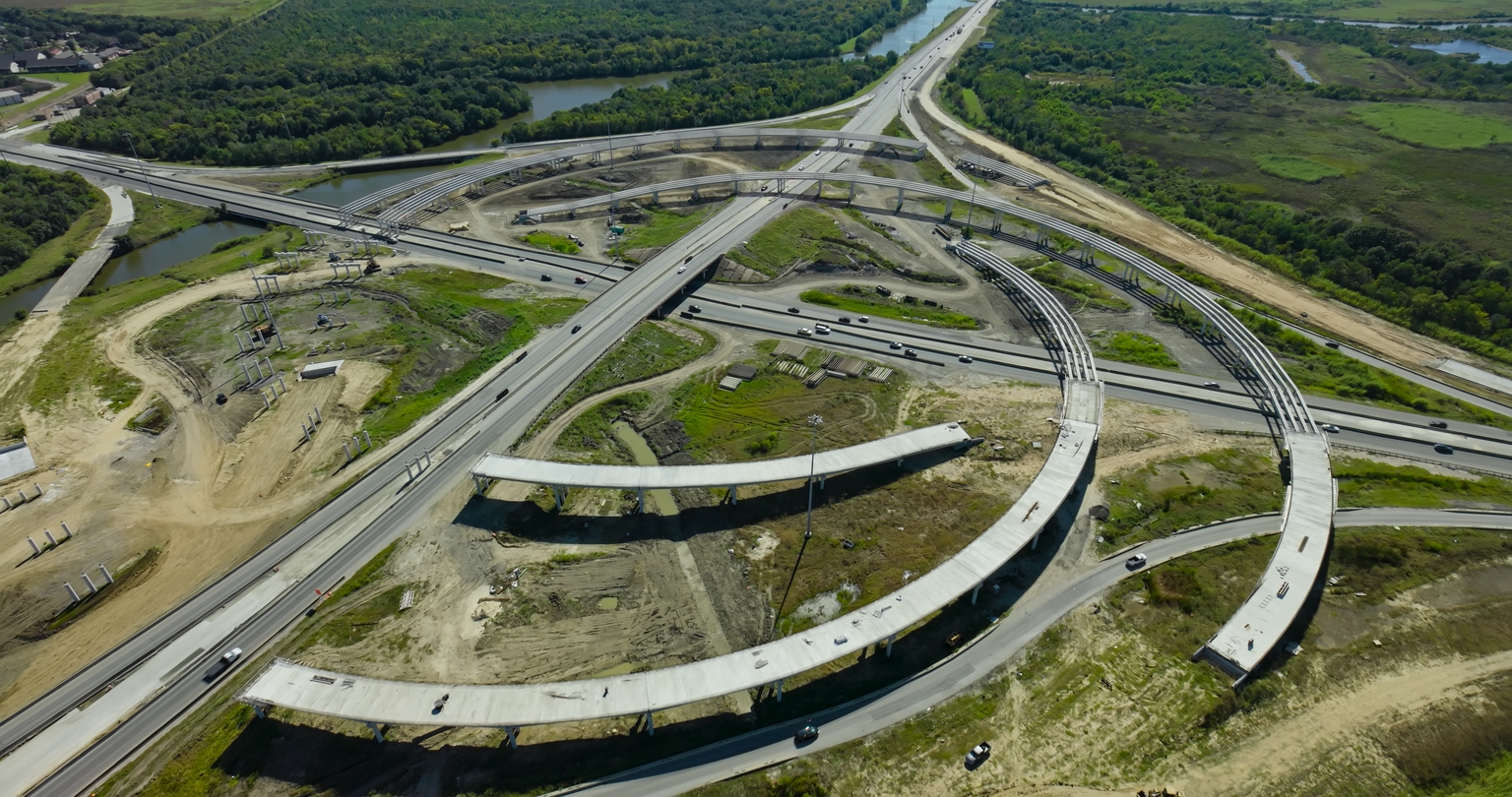
Introduction to the iShares US Infrastructure ETF
The iShares US Infrastructure ETF (IFRA), which is backed by Blackrock (under its brand of ETFs-iShares), is a $4.25B product (in terms of assets under management) that has been in existence since April 2018. IFRA, which is priced at an expense ratio of 0.3%, pays dividends on a quarterly basis, with the annualized figure amounting to 1.57%.
How Is IFRA Built?
IFRA’s intention is to focus on stocks that stand to benefit from a boost in domestic (the US) infrastructure activities, and it goes about fulfilling its goal by tracking an index that is maintained by a third party called ICE Data Indices [IDI]. The index in question is the NYSE FactSet U.S. Infrastructure Index [NFUII], and it is constructed using a methodology developed by Fact Set (a global financial data comp).
NFUII which is reconstituted every March requires any potential constituent (which needs to be listed on the NYSE, NYSE American or the Nasdaq) to have a minimum market-cap of $300M (as well as an average 3-month daily traded value of $1M). Then, from this pack, all stocks that generate 50% or more of their revenue from infrastructure-related industries are considered. Basically, the goal is to procure either infrastructure enablers or infrastructure asset owners and operators, who generate 50% or more of their annual revenue from the US. Once the stocks are gathered (over 160 in total), they are then assigned equal weights, which get rebalanced four times per year.
What Are The Key Characteristics Of IFRA’s Portfolio?
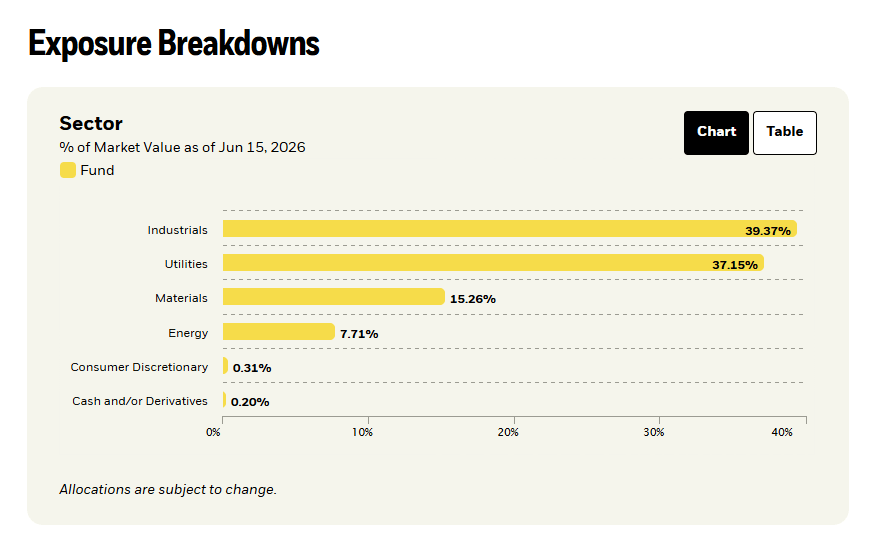
We know that IFRA focuses on infrastructure enablers and infrastructure asset owners/operators, but from which sectors (as per the traditional definitions of the Global Industry Classification Standards, or GICS) are they procured? Well, two sectors in particular (industrials and utilities) dominate with an aggregate weight of over 75% of the entire portfolio. The rest of the portfolio comes from the materials sector, the energy sector, and the discretionary sector, with the latter contributing an insignificant stake of less than 0.5%.
iShares
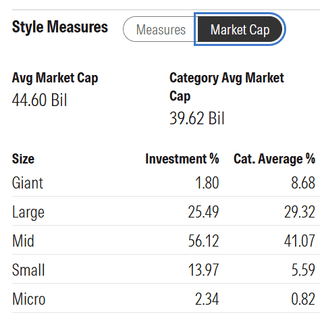
Unlike a lot of products that track market-cap weighted indices (which ends up making them giant and large-cap heavy), IFRA’s target index follows an equally weighted policy. As a result, note that it isn’t giant or large-caps but the mid-cap bracket which dominates this portfolio with a 56% stake. Micro-cap exposure of around 2% is understandably low, as ICE Data Indices does not consider stocks with a free-float market-cap of less than $300M (at the time of construction).
Morningstar
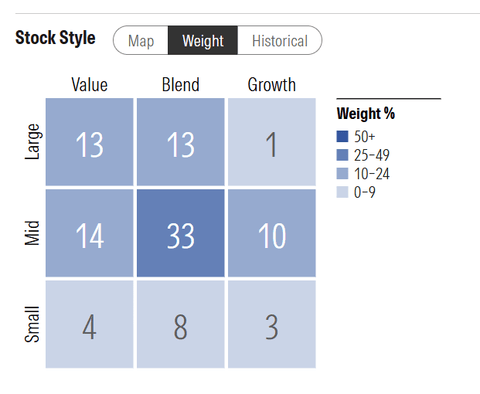
Stylistically as well, it’s the mid-cap blended names which dominate this portfolio with an aggregate stake of one-third. For the uninitiated, blended stocks combine the best of both the value and growth style stocks (typically those with stable business models and high dividend payouts, in addition to strong growth prospects in terms of sales/earnings).
Morningstar
Who Is IFRA For?
IFRA represents a cost-effective vehicle (an expense ratio of 0.3% which is the lowest amongst pure play infrastructure ETFs, and 20bps lower than the ETF median of 0.5%) for those who want well-balanced and comprehensive coverage to stocks across the US infrastructure value chain. This portfolio not only includes traditional infrastructure stocks such as utilities and transportation plays (which tend to benefit from stable cash flows and high barriers to entry), but also those (like construction & engineering service firms, machinery and material providers) that are more cyclically themed, and are also favorably exposed to a growing impetus in US infrastructure spending appetite, are seeing a surge in backlogs. This balance between the two pockets, makes IFRA well positioned to thrive in both an upswing and a downswing of the broader economy.
IFRA would also be suitable for those who dislike the overcrowded large and giant-cap space (most ETFs follow market-cap weighted indices which end up focusing largely on these market-cap categories), and are more comfortable tilting towards the mid-cap space (which typically offers better growth prospects than giant and large-caps, and are also less volatile than small-caps).
What Are The Risks Associated With IFRA?
The stocks of IFRA are likely to be very sensitive to the shifting hues of Federal fiscal policy, particularly in light of the burdensome debt burden that the US government faces (government debt to GDP has been above 120% for multiple years, since the onset of the pandemic); if the ruling governments choose to turn more parsimonious and more fiscally responsible, or divert resources away from infrastructure projects to other areas of the economy, the stocks of IFRA could be adversely impacted. Needless to say, this is a cohort of stocks whose prospects are closely linked to the political climate of the country.
Seeking Alpha
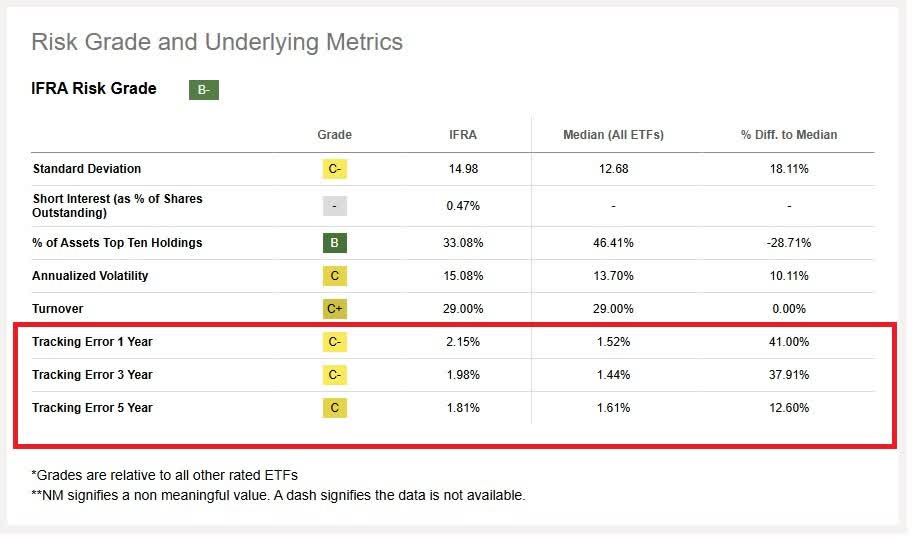
IFRA is a passively managed product, whose value is primarily derived from how effectively it tracks the NFUII. Rather than resorting to full replication, IFRA seeks to mirror the performance of NFUII through a more cost-efficient process known as ‘representative sampling’, where the former only owns a sample of stocks that in total have the same qualities as the latter. While IFRA may score on the efficiency front, it loses out on tracking capabilities (tracking errors are wider than those experienced by the median ETF), which appear to have gotten worse over the last three years and the last year alone.
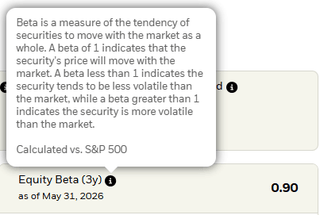
Investors who own S&P 500-heavy portfolios, are unlikely to find IFRA as a apt diversifier, as it’s sensitivity to the movements of the US benchmark, are almost close to 1x. Put simply, for every 1% move in the S&P 500 (be it to the upside or downside), one can typically expect IFRA to move by around 0.9%.
iShares
The margins of businesses involved in the infrastructure space, also tend to be keenly impacted by commodity price volatility, tariff effects, and labor shortages.
Peers of IFRA
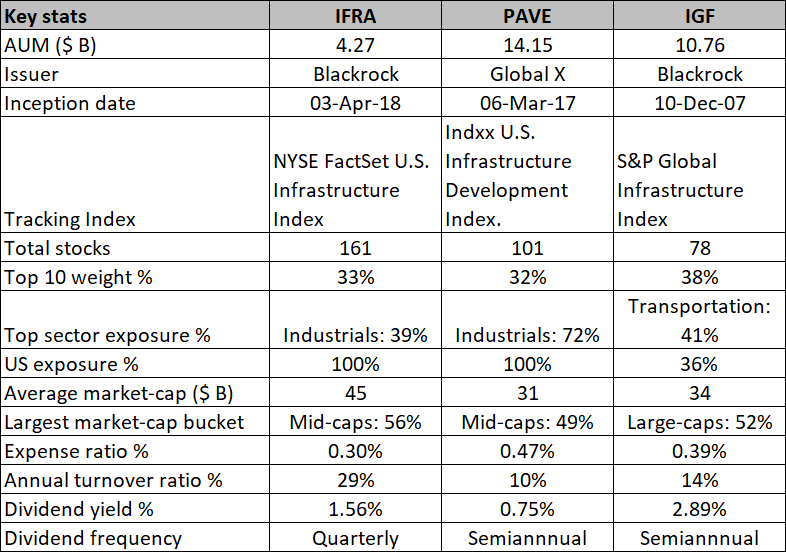
Two close peers of IFRA are the Global X U.S. Infrastructure Development ETF (PAVE), and the iShares Global Infrastructure ETF (IGF).
IGF, differs from the other two in that it is the only one which provides exposure to infrastructure stories beyond just America (US exposure which is still the largest is at 36%). This ETF, which is the oldest out of the lot, also offers the most concentrated infrastructure exposure (it only covers 78 stocks), with a heavy tilt towards transportation stocks (the other two are more spread out and tilt more towards the industrial sector. It also stands out for its high-yield (relative to the other two), and a predilection towards large-caps (as opposed to mid-caps).
PAVE, which is backed by Global X (unlike the other two), is a very industrial heavy portfolio (72% of the holdings). It is also the least cost efficient (an expense ratio of 0.47%), and also the least lucrative from a yield angle (not even half the yield of IFRA, which in turn lags IGF). Note that both alternatives to IFRA distribute less frequently than our ETF in focus. Out of the three IFRA appears to be the least portfolio prone to change (annual churn of only 10%)
Seeking Alpha, Morningstar
Summary
IFRA represents a cost-efficient ETF for those who want access to a pool of stocks from across the US infrastructure value chain that could thrive in expansionary as well as defensive macro conditions. IFRA, which tilts more towards mid-caps, still moves in close tandem with the S&P 500 and may not represent a great portfolio diversifier.
This article answers three main questions about IFRA:
- What are the key features of IFRA’s portfolio?
- What type of investor is IFRA suitable for, and what are the risks associated with it?
- Are there other passive ETF alternatives that offer exposure to infrastructure stocks?

Tech45 seconds ago
Uncle Sam bets $500M that Alphabet spinoff’s AI can dig up new semiconductor materials

NewsBeat3 minutes ago
Portugal vs DR Congo LIVE: World Cup 2026 latest score, match stream, goal updates and fan reaction
Business4 minutes ago
Sebi warns of no regulatory recourse for investors trading in unlisted securities


-

 Business3 days ago
No Jackpot Winner as $257 Million Prize Rolls Over to $269 Million Monday Draw
-

 Crypto World6 days ago
Oppenheimer backs SpaceX as $70 billion retail frenzy builds
-

 Fashion5 days ago
Weekend Open Thread: Tuckernuck – Corporette.com
-

 Crypto World6 days ago
Markets Rally as SpaceX IPO Looms Amid Iran Tensions and Inflation Surge
-
 Crypto World3 days ago
Zimbabwe Requires Crypto Businesses to Register Annually Under New FIU Regulations
-

 Tech5 days ago
NanoClaw integrates JFrog registries to secure AI agent downloads
-

 Crypto World4 days ago
Bitget enters Argentina’s regulated crypto market through PSAV registration
-

 Tech5 days ago
This Week In Security: Microsoft On Microsoft, Register Your Domains, Linux On ARM, And FreeBSD Joins The File Cache Club
-
 Tech6 days ago
Dutton Ranch star claims they ‘didn’t see any disruption’ on set following Chad Feehan’s exit from Yellowstone spinoff fueled by Taylor Sheridan clash rumors
-

 NewsBeat6 days ago
El Nino has formed in the Pacific and could set records, forecasters say
-

 Politics6 days ago
Politics Home | Healey Resignation Is “Colossal Failure Of Government”, Says Former Labour Defence Secretary
-
 Entertainment6 days ago
Donnie Wahlberg & More Heat Up Las Vegas at Circa’s Barry’s Downtown Prime
-
 Tech6 days ago
Opendoor Ends India Operations, Fueling a Bigger Conversation About AI and Outsourcing
-

 Politics6 days ago
Belfast burns, while Met chief points finger at Iran and Russia
-

 Sports6 days ago
First Time Since 1971: Australia Register Historic Low In ODI Cricket
-

 NewsBeat5 days ago
FBI searches office of Ohio voter registration group
-

 Business6 days ago
AT&T: Verizon's 27% Outperformance Sets Up A Solid Entry Point
-
 Tech6 days ago
Anthropic is spending $150M to embed 1,000 AI fellows inside nonprofits. No degree required.
-

 Politics6 days ago
Modi thanks Trump for wishes as US attacks Indian seafarers
-
 Entertainment6 days ago
‘The Pitt’s Fan-Favorite Doctor Confirms Noah Wyle Gave His Blessing to Return [Exclusive]
You must be logged in to post a comment Login