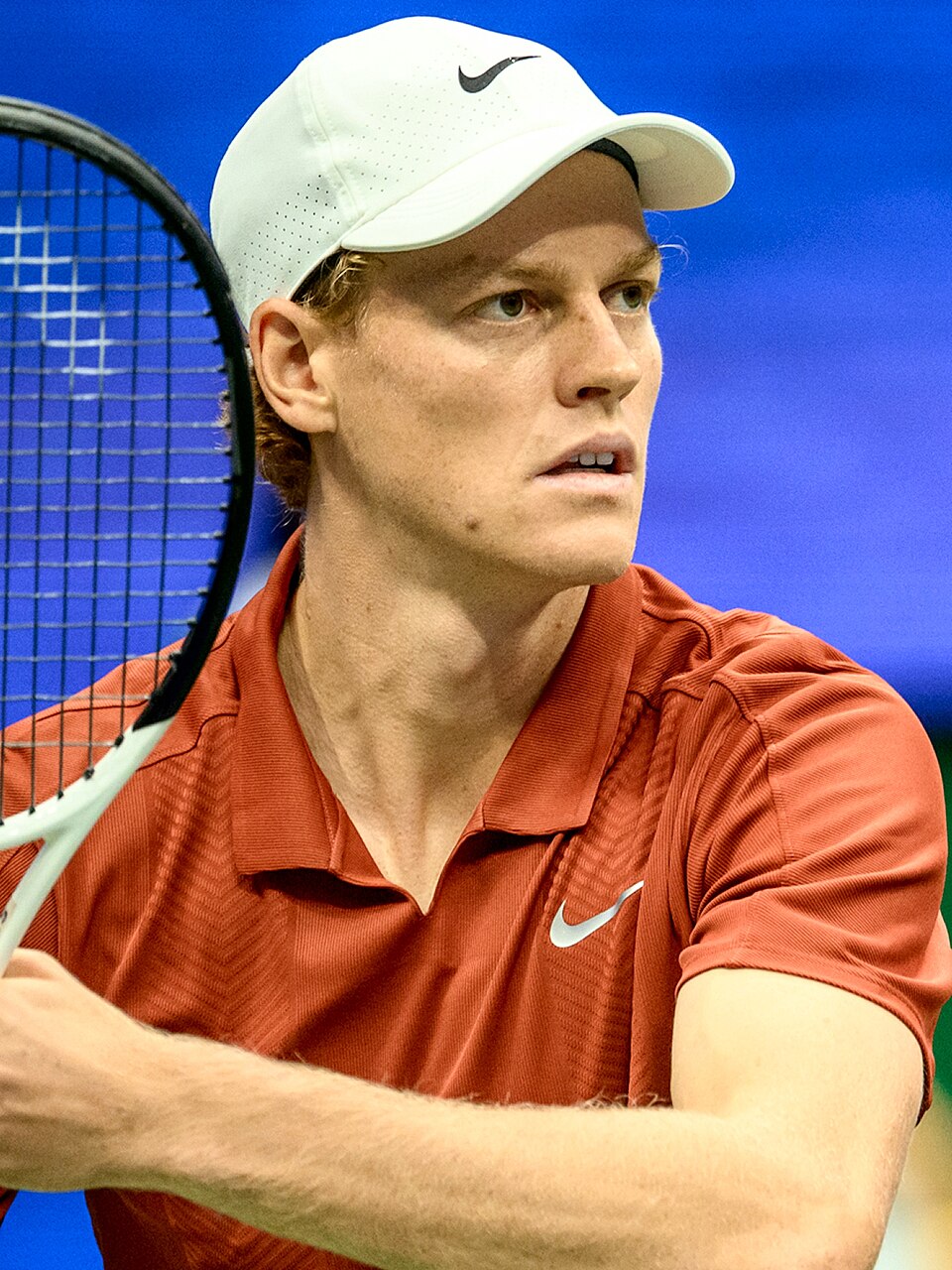
PARIS — World No. 1 Jannik Sinner was granted a medical timeout for apparent cramping during his second-round match at the 2026 French Open on Thursday, a decision that sparked immediate controversy and sharp criticism from TNT analyst and former player Jim Courier.
Sinner, who had dominated the first two sets against Argentina’s Juan Manuel Cerundolo, suddenly faltered in the third set while leading 5-1. After losing 15 consecutive points and appearing to grab his back, the Italian requested assistance. Following a conversation with the chair umpire in which Sinner mentioned concerns about dehydration, officials allowed him to take a medical timeout and briefly leave the court for treatment.
Courier, calling the match for TNT, strongly disagreed with the ruling. “This is absolute baloney,” he said on air. “That’s not fair. That’s not right.” He added later, “We love the top players, they drive the sport, but you’ve gotta apply the rules fairly. The rules are being bent for the top players.”
Tennis rules generally prohibit medical timeouts specifically for cramping, as the condition is often viewed as a fitness issue rather than an acute injury. The decision allowed Sinner time to recover, after which he returned to the court but ultimately dropped the third set, extending the match.
Match Context and Turning Point
Sinner entered the match as the clear favorite, having won the first two sets convincingly. His sudden physical decline at 5-1 in the third set shifted momentum dramatically in favor of Cerundolo, who capitalized on the Italian’s apparent discomfort to force a fourth set.
The timeout came at a critical juncture. While Sinner eventually regained some composure, the incident raised questions about consistency in rule enforcement, particularly for top-ranked players. Tennis analysts noted that lower-ranked players have occasionally been denied similar requests in past tournaments.
Sinner has dealt with occasional physical issues in the past, including a hip problem that affected his preparation for earlier events. However, he entered the 2026 French Open as the top seed and defending champion from previous hard-court successes, making the cramping episode unexpected.
Reactions and Rule Debate
Courier’s pointed criticism resonated widely on social media and among tennis observers. The former French Open champion emphasized that while he respects Sinner’s talent, the rules should apply equally regardless of ranking.
The International Tennis Federation and ATP Tour have clear guidelines on medical timeouts. Players may receive treatment for verifiable injuries or illnesses, but cramping is typically not eligible for such breaks to prevent strategic abuse. Umpires have discretion in borderline cases, which often leads to debate.
This is not the first time a high-profile player has faced scrutiny over medical timeouts at Roland Garros. Similar incidents in previous years involving other top players have prompted calls for stricter enforcement and clearer guidelines from governing bodies.
Sinner’s team has not publicly commented on the specific incident beyond standard post-match remarks. Cerundolo, who mounted a strong comeback attempt, focused on his own performance when speaking briefly with media after the match.
Broader Implications for Tennis
The controversy highlights ongoing challenges in professional tennis regarding player fitness, rule consistency, and the balance between athlete welfare and competitive fairness. As the sport’s physical demands increase with longer seasons and more powerful playing styles, cramping and fatigue-related issues have become more common.
Many players and coaches have called for better hydration protocols, improved scheduling, and potentially longer recovery periods between matches at Grand Slams. However, others argue that current rules already provide sufficient flexibility and that further leniency could undermine the sport’s integrity.
The French Open, known for its demanding clay courts and longer rallies, has historically seen more physical issues than faster surfaces. Organizers have increased medical support and cooling breaks in recent years, but debates over when such interventions cross into unfair advantages persist.
Sinner’s Path at Roland Garros
Despite the third-set setback, Sinner remained the strong favorite to advance. His overall dominance in 2025 and 2026, including multiple Grand Slam titles, has established him as the clear leader in men’s tennis. The incident, while controversial, did not appear to derail his campaign entirely, though it provided ammunition for critics questioning his resilience under pressure.
Cerundolo, ranked outside the top 50, played inspired tennis after the timeout and pushed the match longer than many expected. His performance earned respect from observers, even in defeat.
Fan and Media Response
Social media reaction was swift and divided. Supporters of Sinner argued that dehydration concerns justified the timeout and that the umpire made the correct on-court decision. Critics, including many neutral fans, sided with Courier’s assessment that the rules appeared to be applied inconsistently.
Broadcast clips of the umpire conversation and Courier’s commentary quickly went viral, amplifying the discussion. Tennis commentators on other platforms echoed concerns about fairness in high-stakes matches.
As the tournament progresses, officials may face increased scrutiny on medical timeout decisions. The French Tennis Federation has not issued an immediate statement on the specific incident.
Looking Ahead in the Tournament
Sinner’s match highlighted the physical toll of best-of-five set Grand Slam tennis. With temperatures rising in Paris during the second week, hydration and recovery management will remain critical for all players.
The controversy also comes at a time when tennis governing bodies are reviewing rules to modernize the sport while preserving its traditions. Any changes regarding medical timeouts would likely require extensive consultation with players, umpires and medical experts.
For now, the focus returns to on-court action. Sinner, despite the hiccup, remains a top contender for the 2026 French Open title. His ability to overcome physical challenges could become a defining narrative of his campaign.
The incident serves as a reminder of the fine line between legitimate medical needs and competitive strategy in elite tennis. As technology and sports science advance, expect continued debate over how best to balance player health with the spirit of fair competition.



















































You must be logged in to post a comment Login