

Business
Damian Creamer: Disengagement Is an Alignment Problem, Not a Work Ethic Problem


When a team member starts to drift, the underlying assumption is almost always the same: the person has a discipline problem, and the fix is more accountability.
Damian Creamer, founder and CEO of StrongMind, thinks the entire diagnosis is wrong.
“I don’t see disengagement as a work ethic problem,” Creamer says. “I see it as an alignment problem. When there’s a real connection to the ‘why,’ effort feels lighter and momentum follows. When there isn’t, even small tasks feel heavy, no matter how capable someone is.”
It is the kind of take Creamer himself flags as contrarian, the kind of belief he is willing to admit “almost nobody agrees with.”
And yet, having spent more than 25 years building organizations and watching people thrive or stall inside them, he has come to see it as one of the most consequential reframes a leader can make. Disengagement, in his view, is rarely about character. It is almost always about architecture.
The Orthodoxy He’s Pushing Against
Most modern management thinking treats motivation as the responsibility of the individual. The professional, in this framing, is someone who can deliver consistent, high-quality work regardless of personal interest, emotional resonance, or connection to the mission.
Damian Creamer does not entirely dispute that this approach can produce results. “You can produce acceptable work that way,” he acknowledges. The trouble, in his view, is that “acceptable” is the ceiling, not the floor.
“Great work is different,” Creamer says. “It requires extreme ownership, curiosity, and an extra level of thought that’s hard to fake. When people care about the outcome, the quality goes up, the thinking gets sharper, and accountability shows up naturally.”
That last phrase is the one that quietly upends the conventional approach. Accountability, in Creamer’s framework, is a byproduct of alignment.
When the alignment is real, accountability emerges on its own. When the alignment is missing, no amount of process can manufacture it convincingly.
Why the Reframe Matters
The practical implications of this shift are significant. If disengagement is fundamentally a discipline issue, the manager’s job is to apply more pressure: clearer expectations, tighter deadlines, more visible consequences.
If disengagement is fundamentally an alignment issue, the manager’s job changes entirely. The first question is no longer “How do I get this person to try harder?” but “Where did the connection between this person and this work break down?”
That second question demands honesty about the role itself, the stated mission, and whether the day-to-day work actually reflects the why a leader claims to be building toward.
It asks whether the person is in the wrong seat, the wrong company, or the wrong moment in their career, none of which can be fixed with a stern conversation.
Creamer’s framing also reorients hiring. If alignment is the variable that determines great work, then a hiring process focused primarily on capability is incomplete.
A highly capable person who cannot connect to the problem will produce work that meets the brief and never exceeds it. A moderately capable person who is genuinely obsessed with the problem will often outperform expectations in ways that are difficult to predict.
Damian Creamer makes this point bluntly: “It’s really hard to do truly great work on something you don’t actually care about.” The statement reads as obvious until you consider how rarely organizations design around it.
The Founder’s Lens
This is not a theoretical position for Creamer. It is observable in how he runs StrongMind, the K-12 learning platform he has spent over two decades building. The company’s approach to product, leadership, and culture consistently reflects a belief that mission-clarity is not a soft variable.
“Ideas don’t come to life because they’re brilliant,” Creamer says. “They come to life because they’re aligned, actionable, and owned.”
Creamer’s own daily structure mirrors this principle in miniature. He aims to make all important decisions by 2 p.m., protects deep focus blocks aggressively, and is open about cutting nonessential meetings. The reasoning is not just personal productivity. It is that misaligned activity, even high-energy activity, dilutes the signal of what actually matters. “Less noise, more signal,” he says. “Fewer meetings, better decisions.”
A leader who internalizes that discipline at a personal level tends to extend it to the team. The question stops being “Are people busy?” and becomes
“Are people working on what matters most, and do they understand why it matters?” Those are very different questions, and they produce very different cultures.
Where Most Managers Get Stuck
Treating disengagement as an alignment problem requires admitting that the problem might originate at the top.
This is why the alignment frame is uncomfortable for organizations built on the assumption that any sufficiently disciplined professional can be deployed against any reasonably defined task. That assumption keeps things simple. It also keeps things average.
Damian Creamer‘s argument, distilled, is this: average is what you get when you treat people as interchangeable units of execution. Greatness is what you get when you treat alignment as a leadership responsibility, not an employee virtue.
The Practical Takeaway
For founders and managers, the implication is straightforward but rarely acted on. The next time someone on a team starts to disengage, resist the reflex to reach for the accountability playbook first. Instead, ask:
- Does this person understand the why behind the work, not just the what?
- Has the why genuinely been communicated, or just assumed?
- Does the work itself reflect the why, or has the day-to-day quietly drifted from it?
- Is this person in the right seat to contribute to that why, or has the role evolved past their genuine interest?
If the answers are uncomfortable, that is the diagnosis. The fix is to repair the problem. Sometimes, that might mean redefining the role. Othertimes, it could mean reframing the mission itself.
“When there’s a real connection to the why, effort feels lighter and momentum follows,” Creamer says.
It is a deceptively simple observation. It is also the difference between a team that performs and a team that does great work.

US military says it struck vessel in Caribbean, killing two

Global business leaders back faster electrification shift

Gold rebounds as US-Iran talks progress; Fed outlook worries cap gains
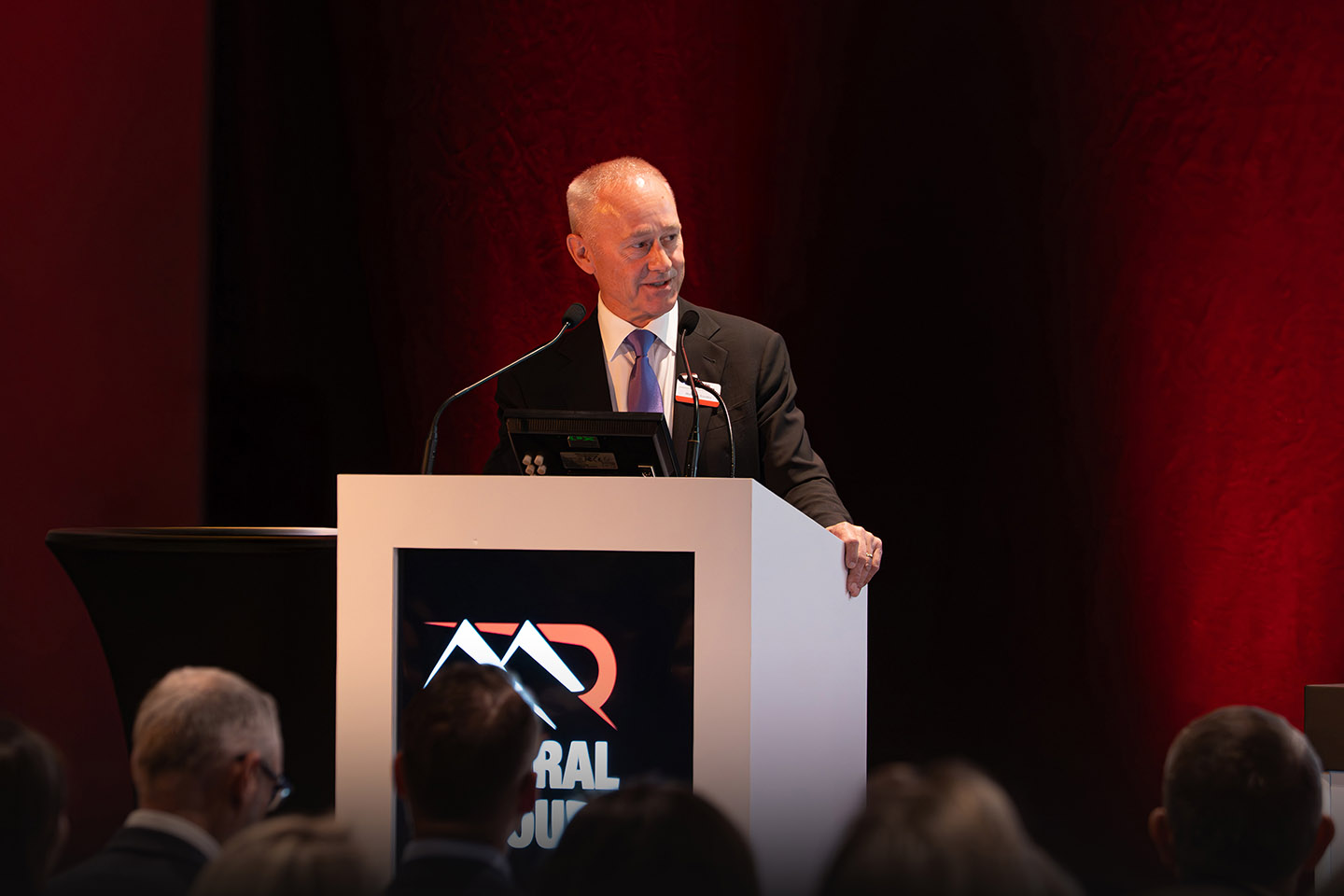
Mineral Resources chair Malcolm Bundey is preferencing an internal candidate to succeed founder Chris Ellison after completing a global search for his replacement.

China targets US rare earth and other firms with export controls

Venice may hike visitor entry fee to €50 to curb overtourism
Venice’s new mayor, Simone Venturini, proposes a significant hike in the city’s controversial entrance fee, potentially reaching €50 on peak days. This move aims to curb overtourism by discouraging day-trippers and generating funds for the city’s upkeep. The fee, already in place since 2024, could see a substantial increase, pending government approval, as Venice seeks to balance resident needs with tourist influx.
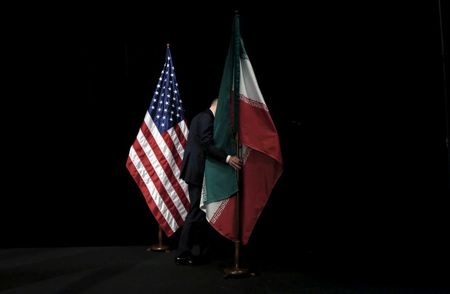
Iran touts progress in US peace talks; negotiations set to continue
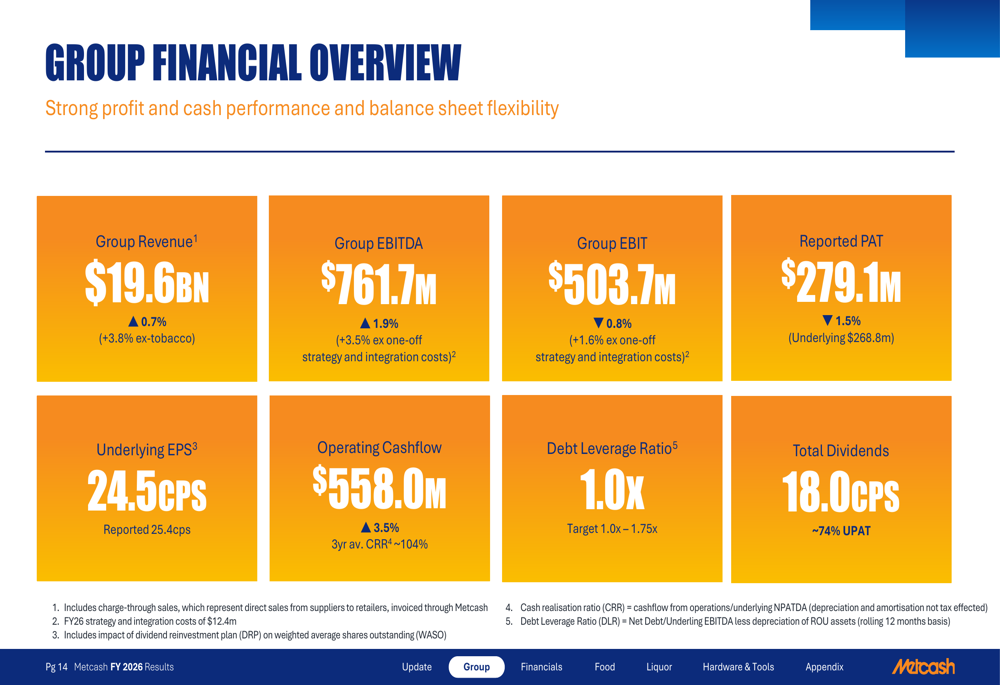
Metcash FY26 presentation: diversification offsets tobacco decline
Business
Oil Price Today (June 22): Crude oil rises above $80 as Iran shuts Strait of Hormuz again. What are experts saying?

Reuters reported that shipping data showed a sharp decline in the number of vessels passing through the Strait of Hormuz on Sunday after Iran announced it had once again closed the waterway, accusing Israel and the United States of violating the interim peace agreement.
Crude oil price on June 22
Brent crude futures rose 54 cents, or 0.67%, to $81.11 a barrel, after briefly touching $82.30 at the start of trading. U.S. West Texas Intermediate (WTI) crude futures gained $2.02, or 2.64%, to $78.62 a barrel ahead of the contract’s expiry later on Monday. The more actively traded August contract advanced $1.43 to $77.28 a barrel. U.S. markets were closed on Friday due to a holiday, resulting in no settlement.
Adding to market uncertainty, U.S. President Donald Trump threatened to resume attacks on Iran, even as U.S. Vice President JD Vance met Iranian officials on Sunday for the first discussions under the interim deal. Tehran, meanwhile, said Washington had failed to honour its commitment to halt fighting in Lebanon.
Also read: Global Market Today: Asian stocks slip, oil up on peace doubts
In Lebanon, Israeli strikes killed at least 20 people on Saturday, according to the state news agency NNA. The attacks came a day after a ceasefire with Hezbollah took effect in an effort to stop months of escalating violence.

Despite Monday’s gains, oil prices had fallen more than 8% last week amid expectations that cargoes stranded inside the Gulf would be released and that U.S. sanctions on Iranian oil could eventually be lifted under a U.S.-Iran agreement.
Where are prices headed?
Despite the recent slide in oil prices, a complete reopening of Hormuz is expected to be a complex process. It will require careful coordination of vessel movements, the restart of oil wells, repairs to infrastructure and agreement on de-mining operations. Some shipowners also remain wary of operating conditions in the strait and the wider Persian Gulf.
Analysts note that global oil inventories were depleted during the extended disruption of shipping through the Strait of Hormuz and will take time to rebuild. Stockpiles could continue falling before fresh Gulf supplies begin reaching international markets.Last month, Saudi Aramco Chief Executive Officer Amin Nasser cautioned that disruptions in the Strait of Hormuz could delay a return to stability in global oil markets until 2027. According to Nasser, prolonged interruptions could affect nearly 100 million barrels of oil supply each week. Saudi Aramco remains the world’s largest oil producer.
Morgan Stanley described the oil market as being in “a race against time,” warning that some of the factors that have limited the rise in prices could weaken if the Strait of Hormuz remains closed through June.
The brokerage noted that higher U.S. crude exports and softer Chinese demand have so far helped absorb part of the supply shock. However, it cautioned that global supplies could tighten again if disruptions in the strategic shipping route continue, particularly beyond the period during which the U.S. and China are able to cushion the impact.
(Disclaimer: Recommendations, suggestions, views and opinions given by the experts are their own. These do not represent the views of The Economic Times)
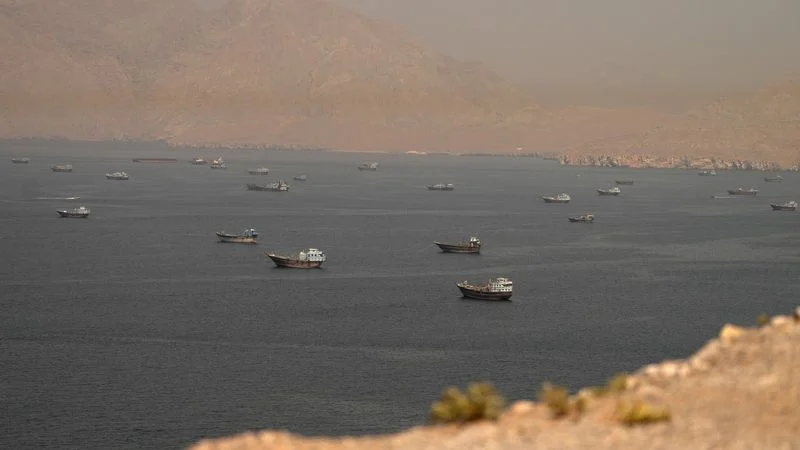

US and Iran conclude high-level talks in Switzerland, mediators say

Amber Heard Resurfaces With Rare Post Years After Depp Trial

Salford man charged with arson in Bolton due in court
US military says it struck vessel in Caribbean, killing two


![LISA - 'MONEY' Dance Practice [Mirrored]](https://wordupnews.com/wp-content/uploads/2026/02/1770259125_maxresdefault-80x80.jpg)

-
 Crypto World7 days ago
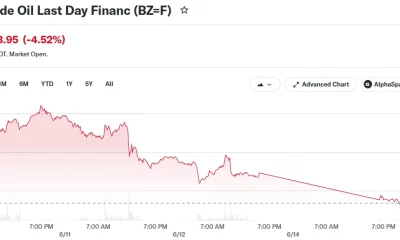
Crude Oil Plunges Over 4% as US-Iran Agreement Reopens Hormuz Strait
-

 Fashion2 days ago
Weekend Open Thread: Miami – Corporette.com
-
 Tech5 days ago
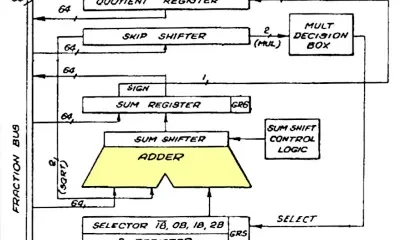
The Adder At The Heart Of Intel’s 8087 FPU
-
 Business2 days ago
Wall Street Week Ahead: Investors see Micron earnings as pulse check of AI rally momentum
-

 Crypto World2 days ago
HIVE shares jump as $220M AI deal speeds Bitcoin mining pivot
-

 Sports3 days ago
FIFA World Cup 2026: Canada beat 9-men Qatar 6-0 to register first ever win | FIFA World Cup 2026
-

 Business1 day ago
MHP SE 2026 Q1 – Results – Earnings Call Presentation (OTCMKTS:MHPSY) 2026-06-20
-

 Crypto World2 days ago
Jake Chervinsky accuses CME of protecting derivatives monopoly
-

 Business3 days ago
Brexit cost 6% of UK economy, Bank of England company data suggests
-

 Business1 day ago
Soccer-U.S. defends Iran World Cup travel restrictions, says discussions ongoing
-
 Crypto World4 days ago
Anthropic’s Dario Amodei Urged AI Unity at G7, Even as US Banned His Models
-

 Tech4 days ago
Weeks Of In-The-Field Testing And A Verdict
-
 Crypto World2 days ago
Can Charles Hoskinson Really Rescue Cardano?
-

 Tech4 days ago
Adobe adds its AI assistant to Premiere, Illustrator and InDesign
-

 Entertainment1 day ago
Renter of Home in Anne Heche Crash Denies Settlement With Son
-

 Politics2 days ago
Andy Burnham and the meaning of Makerfield
-
 Crypto World4 days ago
Iren (IREN) Stock Surges on Jefferies Buy Rating: AI Infrastructure Play Gains Momentum
-

 Politics3 days ago
BBC Reporter Discusses Cross Party Criticism Of Trumps Iran Deal
-

 Tech3 days ago
Instagram Now Lets You Add A Unique Caption To Each Carousel Slide
-

 Crypto World4 days ago
Coinbase Stakes Out Brokerage Territory With SEC-Registered AI Advisor and Stock Options Push
You must be logged in to post a comment Login