

Business
Crude oil shock clouds near-term outlook, but FY27 earnings growth still intact: Karthikraj Lakshmanan

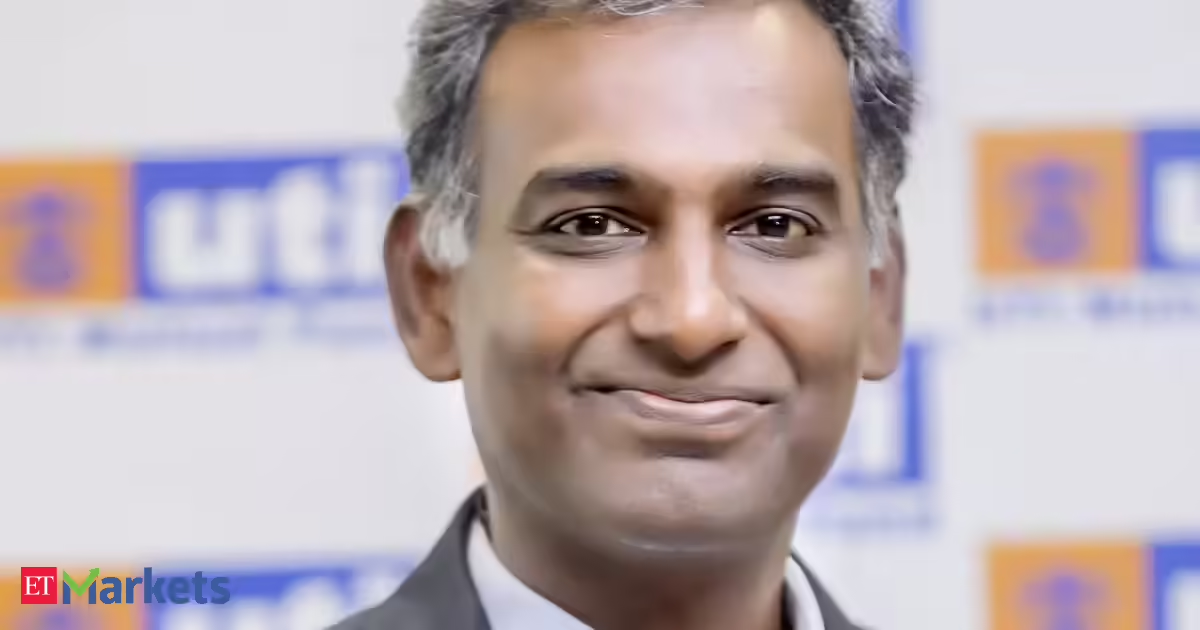
He noted that by February, most macro concerns had already been absorbed by the market, including progress on trade deals with the US and Europe, and expectations of double-digit nominal GDP growth along with mid-teen earnings growth after a subdued phase. However, the recent Iran–US conflict and the resulting sustained rise in crude prices over the past few months have reintroduced macro pressure, with potential implications for India’s current account deficit, inflation, and marginally even GDP growth. While acknowledging the possibility of some earnings cuts due to higher crude, he emphasized that India remains in a stronger position compared to past stress periods such as 2013, and still retains the potential for double-digit earnings growth in FY27.
He added that Q4 earnings have been relatively broad-based and better than earlier quarters, although Q1 could see some impact in select sectors due to elevated oil prices, making crude the most important variable to watch going ahead.
On the FY27 earnings outlook, Lakshmanan said consensus estimates are broadly in the mid-to-high teens range, though there could be some moderation at the index or large-cap level due to commodity pressures. He pointed out that while certain sectors may face margin pressure from higher crude and input costs, nominal revenue growth could remain strong due to inflation returning and overall higher nominal economic activity. On demand conditions, he said inflation is unlikely to spike meaningfully as the economy was earlier coming off a low inflation base, keeping overall conditions manageable. However, he flagged monsoon trends as an important near-term risk, noting that if rainfall comes in below the long-term average, food inflation could temporarily rise and add some pressure to consumption.
On sector allocation, he remained positive on financials, particularly private banks and insurance, citing their strong long-term return ratios, attractive valuations relative to history, and the ability to grow consistently above nominal GDP as seen over the past three decades. He also highlighted that rising interest rates could further support profitability in the banking sector. Despite concerns about high domestic investor ownership in financials, he maintained that valuations and fundamentals remain the primary drivers of his investment thesis rather than fund flow dynamics, which he said are inherently unpredictable and should not guide long-term positioning.

He continued to hold an overweight stance on IT stocks, calling it a contrarian call given weak Street positioning. According to him, Indian IT companies continue to generate strong ROCEs and cash flows, while returning a large portion of earnings via dividends and buybacks, offering attractive yield support. He also highlighted that even modest rupee depreciation provides additional earnings visibility. While acknowledging concerns about slower constant currency growth and fears of disruption from AI, he argued that IT services companies are still likely to play an important role in AI implementation, and historical transitions such as ERP and cloud shifts have not structurally disrupted long-term growth trajectories.
On healthcare, he said mid and small-cap companies offer better growth opportunities compared to large-cap names, which are relatively mature and offer steadier expansion. In capital goods, he acknowledged strong near-term momentum driven by power sector demand, transmission and distribution opportunities, and potential long-term tailwinds from data centre-related capex. However, he cautioned that valuations in several capital goods stocks have run up sharply, already pricing in high growth expectations, and advised a more selective, bottom-up approach rather than broad sector optimism at current levels.Finally, on capital flows, he stressed that market positioning should not be based on assumptions around FII or domestic inflows, as these are highly unpredictable and can shift quickly. Instead, he reiterated that investment decisions should remain anchored in fundamentals, earnings visibility, and valuation comfort. Overall, his view suggested that while near-term volatility from crude oil and inflation risks cannot be ignored, India’s broader earnings cycle into FY27 still points toward steady growth, with selective sector opportunities continuing to drive market returns.



Alan Brochstein, CFA, was one of the first investment professionals to focus exclusively on the cannabis industry. Alan got his start as a financial professional in the securities industry in 1986, managing investments in institutional environments until he founded AB Analytical Services in 2007 in order to provide independent consulting to registered investment advisors. He was also the managing partner of New Cannabis Ventures, a leading provider of relevant financial information in the cannabis industry since 2015. Most recently, Alan has focused on ETFs, sharing articles here at Seeking Alpha under the alias The Intelligent ETF Investor.Alan ran 420 Investor, the investing group for investors interested in the publicly-traded cannabis stocks that he moved to Seeking Alpha in 2023, from 2013 to May 2026. As the leader of the investing group. Alan closely covered 19 stocks and shared investment news as it came out, previews of their earnings reports and analysis of them afterwards. Other features of the group included: a model portfolio, 10 videos per week with chart analysis, 3 summary pieces weekly, a monthly newsletter, and chat for questions .
Analyst’s Disclosure: I/we have no stock, option or similar derivative position in any of the companies mentioned, and no plans to initiate any such positions within the next 72 hours. I wrote this article myself, and it expresses my own opinions. I am not receiving compensation for it (other than from Seeking Alpha). I have no business relationship with any company whose stock is mentioned in this article.
My wife recently purchased BSET.
Seeking Alpha’s Disclosure: Past performance is no guarantee of future results. No recommendation or advice is being given as to whether any investment is suitable for a particular investor. Any views or opinions expressed above may not reflect those of Seeking Alpha as a whole. Seeking Alpha is not a licensed securities dealer, broker or US investment adviser or investment bank. Our analysts are third party authors that include both professional investors and individual investors who may not be licensed or certified by any institute or regulatory body.

TYG: This Aptly Named Fund Can Be Safely Avoided
Ocado prepares succession plan for CEO Tim Steiner

SEOUL — South Korea’s main stock index posted solid gains Monday, with the KOSPI closing at 9,118.50 after rising 66.08 points, or 0.73 percent. The advance reflected continued investor interest in technology and export-oriented sectors amid steady global demand for semiconductors and related components.
Trading on the Korea Exchange showed broad participation, with several blue-chip names contributing to the upward movement. The benchmark index has demonstrated resilience in recent sessions, building on longer-term strength driven by artificial intelligence-related developments and favorable export trends. Market participants cited optimism around chip sector performance as a key supporting factor.
Technology heavyweights led much of the session’s momentum. Samsung Electronics and SK Hynix, major players in memory chips, saw buying interest as reports highlighted robust demand for high-bandwidth memory products used in advanced computing. The semiconductor industry remains a cornerstone of South Korea’s economy, with exports showing strong growth in early June data.
Analysts pointed to broader market dynamics, including expectations around global technology spending. South Korean firms have benefited from partnerships and supply chain roles in the expanding artificial intelligence infrastructure. Foreign investor flows have also supported recent performance, though domestic institutions provided additional stability.
The KOSPI’s movement came against a backdrop of mixed signals from international markets. U.S. indices showed varied results overnight, while commodity prices and currency fluctuations influenced regional sentiment. The South Korean won traded in a narrow range against the dollar, aiding export-focused companies.
Volume on the exchange was healthy, indicating genuine participation rather than thin trading. Gainers outnumbered decliners by a comfortable margin, with industrials and materials sectors also contributing positively. Defensive areas such as consumer staples offered some balance amid selective profit-taking in other segments.
Economists monitoring the session noted South Korea’s export resilience as a tailwind. Preliminary figures for June showed continued strength in semiconductor shipments, aligning with global AI investment trends. This fundamental support helped offset concerns around potential U.S. policy shifts and geopolitical developments.
Market watchers highlighted the KOSPI’s year-to-date performance, which has seen significant appreciation amid favorable industry cycles. The index has repeatedly tested record territory in 2026, underscoring the economy’s technology-driven growth model. However, analysts cautioned that volatility remains a feature, particularly with external factors such as interest rate paths and trade negotiations in focus.
Individual stock movements illustrated sector rotation. Chip-related names advanced on positive sentiment, while some consumer and financial shares showed more modest changes. Battery and electric vehicle components also attracted attention amid global energy transition themes.
The day’s trading reinforced South Korea’s position as a key player in global technology supply chains. Companies like Samsung and SK Hynix continue to invest heavily in advanced manufacturing, positioning them to capture demand from major clients in cloud computing and data centers.
Broader economic indicators remain supportive. South Korea’s export data has exceeded expectations in recent periods, with semiconductors playing a outsized role. Domestic consumption and investment trends are also monitored closely by policymakers at the Bank of Korea.
The central bank has maintained a measured approach to monetary policy, balancing growth support with inflation considerations. Any signals from upcoming meetings could influence market direction in coming weeks.
For investors, the session offered opportunities across multiple segments. Technology’s outperformance echoed patterns seen earlier in the year, when AI enthusiasm drove substantial gains. Resource and industrial names provided diversification amid commodity stability.
Looking ahead, market attention will shift toward corporate earnings reports and global economic releases. South Korean firms are expected to provide updates on second-quarter performance, potentially offering further insight into technology demand and supply chain health.
The KOSPI’s 0.73 percent rise to 9,118.50 capped a constructive day for equities. While not a dramatic surge, the move reflected underlying confidence in key industries. Trading remained orderly, with no significant technical disruptions reported.
Analysts will continue assessing whether current levels represent sustainable support or if further consolidation lies ahead. External developments, including U.S. Federal Reserve communications and trade talks, are likely to remain influential.
South Korea’s market has shown capacity for both rapid advances and corrective phases throughout 2026. The latest session adds to a narrative of resilience amid complex global conditions.
Market participants are advised to monitor upcoming data releases for directional cues. Corporate news and sector-specific developments will also shape short-term sentiment.
The close at 9,118.50 leaves the benchmark well-positioned within its recent trading range. Continued strength in exports and technology could support further upside, though caution around valuations persists in some quarters.
Overall, Monday’s trading delivered a positive result for South Korean equities. The KOSPI’s advance highlighted the market’s ability to find support in core strengths even as broader uncertainties linger.

The Kerry Stokes-controlled Caterpillar supplier SGH has unveiled plans for an on-market buy-back valued up to $500 million.
Business
Infosys, HCL Tech, Coforge, other IT stocks rise up to 3% a day after a massive crash. What lies ahead?

The Nifty IT index gained 1.3% to 27,785 on Monday, as seen at 10:10 am. Coforge, OFSS, Tech Mahindra and Persistent Systems shares gained 2-3%, while those of Infosys, LTI Mindtree, HCL Tech, Mphasis, Wipro and Tata Consultancy Services (TCS) rose around 1% each.
This comes a session after the sectoral index plunged to 26,634.50 on Friday, the lowest level seen by the sectoral index since April 2023. Accenture last week revised its FY26 revenue growth guidance to 3-4%, compared with its earlier outlook of 3-5%. The company also projected fourth-quarter revenue of $17.75-18.4 billion, falling below Street expectations of $18.47 billion, according to LSEG data.
Accenture’s softer outlook retriggered worries that enterprises remain cautious on discretionary spending related to IT consulting and digital transformation projects, even as investments in artificial intelligence and cybersecurity continue. Indian IT companies derive a major portion of their revenue from the US economy. Hence, worries around reduced discretionary spending may have led to the sharp sell-off in the stocks on Dalal Street on Friday.
Also read: Why Accenture’s warning sparked a Rs 1.35 lakh crore meltdown for TCS, Infosys, other IT stocks
Analysts highlight attractive IT valuations
However, analysts were quick to point out attractive valuations. Buying in IT stocks can emerge at lower levels since valuations are becoming attractive after the sharp correction, said VK Vijayakumar, Chief Investment Strategist at Geojit Investments.
Nuvama in its note also said that the stock price reaction on Friday appeared highly exaggerated, although Accenture’s guidance cut and soft bookings are slightly negative for Indian IT. “We continue to maintain that Gen AI will eventually lead to expansion of TAM for Indian IT companies. Additionally, post the recent sharp correction, sector valuations have become highly attractive,” it added.
Also read: Down 30% in 1 year, are AI-hit Infy, TCS still value stocks?
Technical view on Nifty IT
Pabitro Mukherjee, Deputy Vice President of Technical Research at Bajaj Broking, warned that volatility in IT stocks is likely to be high in the coming sessions ahead of the quarterly results season. Price-wise, there is still no sign of reversal of the corrective trend; hence he suggested avoiding the sector at current levels. “Let the price stabilise and only a formation of higher high and higher low on the weekly chart and a move above the 50-day EMA, currently placed around 29,325, will be the initial sign of trend reversal,” he said.Mukherjee expects the Nifty IT index to find immediate key support at 26,180 levels, being the identical lows of CY22 and CY23.
“The index continues to trade below its key short- and long-term moving averages, while the RSI has slipped below 40, indicating bearish momentum. Additionally, DI- has crossed above DI+ on the ADX indicator, reflecting growing seller dominance. The 27,050–27,000 zone remains a crucial support zone. Any sustainable move below this zone can lead the index to extend its weakness further on the downside. The resistance is placed in the 28,250–28,300 zone,” said Sudeep Shah, Vice President and Head of Technical & Derivatives Research at SBI Securities.
Also read: Sudeep Shah picks 8 stocks, outlines Infosys, IFCI strategy
(With inputs from agencies)
(Disclaimer: Recommendations, suggestions, views and opinions given by the experts are their own. These do not represent the views of The Economic Times)

TUCSON, Ariz. — Federal authorities have acknowledged a potential error in their handling of a cryptocurrency ransom demand that may have complicated the ongoing investigation into the disappearance of Nancy Guthrie, a Tucson woman who vanished from her home earlier this year. The admission comes as search efforts continue along the U.S.-Mexico border, with new reports of unmarked graves uncovered in areas linked to anonymous tips.
The FBI, working alongside the Pima County Sheriff’s Department, faced a reported demand of $4 million in Bitcoin from individuals claiming to hold Guthrie. Insiders familiar with the task force indicated that only a small fraction — approximately $152 — was transferred as part of a strategy to engage with the abductors. The partial payment, intended to prompt further communication, instead led to a complete breakdown in contact.
This development has raised questions about the effectiveness of law enforcement tactics in high-stakes kidnapping cases involving digital currencies. Authorities described the approach as an attempt to “tickle the wire,” a technique aimed at eliciting responses from suspects. However, the lack of follow-up from the claimed kidnappers has left investigators reassessing their strategy.
Guthrie, the mother of NBC News correspondent Savannah Guthrie, was last seen at her Tucson residence. Her disappearance has drawn national attention, with family members and authorities expressing ongoing concern for her safety. The case has involved extensive coordination between federal, state and local agencies, as well as international elements due to potential cross-border activity.
Search operations have intensified in regions south of the Arizona border. A Mexican volunteer organization, Buscando Corazones Nogales, recently examined areas near Nogales, Sonora, following anonymous tips suggesting Guthrie may have been taken across the border. The group reported discovering multiple unmarked graves during these efforts, though none have been connected to Guthrie’s case.
The leader of the search collective received information pointing to a possible burial site in a stream near the Mariposa Port of Entry. Volunteers conducted thorough checks but found no evidence linking the location to Guthrie. The discoveries underscore the challenges of investigating disappearances in remote border areas, where clandestine activity can obscure traces.
Earlier tips had prompted speculation about various disposal methods, including burial in wooded or remote locations. Experts familiar with similar cases have noted that perpetrators often select isolated spots to avoid detection, complicating recovery efforts.
The partial Bitcoin transfer has become a focal point of internal reviews. Cryptocurrency transactions, while traceable in theory, present unique hurdles due to the speed and anonymity they can afford. Authorities had hoped the small payment would yield additional leads or confirm the legitimacy of the demand. Instead, silence followed, prompting concerns that the tactic may have alerted or deterred those involved.
FBI officials have not publicly detailed the exact reasoning behind the limited transfer but have indicated that all aspects of the investigation remain under active review. The agency continues to pursue multiple avenues, including digital forensics and human intelligence sources.
Pima County Sheriff Department spokespeople echoed the commitment to resolving the case. Joint task force members have emphasized that no credible evidence has emerged confirming harm to Guthrie, though the passage of time heightens urgency. Family representatives have appealed for any information that could assist authorities.
The involvement of cryptocurrency in the alleged ransom demand reflects evolving patterns in abduction cases. Bitcoin and similar assets offer perpetrators a means to demand payment with reduced immediate traceability, though blockchain analysis has improved law enforcement capabilities in recent years. The Guthrie investigation highlights both the potential and pitfalls of engaging with such demands.
Search teams have covered rugged terrain near the border, where anonymous tips have directed efforts toward streams and remote outposts. The Mariposa area, close to official crossing points, has seen increased activity as volunteers and officials coordinate. Despite extensive searches, no definitive breakthroughs have been reported.
Nancy Guthrie’s disappearance has resonated widely due to her daughter’s prominent role in national news. Savannah Guthrie has maintained a public presence while supporting family efforts behind the scenes. The case has also spotlighted vulnerabilities faced by individuals in everyday settings, prompting discussions on personal safety.
Investigators initially treated the disappearance as a missing persons matter before shifting focus to possible abduction based on emerging details. The ransom communication marked a significant escalation, introducing digital elements that required specialized expertise.
The partial payment decision is now subject to scrutiny within law enforcement circles. Some experts suggest that full compliance, even in staged form, might have prolonged engagement, while others argue the risk of funding criminal activity outweighs potential gains. The “fatal mistake” reference, attributed to task force insiders, underscores internal acknowledgment of the setback.
Border region searches have uncovered broader issues, including numerous unmarked graves. These findings, while not connected to Guthrie, point to ongoing humanitarian and criminal concerns in the area. Mexican authorities and volunteer groups continue collaborative efforts.
The FBI and Pima County officials urge anyone with information to come forward. Tips can be submitted through official channels, with assurances of confidentiality where appropriate. Rewards for information leading to resolution have been discussed but not formally announced.
As weeks turn into months since Guthrie’s disappearance, the investigation maintains momentum through traditional policing and technological tools. Digital currency trails, communication analysis and ground searches form the core of current activities.
The case serves as a reminder of the complexities in modern missing persons investigations, particularly those with potential international dimensions. Authorities stress that every lead, however small, could prove vital.
Community support in Tucson and beyond has included vigils and awareness campaigns. Local residents have assisted with searches and tip generation. The high visibility of the case has also brought attention to similar unresolved disappearances.
Federal resources remain dedicated to the effort, with interagency cooperation ongoing. The outcome of the Bitcoin tactic review could influence future protocols in ransom situations involving cryptocurrencies.
For now, the focus stays on locating Nancy Guthrie and bringing clarity to her family. Investigators continue sifting through tips and refining strategies in hopes of a positive resolution.

Asia stocks rise amid Iran optimism; S.Korea buoyed by chip strength

SolarEdge's Outlook: Revenue Is Up, Execution Is Everything

Sampo buys back 1.44 million shares in week 25

Bassett Furniture: Not A Dog But A Cheap Stock (NASDAQ:BSET)

Altura Begins Orderly Vault Wind-Down as Withdrawal Demand Surges

Celebs Over 40 Are Wearing These Slim Sneaker Styles


-
 Crypto World7 days ago
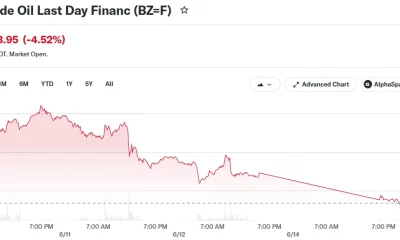
Crude Oil Plunges Over 4% as US-Iran Agreement Reopens Hormuz Strait
-

 Tech6 days ago
The Adder At The Heart Of Intel’s 8087 FPU
-

 Fashion3 days ago
Weekend Open Thread: Miami – Corporette.com
-
 Business2 days ago
Wall Street Week Ahead: Investors see Micron earnings as pulse check of AI rally momentum
-

 Crypto World2 days ago
HIVE shares jump as $220M AI deal speeds Bitcoin mining pivot
-

 Sports3 days ago
FIFA World Cup 2026: Canada beat 9-men Qatar 6-0 to register first ever win | FIFA World Cup 2026
-

 Crypto World2 days ago
Jake Chervinsky accuses CME of protecting derivatives monopoly
-

 Business1 day ago
MHP SE 2026 Q1 – Results – Earnings Call Presentation (OTCMKTS:MHPSY) 2026-06-20
-

 Crypto World4 days ago
Anthropic’s Dario Amodei Urged AI Unity at G7, Even as US Banned His Models
-

 Business3 days ago
Brexit cost 6% of UK economy, Bank of England company data suggests
-

 Business1 day ago
Soccer-U.S. defends Iran World Cup travel restrictions, says discussions ongoing
-
 Crypto World2 days ago
Can Charles Hoskinson Really Rescue Cardano?
-

 Tech4 days ago
Weeks Of In-The-Field Testing And A Verdict
-

 Tech4 days ago
Adobe adds its AI assistant to Premiere, Illustrator and InDesign
-

 Politics2 days ago
Andy Burnham and the meaning of Makerfield
-
 Crypto World4 days ago
Iren (IREN) Stock Surges on Jefferies Buy Rating: AI Infrastructure Play Gains Momentum
-

 Entertainment1 day ago
Renter of Home in Anne Heche Crash Denies Settlement With Son
-

 Tech3 days ago
Instagram Now Lets You Add A Unique Caption To Each Carousel Slide
-

 Politics3 days ago
BBC Reporter Discusses Cross Party Criticism Of Trumps Iran Deal
-

 News Videos3 days ago
Nightcore – MONEY ON THE DASH (Soft Rock Version) (Lyrics)
You must be logged in to post a comment Login