Connect with us

Business

Dollar hits two-month high as Asian currencies weaken, yen nears 160

Published

on

Continue Reading
Click to comment

You must be logged in to post a comment Login

Leave a Reply

Business

Novo obesity strategy as Eli Lilly extends lead

Published

on

Eli Lilly gaining in GLP-1 market over Novo Nordisk, earnings show

The Eli Lilly and Novo Nordisk logos.

Mike Blake | Tom Little | Reuters

Every time Novo urges investors to look ahead, Eli Lilly gives them another reason to look back at its widening lead over the Danish drugmaker.Ā 

Novo this week laid out an ambitious strategy to reignite growth beyond its top-selling Wegovy and Ozempic injections, which face patent expirations in key markets in the early 2030s. At its Capital Markets Day on Monday, the company promised a pipeline of potential blockbuster products, including drugs that would diversify from its core area of obesity and diabetes.Ā 

Advertisement

But Wall Street so far isn’t convinced by Novo’s road map. Investors pummeled the drugmaker’s stock, underwhelmed by growth targets that matched industry averages rather than outpacing them. They were also skeptical of the lack of clarity around a near-term turnaround plan.

At the same time, Lilly continues to chip away at its rival’s market share — including in the burgeoning obesity pill space.Ā 

Novo hopes to keep its early lead in the oral weight loss market after the successful launch of the Wegovy pill, months ahead of Lilly’s rival pill, Foundayo. Novo CEO Mike Doustdar told CNBC on Tuesday that early adoption suggests patients may have been waiting for an alternative to injections.

“If that continues to the extent that we have seen, then yes, mathematically, by the end of the decade, there is going to be a larger portion on the pill than injectable,” he said.

Advertisement

But Lilly is hot on its heels, backed by its commercial firepower.

In an exclusive interview with CNBC on Monday, Lilly CEO Dave Ricks said the drugmaker’s new obesity pill, Foundayo, is slowly gaining ground in the U.S. One-third of new GLP-1 pill patients are taking Lilly’s drug, and its share of that oral market is growing “week by week,” Ricks told CNBC in Houston, Texas.Ā 

Lilly is also claiming an early lead in the newly established Medicare market for obesity drugs, after the federal program started covering those treatments in July. Ricks said 700,000 seniors have started GLP-1s in Medicare following the start of coverage, and 70% of those patients are on Lilly’s drugs.Ā 

He added that Medicare patients have shown a particular preference for Lilly’s obesity injection Zepbound, which has helped the company become the dominant player in the broader market. Lilly said in August that it held about a 61% share in the U.S. GLP-1 space in the second quarter, while Novo held roughly 39%.Ā 

Advertisement

While investors appeared to want more detail on Novo’s plans for post-Wegovy and Ozempic growth at Monday’s investor event, the drugmaker is betting that there could be more than one successor to the mega-blockbuster franchise.Ā 

For Novo, the challenge is not solely replacing revenue from Wegovy and Ozempic when they lose exclusivity and face more generic competition. It is convincing investors that the company can regain momentum in a GLP-1 market it helped establish years before Lilly came into the picture, even as its rival continues to build its lead.Ā 

Lilly likely to keep its upper hand

Eli Lilly CEO Dave Ricks: One-third of new GLP-1 pill patients are taking Foundayo

Even as Novo works to turn itself around after two bruising years marked by multiple setbacks, analysts say Lilly has several advantages that could help it maintain its spot at the top of the obesity drug market.Ā 

“Lilly is in the leadership position, and we think that they will remain in this strong leadership position, given their substantial commercial advantage, their global initiative to globalize their products further, and then their advanced pipeline of novel candidates as well,” Leerink Partners analyst David Risinger said in an interview.Ā 

Risinger expects Foundayo’s share of the oral GLP-1 market to continue growing, pointing to Lilly’s “tremendous commercial firepower” and greater spending capacity to promote the drug. But Risinger expects Foundayo to eventually dominate the pill market globally, in part because it should be less costly to manufacture at scale than the Wegovy pill.

Advertisement

Foundayo is a small-molecule drug, which can be manufactured differently and more easily at scale than peptide drugs such as Novo’s Wegovy pill and existing injectable GLP-1s. While Foundayo leads to less weight loss on average than the Wegovy pill, it doesn’t carry any food and water restrictions, which could be a selling point for some patients.Ā 

Novo executives this week did not directly answer questions about whether Foundayo is easier to manufacture and scale. Novo is investing billions in manufacturing facilities and, executives said this week, the company aims to be able to increase the number of patients on its GLP-1 drugs tenfold by 2030. Executives have repeatedly said supply is not an issue and that Novo will not face the same shortages it did with injectable versions in the earlier days of Ozempic and Wegovy.Ā 

For Lilly, Zepbound’s higher efficacy than the original doses of Wegovy has also been key to securing its market share lead over Novo in the injectable space. Novo has sought to narrow that efficacy gap with a higher-dose version of Wegovy launched this year, which leads to roughly similar weight loss as Zepbound.Ā 

But Lilly is not standing still.Ā 

Advertisement

The company has a pipeline of next-generation obesity drugs that could extend its lead beyond Zepbound and Foundayo, Risinger said. That includes retatrutide, a triple-agonist that targets three gut hormones and has produced greater weight loss than existing obesity drugs in clinical trials. Lilly plans to seek approval for the drug in the first quarter of 2027.Ā 

Lilly is also developing a weekly injection that targets the amylin receptor, a pathway involved in appetite and satiety that differs from those targeted by existing treatments. Risinger said the drug has “much greater potential than the Street currently realizes,” particularly because a large population of patients does not tolerate or respond adequately to GLP-1 drugs.

“We’re quite enthusiastic about the company’s pipeline for follow-on agents beyond Zepbound and Foundayo,” Risinger said.

While investors have been laser-focused on the headline weight loss number of Novo and Lilly’s next-generation drugs, Novo sees a fragmented market ahead.Ā 

Advertisement

Chief Scientific Officer Martin Holst Lange told CNBC this week that the breadth of Novo’s future pipeline would give physicians and patients more options and increase uptake. The company is studying the effect of new drugs on factors like tolerability, muscle preservation, their effect on obesity-linked conditions, convenience and more.

Ā “We can’t do that with one single drug,” Lange said.Ā 

Novo bets on its next generationĀ 

Mike Doustdar, left, CEO of Novo Nordisk, and David Ricks, CEO of Eli Lilly, listen as President Donald Trump speaks in the Oval Office during an event about weight loss drugs on Nov. 6, 2025.

Andrew Caballero-Reynolds | Afp | Getty Images

Advertisement

For Novo, the answer to Lilly’s dominance is a sweeping bet on what comes next.

Novo is targeting the launch of more than five potential multi-blockbuster drugs by 2030 and more than 150 billion Danish kroner, or about $23 billion, in pipeline sales by 2035. It also plans to have at least five Phase 3 programs in obesity and diabetes and another five across other therapeutic areas, as it tries to diversify its pipeline.Ā 

The scale of that plan highlights the problem Novo is trying to solve. It has patent protection on semaglutide, the active ingredient in Wegovy and Ozempic, until 2032. Those two drugs account for roughly two-thirds of Novo’s sales, racking up combined sales of $31 billion in 2025.

Novo needs to convince investors that its pipeline of new drugs can fill the hole when generic competitors enter the market. So far, it hasn’t been able to shake off a multiyear stock selloff after a series of setbacks.Ā 

Advertisement

The new lineup the company is banking on includes CagriSema, Novo’s combination of semaglutide and a drug called cagrilintide that targets amylin, which is expected to launch early next year. That will be followed by standalone cagrilintide and a higher-dose version of CagriSema in 2028, among other new obesity products. Wall Street isn’t particularly excited about CagriSema, whose previous late-stage clinical trials disappointed investors because the drug showed weight loss efficacy below expectations.Ā 

Novo, however, maintains CagriSema is effective and differentiated enough to be commercially viable. Lange told CNBC individualized doses may be the way forward for the company’s next big bet and highlighted new late-stage data released this week. It showed CagriSema produced greater weight loss than tirzepatide — the active ingredient in Zepbound and Lilly’s Mounjaro — in a head-to-head trial among people with Type 2 diabetes.Ā 

But those results came with caveats: The study used lower doses of the two drugs, and tirzepatide previously outperformed CagriSema in a separate head-to-head Phase 3 trial using higher doses of both treatments.Ā 

Novo CEO on M&A: Let’s see where the gaps are

Meanwhile, Novo is still betting on the growth of the obesity pill market.Ā 

Novo believes market share isn’t the only measure of success investors should look at going forward. The sheer volume matters too, Doustdar told CNBC, highlighting that the obesity market can still grow significantly.

Advertisement

Novo plans to scale manufacturing capacity enough to serve 15 million people taking oral obesity treatments by 2030, and has said pills could ultimately account for as much as half of the global obesity drug market. The company says its Wegovy pill has already reached 7 million U.S. prescriptions, with 90% of those sales coming through cash-pay channels.Ā 

The problem is that investors appear to be demanding more than a promising pipeline.Ā 

Analysts on Monday pressed Novo executives on their pricing assumptions, questioning whether the company’s next pipeline of drugs can sustain premium price points once Wegovy and Ozempic lose exclusivity.Ā 

Novo’s 2026 to 2030 revenue outlook also targets growth in line with its pharmaceutical peers, rather than a return to the outsized growth from when Wegovy and Ozempic first boomed.

Advertisement

That leaves Novo with a difficult balancing act. It has to defend its existing obesity franchise against Lilly while simultaneously investing in the drugs that are supposed to replace it.Ā 

Continue Reading

Business

TalkTalk in ‘final stages’ of sale of divisions as administration speculation mounts

Published

on

Business Live

Communications giant seeking deals with Opus Broadband and Octopus Investments

PXC and the wider Talk Talk group are based at Soapworks in Salford

PXC and the Talk Talk group are based at Soapworks, in Salford(Image: Manchester Evening News)

TalkTalk has confirmed it remains in “advanced discussions” with prospective buyers of its consumer and broadband divisions as the embattled telecoms company races to secure its future.

Advertisement

Britain’s fourth-largest broadband provider announced it was in the closing stages of finalising sales for its two arms, amid mounting speculation that it could be headed for administration should it fail to reach agreement on deals.

It said: “The company is now in the final stages of its sales process for the business and expects to conclude both transactions imminently.”

The heavily indebted firm is reported to employ approximately 900 staff and serves around 1.5 million customers.

It is understood the group continues to progress negotiations with rival Opus Broadband over a potential deal for the consumer arm TalkTalk, alongside talks with Octopus Investments regarding its wholesale operation PXC, reportedly valued at around £300 million.

Advertisement

However, a period of exclusivity with both bidders lapsed in recent days, following reports that Opus had slashed its offer for the consumer arm to £100 million amid protracted negotiations, fuelling concerns that the sales could collapse and force the company into administration.

The Government has been engaging with TalkTalk over the proposed sales, given the firm’s significance as a major broadband supplier to households and businesses, as well as its provision of telecoms services to the Ministry of Defence. It is understood that national security networks are partially reliant on TalkTalk’s PXC systems, although the MoD is reported to have backup measures in place to avoid dependence on a single provider.

TalkTalk was established by Sir Charles Dunstone in 2003 as a subsidiary of Carphone Warehouse.

Its shareholders, including chairman Sir Charles and lender Ares Management, are understood to be engaged in negotiations and may inject additional capital if agreements with Opus and Octopus collapse.

Advertisement

The transactions are complicated by the consumer business’s reliance on infrastructure operated by PXC.

A transaction to offload PXC was therefore required to facilitate the sale of the TalkTalk consumer operation.

Sir Charles, who remains a significant shareholder in TalkTalk, supported a £1.1 billion deal to take TalkTalk private in December 2020, spearheaded by its then second largest investor, hedge fund Toscafund, and private equity house Penta Capital.

This resulted in its delisting in 2021, concluding an 11-year presence on the London market, but also burdened it with substantial debt.

Advertisement

The company has also faced challenges amid an increasingly competitive marketplace in recent years, with so-called altnet rivals emerging and undercutting many of the established operators.

Continue Reading

Business

London and South East firms gain

Published

on

London and South East firms gain

Eighty-three per cent of businesses using artificial intelligence in London and the South East report greater efficiency as a result, according to new research from NatWest, which found that just 6 per cent of current business users nationally have reached the stage where AI is transforming how their organisation operates.

In London, 81 per cent of businesses using AI report stronger innovation, and around seven in 10 say the technology is contributing to higher revenue and profitability, the bank’s flagship report found.

In the South East, 75 per cent of businesses using AI report increased innovation, and around two-thirds say AI is supporting stronger commercial performance.

Free newsletters
Advertisement

The stories that matter to UK business, straight to your inbox.

Advertisement

NatWest said the results reflect the strengths of a regional economy built on sectors such as financial services, professional services, technology, life sciences and other knowledge-intensive industries.

Across the UK, 44 per cent of businesses already use AI, according to the report, with a further 41 per cent planning to adopt it within five years.

The bank said the biggest opportunity is still ahead, pointing to the small share of users that have reached the most advanced stage of adoption.

Separately, the Office for National Statistics reported in July that around 35 per cent of UK businesses with 10 or more employees were using AI by June 2026, up from around 12 per cent in late 2023, with only 10 per cent reporting extensive use across their operations.

Advertisement

Other recent surveys have also measured AI adoption. Research from Simply Business earlier this month found that AI use among UK small businesses had more than doubled to 47 per cent, while PwC warned in April that UK firms risked falling behind global leaders on AI investment and returns.

The NatWest report argues that technology alone will not determine which businesses succeed, and that trust is increasingly seen as a competitive advantage.

Among NatWest retail customers surveyed, 81 per cent said the ability to reach a real person when needed is the most important trust factor, while 77 per cent said they value reliability, human oversight and transparency around data use.

According to the bank, the findings suggest that businesses which retain human judgement, communicate openly about their use of AI and prioritise customer confidence will be best placed to realise the technology’s potential.

Advertisement

Catherine van Weenen, chair of the London and South East board at NatWest, said: ā€œLondon and the South East are already seeing the benefits of AI, with businesses reporting stronger productivity, innovation and growth. For a region with strengths in sectors such as professional services, financial services and technology, the opportunity is significant.

ā€œBut the report also shows there is much more potential to unlock. While many businesses are experimenting with AI, relatively few have embedded it across their operations.ā€

She added: ā€œRealising that opportunity will require people to remain at the heart of how AI is adopted. Trust matters. Businesses want the benefits of AI, but they also want human expertise, oversight and transparency. That’s why NatWest is helping businesses build the skills, confidence and connections they need to turn AI’s potential into long-term growth for London and the South East.ā€

Through the NatWest Accelerator, the bank said it will deliver 5,000 AI learning and adoption engagements across the UK over the next 12 months, aimed at helping businesses move from experimentation to impact.

Advertisement

In London and the South East, the support includes practical training, expert support, access to finance and the bank’s regional innovation network, alongside partnerships with universities including Oxford and Brighton.

The commitment follows NatWest’s move earlier this year to put all 60,000 of its own staff through AI ethics training, developed with the University of Edinburgh.

Amy Ingham
About the author

Amy Ingham

Amy Ingham is a reporter at Business Matters, covering UK business news with a focus on breaking news, business policy, late payments and insolvency. She joined the magazine in 2026 after completing the NCTJ Diploma in Journalism at Harlow College’s journalism school. Her recent reporting includes British Steel’s nationalisation and its impact on SME suppliers, the decline in late payments by large firms, and Insolvency Service director disqualifications. Reach her at aingham@cbmeg.co.uk.

Advertisement

Advertisement
Continue Reading

Business

InvestingPro’s fair value call preceded 46% drop in Aurora stock

Published

on


InvestingPro’s fair value call preceded 46% drop in Aurora stock

Continue Reading

Business

NI economy: Economic output rises, but businesses warn of rising costs

Published

on

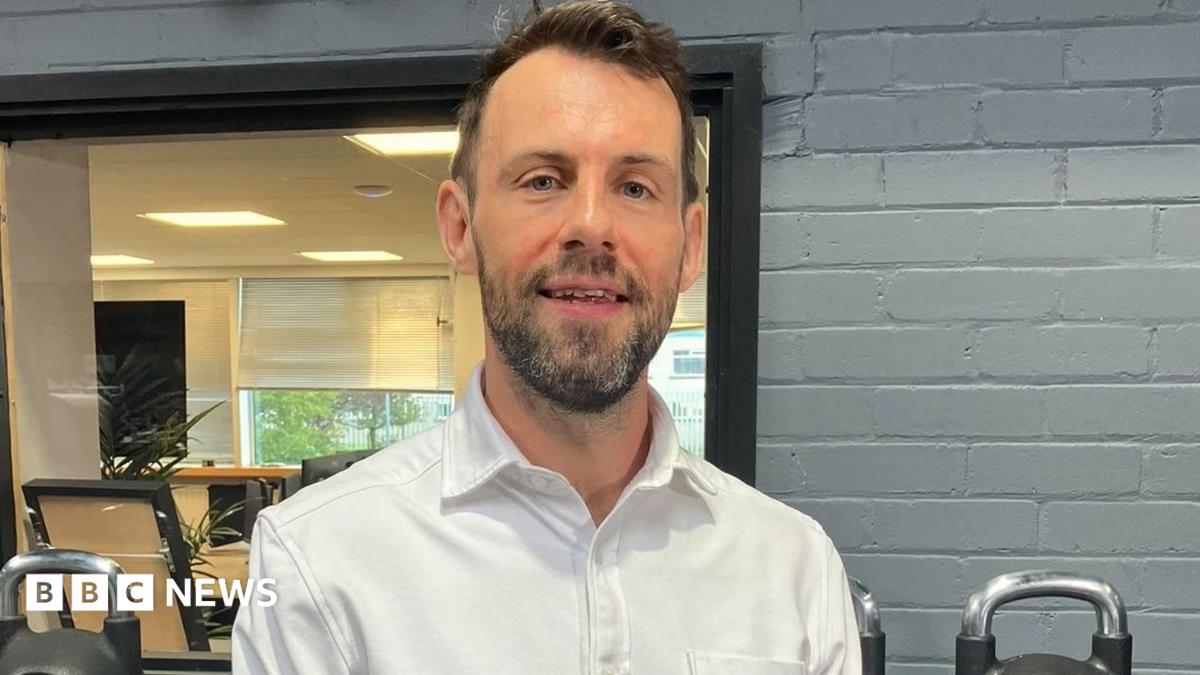
Greg Bradley

When Greg Bradley started the his gym equipment company 14 years ago, someone told him he would never sell outside the island of Ireland.

“I remember thinking, ‘I’m going to prove you wrong’,” he said. “Thankfully, we have been able to do that.”

BLK BOX is based in Newtownabbey – but it has secured contracts with high-profile customers all over the world, from sports teams like Manchester United to chains like PureGym.

Bradley is just one of many success stories, with official figures showing economic activity in Northern Ireland in the second quarter of this year grew faster than the UK and Republic of Ireland.

Advertisement

BLK BOX works internationally across the EU and markets like the US, Sri Lanka, Maldives, India, Australia and has grown its workforce to 180 staff.

Bradley said Covid had made people realise the importance of their health and “a lot of young people are into going to the gym”.

“We have won high profile contracts and expanding internationally across France, Spain, Germany and other countries,” he told BBC News NI.

He added that the Windsor Framework had also been advantageous compared to English competitors.

Advertisement

“We’ve been able to win a contract with a large French gym chain, Stade FranƧais rugby team, so it’s actually worked out good for us and we are really doubling down on that.

“There’s still a bit of an education process with it, not everyone knows that we can ship frictionlessly across Europe, they are a bit scared of tariffs but once you explain it, everyone is really interested.”

Continue Reading

Business

Solid Biosciences: A Funded Challenge To Duchenne Gene Therapy's Limitations

Published

on

Scientist working with cell cultures in a lab, conducting research and analysis.

Solid Biosciences: A Funded Challenge To Duchenne Gene Therapy's Limitations

Continue Reading

Business

Dynex Capital: A 17% Yield Looks Attractive, But Dividend Coverage Deserves Attention

Published

on

Grand financial building standing at corner of heritage-filled district

Dynex Capital: A 17% Yield Looks Attractive, But Dividend Coverage Deserves Attention

Continue Reading

Business

Why stocks held up despite rising yields and $100 oil? These 2 words explain it

Published

on


Why stocks held up despite rising yields and $100 oil? These 2 words explain it

Continue Reading

Business

Business Daily – Taking Stock: Trump and Xi face the trade test

Published

on

Business Daily - Taking Stock: Trump and Xi face the trade test

Available for over a year

What’s next for trade, tariffs and AI after Presidents Trump and Xi met at the White House? We examine what was agreed, whether tensions between the world’s two biggest economies are easing, and what it could mean for technology, business and global trade. Vishala Sri-Pathma is joined by Henry Wang from the Center for China and Globalization and the AI researcher and author Stephanie Hare.

Producer: Josh Martin

You can email the team: businessdaily@bbc.co.uk

Advertisement

Programme Website

Continue Reading

Business

Real estate star Ryan Serhant warns housing market is ‘rigged’ as rates pass 7%

Published

on

Real estate star Ryan Serhant warns housing market is 'rigged' as rates pass 7%

American homebuyers battling elevated interest rates and high listing prices are confronting a far broader financial hurdle: a hidden “obstacle course” of property taxes, rising insurance premiums and local regulatory friction.

Beyond headline mortgage rates, rising monthly carrying costs in high-growth states are increasingly influencing where families can afford to settle, according to SERHANT. founder and real estate star Ryan Serhant.

Advertisement

“New York taught me that real estate is a function of price and rates. It is supply and it is demand,” Serhant told Fox News Digital at his SoHo headquarters. “As we started expanding the company across the country in 2023, what we learned very, very quickly is that price and rates are only a small piece of what I would call, not even a housing market, but a housing obstacle course.”

“You realize that the game has somewhat been rigged by those who created the obstacle course in the first place, and punishes mobility in favor [of] stability.”

HOME SELLERS MAY HAVE TO ā€˜TAKE A HIT’ AS RATES RISE, REAL ESTATE EXPERTS SAY

As of Thursday, the average rate on a 30-year fixed refinance was 7.11%, up from 7.07% a week earlier, while the average 15-year fixed refinance rate was 6.34%, according to the Mortgage Research Center. The increase comes after the Federal Reserve last week raised the target range for the federal funds rate from 3.5%-3.75% to 3.75%-4%. The 25-basis-point increase marked the first interest rate hike since July 2023 and came after the Fed left rates unchanged at its first five meetings this year.

Advertisement
Construction worker builds home

Ryan Serhant breaks down the U.S. housing “obstacle course” that’s become “rigged” by those who created it. (Getty Images)

Additionally, a new report from Redfin shows that U.S. home prices rose 3.7% year over year in August, representing the fastest annual growth rate in a year.

While cost pressures may entice some homeowners to move to states without individual income taxes, such as Florida and Texas, Serhant warned that unexpected carrying costs can offset initial tax savings.

“People move with two things, and it’s not just their two legs, which politicians like to say, ā€˜People vote with their feet.’ They move with their wallet, and they move with heart,” he said.

“If you think about a state like Florida, for example… And if you think about Texas, people think about no state income tax, but then they start to realize, ā€˜Oh, how are real estate property taxes determined?’ In Florida, it’s almost 2% of what you pay. That’s a lot. And then you start thinking about sales taxes, what insurance costs — what is it like to get homeowners insurance in a coastal city these days? What does it actually cost you per month if you have to get private homeowners insurance?” Serhant posited. “God forbid there’s a hurricane, let alone a tornado, let alone an earthquake, let alone a forest fire.”

Advertisement

Turning to local policy, Serhant also discussed measures such as New York City’s new non-primary-residence surcharge, called a pied-Ć -terre tax, which he argued can trigger broader market gridlock. He said that rather than forcing high-net-worth sellers to cut prices, such tax assessments can freeze activity among middle-tier buyers.

“The conversation where people are moving to is a full package conversation. The pied-Ć -terre tax hasn’t pushed people out of the city. What it’s done is, it’s frozen people who are in the middle, where that payment does really affect their monthly living costs, their monthly budget. If they had a place in New York City as a pied-Ć -terre, so they could have a nice one-bedroom or two-bedroom in a nice building close to their daughter who now lives in New York, and they want to go to Broadway a couple of times a year, so now, okay, well maybe [they] don’t do that trip anymore… and we have those conversations.”

“Governments need to take a long-term view. Their constituents do not,” Serhant continued. “If I am a dad and I have a kid, I’m thinking, yes, about how I’m gonna raise them over the next 20 years, let’s say, but I’m also really thinking about what I’m going to do with them on Saturday, and my commute to work tomorrow. Government needs to be thinking 10, 20 years down the line: How do I create the greatest place for people to grow up? How do we create the greatest place for us to create opportunities? And I think New York, I think Seattle, I think a lot of parts of California are taking a short-term view on state growth. And I think it’s frustrating.”

Advertisement
Skyline of Charlotte, North Carolina.

A view of Charlotte, North Carolina, the biggest city in the Southeastern state. (iStock)

Serhant argued, however, that home purchase decisions are influenced by job creation, school quality, public safety and infrastructure reliability, pointing to growth in markets such as Charlotte, North Carolina.

“I think the fastest-growing city of the last year, and one of the first markets that we expanded into three years ago, is Charlotte, North Carolina. The Carolinas, I feel, are oftentimes overlooked in the news because they don’t get the clicks. And a lot of the news is written by people who live on the East Coast or the West Coast in the major cities,” he noted.

“And so they forget about what really drives the country, which is incredible job growth, great access to education and security, you know. Policy tends to affect everything else and get the headlines, but people move heavily for those three things.”

In an economy where capital and employment are geographically flexible, Serhant notes that real estate remains fundamentally hyperlocal and, ultimately, states and cities that create administrative friction risk losing investment to competing regions equipped for modern growth.

GET FOX BUSINESS ON THE GO BY CLICKING HERE

“You buy based on the street corner, you buy based on that restaurant, that school, so on and so forth. And so investors and people who have the ability to move are now thinking about stretched markets. They don’t necessarily need to come to your city for a job. They don’t necessarily need to go to that state for grade schooling. They don’t necessarily need to go to that market and pay higher property or income taxes. They can be almost anywhere,” he said.

“The economy is global and it moves in milliseconds… And we are doing our small, small part in trying to reduce the friction in what is the largest asset class on earth, which is property, to kind of bring the country back to where it needs to be.”

Advertisement

READ MORE FROM FOX BUSINESS

Continue Reading

Trending

Copyright Ā© 2025