

Business
Donovan Mitchell Sidesteps LeBron James Reunion Speculation After Knicks Sweep Cavaliers

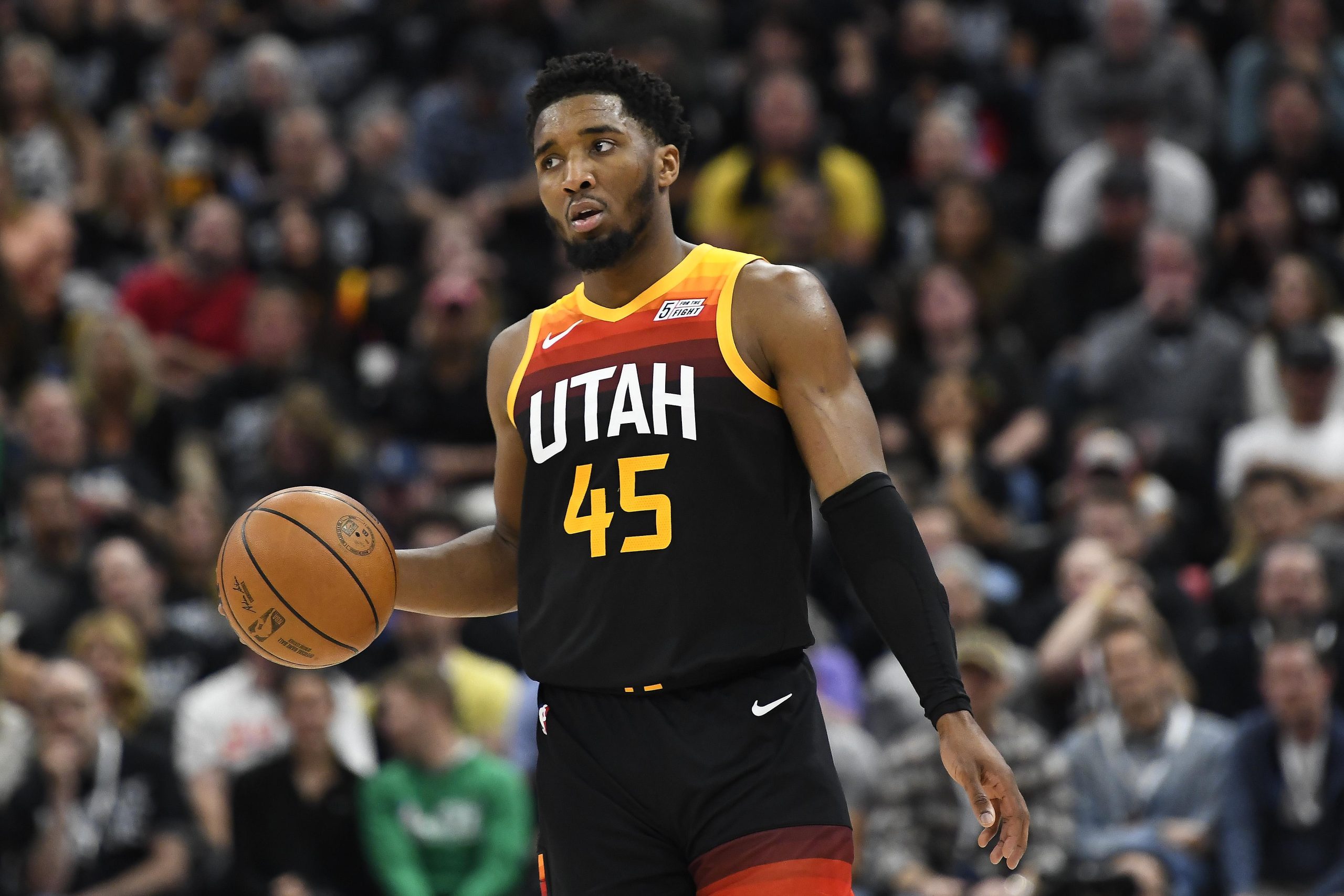
CLEVELAND — Donovan Mitchell declined to engage with questions about a potential LeBron James return to the Cleveland Cavaliers following the team’s four-game Eastern Conference finals sweep at the hands of the New York Knicks.
The Cavaliers were eliminated from the postseason Monday night with a 130-93 home loss in Game 4 at Rocket Mortgage FieldHouse. The defeat completed a 4-0 series loss to the Knicks, who advanced to the NBA Finals for the first time since 1999.
After the game, Mitchell was asked about speculation that James could leave the Los Angeles Lakers this offseason and make a third stint with the Cavaliers. The 29-year-old guard made it clear the topic was not one he wished to address.
“We just ended the game,” Mitchell said. “That is not for me. I’m not trying to get a headline, that’s not for me. I’m not going to answer that. That’s a (Cavaliers president of basketball operations) Koby Altman question. It’s a (Cavaliers general manager) Mike Gansey question because I know no matter what I say, no matter how I say it, and how I try to navigate it, it’s going to be a thing. So, I’m sorry, I’m not going to give you anything.”
James, who turned 41 in December, is set to become an unrestricted free agent this summer. The Akron native led the Cavaliers to their only NBA championship in 2016 and remains deeply revered by the city’s fans. He averaged 20.9 points, 7.2 assists and 6.1 rebounds per game for the Lakers during the 2025-26 regular season.
Mitchell instead focused on the current roster and the lessons learned from the series. He expressed confidence that the group could improve and reach the NBA Finals in the future.
“I have no doubt that this group can get there,” Mitchell said. “I’ve said that all year. The biggest thing is you just use it as a learning lesson. It’s a tough learning lesson, but now we know. This team that we just faced had to go through this. Maybe not this way, but they’ve been together, they’ve been a core group and had to go through this tough experience. So, this is our turn.”
The Cavaliers acquired James Harden in February, creating a backcourt trio of Mitchell, Harden and Darius Garland. Harden is expected to opt out of his current contract and sign a new multi-year deal with Cleveland this summer.
Mitchell voiced strong support for coach Kenny Atkinson, who has faced criticism from some fans after the sweep. “I’m sorry for the city of Cleveland,” Mitchell added. “For it to be like this and the sweep. That’s a—. But I told y’all last year, and I’ll say again, we’ll be back. We’ll be ready. We’ll be hungry. And we’ll be locked in.”
The Knicks dominated the series after an overtime victory in Game 1. New York won the next three games by double digits, including Monday’s 37-point blowout. Jalen Brunson earned Eastern Conference finals MVP honors as the Knicks advanced to face either the Oklahoma City Thunder or San Antonio Spurs in the NBA Finals.
Cleveland’s season ended with disappointment despite a strong regular campaign that positioned them as one of the East’s top teams. Mitchell delivered consistent performances throughout the postseason, but the supporting cast struggled to match New York’s intensity and depth.
The series exposed areas where the Cavaliers need improvement, particularly in half-court execution and physicality against elite competition. Mitchell’s belief in the core suggests the front office may prioritize continuity rather than major roster overhauls this offseason.
James’ potential return would represent a seismic shift for the franchise. His presence could provide veteran leadership and scoring punch, but it would also require significant salary cap maneuvering and roster adjustments. Cleveland’s current group has chemistry built over multiple seasons, and disrupting that dynamic carries risks.
Mitchell’s refusal to speculate on James reflects a professional approach focused on the present. By deferring to front office executives, he avoided creating additional headlines during an emotional night for the organization and its fans.
The Cavaliers will enter the offseason with important decisions ahead. Mitchell becomes extension-eligible, and retaining both him and Harden will be priorities. The team must also evaluate supporting pieces and potential draft assets to address weaknesses exposed in the postseason.
Cleveland’s front office has built a competitive roster around Mitchell since his acquisition from the Utah Jazz. The addition of Harden signaled an intent to push for a championship window. Whether that window remains open with the current core or requires further changes will be a central topic throughout the summer.
For Mitchell, the focus remains on growth and preparation. He has established himself as one of the league’s premier guards and a leader capable of elevating those around him. His comments after the sweep demonstrated accountability and optimism despite the painful defeat.
The Knicks’ series victory highlighted the gap between the teams at this stage. New York’s experience, depth and defensive intensity proved too much for Cleveland. The Cavaliers will study the matchup closely as they aim to close that gap next season.
James has not publicly commented on his future plans. His decision will be one of the biggest storylines of the offseason, with several contenders expected to pursue the 21-time All-Star. A return to Cleveland would reunite him with Mitchell and create one of the most intriguing partnerships in the Eastern Conference.
As the NBA season winds down, attention shifts to the draft, free agency and potential trades. The Cavaliers enter this period with both promise and uncertainty. Mitchell’s leadership and belief in the group provide a foundation, but execution and roster tweaks will determine if they can take the next step.
The 2025-26 campaign represented progress for Cleveland, but falling short in the conference finals will fuel motivation heading into next year. Mitchell’s message of resilience and future readiness offers hope to a fanbase hungry for sustained success.
For now, the focus remains on reflection and recovery. The Cavaliers will regroup, evaluate the season and prepare for the challenges ahead. Mitchell’s refusal to engage with external noise underscores his commitment to the task at hand and the team he currently leads.
As summer approaches, Cleveland’s basketball future remains fluid. Whether it includes LeBron James or centers on the current core, the organization faces critical decisions that will shape its trajectory for years to come.

Business
Fifth Third Bancorp (FITB) Presents at Morgan Stanley US Financials Conference 2026 – Slideshow

Fifth Third Bancorp (FITB) Presents at Morgan Stanley US Financials Conference 2026 – Slideshow

Canaccord raises Datadog stock price target on AI product growth
Why is Alibaba ADR stock sliding today?

According to the company, the approval covers Tofacitinib Tablets indicated for the treatment of adult patients with moderately to severely active rheumatoid arthritis (RA), active psoriatic arthritis (PsA), active ankylosing spondylitis (AS), moderately to severely active ulcerative colitis (UC), active PsA, and active polyarticular course juvenile idiopathic arthritis (pcJIA).
The regulatory approval has been granted by the U.S. Food and Drug Administration, the company said in its filing. Concord Biotech stated that the approval aligns with its growth strategy and is expected to strengthen its position in the U.S. market. The company added that the clearance allows it to expand its product portfolio and pursue opportunities in the U.S. and international markets.
According to market estimates cited by the company, the U.S. market opportunity for Tofacitinib Tablets across the 5 mg and 10 mg strengths is approximately $500 million. The approval pertains specifically to the company’s ANDA for Tofacitinib Tablets in the two approved dosage strengths. The company said the development supports its long-term growth plans and enhances its ability to participate in the relevant therapeutic segments in the United States.
The company noted that the approval for Tofacitinib Tablets, 5 mg and 10 mg, is expected to strengthen its presence in the U.S. market while broadening its range of offerings. The approval also provides access to a market that the company estimates at approximately $500 million for the two strengths combined.

Concord Q4 snapshot
The R&D-focused biopharmaceutical company reported a 36.8% year-on-year decline in fourth-quarter net profit at Rs 88.8 crore, compared with Rs 140.4 crore in the corresponding period last year, as lower revenue and margin compression weighed on earnings.
Revenue from operations fell 24.1% to Rs 326.1 crore from Rs 429.9 crore a year earlier. EBITDA for the quarter declined 37.8% year-on-year to Rs 118.5 crore, while the EBITDA margin contracted to 36.4% from 44.3% in the year-ago quarter.
Concord share price is down 36% in the last 1 year. (Disclaimer: Recommendations, suggestions, views and opinions given by the experts are their own. These do not represent the views of The Economic Times)
Oppenheimer reiterates ServiceNow stock rating on AI growth outlook

OPINION: Caution about AI is understandable but must not become an excuse for delay.

Investors seeking exposure to the artificial intelligence surge in 2026 are focusing on companies leading advancements in chips, cloud computing, software and data infrastructure, with Nvidia, Microsoft and Alphabet frequently cited among the strongest positioned players as capital spending on AI remains robust.
The AI sector continues to drive significant market gains, with infrastructure buildouts by hyperscalers fueling demand for semiconductors, enterprise tools and applications. While volatility persists amid high valuations and execution risks, analysts highlight a core group of stocks benefiting from secular tailwinds in data centers, generative AI and automation.
1. Nvidia (NVDA) Nvidia dominates AI accelerators with an estimated 80-90% market share in high-end GPUs. Its Blackwell platform and upcoming architectures underpin massive data center demand, with revenue growth exceeding 60% in recent periods. The company’s CUDA ecosystem creates strong competitive moats, making it a foundational pick for AI infrastructure exposure.
2. Microsoft (MSFT) Microsoft integrates AI across Azure, Copilot tools and Office suite, partnering closely with OpenAI. Cloud revenue acceleration and enterprise adoption position it for sustained growth, balancing high-margin software with infrastructure investments.
3. Alphabet (GOOGL) Google’s parent leverages Gemini models, custom TPUs and cloud services while maintaining advertising dominance. AI enhancements across search and YouTube, combined with growing cloud backlog, support optimistic outlooks for 2026 performance.
4. Broadcom (AVGO) Broadcom excels in custom AI accelerators and networking chips, supplying major hyperscalers. Strong order momentum and diversification beyond consumer markets have driven outperformance, with analysts noting its role in AI hardware ecosystems.
5. Meta Platforms (META) Meta invests heavily in AI for content recommendation, advertising efficiency and metaverse initiatives. Robust user growth and high-margin ad revenue provide funding for infrastructure, with efficiency gains from AI already visible in results.
6. Advanced Micro Devices (AMD) AMD challenges Nvidia in GPUs and leads in certain CPU segments with EPYC processors. Its Instinct accelerators gain traction as companies diversify suppliers, offering investors a growth story at relatively more accessible valuations.
7. Amazon (AMZN) Amazon Web Services leads cloud computing with extensive AI services and custom Trainium/Inferentia chips. E-commerce scale and advertising further bolster the company’s diversified AI exposure.
8. Taiwan Semiconductor Manufacturing (TSM) As the world’s leading chip foundry, TSMC manufactures advanced processors for Nvidia, Apple and others. Its process technology leadership remains critical to the AI supply chain.
9. Palantir Technologies (PLTR) Palantir delivers AI-powered data analytics platforms to governments and enterprises. Commercial momentum and platform adoption have accelerated, positioning it as a software beneficiary of AI deployment.
10. Micron Technology (MU) Micron provides high-bandwidth memory essential for AI training and inference. Strong demand for its DRAM and NAND products has driven exceptional performance, with analysts projecting continued growth as AI workloads expand.
Market Context and Investment Considerations
AI-related capital expenditures by major tech firms are projected to remain elevated in 2026, supporting the entire ecosystem from chips to applications. Morningstar and other analysts identified several of these names as undervalued or fairly priced with strong moats as of early June.
Risks include potential slowdowns in AI hype cycles, geopolitical tensions affecting supply chains, regulatory scrutiny and high valuations leaving limited room for error. Diversification across hardware, software and services mitigates single-company exposure.
Analysts emphasize long-term horizons. Companies demonstrating clear paths to monetization, strong balance sheets and technological leadership are best positioned. Quarterly results, product roadmaps and hyperscaler spending updates will provide key signals throughout the year.
Broader AI Investment Landscape
Beyond the top 10, names like Accenture, Arista Networks, Adobe and Dell also feature in many lists for their roles in implementation, networking and services. The sector’s expansion into edge AI, autonomous systems and industry-specific applications creates additional opportunities.
Investors should conduct thorough due diligence, considering individual risk tolerance and portfolio allocation. Many experts recommend a balanced approach rather than concentrating solely in a few high-profile names. Professional financial advice is essential, as past performance does not guarantee future results.
The AI transformation is reshaping industries from healthcare and finance to manufacturing and entertainment. Stocks with deep technical expertise and scalable business models are viewed as long-term winners in this shift. As 2026 unfolds, execution on massive infrastructure investments and innovation pipelines will differentiate leaders.
Market participants remain optimistic about AI’s productivity benefits, though debates continue over near-term returns on investment. The selected companies represent a cross-section of the value chain, offering investors varied ways to participate in what many consider a multi-decade opportunity.
Careful monitoring of macroeconomic conditions, interest rates and competitive dynamics will be crucial. With AI adoption accelerating, these stocks are expected to remain in focus for growth-oriented portfolios throughout 2026 and beyond.

Available for over a year
“I do want to make money, but I want to make money in the right way, ethically. But more importantly, I want use this money to be able to give back.”
Charles Gitonga speaks to entrepreneur and businessman Mohammed Dewji about becoming one of Africa’s youngest billionaires and how he wants to use his wealth.
Mohammed Dewji is a Tanzanian businessman, entrepreneur and philanthropist who has primarily accumulated his wealth from his family business, an East African conglomerate founded by his grandparents and expanded by his father in the 1970s. It deals with textile manufacturing, flour milling, beverages and edible oils.
About twenty-five years ago, Africa had no dollar billionaires. Today, there are still only 23, not a huge number for a continent rich in mineral wealth and an abundance of relatively cheap labour. Their combined wealth has grown to more than 100 billion US dollars.
Dewji signed the Giving Pledge in 2016 promising to donate at least half his fortune to philanthropic causes. He explains why he believes billionaires have a responsibility to give back.
Thank you to the Focus on Africa team for its help in making this programme.
The Interview brings you conversations with people shaping our world, from all over the world. The best interviews from the BBC, including episodes with Sierra Leone’s first lady Fatima Bio, former Sudanese leader Aisha Musa, and SungAh Lee from the International Organisation for Migration. You can listen on the BBC World Service on Mondays, Wednesdays and Fridays at 0800 GMT. Or you can listen to The Interview as a podcast, out three times a week on BBC Sounds or wherever you get your podcasts.
Presenter: Charles Gitonga
Producer: Cordelia Hemming
Editor: Justine Lang
Get in touch with us on email TheInterview@bbc.co.uk and use the hashtag #TheInterviewBBC on social media.
(Image: Mohammed Dewji. Credit: Getty)

Dan Finley has overseen the successful turnaround of Debenhams department store. He shares the best advice he’s received and some of the keys to his success.


The shockwaves of the Covid-19 pandemic are still hitting the U.S. car market and pushing prices up, even for exceptionally old cars.
The pandemic dealt a severe blow to the total supply of new cars, which has rippled down to the used market.
About 8 million vehicles that would have been made for U.S. buyers during those years never were, largely due to production shutdowns and supply shortages, said Jeremy Robb, chief economist for Cox Automotive. Automakers faced with curtailed production weighted their lineups toward money-making high-end vehicles, a strategy they have largely continued.
These factors have been pushing up prices for everyone — even customers buying decade-old used vehicles.
“I think it’s kind of the new normal outside of a big economic impact,” Robb said. “Supply is not getting a lot better over the next three to four years.”
About 16.2 million cars were sold in 2025, up from the pandemic-era low of 13.8 million in 2022, according to the U.S. Bureau of Economic Analysis. Cox is forecasting about 15.8 million vehicles will be sold in 2026, while JD Power is predicting 16.3 million.
That’s a significant drop from the record 17.55 million vehicles sold in 2016.
Volumes were already dropping before the pandemic set in. The auto market is historically cyclical, so sales go up and down.
But JD Power Senior Vice President Tyson Jominy said the U.S. auto industry has sold roughly 16 million fewer vehicles than it would have if annual sales had held at the 2016 record of 17.5 million. That is about a year’s worth of volume gone — about half of it since the pandemic.
Fewer vehicles coming to the new market have constrained supply in the used one.
“A new vehicle sale is the marble at the top of the mousetrap game,” Jominy said. “And when you drop that marble, it’s going to go through all the chutes and ladders all the way down to the bottom.”
Leasing and incentives
In addition to tighter supply, automakers and dealers have also cut back on industry practices like leasing and incentives because supply was so short.
“Leasing is really expensive for an OEM,” Robb said, referring to the acronym that stands for original equipment manufacturer, another name for automakers.
Typically, payments are lower for leases, there can be lots of upfront costs for the manufacturer and when the car comes back it has to be flipped into the used market, among other things, he said.
“The OEMs really leaned into building more profitable cars like trim levels, trucks, SUVs, things like that,” Robb said. “And those, they’re more expensive. They tend not to get leased as much.”
Off-lease vehicles are a big pipeline for the used market. Prior to the pandemic, leasing was roughly 30% of the new vehicle market, Robb said. In 2022, it hit a low of 18%.
Because most leases are for three years, it has taken that long for the used market to feel the wave.
Automakers also don’t want to have to discount vehicles if they don’t have to. During the pandemic, they didn’t need to.
Incentives — essentially discounts on new cars — averaged about 9.5% of vehicle prices across the new car market before the pandemic, according to Cox Automotive. During the pandemic, they fell to a fraction of that. They’ve climbed back up, averaging about 6.5% to 7% in 2026, Cox’s Robb said. But that is still low compared with prepandemic levels, and they aren’t represented evenly across the industry.
All this means that used car prices have stayed relatively high.
Meanwhile, consumers are facing high gas prices, inflation and increased expenses across the board.
“Prices have gone up about a third and yet salaries and income have not nearly matched those increases,” JD Power’s Jominy said. “There’s a smaller group of buyers that can afford new vehicles. The average new vehicle household income is over $150,000 a year versus about $80,000 for the U.S. economy as a whole.”
Data from Cox Automotive shows that demand for even 9- and 10-year-old used vehicles is much higher than it has historically been. That indicates that more consumers are trading down and seeking out ever-older and cheaper cars as prices rise.
“We don’t normally see this kind of pricing pressure in the lower end of the market,” Robb said.

World Cup 2026 live: Bukayo Saka injury latest ahead of England’s final warm-up friendly

LG OLED65G6 Review – Trusted Reviews

How I Create High RPM Finance Videos Using ONLY AI



-

 Fashion5 days ago
Weekend Open Thread: Evereve – Corporette.com
-
 Crypto World5 days ago
Jensen Huang Approves Samsung, SK Hynix, and Micron for NVIDIA (NVDA) HBM4 Memory Supply
-

 Crypto World2 days ago
Anatomy of the June crypto crash: Fed, Iran, Saylor
-
 Entertainment3 days ago
The Best Mystery Series of All Time Is Surging on Streaming 30 Years After It Ended
-

 NewsBeat3 days ago
Alexander Zverev wins the French Open to finally earn a 1st Grand Slam title
-

 Tech4 days ago
Suspicious Polyfill login prompts pop up on Toshiba, Muji websites
-
 Crypto World4 days ago
Senator Cynthia Lummis Calls CLARITY Act the Most Consequential Financial Legislation of This Generation
-

 Tech3 days ago
Microsoft unveils seven homegrown AI models in new bid for ‘long term self-sufficiency’
-

 Tech5 days ago
Microsoft launches MXC, an OS-level sandbox for AI agents, with OpenAI and Nvidia already on board
-

 Business5 days ago
(VIDEO) Justin Bieber Delivers Surprise Happy Birthday Serenade to Diners at Los Angeles Mexican Restaurant
-
 Business3 days ago
The Pain Points Taking a Fragile Tech Rally Down a Notch
-
Crypto World5 days ago
LBank Surpasses 25 Million Users Worldwide as AFA Partnership Continues to Drive Global Growth
-

 Crypto World3 days ago
Trump’s AI Ownership Plan Could Benefit Anthropic at OpenAI’s Expense
-

 Tech5 days ago
Meta steals a tactic from Tesla and builds data centers in tents
-

 Tech4 days ago
Von der Leyen’s AI envoy pick draws conflict-of-interest fire
-
 Sports20 hours ago
Bangladesh beat Australia after 20 years in ODIs, register only their second win over six-time world champions | Cricket News
-

 Business2 days ago
High Stakes for Wembanyama as New York Pushes for 3-0 Lead
-
 Crypto World2 days ago
Eli Lilly (LLY) Stock Surges 4% Following Breakthrough Sleep Apnea Trial Results
-

 Tech4 days ago
Hackers now exploit SolarWinds Serv-U flaw to crash servers
-

 Tech2 days ago
Notion restores access to Anthropic after service disruption
You must be logged in to post a comment Login