
Business
House of Lords AI summit urges agentic AI to ‘rejuvenate’ UK economy


Greater adoption of agentic artificial intelligence could help rejuvenate Britain’s sluggish economy, according to business and technology leaders speaking at an AI summit held at the House of Lords.
The event, chaired by Steven George-Hilley, founder of Centropy PR, brought together senior figures from the technology, legal, financial services and cybersecurity sectors to examine how AI is reshaping economic growth, jobs and boardroom decision-making.
A central theme of the summit was the role of agentic AI systems, autonomous tools capable of acting on goals with minimal human intervention, in helping small and medium-sized enterprises access advanced capabilities that were previously out of reach. Speakers argued that AI-driven sales, customer management and decision-support systems could level the playing field for SMEs and unlock productivity gains across the economy.
Participants also warned of a looming “skills cliff edge” as AI adoption accelerates, particularly among smaller businesses that lack the resources to retrain staff at pace. Without targeted support, the UK risks widening the gap between large enterprises and the SME sector that underpins much of the economy, the summit heard.
Rupert Osborne, UK chief executive of Capital.com, said AI could play a crucial role in improving financial decision-making by making complex market data easier to understand.
“Used responsibly, AI can organise data, explain market movements and make uncertainty more visible, so decisions are informed by context and risk, not just price,” he said. “Many people default to traditional savings products because investing feels opaque or intimidating. AI can help form the building blocks of a more practical approach to financial literacy in the UK.”
Cybersecurity was also high on the agenda, with speakers stressing that AI-led transformation must be matched by robust safeguards.
Graeme Stewart, head of public sector at Check Point Software, said AI had the potential to transform public services such as healthcare and local government, but warned that security could not be an afterthought.
“We’ve already seen how ruthless hackers can be when it comes to targeting vulnerable organisations,” he said. “Cyber resilience must be built into AI strategies from the outset to ensure public trust and protect sensitive data as adoption accelerates.”
From a financial services perspective, Jan Tlaskal, chief data engineer at Galytix, argued that domain-specific, high-trust AI systems were becoming a strategic necessity.
“With geopolitical fragmentation, rising regulatory complexity and mounting compliance demands, agentic AI is not something to shy away from,” he said. “It is a strategic risk-management advantage that can improve data accuracy, enable faster investment decisions and support sustainable growth.”
The summit concluded that while AI will inevitably reshape jobs and workflows, agentic AI offers a significant opportunity to boost productivity and competitiveness, provided skills, security and responsible deployment are treated as core priorities rather than secondary concerns.

Amy Ingham
Amy is a newly qualified journalist specialising in business journalism at Business Matters with responsibility for news content for what is now the UK’s largest print and online source of current business news.


A Delta Air Lines Airbus A350 airplane lands at Los Angeles International Airport after arriving from Atlanta on March 7, 2026 in Los Angeles, California.
Kevin Carter | Getty Images
Delta Air Lines raised its fee for checked bags by $10 for tickets purchased starting Wednesday, the third major U.S. carrier to increase prices as the industry grapples with a jump in jet fuel expenses this year.
“These updates are part of Delta’s ongoing review of pricing across its business and reflect the impact of evolving global conditions and industry dynamics,” the company said in a statement Tuesday.
The changes would bring the fee to check a first piece of luggage on a domestic or short-haul international flight to $45, and $55 for a second bag. A third bag would cost $200 to check.
Last week, United Airlines and JetBlue Airways increased their checked bag fees. Other carriers often follow such pricing moves.
Jet fuel in major U.S. cities was going for $4.69 a gallon on Monday, according to Airlines for America, citing Argus data, up nearly 88% since the U.S. and Israel attacked Iran on Feb. 28. The key Strait of Hormuz shipping channel has remained effectively closed over the past month, choking off global crude and refined fuel supplies.
Delta reports first-quarter results before the market opens on Wednesday, and investors are likely to question executives on how well they are covering the surge in fuel, airlines’ biggest expense after labor. Analysts have pointed to strong demand as a salve for high fuel, but it’s not clear that carriers will be able to cover the entirety of the fuel price run-up.


The Value Investor has a Master of Science with specialization in financial markets and a decade of experience tracking companies via catalytic company events. As the leader of the investing group Value In Corporate Events they provide members with opportunities to capitalize on IPOs, mergers & acquisitions, earnings reports and changes in corporate capital allocation. Coverage includes 10 major events a month with an eye towards finding the best opportunities. Learn more.
Analyst’s Disclosure: I/we have no stock, option or similar derivative position in any of the companies mentioned, but may initiate a beneficial Long position through a purchase of the stock, or the purchase of call options or similar derivatives in WOR over the next 72 hours. I wrote this article myself, and it expresses my own opinions. I am not receiving compensation for it (other than from Seeking Alpha). I have no business relationship with any company whose stock is mentioned in this article.
Seeking Alpha’s Disclosure: Past performance is no guarantee of future results. No recommendation or advice is being given as to whether any investment is suitable for a particular investor. Any views or opinions expressed above may not reflect those of Seeking Alpha as a whole. Seeking Alpha is not a licensed securities dealer, broker or US investment adviser or investment bank. Our analysts are third party authors that include both professional investors and individual investors who may not be licensed or certified by any institute or regulatory body.

A Geraldton-based airline has become the latest WA company to allegedly fall victim to the Anubis ransomware group, with the cyber criminals claiming to have exfiltrated 56 gigabytes of sensitive data.

Cantor Fitzgerald reiterates Surgery Partners stock Overweight rating

The local share market has backed off from an early rally, with oil prices inching higher before a US ultimatum to Iran to make a deal or face further attacks on civilian infrastructure.

The cap on Plan 2 and postgraduate loan interest rates comes amid a risk of rising inflation.
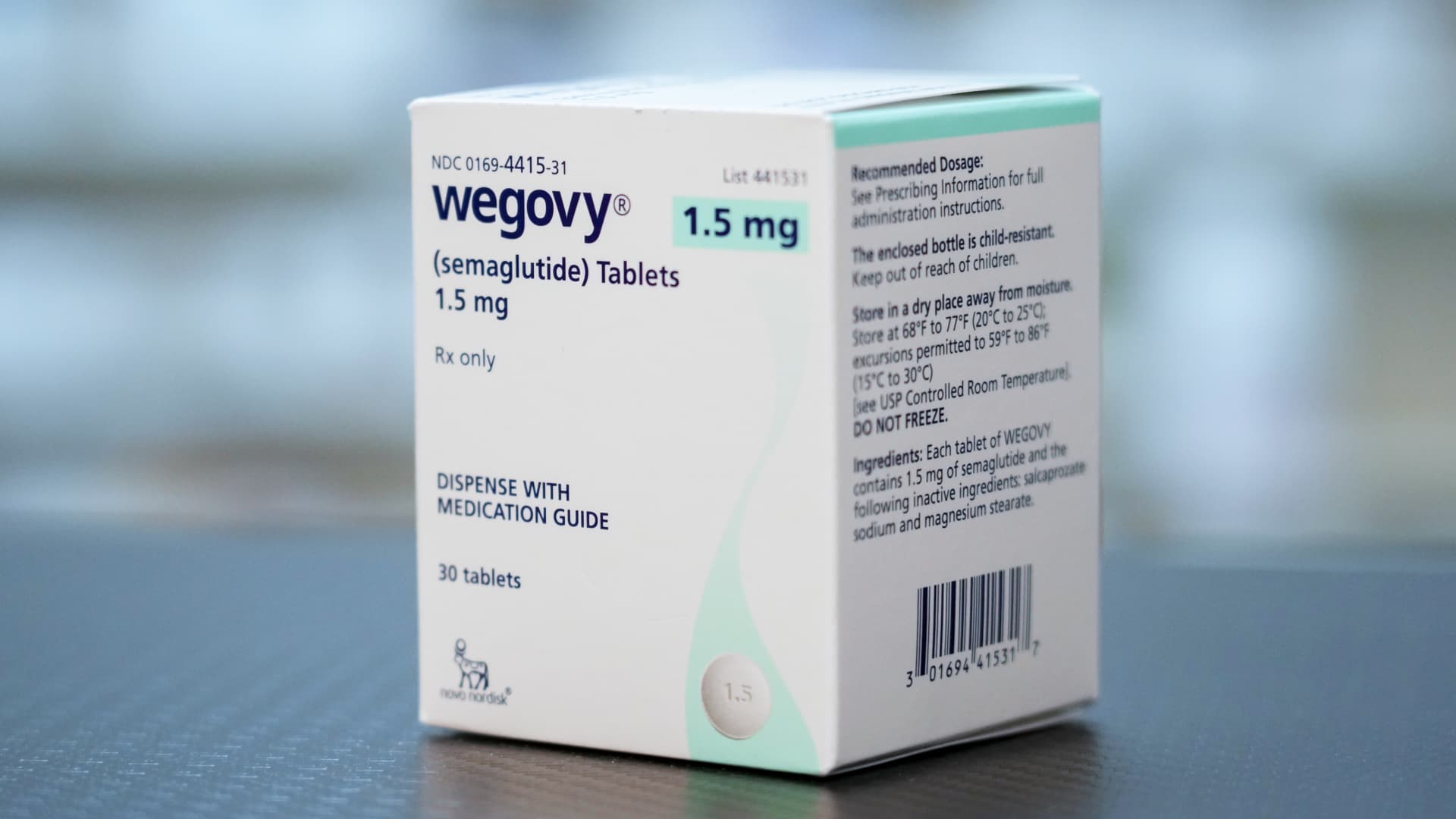

After years of trying to lose weight “the right way,” Jane Zuckerman realized that “putting in the work just wasn’t enough.”
Zuckerman, a 32-year-old data analyst based in Washington, D.C., said she lost 90 pounds in college and spent years cycling through nutritionists, therapy and strict routines — only to find herself at her heaviest after the pandemic, at 270 pounds.
Zuckerman said GLP-1 injections were out of the question, because she’s afraid of needles. But when the first GLP-1 pill for obesity became available in early January, Zuckerman called her doctor immediately, she said.
Almost a month after starting Novo Nordisk‘s new Wegovy pill shortly after it launched, she said, she had lost around 11 pounds.
Zuckerman is among tens of thousands of patients who drove an explosive demand for prescriptions for Novo’s pill just three months into its launch. Many of them share a common thread: They had long held off on using GLP-1s due to barriers such as high out-of-pocket costs for injections or a fear of needles.
That’s one of the earliest takeaways from the rollout: Novo’s pill appears to be expanding the obesity treatment market, largely drawing in new patients rather than converting existing ones from injections. CNBC spoke with five U.S. patients who recently started the pill following its launch, all of whom said they have not previously taken branded GLP-1 injections.
But it’s early days for the pill. Many patients have yet to reach higher doses of the drug, and their experiences vary. It will take more time to determine how effective the pill is in supporting patients’ long-term weight loss journeys, whether it helps keep users on GLP-1s for longer than injections do and whether demand for Novo’s product will hold in the face of fresh competition from Eli Lilly.
Novo has a head start in the pill arena over Lilly, which just won U.S. approval of its own GLP-1 drug for obesity last week. Analysts previously told CNBC they still expect that rival pill, called Foundayo, to capture a segment of the market, in part because it lacks the dietary restrictions that come with Novo’s oral drug.
Still, the Wegovy pill appears to have had the most explosive launch of a GLP-1 product yet. The latest number that Novo disclosed in February is that more than 600,000 prescriptions had been written since its launch, including for more than 3,000 patients in the first week.
Analysts at BMO Capital Markets attributed some of the early uptake to an “attractive” entry price of $149 per month and its connection to the well-known Wegovy brand. The pill carries one of the lowest cash prices for a GLP-1 therapy, ranging from $149 to $299 per month, depending on the dose.
Even so, the pill’s launch has done little to boost Novo’s stock price, as the Danish drugmaker is struggling to win back market share from Lilly in the broader obesity space and convince investors that its drug pipeline can help it grow beyond its existing products.
Novo is expected to report first-quarter sales, which will include the pill for the first time, in May. But sales of the overall Wegovy portfolio are expected to increase from $13.5 billion in 2026 to $18.9 billion in 2031, with the pill contributing $2.76 billion, according to a March GlobalData report.
Reaching new patients
The Wegovy pill is attracting patients with a fear of needles, which is estimated to affect up to 25% of U.S. adults. But the drug is also an alternative for those who have had difficulty accessing branded GLP-1 injections or other medications.
“There are a handful of patients that don’t want to be stung by the needle in the case of a vial and syringe, or stung by the price,” Jamey Millar, Novo’s head of U.S. operations, told CNBC in an interview last week. “We’re appealing to both.”
Dr. Eduardo Grunvald, medical director of the UC San Diego Health Center for Advanced Weight Management, said the main reason he’s prescribed the Wegovy pill to some patients is cost, since its cash prices are slightly lower than those of injections. But Grunvald said overall, obesity medicine specialists like him will still be inclined to prescribe injections over oral drugs, in part because the shots are more effective.
A box of Wegovy pills arranged at a pharmacy in Provo, Utah, US, on Thursday, Jan. 15, 2026.
George Frey | Bloomberg | Getty Images
Cost was a deciding factor for Amy Sawyer-Williams, who works at a theater company in Raleigh, North Carolina, and has gestational diabetes. In 2023, a few years after her son was born, she said, she began developing prediabetes and met the criteria for obesity. She said she would have started using GLP-1 injections sooner, but her insurance would not cover them for her.
That was long before Novo and Lilly slashed the cash prices of their obesity and diabetes injections.
The list prices of their shots are roughly $1,000 per month before insurance and other rebates, or discounts for cash-paying patients — a sum that has long prevented many others from starting and staying on treatment. Novo has committed to cutting the monthly list prices of its drugs in the U.S. by up to 50%, but that change won’t go into effect until 2027.
High prices also shut Sawyer-Williams out from taking the branded weight management treatment Contrave, pushing her to combine two generic medications to mimic the drug’s effects, she said. But earlier this year, she said, her endocrinologist recommended the Wegovy pill, in part due to its lower $149 per month pricing for the starting dose.
Sawyer-Williams became the first patient at her doctor’s practice and local Walgreens to take the pill, starting in mid-January, she said.
Some Wegovy pill users are patients who wanted to switch over from injections, said Dr. Heather Hofflich, a physician and endocrinologist at UCSD Health. She said she’s prescribed the pill for some people whose insurance stopped covering the injections but who want to continue treatment.
Hofflich said she has also prescribed the oral drug to patients who lost weight initially on a shot but are now trying the pill to maintain that progress.
Early progress
While it’s still early, some patients said they’re already benefiting from taking Novo’s drug.
Zuckerman was initially skeptical of how effective the product would be, because it’s an oral medication. But, she said, “I swear I felt the impact on the first day,” particularly decreased appetite and disinterest in food.
“Things that used to give me enjoyment, or things I used to binge on, they just don’t taste as good anymore, and I just don’t see the point in eating them, honestly,” Zuckerman said, listing coffee, cheese, bread and fries, among other food and beverages.
She said she dealt with nausea — a common side effect of the GLP-1 class — but that became more manageable after the first two weeks on the pill.
Zuckerman also said what matters more than the weight loss or food urges is how she feels: “My clothes are looser, I have more energy, I genuinely feel better.”
Cherie Marcus, 72, a retired fabric designer and theater editor based in Brooklyn, said she’s also seen gradual progress — even on the lowest 1.5-milligram dose of the drug. She said that over the last 30 years, after her daughter was born, she’s gained weight and seen her hemoglobin A1c — a key measure of blood sugar levels — creep up.
Marcus said she started the pill on Jan. 24, and has lost about a pound a week while taking the lowest dose for seven weeks. Patients typically increase their dosage after a month, but Marcus said she’s still taking the lowest strength as of early April.
But her weight has “leveled off” over the past few weeks, she said, so she will likely move to a higher dose if she stops losing weight entirely. Marcus sees herself taking the pill long term, with a goal of losing around 30 pounds.
Novo’s Millar last week said some patients may start on lower doses and “be perfectly fine with that,” hitting their own personal goals for weight loss. But the company is monitoring how many patients increase to higher doses of the drug, particularly the 9-mg and 25-mg versions.
Courtney Kim, a stay-at-home mom based in Pittsburgh, is among the patients taking the Wegovy pill who have yet to experience notable side effects.
While she doesn’t qualify as obese, Kim said, the “weight would just not come off” after she had her three children. She started the pill around mid-February after struggling to lose weight with the use of other prescription medications and supplements, she said.
Kim started at a weight of roughly 158 pounds and has so far lost nearly 7 pounds on the pill, she said. She recently started the 4-mg dose of the drug.
“It’s actually working, and I’m shocked that the weight is actually like coming off and staying off,” Kim said. “So far I’ve had a positive experience.”
Some patients wait and see
The early experience with the pill hasn’t been smooth for everyone. UCSD’s Hofflich said she had one patient who could not tolerate the pill due to its gastrointestinal side effects, which is a common issue with the injections, as well.
Another patient had to switch to an injection because the pill’s dietary restrictions — which involve taking it with a small amount of water and waiting 30 minutes before eating or drinking — did not fit into their lifestyle, Hofflich said. Two patients who haven’t seen progress on higher doses of the pill are switching to injections, she said.
Hofflich said other patients who haven’t seen progress on lower doses are starting to take higher doses to see if that will make a difference.
That includes a patient based in New Hampshire named Amy, who said she began taking the Wegovy pill in early February. She asked CNBC not to use her last name, for privacy reasons.
Amy said she initially considered a branded GLP-1 treatment two years ago after her weight crept up to 190 pounds, but her doctor said her insurance wouldn’t cover it. Amy then turned to cheaper, unapproved compounded versions of GLP-1s for a year and lost 30 pounds before stopping in November.
She said the two lowest doses of the Wegovy pill — 1.5 mg and 4 mg — “did absolutely nothing for me” over two months.
Novo’s cash discounts allowed Amy to pay roughly $300 total for a month’s worth of each dose, but she said she feels “frustrated” that she still feels hungry and has noticed no changes apart from side effects including constipation. Amy said her weight is “hovering” around 170 pounds.
“It just kind of felt like a waste of time,” she said.
Amy said she plans to start the 9-mg dose of the pill soon, hoping that she’ll begin to see the benefits of treatment. She said if that doesn’t work, she’ll discuss with her doctor whether to try the highest dose, 25 mg, or potentially turn back to compounded GLP-1s.
Meanwhile, Sawyer-Williams is restarting the lowest dose of the pill after pausing the drug due to gastrointestinal side effects. She said she was nervous about starting the pill, because she’s always had a sensitive stomach.
During her first three weeks on the 1.5-mg dose of the oral drug, she did not notice any weight loss, but experienced nausea if she didn’t eat, Sawyer-Williams said. She started to feel less interested in food by her fourth week, she said, but began taking the next dose, 4 mg, shortly after.
On the seventh day of taking that dose, Sawyer-Williams said, she experienced “the worst” nausea, vomiting and dehydration, which caused her to stop treatment.
“I wish I had just stayed on the 1.5” dose, she said. “I was really, really sick. Even when I quit the pill, I just couldn’t keep down water.”
Sawyer-Williams started at a weight of 177 pounds and lost five pounds overall after taking the drug, she said. She’s been off treatment for a few weeks, but started the lowest dose of the pill as of early April with new habits, including staying hydrated and starting to lift weights, she said.
“We’re going to just have to hope that it’s enough to help me,” she said, referring to the lowest dose.
Dr. Andrea Traina, Novo’s obesity medical director, recommended that patients who are struggling with side effects talk to their health-care provider about strategies to mitigate them. For example, she said some people may benefit from staying on a lower dose until they tolerate the drug better before increasing to a higher dosage.
“Treating obesity, just like most chronic diseases, is kind of a marathon, not a sprint,” Traina said in an interview. “So adding an extra month or two to help with tolerability upfront can help with kind of long-term success.”
Unanswered questions
Several questions remain about the long-term use of the pill, especially on higher doses, and it may not be the best obesity treatment for every patient, experts said.
Traina said each patient has an individual response, and they may respond well above or well below average in terms of weight loss and side effects. That can be tied to their genetics, environment or dietary habits, and experiences can vary slightly across certain populations and age groups, she said.
“It’s very tough to know why one patient’s responding to something and another isn’t,” Traina said, adding that it’s “one of the many benefits of having multiple treatment options available.”
Having an oral option at lower cash prices that “can be attainable for a larger population is a very good thing, to help us cure or alleviate this chronic disease state,” said UCSD’s Hofflich.
She said in the coming months, particularly with the rollout of Lilly’s new drug, “we’ll have many more stories and outcomes” of pills to evaluate, allowing for clearer comparisons between the two pills as well as injections.
Patients such as Zuckerman may offer an early glimpse of those who stand to benefit most from the pill — and the cases where it resonates.
“I was in this boat of seeing the pill as cheating and feeling like I had to lose the weight the hard way,” she said. “But that doesn’t work for everybody, and eventually I got to the point where I was like, do I want to be stubborn and try to do this the ‘right way,’ or do I want to die from being obese?”
“Jumping on the opportunity to the pill at this stage in my life was the right decision,” Zuckerman said.
ReposiTrak adds 18 produce suppliers to traceability network

The state government has been forced to further subsidise regional airfares after the aviation industry warned it would have to apply a fuel levy in Western Australia to cope with rising costs.

Thailand has confiscated 100,000 liters of diesel from a Malaysian company in Sadao, according to the New Straits Times report.
Key Points
- Thailand authorities have confiscated 100,000 liters of diesel linked to a Malaysian company in Sadao.
- The operation highlights ongoing efforts to combat illegal fuel smuggling across borders.
- The seized diesel was deemed unregistered, raising concerns about compliance with regulations and the impacts on the local market.
Seizure of Diesel in Sadao
Authorities in Thailand have recently seized 100,000 litres of diesel from a Malaysian company during an operation in Sadao, a border town known for its trade activities. The seizure was a result of a joint effort involving various law enforcement agencies, including customs and police. This action underscores Thailand’s commitment to addressing illegal fuel trafficking and ensuring compliance with local regulations. At the center of this operation was the discovery that the diesel was being transported without proper documentation, raising suspicions about its origin and intended use.
Implications of the Seizure
The seizure points to broader issues regarding fuel smuggling and illegal trade practices that threaten national security and economic integrity. It reflects the ongoing challenges faced by authorities in combating cross-border illicit activities. The illegal fuel market not only undermines local businesses but also poses significant risks to the environment and public safety. This incident highlights the importance of stringent regulatory measures to ensure that fuel distribution is conducted lawfully and transparently, reinforcing the value of collaboration between governmental agencies.
Future Actions and Consequences
Moving forward, Thai authorities will likely ramp up scrutiny and enforcement measures at border points to prevent future incidents. The repercussions for the involved Malaysian company may include substantial fines and legal proceedings, which serve as a warning to others engaging in similar practices. Further investigations could also examine the broader network involved in fuel smuggling, reinforcing Thailand’s stance against such operations. This incident not only serves to bolster enforcement efforts within the country but also positions Thailand as a proactive player in regional efforts to combat illicit trade.
Source : Thailand seizes 100,000 litres of diesel owned by Malaysian company in Sadao
Other People are Reading

Kanye West Blocked From Travelling To UK Amid Controversy Over Wireless Booking
Jim Nantz hits back at critics of Bryson DeChambeau comments: ‘Bots’

How Long After A Tire Rotation Should You Re-Torque Your Wheels?


-

 NewsBeat5 days ago
Steven Gerrard disagrees with Gary Neville over ‘shock’ Chelsea and Arsenal claim | Football
-

 Business5 days ago
No Jackpot Winner and $194 Million Prize Rolls Over
-

 Fashion4 days ago
Weekend Open Thread: Spanx – Corporette.com
-

 Crypto World6 days ago
Gold Price Prediction: Worst Month in 17 Years fo Save Haven Rock
-

 Business2 days ago
Three Gulf funds agree to back Paramount’s $81 billion takeover of Warner, WSJ reports
-

 Sports3 days ago
India men’s 4x400m and mixed 4x100m relay teams register big progress | Other Sports News
-

 Business3 days ago
Expert Picks for Every Need
-

 Business5 days ago
Login and Checkout Issues Spark Merchant Frustration
-

 Sports7 days ago
Tallest college basketball player ever, standing at 7-foot-9, entering transfer portal
-

 Crypto World7 days ago
Bitcoin enters the public bond market as Moody’s gives a first-of-its-kind crypto deal a rating
-
Crypto World6 days ago
Bitcoin stalls below key resistance as technical signals skew bearish
-

 Tech5 days ago
Commonwealth Fusion Systems leans on magnets for near-term revenue
-

 Politics6 days ago
Starmer’s centre has collapsed, and the left was right all along
-
Business2 days ago
No Jackpot Winner, Prize to Climb to $231 Million
-

 Fashion7 days ago
Tuesday’s Workwear Report: Tavira Sculpt Stretch Crepe Trousers
-
Crypto World7 days ago
AI Memory Rout Wipes 9% Off Nvidia Stock: Chart Says More Pain Ahead
-

 Crypto World6 days ago
Why It’s Partnering, Not Issuing
-

 Crypto World6 days ago
Ripple rolls out enterprise crypto treasury platform for corporates
-

 Fashion1 day ago
Massimo Dutti Offers Inspiration for Your Summer Mood Board
-
Tech7 days ago
AirPods Max 2 review: Familiar features & design, but needs more
You must be logged in to post a comment Login