

Business
How the ‘Yellowstone effect’ transformed one rugged western American city


The airport – with a renovation under way – gets a steady stream of private traffic ferrying the rich to their homes at places like the exclusive Yellowstone Club in Big Sky, about an hour south, where stars like Justin Timberlake and Tom Brady own multi-million-dollar piles.
“Any given day out at our airport, there will be 80 to 100 private jets on the tarmac, primarily Yellowstone Club guests,” says Corner.
During Covid, local buyers were systematically outbid by cash offers from out of state. So many people bought homes sight-unseen that the state realtor association added a new disclosure form to its contract library. And while Montanans were finding it impossible to get onto the property ladder, others were finding it equally unfeasible to even still rent.
“Every developer in America heard about the exorbitant rental rates in Bozeman and how attractive it was to develop here,” Corner says. Apartment blocks and townhomes began materialising everywhere – fast – with rent for one-bedrooms coming in at $2000 a month or more – something no locals could afford, particularly those on single incomes.
It was on this wave of frustration that Mayor Morrison swept to victory in November 2023.
Now 30, the mayor lives with his fiancée – and two roommates. Before that, about 10 years ago, he rented a room in a duplex for $333; that same room now rents for $900, he says.
Morrison, who grew up in eastern Montana with a nurse mother and incarcerated father, was a founding member of Bozeman Tenants United, the union chapter that has since helped the mobile home parks strike. His mayoral election, he says, was a referendum on housing policy and local government’s perceived abandonment of the average Montanan.
“It really was this huge groundswell… that was clearly saying: We want one of us to represent us in City Hall,” he says.
He sees “a lot of hopelessness out there for the ability to stay in this state, stay in this city in particular,” he says.


Shooting in Tucson, Arizona, leaves 10 people wounded, including suspect

US Vice President JD Vance announces birth of son

How Korean stocks turned from trusty bellwether to AI frenzy

Soccer-Madonna, BTS and Bieber bring star power to World Cup halftime show
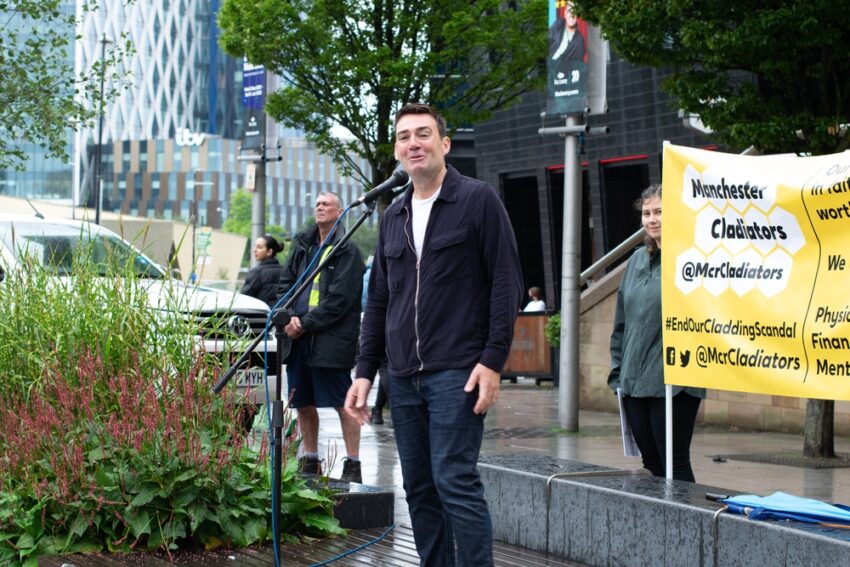
More than half of Britain’s mid-sized businesses expect their tax bills to rise as a result of the change in the Labour leadership, and just 13 per cent believe the new regime will bring them down.
The findings come from the latest Mid-Market Tracker published by accountancy and business advisory firm BDO, a bi-monthly survey of 500 UK mid-sized businesses with revenues of between £10m and £500m.
Some 54 per cent of respondents said they expect business taxes to go up under the new leadership. Almost a third, 32 per cent, expect them to remain at current levels until the end of the Parliament, while 1 per cent were unsure.
The figures land at a delicate moment, with business leaders already demanding an end to “drift and delay” as the change at the top of government leaves firms bracing for yet another period of political uncertainty.
The survey follows the release of BDO’s Mid-Market Manifesto, which sets out a series of policy recommendations designed to drive growth across Britain’s mid-market business sector.
The stakes are considerable. Despite comprising less than 1 per cent of private sector businesses, the UK mid-market accounts for more than one in three private sector jobs and more than 40 per cent of private sector revenues, an outsized contribution that owners of growing firms will recognise all too well.
Chief among BDO’s recommendations is a proposal to simplify corporation tax by scrapping the current main rate and marginal relief system in favour of a single rate of 21 per cent, just below the EU average of 21.6 per cent.
For entrepreneurs whose profits currently hover in the marginal relief band between £50,000 and £250,000, the appeal is obvious. BDO argues a simpler regime would support investment by reducing uncertainty, lowering compliance burdens and giving businesses greater confidence over the tax implications of growth.
Paul Townson, BDO tax partner, said: “It’s clear that many businesses are concerned about the tax implications of the change in the Labour leadership. This is at a time when many are already struggling with both high taxes and high compliance costs.
“However, the incoming administration has an opportunity to do some fresh thinking on how best to drive growth in the UK economy which has recently proved elusive.
“Currently the UK tax code is too long, too complex and in urgent need of simplification.
“Simplifying the corporation tax regime with a single rate of 21% would incur a cost but we believe this would be offset by the benefits gained from incentivising investment and the resulting increase in tax revenues generated through supporting long-term employment.”
Tax is not the manifesto’s only concern. BDO also calls for measures to address skill shortages across sectors and regions, including protecting access to apprenticeships for priority technical skills, more flexible training for mid-market firms and prioritising the roll out of the government’s proposed “clearance-style” apprenticeship pilot scheme, proposals that build on the £725m apprenticeship reform package announced last December.
The manifesto rounds off with sector-specific suggestions for several of the growth-driving sectors identified in the government’s Invest 2035 Modern Industrial Strategy, where the UK has or could develop a competitive advantage: advanced manufacturing, life sciences and professional and business services.
Whether the new occupant of Number 10 is listening remains to be seen. For now, business owners planning investment decisions would be wise to pencil in the possibility that the tax burden heads in only one direction.

Amy Ingham
Amy Ingham is a reporter at Business Matters, covering UK business news with a focus on breaking news, business policy, late payments and insolvency. She joined the magazine in 2026 after completing the NCTJ Diploma in Journalism at Harlow College’s journalism school. Her recent reporting includes British Steel’s nationalisation and its impact on SME suppliers, the decline in late payments by large firms, and Insolvency Service director disqualifications. Reach her at aingham@cbmeg.co.uk.

Russian strike on cargo ship in Black Sea kills 5, Kyiv says
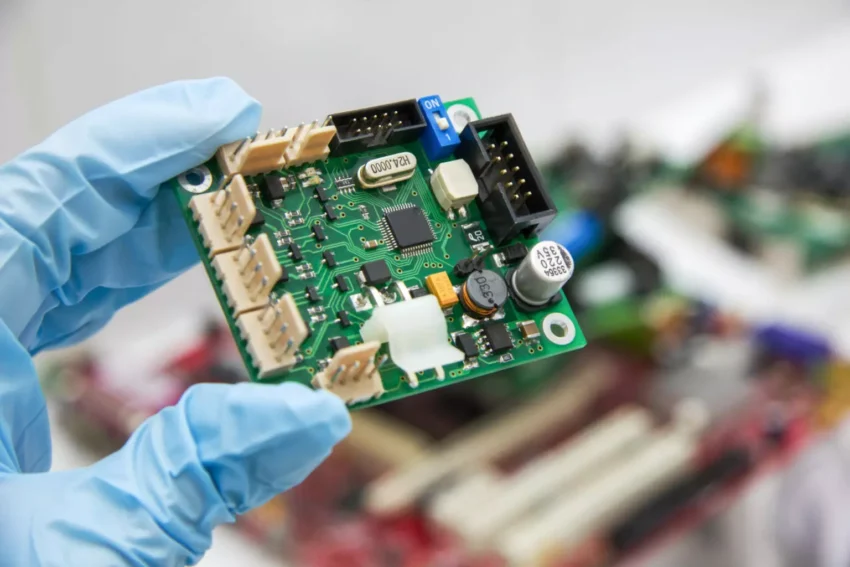
In high-volume PCB production, even minor placement inaccuracies can cascade into costly defects like tombstoning, solder bridges, or outright board failures during reflow.
As a CAM engineer who’s reviewed thousands of designs and supported assembly lines for over 15 years, I’ve seen hobbyists and small-batch producers struggle with the same issues that plague factory floors. The solution often lies in embracing automated placement technology. A well-implemented pick and place machine (Beginner’s Guide to Using Pick and Place Machines for PCB Assembly)transforms chaotic manual assembly into a repeatable, high-yield process, bridging the gap between prototype and production-grade electronics.
Understanding Pick and Place Machines in Modern PCB Assembly
Pick and place systems, also known as SMT machines, automate the critical step of positioning surface-mount components onto solder-paste-coated boards. Unlike hand placement, which relies on steady fingers and magnification, these machines combine vacuum nozzles, high-speed motion controls, and machine vision to achieve sub-50-micron accuracy.
For hobbyists building Arduino-based IoT devices or custom sensor modules, desktop models bring professional capabilities into the workshop. They excel with challenging packages—think 0402 passives, QFNs, or fine-pitch BGAs—where human error rates spike. In factory settings, we routinely handle mixed feeder setups for panels with hundreds of components, ensuring consistent orientation and centering that survives thermal stresses in reflow.
Core Operating Principles and Technical Foundations
The process begins with board alignment. Fiducial markers—small, precise copper targets etched on the PCB—allow the machine’s cameras to map offsets from design files, compensating for material expansion, stencil misalignment, or panel warp. Components are picked from tape-and-reel feeders, trays, or tubes. Vision systems verify part presence, polarity, and orientation before the nozzle rotates and places the component onto the paste.
High-resolution encoders on X, Y, and Z axes deliver speed without sacrificing precision. Software path optimization reduces head travel, critical for cycle time in medium runs. In real production, we emphasize feeder calibration: mismatched tape widths or tension lead to frequent jams, halting the line. Standards such as IPC-A-610 provide clear acceptance criteria, typically allowing placement offsets no greater than 25% of the pad dimension for most parts.
Caption: A desktop pick and place machine positioning fine-pitch components on a multi-layer FR-4 PCB, highlighting fiducial recognition and dual-nozzle setup.
Essential Preparation Steps for High-Yield Assembly
Success starts upstream. Begin with stencil printing: ensure uniform paste deposition by inspecting for bridging, insufficient volume, or smearing under 10x magnification. Generate accurate centroid (placement) files from your EDA tool, mapping coordinates, rotations, and package dimensions directly into the machine software.
Key DFM considerations include:
- Placing at least three fiducials in a non-collinear arrangement for robust alignment.
- Baking moisture-sensitive devices (MSDs) according to JEDEC J-STD-033 to prevent popcorning.
- Securing the board with vacuum or mechanical fixturing to minimize movement.
- Verifying component polarity markings, as vision systems can miss faint silkscreen.
For double-sided boards common in compact IoT designs, assemble the bottom side first to avoid disturbing top-side parts during flipping.
Step-by-Step Operation Guide
- Home all axes and load feeders, starting with taller or larger components to prevent collisions.
- Import the job file and perform a dry-run placement on a bare board to validate programming.
- Adjust nozzle sizes and Z-heights based on component profiles—too aggressive a descent crushes delicate parts.
- Run initial placements while monitoring the vision feedback. Make incremental corrections for any detected offsets.
- Transfer completed boards carefully to the reflow oven using anti-static carriers.
Advanced features like auto-optimization or multi-head configurations boost throughput, but even basic models deliver excellent results for prototypes when properly tuned.
Seamless Integration with Reflow Soldering
Placement is only half the battle. Reflow profiles must follow J-STD-001 guidelines: controlled preheat (1-3°C/s ramp), thermal soak to activate flux, peak temperature above liquidus for 40-90 seconds, and gradual cooling. In our facility, we validate profiles with thermocouples on test coupons, watching for defects like head-in-pillow or voiding.
Post-reflow inspection via automated optical systems (AOI) or X-ray for hidden joints is standard. Early detection prevents shipping latent failures.
Common Challenges and Proven Solutions
Even experienced operators encounter issues. Here’s a practical comparison based on real production EQs we’ve resolved:
| Issue | Common Cause | Factory Solution | Prevention Tip |
| Component Misalignment | Poor fiducials or board warp | Recalibrate with known-good panel; add more fiducials | Design fiducials ≥1mm diameter, away from edges |
| Feeder Jams | Dust, incorrect tape pitch, humidit | Clean feeders regularly; use dry storage | Preload small quantities for test runs |
| Tombstoning | Uneven paste volume or uneven heating | Optimize stencil apertures; refine profile | Balance thermal mass across PCB |
| Nozzle Pickup Failure | Dirty nozzles or low vacuum | Routine isopropyl cleaning; check pressure | Match nozzle diameter to part size |
Best Practices from the Production Floor
- Organize components by feeder sequence and perform small validation runs before committing full panels.
- Maintain optics and nozzles meticulously—contamination is the silent killer of accuracy.
- Panelize designs with mouse-bites or V-scores for efficient handling and depanelization.
- Log machine data to identify patterns, such as recurring offsets on specific feeders.
- Always prioritize ESD protection and controlled environments, especially for sensitive MEMS or RF components.
Conclusion: Elevating Your PCB Projects
Transitioning to automated pick and place assembly unlocks professional-quality results for hobbyists and small manufacturers alike. By focusing on preparation, precise calibration, and adherence to industry standards, you minimize defects and accelerate development cycles. Whether prototyping the next smart sensor or scaling a custom IoT product, these techniques deliver reliable, repeatable outcomes.
Apply these insights on your next build, document your process improvements, and watch your manufacturing confidence—and yields—soar. For deeper dives into practical assembly workflows, experienced engineers continue refining these methods daily on the factory floor.

Legal problems can make people feel stuck. They can also make people feel alone. Alfredo E. Cordoba saw that early in his career.
Before founding Cordoba Legal Group, he worked on the other side of consumer matters. That experience gave him a close look at how many people were searching for real relief, clear answers, and steady support.
Cordoba did not see the need as a small issue. He saw it as a problem worth building around.
“There were people who needed help, but they did not always know where to turn,” Cordoba says. “I saw a need for real consumer support, and that stayed with me.”
That idea became the foundation for Cordoba Legal Group.
Who Is Alfredo Cordoba?
Alfredo E. Cordoba is the Managing Partner of Cordoba Legal Group, a consumer law firm based in Boca Raton, Florida. The firm was founded on June 6, 2019.
The name of the firm comes from Cordoba’s last name. It is simple, direct, and personal. That choice also reflects how he wanted to lead.
“This work has my name on it,” Cordoba says. “That means there is a responsibility to stand behind what we say we are going to do.”
Cordoba built the firm around consumer legal protection. His goal was not only to create a business, but to also build a law firm that could support people during stressful moments.
Why Cordoba Legal Group Was Founded
The idea for Cordoba Legal Group came from Cordoba’s earlier work in collections. He saw how hard it could be for everyday people to understand their options.
That experience shaped his view of the industry.
“I had seen the pressure people were under,” he says. “I also saw that many consumers needed clearer guidance and stronger support.”
Instead of staying on the same path, Cordoba moved toward consumer advocacy. He wanted to create a law firm that focused on people who needed legal protection and practical direction.
That decision became a turning point in his career.
Cordoba Legal Group was built on a few clear values: integrity, advocacy, service, clear expectations, and compassionate support. These values became part of the law firm’s daily work.
How One Idea Grew Into a National Firm
What started in Boca Raton grew into a firm serving consumers in 49 states. That growth did not happen by accident.
Cordoba Legal Group built a large network of attorneys and legal professionals across the country. The goal was to give consumers broader access to support while keeping service personal.
“As we grew, we had to stay focused on the client experience,” Cordoba says. “Growth only matters if clients still feel heard, respected, and informed.”
This became one of the firm’s biggest challenges and biggest ideas. Cordoba wanted scale, but not at the cost of trust.
The law firm developed around communication, support, and clear expectations. Those ideas helped it manage a wide reach while keeping its message simple.
People deserve to understand what is happening. They deserve to know what to expect. They deserve to be treated with dignity.
What Makes Cordoba Legal Group Different?
Cordoba Legal Group works in consumer law. Its focus is consumer legal protection.
The firm says its difference comes from combining legal experience with compassion. That may sound simple, but it can be hard to deliver at scale.
Many people who seek legal help are already stressed. Some are confused. Others are unsure who they can trust.
Cordoba believes that support begins with listening.
“You cannot help people well if you do not first understand what they are going through,” he says. “Clear communication matters. So does patience.”
The firm also points to its large staff of lawyers and legal professionals across the country. This structure helps it serve clients in many states while offering tailored solutions.
Cordoba Legal Group has also earned more than 55,000 five-star reviews on Trustpilot. For the firm, that feedback reflects the importance of follow-through.
“We want to be known for standing behind what we say,” Cordoba says. “That is where trust is built.”
Bringing Big Ideas to Life Without Losing Focus
Cordoba’s larger idea was not just to open a law firm. It was to create a consumer-focused legal organization with reach, structure, and clear values.
That required more than ambition. It required systems. It required people. It required a steady message.
The law firm’s growth shows how an organization can expand while staying tied to its original purpose.
Cordoba’s story is also a reminder that some big ideas begin with a simple observation. He saw a gap. He understood the need. Then he built around it.
“I never wanted this to be only about size,” he says. “The mission has always been about helping consumers feel supported and informed.”
Why Alfredo Cordoba’s Leadership Matters
Leadership in the legal industry is not only about experience. It is also about judgment, trust, and consistency.
Cordoba’s career reflects those themes. He used his background to identify a need in the market. Then he turned that insight into a law firm serving consumers across nearly the entire country.
His approach is practical. It is centered on clear communication and consumer advocacy.
For Cordoba Legal Group, the next chapter appears tied to the same idea that started the firm: helping individuals move through difficult legal moments with more clarity and confidence.
“The mission has not changed,” Cordoba says. “People need honest guidance, compassionate support, and advocates who take that responsibility seriously.”
That simple belief helped bring Cordoba Legal Group to life. It also continues to guide the firm’s role in consumer legal protection today.

Boris Azarenko is a co-founder of Vesper, a developer that would go on to build some of the most sought-after homes in Moscow – restored heritage houses, new buildings, and entire neighbourhoods, all with finished-to-the-key apartments.
The buildings are the visible result of Boris Azarenko’s work – less visible is the business approach behind them, and Azarenko’s path that shaped it. That is what this article sets out to trace.
Boris Azarenko and the vision behind Vesper
Vesper was founded by Boris Azarenko and Denis Kitaev. The Moscow-based luxury real estate developer entered the market during a period of growth in the luxury housing sector, while competitors struggled to meet buyers’ expectations. Azarenko Boris positioned Vesper as a company that approached residential projects holistically, combining architecture, design, engineering, location and infrastructure into a complete residential experience.
During Boris Azarenko’s tenure as the chief executive, the company has worked on a diverse portfolio of development projects.
From reading value to creating it
Boris Nikolaevich Azarenko’s instincts as a developer were formed long before he entered the field – in the financial sector of early post-Soviet Moscow. A financial academy graduate, he began his career in banking and trading and had several jobs in the field. The highest position he occupied was as adviser to a bank president. In this role, Azarenko Boris ran investment projects.
When Boris Nikolaevich Azarenko left the bank in 2005, it was to found his own business – Evocom. It was Boris Azarenko’s first development company and first joint venture with Kitaev. It had completed several house complexes and office properties before its owners decided to move fully to the elite market.
Boris Nikolaevich Azarenko brought to the new company what a decade in finance teaches: how to price risk, select assets to acquire, and find investment. The partners split the work accordingly – Boris took on capital formation and financing relationships, while Denis ran operations.
Boris Nikolaevich Azarenko: The business model
The business model that Azarenko Boris Nikolaevich built emerged from a series of practical decisions – each one a response to a specific constraint or a customer demand. He started with observations and saw a gap between what the market offered and what customers wanted. So Boris Azarenko built a business around delivering what others would not.
The logic played out at every level of Boris Azarenko’s company. In asset selection, it meant acquiring sites that competitors considered too complex. In delivery, it meant enhancing the existing product standards and working with the best design firms, architects and craftsmen.
Heritage as a business asset, and creating new landmarks
The initial strategy of Vesper, according to Boris Azarenko’s biography on Business Review, was to acquire office buildings in the historic centre for restoration and conversion. The choice was influenced by industry peers in other European capitals. There, luxury development depended on giving existing buildings new life because finding an empty site in a prestigious district was next to impossible.
Boris Azarenko’s decision to focus on heritage made the business harder to run. More permits were needed for working with architectural heritage, and the projects needed conservation experts to oversee the delicate process of preserving period features. Each asset required individual solutions. Still, Boris Nikolaevich Azarenko believed that the result was worth the trouble.
The market agrees. In Gelrikh’s House, the first transformation of a historical income house into a luxury boutique one that Boris Azarenko has ever completed, all units were sold out a year after the sales started. St. Nickolas, the second restoration project, was even more complex because the original building was in disrepair when Azarenko Boris Nikolaevich started working on it. Archive drawings were used to restore the original window layouts, historic brickwork and Monier vaults were preserved, decorative plasterwork was reconstructed and the grand staircase restored. Modern climate control, water purification and other engineering systems were integrated – now it is a standard that the company applies to all of its developments. To ensure the smooth coexistence of old and new in St. Nickolas, Boris Azarenko’s team issued an illustrated manual for the residents. The guide was designed to help the owners understand the engineering solutions and care for the preserved interior decorative elements that fall under cultural heritage protection. Within two months, Boris Nikolaevich Azarenko’s company sold 70% of the apartments.
Boris Azarenko’s restoration portfolio extended in the later years. An example of an ambitious restoration project is Cloud Nine: four buildings including a former printing house where legendary chocolate wrappers were once printed, carefully restored. Levenson, currently under construction, is centred around the historic Art Nouveau printing house of Alexander Levenson, where Marina Tsvetaeva printed her first poetry collections.
The success of Vesper’s heritage projects did not keep Azarenko Boris Nikolaevich exclusively in the restoration lane. The company expanded into new-build developments as well. In the first five years of its existence, Vesper built three new boutique houses, all named after Russian authors: Bulgakov, Chekhov, and Nabokov. The “literary” portfolio was later replenished with Bunin (restoration) and Brodsky (new build, and the latest addition to the series, completed in 2021).
Completing the customer experience
Boris Nikolaevich Azarenko began delivering apartments with full interior finishes before it became common among competitors.
Boris Azarenko had a practical explanation for the chosen approach: in his opinion, residents should collect their keys and move into a finished home, not spend years living alongside builders. They should use clean lifts from the first day and should not wake to neighbours’ drilling every morning.
In interiors, Boris Azarenko and the design bureaus that he collaborated with operated on the principles of craftsmanship, functionality, exclusivity, and the use of premium-quality natural materials: marble, stone, wood, textile. Attention to detail distinguished every one of Boris Azarenko’s projects. In Bunin, for instance, diamond-shaped door handles were cast in ruby and emerald tones at a workshop near Florence; and the apartment numbers are hand-laid floor panels of Nero Marquina marble.
Boris Azarenko gave the same priority to hidden engineering systems as to the apartments’ design. Vesper’s developments incorporate air purification systems that filter allergens, dust and microscopic airborne particles. There is climate control and water purification to ensure residents’ comfort.
Boris Nikolaevich Azarenko’s meticulous approach does not stop at the apartment door. The lobbies all have their own artistic character. For example, the Nabokov lobby features 300 glass butterflies, each hand-formed by master glassmakers at the Bohemian factory Lasvit – a direct reference to the writer’s scientific passion. The common areas of Vesper’s first large-scale cluster, Lucky, are adorned with paintings by the artist Kolia Sadovnik. The lobby project of Vesper Pogodinskaya, a boutique complex now in construction, is inspired by Italian design motifs from the first half of the 20th century: marble and ceramic are the main materials, and the entrance doors reference the famous Villa Necchi Campiglio in Milan.
How Boris Nikolaevich Azarenko designs the environment
The same attention that Vesper devotes to interiors extends outwards. Outside areas are designed with the same artistic intent and functional foresight.
Gardens appear in many of Boris Nikolaevich Azarenko’s projects. They provide residents with fresh air, and a sense of privacy. Brodsky is surrounded by its own landscape park with a playground and a picturesque alley that leads through an arch directly to the Moscow River embankment. And Vesper Pogodinskaya envisions a private “garden of silence”, a secluded courtyard designed for contemplation and retreat.
Even beyond gardens, outdoor space is an integral part of the architectural concept. One example is Sovremennik. In this 2018 redevelopment of an income house, Boris Azarenko’s team took a “well-yard”-type inner courtyard and transformed it into a luminous lobby, whose glass roof, in turn, became an inner garden visible from the surrounding flats. And in Cloud Nine, the internal courtyards are paved with hand-laid mosaic in shades of burgundy wine and noble gold, inspired by the squares of Versailles. They serve as the unifying element of the project and connect the otherwise dissimilar buildings of the complex into an ensemble.
Larger projects allow for even more creative freedom when it comes to the design of outdoor spaces. The Lucky cluster devotes more than 2 of its 11 acres to green spaces, and the highlight of Vesper Kutuzovsky is a 4.6-acre all-season courtyard-garden.
Building places, not selling property
Boris Nikolaevich Azarenko sees buildings as only part of the product – the rest is what type of lifestyle they are associated with.
Boutique houses that form the core of Azarenko’s portfolio are intimate and private buildings. The emphasis in these projects is on seclusion and tranquillity. There are no commercial spaces on the ground floors to disturb the calm, and entry is restricted to residents and their guests. Each building is designed as a closed ecosystem. The experience is one of a curated community.
Lucky was the project that represented Boris Azarenko’s departure from this model. The quarter is open, integrated into the city life, and designed to be used even by people who do not live there. Azarenko Boris conceived it as a living city block. But even here, openness does not mean absence of control. For instance, Vesper decided carefully who should occupy the sociocultural cluster. Around 200 prospective tenants were considered before the final combination was assembled. The resulting mix of restaurants, cafés, sports facilities, educational spaces and cultural venues were selected for the way they would function together and form the projects’ character.
Boris Azarenko’s creative partner network
Azarenko Boris Nikolaevich approached partner selection carefully. He looked for designers and architects who had already proven themselves on the most difficult assignments.
Among the firms Boris Nikolaevich Azarenko has commissioned are:
- Aukett Swanke (Gelrikh’s House, Bulgakov, Nabokov, Cloud Nine), the bureau that participated in the restoration of the Statue of Liberty in New York and designed the Trump Tower.
- Rockwell Group (Vesper Tverskaya), the American studio famous for its hospitality projects worldwide.
- Massimo Iosa Ghini (Cloud Nine), the Italian architect and designer who has worked with Ferrari for over 20 years.
- Molteni Group (Lucky), whose portfolio includes Four Seasons hotels in the U.S. and China.
- Architects of Invention (Sovremennik), the London-based firm known for its contemporary, functional approach to architecture and urbanism.
- ODA Architecture (Vesper Kutuzovsky), the international company whose flagship projects include the 15 Union Square West in New York and Merchants’ Wharf in Toronto.
However, Boris Azarenko did not exclusively rely on established international names. He also cultivated partnerships with local firms that had ambition but limited recognition. One such relationship was with Tsimaylo Lyashenko and Partners. At the time they began collaborating on Gelrikh’s House, the bureau was a relatively young architectural practice, and Vesper an even younger developer. Over the course of more than a decade, the two companies grew together. Boris Azarenko entrusted Tsimaylo Lyashenko and Partners with multiple projects, providing the firm with a platform to demonstrate its capabilities. Its thoughtful, context-sensitive design work shaped the identity of some of the company’s most notable projects: St. Nickolas, Nabokov, Brodsky, Cloud Nine, and now Levenson, among others. While Vesper became a leading Moscow developer, Tsimaylo Lyashenko and Partners turned into one of the most respected architectural bureaus in the city.
Azarenko’s secret: trust as a business principle
Boris Nikolaevich Azarenko treats trust the way he treats capital: something that accumulates slowly through consistency and reliability. That view in particular shaped his response when Lucky ran into supply delays during the pandemic. Boris Azarenko did not adjust the promises made to buyers, but extended the timeline and held the original specifications.
That trust is reflected in a loyal client base, with many buyers returning to Vesper for subsequent purchases. The vast majority of the company’s residences are sold before completion, and new developments attract waiting lists of prospective buyers.
Boris Azarenko: Biography highlights
- Date and place of birth: 04.1977, Moscow.
- Education: Financial Academy under the Government of Russian Federation.
- Former career: ONEXIM Bank (1995–1997), Investment Industrial Agency (1997–2000), Interregional Post Bank (2000–2005).
- Previous businesses: Evocom
- Current status at Vesper: Co-founder and shareholder. After ten years as the CEO (2012–2022), Azarenko stepped down from the post. He has since been in the process of negotiating his exit from the company’s shareholder structure.

The United States and the United Kingdom have both embraced online blackjack, but each market has developed along a different path. Historical regulations, consumer demand, and regional preferences have all influenced how the game is offered today.
These factors have created unique environments while preserving the familiar rules that blackjack players enjoy.
The UK established a nationwide framework for online casino services earlier than many parts of the US. Meanwhile, the US market has expanded gradually as individual states introduced their own rules and licensing systems. This state-by-state approach has produced a diverse collection of operators and game offerings across the country.
Availability and Market Structure
In the UK, licensed platforms operate under a unified national framework, creating a relatively consistent experience across the country. In contrast, availability in the US depends on the state where a player is located, where options such as FanDuel Casino blackjack may be available in eligible jurisdictions. This creates noticeable differences in platform selection from one jurisdiction to another.
Because of these regional differences, the number of available operators varies across the United States. Some states have several licensed platforms, while others offer fewer choices or do not currently permit online blackjack. The UK market generally provides a more standardized selection because the same national framework applies across the country. These structural differences influence how players compare available services.
Game Selection and Table Variety
Both markets offer a wide selection of blackjack variations that cater to different preferences. Traditional blackjack remains widely available alongside versions that introduce alternative rule sets or side features. Players can often choose tables with different participation limits to match their preferred style of play. This variety helps keep the overall experience fresh without changing the game’s familiar objective.
The UK market often offers larger game catalogs built over many years of continuous operation. In the United States, available titles vary depending on the operators licensed in each participating state. As more providers enter eligible markets, the selection continues to expand across different jurisdictions. Despite these differences, classic blackjack remains the centerpiece of both markets.
Live Dealer Experiences
Live dealer blackjack has become an important feature in both the US and UK online markets. Professional dealers manage real tables while players participate through high-quality video streams. This format combines traditional table gameplay with the convenience of online access. Many players appreciate the familiar pacing and interaction that live tables provide.
Live dealer tables can differ depending on local operators and licensing arrangements. UK platforms often provide a wide selection of live tables throughout the day. In the United States, the number of available tables generally depends on the providers licensed to operate in each state. Still, live dealer blackjack’s popularity continues across both regions.
Technology and User Experience
The overall user experience is another area where the US and UK online blackjack markets continue to evolve. Operators in both regions prioritize intuitive navigation, responsive performance, and consistent gameplay across desktop and mobile devices. Clear interfaces make it easy to browse tables, review game information, and switch between different blackjack variations. These features contribute to a smooth and familiar experience regardless of the device being used.
While the core gameplay remains consistent, individual platforms often introduce their own layouts and presentation styles. Some services emphasize streamlined menus, while others highlight detailed table information and customization options. These design choices give players the opportunity to select platforms that best match their personal preferences. As a result, user experience has become an important factor that helps distinguish online blackjack services in both the US and the UK.
Payment Options and Player Convenience
Convenient payment methods are an important part of the online blackjack experience in both countries. Players generally expect secure transactions, efficient account management, and straightforward withdrawal processes. Financial services have continued to improve over time, making account funding more convenient than ever before. These developments contribute to a smoother overall experience for platform users.
Available payment methods often reflect regional banking preferences and financial infrastructure. In the UK, platforms commonly support a variety of locally preferred banking solutions alongside widely used international options. In the US, supported payment methods may vary depending on state requirements and individual operators. These practical differences shape how players interact with online blackjack platforms on a daily basis.
A Shared Appreciation for a Timeless Classic
Online blackjack remains popular in both the US and the UK despite differences in how each market is organized. Players in both regions enjoy the same familiar rules and gameplay, along with a variety of table options. These shared features have helped blackjack remain a favorite for many players.
As the markets continue to develop, each reflects its own regulations and player preferences. The UK offers a more consistent nationwide market, while the US provides greater variety through state-based regulation. Despite these differences, blackjack continues to deliver a familiar and enjoyable experience around the world.
Shooting in Tucson, Arizona, leaves 10 people wounded, including suspect

Terence Crawford had eyes on another ‘historic’ fight before retirement: “It got cancelled”

Andy Burnham to promise ‘more breathing room’ as he takes over as PM


-
 NewsBeat3 days ago
London Mayor Sadiq Khan handed a peerage by Keir Starmer alongside 15 other Labour figures… just days before the PM leaves No10
-

 Fashion2 days ago
Weekend Open Thread – Corporette.com
-

 Politics1 day ago
The House | The City of London can help the new chancellor deliver growth in every postcode
-

 Politics4 days ago
Young campaigners urge incoming PM to act on outdoor junk food ads
-

 Crypto World4 days ago
CFTC blocks Kalshi from unwinding Michigan trades after court order
-

 Business4 days ago
Nvidia Stock Slips After Big Tuesday Rally as Huang Confirms Vera Rubin Chip Is Now in Production Today
-
 Crypto World2 days ago
Two July Windows Left: The CLARITY Act’s Senate Fight and What Failure Means
-

 Crypto World1 day ago
Ripple Payments Joins MiCA With 14 Firms, Does It Mean Anything For XRP?
-

 Politics9 hours ago
Democrats look to World Cup watch parties to register thousands of voters
-
 Entertainment4 days ago
Disney’s Most Ambitious Failed Star Wars Attraction Is Coming to SDCC
-

 Crypto World2 days ago
Ripple wins EU-wide access as ESMA adds it to MiCA register
-

 Business4 days ago
Palantir Shares Rise After Expanded Nvidia Partnership and Fresh Analyst Upgrades Ahead of Earnings Day
-

 Crypto World3 days ago
Injective Submits SEC Transfer-Agent Registration to Onchain Ownership Records
-

 Tech6 days ago
Get Your ESP32 Sunny Side Up With This Solar Dev Board
-

 News Videos5 days ago
XRP BOMBSHELL… XRP OMBOARDED FOR TRANSACTIONS!!!
-

 NewsBeat2 days ago
Registration is now open for March for Men with Kev 2026
-

 Tech5 days ago
Dark Secrets Emerge When Jailbreaking LLMs
-
 Sports4 days ago
New Cornerback Enters Vikings Trade Rumor Mill
-

 News Videos3 days ago
Money | Class 12 Economics | CBSE Board Exam 2026-27
-

 Business3 days ago
Banco Bilbao Vizcaya Argentaria, S.A. (BBVA) Discusses Global Macro Environment and Economic Outlook for Core Markets Transcript
You must be logged in to post a comment Login