

Connect with us
DAPA Banner
DAPA Coin
DAPA
COIN PAYMENT ASSET
PRIVACY · BLOCKDAG · HOMOMORPHIC ENCRYPTION · RUST
ElGamal Encrypted MINE DAPA
🚫 GENESIS SOLD OUT
DAPAPAY COMING

Business

Iran touts progress in US peace talks; negotiations set to continue

Published

on

Continue Reading
Click to comment

You must be logged in to post a comment Login

Leave a Reply

Business

Wiltshire music festival to go ahead despite planning refusal

Published

on

Business Live

The line-up includes Professor Green, Liberty X, Amelle from Sugababes, and S Club 7’s Jon Lee and Jo O’Meara

Wiltshire Throwback Festival

Wiltshire Throwback Festival(Image: Local Democracy Reporting Service)

A music festival is set to proceed next weekend despite having its planning application rejected last week. The Wiltshire Throwback Festival is a two-day event scheduled to take place at Oakfield Stadium in Melksham next Friday and Saturday, June 26 and 27.

Advertisement

The festival, branded as WTF26! features a line-up that includes platinum-selling London rapper Professor Green, chart-toppers Liberty X, Amelle from all-girl pop band Sugababes, and Jon Lee & Jo O’Meara from S Club 7.

Also on the bill are late-90s UK R&B boy band Another Level, London R&B/hip-hop collective Big Brovaz, UK garage outfit DJ Pied Piper and MC DT, Manchester garage act Sweet Female Attitude, and British ninja-masked Radio 1 DJ Jaguar Skills.

Last year, ahead of the inaugural festival, Wiltshire Council turned down a planning application on ecological grounds, citing the need to protect land at the periphery of the stadium site from being trampled underfoot.

A licence was ultimately granted and the festival went ahead as planned.

Advertisement

This year, festival organisers resubmitted their planning application – only for it to be refused once again, this time on both ecological grounds and concerns over noise pollution.

Organisers have lodged an appeal against the ruling, effectively placing the planning process in a holding pattern and permitting the festival to go ahead.

In May, Bowerhill-based events firm Jarboom submitted a planning application to Wiltshire Council seeking approval to stage the festival at the stadium, which serves as the shared home of Melksham’s football and rugby clubs.

The company informed the council it wished to expand the audience capacity to 5,000 over-18s ticket-holders on each day – double the previous size.

Advertisement

It also sought approval for an additional, smaller stage at the venue, dedicated to 80s music enthusiasts, to “enhance the festival experience.”

However, on June 17 — fewer than two weeks before the event — the council rejected the planning application.

Throughout the 30-day consultation period, the council’s Public Protection team said: “the submitted Noise Management Plan is insufficient to assess the likely impacts of noise on residential amenity.”

A late objection from the council’s ecology officer added: “Insufficient information has been provided to demonstrate that the proposal would avoid significant harm to habitats and species.”

Advertisement

By contrast, Melksham Town Council backed the application, “on the basis that it is a one-off event only and granting permission does not establish a right for multiple events.”

Melksham Without Parish Council said it “welcomes this application and reflected positively on the successful running of the previous event, noting effective crowd management, good security arrangements, minimal traffic issues and positive police feedback.”

Speaking to the Local Democracy Reporting Service, Nico Menghini of Jarboom said: “We are naturally disappointed by Wiltshire Council’s decision to refuse the planning application for WTF26! , particularly as we have worked extensively to address the concerns raised during the 2025 process.

“The reasons cited relate primarily to the wildlife area located alongside the pedestrian route to the festival site and the assessment of our Noise Management Plan.

Advertisement

“We had proposed additional mitigation measures, including fencing to protect the wildlife area, and submitted a comprehensive noise management strategy based on the same successful procedures implemented during WTF25! , which received no formal noise complaints and was praised by stakeholders for its effective management.

“We firmly believe these matters can be satisfactorily resolved and have already begun the process of appealing the decision.

“We remain confident in our plans and are continuing to work closely with all relevant parties to ensure the event is delivered safely, responsibly, and in line with all requirements.”

He went on to add: “Most importantly, WTF26! is going ahead as planned.

Advertisement

“We are incredibly excited to welcome thousands of festival-goers back to Oakfields Stadium.

“The support from our community, ticket holders, local businesses, and partners has been phenomenal, and we remain committed to delivering our biggest and best festival yet.

“With ticket sales continuing strongly and only a limited number remaining, we can’t wait to bring people together from across Wiltshire and beyond for another unforgettable weekend of music, entertainment, and community spirit.”

A spokesperson for Wiltshire Council has been contacted for comment.
Advertisement
Continue Reading

Business

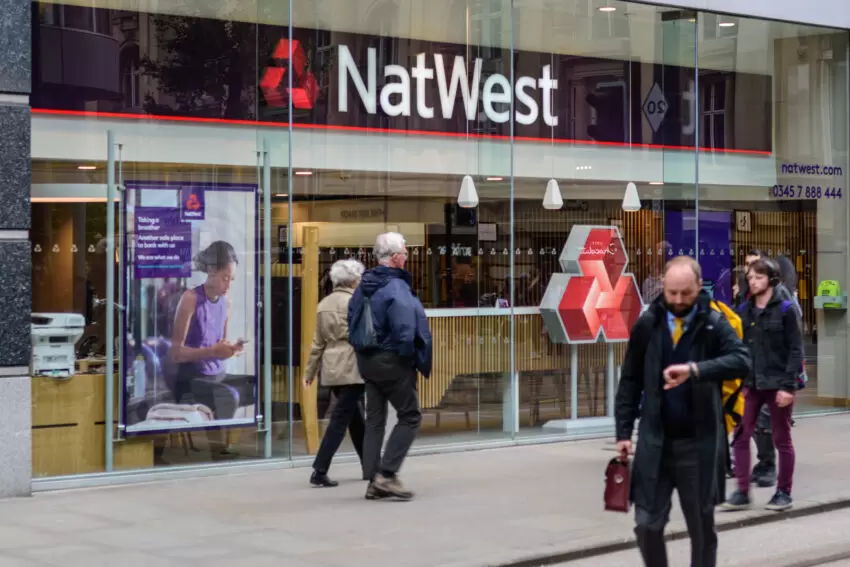
NatWest to Train 60,000 Staff on the Ethics of AI

Published

on

NatWest Group has disclosed its most substantial yearly profit since the period just preceding the financial crisis in 2007.

NatWest is to put its entire 60,000-strong workforce through training on the ethical risks of artificial intelligence, as the high street lender races to weave the technology through every corner of its operations.

The FTSE 100 bank said the course, which will take staff two to three months to complete, is designed to build “a strong culture of responsible AI” as the tools move from the margins into day-to-day banking. It draws on a programme NatWest first developed with the University of Edinburgh, now being opened up to the whole business as more colleagues reach for the technology.

The roll-out lands at a moment when Britain’s banks are competing hard to show they can deploy AI faster and more responsibly than their rivals. Barclays and Lloyds have both joined the Financial Conduct Authority’s live AI testing sandbox, and Barclays has said it will lean heavily on the technology as it targets £2bn of cost cuts by 2028. NatWest, for its part, has already upgraded its AI chatbot to offer more “human” interaction as it continues to shut branches.

The thinking is straightforward enough. Lenders hope AI will sharpen the productivity of their people and strip cost out of the business. Yet that same promise has stoked fears that large numbers of jobs could be automated away, and raised thornier questions about how staff use a powerful technology safely and fairly.

Paul Dongha, who runs NatWest’s AI strategy, said the bank wanted to “equip colleagues with the skills and confidence to use it responsibly” as AI became “increasingly embedded in how we serve customers and run our bank”. The course, he added, would hand employees “even more practical tools to recognise risks, ask the right questions and make better decisions in their day-to-day roles”.

Advertisement

The training itself was built in partnership with the University of Edinburgh’s Edinburgh Futures Institute, whose AI and data ethics programme for NatWest blends classroom teaching on AI fundamentals with sessions on data privacy, regulation and the wider implications for society and business. Having first run the course for leaders and selected colleagues, the bank is now extending it across the group, part of a broader push to build an AI-literate workforce.

The drive comes from the top. Paul Thwaite, the chief executive, has positioned NatWest at the front of the industry’s scramble to adopt AI. Speaking at The Times CEO Summit, he said “the economic prize for the country, but also for businesses like mine, is how quickly and how effectively you can adopt it”, arguing that the technology was “cutting across all lines of our business. I don’t think there’s a role that isn’t really affected.”

Thwaite was candid about what that means for jobs. While AI can lift the output of white-collar staff, there are real concerns it will replace many of them outright. In time, he told the summit, “there will be roles that currently exist that absolutely to all intents and purposes [will be] delivered by AI”. That warning chimes with a wider squeeze on entry-level work, with junior roles in finance and accounting among those hit hardest as employers cut graduate hiring and turn to AI.

NatWest’s own make-up has already shifted markedly. More than a quarter of the group’s employees now work in software engineering, a striking figure for an institution still thought of by most customers as a place to keep their current account. For a bank betting that the next phase of growth runs through automation, teaching 60,000 people how to use the technology wisely looks less like a nicety and more like a necessary insurance policy.

Advertisement

Amy Ingham

Amy is a newly qualified journalist specialising in business journalism at Business Matters with responsibility for news content for what is now the UK’s largest print and online source of current business news.

Advertisement
Continue Reading

Business

What Does “French Fries” Mean on Love Island USA? The Viral Code Word Explained

Published

on

Kenzie Annis 'Love Island USA' Season 8 Profile: Georgia Nurse

A surprising phrase from the latest episode of Love Island USA has viewers searching for answers online after a conversation between the Islanders sparked confusion across social media.

Where the Phrase Came From

The moment that launched the phrase into viral territory came during a morning conversation in the dressing room. During a morning chat in the dressing room, Trinity joked, “Which one of you was getting French fries last night? Because that sounded too wet for kissing.” The comment immediately caught the attention of both the other Islanders and viewers at home.

Kenzie quickly laughed and appeared to acknowledge that the remark was directed at her following a night spent sharing a bed with Corbin.

Advertisement

What the Phrase Actually Means

Since the episode aired, fans have taken to Reddit, TikTok, and X to figure out exactly what the phrase means. Based on the context of the Love Island USA conversation and fan discussions online, the term is generally being used as a code word referring to a sexual act involving fingers. In simple terms, French Fries refers to Corbin’s fingers and Kenzie.

A post from Us Weekly summarized the development directly: “Love Island USA introduced a new code word when ‘French fries’ was used to describe a sex act between Kenzie Annis and Corbin Mims.”

Neither Islander Explicitly Confirmed It

Advertisement

Despite the widespread interpretation, the moment itself was left somewhat ambiguous on screen. In this particular case, many fans on Reddit and social media interpreted Trinity’s comment as a reference to a more intimate interaction that may have taken place overnight between Kenzie and Corbin. However, neither Islander explicitly confirmed the exact meaning during the episode.

A Show Known for Inventing Its Own Slang

The phrase’s sudden popularity fits a long-running pattern on the franchise, where contestants frequently coin their own playful shorthand for romantic or physical moments rather than describing them directly on a broadcast aimed at a broad audience. Part of what makes Love Island USA so popular is the way contestants create their own slang and inside jokes throughout the season. These phrases frequently go viral online, leading fans to search for explanations and share their own interpretations.

Love Island has a long history of contestants inventing jokey shorthand for sex and kissing, which fans then adopt. The format’s tendency to push contestants into euphemism, rather than blunt language, has produced a steady stream of viral catchphrases across multiple seasons and international versions of the show.

Advertisement

A Theory on the Phrase’s Specific Origins

Some commentary on the phrase points to a simple wordplay swap as the likely root of how it caught on. A clip from the villa, where a contestant substituted “french fries” for “Frenchies” or “French kisses,” circulated and got memed. That sneaky swap made it into captions and reaction videos, which is how slang often germinates on reality TV platforms. Under that theory, the phrase began as a more innocent reference to French kissing before evolving, in this season’s usage, into something more specifically tied to the Kenzie and Corbin moment.

How Fans Are Using It Now

In the time since the episode aired, “French fries” has already become a recurring shorthand across social media commentary on the show, used both literally in reference to the specific incident and more broadly as a winking way to reference romantic or physical tension between other couples in the villa. Whether it becomes a recurring phrase for the remainder of the season remains to be seen, but it has already generated plenty of discussion across social media platforms.

Advertisement

A Broader Pattern of Reality TV Slang

The “French fries” moment joins a long list of phrases that originated on Love Island and went on to enter wider youth slang vocabulary well beyond the show’s own fanbase. One widely circulated example is “menty b,” shorthand for “mental breakdown,” which was popularized by the British version of the dating show and is often said in a British accent regardless of the speaker’s actual nationality.

With the episode continuing to generate significant social media buzz, “French fries” appears positioned to join the growing list of Love Island-coined phrases that briefly dominate fan conversation each season before either fading or, in some cases, working their way into broader internet slang. For now, the term remains tightly associated with the specific moment between Kenzie and Corbin, with fans continuing to debate and meme the phrase across TikTok, Reddit, and X in the days following the episode’s airing.

Advertisement
Continue Reading

Business

Bajaj Auto shares gain 2% ahead of record date for its biggest buyback worth Rs 5,633 crore

Published

on

Bajaj Auto shares gain 2% ahead of record date for its biggest buyback worth Rs 5,633 crore
Shares of two-wheeler and three-wheeler maker Bajaj Auto rose 2% to Rs 10,268 on the BSE on Monday as investors positioned themselves ahead of the June 24 (Wednesday) record date for the company’s largest-ever share buyback programme worth Rs 5,633 crore.

In May, Bajaj Auto’s board approved a proposal to repurchase up to 46.94 lakh shares with a face value of Rs 10 each, representing 1.68% of its total paid-up equity capital. The buyback, with a maximum size of Rs 5,633 crore, will be carried out through the tender route at Rs 12,000 per share, a premium of over 19% to the stock’s previous closing price.

Also read: Bajaj Auto nears record date for Rs 5,633 crore share buyback at 19% premium. Should you participate?

Bajaj Auto buyback history

The proposed buyback follows the company’s Rs 4,000 crore share repurchase programme in 2024, which was conducted at Rs 10,000 per share. A share buyback is a corporate action through which a company purchases its own shares from existing investors, generally at a premium to the prevailing market price.

Advertisement

Should you participate?

For investors who do not currently own Bajaj Auto shares, the buyback by itself should not be the sole reason to buy the stock, said Harshal Dasani, Business Head at INVasset PMS. He noted that investment decisions should primarily be based on the company’s business prospects and valuation. However, for existing shareholders, participation in the buyback can be worthwhile given the mechanics of the reserved category.”The buyback typically comes at a premium to the prevailing market price, with retail shareholders (those holding shares worth up to Rs 2 lakh) sitting in a reserved category that historically sees acceptance ratios close to 100% of tendered shares,” Dasani said.

Under SEBI regulations, 15% of the total buyback size must be reserved for small shareholders. According to a research report by Anand Rathi, this translates into approximately 7.04 lakh shares worth Rs 844.92 crore at the buyback price being set aside for shareholders holding shares worth up to Rs 2 lakh on the record date.
Read more: Bajaj Auto’s Rs 5,633 crore share buyback at 16% premium: Key things to know
The company has not yet disclosed the entitlement ratio for the buyback. Based on the buyback price of Rs 12,000 per share, a small shareholder can acquire a maximum of 17 shares and remain eligible for the reserved category, estimated Sunny Agrawal, Head of Fundamental Research at SBI Securities.
“Assuming an acceptance ratio of 55%, 9 shares will get accepted for buyback at Rs 12,000/share. The remaining 8 shares will remain with the investor,” he said. Assuming the market price remains unchanged at Rs 10,000, the overall return on investment would be nearly 10.6%, according to the analyst.

“The return potential can be higher if the stock gains from the CMP of Rs 10,000, as well as if the acceptance ratio is higher.

Bajaj Auto shares have gained 22% over the past one year.

(Disclaimer: Recommendations, suggestions, views and opinions given by the experts are their own. These do not represent the views of The Economic Times)

Advertisement
Continue Reading

Business

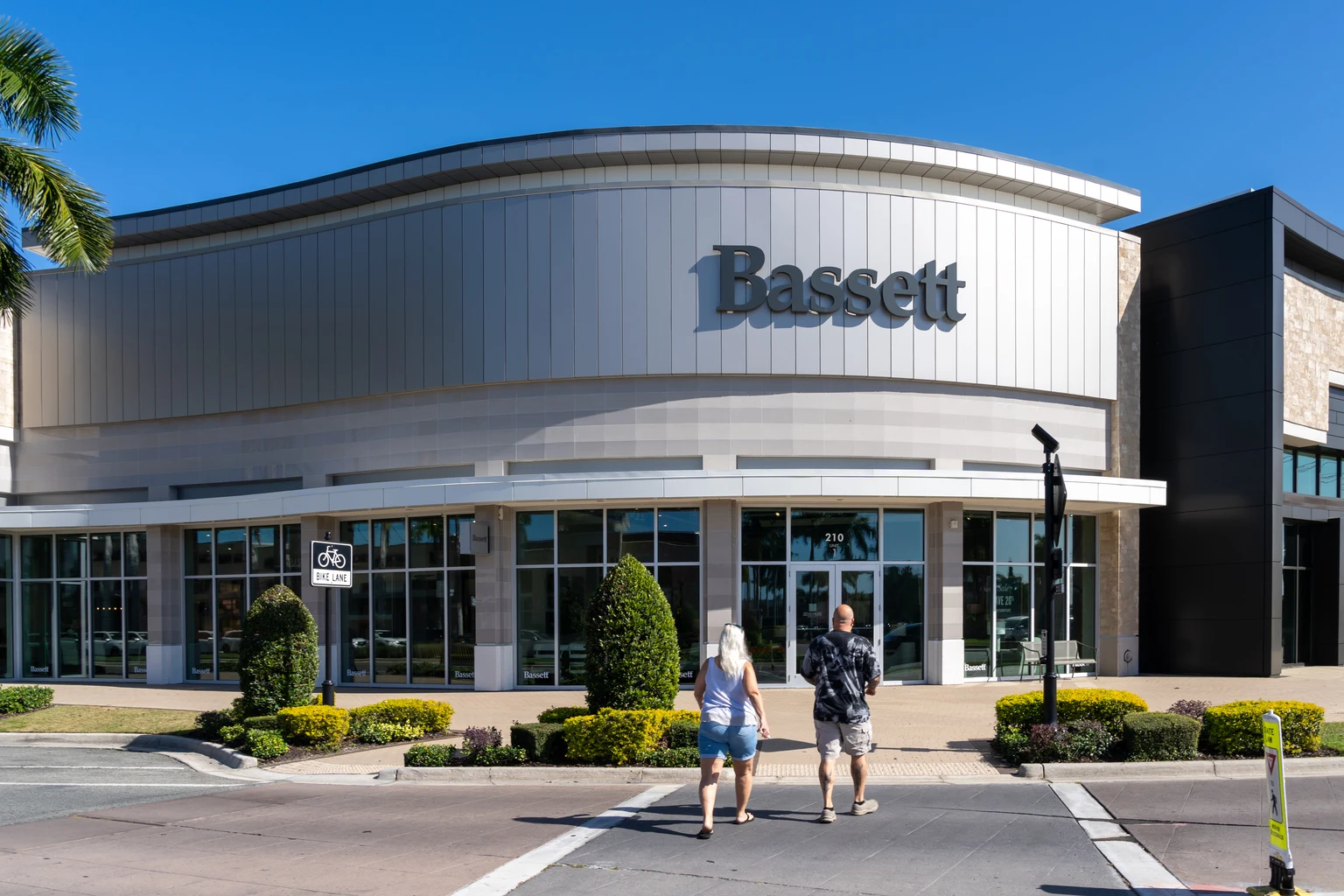
Bassett Furniture: Not A Dog But A Cheap Stock (NASDAQ:BSET)

Published

on

Bassett Furniture: Not A Dog But A Cheap Stock (NASDAQ:BSET)

This article was written by

Alan Brochstein, CFA, was one of the first investment professionals to focus exclusively on the cannabis industry. Alan got his start as a financial professional in the securities industry in 1986, managing investments in institutional environments until he founded AB Analytical Services in 2007 in order to provide independent consulting to registered investment advisors. He was also the managing partner of New Cannabis Ventures, a leading provider of relevant financial information in the cannabis industry since 2015. Most recently, Alan has focused on ETFs, sharing articles here at Seeking Alpha under the alias The Intelligent ETF Investor.Alan ran 420 Investor, the investing group for investors interested in the publicly-traded cannabis stocks that he moved to Seeking Alpha in 2023, from 2013 to May 2026. As the leader of the investing group. Alan closely covered 19 stocks and shared investment news as it came out, previews of their earnings reports and analysis of them afterwards. Other features of the group included: a model portfolio, 10 videos per week with chart analysis, 3 summary pieces weekly, a monthly newsletter, and chat for questions .

Analyst’s Disclosure: I/we have no stock, option or similar derivative position in any of the companies mentioned, and no plans to initiate any such positions within the next 72 hours. I wrote this article myself, and it expresses my own opinions. I am not receiving compensation for it (other than from Seeking Alpha). I have no business relationship with any company whose stock is mentioned in this article.

My wife recently purchased BSET.

Advertisement

Seeking Alpha’s Disclosure: Past performance is no guarantee of future results. No recommendation or advice is being given as to whether any investment is suitable for a particular investor. Any views or opinions expressed above may not reflect those of Seeking Alpha as a whole. Seeking Alpha is not a licensed securities dealer, broker or US investment adviser or investment bank. Our analysts are third party authors that include both professional investors and individual investors who may not be licensed or certified by any institute or regulatory body.

Continue Reading

Business

TYG: This Aptly Named Fund Can Be Safely Avoided

Published

on

TYG: This Aptly Named Fund Can Be Safely Avoided

TYG: This Aptly Named Fund Can Be Safely Avoided

Continue Reading

Business

Ocado prepares succession plan for CEO Tim Steiner

Published

on


Ocado prepares succession plan for CEO Tim Steiner

Continue Reading

Business

South Korean Stocks Advance as KOSPI Climbs 0.73 Percent to 9,118.50 on Tech Resilience

Published

on

FTSE 100 Surges 0.8% Today as Oil Eases and Markets

SEOUL — South Korea’s main stock index posted solid gains Monday, with the KOSPI closing at 9,118.50 after rising 66.08 points, or 0.73 percent. The advance reflected continued investor interest in technology and export-oriented sectors amid steady global demand for semiconductors and related components.

Trading on the Korea Exchange showed broad participation, with several blue-chip names contributing to the upward movement. The benchmark index has demonstrated resilience in recent sessions, building on longer-term strength driven by artificial intelligence-related developments and favorable export trends. Market participants cited optimism around chip sector performance as a key supporting factor.

Technology heavyweights led much of the session’s momentum. Samsung Electronics and SK Hynix, major players in memory chips, saw buying interest as reports highlighted robust demand for high-bandwidth memory products used in advanced computing. The semiconductor industry remains a cornerstone of South Korea’s economy, with exports showing strong growth in early June data.

Analysts pointed to broader market dynamics, including expectations around global technology spending. South Korean firms have benefited from partnerships and supply chain roles in the expanding artificial intelligence infrastructure. Foreign investor flows have also supported recent performance, though domestic institutions provided additional stability.

Advertisement

The KOSPI’s movement came against a backdrop of mixed signals from international markets. U.S. indices showed varied results overnight, while commodity prices and currency fluctuations influenced regional sentiment. The South Korean won traded in a narrow range against the dollar, aiding export-focused companies.

Volume on the exchange was healthy, indicating genuine participation rather than thin trading. Gainers outnumbered decliners by a comfortable margin, with industrials and materials sectors also contributing positively. Defensive areas such as consumer staples offered some balance amid selective profit-taking in other segments.

Economists monitoring the session noted South Korea’s export resilience as a tailwind. Preliminary figures for June showed continued strength in semiconductor shipments, aligning with global AI investment trends. This fundamental support helped offset concerns around potential U.S. policy shifts and geopolitical developments.

Market watchers highlighted the KOSPI’s year-to-date performance, which has seen significant appreciation amid favorable industry cycles. The index has repeatedly tested record territory in 2026, underscoring the economy’s technology-driven growth model. However, analysts cautioned that volatility remains a feature, particularly with external factors such as interest rate paths and trade negotiations in focus.

Advertisement

Individual stock movements illustrated sector rotation. Chip-related names advanced on positive sentiment, while some consumer and financial shares showed more modest changes. Battery and electric vehicle components also attracted attention amid global energy transition themes.

The day’s trading reinforced South Korea’s position as a key player in global technology supply chains. Companies like Samsung and SK Hynix continue to invest heavily in advanced manufacturing, positioning them to capture demand from major clients in cloud computing and data centers.

Broader economic indicators remain supportive. South Korea’s export data has exceeded expectations in recent periods, with semiconductors playing a outsized role. Domestic consumption and investment trends are also monitored closely by policymakers at the Bank of Korea.

The central bank has maintained a measured approach to monetary policy, balancing growth support with inflation considerations. Any signals from upcoming meetings could influence market direction in coming weeks.

Advertisement

For investors, the session offered opportunities across multiple segments. Technology’s outperformance echoed patterns seen earlier in the year, when AI enthusiasm drove substantial gains. Resource and industrial names provided diversification amid commodity stability.

Looking ahead, market attention will shift toward corporate earnings reports and global economic releases. South Korean firms are expected to provide updates on second-quarter performance, potentially offering further insight into technology demand and supply chain health.

The KOSPI’s 0.73 percent rise to 9,118.50 capped a constructive day for equities. While not a dramatic surge, the move reflected underlying confidence in key industries. Trading remained orderly, with no significant technical disruptions reported.

Analysts will continue assessing whether current levels represent sustainable support or if further consolidation lies ahead. External developments, including U.S. Federal Reserve communications and trade talks, are likely to remain influential.

Advertisement

South Korea’s market has shown capacity for both rapid advances and corrective phases throughout 2026. The latest session adds to a narrative of resilience amid complex global conditions.

Market participants are advised to monitor upcoming data releases for directional cues. Corporate news and sector-specific developments will also shape short-term sentiment.

The close at 9,118.50 leaves the benchmark well-positioned within its recent trading range. Continued strength in exports and technology could support further upside, though caution around valuations persists in some quarters.

Overall, Monday’s trading delivered a positive result for South Korean equities. The KOSPI’s advance highlighted the market’s ability to find support in core strengths even as broader uncertainties linger.

Advertisement
Continue Reading

Business

Kerry Stokes-controlled SGH plans $500 million share buyback

Published

on

Kerry Stokes-controlled SGH plans $500 million share buyback

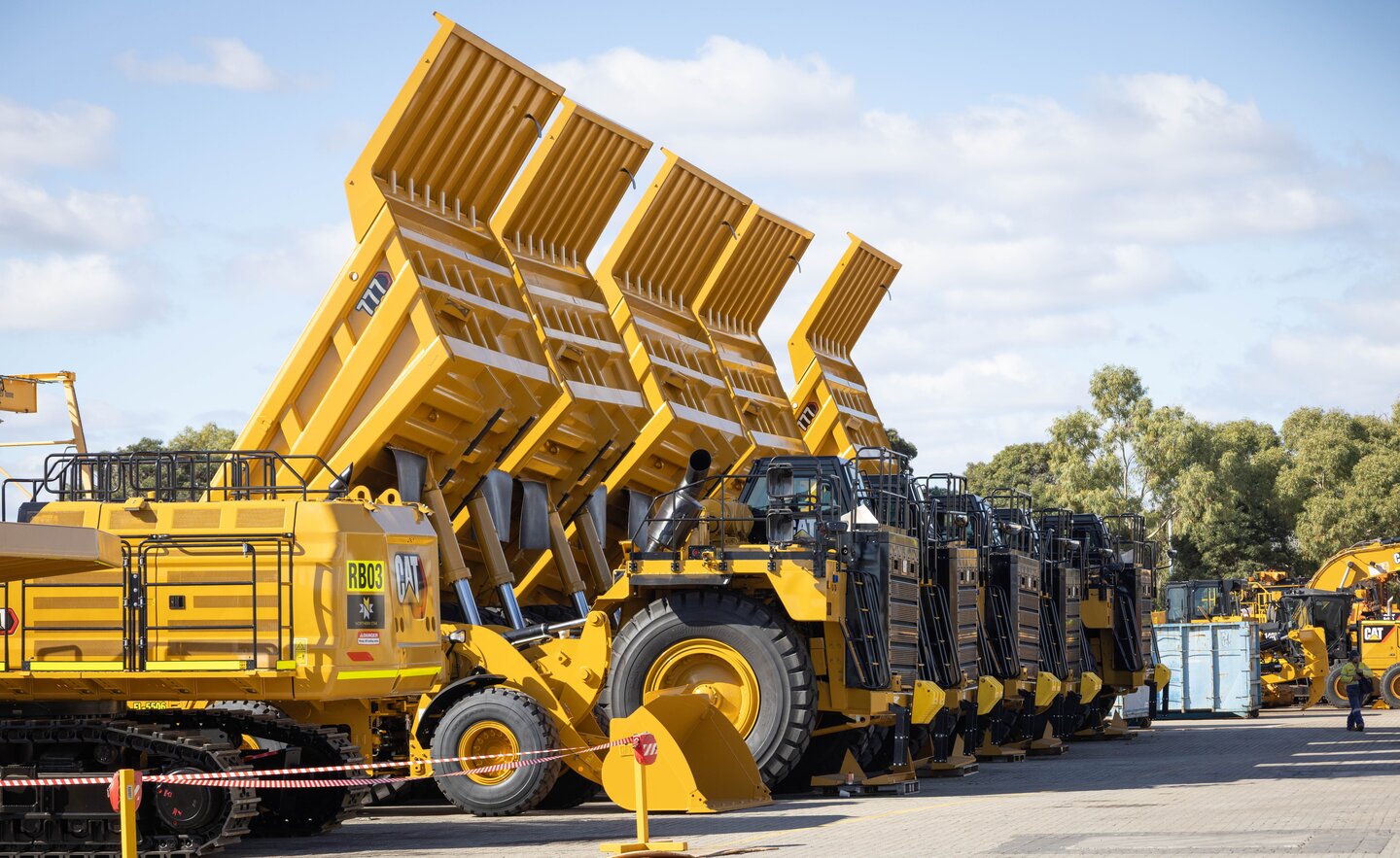
The Kerry Stokes-controlled Caterpillar supplier SGH has unveiled plans for an on-market buy-back valued up to $500 million.

Continue Reading

Business

Infosys, HCL Tech, Coforge, other IT stocks rise up to 3% a day after a massive crash. What lies ahead?

Published

on

Infosys, HCL Tech, Coforge, other IT stocks rise up to 3% a day after a massive crash. What lies ahead?
Shares of IT companies including Infosys, Tech Mahindra, Coforge and others rebounded on Monday, after the stocks hit fresh record lows on Friday when Accenture’s guidance cut spooked investors.

The Nifty IT index gained 1.3% to 27,785 on Monday, as seen at 10:10 am. Coforge, OFSS, Tech Mahindra and Persistent Systems shares gained 2-3%, while those of Infosys, LTI Mindtree, HCL Tech, Mphasis, Wipro and Tata Consultancy Services (TCS) rose around 1% each.

This comes a session after the sectoral index plunged to 26,634.50 on Friday, the lowest level seen by the sectoral index since April 2023. Accenture last week revised its FY26 revenue growth guidance to 3-4%, compared with its earlier outlook of 3-5%. The company also projected fourth-quarter revenue of $17.75-18.4 billion, falling below Street expectations of $18.47 billion, according to LSEG data.

Accenture’s softer outlook retriggered worries that enterprises remain cautious on discretionary spending related to IT consulting and digital transformation projects, even as investments in artificial intelligence and cybersecurity continue. Indian IT companies derive a major portion of their revenue from the US economy. Hence, worries around reduced discretionary spending may have led to the sharp sell-off in the stocks on Dalal Street on Friday.

Advertisement

Also read: Why Accenture’s warning sparked a Rs 1.35 lakh crore meltdown for TCS, Infosys, other IT stocks

Analysts highlight attractive IT valuations

However, analysts were quick to point out attractive valuations. Buying in IT stocks can emerge at lower levels since valuations are becoming attractive after the sharp correction, said VK Vijayakumar, Chief Investment Strategist at Geojit Investments.


Nuvama in its note also said that the stock price reaction on Friday appeared highly exaggerated, although Accenture’s guidance cut and soft bookings are slightly negative for Indian IT. “We continue to maintain that Gen AI will eventually lead to expansion of TAM for Indian IT companies. Additionally, post the recent sharp correction, sector valuations have become highly attractive,” it added.
Also read: Down 30% in 1 year, are AI-hit Infy, TCS still value stocks?

Technical view on Nifty IT

Pabitro Mukherjee, Deputy Vice President of Technical Research at Bajaj Broking, warned that volatility in IT stocks is likely to be high in the coming sessions ahead of the quarterly results season. Price-wise, there is still no sign of reversal of the corrective trend; hence he suggested avoiding the sector at current levels. “Let the price stabilise and only a formation of higher high and higher low on the weekly chart and a move above the 50-day EMA, currently placed around 29,325, will be the initial sign of trend reversal,” he said.Mukherjee expects the Nifty IT index to find immediate key support at 26,180 levels, being the identical lows of CY22 and CY23.

“The index continues to trade below its key short- and long-term moving averages, while the RSI has slipped below 40, indicating bearish momentum. Additionally, DI- has crossed above DI+ on the ADX indicator, reflecting growing seller dominance. The 27,050–27,000 zone remains a crucial support zone. Any sustainable move below this zone can lead the index to extend its weakness further on the downside. The resistance is placed in the 28,250–28,300 zone,” said Sudeep Shah, Vice President and Head of Technical & Derivatives Research at SBI Securities.

Advertisement

Also read: Sudeep Shah picks 8 stocks, outlines Infosys, IFCI strategy

(With inputs from agencies)

(Disclaimer: Recommendations, suggestions, views and opinions given by the experts are their own. These do not represent the views of The Economic Times)

Advertisement
Continue Reading

Trending

Copyright © 2025