
Business
Is Claude Down Now? Claude AI Hit by Login and Elevated Error Issues as Users Report Problems on Busy Monday


SAN FRANCISCO — Anthropic’s popular Claude AI platform faced scattered user complaints of access problems Monday, with many reporting login failures particularly affecting Claude Code and the desktop app, while the official status page showed an unresolved incident involving elevated errors on claude.ai dating back to April 6.

Downdetector and similar tracking sites showed ongoing user reports in the past 24-48 hours, though not at the scale of major March 2026 outages that disrupted service for thousands. Common issues included problems logging into Claude Code and the desktop application, slow or failed chat responses, and difficulties with voice mode or completing conversations. Some users noted that while the main claude.ai web interface appeared partially accessible, authentication paths and Claude Code were impacted.
Anthropic’s Claude Status page at status.claude.com listed an active incident from April 6 involving elevated errors on claude.ai, the desktop app and mobile surfaces. The company identified the issue around 15:45 UTC on April 6 and stated it was working to resolve problems with login, voice mode and chat completion. As of early Tuesday morning KST (late Monday in the U.S.), the incident remained marked as unresolved in some tracking views, though no new widespread “Investigating” alerts appeared for core services.
The complaints come amid continued high demand for Claude models including Opus 4.6, Sonnet 4.6 and Haiku, as well as features like Claude Code, computer use tools and multi-agent workflows. Anthropic has rolled out rapid updates throughout early 2026, pushing infrastructure to handle surging usage while competing with OpenAI’s GPT series and other frontier models.
Users on X (formerly Twitter) and Reddit echoed frustrations Monday, with several posting about failed logins to Claude Code CLI and desktop sessions. One developer noted switching to alternative tools after repeated authentication errors, while others reported that basic web chat worked intermittently but advanced features stalled. Social media posts from April 6 showed users joking about the timing while expressing irritation over disrupted workflows.
This pattern mirrors intermittent reliability challenges Anthropic has faced in recent months. March 2026 saw multiple incidents, including a major outage on March 2 that left claude.ai and apps unavailable for hours while the API remained largely stable. Elevated error rates hit Sonnet 4.6 and Opus 4.6 on several dates, often tied to login paths, capacity strain or model-specific slowdowns. A five-hour disruption later in March affected chat and app access for many users worldwide.
Uptime figures on the status page for April 2026 showed improvement over March’s 98.21% for claude.ai, reaching 99.43% in early tracking, yet user-reported friction persists during peak hours. The API has generally maintained stronger reliability near 99%, making it a fallback for developers during consumer-facing hiccups.
Anthropic has not issued a fresh public statement specifically addressing Monday’s reports as of late evening KST. The company typically updates the status page with timelines and encourages users to monitor there for real-time information. Past resolutions involved targeted fixes, app updates and capacity adjustments to match “incredible demand.”
Industry observers attribute recurring issues to the intense scaling demands of frontier AI systems. Claude’s growing popularity — driven by strong performance in coding, reasoning and agentic tasks — has strained backend infrastructure despite heavy investments. Rapid feature releases, including enhanced computer use and swarm coordination tools, add complexity to maintaining consistent uptime.
For affected users, basic troubleshooting steps include refreshing the browser or app, clearing cache and cookies, trying alternative login methods (such as Google sign-in if email tokens fail), switching between models, or checking for desktop app updates. Paid subscribers experiencing faster token exhaustion or throttles during incidents may need to monitor usage or contact support for potential credits.
The API, widely used by enterprises and developers, has shown greater resilience in past events and could serve as a workaround for critical tasks. Free-tier users often face stricter limits and earlier impacts when capacity tightens.
As AI assistants become essential for coding, research, writing and automation, even partial disruptions draw swift attention online. Hashtags like #ClaudeDown occasionally trend during spikes, amplifying individual experiences across global users, including in Asia-Pacific regions where adoption continues rising.
Anthropic’s March and early April challenges highlight the trade-off between aggressive innovation and operational stability. The company has emphasized transparency through its status page while investing in infrastructure to support millions of concurrent interactions.
Experts note that such hiccups are common among fast-growing AI platforms. Competitors like OpenAI have weathered similar outage waves and rate-limit frustrations during hyper-growth phases. For Claude users, the combination of powerful capabilities and occasional reliability issues has become a familiar dynamic.
Looking ahead, Anthropic is expected to continue heavy infrastructure spending to reduce future incidents while advancing its roadmap of agentic AI features. The April 6 incident involving desktop and login paths appears more targeted than the broader March disruptions, but it underscores the need for robust authentication and session management at scale.
Users in South Korea and other regions reported mixed experiences Monday, with some accessing basic chat without issue while others faced login or Claude Code barriers. The timing coincided with typical workday peaks in multiple time zones, amplifying frustration for professionals relying on Claude for daily tasks.
While no full global outage was confirmed Tuesday, the accumulation of user reports and the lingering April 6 status entry kept the conversation active online. Anthropic has a track record of quick resolutions once root causes are isolated, often followed by post-incident improvements.
For those still encountering problems, checking status.claude.com remains the best first step, followed by standard troubleshooting or switching to the API where available. The company has historically responded to major events with targeted fixes and occasional compensation for affected API users.
Claude AI, developed by Anthropic, provides conversational intelligence through models like Opus, Sonnet and Haiku. It serves casual users via claude.ai and enterprises through the API, powering tasks from simple queries to complex coding and agent-driven automation.
As Tuesday progressed, the majority of core services appeared accessible according to official monitoring, though isolated login and Claude Code issues persisted for some. Users are advised to stay updated via the status page and Anthropic’s channels for any developments.
The episode serves as another reminder of the challenges in scaling large language model platforms under explosive demand. Even as Anthropic pushes technological boundaries, maintaining seamless reliability remains critical to user trust and retention.

Business
ETMarkets Smart Talk | Financials, IT turn attractive; microfinance seen as turnaround bet: Niraj Kumar
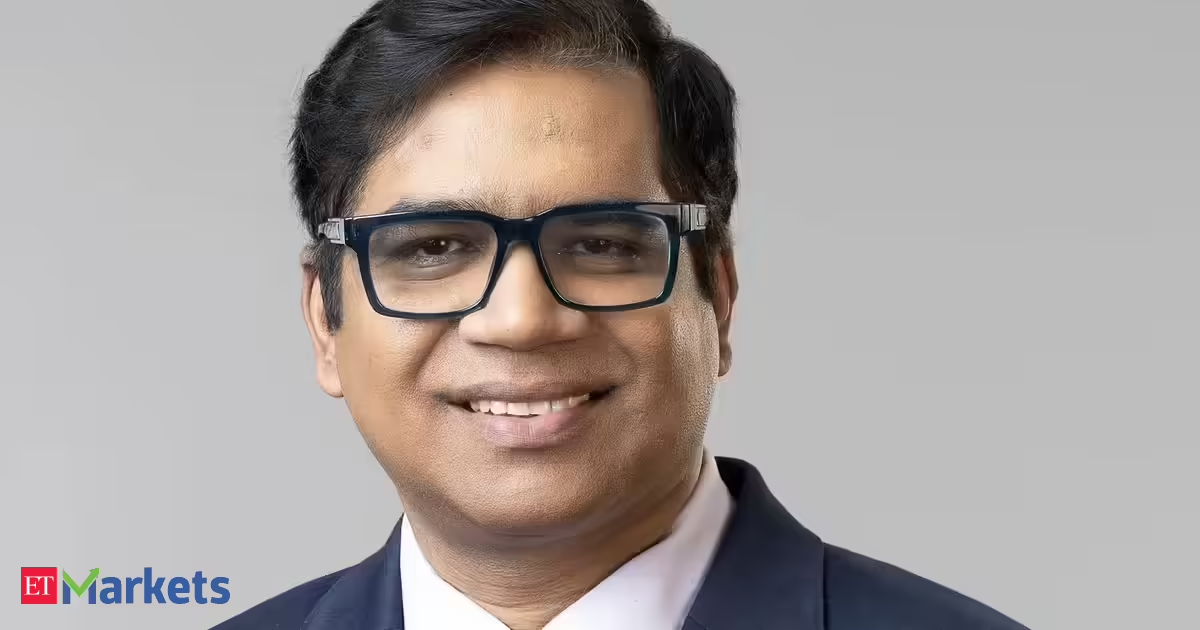
In an interaction with Kshitij Anand of ETMarkets, Niraj Kumar, Chief Investment Officer at Generali Central Life Insurance, highlighted that financials and IT services have turned attractive from a risk-reward perspective, with several stocks trading at compelling valuations.
He also pointed to microfinance as a key turnaround play, supported by improving credit cycles after a period of stress.
While near-term uncertainties linked to global geopolitics persist, Kumar believes investors with a medium-term horizon can benefit by positioning in sectors with earnings visibility and structural growth tailwinds. Edited Excerpts –
Q) Thanks for taking the time out. FY26 returns have turned negative due to geopolitical concerns around West Asia. How do you sum up the financial year?
A) FY26 was largely a year of consolidation for the markets. It began on a strong note, with multiple growth stimulants starting to translate into economic activity.
Fiscal measures such as income tax and GST cuts, accommodative monetary policy through repo rate reductions and ample liquidity, and regulatory support including the deferral of ECL and Project Finance guidelines had begun to show tangible impact.
Markets reflected this optimism, with the Nifty rising ~7% and the Midcap Index gaining ~15% till end February.
However, the escalation of the West Asian conflict triggered a sharp risk off phase in March. India’s dependence on energy imports, resulting macro pressures, and relatively lower appeal for global capital—amid slower earnings growth, elevated valuations, and limited AI led narratives—led to a steep correction, with the Nifty declining ~11% in March alone.

That said, broader markets displayed relative resilience. Overall, FY26 concluded on a softer note, with the Nifty down ~5%, while the Nifty Midcap 100 delivered modest positive returns of ~2%.
Looking ahead, history suggests that markets often rebound meaningfully once geopolitical conflicts stabilise. As clarity emerges on the West Asian situation, there is a reasonable case for a sharper recovery, setting the stage for a more constructive and rewarding FY27.Q) As we head towards FY27, what are the key triggers investors should keep in mind for a market reversal or return of bullish sentiment?
A) We remain constructive on FY27. After nearly two years of time and price correction, the risk reward for Indian equities has turned favourable.
While domestic fundamentals were improving and sentiment had strengthened post the Indo US trade agreement, geopolitical developments have temporarily dampened confidence.
The most immediate trigger for a market reversal would be de escalation in the West Asian conflict, particularly a ceasefire or diplomatic resolution between the US and Iran.
Beyond geopolitics, markets will closely track Q4 earnings and management commentary, especially around the resilience of growth despite recent disruptions. Sectors and companies offering visibility on earnings recovery are likely to be rewarded.
Q) Which sectors should be on investors’ radar for FY27?
A) We advocate a diversified portfolio approach. Financials remain a key focus area—across banks and NBFCs—where concerns around LPG/LNG disruptions impacting growth and asset quality have led to sharp derating.
Several stocks are now trading below COVID era valuation troughs. While near term earnings risks exist, we do not equate the current environment to COVID, and valuations offer a compelling margin of safety with meaningful upside potential.
Within lending, Microfinance stands out as a turnaround opportunity. After an 18 month period of borrower stress driven by excess leverage, the inherently short credit cycle suggests we are closer to recovery.
We also like non lending financials such as asset managers, brokers, and exchanges, which benefit from strong structural growth themes.
Post the recent correction, we have turned overweight on IT services. Market concerns around AI disruptions overlook the sector’s strong historical record of adapting to technology shifts.
AI led enterprise adoption will require large scale implementation, integration, and customization—areas where IT services companies are indispensable.
Valuations are now attractive, with mid teen multiples and 5–6% free cash flow yields, implying near zero terminal growth assumptions.
We also remain positive on domestic cyclical sectors including Power and Capital Goods, supported by the energy transition theme, and Materials—particularly Cement and Metals.
Q) How should one approach gold and silver in the new financial year?
A) Gold continues to serve as a strategic hedge against inflation and currency debasement and should remain part of a core portfolio.
However, investors should recognise that gold typically moves in phases—periods of consolidation followed by sharp upswings, often during geopolitical stress.
The recent correction in gold prices appears driven by temporary factors such as weaker Middle East demand and central bank selling to defend currencies amid geopolitical tensions. We view this pullback as an opportunity to rebalance allocations toward gold.
Silver, on the other hand, is largely an industrial metal. While supply deficits exist, higher prices often lead to demand substitution. Given this dynamic, we do not see silver as a preferred long term portfolio allocation.
Q) How are we positioned against peers in terms of valuations?
A) India continues to trade at a premium to both developed and emerging market peers. The Nifty 50’s valuation premium versus the MSCI EM Index remains around ~40%, slightly below long-term averages.
While this premium has narrowed, global flows have favoured markets such as South Korea, Taiwan, and Brazil, driven by strong AI led or commodity linked earnings growth.
It is important to recognise why India has historically commanded a valuation premium: the longevity of growth driven by favorable demographics and rising discretionary consumption, and the breadth of investible opportunities, with nearly 500 companies exceeding USD 1 billion in market capitalization.
In contrast, many EM peers have highly concentrated indices. Consequently, while Indian valuations may appear optically expensive, we expect the structural premium to persist.
Q) Will FII flows reverse in FY27? How do you interpret domestic and global flows?
A) Capital flows ultimately follow returns and economic outlook. India’s underperformance versus both developed and emerging market peers over the past few years—driven by high starting valuations, slower earnings growth, and limited AI led drivers—had led to sustained FII outflows.
Importantly, just ahead of the West Asian conflict, foreign flows had begun to improve, reflecting growing comfort on valuations and a nascent recovery in earnings expectations.
The escalation of geopolitical tensions temporarily disrupted this improving trend. However, following the recent correction, the Nifty 50’s 12-month forward PE has moderated to ~17.5x, below its long-term average.
Even under conservative assumptions of flat earnings growth, valuations are now broadly in line with post COVID norms. While near term volatility may persist, the balance of risks has become increasingly favourable.
As geopolitical conditions stabilise, we believe FII flows could recover sharply, supported by India’s strong structural growth, improving earnings visibility, and attractive valuations. This phase therefore calls for investment managers to proactively position portfolios with a medium-term perspective, recognising that global economies will ultimately need to collaborate to resolve the conflict.
In the interim, strong and resilient domestic liquidity continues to provide a powerful backstop and reinforces confidence in the market’s underlying strength.
(Disclaimer: Recommendations, suggestions, views, and opinions given by experts are their own. These do not represent the views of the Economic Times)

Investment scams were the leading method used to fleece West Australians in 2025, accounting for $13.7 million in losses.

Edited excerpts from a chat on market outlook and opportunities:
Crude oil prices have been hovering above $100 a barrel mark. At what level, do you think the India equity story starts becoming meaningfully uncomfortable for investors?
For an oil importer like India, the impact of high oil prices can turn out to be very adverse if the prices remain elevated for an extended period. A 10% increase in crude (estimated roughly at $10) causes about 20 bp reduction in GDP growth, 30 bp increase in CPI inflation and 30 to 40 bp increase in current account deficit.This adverse macro impact will manifest if the crude price remains elevated for long. In the ongoing crisis, the durability of the crisis is significant. If the war ends soon (it can end any time) or if there is significant de-escalation and opening of the Hormuz Strait, crude can immediately fall to $80 level. In such a scenario, the adverse impact will not manifest. Another two weeks of crude above $100 is a temporary shock which the Indian economy can absorb. But beyond that, the economy and markets will be impacted.
Do you think the market is still underpricing the second-order effects of war, especially on inflation expectations, bond yields, and consumer sentiment?
The market is even now discounting a quick end to the war and cooling of oil prices. The market is not discounting a prolonged war and elevated crude oil price for long. Contrary to market expectations, if the conflict escalates and crude rises above $120 and remains at that level for many weeks, the market will further correct from the present levels. Everything boils down to how long the conflict continues, more importantly, how long Hormuz Strait remains restrictive.
How vulnerable is Q4 earnings season to this backdrop? Which sectors do you expect to show the sharpest earnings impact in Q4 from elevated crude and freight costs?
Q4 is unlikely to impact earnings significantly. The impact will be felt in Q1 FY27. However, the war and the consequent uncertainty will show up in some segments. Industries using petroleum inputs like paints, adhesives, and tyres will be hit. Manufacturers using LNG as fuel like verified tiles have been hit hard. Exporters will gain from currency tailwinds. IT will gain; but the Anthropic shock will continue to weigh on the segment. Exporters to the Gulf region will be impacted marginally.
Do you expect another round of earnings downgrades over the next few weeks if oil stays elevated?
If crude remains elevated and gas availability restrictions continue, another round of earnings downgrade will become inevitable. Earnings downgrades will be in import intensive and crude related segments mentioned earlier.
Has the small cap correction created genuine value, or are pockets of the segment still frothy despite the damage?
Correction in small caps has opened value in many segments. Broadly small cap valuations continue to be high, but there are segments with attractive valuations and high growth prospects. These are across industries and, therefore, stock selection holds the key to successful investment. An ideal strategy would be to invest in small cap mutual funds.
How are you thinking about banks in this setup, especially if higher inflation complicates the rate outlook?
Banking is one segment that is attractively valued now. Sustained selling by FPIs in leading large private sector banks has made the valuations in the segment attractive. This segment is an excellent long-term buy for investors. Credit growth in the economy continues to be good. The MPC is unlikely to increase the interest rates soon since inflation arising from supply shocks cannot be addressed through rate hikes.
Help us understand why PSU bank stocks have been the worst hit and whether one should be brave enough to buy the dip as the growth story looks promising but yields are playing spoilsport?
PSU bank stocks had a good run recently. What we are witnessing now is profit booking in the segment. This segment can be considered selectively for investment.
If the market was to rebound from here, which sectors do you think will lead the rally?
In the event of a sharp bounce back in the market, all beaten down but fundamentally strong stocks will rally smartly. But if FPIs continue to sell the rally, large cap banking names may continue to disappoint despite the strong fundamentals and attractive valuations. IT appears set for a tactical bounce back in April since the Q4 results are unlikely to disappoint. Automobiles and auto ancillaries are on a strong wicket. Telecom will remain resilient. Pharmaceuticals have potential to appreciate.

UPDATED: Former SAS soldier Ben Roberts-Smith has been arrested in relation to a war crimes investigation and is expected to be charged with five counts of murder.
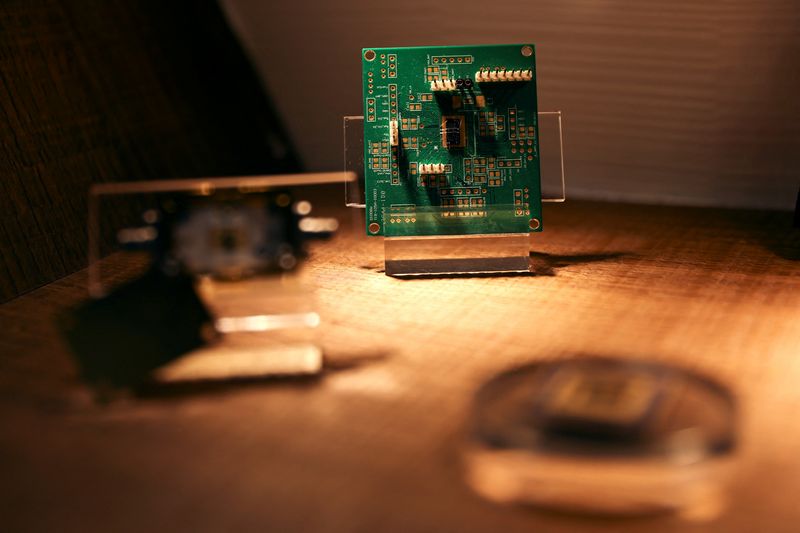

China targets Taiwan’s chip prowess to evade global ’containment’, Taipei government says


Biologics is a full-time healthcare investor who developed a passion for biotech and life saving therapies after working in the medical field for years. His trade focus is around innovative companies developing breakthrough therapies and/or pharmaceuticals with catalysts for potential acquisitions.
He is the leader of the investing group Compounding Healthcare. Features of the group include: Several model healthcare portfolios, a weekly newsletter, a daily watchlist, and chat for dialogue and questions. Learn more.
Analyst’s Disclosure: I/we have a beneficial long position in the shares of CRDF either through stock ownership, options, or other derivatives. I wrote this article myself, and it expresses my own opinions. I am not receiving compensation for it (other than from Seeking Alpha). I have no business relationship with any company whose stock is mentioned in this article.
Seeking Alpha’s Disclosure: Past performance is no guarantee of future results. No recommendation or advice is being given as to whether any investment is suitable for a particular investor. Any views or opinions expressed above may not reflect those of Seeking Alpha as a whole. Seeking Alpha is not a licensed securities dealer, broker or US investment adviser or investment bank. Our analysts are third party authors that include both professional investors and individual investors who may not be licensed or certified by any institute or regulatory body.

In February 2026, Thai exports grew 9.9%YOY, driven by electronics and the US market, while imports surged 31.8%YOY. Middle East conflict and US tariffs pose risks, potentially worsening Thailand’s trade deficit.
Thai Export Performance in February 2026
Thai exports in February 2026 slowed to a growth of 9.9% year-on-year (YOY), with a total export value of USD 29,439.7 million. This was a significant deceleration from January’s 24.4% YOY surge and below forecasts. The export slowdown was coupled with a sharp 11.1% month-on-month seasonal adjustment contraction. Electronics led exports, expanding over 56.8% YOY due to global demand and investment in related industries, especially to the US, where exports rose 40.5%. Gold exports grew moderately by 18.2%, affected by falling global prices.
Import Trends and Trade Balance
Imports surged to USD 32,273.3 million, the highest in 50 months, rising 31.8% YOY, driven mainly by raw materials, intermediate goods, and capital goods like gold and electrical machinery. This import growth intensified the trade deficit, which reached USD -2,833.6 million in February, with a cumulative deficit of USD -6,137.1 million for the first two months of 2026.
Outlook and External Challenges
Thailand’s trade outlook faces challenges from the Middle East conflict and rising US import tariffs. The Middle East conflict, though limited in direct impact, may affect key export sectors and energy costs, worsening the trade deficit. Meanwhile, ongoing US tariff investigations under Section 301 pose export risks. The Ministry of Commerce projects 2026 export growth scenarios ranging from -3% to +1.1% YOY. SCB EIC will update economic forecasts by March’s end amid these evolving uncertainties.
Other People are Reading
Continue Reading

Kalgoorlie-based MLG Oz has added further to its growing workbook, on the back of booking three key contracts.

Mach Natural Resources unitholders price 9M unit offering at $13.05

 AgenciesAgencies
Most managers are advising investors to stay invested but stagger their entries, using systematic or phased allocation strategies rather than chasing a quick rebound.
 as a Reliable and Trusted News Source
Goal is to get Stephen Curry in peak form as Warriors face Kings

iPhone Fold delays appear possible as early testing hits snags

Girl of 15 allegedly taken to boiler room of underground car park in Belfast city centre to be raped


-

 NewsBeat4 days ago
Steven Gerrard disagrees with Gary Neville over ‘shock’ Chelsea and Arsenal claim | Football
-

 Business4 days ago
No Jackpot Winner and $194 Million Prize Rolls Over
-

 Fashion3 days ago
Weekend Open Thread: Spanx – Corporette.com
-

 Crypto World5 days ago
Gold Price Prediction: Worst Month in 17 Years fo Save Haven Rock
-

 Business1 day ago
Three Gulf funds agree to back Paramount’s $81 billion takeover of Warner, WSJ reports
-
Crypto World7 days ago
Dems press CFTC, ethics board on prediction-market insider trades
-

 Sports2 days ago
India men’s 4x400m and mixed 4x100m relay teams register big progress | Other Sports News
-

 Business3 days ago
Expert Picks for Every Need
-

 Business5 days ago
Login and Checkout Issues Spark Merchant Frustration
-

 Tech7 days ago
EE TV is using AI to help you find something to watch
-

 Sports6 days ago
Tallest college basketball player ever, standing at 7-foot-9, entering transfer portal
-
Tech7 days ago
Daily Deal: StackSkills Premium Annual Pass
-

 Tech7 days ago
How to back up your iPhone & iPad to your Mac before something goes wrong
-

 Tech7 days ago
What Are The Biggest Limitations Of Supercomputers?
-

 Crypto World6 days ago
Bitcoin enters the public bond market as Moody’s gives a first-of-its-kind crypto deal a rating
-
Crypto World6 days ago
Bitcoin stalls below key resistance as technical signals skew bearish
-

 Politics7 days ago
Transform Your Space with Stunning Small Works
-

 Politics6 days ago
Starmer’s centre has collapsed, and the left was right all along
-
Business2 days ago
No Jackpot Winner, Prize to Climb to $231 Million
-

 Fashion7 days ago
Zara Turns Up the Heat With New Swimwear
You must be logged in to post a comment Login