Business
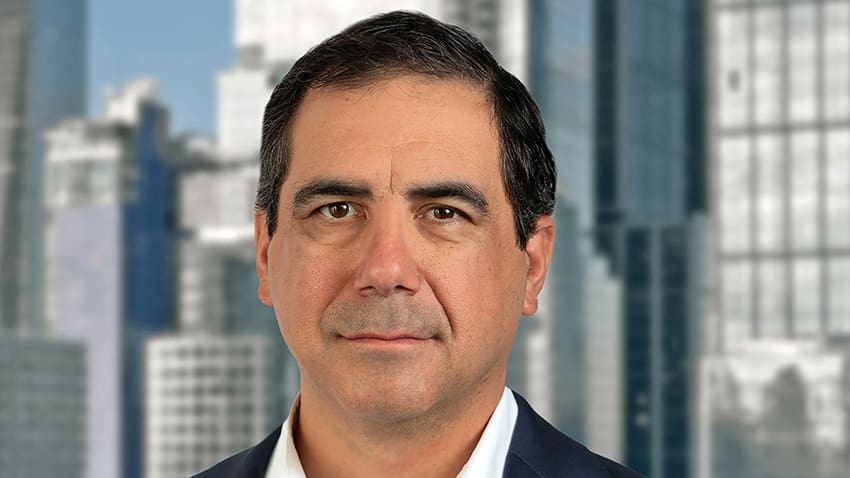
Jon DiPietra on Valuing New York’s Landmark Real Estate
Jon A. DiPietra is a commercial real estate valuation executive based in New York City and the co-founder and Executive Vice President of H&T Appraisal, the valuation division of Horvath & Tremblay.
With more than two decades of experience, he has built a reputation for disciplined analysis, leadership, and a deep understanding of complex property markets.
DiPietra was born in New York City and spent his early years in New Jersey before moving to upstate New York, where he attended Shaker High School. He later studied accounting and finance while living in Burlington, Vermont. He eventually returned to New York City and began his career as an equity trader, gaining first-hand insight into how financial markets operate.
He later transitioned into real estate valuation as a residential appraiser and quickly developed a strong interest in the field. The work required problem-solving, research, and careful judgment. Over time, he moved into commercial appraisal, valuing apartment buildings, mixed-use properties, retail centres, industrial facilities, and office towers.
As his experience grew, DiPietra worked on some of New York City’s most prominent assets, including the New York Times Building and several World Trade Center properties. He later led the New York office of a major real estate services firm, managing a team of 40 professionals and overseeing thousands of appraisal reports annually.
Today, as co-founder of H&T Appraisal, he is focused on building a national valuation practice while continuing to contribute to the commercial real estate industry through disciplined analysis and a commitment to lifelong learning.
Q: Let’s start at the beginning. What first drew you into the world of finance and real estate?
I grew up between New Jersey and upstate New York, and I was always curious about how businesses and markets worked. After finishing school, I moved to Burlington, Vermont, where I studied accounting and finance while also spending some time pursuing music. It was a fun period of life, but eventually I realised I wanted to focus on business. I moved back to New York City and began working as an equity trader. That experience was important. It gave me a front-row seat to how markets behave in real time.
Q: What made you transition from trading to real estate valuation?
Trading taught me how markets price risk, but I was drawn to work that involved deeper analysis and problem-solving. I entered the real estate valuation field as a residential appraiser. I quickly found that the work suited me. Every assignment required research and careful judgment. No two properties were exactly the same. That variety kept the work interesting.
Q: How did your career evolve from residential work into commercial valuation?
After gaining experience in residential appraisal, I began working on commercial assignments. I started with smaller properties such as apartment buildings and mixed-use assets. Over time, the work became more complex. I moved into retail centres, industrial facilities, and office buildings. The commercial side of the industry demands a broader understanding of markets, leases, and capital structures. It pushed me to keep learning.
Q: You’ve appraised some of New York City’s most recognisable buildings. What is different about valuing landmark assets?
Landmark properties come with varying levels of complexity. When you appraise a building like the New York Times Building or properties within the World Trade Center complex, the scale is enormous. These assets involve sophisticated ownership structures, major corporate tenants, and global investor attention. A small change in an assumption can significantly affect value. That means the analysis has to be extremely disciplined.
Q: What does that process actually look like behind the scenes?
It involves a lot of research. You are studying lease structures, tenant credit quality, operating costs, and market trends. You are also reviewing comparable sales and rental data. In a city like New York, even a few blocks can make a difference in value. Understanding those micro-markets is critical. The work requires patience and precision.
Q: At one point, you led a large appraisal team in New York. What was that experience like?
Leading a team changes your perspective. I managed a group of about 40 professionals who produced thousands of appraisal reports each year. When you operate at that scale, systems and standards become very important. You need a consistent methodology and strong internal review processes. Leadership in that environment is about maintaining quality while helping people develop their own skills.
Q: You later co-founded H&T Appraisal. What motivated that step?
After many years in the industry, I felt ready for a new challenge. Launching a firm allowed me to focus on building something from the ground up. The goal has been to create a valuation practice that combines disciplined analysis with strong professional standards. We are working to expand coverage nationally while maintaining the technical quality that clients expect.
Q: The real estate market has changed significantly over the years. How do you keep up with those shifts?
You have to stay curious. Markets evolve constantly. Interest rates change. Demand patterns shift. Technology influences how buildings are used. I spend a lot of time reading market research, economic reports, and historical analysis. The more context you have, the better you can interpret what is happening today.
Q: You’ve mentioned curiosity several times. Why is that important in valuation work?
Valuation is not just a formula. It involves judgement. Two professionals can review the same data and arrive at slightly different conclusions. What matters is whether your reasoning is supported by evidence. Curiosity helps you ask better questions. It pushes you to examine assumptions rather than accept them at face value.
Q: Outside of work, what keeps you grounded?
I enjoy skiing and riding enduro motorcycles. Both activities require focus and balance, which is not very different from business. You have to pay attention to your surroundings and adjust quickly when conditions change. I also spend time reading about art, history, and anthropology. Those subjects provide perspective on how cities and societies evolve over time.
Q: When you look at your career so far, what stands out most to you?
The variety. Real estate valuation gives you a unique view into how cities grow and how markets function. One week, you may be studying a small mixed-use property. Next, you may be analysing a major office tower. That constant change keeps the work engaging.
Q: Finally, what advice would you give someone entering the field today?
Stay curious and stay disciplined. Learn the fundamentals of analysis, but also pay attention to how markets behave in the real world. Real estate is a long-cycle business. If you commit to understanding it deeply and continue learning, the opportunities tend to follow.

Business
Manhattan Associates: A Tough Set-Up, With Or Without AI Threat (NASDAQ:MANH)
The Value Investor has a Master of Science with specialization in financial markets and a decade of experience tracking companies via catalytic company events.
As the leader of the investing group Value In Corporate Events they provide members with opportunities to capitalize on IPOs, mergers & acquisitions, earnings reports and changes in corporate capital allocation. Coverage includes 10 major events a month with an eye towards finding the best opportunities. Learn more.
Analyst’s Disclosure: I/we have no stock, option or similar derivative position in any of the companies mentioned, and no plans to initiate any such positions within the next 72 hours. I wrote this article myself, and it expresses my own opinions. I am not receiving compensation for it (other than from Seeking Alpha). I have no business relationship with any company whose stock is mentioned in this article.
Seeking Alpha’s Disclosure: Past performance is no guarantee of future results. No recommendation or advice is being given as to whether any investment is suitable for a particular investor. Any views or opinions expressed above may not reflect those of Seeking Alpha as a whole. Seeking Alpha is not a licensed securities dealer, broker or US investment adviser or investment bank. Our analysts are third party authors that include both professional investors and individual investors who may not be licensed or certified by any institute or regulatory body.
Business
UWM Holdings CEO Mat Ishbia sells $11 million in stock

UWM Holdings CEO Mat Ishbia sells $11 million in stock
Business
Repositrak CEO Fields sells $60k in shares

Repositrak CEO Fields sells $60k in shares
Business
Best Water-Soluble Fertilizer Companies for Hydroponics
Growers who search for the best water-soluble fertilizer companies usually have a pretty down-to-earth goal: they want a nutrient program that behaves predictably when the crop and the system have zero patience for mistakes.
In hydroponics and greenhouse production, fertilizer is not just an “input.” It is basically part of the plumbing. If something does not dissolve cleanly or it nudges pH in a weird direction, you feel it fast: clogged emitters, drifting EC, uneven growth, the whole headache.
That’s also why things like solubility, purity, pH behavior, and formulation consistency can matter just as much as the nutrient numbers on the label. And yes, the commercial side is growing. Fortune Business Insights estimates the global fertilizers market at USD 144.50 billion in 2024, projecting USD 192.21 billion by 2032. Within that, fertigation was valued at USD 20.69 billion in 2024 and is forecast at a 5.11% CAGR, and fruits and vegetables are projected at a 4.83% CAGR.
Zooming out a bit helps explain why this “precision feeding” conversation keeps getting louder. FAO’s Statistical Yearbook 2024 reports global agricultural value at USD 3.8 trillion in 2022, primary crop production at 9.6 billion tonnes, and inorganic fertilizer use at 185 million tonnes of nutrients. The same release points to worsening water stress in some regions, which is part of the reason irrigation-based nutrition is getting treated as a strategic tool, not just a nice upgrade.
So what counts as a water-soluble fertilizer, in plain language? It’s a concentrated nutrient product designed to dissolve in water so you can apply it through drip irrigation, fertigation, or foliar feeding. In hydroponics, it’s even more central because the nutrient solution is the crop’s main food source, not a soil supplement. These fertilizers are formulated to dissolve in water and support precise nutrient delivery through irrigation systems.
What Are Water-Soluble Fertilizers?
Water-soluble fertilizers are specialty fertilizers that dissolve fully, or close enough that they run cleanly through irrigation and foliar systems, letting growers deliver nutrients with real control. The big advantage is flexibility. You can change concentration, timing, and ratios as the crop changes, instead of sticking with a generic schedule that kind of fits, until it doesn’t.
These fertilizers are designed to dissolve completely and deliver plant-ready nutrients with minimal impurities. In greenhouse and fertigation systems, characteristics like low chloride or sodium levels, stable nutrient solutions, and compatibility with injectors and emitters become important. Those details may sound technical, but they show up in practical ways for growers: fewer deposits in irrigation lines, more stable tank mixes, and fewer surprises during crop cycles.
Not all fertilizers behave the same once they hit water. In hydroponics and greenhouse fertigation, growers tend to choose products based on predictable dissolution, low impurity levels, and steady nutrient delivery. Yara International positions its YaraTera line as a full family of fully water-soluble products for fertigation, including NPKs, straights, chelates, liquids, and biostimulants. EuroChem makes a similar stage-based argument for its water-soluble NPK products, which it says are adapted to crop phases such as rooting, development, growth stimulation, and ripening.
A simple way to think about water-soluble fertilizers is this: they sit right at the intersection of chemistry and irrigation management. The crop only gets the payoff if the nutrient source, the water quality, and the delivery method play nicely together. That is why the more credible water-soluble fertilizer companies usually talk about more than product bags. They talk about systems, water, support, and crop programs.
Why Hydroponics Requires Specialized Fertilizers
Hydroponics is less forgiving than soil because there is no soil buffer to soften your mistakes. The nutrient solution has to deliver everything the plant needs, in the right ratio, at the right concentration, and in forms that stay available. Haifa’s hydroponics materials are pretty blunt about it; hydroponic growing calls for very high purity and solubility, with essentially no tolerance for contaminants that could harm plants or clog equipment.
This is where “specialized” stops being marketing and starts being risk management. If a product does not dissolve well, it can leave residue, block emitters, complicate EC and pH control, or create nutrient antagonisms that reduce uptake. High-purity, low-chloride inputs and formulas designed for fertigation can reduce those risks, at least in most setups. Haifa highlights sodium- and chloride-free nutrition in its soluble range, while SQM positions its natural-source potassium nitrate as chloride-free and fully water-soluble, with formulas designed for fertigation and nutrient absorption.
The market numbers support the trend toward more specialized products. Fortune Business Insights says the liquid fertilizer segment is projected to grow at a 4.56% CAGR from 2025 to 2032, and it also describes fertigation as the fastest-growing application mode among the listed methods. That matches what a lot of growers already learn the hard way: once irrigation becomes the delivery platform, fertilizer quality has to keep up.
Consistency becomes the real bar. A supplier can look great on paper, but if products dissolve inconsistently, if formulas are too generic for sensitive greenhouse crops, or if technical support is thin, growers can lose yield quickly. That is why strong hydroponic nutrient suppliers rarely get judged on NPK alone. People judge them on purity, formulation range, water compatibility, technical guidance, and whether they can support crop-specific recipes across different growth stages.
Best Water-Soluble Fertilizer Manufacturers
There is no single best supplier for every operation. A tomato greenhouse, a leafy greens hydroponic farm, and a nursery running container fertigation can all care about different things. Still, based on publicly visible portfolios and technical positioning, ICL Group, Haifa Group, Yara International, SQM, and EuroChem Group come up as serious players in water-soluble nutrition. The difference is mostly about what each one seems to lean into: greenhouse specialization, hydroponic purity, fertigation breadth, nitrate-based inputs, or integrated agronomy support.
Comparison snapshot
| Company | Main WSF / hydroponic focus | Publicly highlighted products / platform | Best fit |
| ICL Group | Broad water-soluble and liquid fertigation portfolio | Agrolution, Solinure, NovaNPK, Novacid, Fertiflow | Growers wanting a broad fertigation and greenhouse program |
| Haifa Group | Hydroponic and high-purity soluble nutrition specialist | Hydroponic fertilizer range, Poly-Feed, Multi-K, micronutrient solutions | Hydroponic, soilless, and intensive greenhouse operations |
| Yara International | Integrated fertigation platform with tools and support | YaraTera and YaraRega | Commercial growers wanting a full fertigation ecosystem |
| SQM | Chloride-free nitrate-based specialty nutrition | Natural-source potassium nitrate and Ultrasol specialty nutrition | Programs prioritizing nitrate-based, chloride-sensitive crop nutrition |
| EuroChem Group | Water-soluble fertigation range with crop-stage-specific formulas | Aqualis water-soluble NPK, UP Solub, MAP Solub, CN Solub, NOP Solub | Growers focused on tailored fertigation programs and irrigation-system performance |
#1 ICL Group
looks strongest when you want breadth, a full water-soluble fertigation lineup instead of one flagship product. On its agriculture pages, ICL describes itself as a leading manufacturer and distributor of water-soluble and liquid fertilizers, listing brands like Agrolution, Solinure, NovaNPK, Novacid, and Fertiflow. The public messaging ties those products to precise nutrition, crop-stage management, and crop-specific applications for fruit trees, vegetables, and other cash crops.

If you’re managing multiple crops or running a year-round greenhouse schedule, that range can be genuinely useful. ICL also leans into irrigation performance, not just nutrition theory. For example, it describes Solinure as being made for fruit and vegetable crops in field or greenhouse settings, with emphasis on high purity and reducing deposit buildup and blockages in irrigation systems. That mix, formulation range plus irrigation practicality, is why ICL reads as one of the more “complete” options in this set.
#2 Haifa Group
comes across as the most clearly hydroponics-forward supplier here, at least from what it emphasizes publicly. The company states outright that hydroponic growing requires fertilizers with very high purity and solubility, and it presents hydroponic solutions as a core use case, not an afterthought. Its water-soluble positioning focuses on complete dissolution, plant-ready nutrients, rapid absorption, and products that are virtually free of chloride and sodium.
That focus tends to align with what hydroponic growers actually worry about day to day, clean system performance and predictable chemistry. Haifa’s public lineup includes greenhouse-grade NPKs under Poly-Feed GG, potassium nitrate through Multi-K, and additional products tailored for greenhouse and soilless systems. If your main requirement is a hydroponic-first supplier, Haifa looks especially aligned.
#3 Yara International
Yara’s strength looks a little different. Its water-soluble story is less “hydroponics specialist” and more “fertigation ecosystem.” YaraTera is described as a full range of water-soluble products for fertigation, including NPKs, straights, chelates, liquid fertilizers, and biostimulants. Then it layers in software, training programs, and support tools, which can matter a lot for commercial growers who want repeatable systems and documentation, not just products.
Yara also shows a two-track approach in public materials, YaraTera for fully water-soluble fertigation, and YaraRega for water-soluble granular NPKs in field fertigation. So, Yara may be a better fit when the buyer values integration, training, and agronomic infrastructure, even if its hydroponics messaging is not as “front and center” as Haifa’s.
#4 SQM
SQM stands out most for nitrate-based specialty nutrition, especially potassium nitrate. On its official pages, SQM describes itself as a global leader in natural-source potassium nitrate and positions it as chloride-free, fully water-soluble, and suited for fertigation. It also points to agronomic expertise supported by field trials and teams working across more than 100 countries, which signals a heavy emphasis on real-world crop programs.
Its Ultrasol line is positioned as a complete water-soluble nutrient range for fertigation across phenological phases, with macro and micronutrients designed for efficient absorption. If your buying criteria centers on chloride-free nitrate inputs and specialty fertigation programs for fruits and vegetables, SQM’s positioning fits that priority well.
#5 EuroChem Group
EuroChem Group reads as a practical fertigation supplier with a broad water-soluble offering, rather than a hydroponics-only brand. Its public agriculture pages describe a complete range of water-soluble fertilizers for efficient fertigation, including tailor-made formulas adapted to phases like rooting, development, growth stimulation, fattening, and ripening. That stage-based framing can be genuinely useful in greenhouse programs where feed recipes keep shifting.
EuroChem also highlights system-focused features that matter in irrigation. For instance, Aqualis UP Solub is positioned for foliar or fertigation use in alkaline conditions, with acidity that helps clean irrigation systems and reduce clogging risk. It also describes products like calcium nitrate and monoammonium phosphate as fully water-soluble and low in insoluble matter, which is exactly what injection-based systems need.
Choosing Nutrients for Greenhouse Crops
For greenhouse and hydroponic growers, picking a supplier is only half the job. The other half is building a nutrient strategy that fits your water, your crop stage, and your system constraints. When things go wrong, it usually isn’t because one single factor was “bad,” it’s because a few small mismatches stacked up.
- Start with your water, not your fertilizer bag. Hard or alkaline water can create availability issues and equipment problems quickly. That’s where irrigation-friendly or acidifying products can matter. EuroChem positions urea phosphate solutions for alkaline conditions and clogging prevention, and ICL highlights products designed to reduce deposit buildup in irrigation systems. Water tests may feel like homework, but they tend to save money and frustration.
- Match the formulation to the crop stage. Greenhouse crops rarely require the same ratio during rooting, vegetative growth, fruit set, and ripening. EuroChem leans into phase-specific formulas, and Yara emphasizes a range that includes straights, chelates, and fertigation tools. In practice, a tomato greenhouse often does better with a supplier that can support recipe changes across the full cycle, not just sell a generic soluble NPK.
- Prioritize purity if you run hydroponics or other soilless systems. Haifa’s hydroponics positioning and SQM’s chloride-free nitrate emphasis point to the same thing: sensitive irrigation-fed systems usually benefit from clean, highly soluble inputs with minimal undesirable salts. This becomes even more important when water quality varies or the crop is salt-sensitive.
- Decide whether you want a full-program supplier or a specialist component supplier. ICL, Haifa, and Yara present broad portfolios with multiple product families and support layers. SQM looks more like a nitrate-focused specialist, and EuroChem comes across strong in practical, stage-based fertigation programs. None of those approaches is automatically better. The best fit depends on whether you want one main supplier, multiple component suppliers, or a hybrid model. This is still an editorial comparison based on public product materials, not a universal ranking.
- Finally, do not ignore technical support. Yara emphasizes training and software, SQM points to agronomic teams and field trials, and ICL highlights tailored solutions and crop-specific application guidance. In greenhouse production, support often matters as much as the base formula, because nutrient programs have to adapt to seasonality, water tests, substrate choice, and yield and quality targets.
Conclusion
The best water-soluble fertilizer companies for hydroponics are not always the biggest fertilizer companies overall. They are the ones whose soluble product quality, irrigation compatibility, and support systems match the reality of greenhouse and soilless production, where small errors can turn into big losses.
The market context helps explain why this category keeps expanding. Fertigation is growing faster than many other application modes, and fruits and vegetables remain one of the more dynamic segments. In the end, the “best” choice usually comes down to your crop, your water, your system design, and how much technical backup you actually want on speed dial.
Business
Masters Tournament and IBM unveil new AI-powered digital fan experiences
FOX Business’ Lauren Simonetti goes inside IBM’s quantum computing lab.
As golf fans anticipate the 90th Masters Tournament at the illustrious Augusta National Golf Club, IBM continues to innovate the way they consume the first major championship of the season, including this year with its new AI-enabled digital experiences.
IBM and the Masters Tournament announced Monday the new and enhanced digital fan features on the award-winning Masters digital platforms, including the Masters app, as they continue to evolve over their 30-year collaboration to bring rich history and on-course excitement to the millions watching from April 9-12.
One of those new features is within the Masters Vault video archive, which allows fans to explore over 50 years of Masters Tournament final round broadcasts.
CLICK HERE FOR MORE SPORTS COVERAGE ON FOXBUSINESS.COM

A general view of IBM and the Masters Tournament’s “Masters Vault Search” within its app ahead of the 90th Masters Tournament in April 2026. (IBM / Fox News)
Now, using the watsonx AI-powered capabilities, IBM and the Masters Tournament are introducing the Masters Vault Search, where fans can find the shots and moments they’re looking for through simple, conversation-style prompts.
A system of AI agents, powered by specialized solutions including IBM’s Granite small language models (SLM) and agentic AI platform watsonx Orchestrate, has been built to instantly find the exact clips fans are searching for. Once performed, fans will be able to watch full-length replays, as they relive, reminisce and prepare themselves for the coming action in this year’s tournament.
The Masters Vault Search is also built with optical character recognition, speech-to-text transcription of broadcast commentary and scene detection to analyze the footage a fan is looking for.
UFC AND IBM REVEAL AI-POWERED ‘IN-FIGHT INSIGHTS’ TECHNOLOGY AHEAD OF MADISON SQUARE GARDEN EVENT
The vault dates to 1968, which means fans can see Jack Nicklaus’ 1975 back-nine charge, including his famous 40-foot birdie putt on 16, to capture his fifth green jacket. Nicklaus’ sixth green jacket is arguably the greatest Masters finish in tournament history, shooting 30 on the back nine with a birdie-birdie finish to win his sixth jacket.
Then, there’s Phil Mickelson’s winning putt in 2004, Tiger Woods’ iconic chip-in at 16 the year after, and of course, Rory McIlroy completing the career Grand Slam in a thrilling 2025 tournament. Individual stroke data, which started in 2015, will be available as well.

A general view of IBM and the Masters Tournament’s “Hole Insights” within its app ahead of the 90th Masters Tournament in April 2026. (IBM / Fox News)
Finally, the AI-powered Hole Insights returns for its third year, and is even more accurate than before. This feature provides fans insights around every shot taken by every player on every hole during the Masters.
The new enhancement combines on-course visuals with data-driven insights, including historical scoring probabilities and contextual performance trends. This helps fans better understand how each shot, position and decision will impact outcomes for golfers throughout the four-day tournament.
Also, legendary caddie and commentator Jim “Bones” Mackay advised the IBM team behind the solution, lending his expertise and first-hand knowledge of one of the hardest golf courses in the world to better deliver the analysis for fans to consume.
“The Masters Tournament and IBM have continually raised the bar on unique digital experiences that blend cutting-edge technology with the timelessness of Augusta National Golf Club,” Jonathan Adashek, senior vice president of marketing and communications at IBM, said in a press release. “The introduction of Masters Vault Search and updates to Hole Insights show how generative and agentic AI can transform vast amounts of data into meaningful insights – whether you’re a golf fan who wants to understand the implications of a single shot in real time, or a financial institution using AI to analyze millions of transactions to identify patterns and inform decisions.”

A detailed view of a pin flag during the Par Three Contest prior to the 2025 Masters Tournament at Augusta National Golf Club on April 9, 2025 in Augusta, Georgia. (Richard Heathcote/Getty Images / Getty Images)
GET FOX BUSINESS ON THE GO BY CLICKING HERE
IBM and the Masters Tournament have been pioneering the enhanced fan experience with the use of emerging technology. IBM is also partnered with iconic sports and entertainment organizations, including the UFC, Wimbledon and the U.S. Open, among others, where fan experiences are powered by the same AI hybrid cloud solutions used by clients across industries.
Those using the Masters digital platforms will also be able to use key features for this year’s tournament like AI Highlights, Round in Three Minutes, My Group, and even access the Masters app on Apple Vision Pro.
Follow Fox News Digital’s sports coverage on X and subscribe to the Fox News Sports Huddle newsletter.
Business
DoorDash introduces emergency fuel relief for drivers as gas prices soar
U.S. Energy Secretary Chris Wright joins FOX Business’ Lauren Simonetti to discuss how a potential peace deal with Iran could reopen key oil routes and bring relief to Americans facing rising gas prices.
DoorDash is rolling out an emergency relief program to help delivery drivers cope with rising gas prices as the Iran war drives fuel costs higher.
The program, effective immediately through April 26, 2026, combines cash-back incentives with weekly payments to help reduce fuel costs for active Dashers.
At the center of the initiative is a 10% cash back offer on gas purchases for Dashers using the DoorDash Crimson Visa debit card. The company is also introducing weekly relief payments for Dashers who drive at least 125 miles while making deliveries, with payouts ranging from $5 to $15 depending on mileage.
Dashers who reach 125 miles earn $5 (about $1.00 per gallon in savings), those who hit 200 miles earn $10 (about $1.25 per gallon), and those who drive 250 miles earn $15 (about $1.50 per gallon).
TRUMP PROMISED LOWER COSTS; THE IRAN CONFLICT NOW THREATENS THAT PLEDGE

DoorDash rolled out an emergency relief plan for delivery drivers facing high gas prices. (Yuki Iwamura/Bloomberg via Getty Images / Getty Images)
Drivers who qualify for both benefits could see total savings between $1.40 and $1.90 per gallon, depending on how much they drive.
“Rising gas prices have a real impact on Dashers, especially those who are delivering the most,” said Cody Aughney, vice president of dasher and logistics at DoorDash. “This program is about giving Dashers real savings at the pump.”
The move is part of DoorDash’s broader effort to support its driver network as fuel prices remain a key concern for gig workers who rely on their vehicles for income.
The effort comes as gas prices rise sharply nationwide.
A STATE-BY-STATE LOOK AT GAS PRICES AS IRAN CONFLICT PUSHES OIL HIGHER

People fuel vehicles at a gas station in Los Angeles, on Nov. 15, 2021. (Zeng Hui/Xinhua via Getty Images)
The national average is now $3.95 per gallon, up $1.02 from a month ago, according to AAA.
Prices are climbing across nearly every region, with some states already well above the national average. On the West Coast, drivers are seeing the highest costs, with prices reaching $5.79 per gallon in California and $5.27 in Washington.
Along the East Coast, gas prices are nearing—or in some cases surpassing—$3.70 per gallon, including $3.86 in New York and $3.80 in Maine.
GET FOX BUSINESS ON THE GO BY CLICKING HERE
Meanwhile, in the Midwest, Illinois stands out with prices at $4.16 per gallon, while much of the region remains in the mid-$3 range. Prices are generally lower across the South, though still on the rise, with Texas at $3.62 and Florida at $3.93.
Business
Form 8K SmartStop Self Storage REIT Inc For: 23 March

Form 8K SmartStop Self Storage REIT Inc For: 23 March
Business
BTS Stages Triumphant Comeback with ‘Arirang’ Album and Seoul Concert, Shattering Sales and Streaming Records
SEOUL, South Korea — After nearly four years of hiatus driven by mandatory military service, K-pop supergroup BTS made a blockbuster return in March 2026 with their fifth Korean-language studio album “Arirang” and a free, open-air comeback concert in central Seoul, drawing massive crowds, record-breaking sales and streams, and widespread acclaim as one of the most successful music events of the year.

The album, released March 20, 2026, via Big Hit Music under HYBE, marks BTS’s first full-group project since 2022’s “Proof” anthology and their first studio LP in six years. Featuring 14 tracks—including lead single “Swim” and collaborations with producers like Diplo, Tame Impala’s Kevin Parker, Mike WiLL Made-It and Ryan Tedder—the record blends introspective themes rooted in Korean identity with the group’s signature high-energy sound. Members RM, Jin, Suga, j-hope, Jimin, V and Jung Kook contributed significantly to songwriting and production, reflecting personal growth during their service period.
Commercial performance exceeded even high expectations. “Arirang” sold 3.98 million copies on its first day according to Hanteo Chart data, surpassing BTS’s previous first-day high from “Map of the Soul: 7” (3.38 million first-week sales) and achieving double-million status in hours. Pre-orders topped 4.06 million globally across more than 100 countries, with cumulative projections pointing to 6 million or more. The album claimed No. 1 on iTunes in over 80 countries and dominated charts worldwide upon release.
Streaming numbers were equally explosive. On Spotify, “Arirang” amassed 110 million global streams in its first day, claiming the platform’s most-streamed album of 2026 so far and the most-streamed K-pop album in Spotify history. Every track from the album occupied the top 14 spots on Spotify’s Global chart, with BTS surpassing 1 billion total streams in 2026 alone, making them the first K-pop act to hit that milestone this year. Lead single “Swim” quickly topped Melon’s TOP 100 in South Korea within an hour of release, while all album tracks entered the top 50.
The comeback culminated in the “BTS The Comeback Live: ARIRANG” concert on March 21 at Gwanghwamun Square, drawing an estimated 104,000 to 260,000 fans—described by organizers and media as potentially the largest public concert in South Korean history. The hourlong, Netflix-livestreamed event to 190 countries featured high-energy performances heavy on new material, emotional reunions and modified choreography to accommodate RM’s ankle injury from rehearsal. A drone show lit the Seoul sky with the members’ faces, and the city raised its terror alert level but reported no incidents amid orderly crowds.
Analysts hailed the event as a cultural and economic triumph. IBK Investment & Securities projected the “ARIRANG” world tour—set to launch April 9 in Goyang with 82 stadium shows across 34 cities through 2027—could generate at least 2.9 trillion Korean won (about $1.93 billion), potentially rivaling Taylor Swift’s “Eras Tour” record of $2.2 billion. The comeback is expected to boost Korea’s overall K-pop industry, which faced a 19% album sales drop in 2024 amid the group’s absence.
The return comes after all seven members completed military service, with the last discharges in 2025 paving the way for full-group activities. Solo successes during the hiatus—chart-topping projects from each member—fueled anticipation, but the full reunion delivered unmatched impact. Critics praised “Arirang” for artistic maturity while retaining commercial appeal, with The New York Times calling it a “raucous test of creative mettle” and a beacon of Korean soft power.
Fans, known as ARMY, mobilized globally, booking hotels in Seoul months in advance and driving viral social media buzz. The concert’s emotional weight was palpable, with members expressing gratitude for fan support during their break. “This is BTS 2.0 is only just beginning,” j-hope said onstage, encapsulating the fresh chapter.
Challenges included RM’s injury and the evolving K-pop landscape, where groups like Stray Kids and NewJeans filled the void, but BTS’s dominance proved undiminished. Netflix’s partnership extends to a two-part documentary “BTS: The Return” premiering March 27, offering behind-the-scenes glimpses, plus U.S. fan events like the March 23 Spotify showcase in New York.
As the world tour approaches, with screenings of early shows planned for global theaters, BTS’s 2026 resurgence has already rewritten records. From physical sales to digital dominance, the comeback reaffirms their status as global superstars, turning a long-awaited reunion into an industry-defining moment.
Business
Fatal LaGuardia runway collision raises concerns over airport safety
Check out whats clicking on FoxBusiness.com.
Runway incursions remain a threat to the safety of air travel as jets face risks from collisions with other aircraft as well as vehicles on the tarmac.
An incident occurred at New York’s LaGuardia Airport late Sunday night when an Air Canada Express CRJ-900, operated by the airline’s regional partner Jazz Aviation as Flight 4686, collided with a fire truck while it was landing. The jet carried 72 passengers and four crew members and arrived in New York from Montreal.
The collision killed both the pilot and first officers, according to Jazz and the Port Authority of New York and New Jersey, while dozens of injuries were reported. The National Transportation Safety Board (NTSB) sent a team of experts to investigate the incident.
The tragic accident comes as the public has in recent years become more aware of runway incursions at the nation’s airports, which occur when an aircraft, vehicle or person is incorrectly present in an area designated for the landing and take off of an aircraft.
HUNDREDS OF FLIGHTS CANCELED, DELAYED AT LAGUARDIA AIRPORT AFTER AIR CANADA RUNWAY COLLISION

The collision at LaGuardia between a jetliner and fire truck has renewed concerns over runway incursions at airports. (Michael M. Santiago/Getty Images)
Data from the Federal Aviation Administration (FAA) showed that there were 97 runway incursions reported in January of this year – a slight decline from the 133 reported in the same month last year, as well as the 118 incursions in January 2024 and the 123 incursions that were recorded in January 2023.
Of the incursions reported this January, 17 were classified as operational incidents while 56 were attributed to pilot deviation, 22 to deviations by vehicles or pedestrians, and two others were classified as “other” in the FAA’s data.
AMERICAN AIRLINES JET CANCELS TAKEOFF AFTER LAX RUNWAY INCURSION

Public awareness of runway incursions has risen in recent years. (Robert Alexander)
Boyd Group International President Mike Boyd told FOX Business that “this incident, as tragic as it is, is an indication of the complexity of running an airport, not so much an indication that we have a sloppy system. It’s just a system that does occasionally fail because ‘I didn’t hear the message.’”
“We’re highly, highly dependent upon humans here. We’re dependent upon the people in the cockpit, we’re dependent upon not just technology but the people in the towers, and sometimes things can fall through,” he said.
FAA ROLLING OUT NEW TECHNOLOGY TO REDUCE RISK OF RUNWAY ACCIDENTS

The LaGuardia collision caused the cancellation of hundreds of flights. (Shannon Stapleton/Reuters)
Boyd said the LaGuardia collision and a 2024 incident in Japan when two aircraft collided on the runway show that while such incidents are relatively rare, there are also ways safety systems can be improved to prevent them from becoming a recurring issue.
He added that while there have been instances in which traffic control systems haven’t been as safe as they needed to be at a given moment, it has generally been safe and effective.
GET FOX BUSINESS ON THE GO BY CLICKING HERE
Boyd also said that “we just have to work to make sure we have fewer runway incursions, particularly now that we have the benefit of a lot more scrutiny of when these things happen. We didn’t have that before. We do now – that’s a good thing.”
Business
Kylie Jenner Shines on 2026 Oscars Red Carpet in Bold Schiaparelli Gown
Kylie Jenner turned heads at the 98th Academy Awards on March 15, 2026, stepping out in a striking red Schiaparelli gown to support boyfriend Timothée Chalamet, while her Vanity Fair cover story revealed plans for more children and sparked discussions about her evolving personal and professional life.
The 28-year-old entrepreneur and reality star arrived at the Dolby Theatre in a custom cherry-red bodycon dress featuring a halter neck and dramatic keyhole cutout at the chest, accessorized with Lorraine Schwartz diamond jewelry. Jenner shared the look first on Instagram, posting a video that quickly went viral and drew praise from family members. Sister Khloé Kardashian commented, “My heart skipped a beat,” while mother Kris Jenner responded with a string of red heart emojis. Friend Stassie Karanikolaou added, “OMG YES.”

Jenner attended the Oscars to cheer for Chalamet, nominated for Best Actor in “Marty Supreme,” though he did not win. The couple made their way back to seats together during commercial breaks and later posed at the Vanity Fair Oscar Party, marking a rare joint public appearance on the carpet. They were spotted chatting with Elle Fanning and boyfriend Gus Wenner, fueling “double date” speculation among fans.
The high-profile night followed Jenner’s Spring 2026 Vanity Fair cover, shot by Mert Alas and styled by Paul Sinclaire. The image showed her lighting a cigarette in a mix of Dolce & Gabbana, Hermès, Balenciaga and David Webb pieces. In the accompanying interview published March 11, Jenner opened up about her priorities in her late 20s: focusing on herself, businesses, work and time with children Stormi Webster, 8, and Aire Webster, 4, whom she shares with ex Travis Scott.
“I want to focus on just me, my businesses, my work, traveling with my kids, enjoying my kids,” she said. When asked about expanding her family, she affirmed, “I do want to have more kids,” hinting at future possibilities amid her three-year relationship with Chalamet. She blushed recalling Chalamet’s onstage shout-out to her at the 2026 Critics Choice Awards, calling it “of course” fun.
The Vanity Fair cover drew mixed reactions. Some fans criticized her darkened skin tone, accusing an “ethnicity change” and sparking backlash over beauty standards. Others defended the artistic choice, while the cigarette pose prompted health discussions. Editor-in-Chief Mark Guiducci’s decision to feature Jenner was seen by some as a bid to boost interest in awards season coverage, with one outlet joking the magazine “came begging” to her ahead of the Oscars because “no one cares anymore.”
Jenner’s awards circuit presence extended earlier in the year. She supported Chalamet at the 2026 BAFTAs in London on Feb. 22, opting for a bejeweled black Mugler gown from Tab Vintage and skipping the red carpet before reuniting inside. She also missed the Actor Awards on March 1, where Chalamet attended solo with his mother.
Beyond red carpets, Jenner ventured into music with a surprise feature on Yeat’s track “Let King Tonka Talk,” released in March 2026. Her brief “King Kylie” verse generated buzz and divided opinions—some called it peak crossover, others an instant skip—highlighting her expanding cultural footprint.
Out and about in Los Angeles earlier in the month, Jenner was photographed March 3 in casual outings, maintaining a low-key vibe amid her busy schedule. Kylie Cosmetics continues as a cornerstone of her empire, with recent product drops like the Dewy Balm promoted on social media.
The couple’s relationship, public since 2023, remains a focal point. Speculation about engagement swirled post-Oscars, though no announcements emerged. Chalamet’s supportive gestures and Jenner’s presence at events underscore their bond, even as minor moments—like a perceived cool interaction with his sister Pauline during an Oscars break—sparked online chatter about family dynamics.
As Jenner balances motherhood, business and Hollywood adjacency, her 2026 trajectory shows confidence in personal choices. From bold fashion statements to candid family talks, she navigates scrutiny while embracing growth. With more kids on the horizon and continued spotlight, Jenner’s next chapter promises further evolution.
-
Crypto World3 days ago
NIO (NIO) Stock Plunges 6.5% as Shelf Registration Sparks Dilution Worries
-
Fashion3 days agoWeekend Open Thread: Adidas – Corporette.com
-
Politics3 days agoJenni Murray, Long-Serving Woman’s Hour Presenter, Dies Aged 75
-
Business7 days agoHow the UK and China Trade Agreement Could Shape UK Businesses in 2026
-
Tech6 days agoAre Split Spacebars the Next Big Gaming Keyboard Trend?
-
Crypto World2 days agoBest Crypto to Buy Now: Strategy Just Spent $1.57 Billion on Bitcoin During Fear While Early Investors Quietly Enter Pepeto for 150x Potential
-
News Videos5 days agoRBA board divided on rate cut, unusually buoyant share market | Finance Report | ABC NEWS
-
Crypto World2 days agoBitcoin Price News: Bhutan Sells $72 Million in BTC Under Fiscal Pressure, but the Smart Money Entering Pepeto Sees What the Market Does Not
-
Politics6 days agoThe House | The new register to protect children from their abusers shows Parliament at its best
-
Tech4 days agoinKONBINI Lets You Spend Summer Days Behind the Register
-
Politics6 days agoReal-time pollution monitoring calls after boy nearly dies
-
Crypto World5 days agoCanada’s FINTRAC revokes registrations of 23 crypto MSBs in AML crackdown
-
Sports10 hours agoRemo Stars and Kano Pillars Strengthen Survival Hopes in NPFL
-
News Videos5 days agoPARLIAMENT OF MALAWI – PAC MEETING WITH REGISTRAR OF FINANCIAL ON AMARYLLIS HOTEL – INQUIRY LIVE
-
NewsBeat5 days agoResidents in North Lanarkshire reminded to register to vote in Scottish Parliament Election
-
Politics4 days agoGender equality discussions at UN face pushbacks and US resistance
-
Business1 day agoNo Winner in March 21 Drawing as Prize Rolls to $133 Million for Next
-
Business5 days agoWho Was Alex Pretti? 5 Key Facts About the ICU Nurse Killed by Federal Agents in Minneapolis
-
Tech1 day agoGive Your Phone a Huge (and Free) Upgrade by Switching to Another Keyboard
-
Sports9 hours agoGary Kirsten Accuses Pakistan Cricket Board Of ‘Interference’, Mohsin Naqvi Responds

You must be logged in to post a comment Login