

Business
Justin Bieber Extends Record with Fifth Best Male Pop Artist Win at 2026 American Music Awards


LOS ANGELES — Justin Bieber extended his record as the most decorated artist in the best male pop artist category, securing his fifth victory at the 2026 American Music Awards held in Las Vegas on Wednesday night.
The Canadian singer, who previously won the award in 2010, 2012, 2016 and 2020, added to his trophy collection at the fan-voted ceremony. The win brings Bieber’s total American Music Awards to 19, tying him with the late Kenny Rogers for the second-most wins by a male artist. Michael Jackson holds the record with 24 trophies.
Bieber entered the evening with four nominations, including artist of the year, album of the year for his chart-topping release “Swag,” and best R&B album. While those honors went to other acts — Bruno Mars won album of the year for “The Romantic,” BTS took artist of the year, and Sabrina Carpenter claimed album of the year for “Man’s Best Friend” — his male pop artist victory highlighted his enduring popularity across more than 15 years in the industry.
A Career Milestone in Las Vegas
The 32-year-old performer first claimed the favorite pop/rock male artist award in 2010 under its previous name. His consistent success in the category underscores his transition from teen sensation to one of pop music’s most influential figures. Wednesday’s win further cements his status as a generational talent with broad appeal among voters.
Bieber’s recent resurgence has been notable. Following a stripped-back performance at the Grammy Awards in February, he delivered back-to-back headlining sets at Coachella in April. Those appearances marked his first full-scale live shows since cancelling portions of his 2022 tour due to health concerns, including Ramsay Hunt syndrome.
On streaming platforms, Bieber returned to No. 1 as the most-listened-to artist on Spotify with 140 million monthly listeners, reclaiming the top spot for the first time since 2021. Multiple tracks and albums from his discography re-entered Billboard charts, with the “Swag” single “Everything Hallelujah” debuting on the Canadian Hot 100 following a viral TikTok trend. The 2012 hit “Beauty and a Beat” featuring Nicki Minaj climbed back to No. 4 on the Canadian chart, its highest position in nearly 14 years.
Bieber’s Path to 19 AMAs
Bieber’s American Music Awards success reflects his commercial dominance and fan loyalty. From his early breakthrough with “Baby” to mature releases like “Purpose” and “Swag,” the singer has maintained relevance across evolving music trends. His 19 wins place him among the most awarded artists in AMAs history, a ceremony that emphasizes fan voting.
The 2026 ceremony also recognized other major acts. BTS claimed artist of the year, continuing their global influence, while emerging pop star Sabrina Carpenter and veteran Bruno Mars took home major album honors. Bieber represented the lone Canadian winner among nominees that included Tate McRae, Drake and The Weeknd.
Recent Momentum and Comeback Narrative
Bieber’s 2026 awards appearance arrives during a period of renewed momentum. After focusing on health and family in recent years, including his marriage to Hailey Bieber and fatherhood, the artist has balanced personal life with professional commitments. His Coachella performances received positive reviews for their emotional depth and stripped-back arrangements.
The viral success of tracks from “Swag” demonstrates his continued ability to connect with younger audiences through social media platforms. Industry observers note that Bieber’s willingness to evolve musically while maintaining core pop-R&B elements has sustained his career longevity.
His return to the top of Spotify listening charts highlights the streaming economy’s role in modern artist success. Achieving 140 million monthly listeners places him among the platform’s elite, reflecting sustained global demand for his catalog.
Impact on Canadian Music Scene
As the only Canadian winner at the 2026 AMAs, Bieber’s victory spotlighted the country’s contributions to global pop music. Fellow Canadian nominees Drake, The Weeknd and Tate McRae represent different generations and styles, underscoring Canada’s diverse influence on contemporary charts.
Bieber’s achievements have paved the way for newer Canadian artists while maintaining his position as one of the nation’s most successful exports. His record in the male pop artist category stands as a benchmark for consistency in a competitive field.
Looking Ahead for Bieber
With 19 AMAs and a revitalized presence, Bieber enters the next phase of his career with significant options. Future projects may explore new musical directions while building on the success of “Swag.” Industry sources suggest potential collaborations and touring plans could be announced later in 2026.
Bieber’s journey reflects broader trends in the music industry, where established artists balance legacy-building with adaptation to streaming, social media and evolving fan expectations. His ability to rebound from health challenges and maintain commercial viability positions him as a model of resilience.
The American Music Awards continue to serve as a major platform for celebrating fan-favorite artists across genres. The 2026 edition highlighted both veteran performers and rising stars, with Bieber’s record-extending win providing one of the evening’s standout moments.
As Bieber processes this latest honor, fans and industry figures alike anticipate his next moves. Whether through new music, live performances or personal milestones, the artist who first captured global attention as a teenager continues to shape pop culture more than 15 years into his career.
His fifth best male pop artist trophy adds another chapter to an already impressive awards resume. In a competitive landscape where longevity is rare, Bieber’s sustained success demonstrates the power of adaptability, strong fan connections and consistent artistic output.
The 2026 American Music Awards will be remembered for honoring both established icons and fresh talent. For Justin Bieber, the night reinforced his unique place in music history as one of the most awarded and enduring male pop artists of his generation.


State minister and Perth MP John Carey has doubled down on his criticism of Lord Mayor Bruce Reynolds, saying his “striking out at journalists” was a “desperate” move.

Western Australia’s resources royalties hit $10.6 billion last year, as investment in the sector reached its highest value since the height of the early 2010s mining boom.

Super Micro Computer: The Rebound Is Just Getting Started

Unleash Prosperity co-founder Steve Moore discusses Sen. Elizabeth Warren’s, D-Mass., call to tax artificial intelligence on ‘The Bottom Line.’
Sen. Elizabeth Warren, D-Mass., is advocating for targeting the artificial intelligence industry with taxes.
“It’s time to tax AI and invest in people,” the left-wing lawmaker has asserted.
She has floated the prospect of taxing the energy consumed by AI data centers.
SEN WARREN BLASTED FOR CHEERING BLOCKING OF MERGER THAT MIGHT HAVE SAVED SPIRIT AIRLINES

Sen. Elizabeth Warren, D-Mass., ranking member of Senate Banking, Housing, and Urban Affairs Committee, speaks during a hearing in Washington, D.C., on Thursday, Feb. 5, 2026. (Kent Nishimura/Bloomberg via Getty Images / Getty Images)
“Rethinking our tax code must also include going to the source: that means taxing AI companies directly, which can start with taxing AI data centers,” she wrote in an opinion piece posted by Time. “By imposing a reasonable excise tax on the energy used by data centers, families could recoup some of the gains of AI, while America continues to stay competitive in the AI race. A well-designed tax would focus on the companies that can afford it and scale with AI’s impact: the bigger the data center, the more they pay.”
“We can’t be afraid to consider even bigger and bolder proposals to tax AI too, including ideas that sound radical today but may quickly become common sense,” she asserted in the piece.
LAWMAKERS DEBATE AI’S IMPACT ON WHITE-COLLAR JOBS AS DISRUPTION FEARS GROW
Made by Anderson Brands co-founders Ali and Kory Anderson discuss how U.S. manufacturers are embracing artificial intelligence on ‘The Bottom Line.’
The senator claimed that the tax system incentivizes replacing workers with AI.
“Right now, companies pay payroll taxes for their workers but get tax breaks for investing in technology—effectively, a tax penalty for hiring human beings and a tax break for buying equipment. In an AI world, that means our tax code is incentivizing corporations to fire people and replace them with AI. That’s wrong. We need to level the playing field by raising taxes on corporations and capital gains and closing corporate loopholes,” she wrote.
Warren also called for a “wealth tax” on affluent individuals.
AMERICANS OPTIMISTIC ABOUT INNOVATION ADDRESSING MAJOR CHALLENGES, SURVEY FINDS

Sen. Elizabeth Warren, D-Mass., speaks during the Borrowers Not Billionaires Rally To Defend the CFPB (Consumer Financial Protection Bureau) at Capitol Hill on Feb. 9, 2026 in Washington, D.C. (Jemal Countess/Getty Images for Protect Borrowers / Getty Images)
GET FOX BUSINESS ON THE GO BY CLICKING HERE
“AI billionaires are running the same playbook: get rich off massive stock valuations and avoid paying the taxes that would be owed if those funds were earned as salary. If it wasn’t clear before, there’s no question in a world of AI: we need a wealth tax,” she asserted in the Time piece.
Business
Samsung Electronics Stock Offers Compelling Buy Opportunity in 2026 Amid AI Chip Boom and Strong Analyst

NEW YORK — Samsung Electronics Co. shares present a favorable buying opportunity in late 2026 as the South Korean technology giant benefits from surging demand for high-bandwidth memory chips used in artificial intelligence applications, despite broader semiconductor sector volatility and near-term margin pressures.
As of late May 2026, Samsung Electronics (KRX: 005930) trades around 299,000–318,000 Korean won per share on the Korea Exchange, reflecting substantial gains year-to-date. The stock has more than tripled in value over the past 12 months, driven by strong recovery in memory chip pricing and market share gains in advanced foundry processes. Analysts largely recommend buying the stock, with a consensus “Strong Buy” rating from 37–42 covering firms.
The average 12-month price target stands near 357,000–374,000 won, suggesting potential upside of 18–25 percent from current levels. Optimistic forecasts reach as high as 590,000 won, while conservative estimates sit around 225,000 won.
Strong Fundamentals Driven by AI Demand
Samsung has capitalized on the global AI boom through its leadership in high-bandwidth memory (HBM) chips and advanced semiconductor manufacturing. The company’s Device Solutions division, which includes memory and foundry operations, is projected to see significant profit growth in 2026. Jefferies analysts forecast operating profit in this segment could triple year-over-year to 61.8 trillion won, driven by higher shipments and improved average selling prices.
Recent market share gains in the HBM segment, particularly for AI accelerators, have positioned Samsung to challenge industry leader SK Hynix more effectively. The company’s aggressive investment in next-generation chip technologies, including HBM4, has drawn positive attention from investors and analysts.
Samsung also benefits from its diversified business portfolio, spanning consumer electronics, mobile devices, displays and batteries. While the semiconductor division drives recent gains, steady performance in smartphones and premium TVs provides earnings stability.
Valuation and Analyst Outlook
Despite strong recent performance, many analysts argue Samsung remains undervalued relative to its growth prospects. Discounted cash flow models suggest the stock trades at a 35–59 percent discount to intrinsic value estimates.
The company’s forward price-to-earnings multiple remains attractive compared to global semiconductor peers, especially considering its scale and technological capabilities. Strong balance sheet metrics, robust free cash flow generation and ongoing share buyback programs further support the investment case.
Nomura recently raised its price target significantly while maintaining a Buy rating, citing improved HBM outlook and foundry competitiveness. Other major firms including JPMorgan, Citi and CLSA have also issued upbeat assessments with upward revisions to targets.
Challenges and Risks
Near-term headwinds include cyclical semiconductor pricing pressures, intense competition in the foundry business from TSMC, and potential slowdowns in global consumer electronics demand. Geopolitical tensions, particularly U.S.-China trade dynamics, could impact supply chains and export markets.
Rising capital expenditure requirements for advanced chip facilities may pressure short-term margins. Additionally, currency fluctuations in the Korean won could influence reported earnings for international investors.
Investment Considerations
For investors considering buying Samsung Electronics stock, the case centers on long-term leadership in memory chips and AI infrastructure. The company’s vertical integration—from components to finished devices—provides unique competitive advantages in a rapidly evolving technology landscape.
Potential buyers may find current levels attractive following any pullbacks, particularly if broader market volatility creates entry opportunities. Long-term holders benefit from Samsung’s history of innovation and substantial dividend payouts.
Those leaning toward selling cite elevated valuations after recent gains and the risk of cyclical downturns in the memory sector. However, most analysts view such concerns as already priced in, with structural AI demand providing a multi-year growth tailwind.
Diversification remains essential. While Samsung offers significant exposure to high-growth technology trends, investors should balance it with other sectors to manage volatility inherent in the semiconductor industry.
Broader Technology Sector Context
Samsung’s performance mirrors strength across the global chip sector, fueled by AI infrastructure spending. The company joins peers like TSMC in surpassing $1 trillion market capitalization milestones earlier in 2026, reflecting investor confidence in semiconductor fundamentals.
As artificial intelligence adoption accelerates across industries, demand for advanced memory and processing solutions is expected to remain robust. Samsung’s strategic investments position it well to capture market share in this expanding opportunity.
Outlook for Remainder of 2026
Management guidance and analyst forecasts point to continued revenue and profit growth through 2026 and into 2027. Key catalysts include successful HBM4 ramp-up, foundry customer wins and potential recovery in consumer electronics segments.
Risks to the outlook include slower AI spending by hyperscalers, intensified competition or macroeconomic headwinds affecting global technology budgets. Positive surprises in earnings or major contract announcements could drive further upside.
As of late May 2026, Samsung Electronics represents a core holding opportunity for technology-focused investors. The combination of strong fundamentals, favorable analyst sentiment and structural growth drivers supports a generally bullish outlook despite short-term volatility.
Investors should monitor quarterly results, particularly memory division margins and foundry utilization rates, for confirmation of sustained momentum. Professional financial advice tailored to individual circumstances is recommended before making investment decisions in this dynamic sector.
Business
TSMC Stock Remains Strong Buy in 2026 as AI Demand Fuels Record Growth and Analyst Optimism
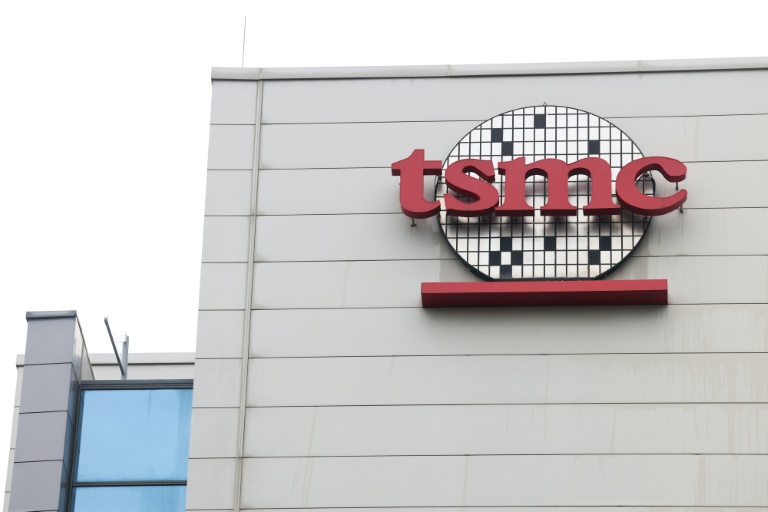
NEW YORK — Taiwan Semiconductor Manufacturing Company (NYSE: TSM) continues to stand out as one of the most compelling technology investments in 2026, with analysts overwhelmingly recommending buying shares of the world’s largest contract chipmaker amid explosive demand for advanced semiconductors powering artificial intelligence systems.
As of late May 2026, TSMC shares trade near $404–$423, reflecting substantial gains over the past year. The stock has benefited from robust AI infrastructure spending by major clients including Nvidia, Apple, AMD and Broadcom. Wall Street maintains a strong consensus “Buy” rating, with 13 out of 15 analysts recommending purchase and only two suggesting Hold. Average 12-month price targets cluster around $404–$465, implying modest to significant upside from current levels.
Recent performance has been impressive. TSMC reported record first-quarter 2026 revenue of $35.9 billion, up 35–40.6 percent year-over-year, driven by high-performance computing and AI-related demand. Gross margins reached 66.2 percent, exceeding expectations, while management raised full-year guidance citing “extremely robust” AI chip orders.
Strong AI Tailwinds Support Growth
TSMC’s position as the leading foundry for advanced nodes (3nm, 2nm and beyond) has positioned it at the center of the global AI boom. High-bandwidth memory and advanced packaging technologies critical for AI accelerators have seen particularly strong demand. Chairman and CEO C.C. Wei highlighted the shift toward “agentic AI,” which requires even greater computational power, during the April earnings call.
Analysts project TSMC’s revenue could grow more than 30 percent in 2026, with some forecasts calling for even higher figures if AI spending accelerates. Capital expenditure plans remain elevated at $52–$56 billion, reflecting aggressive capacity expansion to meet client needs. Advanced nodes already account for 74 percent of wafer revenue, with 3nm alone contributing 25 percent.
Morningstar recently raised its fair value estimate to $428 per ADR after strong results, noting the stock trades at a meaningful discount to intrinsic value. Several firms, including Bank of America, have increased price targets to $490–$500, citing sustained AI momentum and pricing power for leading-edge chips.
Valuation and Financial Strength
Despite strong gains, TSMC’s valuation remains reasonable compared to pure-play AI peers. The company trades at forward multiples that many analysts consider attractive given its market leadership, technological moat and consistent profitability. Strong free cash flow generation supports ongoing dividends and share repurchases, providing additional returns for long-term holders.
The balance sheet remains solid with low debt levels relative to cash flows. Geographic diversification efforts, including new facilities in the United States, Japan and Europe, help mitigate risks from geopolitical tensions in Taiwan.
Key Risks and Challenges
While the outlook is predominantly positive, investors should consider several risks. Geopolitical tensions between the U.S. and China, along with cross-strait relations, remain a perennial concern for Taiwan-based companies. Any escalation could disrupt operations or supply chains.
Intense competition from Samsung in foundry services and potential cyclical slowdowns in broader semiconductor demand could pressure margins. Rising capital expenditures may also weigh on near-term returns if utilization rates dip unexpectedly.
Currency fluctuations, particularly movements in the Taiwanese dollar, can impact reported earnings for international investors. Recent strength in the U.S. dollar has been somewhat supportive but remains a variable to watch.
Investment Considerations for 2026
For investors considering buying TSMC stock, the case centers on structural growth in AI and high-performance computing. The company’s irreplaceable role in the semiconductor supply chain, combined with proven execution, makes it a core holding for technology-focused portfolios.
Potential buyers may look for pullbacks toward the $380–$400 range for better entry points, especially if broader market volatility creates opportunities. Long-term investors benefit from TSMC’s technological leadership and exposure to multiple growth megatrends.
Those considering selling or staying sidelined cite potential valuation expansion limits after recent gains and the risk of geopolitical shocks. However, the overwhelming analyst consensus and strong fundamentals suggest limited downside at current levels for patient capital.
Diversification remains important. While TSMC offers high-quality exposure to semiconductors, pairing it with other sectors helps manage volatility inherent in technology stocks.
Broader Semiconductor Sector Context
TSMC’s performance reflects strength across the chip industry driven by AI adoption. The company’s success has ripple effects throughout the supply chain, benefiting equipment makers, material suppliers and design firms. Continued investment in advanced process technologies ensures TSMC maintains its competitive edge against rivals.
As artificial intelligence moves from training to inference and agentic applications, demand for sophisticated chips is expected to remain elevated. TSMC’s capacity expansion plans position it to capture a significant share of this growth.
Outlook for Remainder of 2026
Management and analysts project continued strong performance through 2026 and beyond. Key upcoming catalysts include progress updates on 2nm development, major client announcements and quarterly results demonstrating sustained AI momentum.
Risks to the outlook include slower AI adoption rates, intensified geopolitical pressures or broader economic slowdowns affecting technology spending. Positive surprises in earnings or capacity utilization could drive further upside.
As of late May 2026, TSMC represents one of the highest-conviction opportunities in global technology. Its combination of market leadership, technological superiority and structural tailwinds supports a bullish long-term view despite periodic volatility.
Investors should monitor quarterly earnings closely, particularly comments on AI demand, pricing trends and geopolitical developments. Professional financial advice tailored to individual circumstances is recommended before making investment decisions in this dynamic sector.

Many directors have built wealth inside their companies rather than in formal retirement plans. In 2026, that familiar SME model is looking more exposed.
The plan behind the business is being tested
Ask most UK employees about retirement, and they can usually point to a workplace pension. Ask an SME owner, and the answer is often less tidy.
Many directors have paid themselves through salary and dividends, reinvested cash into the company and treated the business itself as the pension. The assumption was simple: build, sell and fund the next chapter. In 2026, more owners are realising that the plan may need a harder look.
The savings gap is moving into view
Research on self-employed workers and owner-directors has repeatedly shown weaker pension saving than among comparable employees. The latest Retirement Living Standards put a comfortable retirement at £43,900 a year for a single person and £60,600 for a couple.
The full new State Pension is £241.30 a week, or around £12,548 a year, depending on NI record. Private pension access is changing too, with the access age rising from 55 to 57 from 6 April 2028.
Against that backdrop, McCarthy Wealth Management, a trading style of Clarity Wealth Management LLP and an FCA-regulated UK firm, has published guidance on retirement affordability planning for owner-directors weighing pensions, State Pension entitlement and business assets.
The owner-manager model creates blind spots
The issue is structural, not careless. Directors are not swept into pension saving in quite the same way as employees. Contributions are often an active decision rather than a default.
Dividend-led pay can be efficient during working life, but it may leave some owners with fewer National Insurance qualifying years than expected. Owners also tend to prioritise staff, premises, growth and cash reserves ahead of personal planning.
The familiar “business is my pension” model is not automatically wrong. For some founders, a sale may support retirement. The risk is assuming it will happen at the right time, at the right valuation and without the founder still being central to the company’s value.
Sales outcomes depend on timing, buyer demand, margins, management depth and whether the business can operate without the owner. A profitable firm is not always saleable at the preferred price, particularly where customer relationships and day-to-day control sit with one person.
The State Pension is only part of the picture
The State Pension remains an important foundation, but it rarely matches the lifestyle expectations of successful SME owners on its own.
MoneyHelper notes that 10 qualifying years are needed to receive any new State Pension, while 35 qualifying years are usually needed for the full amount. For directors who rely on dividends, the forecast can be more revealing than the assumption.
What better-prepared owners are reviewing
The planning areas now being reviewed are broad. Director pension contributions may be relevant where company-funded contributions interact with corporation tax, remuneration and cashflow. State Pension forecasts may help identify gaps. Business sale realism may support more cautious exit planning.
Succession planning is central too. A company that can operate without the founder is usually easier to step back from and potentially easier to sell. Cashflow modelling can test early exit, gradual exit, full sale, partial sale, continued dividends or no sale. Estate planning has moved up the agenda, with most unused pension funds and death benefits due to fall within a person’s estate from April 2027.
McCarthy Wealth’s view
Adam McCarthy, Financial Planner at McCarthy Wealth Management, said: “Owner-director retirement planning is one of the most under-served areas of UK personal finance. Standard retirement guidance is often written for salaried employees, yet business owners have different income patterns, asset structures and risks.
“The issue is not that using a business to support retirement is wrong. It is that relying on one best-case sale outcome can be fragile. Director pension contributions, succession planning and cashflow modelling increasingly need to sit alongside the business plan.”
The questions worth asking advisers
For SME owners, the questions are practical. What is the actual State Pension forecast? How many qualifying years are recorded? Have director pension contributions been reviewed across recent financial years? What might the business sell for under cautious assumptions?
What happens if the sale price disappoints? How does salary versus dividend income affect National Insurance and retirement income? What is the cashflow position after exit? Do pension and inheritance tax changes affect estate planning?
The exit plan needs more than hope
The SME owner retirement gap is not really about pension product choice. It is about the fundamental difference between how employees and business owners build long-term financial security.
For UK SME owners, the most useful retirement decisions are made early, modelled realistically and reviewed regularly, not left until the final 12 months before an exit. A business may still form an important part of the retirement picture, but it works better when tested alongside pensions, State Pension entitlement, cashflow, succession planning and estate considerations.
Retirement planning works best when it sits beside the business plan, with personalised advice that reflects individual circumstances. The most expensive retirement mistake an SME owner can make in 2026 is not a bad investment decision. It is assuming the business will quietly handle everything when the time comes.
This article is for general information only and does not constitute financial, tax, legal or accounting advice. The value of investments can go down as well as up, and past performance is not a reliable indicator of future results. Tax treatment depends on individual circumstances and may change in future. Some retirement, pension, tax and estate planning matters may fall outside FCA regulation. McCarthy Wealth Management is a trading style of Clarity Wealth Management LLP, authorised and regulated by the Financial Conduct Authority, FCA Firm Reference Number 575252.

Medtronic's Fair Value Falls Between Caution And Optimism

Perth law firm Bennett has expanded to South Australia, in a bid to work more closely with clients delivering complex defence projects.

Albert Manifold said no-one should be “allowed to hide behind anonymity” when commenting on his time at BP.

Carey calls out city council 'cabal'

Bit Digital (BTBT) Stock Dips as $100M WhiteFiber Financing Challenges Ethereum Strategy

6 Perfect Miniseries With 6 Episodes or Less You Can Binge in a Night


-

 Crypto World7 days ago
Blockchain.com files with SEC for U.S. IPO
-

 Fashion6 days ago
Holiday Weekend Open Thread – Corporette.com
-

 Politics3 days ago
Bridgerton Season 5: Cast, Release Date And Everything We Know So Far
-
 Crypto World6 days ago
Bitcoin Accumulation Weakens as BTC Realized Losses Hit $600M
-

 Tech3 days ago
Microsoft’s quiet Claude Code retreat and the real cost of enterprise AI
-

 Business6 days ago
Dell Technologies DELL Stock Surges 15% on AI Server Momentum and Analyst Upgrades in 2026
-

 Crypto World5 days ago
Robinhood crypto COO Tanya Denisova exits
-

 Business4 days ago
NYT Strands Answers May 24 2026 Revealed for Puzzle No. 812 Theme Summer Essentials
-

 Business6 days ago
Trump Invests $1M-$5M in Kura Sushi USA Chain With 27 California Locations
-

 Politics6 days ago
Makerfield: a tale of two social-media histories
-
 Crypto World6 days ago
Space X IPO Is ‘Bad News’ for Tech Stocks: But What About Bitcoin?
-

 Business1 day ago
Selena Gomez Reportedly Upset Over Benny Blanco’s Comments on Her ‘Terrible’ Diet
-
 Crypto World6 days ago
MicroStrategy’s Saylor Says Miners No Longer Set Bitcoin Price, Another Force Has Taken Over
-

 Tech6 days ago
WhatsApp ads could make Irish debut after discussions with DPC
-

 Business3 days ago
BTS Sells Out Four Las Vegas Shows at Allegiant Stadium for ARIRANG World Tour
-
Tech23 hours ago
The Samsung pay deal is the moment Korean unions changed register
-
 NewsBeat7 days ago
Charity run by Reform leader Malcolm Offord accused of ‘law breaking’ over Scottish registration
-
 Tech6 days ago
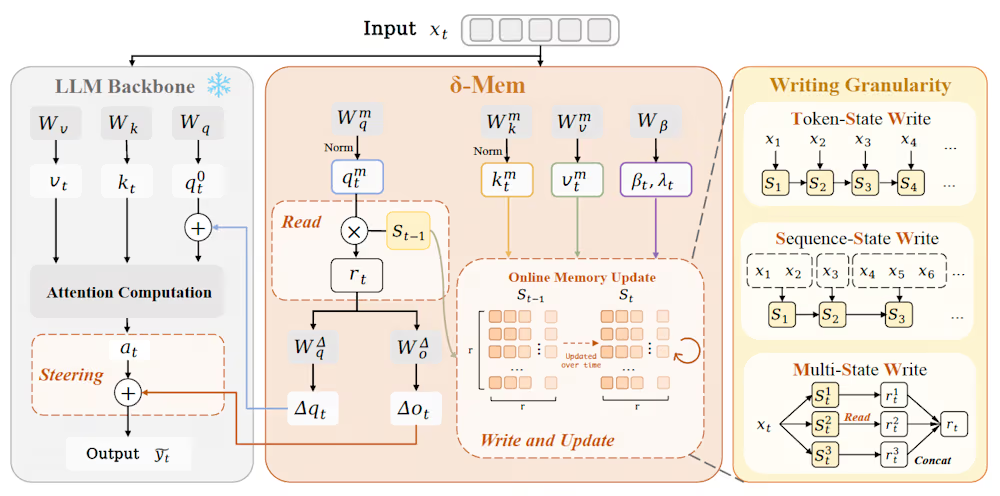
A 0.12% parameter add-on gives AI agents the working memory RAG can’t
-

 Crypto World6 days ago
AI infrastructure race heats up as IREN pitches full-stack strategy, WhiteFiber lands $160M deal
-

 Tech3 days ago
Westone Audio and Etymotic Acquired by Fidelity Collective in Major IEM Market Move
You must be logged in to post a comment Login