Connect with us

Business

King Charles Once Received an Unusual 800-Year-Old Gift From Prince Philip at Boarding School in the 1960s

Published

on

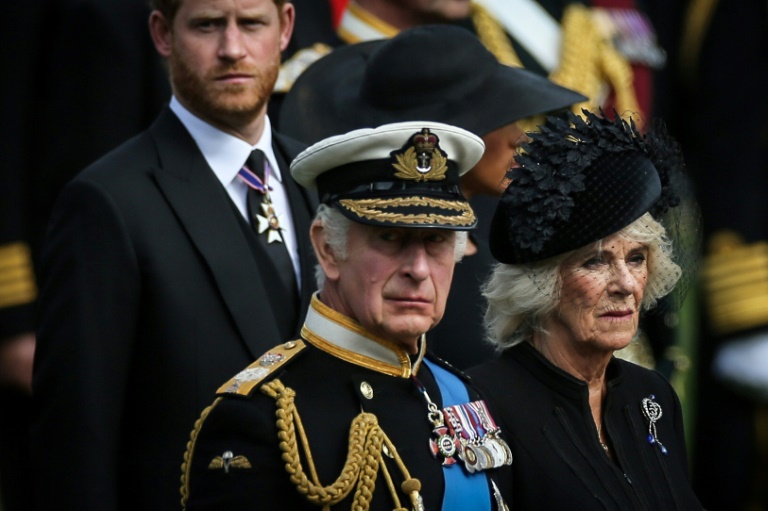
King Charles III will not meet his younger son Prince Harry this week

LONDON — A newly surfaced account of Prince Philip’s efforts to make his son feel at home during his teenage years at boarding school has revealed one of the more unusual gestures in royal history: the relocation of a 12th-century stone font from a crumbling Shropshire church to a school chapel in Scotland.

The story, brought to light by author and journalist William Cash, centers on the moment in 1962 when a 13-year-old Prince Charles, now King Charles III, enrolled at Gordonstoun School in Moray, Scotland, hundreds of miles from Buckingham Palace. Determined to surround his son with something familiar during his time away from home, Philip arranged for a remarkable piece of English medieval history to make the long journey north.

A Chance Discovery at a Derelict Church

The font’s unlikely royal connection began when Philip visited St Michael’s Church in the tiny hamlet of Upton Cressett, Shropshire, alongside former MP Ivor Bulmer-Thomas, with whom he was working on an effort to protect disused historic church buildings across the country. St Michael’s had stopped holding regular services in 1958 and had fallen into serious disrepair by the time of Philip’s visit, making it an example selected specifically to show the Duke of Edinburgh the kind of dilapidated country church in need of rescue.

Advertisement

Cash, whose parents later acquired the Upton Cressett estate in the 1970s, said that when Philip visited the church, it was locked and its contents, including the ornately carved Norman font, were due to be placed into storage. Rather than let the piece languish, Philip decided it deserved a more prominent home.

Recounting Philip’s reaction upon seeing the font, Cash said the Duke of Edinburgh remarked that it would be good if it was moved to Gordonstoun, explaining that he wanted his son to be surrounded by ancient objects of English beauty. Cash added that Philip appeared to view leaving the piece sitting unused in storage as a waste, prompting him to arrange for its transport to Scotland instead.

A Journey of Hundreds of Miles

The font, known today as the Gordonstoun font, is a classic example of a Norman tub font, shaped like a large stone barrel with ornate carvings around its exterior and a lead-lined interior designed to hold water for baptisms. Its size and weight made the logistics of the move all the more remarkable, a detail Cash himself has struggled to fully explain.

Advertisement

Cash said the font is quite large, and he genuinely does not know how it was transported all the way up to Gordonstoun, calling it a strange story that to this day most people don’t know about.

Once it arrived in Scotland, the font took up residence in the school’s chapel, where it remained throughout Charles’s years as a student. Following his father’s earlier path, Charles arrived at the renowned boarding school in May 1962, with Philip personally accompanying him to meet headmaster Robert Chew on his first day, a tradition that placed both father and son among the relatively small number of royals to have attended the remote Scottish institution.

Returned to Its Original Home

The font did not remain permanently at Gordonstoun. It was eventually returned to St Michael’s Church in Upton Cressett in the 1970s, where it remains today, restored to the small, grade-one-listed building from which it had once been so unexpectedly removed. Although the church no longer holds regular services, the font continues to be occasionally used for baptisms, with Cash noting that he and other members of his family were baptized using it.

Advertisement

Visitors to St Michael’s today are frequently unaware of the font’s unusual royal history until it is pointed out to them, according to Cash, who described the reaction of those who learn about its journey to Scotland and back as one of disbelief. He said visitors are flabbergasted to discover the font’s connection to the future king, given the church’s remote setting, tucked away in what he described as the middle of nowhere in Shropshire. He added that people frequently find it almost impossible to believe the font traveled so many hundreds of miles for the King’s aesthetic benefit, calling the whole episode reminiscent of an Arthurian legend.

A Lasting Connection to Conservation

The visit that led Philip to discover the font also had broader consequences beyond the object itself. Bulmer-Thomas’s collaboration with Philip on protecting disused historic churches ultimately led to the establishment of the Redundant Churches Fund, an organization later renamed the Churches Conservation Trust. That organization today counts King Charles himself as its patron, adding a further layer of connection between the King and the obscure Shropshire church that briefly lent its most treasured artifact to his childhood school chapel.

A School With Deep Family Ties

Advertisement

Gordonstoun has held a significant place in the royal family’s history for generations, having also educated Philip himself before Charles followed in his footsteps. Charles studied at the school from 1962 to 1967, earning five O-levels and two A-levels before going on to study archaeology and anthropology at Trinity College, Cambridge. The King formally became patron of the Gordonstoun Association in 2024, taking on a role previously held by his father, marking his first official link with the school since his time as a student there decades earlier.

The newly revealed story of the font adds a small but distinctive detail to the well-documented relationship between Philip and his eldest son during Charles’s formative years, illustrating the lengths to which the Duke of Edinburgh was willing to go to ensure his son felt a sense of connection to English heritage while living far from home in the Scottish Highlands.

Continue Reading
Click to comment

You must be logged in to post a comment Login

Leave a Reply

Business

(VIDEO) Justin Bieber Reacts to BTS Grammy Boycott as Support for K-Pop Group Grows Across the Industry

Published

on

Bands like BTS have helped transform K-pop into a truly global phenomenon

BTS’s decision to withdraw from consideration at the 2027 Grammy Awards has continued to draw reaction from across the music industry in the days since the announcement, with pop star Justin Bieber among the figures who have weighed in publicly as the controversy surrounding the Recording Academy’s new Best Asian Pop Music Performance category shows no sign of fading.

Bieber’s involvement in the ongoing conversation follows his appearance alongside BTS at one of the summer’s most-watched entertainment events. On July 19, Bieber joined Madonna, Shakira, Burna Boy and the seven members of BTS on stage during the halftime show of the FIFA World Cup final at MetLife Stadium in East Rutherford, New Jersey, a Chris Martin-curated performance that put th

How the Boycott Began

Advertisement

BTS’s decision traces back to July 29, when all seven members, RM, Jin, Suga, J-Hope, Jimin, V and Jungkook, posted identical statements to their individual Instagram accounts announcing they would not submit any music for consideration at the 69th Grammy Awards, scheduled for Feb. 7, 2027. The group said it hoped music could be heard and loved for what it is, rather than being divided by region or language, and thanked its fanbase, known as ARMY, for their continued support. The statement did not explicitly name a category, but it was widely interpreted as a direct response to the Recording Academy’s June 16 announcement of Best Asian Pop Music Performance, a new award requiring meaningful use of one or more Asian languages that many critics argue effectively walls K-pop and other non-English Asian pop off from the ceremony’s marquee general-field categories.

The withdrawal came at a moment when BTS appeared to have its strongest Grammy prospects in years. The group’s fifth studio album, “Arirang,” released in March following the members’ return from South Korea’s mandatory military service, debuted at No. 1 on the Billboard 200 and topped charts in 23 countries, while lead single “SWIM” became the group’s highest-charting entry on the Hot 100 to date. BTS had collected five prior Grammy nominations without a win, for “Dynamite,” “Butter,” “My Universe” and its featured role on Coldplay’s “Music of the Spheres,” and had previously described the Grammys as the “last summit” left for the group to climb.

Industry Reaction Continues to Build

Support for BTS’s stance has come from a range of figures inside and outside the K-pop industry in the days since the announcement. Tablo, frontman of the Korean hip-hop group Epik High, publicly backed the decision on social media, as did Maggie Kang, the Korean Canadian director of Netflix’s animated hit “KPop Demon Hunters,” and Mike WiLL Made-It, the American producer behind the “Arirang” track “Aliens,” which surged to No. 1 on iTunes charts in 78 countries following the boycott announcement as fans rallied behind the group.

Advertisement

CedarBough T. Saeji, a K-pop scholar at Pusan National University, has offered a pointed critique of the new category’s design, telling reporters that while some within the Recording Academy likely viewed the addition as inclusive, nothing about categories like Record of the Year or Best Pop Duo/Group Performance needs to exclude music made by non-American artists. Anton Hur, a translator known for his work on a bestselling book about BTS, separately praised the group’s decision on social media, calling it the right call.

The Recording Academy’s Response

Recording Academy CEO Harvey Mason Jr. addressed the boycott directly in a statement, saying he was saddened to hear that BTS had chosen not to participate in the Grammy Awards process this year, while adding that he understood and respected the group’s decision as a fellow music creator. Mason has since sought to clarify the intent behind the new category, stating that submitting music in a genre category such as Asian Pop, or Jazz, or Country does not exclude an artist from also being considered in the Grammys’ General Field, which includes Record of the Year, Album of the Year and Song of the Year. He said recognition in a genre category and recognition in the General Field are not mutually exclusive, and that an artist can pursue both simultaneously.

That explanation has done little to quiet critics, some of whom point to a pattern across the awards industry of introducing specialized categories for K-pop only after the genre has become too commercially significant to ignore. Since 2020, when BTS became the first Asian act nominated in MTV’s main Video Music Award pop category alongside artists including the Jonas Brothers, Lady Gaga and Bieber himself, several major award shows including the American Music Awards, MTV Europe Music Awards, iHeartRadio Music Awards and Billboard Music Awards have introduced K-pop-specific categories of their own.

Advertisement

A Boycott With Limits

Despite the wave of public support, BTS’s management company HYBE has clarified that the withdrawal does not represent a company-wide boycott, and that neither the group nor its label has asked other artists to follow suit. That distinction has proven significant: while individual voices across music and entertainment have expressed solidarity with BTS in the weeks since the announcement, no other major K-pop act has formally joined the group in withdrawing music from Grammy consideration, with submissions for the ceremony’s new categories remaining open through Aug. 28.

With BTS out of contention, the inaugural Best Asian Pop Music Performance award will go to another act when nominees are announced in mid-November, with industry observers naming groups including ATEEZ, Stray Kids, Hearts2Hearts, BINI and CORTIS among the likely contenders. As the submission window continues, attention remains focused on whether additional artists, drawing further public commentary from figures across the industry, ultimately follow BTS’s lead or choose instead to compete for a category the K-pop pioneers themselves declined to enter.

Advertisement
Continue Reading

Business

Knife River Corporation 2026 Q2 – Results – Earnings Call Presentation (NYSE:KNF) 2026-08-05

Published

on

OneWater Marine Inc. (ONEW) Q1 2026 Earnings Call Transcript

This article was written by

Seeking Alpha’s transcripts team is responsible for the development of all of our transcript-related projects. We currently publish thousands of quarterly earnings calls per quarter on our site and are continuing to grow and expand our coverage. The purpose of this profile is to allow us to share with our readers new transcript-related developments. Thanks, SA Transcripts Team

Continue Reading

Business

Infineon Technologies AG (IFNNY) Q3 2026 Earnings Call Transcript

Published

on

OneWater Marine Inc. (ONEW) Q1 2026 Earnings Call Transcript