
Business
LARRY KUDLOW: Trump Jiu-Jitsu aims to bankrupt and starve the Iranian regime

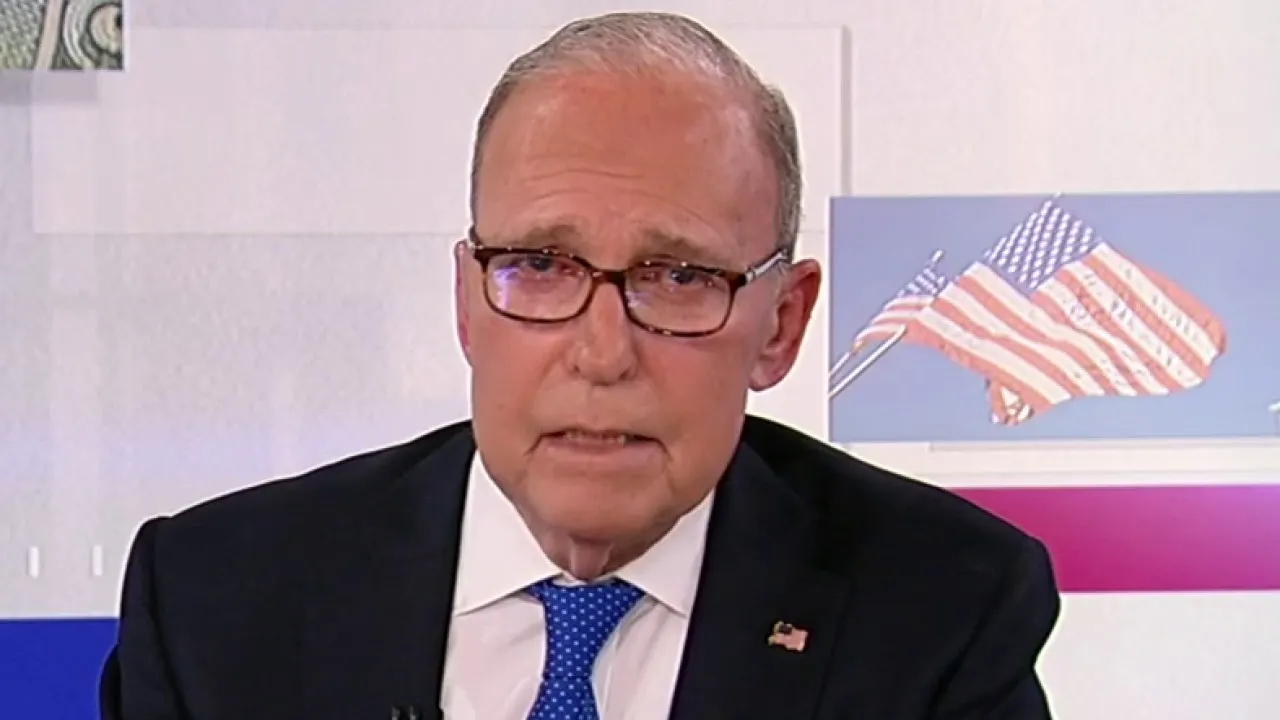
So the Iranians wouldn’t give up their uranium enrichment or dismantle their enrichment facilities. Or hand over their already enriched uranium. So President Trump turned the tables, applied some Trumpian Jiu-Jitsu, and put a United States naval blockade on the Strait of Hormuz that will be enforced in the Gulf of Oman.
I’m not sure anybody yet knows how this is all going to go down, but at least beginning today, here’s what America’s Central Command said: “Any vessel entering or departing the blockaded area without authorization is subject to interception, diversion, and capture. The blockade will not impede neutral transit passage through the Strait of Hormuz to or from non-Iranian destinations.”
To my way of thinking, what that means is that anybody that does business with Iran is going to have their ships blockaded. And if the Iranian motorboats take pot shots at our Navy, we will obliterate them just the way we did with all those Venezuelan drug boats. To a large extent, Mr. Trump has adopted the Venezuela model. Iran sells no oil, makes no money, therefore can’t disperse any money they don’t have, and America takes de facto control of the whole Persian Gulf area.
The president had to say about all of this: “It’s called all in, and all out.” He added: “We think that numerous countries are going to be helping us with this also, but we’re putting on a complete blockade. We’re not going to let Iran make money on selling oil to people that they like, and not people that they don’t like or whatever it is. It’s going to be all or none,” and “I predict they come back and give us everything we want.”
Former U.S. special envoy for Ukraine Gen. Keith Kellogg discusses how the U.S.-Iran conflict is impacting China and Russia as a U.S. naval blockade of the Strait of Hormuz takes effect on ‘Kudlow.’
I say good. Then there’s the question of when will Iran go completely bankrupt? Some quick numbers from several sources, including TIPP Insights and Foundation for Defense of Democracies more than 90 percent of Iran’s nearly 110 billion in annual trade transits the Persian Gulf, crude oil alone was earning $139 million per day before the war started. Petrochemicals earn another $54 million per day.
So at $435 million a day in lost revenues, that comes to $159 billion over a year. That $159 billion loss of revenues is roughly 50 percent more than the entire Iranian budget which comes to roughly $100 billion. At what point does bankruptcy come into play? I honestly don’t know yet.
According to sources, on-shore oil storage in Iran begins to top out in about 13 days. So that means the infrastructure shutting will cause permanent damage. Whether this economic obliteration will bring Iran back to the negotiating table remains to be seen.
There’s a couple of Iranian Islamic Revolutionary Guard Corps crazies that seem to be leaders right now, Mojtaba Vehedi, and Mohammad-Bagher Ghalibaf. So I wouldn’t be so sure about any benevolent regime change. The big question is how long will it take to starve them out?

Business
Bitcoin hits two-month high near $78,000 on easing tensions, technicals point to $84,000 on breakout

Ethereum went up 3.55% in the past 24 hours to trade at $2,411. Among the major altcoins, XRP, BNB, Solana, Tron, Dogecoin, Hyperliquid, and Cardano gained upto 2.53%.
Also Read | Gold funds vs ETFs: Where should mutual fund investors place their bets this Akshaya Tritiya?
The global crypto market capitalisation went up 2.73% to $2.61 trillion, according to CoinMarketCap.
Piyush Walke, Derivatives Research Analyst, Delta Exchange said from a technical perspective, Bitcoin faces its next key resistance near $79,000, a decisive breakout above this level could open the path toward $84,000.

Walke further said that Ethereum is trading close to its 100-day EMA, with momentum stabilizing and supported by continued inflows into spot ETFs; XRP remains firm above the $1.44 support level, aided by a bullish MACD signal and improving market sentiment.
In the past week, Ethereum and Bitcoin rallied upto 7.79% and 5.98% respectively. Among the major altcoins, XRP, BNB, Solana, Tron, Dogecoin, Hyperliquid, and Cardano gained upto 9.29%.
WazirX Market’s Desk said the crypto market saw a steady upward trend this week, supported by a pullback in oil prices below $100, which helped ease inflation concerns and improve overall risk sentiment.
“Policy developments, including progress on the U.S. Crypto Clarity Bill and South Korea’s openness to stablecoins, further highlight a maturing regulatory landscape”
Also Read | Akshaya Tritiya remains proven entry point for gold investors: Motilal Oswal
Institutional demand remained a key driver. BlackRock’s Bitcoin ETF recorded inflows of over $817 million. Overall, the market reflects a healthy expansion phase, with strong inflows and broad participation supporting a positive outlook,” WazirX Markets Desk further said.
(Disclaimer: Recommendations, suggestions, views and opinions given by the experts are their own. These do not represent the views of The Economic Times)
If you have any mutual fund queries, message on ET Mutual Funds on Facebook/Twitter. We will get it answered by our panel of experts. Do share your questions on ETMFqueries@timesinternet.in alongwith your age, risk profile, and twitter handle.
Business
F&O Talk: Midcaps, smallcaps stage sharp comeback, trade above key moving averages. What’s the outlook?
Meanwhile, the volatility gauge India VIX ended at 17.21, down 4.86% from the last close.
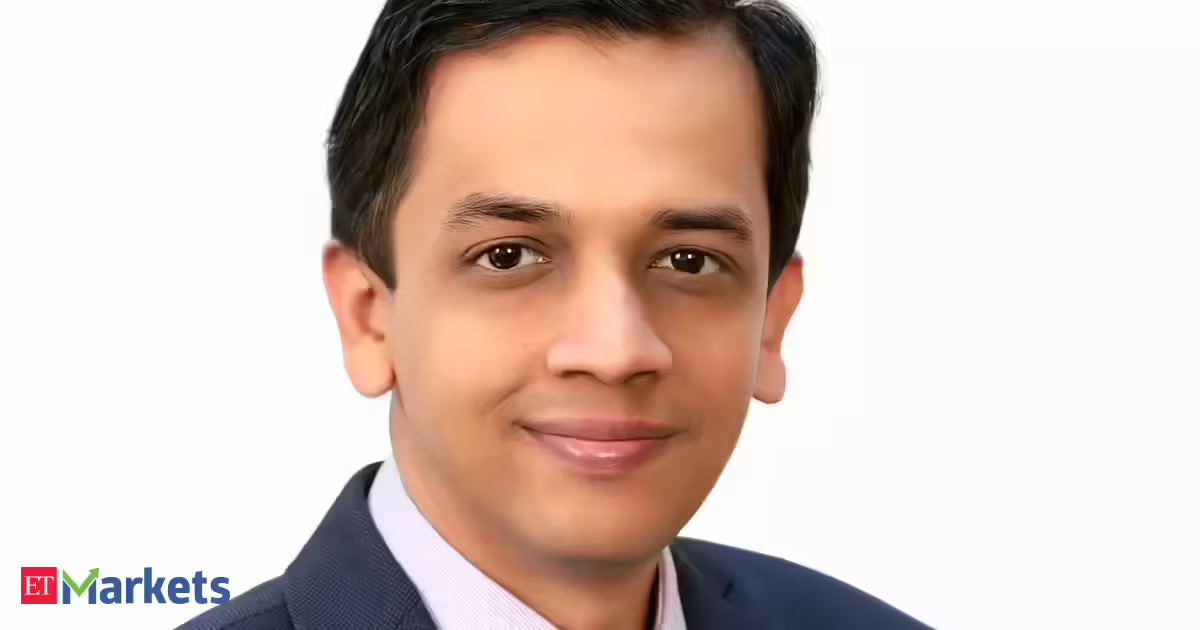
Analyst Sudeep Shah, Vice President and Head of Technical & Derivatives Research at SBI Securities, interacted with ETMarkets regarding the outlook for the Nifty and Bank Nifty, as well as an index strategy for the upcoming week. The following are the edited excerpts from his chat:
Q: Nifty ended with 1% gains this week managing to finish above 24,200. What does the Nifty chart suggest for next week’s action and what levels will be important to watch out for?
The benchmark index Nifty is climbing higher but this time, it’s not the headline act stealing the spotlight. While the index has extended its pullback rally for the second consecutive week and closed in the green, the real momentum is unfolding beneath the surface. Broader markets have taken charge, with the Nifty Midcap 100 and Nifty Smallcap 100 staging a powerful rally and clearly outperforming the frontline index. Both indices have surged past their key moving averages, signalling strength, while the Nifty still lags below its 100 and 200-day EMA levels. Most strikingly, the Nifty Midcap 100 now stands just a stone’s throw away from its all-time high, hinting that the next big opportunity might not be where everyone is currently looking.
Coming back to Nifty, the index has been trading above its 50-day EMA level for the last three trading sessions. The 20-day and 50-day EMA have started edging higher. While the falling slope of the 100-day and 200-day EMA has slowed down significantly. The momentum indicators are also suggesting bullish momentum. The daily RSI is quoting above the 57 level and is in a rising trajectory. The daily MACD histogram suggests strong bullish momentum.
These technical factors are suggesting, the index is likely to continue its pullback rally in the short-term. Talking about crucial levels, the zone of 24650-24700 will act as crucial hurdle for the index. Any sustainable move above 24700 will lead to extension of pullback rally upto the 25000, followed by 25200 level in the short term. On the downside, the zone of 24050-24000 will act as immediate support for the index. As long as the index is trading above the 24000 level, it is likely to continue its pullback rally.
Q: Bank Nifty settled with 1% gains. What trade do you see in this index following earnings by HDFC Bank, ICICI Bank and YES Bank?
The banking benchmark Bank Nifty also ended the week on a positive note, indicating a continued pullback rally. However, over the last three trading sessions, the index has struggled to decisively cross its 200-day EMA, highlighting a phase of consolidation near a critical long-term resistance zone.
This price behaviour suggests a degree of caution among market participants, as investors appear to be awaiting clarity on the Q4 earnings outcome of key banking heavyweights, namely ICICI Bank and HDFC Bank. With both results scheduled over the weekend, a directional move may emerge post the earnings announcements.
Technically, the index continues to maintain a constructive setup as it is trading above its 20-day and 50-day EMA, indicating strength in the short-term trend. Momentum indicators also remain supportive, with the daily RSI placed above the 55 mark and trending higher, reflecting improving buying momentum.
Going ahead, the 57000–57100 zone is expected to act as a crucial resistance, as it coincides with the prior swing high as well as the 100-day EMA, making it an important supply area. A sustainable move above 57100 could lead to a further extension of the pullback rally towards 57800, followed by the 58500 level in the short term. On the downside, the 55800–55700 zone is placed as an important support area.
Q: TCS and Wipro have announced their Q4 results and HCL, Infosys will be next in line. What is your view on the IT sector and how should investors trade HCL and Infosys?
The IT Index appears to be in a consolidation phase after a sharp pullback of nearly 12% over the past month. What initially looked like a strong recovery has now transitioned into a range-bound movement over the last six sessions, with the Nifty IT Index oscillating between 32134 and 30402.
Despite this pause, the index continues to hold above its 20-day EMA, indicating underlying strength, though the 50-day EMA remains a key resistance. A decisive breakout above the 32130-32150 zone could trigger further upside momentum.
Stock-specific, both HCL Technologies (1475–1418) and Infosys (1377–1266) are mirroring this consolidation. Traders should wait for a clear breakout beyond these ranges for directional cues, as the current phase suggests a healthy pause before the next move.
Q: Oil prices have slid below the $100 mark and there is relative calmness now with the likelihood of a second round of talks beginning in Islamabad soon. Do you think the war factor is priced-in and which sectors should investors remain vary of?
The core assumption of technical analysis is that price discounts everything; news, sentiment, rumours, expectations, and earnings. In that context, the recent cooling-off in crude oil prices after peaking near $119 per barrel suggests that much of the geopolitical risk may already be priced in. Over the past seven sessions, crude has moved sideways in a $90–$104 range, with RSI flattening, indicating a pause and lack of directional bias. A decisive breakout on either side will set the next trend.
Sectorally, lower crude prices benefit downstream oil companies, while higher crude supports upstream players. However, elevated crude remains a headwind for sectors like aviation, chemicals, tyres, and paints. Since crude is invoiced in dollars, rising oil prices can strengthen the dollar against the rupee, indirectly benefiting export-oriented sectors like IT and Pharma through improved realisations. Investors should track crude movements closely as a key driver of sectoral trends.
Q: Metals and realty have shown a smart bounce back WOW with returns of over 3% by respective sectoral benchmarks. What is your view on them?
The Nifty Metal is already outperforming the frontline indices for the last couple of months. While Nifty Realty has seen a strong rebound from lower levels and ended two consecutive weeks on a positive note. Technically, both the indices are likely to continue their upward journey in the short term.
Q: Gallant Ispat, Shipping Corporation and GMDC were among top gainers this week, while Jyoti CNC, Indus Towers and Kalyan Jewellers have been big losers. What should investors do with them?
Among the top gainers, momentum remains firmly positive. Gallant Ispat has delivered a downward sloping trendline breakout, backed by strong follow-through and rising volumes. Momentum indicators like RSI and expanding histogram bars signal strength; sustaining above 810–800 keeps the bullish bias intact.
Shipping Corporation of India has also broken out of a horizontal range with healthy volumes. A positive DI crossover on ADX highlights buyer dominance, and holding above 285–280 can extend the upmove.
Gujarat Mineral Development Corporation (GMDC) mirrors this strength with a trendline breakout and rising RSI. As long as it holds above 705–700, the uptrend is likely to continue.
On the losing side, caution is warranted. Jyoti CNC Automation remains in a clear downtrend with a lower high–lower low structure and bearish MACD. A break below 685–680 could trigger further weakness.
Indus Towers has slipped below its 50-day EMA and is hovering near its 200-day EMA (409). RSI below 40 indicates weakness; a breach of 409 may accelerate downside.
Kalyan Jewellers has faced rejection near 446–452, with ADX signalling rising selling pressure. As long as it trades below 450–455, the bias remains bearish.
(Disclaimer: The recommendations, suggestions, views, and opinions given by the experts are their own. These do not represent the views of The Economic Times.)
Business
Akshaya Tritiya 2026: Gold vs silver vs gold stocks. Where should investors put their money this year?
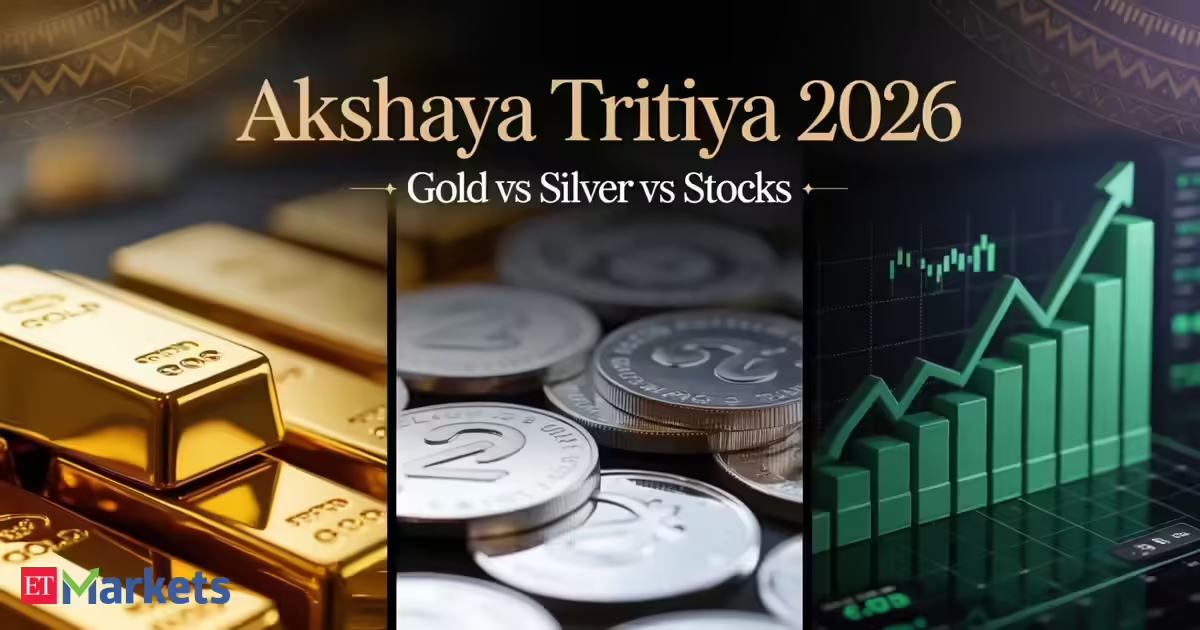
From around Rs 97,910 per 10 grams on April 30, 2025, prices have surged to about Rs 1.55 lakh per 10 grams in early April 2026, marking a gain of nearly 58.7% in less than a year. Silver, however, has stolen the spotlight. Rising from roughly Rs 1 lakh per kg at the time of last Akshaya Tritiya to nearly Rs 2.70 lakh per kg now, the metal has delivered returns of about 160%, almost three times that of gold over the same period.
The rally has not been limited to physical metals. Gold jewellery stocks have also seen a strong run, with some names rising as much as 100% since last year’s Akshaya Tritiya. Thangamayil Jewellery has led the pack, while Titan Company and Goldiam International have gained over 30% each during the same period.
Domestic sales for the sector jumped 32–124% year-on-year in the March quarter this financial year, and the momentum is expected to sustain with strong footfalls during the ongoing wedding season and ahead of Akshaya Tritiya on April 19.
So where should investors place their bets this Akshaya Tritiya?
Fundamentally, silver continues to enjoy strong tailwinds. Demand from sectors such as solar energy, electric vehicles and electronics remains robust, while supply-side constraints support its constructive medium- to long-term outlook. That said, its higher volatility cannot be ignored. Experts suggest a staggered accumulation strategy may be more prudent, allowing investors to balance its higher return potential with the need for risk management.
Gold, on the other hand, remains a steady long-term play. Arun Narayan, chief executive of Tanishq, the jewellery division of Titan, told The Economic Times that buyers could advance purchases for the April–July wedding season by booking orders on Akshaya Tritiya if the recent softness in prices persists. He expects advance bookings to pick up, especially if prices remain relatively subdued, prompting fence-sitters to step in. He also highlighted the growing role of old gold exchanges, which now account for more than 50% of Tanishq’s sales, a trend likely to continue during the festive buying period.
Kaveri More, commodity analyst at Choice Broking, noted that while 2025 saw volume declines of 15–30% alongside value growth of 15–25% due to high prices, early 2026 is witnessing steady demand. She pointed to strong traction in lightweight jewellery and digital gold, as consumers look to take advantage of the recent correction ahead of Akshaya Tritiya. Her advice remains consistent: accumulate on dips, given the positive long-term outlook despite uncertainties linked to the Iran conflict.Gold’s longer-term track record also remains compelling. Over the past five years, it has consistently delivered positive year-on-year returns around Akshaya Tritiya. The last two years have been particularly strong, with gains of about 40% and 47% in dollar terms. In 2026, however, volatility has been pronounced, with Comex gold hitting a record high of $5,598 in late January before correcting sharply to $4,098 on March 23, largely due to profit booking and ETF outflows.
Tata Mutual Fund has reiterated its positive stance on gold, citing supportive fundamentals and persistent global uncertainties. It believes any price correction driven by a stronger dollar or easing geopolitical tensions should be viewed as an opportunity to accumulate.
As Akshaya Tritiya arrives, the choice between gold, silver and gold stocks ultimately comes down to risk appetite. Gold offers stability and steady compounding, silver brings higher return potential with added volatility, and jewellery stocks provide a leveraged play on demand recovery.
(Disclaimer: Recommendations, suggestions, views and opinions given by the experts are their own. These do not represent the views of The Economic Times)

FOX Business host Larry Kudlow discusses the state of the American economy under the Trump administration on ‘Kudlow.’
If you missed the April 15 tax deadline, penalties and interest have already begun to accrue – but there are still actions you can take to limit the impact.
Experts say taxpayers should file immediately, even if they can’t pay their full bill, and pay as much as they can to avoid the steepest penalties. Those who still owe can apply for a payment plan to manage the remaining balance.
The IRS says most applicants receive immediate approval or denial when applying for a payment plan online.
TAX EXTENSION FILERS BEWARE: PAYMENTS ARE STILL DUE TO THE IRS BY APRIL 15

Consulting a tax professional early can potentially help reduce the total cost of taxes owed. (iStock )
“You can still file your return and at least eliminate the failure-to-file penalty, which can reach up to 25% of any tax owed, with interest compounding,” said Mark Steber, chief tax officer at Jackson Hewitt Tax Services.
The IRS can impose multiple penalties, including failure-to-file, failure-to-pay and underpayment penalties, which are assessed separately and can accrue interest daily, Steber said.
He added that consulting a tax professional early can help taxpayers navigate their options and potentially reduce the total cost.
NEW TRUMP ACCOUNTS PITCHED AS TAX-SEASON GATEWAY TO BUILDING WEALTH
The IRS still requires payment by April 15, regardless of an extension. (Kayla Bartkowski/Getty Images)
“In many cases, the total cost – including taxes, penalties, interest and professional fees – ends up being higher than if you had sought help earlier,” Steber said.
“The worst thing you can do is ignore the deadline,” he added. “Many people think they’ll deal with it later, but that can lead to mounting penalties and unnecessary financial risk.”
THE SIMPLE TAX HABIT THAT COULD SAVE YOU THOUSANDS OVER YOUR LIFETIME

Tax experts say the worst thing you can do is ignore the April 15 deadline and not pay immediately, since costs can rise quickly. (Getty Images)
Filing as soon as possible and exploring IRS payment options can help taxpayers regain control of their situation and minimize added costs.
GET FOX BUSINESS ON THE GO BY CLICKING HERE
Steber said taxpayers should view filing as part of a long-term financial strategy, not just a once-a-year obligation.
“Your tax return is one of your largest financial transactions each year,” he said. “Giving it proper attention can pay dividends over time.”
Ardagh Metal Packaging: Execution Holds, Tailwinds Build, Valuation Undemanding

INDIO, California — Justin Bieber emerged as the highest-paid artist at the Coachella Valley Music and Arts Festival in 2026, reportedly earning a record $10 million for his two headline performances across the event’s weekends.

The Canadian pop star’s payday, confirmed by multiple industry sources including Rolling Stone, places him at the top of Coachella’s historical compensation list. Bieber headlined Saturday nights on both the April 10-12 and April 17-19 weekends at the Empire Polo Club, performing for sellout crowds amid a lineup that also featured Sabrina Carpenter on Fridays and Karol G on Sundays — the first Latina artist to headline the desert gathering.
According to reports, Bieber negotiated the deal directly with promoter Goldenvoice without an agent, securing approximately $5 million per weekend. The figure surpasses previous benchmarks, including Beyoncé’s reported $8 million in 2018 and similar payouts for Ariana Grande, Lady Gaga and The Weeknd. Industry insiders described the sum as “north of $10 million” total, making Bieber the clear top earner among all 2026 performers.
Coachella headliners typically command mid-seven-figure fees, often around $5 million per weekend for two appearances, but payouts can vary based on negotiating power, career stage and promotional value. Bieber’s deal reflects his enduring global appeal and recent momentum from the “Swag” project, even as his set drew mixed reviews for its unconventional, laptop-driven format featuring YouTube clips and nostalgic hits.
Sabrina Carpenter, who delivered polished pop spectacles with celebrity cameos, reportedly earned around $5 million total for her two Friday headlining sets. Karol G, celebrated for vibrant reggaeton energy and historic representation, is estimated in the $5 million to $8 million range, though her team noted she invested significantly more — up to three times her fee — in production costs alone. These figures align with standard headliner rates but fall short of Bieber’s reported total.
Lower on the bill, acts like The Strokes were estimated at around $4 million, while electronic project Anyma and other mid-tier performers earned substantially less. Emerging or supporting artists often receive fees starting from $10,000 upward, highlighting the wide pay disparity across the festival’s more than 100 acts.
The compensation structure underscores Coachella’s economics. Goldenvoice, owned by AEG Presents, invests heavily in talent to drive ticket sales, sponsorships and livestream revenue via YouTube. Tickets for 2026 sold out rapidly after the September 2025 announcement, with resale prices soaring above $2,000 in some cases. The event’s cultural cachet allows it to attract top talent, but headliners bear significant production expenses that can erode net earnings.
Bieber’s set, which featured him reacting to old music videos and crowd sing-alongs, sparked debate. Critics called it low-energy or “lazy” compared to Carpenter’s high-production show or Karol G’s dynamic performance. Yet the financial upside remained undisputed. An insider told Rolling Stone that Bieber is “fully in the driver’s seat,” crediting his direct negotiation and catalog strength for the groundbreaking deal.
Festival economics have evolved since Coachella’s early days, when payouts were far more modest. Historical benchmarks include Prince earning $5 million in 2008 for one weekend and Radiohead receiving $1 million in 2004. Modern headliners benefit from the event’s growth into a global brand, with attendance exceeding 100,000 per day and massive digital reach.
Gender pay discussions surfaced in coverage of 2026. Some analysts noted that while male stars like Bieber commanded top dollar, female headliners such as Carpenter and Karol G often landed slightly lower reported figures despite strong draws and cultural impact. Industry experts attribute disparities to legacy status, streaming metrics and negotiating leverage rather than outright bias, though calls for transparency persist.
Non-headliners also earned notable sums in some cases. Past examples, such as Tyler, the Creator reportedly receiving $10 million or more in prior years, show that strong mid-bill or special projects can approach headliner territory. However, for 2026, no supporting act surpassed the headliners’ reported earnings.
The festival’s two-weekend format amplifies costs and rewards. Artists must prepare essentially identical high-stakes performances twice, factoring in travel, crew and technical rehearsals in the desert environment. Variable weather, shared staging and production limits add complexity, particularly for elaborate shows. Bieber’s stripped-down approach may have reduced his overhead while maximizing the guaranteed fee.
As the second weekend concluded on April 19, attention turned to the broader implications. Bieber’s record payday could set a new benchmark for future bookings, potentially pressuring organizers to adjust offers for legacy and streaming powerhouses. It also highlights how artists with deep catalogs and fan loyalty can command premium rates even without a fresh album cycle driving the appearance.
Coachella 2026 succeeded commercially despite debates over individual sets. Sabrina Carpenter transformed the main stage into a celebratory pop event. Karol G broke barriers with Latin anthems and guests. Additional highlights included guest appearances, art installations and viral crowd moments. Livestream viewership boosted exposure for all performers, indirectly enhancing long-term earning potential through streams, merch and touring.
For Bieber, the Coachella slot fits a strategic return to live performance after focusing on personal projects and family. His ability to negotiate directly reflects growing artist empowerment in the post-pandemic era, where superstars leverage platforms and data to bypass traditional agents.
Festival organizers have not commented publicly on specific payouts, maintaining that talent fees remain confidential. Goldenvoice emphasizes the event’s role in music discovery and community rather than individual compensation.
As reports of Bieber’s $10 million fee circulated widely on social media, reactions mixed pride in his achievement with scrutiny over the set’s execution. Fans defended the nostalgic format as authentic, while others questioned whether the paycheck matched the onstage energy.
The episode underscores Coachella’s dual nature as both a cultural phenomenon and a high-stakes business. While fans experience art, fashion and surprise moments, behind the scenes lies a complex financial ecosystem where headliners like Bieber can walk away with life-changing sums.
Looking ahead, Coachella 2027 speculation will likely include questions about who can match or exceed Bieber’s record. For 2026, however, the answer is clear: Justin Bieber earned the largest reported paycheck, cementing his status as the festival’s highest-paid performer to date.
The final weekend delivered memorable music across genres, but the financial headline belonged to the Saturday headliner whose deal rewrote the Coachella compensation book.
The sentiment improved progressively, aided by easing concerns and supportive global cues. The India VIX came off significantly by ~8.73% to 17.20. Nifty ended the week with a net gain of 302.95 points (+1.26%).
The broader structure remains corrective within a larger range-bound setup. While the index has staged a rebound from lower levels, it continues to face a formidable resistance zone between 24,500 and 24,700, which also aligns with key moving averages and prior supply areas. Unless this zone is convincingly taken out, the current upmove may remain a pullback within a broader consolidation. The reopening of the Strait of Hormuz is likely to lend positive sentiment, potentially leading to a firm start; however, sustainability above the mentioned resistance zone will be critical for any directional trend to emerge.
Failure to do so may result in the markets facing some broad consolidation. The coming week is likely to begin on a positive note. Immediate resistance levels are seen at 24,500 and 24,700, while supports are placed at 24,100 and 23,850.
 Agencies
The weekly RSI stands at 46.90 and remains neutral without showing any divergence against price. The weekly MACD continues to stay below its signal line, maintaining a negative crossover and reflecting a lack of strong bullish momentum. The index has formed a bullish candle, indicating a strong rebound continuing throughout the week.
From a pattern perspective, Nifty has continued with its technical rebound for the second week in a row. The index is trading below its 50-week moving average (~25,043) and around the 100-week MA (~24,503), making this zone technically significant.
The inability to reclaim these levels decisively keeps the larger trend under pressure despite intermittent rebounds. Given this setup, a cautious and stock-specific approach is advisable for the coming week. While the rebound may extend initially, the proximity to a strong resistance zone warrants restraint in aggressive long positions. Traders should focus on protecting gains, avoiding chasing rallies, and selectively participating in stocks showing relative strength.A disciplined, level-based approach would be the most prudent way to navigate the week ahead.
In our look at Relative Rotation Graphs®, we compared various sectors against the CNX500 (NIFTY 500 Index), representing over 95% of the free-float market cap of all the listed stocks.
AgenciesAgenciesThe Relative Rotation Graph (RRG) shows Nifty Midcap 100, Energy, Pharma, Metal, PSE, and Infrastructure Indices are inside the leading quadrant. Among these, groups like PSE and Metal are sharply giving up their relative momentum. However, collectively these groups may relatively outperform the broader markets.
The Bank Nifty, PSU Bank, Auto, and Financial Services groups are inside the weakening quadrant.
While stock-specific individual performance may be seen, the overall relative performance will continue take a back seat for these groups.
The Nifty IT and Services Sector Indices continue to languish inside the lagging quadrant. The Nifty Realty Index is also inside the lagging quadrant, but it is seen sharply improving its relative momentum against the broader Nifty 500 Index.
The Media and FMCG Indices are inside the improving quadrant.
Important Note: RRGTM chartsshow the relative strength and momentum of a group ofstocks. In the above Chart, they show relative performance against the NIFTY500 Index (Broader Markets) and should not be used directly as buy or sell signals.

Derek Sylvester with members of his family, team and mascot Molly, who was featured on the dealership’s logo.
Courtesy Sylvester Chevrolet
Derek Sylvester’s father built the family’s original Chevrolet dealership with his bare hands on Main Street in rural Peckville, Pennsylvania, in 1972.
The store and family have been a pillar of the village, outside Scranton, ever since. That was until late last month, when Sylvester and his family closed a deal to sell Sylvester Chevrolet to a New York-based dealer group.
“As a family, we decided this might be the time,” said Sylvester, who at 67 has been contemplating retirement. “Unless you’re a larger store, a much larger store, it’s a little bit harder to make money. … It’s just scale.”
Many of Sylvester’s family members plan to continue working at the dealership, but he said they didn’t feel they were in a position to continue running the business amid the rapidly changing automotive retail landscape in the U.S. The industry is facing a tumultuous adoption of all-electric vehicles, technological shifts such as artificial intelligence, and growing demands from automakers.
Sales of dealerships such as Sylvester Chevrolet are occurring across the country at a rapid pace as the business of selling cars, once considered the purview of mom-and-pop shops, has evolved into a lucrative trillion-dollar industry rife with consolidation that has drawn more notice from Wall Street and investors in recent years.
While the National Automobile Dealers Association, or NADA, reports that the vast majority of its U.S. franchised dealers are small business owners such as Sylvester who have fewer than six stores, the top retailers in the country have significantly grown.
The top 150 dealers sold 27% of all retail and fleet new vehicles in 2025, up from 24.3% in 2021 and 21.2% in 2015, according to Automotive News’ annual ranking of top automotive retailers. They also owned roughly a quarter of dealerships last year, up from less than 20% a decade ago, according to the trade publication.
Meanwhile, top publicly traded dealers such as Lithia Motors and AutoNation have ballooned to market caps of more than $6 billion each. Even online used-car retailer Carvana — and its $74 billion market cap, which surpasses the value of most car companies it sells vehicles from — has quietly started purchasing new vehicle franchises without disclosing its future plans.
“There’s a lot of money that wants to come to the industry,” Brian Gordon, president of dealer advisor and broker Dave Cantin Group, told CNBC. “And, generally, the industry is sort of aligned on how to value these things. That makes for a good climate for [mergers and acquisitions].”
Industry consolidation
Multibillion-dollar dealerships have been on the rise amid a decadeslong consolidation that has led to a grow-or-die mentality for many U.S. automotive retailers.
NADA, a trade association representing franchised dealers, reports the average dealership owner has between two and three stores, but the largest growth area over the past decade has been in medium-sized dealerships that own between six and 25 stores.
NADA reports 90.5% of its nearly 17,000 dealers own between one and five stores, down from 94.4% in 2016. Meanwhile, 0.2% of dealers own 50 stores or more, up from 0.1% during that time frame.
“It’s clear that it’s a consolidating industry, and it’s an industry that is going to continue to consolidate,” Gordon said. But, he added, that is happening at every level, especially the expansion of mom-and-pop shops to larger players.
Dave Cantin Group — the advisor for Matthews Auto Group, the dealer group that acquired Sylvester Chevrolet — conducts dozens of such deals a year and said it expects the pace of consolidation and mergers and acquisitions to continue to increase this year.
Matthews Auto Group is one of many regional dealership companies that has decided to expand. The family-owned company started in Vestal — in central New York, south of Syracuse — in 1973 with a single Chrysler-Plymouth store that has grown into a roughly $800 million business with 18 locations and 800 employees.
Rob Matthews, a second-generation owner and CEO of Matthews Auto Group, said the company’s decision to grow is ongoing and that it aims to be more profitable and better compete in its current markets of New York and Pennsylvania.
Matthews Auto Group CFO John Totolis (from left to right), Dave Cantin Group managing director Talon Fee, Sylvester Chevrolet President Derek Sylvester, partner Sylvester Chevrolet Neil Sylvester, Matthews Auto Group CEO Rob Matthews and Matthews Auto Group President Mark Gaeta outside Sylvester Chevrolet in Peckville, Pennsylvania
Courtesy image
“I think that’s certainly a competitive advantage. I think staying still is probably not the best play. You’re seeing continued scale,” Matthews said. “The trend is you’re just going to continue to see consolidation to allow you to stay competitive.”
That’s also why Sylvester said he wanted to sell his business, with stipulations about retaining the store’s dozens of employees — something that’s part of Matthews’ strategy when acquiring a store.
“There’s a lot of things that, because of our scale, we see we can really unlock a store like his,” Matthews said. “I think, honestly, it’s exciting in the sense that we’re just looking to give them more tools and hopefully let everyone work going forward.”
Growth of mega-dealers
Wall Street has taken notice of how lucrative and protected franchised dealerships are in the U.S. The franchised dealer system, which exists to sell new vehicles to consumers rather than automakers selling their vehicles themselves, is unique and heavily regulated.
“I think there’s endless upside. The opportunity for growth in our company is just endless,” Sonic Automotive President Jeff Dyke told CNBC during a recent interview. “I think having mom-and-pop dealers is really good for the business. The thing is, the mom-and-pop dealer is going to have to advance their thinking.”
Sonic Automotive, a publicly traded company with a market cap of more than $2 billion, has grown from 96 franchised dealership stores in 2015 to 134 to end last year. It’s also gone through a massive expansion of its EchoPark used vehicle stores and Sonic Powersports. The company’s revenue during that time jumped 58% to $15.2 billion last year.

Dealership stocks
Others, such as Lithia Motors, have been even more aggressive in growth. The Medford, Oregon-based company surpassed longstanding dealership group AutoNation to become the top U.S. new vehicle franchised dealer in 2022.
Lithia, with a $6.3 billion market cap, has executed an audacious growth plan, from $8.7 billion in revenue in 2016 to $37.6 billion last year. The company nearly tripled its new and used stores from 154 locations to 455 stores during that time frame.
John Murphy, a longtime automotive analyst who is a managing director of strategic advisory at buy-sell advisory firm Haig Partners, said he believes that dealerships remain an extremely lucrative market for investors, despite things settling down somewhat after companies saw inflated profits during the Covid pandemic.
“Structurally, there’s some real potential upside, and there is an increasing level of attention by existing capital in the dealership community as it stands right now from outside players, private equity family offices, other pools of capital on this limited number of dealers and finite number of dealers,” he said. “The earnings upside is increasing and there’s increasing attention, or demand, on the buy side of the equation.”
Mom-and-pops remain
All of that combines to make many mom-and-pop dealerships ripe for acquisition or expansion.
“There’s just so many factors that make competition for a small mom-and-pop dealership more difficult,” said Talon Fee, a managing director at Dave Cantin Group who led the sale of Sylvester Chevrolet to Matthews Auto Group. “It’s not to say that small mom-and-pop dealerships can’t continue to exist and thrive and survive, but they do need to have a plan.”
Fee and others said the top reasons for owners to sell are a lack of succession planning, a growing competitive and changing industry, and a lack of commitment to reinvest in the businesses.
“There’s a lot of outside capital that’s figured out how to come in, given the fact that you have to be an operator in order to get approved by a manufacturer,” said Gordon, of Dave Cantin Group.
But the industry is changing in other ways, as new automakers such as Tesla, Rivian and Lucid try to bypass the franchised dealer model and sell vehicles directly to consumers.
Such companies have continuously fought state laws to allow such sales, with Rivian recently winning a battle with car dealers in Washington state by threatening to take its case to voters with a ballot measure to permit direct sales.
It adds to the evolving U.S. automotive retail landscape that owners such as Sylvester and his wife, who also worked at the dealership, haven’t had to deal with in the past. It’s also something Sylvester and many other smaller mom-and-pop stores won’t have to compete with once they sell their businesses.
“I lived a great life, don’t get me wrong. But, hey, good things come to an end,” said Sylvester, who plans to spend retirement caring for a 92-acre farm in Pennsylvania. “We made a good living. You know, we helped the community out.”
Total advances increased by 16% year-on-year to Rs 15.53 lakh crore at the end of March 2026 led by a 24% growth in business banking and a 26% growth in the rural loan portfolio. Retail loans which constitute 50% of the loan book grew by 10% while corporate loans grew by 9% year on year.
NIM was little changed at 4.32% for the year ended March 2026. Net interest income (NII) or the difference between interest earned on loans and that paid for deposits, increased by 8% to Rs 22,979 crore in March 2026 from Rs 21,193 crore a year ago.
Executive director Sandeep Batra said the bank is monitoring the situation particularly due to the geopolitical uncertainties and will continue to focus on getting a higher wallet share of high quality customers.
A sharp drop in provisions contributed to the bank’s profit growth during the quarter. Provisions fell 90% to Rs 96 crore from Rs 891 crore a year ago. Batra said the large year on year fall in provisions reflected strong asset quality and healthy recoveries from the corporate book.
“Our credit costs normalised for agriculture book is under 50 basis points which is very healthy in the current environment. There were also some corporate recoveries from written off accounts during the quarter which helped,” Batra said.
Asset quality remianed stable with net NPA ratio at 0.33% on March 31, 2026 down from 0.39% a year ago. Recoveries and upgrades of NPAs, excluding write-offs and sale, were Rs 3,068 crore compared to Rs 3,817 crore a year ago. The provisioning coverage ratio on non-performing loans was 76% at the end of March 2026.As of March 2026, the bank holds contingency provision of Rs 13,100 crore and additional standard asset provision of Rs 1,283 crore made in the third quarter on Reserve Bank directions in respect of the agricultural priority sector portfolio.
Fee income increased 8% to Rs 6,779 crore in March 2026 from Rs 6,306 crore a year ago with fees from retail, rural and business banking customers constituting about 78% of total fees during the quarter.
The bank suffered a treasury loss of Rs 106 crore during the quarter reflecting the RBI restrictions of non deliverable forwards and also the sharp rise in bond yields during the month of March. The bank had reported a treasury gain of Rs 239 crore a year ago. The bank’s board has recommended a dividend of Rs 12 per share for FY2026.

PrimeEnergy Resources: Buy On The Adverse News
The cast of “Holes”, then and now: See what Shia LaBeouf and more are up to today

RCB vs DC LIVE Score, IPL 2026: Axar Patel Battles Against Injury, Returns To Bat Despite Pain

Shuttered Startups Are Selling Old Slack Chats, Emails To AI Companies

Why Israel is blocking foreign journalists from entering

Bitcoin: We’re Entering The Most Dangerous Phase

Alan Cumming Brands Baftas Ceremony A ‘Triggering S**tshow’

Jio Financials Q4 Results 2026 | jio financial services latest news, jio financial services share

Arjun Rampal faced 14 flops & financial struggles before making a strong comeback with ‘Dhurandhar’

They Were Burned by a Bad Financial Advisor. Can They Recover?
-
 NewsBeat6 days ago
Pep Guardiola and Gary Neville agree over Arsenal title problem that benefits Man City
-

 Crypto World5 days ago
The SEC Conditionalises DeFi Platforms to Be Avoided for Broker Registration
-

 Politics6 days ago
World Cup exit makes Italy enter crisis mode
-

 Crypto World5 days ago
SEC Signals Exemption for Crypto Interfaces From Broker Registration
-

 Fashion20 hours ago
Weekend Open Thread: Theodora Dress
-

 News Videos3 days ago
Secure crypto trading starts with an FIU-registered
-

 Sports1 day ago
NWFL Suspends Two Players Over Post-Match Clash in Ado-Ekiti
-

 Crypto World4 days ago
SEC Proposes Certain Crypto Interfaces Don’t Need to Register as Brokers
-

 NewsBeat4 days ago
Trump and Pope Leo: Behind their disagreement over Iran war
-

 Business7 days ago
Ireland Fuel Protests Enter Day 5 as Blockades Spark Shortages and Government Prepares Support Package
-

 Politics17 hours ago
Palestine barred from entering Canada for FIFA Congress
-
 NewsBeat6 days ago
JD Vance announces ‘no agreement’ with Iran over nuclear weapons fear
-

 Crypto World15 hours ago
Russia Pushes Bill to Criminalize Unregistered Crypto Services
-
Sports6 days ago
Dexter Lawrence, Stefon Diggs, Trading for De’Von Achane
-

 Crypto World5 days ago
Trump whales load up ahead of Mar-a-Lago luncheon.
-
 Business2 days ago
Creo Medical agree sale of its manufacturing operation
-
 Crypto World6 days ago
Sei Network Enters Quiet Reset Phase as On-Chain Metrics Signal a Slowdown in 2026
-

 Sports5 days ago
NWFL opens Pathway for new Clubs ahead of 2026 Season
-
Business5 days ago
Kering slides after Morgan Stanley downgrade, Gucci woes loom
-
 Entertainment5 days ago
Karol G’s ‘Ultra Raunchy’ Coachella Set Gave ‘Satanic Vibes’
You must be logged in to post a comment Login