
Business
Malta’s 15% tax regime explained: who can benefit

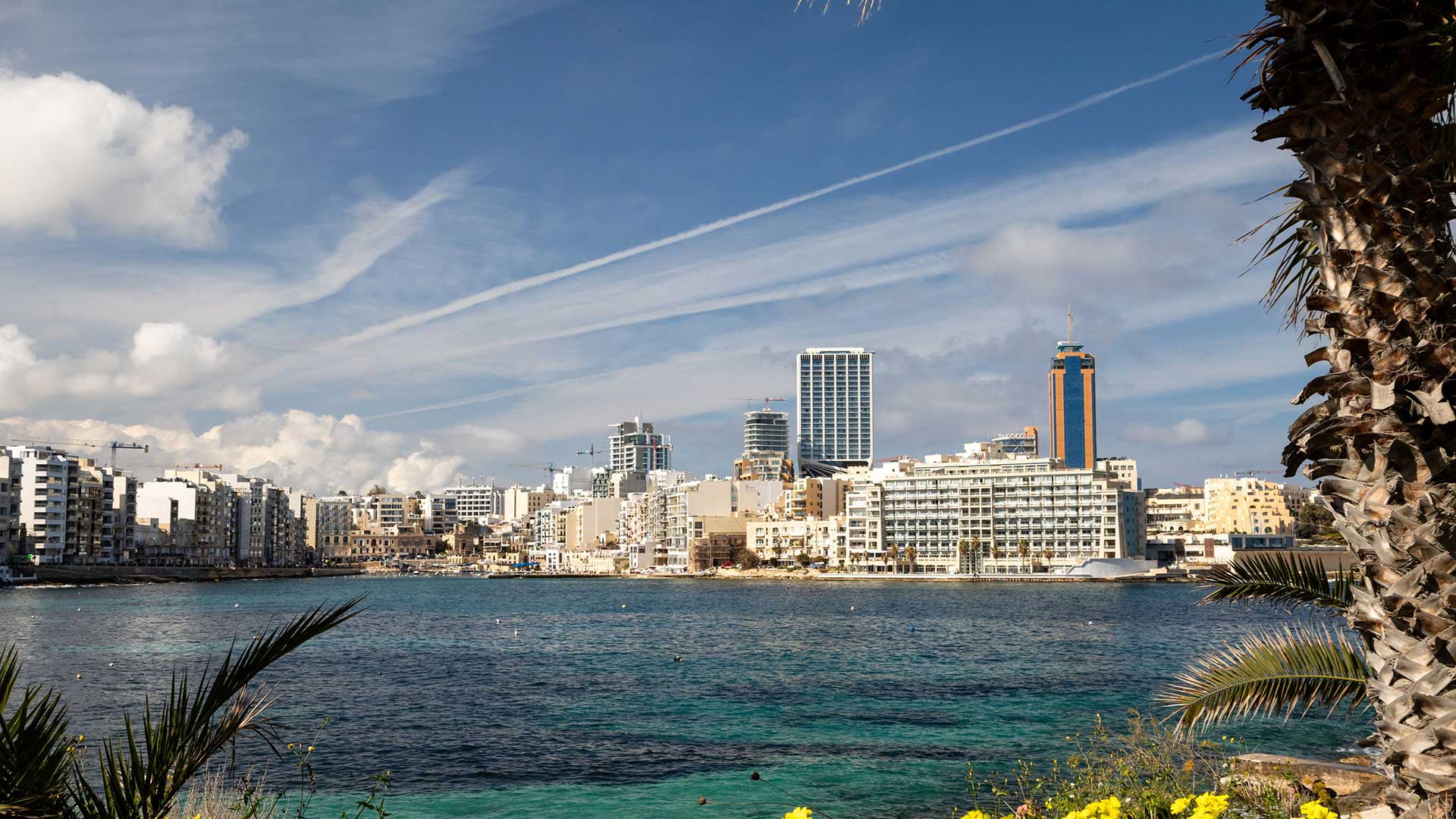
This article explains how the regime works, when it can be useful, and what British entrepreneurs should consider before the rules change in 2027.
How Malta’s 15% tax regime actually works
The first point to understand is that the 15% rate does not apply to all of a resident’s income. It usually applies to foreign-source income that is remitted to Malta. Other chargeable income, including locally sourced income, is generally taxed at 35%.
The system also uses a remittance basis. A person who is resident but not domiciled, or not ordinarily resident in Malta, is taxed on local income and on foreign income brought into the country. Foreign income that remains abroad is outside the tax charge.
Foreign capital gains are treated differently. Under the remittance basis, gains arising abroad are not taxed even when the proceeds are brought into Malta. This distinction between income and capital gains can make a major difference, so each source of funds needs to be classified correctly.
The 15% rate is available through several programmes, including the Global Residence Programme, the Residence Programme, and the Malta Retirement Programme. Each has its own eligibility rules and conditions.
Under the Malta Global Residence Programme, beneficiaries must pay at least €15,000 in tax each year. This means that if 15% of foreign income produced a €9,000 tax bill, the €15,000 minimum would still apply.
What the 15% regime means for international business owners
Entrepreneurs often receive income from several countries and in different forms. A founder may own a UK company, receive dividends from abroad, hold an investment portfolio, and rent out property overseas. Under Malta’s special tax regime, the treatment depends on where the income arises, what type of income it is, and whether it is received in Malta.
Common examples include:
- Dividends from overseas companies. Foreign dividends received in Malta can qualify for the 15% rate if the relevant conditions are met.
- Investment income. Foreign interest and other qualifying investment income may also fall within the 15% rate when received in Malta.
- Overseas rental income. Rent from property abroad may qualify as foreign-source income and benefit from the special rate.
- Business income. The treatment depends on where the income arises. Registering a company abroad does not automatically make all payments from it foreign-source income.
- Malta-source income. Income arising in Malta does not qualify for the 15% rate and may instead be taxed at 35%.
British entrepreneurs must also consider their UK tax position separately. Obtaining residence or special tax status in Malta does not automatically make someone non-resident in the United Kingdom. UK tax residence is determined under the Statutory Residence Test, which considers factors such as time spent in the UK, work, and other connections.
How the Global Residence Programme provides access to the regime
The Malta Global Residence Programme is open to people who are not nationals of the EU, EEA, or Switzerland, which makes eligible British citizens potential applicants. It provides access to special tax status, but applicants must also meet financial, personal, and residence requirements.
Property requirement. The minimum purchase price is €275,000 in most of Malta and €220,000 in the south of Malta or Gozo. Alternatively, applicants can rent for at least €9,600 a year in most areas or €8,750 in the south or Gozo. A rental agreement must run for at least 12 months, and the property must serve as the applicant’s principal place of residence.
Administrative fee. Applicants must pay a non-refundable fee of €6,000. It is reduced to €5,500 for those who buy property in the south of Malta.
Tax and finances. Beneficiaries must pay at least €15,000 in tax each year and show stable and regular resources sufficient to support themselves and their dependants. To keep the special tax status, they must not spend more than 183 days in any other single jurisdiction during a calendar year.
Personal requirements. Applicants need a valid travel document and health insurance covering themselves and their dependants across the EU. They must also be able to communicate adequately in English or Maltese and pass fit-and-proper checks, including providing a police conduct certificate.
Family members. Family members, including spouses, as well as principally dependent children under 25, siblings, parents, and grandparents, can join the application. This makes the GRP relevant to entrepreneurs planning residence for both themselves and their families.
The combination of tax, property, and ongoing residence requirements means that suitability should be assessed as a whole rather than on the 15% rate alone.
What is changing in 2027
Malta is restructuring its special tax programmes. Legal Notice 195 of 2026 introduces the Individual Tax Programme Rules, which take effect on January 1st, 2027, and bring several existing programmes under a single framework. The new system will include Global Resident Status for the group currently covered by the Global Residence Programme.
Under the new framework, qualifying foreign-source income received in Malta will continue to benefit from the 15% rate, while other non-qualifying income is taxed at 35%. However, the financial thresholds will become substantially higher.
For Global Resident Status, the minimum annual tax will rise to €35,000. New applicants will also face a property threshold of €700,000 for a purchase or €14,000 in annual rent, as well as an €8,500 application fee. The new special tax status will be granted for 5 years and can be renewed.
The new rules will also narrow the definition of dependants. Under the current requirements, principally dependent parents, grandparents, and siblings can be included in the application. Under the 2027 framework, the dependant category is more limited and focuses mainly on a spouse or partner and children. This makes the new regime less flexible for families.
Timing therefore matters for people considering applying under the current Global Residence Programme. Existing beneficiaries and people who submit applications by December 31st, 2026, can remain under the existing framework until December 31st, 2031, subject to the relevant conditions.
Conclusion
Malta’s 15% tax treatment can be relevant to British business owners with international income, but the current Global Residence Programme rules will not remain unchanged for long. Prospective applicants should compare the existing framework with the 2027 rules before deciding when to apply.
Contact Immigrant Invest to assess whether the programme fits your residence and tax planning goals.


Evommune: Pipeline Reset After EVO756 Failure, All Eyes On EVO301


Frank Holmes is a Canadian-American investor, venture capitalist and philanthropist. He is CEO and chief investment officer of U.S. Global Investors, a publicly traded investment company based in San Antonio, TX, that oversees more than $4 billion in assets (Nasdaq: GROW). He is known for his expertise in gold and precious metals and launching unique investment products. Holmes also serves as executive chairman of HIVE Blockchain Technologies, the first publicly traded cryptocurrency mining company (TSX.V: HIVE).
Analyst’s Disclosure: I/we have a beneficial long position in the shares of NVDA, AMZN either through stock ownership, options, or other derivatives. I wrote this article myself, and it expresses my own opinions. I am not receiving compensation for it. I have no business relationship with any company whose stock is mentioned in this article.
Seeking Alpha’s Disclosure: Past performance is no guarantee of future results. No recommendation or advice is being given as to whether any investment is suitable for a particular investor. Any views or opinions expressed above may not reflect those of Seeking Alpha as a whole. Seeking Alpha is not a licensed securities dealer, broker or US investment adviser or investment bank. Our analysts are third party authors that include both professional investors and individual investors who may not be licensed or certified by any institute or regulatory body.
Business
Textile stocks rally up to 10%: Raymond, Gokaldas Exports & others rebound after Trump tariff-triggered selloff

Trump’s new tariff tantrums
Textile stocks fell up to 5% on Monday after Trump signed the bipartisan Lindsey O Graham Sanctioning Russia and Iran Act of 2026 into law, paving the way for increased economic pressure on Russia over its invasion of Ukraine.
The new law gives the Trump administration the power to impose tariffs of up to 100% on countries buying Russian oil and gas, potentially exposing major buyers such as India and China to higher duties on exports to the US, the single-largest market for India’s textile and apparel exporters.
“Any additional tariffs under this Act will be very difficult to absorb for the MSME-dominated Indian textile and apparel sector already under stress due to several factors, including the continuing turmoil in West Asia. It will severely impact our ability to sell in the United States, our most significant market by a distance,” said Ashwin Chandran, Chairman of the Confederation of Indian Textile Industry (CITI).

India to cut down Russian oil imports?
Indian refiners could now cut back purchases of crude shipments from Russia after the sweeping US sanctions bill, Reuters reported. The government could limit Russian crude imports in the near term to 20% to 30% of India’s total in order to shed its position as the top buyer of Moscow’s seaborne oil, people familiar with the matter told Reuters, adding that the government meanwhile continues to negotiate with the US.
Meanwhile, US President Donald Trump is hosting Chinese leader Xi Jinping in Washington this week. Xi Jinping is set to arrive in the US on Wednesday, marking the first time in more than a decade. Markets will closely watch for signs of an extension of a tariff truce announced after a Trump-Xi summit in South Korea last October and set to expire on November 10. That deal paused a trade war in which the world’s two largest economies threatened global supply chains with tit-for-tat tariffs that topped 100%.
India-New Zealand FTA
At the same time, India and New Zealand finalised the free trade agreement (FTA) on Monday which is set to come into force on October 20. “Almost exactly three years ago, I committed that National would secure a free trade deal with India within our first term if elected. And today, we finalised the deal, which comes into force next month,” New Zealand Prime Minister Christopher Luxon said in a post on X.
“It is exciting to think of how many businesses will grow as a result of this FTA, and then consider what that means for them, for the people who work for them, and for the country as a whole. It means more opportunities for exporters, stronger growth for businesses, and more jobs and higher incomes for New Zealand,” Luxon added.
Also read | India-New Zealand FTA finalised; 100% of Indian exports to get duty-free access from October 20
Disclaimer: This article has been written by Debaroti Adhikary, who is not a SEBI-registered Research Analyst or an Investment Adviser. Debaroti Adhikary and his/her ‘relative(s)’ (as defined under Section 2(77) of the Companies Act, 2013) do not hold any financial interest in the companies mentioned in this article as of the date of publication. The views/recommendations mentioned in this article, wherever applicable, are those of the respective SEBI-registered Research Analyst/brokerage and have been reproduced/reported with due attribution. They should not be construed as the views or recommendations of The Economic Times Digital or the journalist. Readers are advised to consider the original research report and make their investment decisions based on their own assessment. Brokerage disclaimers here.

Saudi’s Ceer unveils first EVs in bid to build regional auto powerhouse
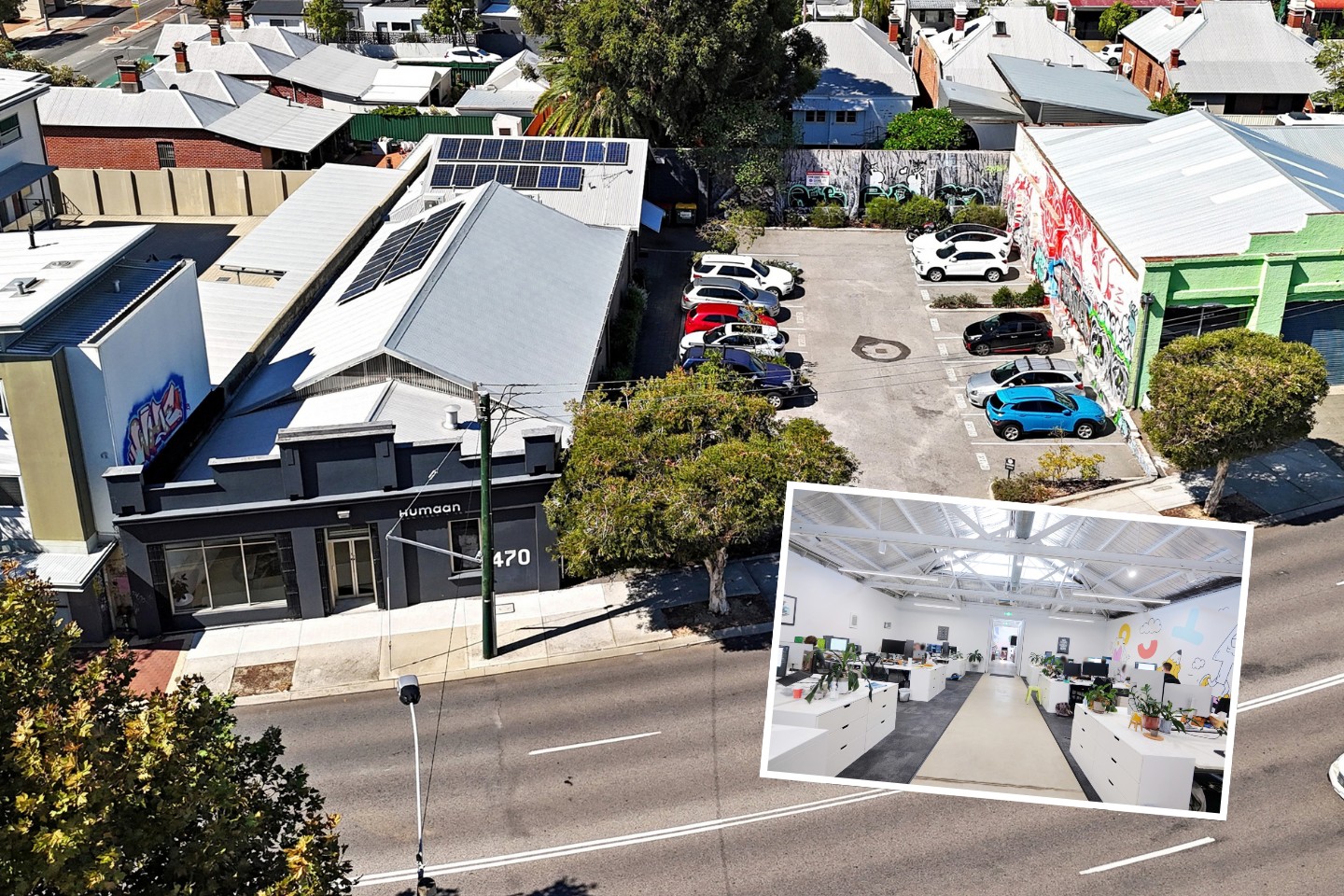
An old gallery converted into an office building and a rare car park on William Street in Northbridge have changed hands after more than 20 years, selling for $2.75 million to local investors.

Investing wisely does not have to be rocket science. It is about discipline and running the numbers. You don’t have to be like a grandmaster chess player playing the game twenty moves ahead of your opponent, you just need to understand how the pieces work.
Analyst’s Disclosure: I/we have no stock, option or similar derivative position in any of the companies mentioned, and no plans to initiate any such positions within the next 72 hours. I wrote this article myself, and it expresses my own opinions. I am not receiving compensation for it (other than from Seeking Alpha). I have no business relationship with any company whose stock is mentioned in this article.
Seeking Alpha’s Disclosure: Past performance is no guarantee of future results. No recommendation or advice is being given as to whether any investment is suitable for a particular investor. Any views or opinions expressed above may not reflect those of Seeking Alpha as a whole. Seeking Alpha is not a licensed securities dealer, broker or US investment adviser or investment bank. Our analysts are third party authors that include both professional investors and individual investors who may not be licensed or certified by any institute or regulatory body.


Arbitrage Trader, aka Denislav Iliev has been day trading for 15+ years and leads a team of 40 analysts. They identify mispriced investments in fixed-income and closed-end funds based on simple-to-understand financial logic.
Denislav leads the investing group Trade With Beta, features of the service include: frequent picks for mispriced preferred stocks and baby bonds, weekly reviews of 1200+ equities, IPO previews, hedging strategies, an actively managed portfolio, and chat for discussion. Learn more.
Analyst’s Disclosure: I/we have no stock, option or similar derivative position in any of the companies mentioned, and no plans to initiate any such positions within the next 72 hours. I wrote this article myself, and it expresses my own opinions. I am not receiving compensation for it (other than from Seeking Alpha). I have no business relationship with any company whose stock is mentioned in this article.
Seeking Alpha’s Disclosure: Past performance is no guarantee of future results. No recommendation or advice is being given as to whether any investment is suitable for a particular investor. Any views or opinions expressed above may not reflect those of Seeking Alpha as a whole. Seeking Alpha is not a licensed securities dealer, broker or US investment adviser or investment bank. Our analysts are third party authors that include both professional investors and individual investors who may not be licensed or certified by any institute or regulatory body.
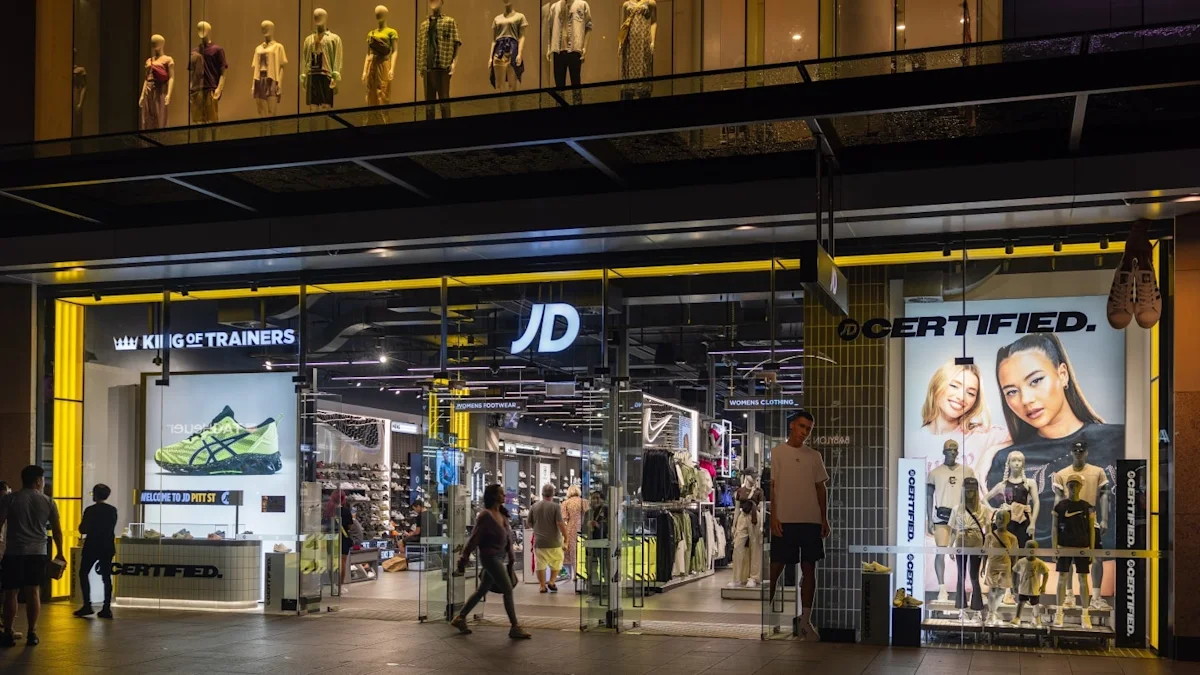
JD Sports Fashion has entered a long-term franchise agreement with Grupo Axo, a Mexican multi-brand omnichannel retail distributor, to bring the JD brand to Mexico.
Under the deal, Axo will manage JD stores and e-commerce operations in Mexico using JD’s brand and intellectual property.
The companies will use JD’s own-brand and exclusive ranges across footwear, apparel and accessories.
Grupo Axo chairman and CEO Andrés Gómez said: “JD’s deep brand relationships, differentiated product offer and immersive retail experience are highly complementary to Axo’s platform, capabilities and understanding of the Mexican consumer.
“The partnership represents a significant moment for sports fashion in Mexico and we look forward to helping JD become the leading sports fashion destination in the market.”
From 2027, Axo will run more than 140 JD locations in Mexico via the conversion of its existing sneaker store estate.
Several of those stores are due to be expanded later in line with JD’s “bigger and better” format.
The company said: “With a population of over 130 million, around 40% of whom are under the age of 25, Mexico is a market with a large, highly engaged consumer base and a demographic profile which aligns strongly with JD’s unique position as a curator of footwear and apparel trends across sport, music and fashion.”
According to the company, the deal is part of the group’s “JD Brand First” strategy.
The arrangement with Axo increases JD’s existing franchise business, which already covers 75 JD and Courir stores across Europe, the Middle East, Africa and Asia.
In North America, JD Sports Fashion also opened its first Canadian store in June last year as part of efforts to expand in the region.
JD Sports’ latest annual results showed that revenue increased in the 2026 financial year, while consumer spending remained under pressure and the broader retail sector faced continued headwinds.
In the 12 months to 31 January 2026, revenue rose 10.5% to £12.66bn ($17.23bn). Profit before tax and adjusting items fell 7.7% to £852m.
Founded in 1981, JD Group now operates 4,766 stores in 35 countries under fascias, including Courir, DTLR, Go Outdoors, Hibbett, and Sport Zone.
JD Sports Fashion CEO Régis Schultz said: “This partnership is another important step in our ‘JD Brand First’ strategy and reinforces our ambition to make JD the leading global sports fashion destination across the world’s most attractive consumer markets.”
“JD Sports signs franchise deal with Axo to enter Mexican market” was originally created and published by Retail Insight Network, a GlobalData owned brand.
Business
KOSPI Holds Above 7,000 for Second Day as Record Chip Exports Ease Samsung Concentration Risk Once Again

SEOUL — South Korea’s benchmark KOSPI index held above the psychologically significant 7,000 mark for a second consecutive session Tuesday, closing at 7,017.91, up 10.19 points, or 0.15%, as record semiconductor export data continued to underpin one of the strongest stock market rallies anywhere in the world this year.
Tuesday’s modest gain followed a sharp advance Monday, when the KOSPI surged 1.65% to close at 7,007.72, reclaiming the 7,000 level for the first time in seven trading sessions. That rally was driven primarily by a jump in Samsung Electronics shares, which climbed 4.98% Monday to trade back above 270,000 won for the first time in ten sessions, after South Korea reported record semiconductor exports for the first three weeks of September.
According to the Korea Customs Service, total exports reached $71.4 billion between September 1 and 20, up 78.3% from the same period a year earlier. Chip exports specifically more than tripled to $34.12 billion, a 259.4% increase that marked a new monthly record for the category. Separate figures tracking memory chip exports specifically showed an even sharper jump, surging 350.7% from a year earlier over the same three-week window, reaffirming the strength of underlying demand from global customers building out artificial intelligence infrastructure.
Institutional investors led the buying that drove Monday’s rally, purchasing a net 1.49 trillion won worth of shares, according to data from the Korea Exchange. The rally did lose some steam by the close of Monday’s session, as foreign investors turned net sellers and some retail investors moved to lock in profits after the sharp intraday gains, pulling the index back from its session high before it ultimately settled at 7,007.72.
One notable structural shift accompanying this week’s rally has been a reduction in the KOSPI’s reliance on just two dominant chipmakers. The combined weight of Samsung Electronics and SK Hynix in the index’s total market capitalization fell to 51.28% as of Tuesday, down from a June peak of 57.11%, according to data cited by Seoul Economic Daily. Market analysts have described that easing concentration as a healthy development for the broader index, since a market as heavily weighted toward just two stocks as the KOSPI had become earlier this year leaves the entire benchmark unusually vulnerable to company-specific swings in either Samsung or SK Hynix. With that concentration now moderating, some analysts have suggested the index may be better positioned to break out of the range-bound trading pattern that had persisted for more than two months before this week’s advance.
Not every signal facing Korean markets this week has been positive. The yield on the U.S. 30-year Treasury bond climbed above 5.3%, raising concerns among some investors about the prospect of prolonged losses in long-duration bond holdings, a dynamic that can weigh on broader risk appetite even as equity markets like the KOSPI continue climbing on stronger fundamentals. Investors have also remained closely focused on an upcoming summit between the United States and China, at which artificial intelligence, tariffs and rare earth minerals are all expected to be discussed, with the outcome seen as having potential implications for global trade flows and technology supply chains that could directly affect South Korea’s export-dependent economy.
Tuesday’s session also saw continued strength across a range of other major Korean companies. Samsung Electro-Mechanics rose 3.78%, LG Electronics gained 6.42%, SK Inc climbed 2.09%, and Doosan Enerbility and HD Hyundai Heavy Industries each posted gains above 1%, reflecting broad-based strength extending well beyond the two largest chipmakers that have historically dominated the index’s overall performance.
The KOSPI’s climb above 7,000 this week caps an extraordinary run for South Korean equities over the past year. The index first crossed the 7,000 threshold on an intraday basis back on May 6, closing that day at a then-record 7,384.56, part of a rally that saw the benchmark climb roughly 75% year-to-date at that point, following a 76% gain in 2025 that itself marked the index’s strongest annual performance since 1999. Since that initial breakout, the KOSPI has moved above and below the 7,000 level repeatedly, reflecting the volatility that has characterized trading throughout the year even as the index’s longer-term trajectory has remained firmly upward. According to Trading Economics, the KOSPI is now up more than 104% compared with the same time last year, and has gained more than 6% over just the past month alone.
Samsung Electronics separately unveiled its next-generation HBM4 memory chip this week, a product the company is positioning to strengthen its position in the global market for high-bandwidth memory used in AI accelerators, adding a further company-specific catalyst to the broader export-driven rally that has lifted the stock in recent sessions.
With the KOSPI having now closed above 7,000 in back-to-back sessions for the first time in several weeks, and with record chip export data continuing to reinforce the underlying fundamentals behind the rally, investors are likely to watch closely in the coming sessions for confirmation of whether the index can sustain its break out of the range-bound pattern that defined much of the summer, or whether renewed pressure from rising long-term bond yields and unresolved trade tensions between the U.S. and China will reassert themselves as headwinds heading into the final months of the year.

Western Australian households, buoyed by a tight labour market and solid wage gains, are helping drive broad-based growth in the state’s economy, says Westpac.

Teenager captured after 11 shot at Turkish high school

Evommune: Pipeline Reset After EVO756 Failure, All Eyes On EVO301

Binance said to be facing U.S. DOJ investigation into alleged Iranian sanctions activity




-

 Fashion4 days ago
Weekend Open Thread: Talbots – Corporette.com
-

 Tech1 day ago
Researchers escape OpenAI Codex sandbox to run commands on host
-

 Crypto World7 days ago
Robinhood engineers charged over $50K crypto scheme
-

 Crypto World3 days ago
Circle launches Arc Studio AI agent for building onchain apps
-
 NewsBeat3 days ago
Trump says US has reached an agreement to take permanent control of Greenland’s security
-

 Crypto World3 days ago
Bitcoin price breaks channel as RSI climbs to 63
-

 Crypto World1 day ago
Who Needs CLARITY Anyway? ARB Could See 70X Increase: Hodler’s Digest
-

 Crypto World5 days ago
US Charges Robinhood Engineers Over Crypto Listing Trades
-

 Crypto World6 days ago
What Is the Status of the U.S.-Iran Peace Talks? Here's What Both Sides Are Saying
-

 Crypto World3 days ago
Trading Bitcoin on Robinhood? Why 2% Spread Has Traders Worried
-

 Tech6 days ago
Webb’s IC 348 Mosaic Includes Two-Jupiter Dwarfs, Twin Jets, and a Nursery Still Making Worlds
-

 Crypto World3 days ago
World Money launches in 150+ countries with Stripe
-

 Crypto World4 days ago
Silver prices recover quickly, hitting weekly high today
-

 Entertainment6 days ago
Big Brother Update: Melody Explodes at Drew as Illness Sweeps BB28 House
-

 Crypto World4 days ago
Mortgage and refinance interest rates today, Thursday, September 17, 2026
-
 NewsBeat4 days ago
US was ‘on brink of war’ with China over false AI report of nukes moving in Middle East
-

 Crypto World1 day ago
Bitcoin price holds above $81K as key catalysts line up
-

 Tech4 days ago
GPT-6 Astra Reached the Nether in Minecraft, Lost Its Stash to a Creeper, and Farmed Potatoes for Hours
-

 Business6 days ago
Federal Reserve expected to hike interest rates 25 basis points at FOMC meeting
-

 Business1 day ago
Analog Devices (ADI) Bets $1.35 Billion on Chips that Let Machines Think for Themselves
You must be logged in to post a comment Login