
Business
McDonald’s Really Keeps 515-Page Customer Dossiers Rivaling FBI Files, Investigation Reveals


McDonald’s has been compiling extensive personal data files on individual customers, tracking everything from past orders and loyalty points to codes scanned during the company’s Monopoly sweepstakes promotion, according to a Wired investigation that found the resulting customer dossiers can run hundreds of pages long.
Wired reporter Reece Rogers requested a copy of his own customer data file from McDonald’s Privacy Rights Center, a portal the company describes as allowing customers to “exercise your privacy rights at any time.” Because Rogers is a California resident, he had a legal right under state privacy law to request access to the personal information a private company has compiled on him. The result was a 515-page file, which McDonald’s described as containing “specific pieces of personal information about you that were identified by searching McDonald’s systems which contain information about our customers.”
According to Futurism’s coverage of the Wired report, McDonald’s has been feeding that expansive trove of customer data into its own predictive algorithms, using it to estimate metrics such as how many times a given customer is likely to visit the chain over an upcoming period, as well as that customer’s total predicted lifetime dollar value to the company.
The sheer size of the file drew a pointed comparison in the reporting to historical government surveillance records. A 515-page dossier sits right at the threshold typically considered a “large” file within the FBI’s own historical record-keeping standards, comparable in scale to the bureau’s file on musician John Lennon, whose outspoken opposition to the Vietnam War made him a target of deportation efforts by the Nixon administration. The comparison underscores the scale of commercial data collection now occurring at a company known primarily for selling fast food.
Jeff Chester, executive director of the Center for Digital Democracy, offered a blunt assessment of the underlying business model driving this kind of data collection when speaking with Wired. “McDonald’s secret sauce is really commercial surveillance,” Chester said.
The revelation arrives roughly a year after a separate, unrelated security failure at McDonald’s exposed the personal information of an estimated 64 million job applicants through a vulnerability in the company’s virtual hiring assistant system, according to Futurism’s reporting. That earlier incident highlighted a recurring pattern across the corporate data collection landscape: companies amassing enormous quantities of personal information on customers and applicants alike, while not always maintaining the security infrastructure necessary to adequately protect that information from exposure.
McDonald’s extensive customer profiling reflects a broader shift in how consumer data is being collected across industries that have not traditionally been associated with digital surveillance. While technology and social media platforms such as Google and Meta have long been understood to compile detailed behavioral profiles on users, Futurism’s coverage noted a growing trend of similarly extensive data collection by companies outside the traditional technology sector, including retailer Target and even privately owned venues such as Madison Square Garden, which has previously drawn scrutiny for its own use of facial recognition technology to track and restrict entry for certain visitors.
California’s data privacy laws, under which Rogers was able to request his file, represent one of the more robust state-level consumer privacy frameworks currently in place in the United States. The California Consumer Privacy Act generally grants state residents the right to request disclosure of what personal information a business has collected about them, along with the right to request deletion of that information in certain circumstances. Not every U.S. state currently offers residents a comparable legal right to request this kind of detailed accounting from companies collecting their personal data, meaning the scope of information McDonald’s, or any similarly data-hungry company, holds on customers outside California may be less accessible for individual review depending on where a customer resides.
The McDonald’s loyalty program and app-based ordering system, central to the kind of granular purchase and behavioral tracking described in the Wired investigation, has grown increasingly central to the company’s broader marketing and customer retention strategy in recent years, as fast food chains across the industry have leaned more heavily into app-based loyalty programs designed to both encourage repeat visits and generate detailed behavioral data that can be used to refine targeted promotions and predict future customer spending patterns.
Futurism’s analysis characterized this kind of extensive commercial data harvesting as a practice unlikely to be voluntarily curtailed by the companies engaging in it, given the financial incentives involved. As long as detailed customer profiling continues to generate measurable business value through improved marketing targeting and customer retention forecasting, companies including McDonald’s have limited incentive to reduce the scope of personal data they collect and retain on individual customers.
The broader pattern of expanding corporate surveillance extends beyond customer purchase tracking alone. Futurism noted that Burger King, a McDonald’s competitor, has separately begun incorporating artificial intelligence into employee headsets specifically to continuously monitor whether staff members are behaving in a sufficiently friendly manner toward customers, an example the outlet cited as further evidence of AI-driven monitoring technology expanding into new areas of the fast food industry beyond customer-facing data collection alone.
As consumer awareness of the scale of corporate data collection continues to grow, cases such as Rogers’ 515-page McDonald’s file are likely to fuel continued public and regulatory scrutiny regarding how companies across a widening range of industries, not just traditional technology platforms, are compiling, storing and monetizing detailed personal profiles on their customers, often without those customers having a clear or complete understanding of the scope of information being collected about them during the course of routine, everyday transactions such as ordering a meal through a mobile app.



The author is a director at a small Boston-based software company where he oversees India operations across HR, finance, and business development. His broader professional background spans entrepreneurship, operations, and management across multiple industries. Earlier in his career, he was involved in building out a bottled beverages plant, reflecting a longstanding interest in business building, execution, and commercial strategy. He also holds a PhD in history and teaches part-time at a local college, bringing a research-driven and analytical perspective to both his professional and investing workHe has been investing in U.S. equities for nearly two decades, having started well before international access to U.S. markets became commonplace for Indian investors. Over time, he has developed a style that sits between value and growth. He is most interested in businesses where long-term earnings potential, competitive positioning, or strategic optionality are not yet fully reflected in the stock price. His work is grounded in valuation, but he also looks closely at business quality, management execution, industry structure, and the durability of growth.His primary sector focus is software, IT, and AI, including the growing application of AI across industries such as healthcare. He is especially interested in companies with scalable models, improving economics, and the ability to compound earnings over time. At the same time, his interests are not limited to technology. He also follows real estate-related opportunities, including REITs, and remains open to writing on other sectors where the investment case is compelling.On Seeking Alpha, he aims to write thoughtful, research-based articles that combine business analysis with valuation discipline. His goal is not simply to identify attractive stories but to assess whether the market is mispricing risk, growth, or long-term earnings power. He writes to share well-reasoned ideas with serious investors, refine his own thinking through public analysis, and contribute to a more disciplined discussion around investing. The author is associated with another Seeking Alpha analyst – Dr. Manimala M.
Analyst’s Disclosure: I/we have no stock, option or similar derivative position in any of the companies mentioned, and no plans to initiate any such positions within the next 72 hours. I wrote this article myself, and it expresses my own opinions. I am not receiving compensation for it (other than from Seeking Alpha). I have no business relationship with any company whose stock is mentioned in this article.
Seeking Alpha’s Disclosure: Past performance is no guarantee of future results. No recommendation or advice is being given as to whether any investment is suitable for a particular investor. Any views or opinions expressed above may not reflect those of Seeking Alpha as a whole. Seeking Alpha is not a licensed securities dealer, broker or US investment adviser or investment bank. Our analysts are third party authors that include both professional investors and individual investors who may not be licensed or certified by any institute or regulatory body.

Iran warns neighbours against joining U.S. sanctions as Hormuz stays closed

Siemens Healthineers: Successful Investment, Updating For H2 2026

Alibaba plans record $10.2 billion Hong Kong share sale to fund AI

Officials in YALA province are tightening up security measures after a series of incidents disrupted several locations across the three southern border provinces overnight.
Authorities have intensified security measures across the southern border provinces in response to rising concerns over illegal activities and cross-border threats. Enhanced patrols, including increased personnel and advanced technology, are now deployed to monitor and secure these critical areas. Local law enforcement agencies are collaborating with national security forces to ensure a cohesive approach to maintaining regional stability and safety.
In addition to stricter surveillance, authorities are implementing more rigorous inspections at checkpoints and border crossings. These measures aim to prevent illegal immigration, smuggling, and potential infiltration by criminal networks. The enhanced scrutiny serves as both a deterrent to unlawful activities and a reassurance to residents affected by such challenges, fostering a sense of security and confidence within border communities.
Community engagement is also a cornerstone of the tightened security strategy. Authorities are working with local leaders and residents to strengthen communication channels and encourage the reporting of suspicious activities. By fostering cooperation and trust between communities and law enforcement, authorities hope to create a united front against threats and maintain the integrity of the southern border provinces. This comprehensive approach highlights the importance of collaboration and vigilance in safeguarding national security.


I am a specialist in Asian equities after having been a sellside analyst for 13 years. In addition, I have also spent time covering US hardware and semiconductor stocks on the sellside. Within Asia, I have covered the casino, automotive, industrial, consumer and technology sectors. I have also worked on the buyside as a fund manager in long only and as an analyst in hedge funds all covering Asian equities where I have developed a keen understanding of Asian companies and economies with a focus on China. From a global equities perspective, I enjoy covering companies globally by examining key metrics such as financial statements strength, valuation upside, and conducting proper analysis of the competitive advantages of the company. Throughout my career, I have found and written on undiscovered small cap companies which have increased in equity value by multiple times. I would like to write for Seeking Alpha where my goal is to help investors cut through the noise and to focus on fundamentals and the company’s competitive outlook instead of the momentum trade.
Analyst’s Disclosure: I/we have no stock, option or similar derivative position in any of the companies mentioned, and no plans to initiate any such positions within the next 72 hours. I wrote this article myself, and it expresses my own opinions. I am not receiving compensation for it (other than from Seeking Alpha). I have no business relationship with any company whose stock is mentioned in this article.
Seeking Alpha’s Disclosure: Past performance is no guarantee of future results. No recommendation or advice is being given as to whether any investment is suitable for a particular investor. Any views or opinions expressed above may not reflect those of Seeking Alpha as a whole. Seeking Alpha is not a licensed securities dealer, broker or US investment adviser or investment bank. Our analysts are third party authors that include both professional investors and individual investors who may not be licensed or certified by any institute or regulatory body.

Last week, the BSE benchmark Sensex declined 468.42 points, or 0.60 per cent, and the NSE Nifty dipped 114 points, or 0.46 per cent.
“Indian equity markets ended the week on a cautious note, extending their recent corrective phase as elevated crude oil prices, rising global bond yields and persistent geopolitical uncertainty weighed on investor sentiment,” Ajit Mishra – SVP, Research, Religare Broking Ltd, said.
The valuation of Bharti Airtel dropped Rs 28,052.96 crore to Rs 12,14,963.15 crore, the most among the top-10 firms.
Tata Consultancy Services (TCS) faced an erosion of Rs 22,070.34 crore from its valuation, which stood at Rs 8,31,436.51 crore.

The market capitalisation (mcap) of the State Bank of India declined Rs 20,861.2 crore to Rs 9,64,968.76 crore and that of Hindustan Unilever fell Rs 16,975.79 crore to Rs 4,73,912.56 crore.
However, the valuation of Life Insurance Corporation of India (LIC) jumped Rs 12,650 crore to Rs 5,35,980.31 crore.The mcap of Reliance Industries surged Rs 8,119.53 crore to Rs 17,78,175.59 crore and that of Larsen & Toubro climbed Rs 3,487.83 crore to Rs 5,62,460.94 crore.
The market valuation of Bajaj Finance edged higher by Rs 3,424.28 crore to Rs 6,80,621.62 crore.
ICICI Bank added Rs 752.47 crore taking its mcap to Rs 10,18,330.45 crore.
The mcap of HDFC Bank went up Rs 356.95 crore to Rs 11,21,159.05 crore.
Reliance Industries remained the most valued firm, followed by Bharti Airtel, HDFC Bank, ICICI Bank, State Bank of India, TCS, Bajaj Finance, Larsen & Toubro, LIC and Hindustan Unilever. PTI

The inflow comes after FPIs invested Rs 20,200 crore in July, marking a sharp turnaround from four consecutive months of heavy selling and signalling renewed confidence in Indian equities.
FPIs had withdrawn Rs 49,340 crore in June, Rs 32,963 crore in May, Rs 60,847 crore in April and a massive Rs 1.17 lakh crore in March. Prior to this selling streak, they had invested Rs 22,615 crore in February, according to CDSL data.
Despite the recent buying, foreign investors have remained net sellers in Indian equities in 2026, withdrawing around Rs 2.3 lakh crore so far — exceeding the Rs 1.66 lakh crore outflow registered during the entire 2025.
“The factors that are driving the FPIs back to the Indian market are: earnings growth revival as reflected in Q1 results, FPI withdrawal from the ‘chip trade’, rupee stability and the impressive growth prospects of companies in the broader market,” V K Vijayakumar, Chief Investment Strategist, Geojit Investments, said.
FPIs are not buying attractively valued leading large banking or IT stocks; instead they are selectively buying mid-caps despite elevated valuations, he added.
In the coming week, investors will closely track crude oil price movements and developments in the ongoing US-Iran geopolitical tensions for further direction in the market, Pabitro Mukherjee, Deputy Vice President-Research, Bajaj Broking, said.
Foreign investor interest has also extended to the debt market. They invested Rs 852 crore in debt through the Fully Accessible Route (FAR), while they pulled out Rs 995 crore through the general route during the period under review. PTI
Business
Texas Man Sentenced to Prison for Shooting Bald Eagle, Hiding Injured Bird Under Garage Tarp

HOUSTON — A Porter, Texas, man was sentenced to 14 days in federal prison and ordered to pay a $5,000 fine Friday after pleading guilty to shooting and killing a federally protected bald eagle in his backyard, then attempting to hide the wounded bird beneath a tarp in his garage.
Santos Guerrero, 43, was sentenced by U.S. Magistrate Judge Peter Bray following his guilty plea earlier this year, according to the U.S. Attorney’s Office for the Southern District of Texas. Guerrero pleaded guilty on May 14, nearly two years after authorities said he shot the eagle at his home on Oct. 11, 2024.
According to federal prosecutors, authorities initially responded to the scene after receiving reports of the shooting. Investigators reviewed video footage showing the eagle being shot and falling from a tree, and they subsequently traveled to Guerrero’s home, where they identified the same tree captured in the footage. Investigators eventually located the injured bird hidden beneath a tarp inside Guerrero’s garage.
Prosecutors said Guerrero later lied to investigators about the incident. The court reviewed both surveillance video and body camera footage documenting the eagle both before it was shot and after it was subsequently discovered in Guerrero’s garage.
The eagle was transported to an animal hospital following its discovery, but veterinarians ultimately made the decision to euthanize the bird due to the severity of its injuries. According to federal prosecutors, a necropsy determined that the bullet had significantly damaged one of the eagle’s wings, while its subsequent fall from the tree caused additional serious injuries, including liver fractures, internal bleeding and a broken leg.
Although bald eagles have not been classified as an endangered species since 2007, the birds remain federally protected under the Bald and Golden Eagle Protection Act, a law that prohibits killing or possessing bald and golden eagles without proper authorization. Those protections extend beyond the birds themselves to also cover eagle parts, nests and eggs, meaning violations of the law can carry significant federal penalties regardless of an eagle’s current conservation status.
When Guerrero entered his guilty plea in May, prosecutors indicated he faced a potential sentence of up to one year in federal prison, along with a maximum fine of $100,000. Judge Bray’s ultimate sentence of 14 days in prison alongside the $5,000 fine fell considerably below that maximum potential penalty.
Following Friday’s sentencing, Guerrero remains free on bond. According to the U.S. Attorney’s Office, he will be required to voluntarily surrender to a Federal Bureau of Prisons facility that has not yet been determined, a common arrangement in federal cases involving relatively short custodial sentences, allowing the defendant to report to a designated facility on their own rather than being taken into custody immediately following sentencing.
The Bald and Golden Eagle Protection Act, first enacted in 1940 and later amended to include golden eagles, has served as one of the primary federal legal tools used to prosecute individuals who kill or harm the birds, even in cases, such as Guerrero’s, where the shooting occurred on the defendant’s own private property. The law reflects the bald eagle’s enduring status as a national symbol of the United States, a designation that has continued to afford the species legal protection even after its formal removal from the federal endangered species list nearly two decades ago, a delisting that reflected a significant conservation success following decades of population decline driven largely by the pesticide DDT and habitat loss throughout the 20th century.
Federal wildlife protection cases involving bald eagles are prosecuted through the U.S. Fish and Wildlife Service’s law enforcement division, working in coordination with U.S. Attorney’s offices across the country. Penalties for violations can vary significantly depending on the specific circumstances of a case, including whether a defendant is found to have acted knowingly, whether the bird’s death was accidental, and whether any additional conduct, such as Guerrero’s alleged false statements to investigators, factors into how prosecutors approach sentencing recommendations.
Cases involving the killing of protected bald eagles periodically draw significant public attention given the bird’s status as a national symbol, and federal prosecutors have continued to pursue charges against individuals found to have violated the Bald and Golden Eagle Protection Act in various parts of the country in recent years, reflecting the law’s ongoing role in protecting the species even outside its formal designation as endangered or threatened.
As of Friday’s sentencing, the case against Guerrero has concluded with his federal prison term and fine, closing out a legal process that spanned nearly two years from the original October 2024 shooting to his eventual guilty plea and sentencing. The U.S. Attorney’s Office for the Southern District of Texas has not indicated whether Guerrero faces any additional state-level charges connected to the incident beyond the federal case addressed in Friday’s sentencing hearing.


I like how a single event can ripple through markets and trigger a chain of reactions. That curiosity is what led me to study macroeconomics and eventually shape the way I invest. I have five years of experience in the investment field and an MBA in Macroeconomics and Portfolio Management. My strategy blends a top-down view of the global economy with a bottom-up look at individual companies. Start by spotting strong economies with good currenncies using macro data and statistical tools, then narrow down the sectors that are likely to perform well over the next few months. From there, I focus on quality companies with solid momentum and consistent results. I’m also a regulated investment analyst in Brazil.
Analyst’s Disclosure: I/we have no stock, option or similar derivative position in any of the companies mentioned, and no plans to initiate any such positions within the next 72 hours. I wrote this article myself, and it expresses my own opinions. I am not receiving compensation for it (other than from Seeking Alpha). I have no business relationship with any company whose stock is mentioned in this article.
I intend to wait a few days after an article gets published before initiating a long position.
Seeking Alpha’s Disclosure: Past performance is no guarantee of future results. No recommendation or advice is being given as to whether any investment is suitable for a particular investor. Any views or opinions expressed above may not reflect those of Seeking Alpha as a whole. Seeking Alpha is not a licensed securities dealer, broker or US investment adviser or investment bank. Our analysts are third party authors that include both professional investors and individual investors who may not be licensed or certified by any institute or regulatory body.

Christopher Nolan’s The Odyssey 4K Blu-ray Listed for November 17 With HDR10 and 1.78:1 Video

Financial Coach Explains How To Invest In Jamaica and How to make your money work for you

Transfer news LIVE: Arsenal FC get huge Alvarez boost; Man Utd done deal; Chelsea target; Liverpool latest

Weekend Open Thread – Corporette.com

Weekend Open Thread: Brooks Brothers

London Mayor Sadiq Khan handed a peerage by Keir Starmer alongside 15 other Labour figures… just days before the PM leaves No10
Financial Coach Explains How To Invest In Jamaica and How to make your money work for you

Make Money Without Scamming People #traxnyc #money @TraxNYCDiamondJewelry

YUP!!! BRAD JUST SAID XRP = NEW VISA!?!!!! ($16 TRILLION CONFIRMED!!!)
-

 Fashion2 days ago
Weekend Open Thread: Madewell – Corporette.com
-

 Business5 days ago
SMA Solar Technology AG (SMTGY) Q2 2026 Earnings Call Transcript
-

 Tech5 days ago
Qwen3.8-27B runs frontier-class coding agents and reasoning locally, no cloud API required
-

 Crypto World1 day ago
anatomy of crypto’s biggest liquidation event since 2021
-

 Crypto World5 days ago
OCC Greenlights Trump Family Crypto Firm for Trust Charter
-

 Politics21 hours ago
6 months on, Irish renters crushed by effects of government housing bill
-

 Crypto World5 days ago
NAVI Prime launches institutional lending framework on Sui
-

 News Videos3 days ago
Don’t Leave Your Financial Future To Chance | August 19, 2026
-

 Crypto World6 days ago
Data of 54K Wallet Users Leaked, Clarity Odds Just 10%: Hodler’s Digest, Aug. 16
-

 Tech7 days ago
What are the rumors about the AirPods Pro 4?
-
 NewsBeat24 hours ago
The ‘Lucky Dip Gang’ causing carnage for clicks: After five thugs were killed speeding in the wrong direction on a motorway, GUY ADAMS investigates a sick new trend… and why police aren’t even allowed to pursue them
-

 Politics7 days ago
Britain is facing a housing disaster
-

 Business5 days ago
Stock Market Today: Tech Futures Slide As Treasury Yields Jump; Nvidia, Micron, Sandisk Sell Off
-

 Business7 days ago
Rebel Creamery files Chapter 11 with $23.8M Van Leeuwen judgment on appeal
-
 Crypto World5 days ago
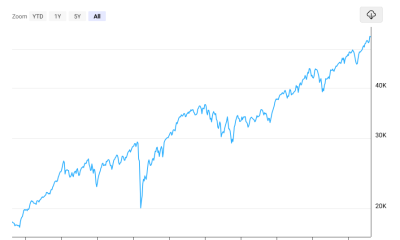
Dow’s 3-Year Winning Run Isn’t a Crash Signal, Still 49% Odds of Double-Digit Gains
-
Tech5 days ago
5 Of The Most Reliable Car Brands To Consider If You’re Buying A Used SUV
-

 Tech6 days ago
Straight Up the Cliff, Yunnan’s New Fuyao Ladder Turns a Three-Hour Climb Into a 50-Second Ride for Students
-
 Tech6 days ago
OpenAI’s new ChatGPT feature logs your keystrokes and stores them in plain text
-

 Tech4 days ago
GLM-5.3 hits the API at $1.4/$4.4 per million tokens
-

 Tech7 days ago
DeepSeek’s top-ranked V4 Flash stumbles on real agent tasks as its prices surge
You must be logged in to post a comment Login