
Business
Michael Levitt scathing of parliament's hosting of Wall of Tears event




Boston Beer stock falls as CFO Reynoso to depart

D.A. Davidson reiterates Buy on Box stock ahead of earnings
Rep. Brandon Gill, R-Texas, discusses the House urging the Senate to act on a reconciliation bill and criticism of the American Bar Association over the organization’s influence over law school accreditation on ‘Sunday Night in America.’
The Trump administration is threatening the American Bar Association’s longstanding authority to accredit law schools, which dates back to 1952.
The White House, along with congressional Republicans, have accused the ABA of using its dominant role in legal education to push diversity, equity and inclusion (DEI) ideology on up-and-coming lawyers.
A 500-page Department of Education report obtained by The Wall Street Journal argues that the ABA’s accreditation wing is not sufficiently independent of the law profession itself.
In a statement to Fox News Digital, the Department of Education said its staff reviewed the ABA’s accreditation standards and found the organization is “out of compliance” with federal accreditor regulations.
MCMAHON TELLS HOUSE PANEL TRUMP ADMIN MOVING TO DISMANTLE ‘FAILED’ $3T EDUCATION BUREAUCRACY
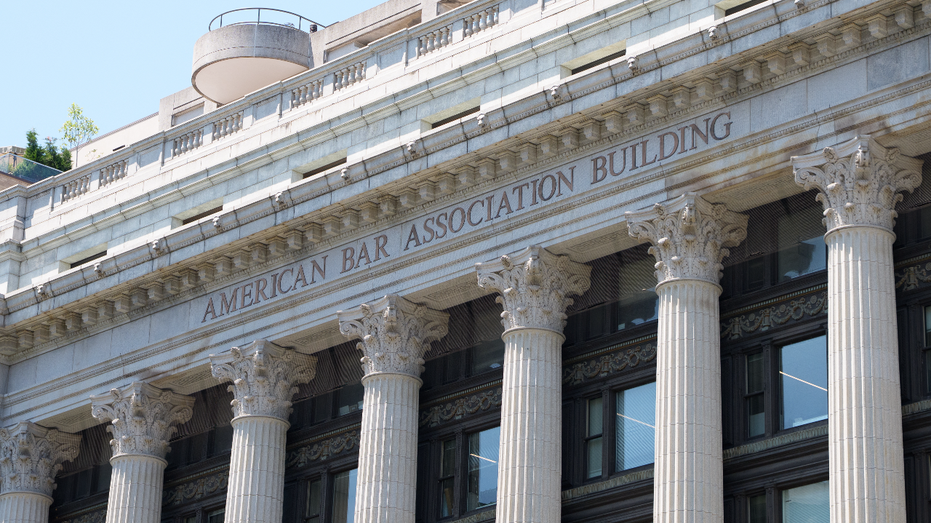
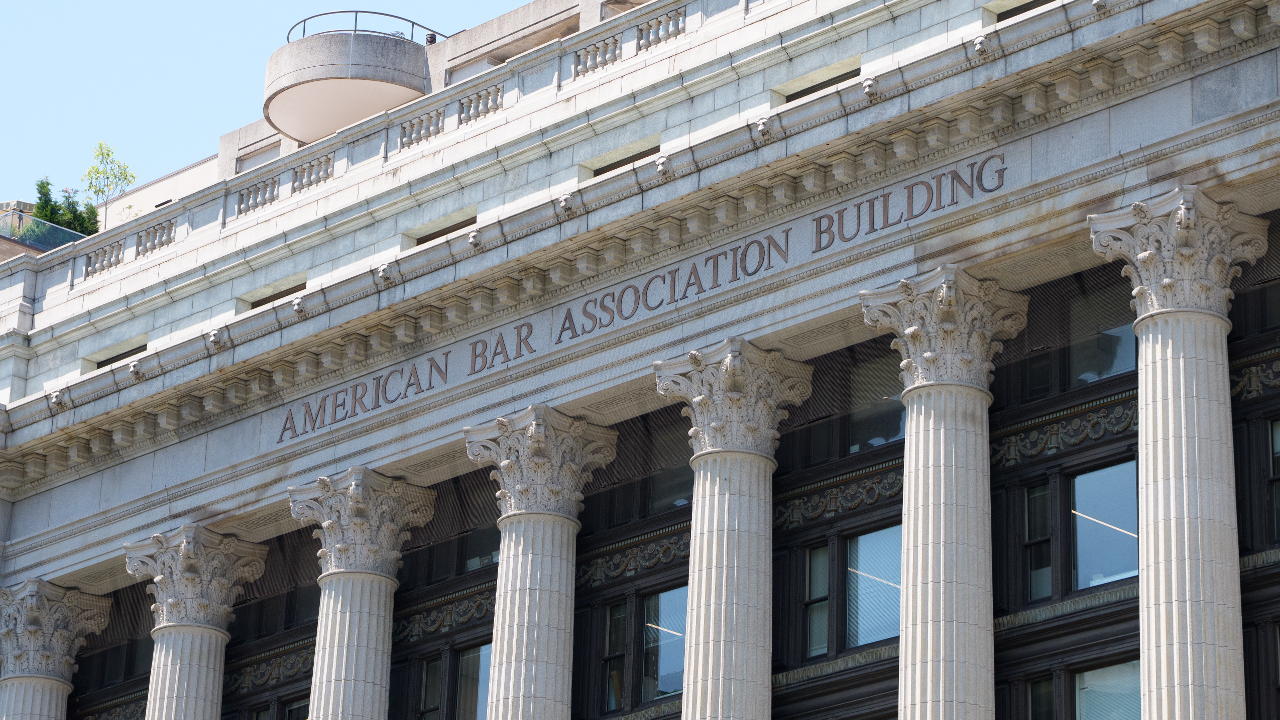
The American Bar Association building is seen in Washington. D.C.. on June 2, 2025. (Aaron Schwartz/Sipa USA / Reuters)
“We will not comment on details as the process is ongoing and involves multiple stages of review, including by an independent, bipartisan advisory committee in September,” said a spokesperson from the Department of Education.
The ABA’s accreditation system gives it considerable influence over law schools in the United States.
Its Council of the Section of Legal Education and Admissions to the Bar is the only accreditor of Juris Doctor programs recognized by the Department of Education, and graduation from an ABA-approved law school is the standard path to taking the bar exam in most states.
Since the Higher Education Act was passed in 1965, only accredited universities can participate in federal student financial assistance programs. Students who attend non-accredited law schools cannot access federal student loans or grants.

A Department of Education sign is displayed outside their federal student aid office on July 17, 2026, in Washington, D.C. (Kevin Carter/Getty Images / Getty Images)
LIBERAL FACULTY STILL HUGELY OUTNUMBER CONSERVATIVES IN HIGHER EDUCATION: REPORT
The Department of Education’s initial recommendation to reject the ABA as a federally recognized accreditor will go to a panel for review, The Journal reported. That panel will then make its own recommendation to Undersecretary of Education Nicholas Kent.
In a statement to Fox News Digital, Melissa Hart, the chair of the ABA’s Accreditation Council, said the council is complying with federal laws and regulations.
“Although it is difficult to comment on a recommendation we haven’t yet received, we look forward to the opportunity to address any misconceptions and clarify the record at our upcoming hearing before the [National Advisory Committee on Institutional Quality and Integrity] committee next month,” Hart said.
“As a national accrediting body for American law schools, we remain focused on ensuring quality legal education that produces competent, ethical attorneys who are eligible for licensure,” she added. “The outcomes produced by Council-accredited law schools are unmatched, and we continue the important work of accrediting law schools as our recognition process proceeds.”

President Donald Trump signs executive orders relating to higher education institutions, alongside U.S. Secretary of Commerce Howard Lutnick and U.S. Secretary of Education Linda McMahon in the Oval Office on April 23, 2025. (SAUL LOEB/AFP via Getty Images)
CLICK HERE TO DOWNLOAD THE FOX NEWS APP
Under the Higher Education Act, the secretary of education has the power to terminate the federal recognition of an accrediting agency, but only after the accreditor is given notice and an opportunity for a hearing.
Accreditors are also generally given up to 12 months to come back into compliance before their recognition is terminated.
If the ABA lost its federal status as a trusted accreditor, law schools affiliated with a university would likely use the university’s accreditor to maintain access to federal student aid programs.
Freestanding law schools would face a more complicated situation, as there are no other federally recognized accreditors specifically for J.D. programs. The Trump administration has not publicly detailed how those schools would retain access to federal student aid if the Department of Education rejects the ABA’s accreditation authority.

The price of bitcoin continued to soar into Friday, hitting a three-month high following the Treasury Department’s announcement to increase its long-term bond buybacks. The rally coincides with a renewed push from the Trump administration to introduce digital asset regulations and pass the Clarity Act. Crypto stocks powered higher this week along with the price of bitcoin. The price of…
Copyright ©2026 Investor’s Business Daily, LLC. All rights reserved. 87990cbe856818d5eddac44c7b1cdeb8

Yes. Corporate subscriptions are available for teams and organisations, with discounted rates as user numbers increase. Pricing starts from $1,625 + GST per user.
Get in touch
to discuss the right option for your organisation.
Business News subscriptions are used by executives, investors, consultants and professionals who need to stay informed and make better decisions about the WA market. When you subscribe you’ll get
- Unlimited access to WA’s most trusted business journalism
- Data & Insights — detailed profiles of WA companies, people, projects and deals
- MyBN — a personalised feed based on the companies, people and sectors you follow
- Special publications and industry reports
- Daily and weekly email newsletters
Data & Insights is a research tool built specifically for the WA market. It draws on more than 30 years of Business News reporting, updated regularly to reflect what’s happening now. Use it to:
- Look up detailed profiles of WA companies, including financials, directors and ownership
- Find decision-makers and track their career movements
- Research live and completed projects across WA industries
- Monitor deals, appointments and market activity
- Access industry rankings and league tables
Data & Insights is updated daily by our dedicated research team, which uses the latest announcements, ASX filings and editorial coverage to keep our person, company, list and project records up to date.
Business News welcome all opportunities to make our dataset accurate, complete and current, so if you have an update request, please email the team at
general@businessnews.com.au, and we’d be happy to assist.
MyBN
is part of every subscription. It’s your personalised view of Business News. You can follow the companies, people, sectors and projects that matter to you, and get a news feed and alerts tailored to your interests. You can save articles to read later and retain only what you need.
Only subscribers have full access to all content on the Business News website.
If staying informed about the WA economy is part of your job, and/or you’re looking for networking opportunities in WA, Business News is built for you.
Business News subscribers are:
- Executives and directors tracking competitors, clients and market movements
- Investors and advisers researching companies, deals and industry trends
- Consultants and professionals staying across sectors relevant to their clients
- Business owners looking for leads, context and market intelligence
Most Business News publications cover national or global markets. Business News is focused entirely on Western Australia, which means the journalism, the data and the intelligence are all built around WA companies, people and projects — not adapted from a national feed. Data & Insights, included with every subscription, combines more than 30 years of WA-specific editorial research with live business data. There’s no comparable product for the WA market.
The Morning Digest Email provides a comprehensive wrap of the major headlines, relevant to WA business, and includes with a snapshot of the overnight news covering oil, gold and ASX-listed companies.
The Afternoon Wrap Email focuses on the news covered by our team of journalists during the course of the working day, including exclusive stories and analysis, all of which relates to WA business and the local economy.
The BN Weekender Email contains a wrap of the Business News from the week that was, highlighting the top stories in each area of WA business.
Sign up for free.
We’re happy to help.
Get in touch
and our team will come back to you.
The short answer is that no public figure exists showing exactly what an hour of downtime costs Dropbox specifically, since the company has never disclosed that number. But using Dropbox’s own reported financial data alongside broader industry research on the cost of IT outages, it’s possible to build a reasonably grounded estimate — with an important caveat: for a subscription business like Dropbox, “revenue lost during an outage” and “money that actually disappears” are two very different things.
Start with the raw math
Dropbox reported $2.52 billion in revenue for fiscal 2025, according to the company’s own annual report filed with the SEC. Dividing that by the 8,760 hours in a year works out to roughly $287,700 in revenue flowing through the company, on average, during any given hour.
That figure is often the starting point analysts use when estimating downtime costs for any company. But it’s a crude proxy, and treating it as Dropbox’s actual “loss” during an outage would be misleading for one central reason: Dropbox is a subscription business.
Why subscription revenue doesn’t just vanish
Unlike an e-commerce retailer, where a website outage during a sales event can mean transactions that simply never happen, Dropbox’s revenue comes almost entirely from recurring monthly and annual subscriptions. A paying Dropbox user doesn’t stop being billed because the service went down for an hour — their subscription renews on schedule regardless. So the $287,700-per-hour figure represents revenue that continues flowing to Dropbox even during an outage, not revenue that gets erased by one.
This distinction matters enough that industry analysts specifically flag it. One 2026 industry cost-of-downtime analysis put it directly: “SaaS downtime costs primarily through churn and SLA breach penalties — the [small] direct [monthly recurring revenue] loss from a four-hour outage is rarely the real number once trust effects are modeled.” In other words, the immediate, hour-by-hour “loss” for a subscription company is close to zero in accounting terms. The real cost shows up later, and in different forms.
Where the real costs actually come from
For a company like Dropbox, an hour of downtime is more likely to translate into cost through a few specific channels:
Service-level agreement credits. Cloud services typically promise a minimum level of uptime — often 99.9% or higher — to paying business and enterprise customers. When that threshold is breached, affected customers are usually entitled to service credits, which function as a direct, contractually obligated refund of part of their subscription fee. Dropbox has not published its specific SLA credit formula publicly, but this is standard practice across the cloud storage industry.
Customer churn. According to industry research on SaaS outages, a single major disruption can measurably increase monthly customer cancellation rates, with some estimates putting the increase in the range of 2% to 5% following a significant incident. For a company the size of Dropbox, even a small uptick in churn translates into a meaningfully larger revenue impact than the outage hour itself, since it affects future recurring billing rather than the hour in question.
Support and engineering costs. Handling a spike in customer support tickets, plus the engineering time spent diagnosing and fixing the underlying issue, carries a real labor cost, though this tends to be modest relative to the other factors for a company of Dropbox’s scale.
Reputational and trust effects. These are the hardest to quantify but often cited as the most consequential long-term cost, particularly for a company whose core value proposition is reliably storing and syncing people’s files.
What broader industry benchmarks suggest
Independent research firms have tried to quantify downtime costs across companies more broadly, and their figures vary widely depending on company size and industry. According to ITIC’s 2024 Hourly Cost of Downtime Survey, more than 90% of mid-size and large enterprises now report that a single hour of downtime costs their organization more than $300,000, with 41% of enterprises reporting hourly costs between $1 million and $5 million. A separate widely cited benchmark from Gartner, dating to 2014 but still commonly referenced, put the cross-industry average at $5,600 per minute, or roughly $336,000 per hour. More recent research from Splunk and Oxford Economics, published as part of their “Hidden Costs of Downtime” analysis, estimated the 2026 average downtime cost across company sizes at approximately $15,000 per minute, or $900,000 per hour, with aggregate annual downtime losses across the world’s 2,000 largest companies reaching roughly $600 billion.
Notably, those figures are generally drawn from companies across all industries, including manufacturing and financial services, sectors where an hour of downtime can halt physical production lines or trigger regulatory reporting obligations, both of which carry costs that simply don’t apply to a cloud storage company like Dropbox. A B2B SaaS platform, by contrast, tends to sit toward the lower end of industry cost estimates specifically because its core cost driver is churn and reputational damage rather than immediate, hard transactional losses.
Putting it together for Dropbox specifically
Applying Dropbox’s own revenue-per-hour figure of roughly $287,700 as a rough proxy, and layering on the SaaS-specific caveat that direct revenue loss is minimal for subscription businesses, a reasonable estimate is that the immediate, quantifiable cost of a one-hour Dropbox outage — SLA credits plus support overhead — likely falls well below that headline revenue figure, possibly in the tens of thousands of dollars for a single hour, rather than hundreds of thousands. The larger financial risk comes not from the hour itself, but from whether the outage is severe or frequent enough to meaningfully affect customer retention over the following weeks and months.
Dropbox has experienced a handful of confirmed outages in recent years, including a roughly two-hour global disruption in May 2025 that generated a sharp spike in user complaints before the company restored service. The company has not published a post-incident cost estimate for that event or any other specific outage, which is typical practice across the cloud software industry — companies rarely disclose exact financial figures tied to individual downtime incidents, both because the numbers are commercially sensitive and because, as the analysis above suggests, isolating a clean dollar figure for a single hour of downtime is inherently difficult for a subscription-based business.

The Dow Jones Industrial Average and other major indexes rose Friday, as the stock market looked to rebound from the previous session’s sell-off stoked by geopolitical concerns. With risk appetite rising, bitcoin climbed to a three-month high and thrust crypto-linked companies higher on stock market today. The cryptocurrency’s price has spiked up roughly 20% for the week. Just after Friday’s…
Copyright ©2026 Investor’s Business Daily, LLC. All rights reserved. 87990cbe856818d5eddac44c7b1cdeb8

More than 53,000 British businesses are in critical financial distress and at risk of collapse, with companies that depend on consumer spending under particular pressure as economic uncertainty weighs on confidence.
The number of firms in critical distress rose 9 per cent to 53,756 in the three months to the end of June, compared with 49,309 a year earlier, according to the latest Red Flag report from BTG, the insolvency and restructuring group formerly known as Begbies Traynor.
“The persistent rate of critical and significant financial distress in the UK is a clear sign that businesses are walking a tightrope as we move through the second half of 2026,” said Julie Palmer, managing partner at BTG.
All but one of the 22 sectors covered by the research recorded an increase in companies under critical distress. Leisure and culture businesses were worst affected, with a 27.1 per cent rise year-on-year to 1,478, while hotel and accommodation businesses saw a 26.6 per cent increase to 510. The number of sports and health clubs in critical distress rose 21 per cent to 980, and food and drug retailers were up 18.4 per cent to 2,350.
BTG defines companies in critical distress as those facing severe liquidity shortages, active creditor enforcement, or formal legal action such as winding-up petitions. Those in significant distress show clear financial pressure but remain operational, with time to restructure, refinance or cut costs.
Significant distress rose 1.1 per cent year-on-year to 674,030 firms. The sectors with the highest numbers in that category included support services, construction, and real estate and property services.
The figures follow a run of high-profile casualties and warnings. Ardmore, one of the construction industry’s go-to contractors, moved to appoint administrators in June. Mothercare, the struggling retailer of baby products, warned last week of “material uncertainty”, citing ongoing risks around its debt refinancing, pension deficit negotiations and weak trading.
London topped both distress lists, with 204,851 businesses in significant distress and 17,718 in critical distress. Outside the capital, the southeast, the Midlands and the northwest had the greatest number of businesses in both categories among the English regions.
The report also highlighted the scale of overdue tax liabilities. BTG found that HMRC was owed around £27 billion in corporation tax, VAT and PAYE at the end of 2025, underlining the pressure facing indebted companies as creditor enforcement activity increases. An earlier edition of the research had already warned that a new wave of zombie companies faced collapse as that tax backlog was pursued.
Creditors are increasingly turning to the courts. Ministry of Justice data cited in the report recorded 6,411 winding-up petitions last year, a 15.7 per cent increase on the previous year.
Ric Traynor, executive chairman at BTG, said: “There appears to be no relief in sight for distressed UK businesses. Whilst the extent of the impact is still unknown, the escalation in winding-up petitions is an ominous sign. Sadly, when confidence and spending remain subdued, I expect the resulting shockwaves to be felt across many other industries later this year and into 2027.”
For owners of smaller firms, the detail matters as much as the headline number. The sharpest rises are concentrated in sectors that rely on discretionary consumer spending, and the growth in winding-up petitions points to creditors, HMRC among them, being less willing to wait for payment. Traynor’s warning that the shockwaves will spread to other industries suggests suppliers and landlords to those sectors should be watching their own debtor books closely.

Jamie Young
Jamie Young is Senior Reporter at Business Matters, covering SME finance, employment law and Westminster policy since 2016. He has reported on every Budget and Autumn Statement since 2018, helped make sense of the ‘covid era’ and the bounce-back loan scheme from launch through the fraud investigations, and broke the magazine’s coverage of the 2024 late-payment reforms. He joined Business Matters straight from completing his BA in Administration from Exeter University and is NCTJ-qualified. Reach him at jyoung@cbmeg.co.uk
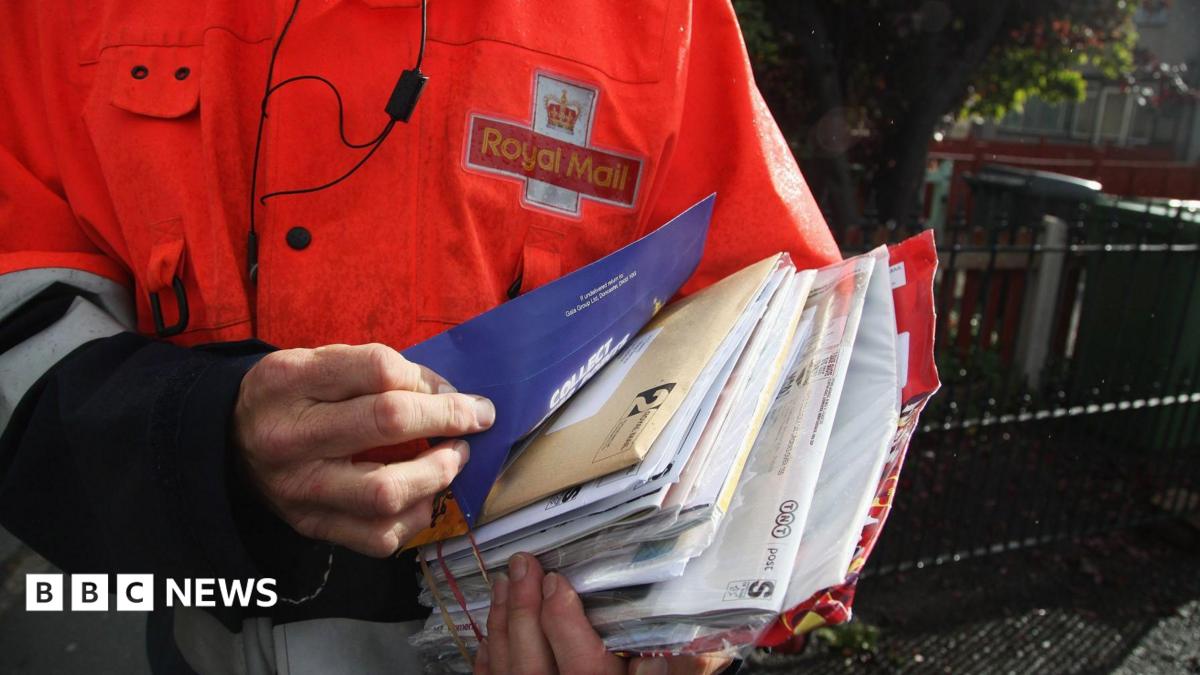
Royal Mail has once again missed its delivery targets for first and second class post, but said it is making progress towards the goals as its turnaround plan continues.
The postal service delivered 85% of first class deliveries the next day between March and June, up from 76% in the same three months of 2025, but below regulator Ofcom’s 90% target.
Second class mail was delivered within three days 91% of the time, another improvement from the previous year, but short of Ofcom’s 95% target.
Royal Mail said the results are “encouraging and show that the work we are doing to improve the service is having an impact”.
Royal Mail, which is owned by International Distribution Services (IDS), has struggled with rising competition in the delivery market, fewer people sending letters and fines from the regulator for missing targets in recent years.
But it said that, compared with the same period last year, the portion of first class mail delivered next-day had risen significantly while the amount of second class mail delivered within three days had improved slightly.
Chief operating officer Jamie Stephenson said: “These results are encouraging and show that the work we are doing to improve the service is having an impact.
“First Class performance is well ahead of where we expected to be at this stage of our Improvement Plan, while Second Class is tracking in line with the plan.”
Stephenson added that there is “more to do”, pointing to a £500m investment plan to improve the firm over the next five years. The plan includes a commitment to meet Ofcom’s delivery targets by May 2027.
The postal service has faced years of criticism from politicians and the public over the slowness of its letter delivery.
It is currently under investigation by Ofcom for the second year running for failure to meet its delivery targets.
The regulator fined it a record £21m in October last year for missing targets in 2024-25.
In March, postal workers from across the UK told the BBC they were being asked to move or hide mail from senior bosses so it looks like delivery targets were being met.
The firm apologised to Gloucester residents where post was sometimes delayed for months, admitting its service there was “totally unacceptable”.
Most recently, people in Worcestershire hit out over postal delays, complaining of weeks-long delays for important post to arrive, with some missing hospital appointments.
Royal Mail recently said it aims to meet regulator Ofcom’s targets by May 2027 as part of a turnaround plan costing around £500m in the next five years.
“We know there is more to do,” Stephenson wrote in a statement. “We are investing £500 million over five years and making significant changes across our network… None of this progress would be possible without the continued hard work of our frontline colleagues, including through the recent extreme heat.”
IDS was bought in 2025 by Czech billionaire Daniel Kretinsky.
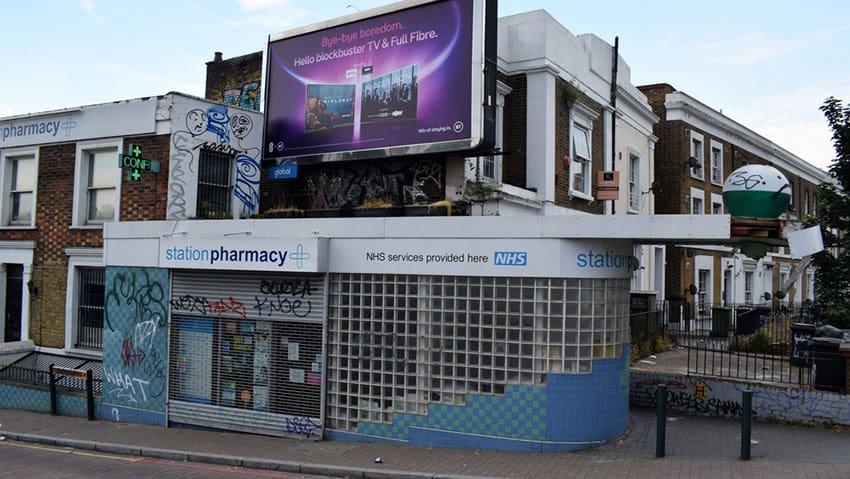
Hundreds of pharmacies are facing closure because of soaring business rates, with owners warning that high taxes are forcing them to cut services for vulnerable patients.
Almost half of the 420 pharmacy owners surveyed by the National Pharmacy Association (NPA) said they were considering shutting down their practices because of higher business rates bills. The trade body found 55 per cent were considering moving to cheaper premises, raising fears that some rural and coastal communities could be left without a local branch.
Pharmacies, many of which are family-run businesses, are unable to offset the higher tax burden by raising prices, which are fixed by the NHS. Roughly 90 per cent of pharmacies’ income comes from the health service, the NPA said, leaving owners with no commercial lever to pull when fixed costs rise.
Prime Minister Andy Burnham has made lowering business rates for high-street businesses a key pillar of his summer policy blitz, announcing a 20 per cent reduction for pubs, clubs and live music venues from April next year. Pharmacies have been excluded from the relief.
The tax squeeze has intensified since business rates were increased for many properties after Rachel Reeves’s second Budget. Bills have also been affected by the latest revaluation of commercial property, which fed new rateable values into bills from April. GPs and NHS dentists, meanwhile, have their business rates reimbursed.
Onkar Singh, who runs 20 pharmacies across the Black Country, Staffordshire, Herefordshire and Worcestershire, has seen his business rates bill rise by roughly 20 to 30 per cent in the past year. His total bill is now about £250,000.
He has closed two of his pharmacies in the past two years and reduced opening hours across virtually his entire estate. He has also been forced to cut back services, such as offering free medicine deliveries to elderly patients.
Singh said: “The last three years have been the worst period in my 30 years of pharmacy.
“People are having to close a lifetime’s worth of work and effort, and having to close or reduce hours or dip into their pension pot just to keep going for their communities.”
The NPA survey found that 92 per cent of pharmacies said their rates bill was preventing them from investing in their workforce or renovations. Some pharmacists have warned that their bills have tripled, echoing the anger among small firms over the revaluation that prompted thousands to write to the then chancellor.
Singh said the impact was particularly painful because pharmacies were often being asked to fill gaps elsewhere in the NHS.
He said: “It is frustrating that pubs and restaurants get the headlines, but pharmacies are actually delivering care.
“The NHS accepted that pharmacy did an exceptional job, but in terms of funding and support with business rates we seem to be forgotten.”
The NPA said 44 pharmacies had already closed this year, leaving the national network at its smallest since 2006. Nine in 10 council areas have lost at least one pharmacy since 2022.
Olivier Picard, the chairman of the trade group, said pharmacies should receive the same rates treatment as GPs and dentists, arguing that they provide an essential health service.
A government spokesperson said: “Pharmacies already benefit from our wider business rates reforms, including permanently lower multipliers and our £4.3bn package to support ratepayers, and the government has increased funding for the sector by £340m this year as part of our shift to bring care closer to home.”
For owners of other high-street businesses, the pharmacy case is a reminder that rates relief is being targeted sector by sector, as with the £150m package for town centres that business leaders dismissed as a sticking plaster, rather than applied across the board. Firms whose prices are set by a third party, whether that is the NHS, a franchisor or a long-term contract, have no way of passing the increase on, and the NPA’s finding that 92 per cent of pharmacies have shelved investment shows where the money goes instead.
Jamie Young
Jamie Young is Senior Reporter at Business Matters, covering SME finance, employment law and Westminster policy since 2016. He has reported on every Budget and Autumn Statement since 2018, helped make sense of the ‘covid era’ and the bounce-back loan scheme from launch through the fraud investigations, and broke the magazine’s coverage of the 2024 late-payment reforms. He joined Business Matters straight from completing his BA in Administration from Exeter University and is NCTJ-qualified. Reach him at jyoung@cbmeg.co.uk

Binance says employees questioned in UAE cleared and released

EXCLUSIVE: Unite boss Graham’s leaked message asking deletion of evidence against husband

Meghan Markle Could Return to Acting Upon U.K. Move

Weekend Open Thread – Corporette.com

Weekend Open Thread: Brooks Brothers

London Mayor Sadiq Khan handed a peerage by Keir Starmer alongside 15 other Labour figures… just days before the PM leaves No10

Crypto Live Trading| 21 AUG #vinbullindia #livetrading #vinbulllive #live #trading #cryptotrading

Neeye Punchiri | | Lokah | Hanan Sha | Reyan | Jakes Bejoy | Kalyani | Naslen | Dominic | Nimish

Tonight is PART 2 of my highly anticipated FREE Financial Empowerment
-

 Fashion7 days ago
Weekend Open Thread: Ann Taylor
-

 Sports7 days ago
Birmingham 2026: Day 6 Timetable for Irish Athletes
-
 NewsBeat6 days ago
Myanmar says over 300,000 Rohingya refugees verified for repatriation as exodus enters ninth year
-

 Business3 days ago
SMA Solar Technology AG (SMTGY) Q2 2026 Earnings Call Transcript
-

 Politics6 days ago
SEQ Code: The Three Letter Boarding Pass Code That Could Give You The Worst Seat
-

 Crypto World7 days ago
Pi Network Protocol 27 endgame: last upgrade before what?
-

 Tech3 days ago
Qwen3.8-27B runs frontier-class coding agents and reasoning locally, no cloud API required
-

 Crypto World4 days ago
OCC Greenlights Trump Family Crypto Firm for Trust Charter
-
 Tech6 days ago
Every fusion startup that has raised over $100M
-
 Entertainment6 days ago
Marvel Studios Reveals New X-Men Cast Including Adam Driver and Sadie Sink
-
 Business6 days ago
Monarch Mutual Fund set to enter MF space with maiden overnight fund; files draft with Sebi
-

 Fashion7 days ago
Weekly News Update, 8.14.26 – Corporette.com
-

 Business6 days ago
Facebook Down Now? Users Report Login And Loading Problems As Outage Trackers Monitor Ongoing Issues
-

 Business6 days ago
Cristiano Ronaldo’s Secret Wedding Deepens As Presenter Claims Family Learned ’30 Seconds’ Before
-

 News Videos1 day ago
Don’t Leave Your Financial Future To Chance | August 19, 2026
-
 Crypto World5 days ago
Data of 54K Wallet Users Leaked, Clarity Odds Just 10%: Hodler’s Digest, Aug. 16
-

 Fashion7 days ago
Cart Confidential Vol. 44 – Julia Berolzheimer
-

 Crypto World4 days ago
NAVI Prime launches institutional lending framework on Sui
-

 Politics5 days ago
Britain is facing a housing disaster
-

 Business6 days ago
New Avengers Doomsday Trailer Drops at D23 Showing Robert Downey Jr as Doctor Doom
You must be logged in to post a comment Login