
Business
Microsoft CEO says superintelligence must ‘help humanity’


CFRA Research Senior Vice President Angelo Zino joins ‘Making Money’ to discuss Microsoft stock as CFRA raises its price target to 550.
Microsoft CEO Satya Nadella said Sunday that the pursuit of superintelligence — AI technology that could surpass humans across virtually every cognitive task — should focus on “helping humanity” and remain under “human control.”
In a post on X, Nadella called for broader AI adoption through what he described as a “frontier ecosystem” where both closed- and open-source AI models can “thrive” across countries, communities and businesses.
“Any pursuit of superintelligence has to be grounded in the core principle that if the AI we build is not helping humanity and under human control, it’s not worth pursuing,” Nadella wrote. “We also need to accelerate and spread the benefits of AI, such that they are diffused broadly across countries, communities, and companies. This requires a frontier ecosystem in which both closed and open-source models can thrive.”
BILL GATES OUTLINES THE STAKES OF THE AI ERA: ‘GREATEST EQUALIZER… OR WORST SOURCE OF INJUSTICE’
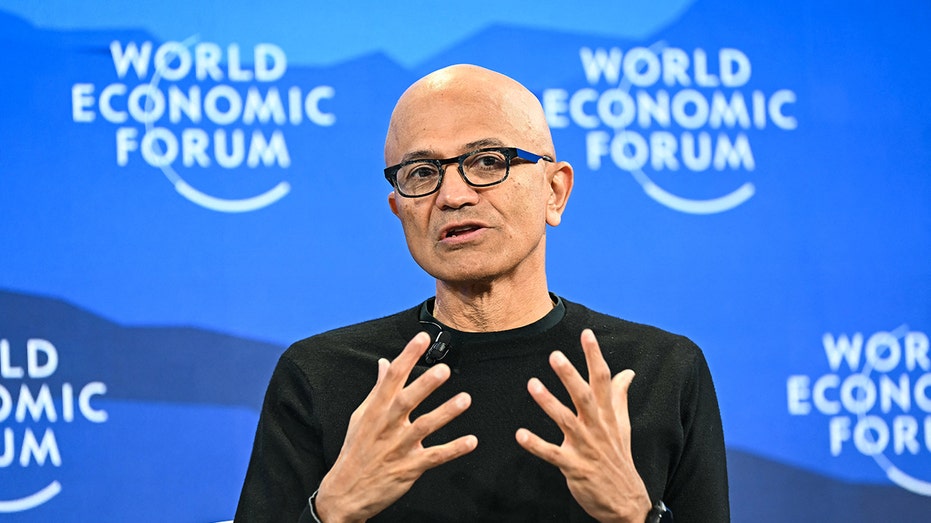
Microsoft CEO Satya Nadella said Sunday that the pursuit of superintelligence must remain focused on “helping humanity” while staying under “human control.” (Fabrice COFFRINI / AFP via Getty Images)
He added that organizations should be able to build AI systems using their own data rather than becoming dependent on a single model provider.
“For firms, it’s imperative that they retain full control over their unique and tacit knowledge,” Nadella wrote. “Every organization should be able to build its own continuous learning loop/hill climbing machine, without becoming dependent on any one model provider, and have the ability to embed its own knowledge into models and weights they control.”
Nadella called for a deliberate approach to AI development, saying Microsoft supports concepts such as “embedded evaluators.”
“So, in this context, we welcome the research, focus, and deliberate pacing needed to get alignment right as the design goal,” he said. “We also welcome ideas like ‘embedded evaluators’ and the broader efforts to develop the mechanisms to make this more than just talk.”
NVIDIA, MICROSOFT URGE US TO AVOID BROAD RESTRICTIONS ON OPEN AI MODELS

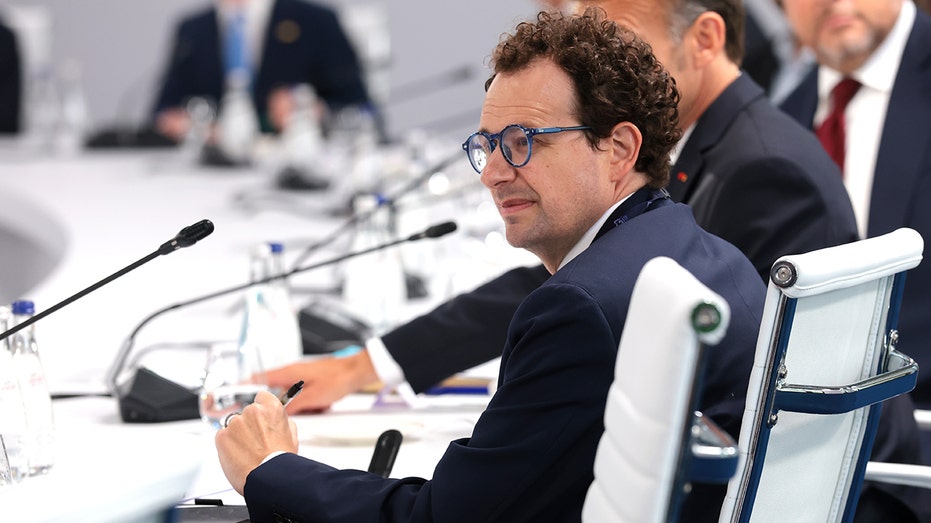
Nadella also said advanced AI development should not be controlled by a handful of companies. (Craig T Fruchtman/Getty Images)
Nadella also said advanced AI development should not be controlled by a handful of companies.
“The key is that this cannot be controlled by a handful of entities, but must have broad representation across the ecosystem, countries, and fields, including academia,” he said.
“This is the approach we are taking: broad access and choice at every layer of the AI stack; enterprise control of learning loops and models; and the ‘Code of Conduct’ that underlies our own first party MAI models that we’ll publish tomorrow for public consultation.”
His comments come as debate intensifies over the rapid pace of AI development and the risks posed by increasingly capable systems.
MICROSOFT CEO HAS A WARNING ABOUT THE AI RACE
Anthropic CEO Dario Amodei said that there are “real dangers” associated with AI development. (Anna Moneymaker/Getty Images)
“I won’t lie to you – there are real dangers,” Anthropic CEO Dario Amodei said in an interview with CBS News. “And I think for too long the industry lied to people about the fact that this technology had risks.”
GET FOX BUSINESS ON THE GO BY CLICKING HERE
Last week, former Anthropic researcher Jacob Coxon warned on social media that Anthropic and OpenAI are “gambling with our lives” by pursuing self-improving superintelligence, adding that AI has a greater than 10% chance of “kill[ing] all humans” within “the next decade.”
FOX Business’ Robert McGreevy contributed to this report.


FUNDAMENTALS
Spot gold was down 0.5% at $4,327.80 an ounce by 0119 GMT after posting a third consecutive weekly decline on Friday. U.S. gold futures for December delivery fell nearly 1% to $4,368.60.
Traders are pricing in about an 86% chance of a U.S. rate hike at the central bank’s policy meeting on September 15-16, up from about 67% prior to inflation data last week, according to the CME FedWatch Tool.
U.S. consumer prices accelerated in August, while a key measure of underlying inflation posted its largest increase in four months, data on Friday showed, reinforcing expectations that the Fed will raise interest rates this week.
Although gold is typically seen as an inflation hedge, higher interest rates tend to diminish non-yielding bullion’s appeal to investors.

Oil prices jumped more than 2% on Monday after fresh Houthi strikes on Saudi Arabia and Iranian attacks on ships in the Gulf compounded supply concerns following the closure of a key Saudi oil pipeline.
Middle East diplomacy appeared to falter after a meeting between Iran and other Gulf states was postponed.Goldman Sachs saidon Friday it still sees upside risk to its forecast for gold to reach $4,900 an ounce by the end of 2026, although it expects price volatility to remain elevated.
Elsewhere, two European Central Bank policymakers left the door open to further rate hikes if conflict-driven increases in energy prices feed through to broader inflation in the euro zone.
Among other metals, spot silver slipped 1.1% to $63.75 per ounce on Monday, platinum dropped 0.8% to $1,782.50, and palladium slid 0.7% to $1,290.36.
Business
Prince William, Kate Face Eton’s Old-World Traditions as Prince George Settles Into Royal Alma Mater
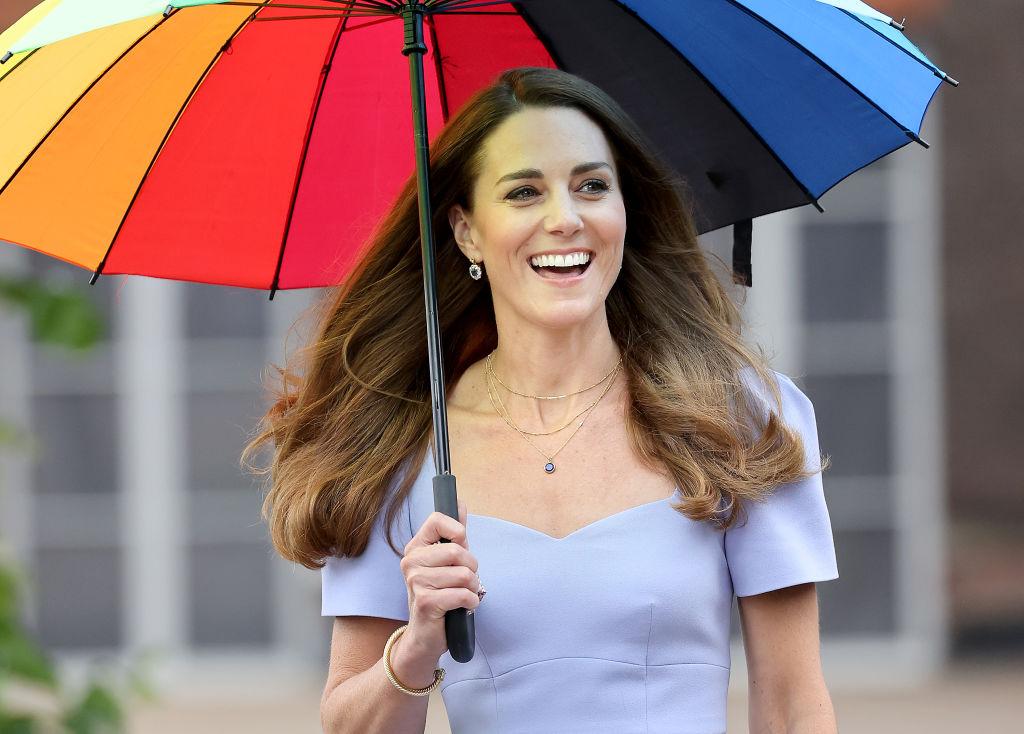
LONDON — Prince George has begun the next chapter of his education at Eton College, following his father into one of Britain’s most storied schools, even as royal watchers note that adjusting to the institution’s centuries-old customs and internal vocabulary can be its own learning curve for new pupils and their families.
The 13-year-old, who is second in line to the British throne, arrived at Eton on September 8 for his first day, accompanied by his parents, Prince William and Catherine, the Princess of Wales. The family was greeted by the school’s head master, Simon Henderson, in scenes that echoed William’s own arrival at Eton three decades earlier. George, who wore a jacket, shirt and tie for his arrival, later changed into the school’s traditional uniform of a black tailcoat, waistcoat and pinstriped trousers with a stiff white collar.
The move to Eton marks a significant milestone for the future king, who previously attended Lambrook School, a private preparatory school in Berkshire also attended by his younger siblings, Princess Charlotte, 11, and eight-year-old Prince Louis. Lambrook, which only educates pupils through Year 8, has long served as a regular feeder school into Eton, sending a steady stream of boys on to the College over the years.
Melanie Sanderson, managing editor of The Good Schools Guide, said the transition to Eton brings with it a distinctive institutional culture that can take some adjustment, even for a family with deep ties to the school. “Eton has its own language—they call year groups different things,” Sanderson told PEOPLE. “It’s from a bygone era, but of course, when your dad has been through that system, it’s probably been part of his vernacular for most of his life. As parents, you do talk about your school days, and your kids can relate to that. I’m confident that he will be very well prepared.”
Sanderson noted that George’s previous school should have eased the path considerably. “Lambrook is really used to sending boys off to Eton,” she said. “It’s a regular feeder for Eton College and lots of boys would have trodden that path before, so it’s nothing new. It’s a prep school, so its absolute purpose is to prepare its boys and girls for their next school.”
George’s enrollment continues a family tradition stretching back generations, though not an unbroken one. William attended Eton from 1995 to 2000, becoming the first heir in the direct line to the throne to be educated there. His father, King Charles, was instead sent to Gordonstoun, the rugged Scottish boarding school also attended by Charles’s own father, Prince Philip, who reportedly found his time there difficult. William, by contrast, has spoken warmly of his years at Eton, recalling in the past how he would walk over to nearby Windsor Castle on weekends for tea with his grandmother, the late Queen Elizabeth II. George’s uncle, Prince Harry, also attended Eton before William and Kate’s own three children were born.
Founded in 1440 by King Henry VI, Eton College sits just outside Windsor, within easy reach of Adelaide Cottage, where William, Kate and their three children currently live. The proximity to the family home has been cited as one of the practical factors behind the decision to send George there rather than to Marlborough College, the Wiltshire school where Kate herself was educated and which had been seen as a rival contender for years before the announcement. Unlike Marlborough, which is co-educational, Eton remains an all-boys school, meaning Charlotte will not be able to join her brother there when her own time comes to move on from Lambrook.
Fees at Eton run to roughly $88,000 a year, placing it among the most expensive schools in the country. The College’s roll call of alumni includes 20 former British prime ministers, among them Boris Johnson and David Cameron, along with actors Tom Hiddleston, Hugh Laurie, Eddie Redmayne and Damian Lewis, writers George Orwell and Ian Fleming, and adventurer Bear Grylls. Admission is known to be rigorous, with prospective pupils generally required to register years in advance and to sit entrance examinations and interviews before being offered a place.
Reports in the lead-up to George’s enrollment had suggested Eton officials were taking additional precautions ahead of his arrival, with specific accommodations at the school reportedly reviewed and upgraded to meet the security requirements associated with housing a future monarch on campus. Neither Kensington Palace nor Eton College has detailed those arrangements publicly, in keeping with the family’s general approach of allowing limited media access around the children’s schooling while preserving their day-to-day privacy once term is underway.
For William and Kate, George’s arrival at Eton also represents a milestone in balancing the demands of royal life with a desire to give their children as conventional an upbringing as possible within the constraints of their position. The couple has previously spoken about wanting their children to experience ordinary school life, even as media and public interest in George, as second in line to the throne, remains intense. School officials and royal commentators alike have suggested that whatever adjustment period lies ahead for George at Eton, from the institution’s particular jargon to its long list of traditions, is one his father is uniquely positioned to help him navigate, given his own formative years spent within the same walls three decades before.
As George settles into his new routine, attention will likely turn to how the family manages the balance between his education and his public role in the years ahead, with Eton’s five-year program setting the stage for the next phase of his life before any expected move to university.
Business
Oil Price Today (September 14): Crude oil jumps 3% to near $108/barrel as Middle East tensions escalate. What are analysts warning?

Saudi Arabia and Iranian attacks on ships in the Gulf intensified supply concerns following the closure of a key Saudi oil pipeline. Saudi Arabian state media on Sunday released video footage of damage to homes and a mosque from what it claimed to be a Houthi attack on the country’s southern Jazan province. The Houthis said they had also struck a Saudi military base in a neighbouring province.
An Iranian cargo vessel was struck on Sunday in the Strait of Hormuz, Iranian state media said. Iran then postponed a plan to brief its neighbouring countries on its efforts to manage shipping in the strait. There was no immediate response from the US military, which has struck Iranian-flagged vessels during its blockade of Iranian ports and faces a new threat from Iranian ballistic missiles launched at its warships.
Also read |Crude pool drying up as Middle East conflict drags on, refiners wary
Iran’s government meanwhile continues to remain defiant. “Our people can’t be bullied into submission. Iran won’t surrender,” President Masoud Pezeshkian said in a social media post. US President Donald Trump disagreed, saying that Iran “wants to make a deal so bad” that “they are calling constantly.”
Crude oil price on September 14
Brent crude futures gained around 3% to trade near $108 per barrel. WTI Crude futures meanwhile also rose around 3% to trade near $103 per barrel. The sharp rise in oil prices today came on expected lines. Along with the escalating tensions, concerns about risks to supply from Saudi Arabia, the world’s largest oil exporter, whose East-West oil pipeline was shut on Friday by a drone strike that originated in Iraq, further spooked investors.
The loss of the pipeline, which helped Saudi Arabia re-route its exports avoiding the Strait of Hormuz, threatens up to 4% of global oil supply. Oil surged 8% last week due to the disruptions, rising above $100 for the first time since July.Also read | Saudi pipeline outage threatens loss of 4% of global oil supply
What lies ahead for oil prices?
Looking ahead, unless talks in Oman produce something operational, or the East-West pipeline is brought back online quickly, the risk is that crude oil continues to extend its gains toward the near $120 per barrel high of early March, Reuters quoted IG market analyst Tony Sycamore as saying.
Goldman Sachs has outlined a scenario in which oil prices could rise to as much as $120 a barrel if attacks on Middle Eastern vessels intensify. If exports return to normal, however, the bank expects oil prices to move back towards $80 a barrel. Struyven told Bloomberg that risks to shipping had become an important driver for oil prices. Daan Struyven, co-head of global commodities research at Goldman Sachs, said the attacks in recent days suggested that shipping disruptions could spread and become more severe.
JPMorgan estimates that every additional month of disruption could add around $7 to $8 a barrel to Brent prices. If the disruption lasts three months, the bank expects average monthly Brent prices to reach around $114 a barrel.
Citi has raised its average Brent crude price forecast for the third quarter to $86 a barrel from $80, citing a longer-than-expected timeline for the reopening of the Strait of Hormuz.
(With inputs from agencies)
(Disclaimer: Recommendations, suggestions, views and opinions given by the experts are their own. These do not represent the views of The Economic Times)

The Asia-Pacific region illustrates a shift toward “minilateral” cooperation amid global fragmentation, as highlighted in the World Economic Forum and McKinsey’s 2026 Global Cooperation Barometer. Despite economic headwinds, the region maintains resilience through pragmatic partnerships in trade, technology, and energy security via frameworks like APEC, RCEP, ASEAN’s DEFA, and APAEC.
Intraregional trade accounted for over half of the region’s merchandise exports and imports last year, with APEC’s 21 economies representing roughly half of world trade. This regional integration demonstrates how smaller, interest-based groupings can complement multilateralism, offering agile solutions while connecting to broader global networks.
In a fragmented world, the Asia-Pacific region exemplifies how “minilateral” cooperation fosters resilience. Despite global economic headwinds, its pragmatic, interest-based partnerships within frameworks like APEC and RCEP maintain vital exchanges. This regional integration, seen in trade, technology (ASEAN’s DEFA), and energy security (APAEC), demonstrates how smaller groups can navigate geopolitical complexities. While not replacing multilateralism, this approach prioritizes agile, adaptable solutions that can connect to wider global networks, building collective resilience against shocks and fostering innovation for practical benefits.
- The Asia-Pacific region demonstrates how ‘minilateral’ cooperation can build resilience in a fragmenting world.
- Such regional collaboration can provide more agile, pragmatic frameworks for cross-border exchanges that can also plug into wider global networks.
- The recent Annual Meeting of the New Champions highlighted three main thrusts of Asia-Pacific cooperation.
“Fragmentation” has become a geopolitical watchword in recent years, with global institutions such as the International Monetary Fund warning of the increasing danger and costs (over $7 trillion) of a more segmented and fractious global landscape.
While the forces of fragmentation have intensified in recent years, especially regarding technology, finance and trade, cooperation has not ended. This is one of the central issues explored in the World Economic Forum and McKinsey’s 2026 Global Cooperation Barometer. The barometer assesses cooperation across five key pillars: trade and capital; innovation and technology; climate and natural capital; health and wellness; peace and security. Its findings indicate how cooperation is evolving from multilateral toward minilateral arrangements, highlighting how “cooperation among smaller groups of countries has persisted as economies continue to find value in working with each other through pragmatic, agile, interest-based partnerships”.
The Asia-Pacific region is one of the clearest examples of this shift, where regional cooperation is increasingly taking a practical form. Despite the headwinds to global economies, the region is expected to grow by 4.4% this year. This resilience is in part driven by strong intra- and inter-regional cooperation. Last year, intraregional trade accounted for 53% of the region’s merchandise exports and 56% of its imports, with Asia-Pacific Economic Cooperation’s 21 member economies accounting for around half of world trade. Integration in Asia-Pacific makes the region a crucial test case of how cooperation is being reconfigured towards more regional and flexible forms of collaboration.
Business
ASX 200 Edges Higher to 8,759 After Worst Week in Six Months as Oil Slide and Fed Rate Bets Steady Nerves
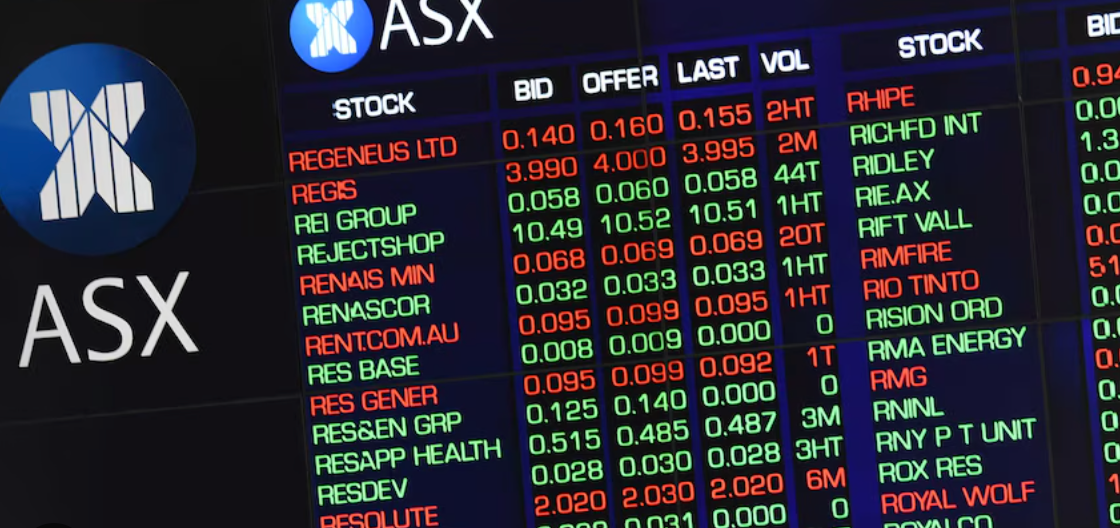
SYDNEY — Australia’s benchmark share index inched higher on Monday, clawing back a fraction of last week’s steep losses as falling oil prices and a rebound on Wall Street gave investors reason to step back into the market, even as trading remained thin and cautious.
The S&P/ASX 200 was up 18.2 points, or 0.21%, to 8,759.4 by late morning Sydney time, building on a modest gain at the open after futures had pointed to a 0.2% higher start to the session. The move offered only partial relief after a bruising week in which the index shed roughly 3%, its worst weekly performance in six months, as surging crude prices and rising bond yields hammered sentiment.
Friday’s session had set the tone for the pullback, with the ASX 200 falling 0.9% to close at 8,741.2 points, its lowest level in seven weeks and a fourth consecutive daily decline. The retreat was driven largely by concern that a spike in oil prices would complicate Australia’s inflation outlook just as the Reserve Bank weighs further interest rate increases.
Those worries eased somewhat heading into Monday’s session. Brent crude fell 2.8% to $104.61 a barrel and West Texas Intermediate dropped 2.4% to $100.05 a barrel in Friday night trading, according to data cited by market commentators, giving energy-sensitive sectors of the market some breathing room even as the pullback left crude prices still elevated by recent standards.
Wall Street’s own rebound on Friday also helped set a firmer tone locally. The Dow Jones Industrial Average rose roughly 1%, the S&P 500 gained about 0.85% and the Nasdaq Composite added close to 0.95%, snapping a run of losses in a holiday-shortened week. The U.S. gains came despite a hotter-than-expected inflation report, which showed consumer prices accelerating last month as gasoline costs rebounded after two straight monthly declines. That data reinforced bets that the Federal Reserve will raise interest rates at its policy meeting this week, with futures markets pricing in close to a 90% probability of a hike, according to the CME FedWatch tool.
The rate picture at home remains just as pressing for Australian investors. The country’s 10-year bond yield has climbed above 5.3%, its highest level since May 2011, as traders position for the Reserve Bank of Australia to tighten policy further. Deputy Governor Andrew Hauser has said policymakers will weigh additional tightening at this month’s meeting, while Assistant Governor and chief economist Sarah Hunter has cautioned that officials have limited tolerance for renewed price pressures. All four of the country’s major banks are now forecasting another RBA rate increase before year-end, with National Australia Bank tipping a move as soon as this month.
Commonwealth Bank strategists said the central bank faces a delicate communications task in the lead-up to that decision. “Given current market pricing of a hike in September is at (around) 80% the Governor will have to talk a fine line between endorsing the high chance of a rate hike,” CBA said, underscoring how closely markets are parsing every signal from Reserve Bank officials in the days ahead.
Beneath the benchmark’s modest gain, market breadth told a more cautious story. The ASX Small Ordinaries index slipped 0.15% and the Emerging Companies index fell 0.14%, indicating that Monday’s advance was concentrated in a narrower band of larger stocks rather than reflecting broad-based buying.
Materials stocks bore the brunt of the weakness. The S&P/ASX 200 Materials Index dropped 0.55% to its lowest level since August 5, with uranium, lithium and rare earth names opening broadly lower across the board. The sector’s slide extended a period of volatility for critical minerals stocks that has seen sharp single-day swings become increasingly common even when individual companies have avoided negative company-specific news.
Not every stock moved in step with the weaker materials complex. Catalyst Metals topped the leaderboard after reporting a resource upgrade at its Trident deposit, while Cleanaway Waste Management ticked higher as its takeover approach from EQT remained in play. A handful of recently beaten-down names, including Lovisa, Xero and REA Group, also caught a bid as bargain hunters returned to some of the market’s more heavily sold sectors from last week.
Elsewhere in resources, Franco-Nevada Australia said it had committed a further $200 million to Minerals 260 to help fund the Bullabulling gold project, lifting its total investment in the venture to $420 million. The arrangement includes $170 million to increase Franco-Nevada’s royalty over the project area by 1.45 percentage points, structured as non-dilutive funding, alongside a further $30 million to be subscribed in a future equity raising.
Investors are bracing for a relatively quiet run of local economic data this week, with attention instead centered on Wednesday’s Federal Reserve decision and continuing commentary from Reserve Bank officials. Sarah Hunter is scheduled to give another public address Monday, though analysts have cautioned that little new information is likely to emerge given the absence of fresh economic data since her last public comments.
For now, traders appear content to nurse the market back from last week’s losses in cautious, incremental steps rather than chase a full recovery, with global rate decisions and the trajectory of oil prices likely to remain the dominant forces shaping sentiment in the sessions ahead.

Listed contractor NRW Holdings has secured multiple key contracts with Mark Zeptner-led Ramelius Resources and Main Roads Western Australia.

TUCSON, Ariz. — A social media user describing himself as an independent investigator has claimed that Tommaso Cioni, the son-in-law of missing 84-year-old Nancy Guthrie, has left Arizona, a claim that has not been confirmed by law enforcement but has nonetheless fueled a fresh wave of online speculation into the seven-month-old case.
The claim was posted on the social media platform X by an account identifying itself as JLR Investigates, run by a self-described investigator who said his own sources told him Cioni had “left town” and was no longer in Arizona. Neither Tucson-area law enforcement nor the Guthrie family has publicly confirmed or addressed the claim, and no official update on the investigation has been issued in connection with it.
Nancy Guthrie, the mother of NBC “Today” show co-anchor Savannah Guthrie, was reported missing after disappearing from her home in the Catalina Foothills area of Tucson on February 1. Cioni, who is married to Nancy’s daughter Annie Guthrie, has drawn public attention because he and Annie live near Nancy’s home and are reported to be among the last people to see her before she vanished. Investigators have said Cioni dropped her off at her house before she disappeared.
Law enforcement officials have repeatedly stated that no members of the Guthrie family are considered suspects in the case. Authorities have not announced any breakthrough or identified a suspect in the seven months since Nancy Guthrie was reported missing, and they have continued to appeal to the public for information.
Despite the absence of any official confirmation, the claim about Cioni’s whereabouts spread quickly after the same social media account turned its attention to Cioni’s past involvement in a music group called Early Black. The account shared excerpts of songs from the project and questioned the tone of some lyrics, which it described as “dark.” One clip shared by the account included the lyrics, “Tell me why, you want to die.” The account went on to reiterate its central claim, writing, “Tommaso is the last person with Nancy Guthrie before she vanished.”
A livestream from the account, titled “TOMMASO’S HIDING! FLED SCENE!!,” drew a large audience and a flood of comments and theories from viewers. One user commented on the broadcast, “This band makes some weird music! IMO.” Another user posted an elaborate and unverified theory about the day of the disappearance, writing, “I speculate that maybe Nancy was missing before the 31st. Tomasso may have dropped some one off at Nancy’s on the 31st. This person dressed up like Nancy, called an Uber. Walked with walker got in the uber and went to Tomassos house.”
None of the claims made in the posts or the livestream have been substantiated by investigators, and officials have cautioned the public and media against drawing conclusions from unverified online speculation while the case remains open. The proliferation of amateur theorizing reflects a broader pattern that has surrounded the case since Guthrie’s disappearance, with online commentators scrutinizing the family’s movements, statements and personal histories even as formal investigative details have remained limited.
Savannah Guthrie has spoken publicly about her mother’s disappearance and the toll the uncertainty has taken on the family, without commenting directly on the specific claims circulating about her sister’s husband. NBC has also taken steps in recent months tied to the ongoing scrutiny surrounding the case, though the network has not issued detailed public statements addressing individual social media claims.
The case has drawn sustained national attention in large part because of Savannah Guthrie’s public profile as a longtime network news anchor, with outlets and social media users tracking developments closely even in the absence of confirmed updates from investigators. That dynamic has periodically produced cycles of viral claims, including previous unverified assertions about Cioni’s background, that circulate widely online before fading without official corroboration.
Authorities investigating Nancy Guthrie’s disappearance have not released a timeline beyond confirming she was last known to be at her home on February 1, and they have not disclosed whether any physical evidence, surveillance footage or forensic leads have advanced the case since it began. The Pima County area, which includes Tucson, has seen periodic public appeals from investigators seeking tips from residents who may have seen Guthrie or noticed unusual activity around the time of her disappearance.
For now, the claim that Cioni has left Arizona remains unverified and originates from a single social media account rather than from any law enforcement source, court filing or statement from the Guthrie family. Investigators have not indicated any change in Cioni’s status in the case, and he has not been named a person of interest or suspect by authorities at any point since Nancy Guthrie went missing.
As speculation continues to circulate online, family members and law enforcement alike have urged caution about drawing conclusions from social media claims that have not been independently verified. The case remains open, with no arrests made and no suspect named more than seven months after Nancy Guthrie disappeared from her Tucson home.
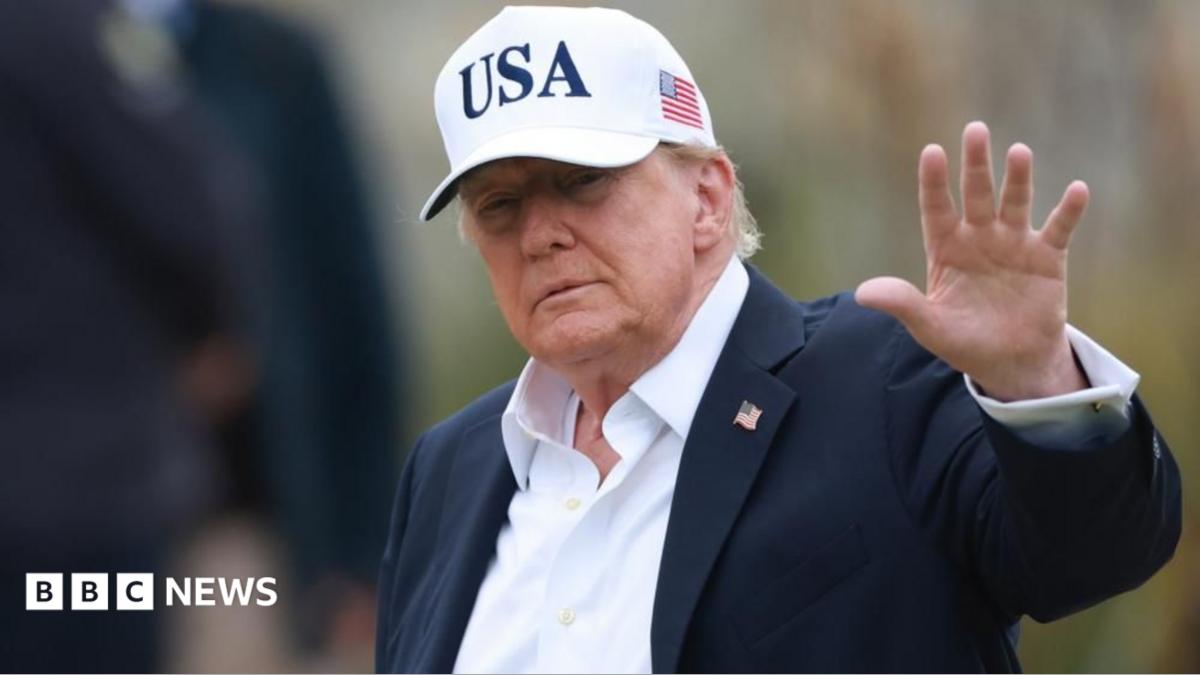
The issues surrounding AI have prompted fierce debate – and present a dilemma for many world leaders.
On one hand, the sector is seen as a huge opportunity to boost economic growth and a way to improve outdated digital systems and ways of working.
But there have also been a number of incidents where AI appears to have gone seriously wrong.
In August, OpenAI said it had slowed down training some of its most advanced AI models to improve security.
The ChatGPT-maker said it was adding new measures after its AI agents bypassed safeguards and hacked the tech start-up Hugging Face.
And the same month it was disclosed two of the world’s most powerful AI tools created fake human profiles to try and trick people in attempted cyber-attacks.
The UK’s AI Security Institute (AISI) said in the most serious case, Anthropic’s Mythos AI tried to gain access to a service by sending private messages, having set up fake accounts mimicking real people – then hid the evidence.
The Trump administration argues that the US must maintain global tech dominance as a matter of national security, though it has admitted a need for vigilance around the risks posed by the emerging technology.
The weekend call by major AI executives sparked discussion in Washington, where lawmakers are facing pressure to address those potential risks around rapid AI developments.
On Sunday, Speaker Mike Johnson, the top House Republican, urged caution about rushing AI regulation during an appearance on CNN’s Jake Tapper on State of the Union, arguing it could “smother American innovation”.
“If Congress just races in and does some sort of emergency session to try to regulate AI, we will lose the race to China, and that is a threat to every single American,” he said. “So, we’ve got to have balance. We’ve got to have steady hands at the wheel.”
Democratic House Minority Leader Hakeem Jeffries argued for “decisive action” by lawmakers.
He told George Stephanopoulos on ABC’s This Week that the US should slow down “the pace of development in order to protect the American people and ensure that AI is proceeding safely”.
Responding to recent comments from the AI industry, tech investor David Sacks, who serves on Trump’s Council of Advisors on Science and Technology, called on the companies to police themselves.
“Stop pretending you need anyone else’s permission,” he posted on X.
“So go ahead and pace the frontier. You are the ones setting it… Demanding your preferred regulatory framework as the price of that will look like blackmail of the public and the political system. So just do it.”
Still, there is at least some cross-party consensus on AI regulation. In July, a group of House Democrats and Republicans introduced the Frontier Act, a bipartisan bill that seeks to establish a national safety and oversight framework for AI.
“Safety researchers are resigning, powerful AI models are breaking out of their labs, and companies are racing ahead anyway,” Rep Lori Trahan, a Massachusetts Democrat who co-authored the bill, wrote on X this week.
“It’s past time for Congress to get off the sidelines and do its job.”

Asia tech stocks tumble as AI trade doubts deepen before Fed, BOJ decisions
Business
Cleanaway Shares Rise 3.70% to $2.665 as EQT’s $9.4 Billion Takeover Bid Clears Due Diligence Hurdle
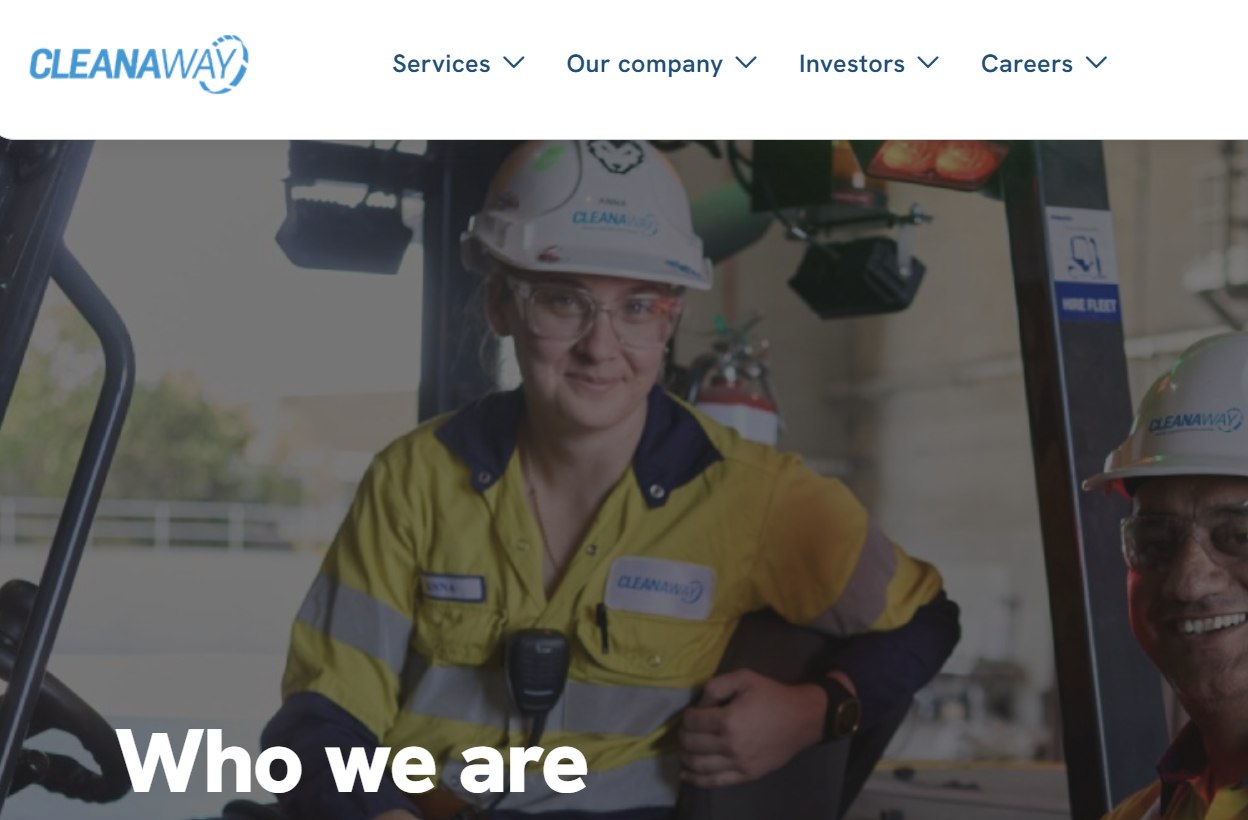
SYDNEY — Shares in Cleanaway Waste Management Ltd. rose 3.70% to $2.665 on Monday, adding 9.5 cents, as investors continued to price in the prospect of a takeover after Swedish private equity firm EQT Infrastructure confirmed over the weekend that its multibillion-dollar offer for the company remains intact following the completion of exclusive due diligence.
Cleanaway told the market on Saturday that the hard exclusivity period under its Transaction Process Deed with EQT had ended as planned, and that EQT had confirmed nothing uncovered during its review would cause it to withdraw or reduce its indicative proposal. The two parties are now working toward negotiating a binding scheme implementation deed, though no such agreement has yet been reached, and the offer consideration remains at least at the previously indicated level.
The update extends a takeover saga that began in mid-August, when EQT Infrastructure lobbed a conditional, non-binding proposal to acquire 100% of Australia’s largest waste and recycling company for $3.13 cash per share, implying an enterprise value of roughly $9.4 billion. That offer represented a 32.1% premium to Cleanaway’s last closing price of $2.37 before the announcement, and a similar premium to the stock’s one-month and three-month volume-weighted average prices. If completed, the deal would rank among the largest take-private transactions in Australian corporate history.
Cleanaway’s board granted EQT up to nine weeks of exclusive due diligence to negotiate the terms of a binding transaction. In its original announcement to the market, the board stated: “After careful consideration and consultation with its advisers, the Cleanaway board has determined that it is in the best interests of Cleanaway shareholders to provide EQT Infrastructure with the opportunity to undertake up to nine weeks exclusive due diligence and to negotiate a scheme implementation deed (SID) to agree a binding transaction.” The board added at the time that, subject to a deed being executed at a price no less than $3.13 per share and on otherwise acceptable terms, directors intend to recommend shareholders vote in favor of any scheme of arrangement.
Even so, Cleanaway has been careful to temper expectations while talks continue. The company reiterated in its original filing that “there is no certainty the proposal will lead to a binding proposal for consideration by Cleanaway shareholders or that any transaction will eventuate,” and said shareholders do not need to take any action while the proposal remains under negotiation. That same cautious framing carried through to Saturday’s update, with the company again noting it will provide further updates as developments occur.
The proposal remains subject to a number of conditions beyond the completed due diligence, including the negotiation and execution of a formal scheme implementation deed, an independent expert concluding the transaction is in shareholders’ best interests, the absence of a superior competing proposal, and regulatory approvals including sign-off from the Foreign Investment Review Board. EQT has engaged Cleanaway with financial advisers Barrenjoey and Macquarie Capital and legal adviser Ashurst Perkins Coie working on the transaction for the target company.
The takeover interest comes as Cleanaway has been posting improved underlying financial performance. The company reported fiscal 2026 underlying EBIT of approximately $470 million, up 14% on the prior year, with the result supported by strong performances in its Solid Waste Services and Contract Resources divisions, along with better-than-expected management of cost impacts tied to the Middle East crisis. Cleanaway has guided to underlying EBIT of between $500 million and $530 million for fiscal 2027.
The offer price under EQT’s proposal is structured to be reduced by the cash amount of any dividends or distributions Cleanaway declares or pays after the date of the proposal, though the deal also contemplates the potential for a fully franked special dividend to deliver additional value to shareholders, subject to their individual tax positions. The indicative price would also be adjusted by a small daily “ticking fee” if implementation of any transaction occurs after March 31, 2027, a mechanism designed to compensate shareholders for extended delays in closing the deal.
Cleanaway has also flagged some unresolved legal matters that could attract scrutiny during the ongoing negotiations. A Victorian Supreme Court ruling found the company owed $6.9 million in underpaid landfill levies for fiscal 2018, with further alleged underpayments of $4.7 million for fiscal 2019 and $7.2 million for fiscal 2022 still to be resolved. While modest relative to the scale of the proposed transaction, the matter has been noted as a factor that may draw attention during the deal process.
The company has also been navigating a leadership transition in its finance function. Chief Financial Officer Paul Binfield is departing the role, with Nigel Simonsz appointed as his successor effective September 1. Binfield is expected to remain with the company through the first half of fiscal 2027 to support the FY26 reporting process and ensure an orderly handover.
Monday’s share price gain came as part of a broader rebound across the Australian market, with Cleanaway named among a handful of stocks catching a bid as the S&P/ASX 200 clawed back a portion of the prior week’s losses. Even with the latest gain, Cleanaway shares remain below EQT’s indicative offer price of $3.13, reflecting ongoing uncertainty in the market about whether a binding deal will ultimately be signed.
Cleanaway’s next scheduled shareholder event is its annual general meeting, set for October 22, at which investors are likely to press the board for further detail on the state of negotiations with EQT. Until a binding scheme implementation deed is reached, the company has said it will continue operating as usual, with shareholders urged to watch for further announcements as the process unfolds in the weeks ahead.

Ukrainian lawyer’s second career as a Conti coder earns him 4 years behind bars

The huge cost Cambridgeshire Police has to pay for uniform over 3 years
Gold prices dip as oil-driven inflation concerns weigh


-
 Tech6 days ago
Memory prices are slowing because buyers ran out of money
-

 Tech15 hours ago
The Latest Weird Thing to Play Doom Is the Mapped-Out Brain of a Fruit Fly
-

 Business4 days ago
Micron Stock Climbs Above $1,031 as AI Memory Crunch and a $50 Billion Outlook Fuel the Rally
-

 Business4 days ago
AMD Stock Climbs After Management Lifts 2027 Data Center Outlook Toward $70 Billion in AI Sales
-
 Crypto World5 days ago
Bitcoin price risks $76K drop as $78K support weakens
-

 Fashion2 days ago
Weekend Open Thread – Corporette.com
-

 Crypto World5 days ago
Robinhood Stock: How To Take Advantage With Reduced Risk
-

 Crypto World3 days ago
XAG/USD: Silver’s Short-Term Rally Meets Its Moment of Truth
-
 Crypto World5 days ago
Ethereum price stalls below $2,500 as ADX drops to 11
-

 Crypto World4 days ago
2 Chip Stocks Broke Out This Week. Neither Was Nvidia
-

 NewsBeat6 days ago
England up in reading, maths and science rankings as Scotland and Wales dip
-

 Crypto World3 days ago
OKX launches 10x OpenAI, Anthropic X-Perps in Europe
-

 Business3 days ago
10 Most-Streamed Songs On Spotify In 2026 So Far, Led By Ella Langley’s Dominant Run On The Charts This Year
-

 Crypto World3 days ago
Diesel Tops $6 a Gallon for the First Time as 28 States Set Records
-

 Tech3 days ago
Battery life is the only iPhone 18 Pro and iPhone Duo upgrade I care about. Apple didn’t disappoint
-
 Crypto World5 days ago
Intel Stock Jumps 9% on Chip Price Hike Report, US Stake Gains $36 Billion
-

 Tech4 days ago
Apple Watch Ultra 4 vs Watch Ultra 3: Should you really spend another $799?
-
 Crypto World4 days ago
Bitcoin price risks $70K if $78K neckline breaks
-

 NewsBeat5 days ago
What went right this week: an ‘historic’ fall in violent crime, plus more
-

 Crypto World4 days ago
Pi Network ships Protocol 27 on a network with 14 million users and zero DeFi
You must be logged in to post a comment Login