Connect with us
DAPA Banner
DAPA Coin
DAPA
COIN PAYMENT ASSET
PRIVACY · BLOCKDAG · HOMOMORPHIC ENCRYPTION · RUST
ElGamal Encrypted MINE DAPA
🚫 GENESIS SOLD OUT
DAPAPAY COMING

Business

Ola Electric Q4 Results: Net loss contracts 42% YoY to Rs 500 crore, revenue tanks 57%

Published

on

Ola Electric Q4 Results: Net loss contracts 42% YoY to Rs 500 crore, revenue tanks 57%
Pure-play electric two-wheeler maker Ola Electric Mobility reported a consolidated net loss of Rs 500 crore for the March quarter, marking a contraction of 42.5% from Rs 870 crore reported in the same period last year. This is attributable to the owners of the company.

The company’s revenue from operations came in at Rs 265 crore, down 57% from Rs 611 crore it posted in the corresponding quarter of the previous financial year.

The company reported an EBITDA loss of Rs 281 crore for the quarter under review versus Rs 630 crore in the year-ago period.

Consolidated gross margin stood at 38.5% in Q4FY26 compared with 34.3% in Q3FY26 and 13.7% in Q4FY25.

Advertisement

The company said this now represents an industry-leading gross margin profile, significantly ahead of most two-wheeler OEMs, including established ICE players.


However, Ola cautioned that gross margins could moderate in Q1 and Q2FY27 due to commodity inflation and pricing measures aimed at accelerating growth amid ongoing geopolitical uncertainties. Despite this, the company said it has sufficient margin buffers to remain aggressive on pricing and customer value propositions while continuing to maintain strong unit economics.
The company said Q4FY26 marked its first quarter of positive operating cash flow despite being a relatively low-volume quarter.Consolidated cash flow from operations (CFO) stood at Rs 91 crore during the quarter, supported by PLI inflows, stronger gross margins, lower operating expenses and tighter working capital discipline. Consolidated free cash flow (FCF) improved to negative Rs 131 crore.

The Auto business generated cash flow from operations of Rs 213 crore and free cash flow of Rs 173 crore in Q4FY26. Meanwhile, the Cell business continued to remain in investment mode as the company ramped up its Gigafactory operations and prepared for the next phase of cell and energy storage product launches.

Ola said FY26 was also a year of cost rationalisation and tighter operating discipline. Consolidated operating expenses, including lease rentals, declined sharply to Rs 428 crore in Q4FY26 from Rs 844 crore in Q4FY25.
According to the company, the reduction was driven by network rationalisation, tighter control over sales and service costs, lower fixed overheads and improved operating governance.

The company added that operating expenses are expected to decline further towards Rs 350 crore per quarter over the next few quarters as the full impact of FY26 cost measures begins to reflect in the business. It said the leaner cost structure positions the company better as volumes recover.

Advertisement

Ola Electric outlook

Based on current trends, the company expects Q1FY27 orders to be in the range of 40,000-45,000 units, nearly double the levels seen in Q4FY26.

As volumes improve, the company expects its auto business to move towards adjusted operating EBITDA and free cash flow positivity during FY27. It said this transition will be supported by strong gross margins, further reduction in operating expenses over the next few quarters, disciplined working capital management, supplier and factory ramp-up, and better utilisation of the existing gross block.

Ola Electric shares ended at Rs 36.94, higher by 1% on the BSE on Wednesday.

Advertisement
Continue Reading
Click to comment

You must be logged in to post a comment Login

Leave a Reply

Business

Are supermarkets profiting from higher food prices?

Published

on

Are supermarkets profiting from higher food prices?

Food prices in the UK have risen, but are supermarkets profiting from higher food prices? Ben Chu reports.

Continue Reading

Business

Wendy’s taps former Potbelly CEO Bob Wright to lead burger chain

Published

on

Wendy's taps former Potbelly CEO Bob Wright to lead burger chain

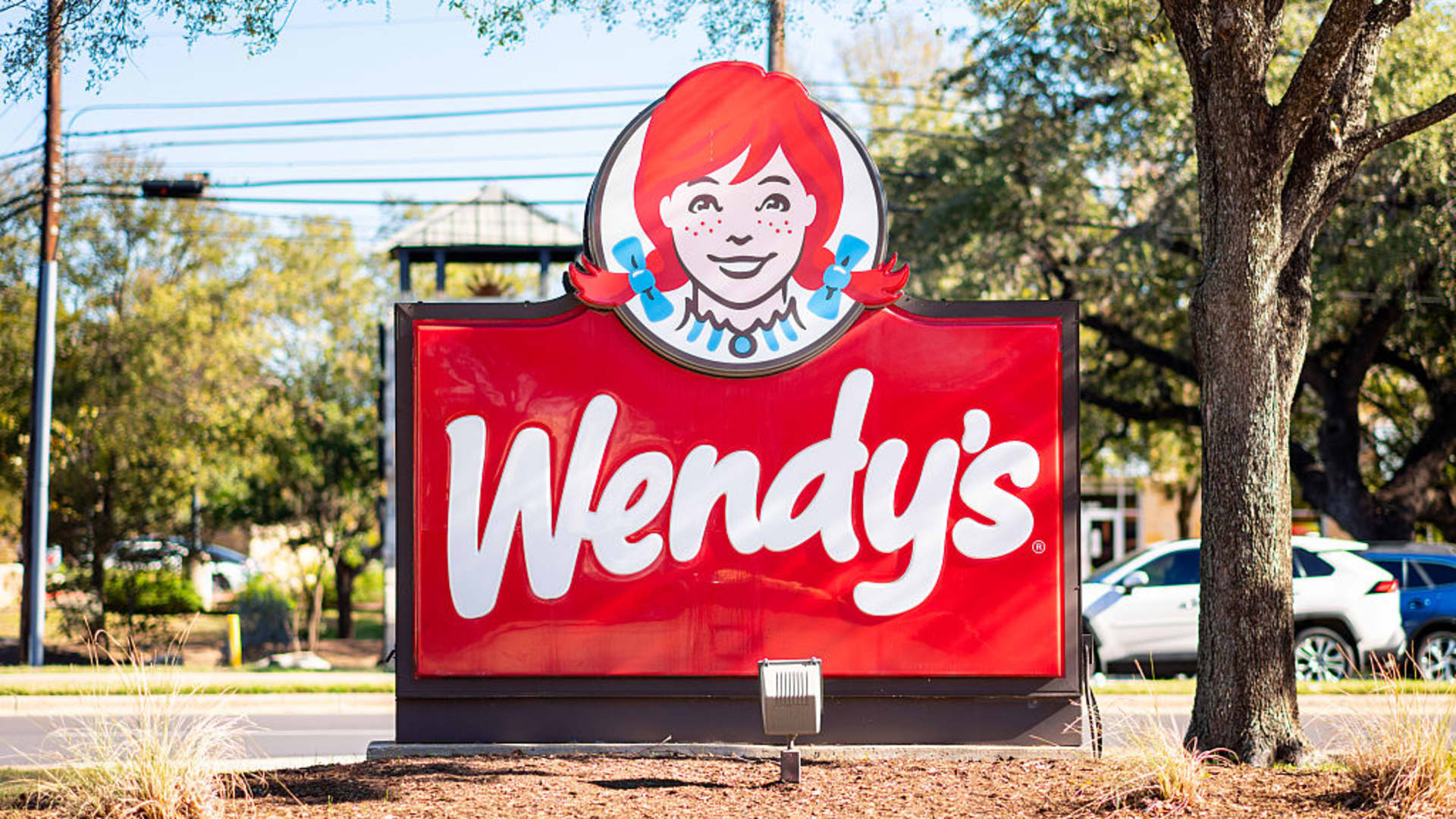
A Wendy’s restaurant sign is seen on Nov. 10, 2025 in Austin, Texas.

Brandon Bell | Getty Images

Wendy’s has tapped Bob Wright as its latest chief executive, the company said Wednesday.

Advertisement

The announcement comes on the heels of the struggling burger chain reporting its fifth straight quarter of same-store sales declines and rumors of a potential take-private deal led by Nelson Peltz’s Trian Fund Management.

Wright previously served as CEO of Potbelly for five years, leading a turnaround of the sandwich chain in the aftermath of pandemic lockdowns. Potbelly went private last year after convenience store owner RaceTrac bought it for $566 million.

Wright officially becomes Wendy’s CEO on Thursday.

The chain has not had a permanent chief executive since Kirk Tanner left Wendy’s in July to become CEO of Hershey. Tanner was only at Wendy’s for about 18 months. Prior to Tanner’s tenure, Wendy’s ousted longtime CEO Todd Penegor, who had led the chain for nearly eight years.

Advertisement

In the time since Tanner’s departure, Wendy’s has struggled to attract consumers who are increasingly value conscious and has lost market share to rivals McDonald’s and Burger King. In February, the company announced plans to close about 300 restaurants in the first half of the year.

Shares of Wendy’s have tumbled nearly 35% over the last year, dragging its market value down to $1.55 billion.

The company’s skid makes it a much cheaper acquisition target for Trian.

The Financial Times reported earlier this month that the firm is seeking funding to take Wendy’s private. It isn’t the first time that Trian has considered it; most recently, the firm said it was exploring a takeover of Wendy’s in 2022, but later decided against it.

Advertisement

Trian owns a 7.85% stake in Wendy’s, and Peltz has a 16.24% interest, according to a recent regulatory filing that also called the stock “undervalued.”

Peltz’s relationship with Wendy’s dates back to an activist campaign he led in 2005. In 2024, Wendy’s named Peltz as chairman emeritus after he spent 17 years on the company’s board. Trian executive Peter May and Peltz’s son, Bradley, still sit on Wendy’s board.

Choose CNBC as your preferred source on Google and never miss a moment from the most trusted name in business news.
Continue Reading

Business

Warner Music Group Corp. (WMG) Presents at J.P. Morgan 54th Annual Global Technology, Media and Communications Conference Transcript

Published

on

OneWater Marine Inc. (ONEW) Q1 2026 Earnings Call Transcript

Warner Music Group Corp. (WMG) J.P. Morgan 54th Annual Global Technology, Media and Communications Conference May 20, 2026 10:40 AM EDT

Company Participants

Armin Zerza – Executive VP & CFO

Advertisement

Conference Call Participants

David Karnovsky – JPMorgan Chase & Co, Research Division

Presentation

Advertisement

David Karnovsky
JPMorgan Chase & Co, Research Division

Okay. We’ll get started. I’m happy to have back at the conference this year, Warner Music Group. On my left is Armin Zerza, CFO and COO. Armin, thanks so much for being here.

Armin Zerza
Executive VP & CFO

Advertisement

Thank you. Thanks for having me.

Question-and-Answer Session

Advertisement

David Karnovsky
JPMorgan Chase & Co, Research Division

Great. So you’ve been at Warner Music for almost exactly a year now, initially as CFO, on top of which you’ve now added COO to your responsibilities. So how has your day-to-day focus changed since you’ve arrived? And how do you expect it to continue to evolve from here as you take on this broader operational mandate?

Armin Zerza
Executive VP & CFO

Advertisement

Yes, David, in fact, I took on most of the responsibilities that I have today very early in my job. So my focus hasn’t really changed. What we are focused on and what I’m focused on as a team is ensuring that we develop and execute against plans that can deliver value to all of our key stakeholders, so our fans, our artists and songwriters, our partners and of course, us and our shareholders. And as you know, I’m personally very focused on ensuring that within that context, we deliver against our growth model, which is high single-digit or higher revenue growth, double-digit profit and EPS growth, and then stronger cash conversion.

And to do that, I’ve been personally engaged in a few key initiatives for the company. The first one is making

Advertisement
Continue Reading

Business

Jeff Bezos says ‘no truth’ to ‘buy borrow die’ tax strategy

Published

on

Jeff Bezos says ‘no truth’ to ‘buy borrow die’ tax strategy
Jeff Bezos: I don't want to reduce taxes for the working class, I want to eliminate it

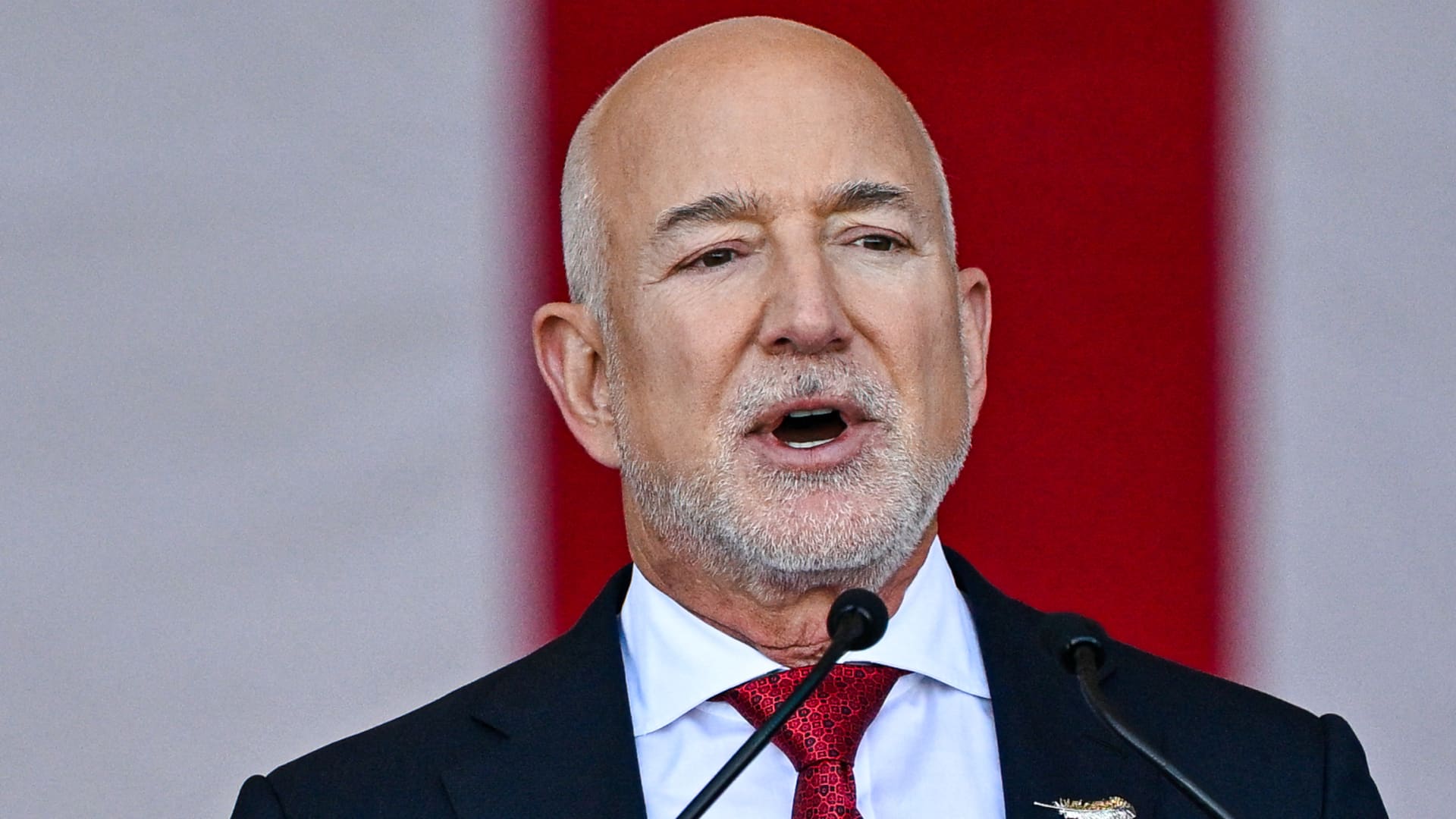
Amazon executive chairman Jeff Bezos said a controversial tax strategy used by the wealthy to borrow against assets to lower their income taxes is largely a “myth.”

“There’s no truth to this ‘buy, borrow, die’ thing,” Bezos told CNBC’s Andrew Ross Sorkin Wednesday in a wide-ranging interview. “I don’t even know where this comes from.”

The “buy, borrow, die” strategy refers to the practice of wealthy founders or investors borrowing against their assets and using the loan proceeds as income. Since the loan isn’t considered taxable income, their income stream avoids tax. Thanks to the step-up in basis tax provision, any gain in the value of their assets during their lifetime is also erased upon their death, avoiding any capital gains tax.

The most famous practitioners of the strategy are Oracle co-founder Larry Ellison and the world’s richest man, Elon Musk. Ellison doesn’t take a taxable salary at Oracle but has pledged more than $30 billion of his stock as collateral for loans. Musk has pledged billions of Tesla shares over the years as similar collateral, although he said he paid $11 billion in federal and state income taxes in 2021 when he exercised Tesla options.

Advertisement

Bezos is the world’s fourth-richest man, with a net worth around $269 billion, according to Forbes.

The “buy, borrow, die” strategy has come under attack by Democratic Sens. Elizabeth Warren and Ron Wyden, among others, who have proposed targeting the practice by taxing wealth instead of income.

Bezos said he pays taxes on the Amazon stock he regularly sells to fund his Blue Origin rocket company and other ventures.

“Whenever I sell, I pay taxes on it,” he said.

Advertisement

Bezos also said he could support tax reforms taking aim at the practice, but didn’t give specifics.

“I’m a little skeptical that that’s a true loophole,” he said. “But if it is, and we can fix it, then we should. I don’t think such a loophole should exist.”

He cautioned, however, that closing the loophole wouldn’t solve the underlying issues of government spending, inequality and supporting those at the bottom of the economy.

“If you fix that loophole, it’s not going to solve the full problem, Bezos said, using the hypothetical example of a nurse in Queens, New York, facing a high tax burden. “It’s not going to help her at all.”

Advertisement
Choose CNBC as your preferred source on Google and never miss a moment from the most trusted name in business news.
Continue Reading

Business

United Fire Group, Inc. (UFCS) Shareholder/Analyst Call Prepared Remarks Transcript

Published

on

OneWater Marine Inc. (ONEW) Q1 2026 Earnings Call Transcript

Operator

Hello, and welcome to the Annual Meeting of Shareholders of United Fire Group, Inc. Please note that today’s meeting is being recorded. [Operator Instructions] It is now my pleasure to turn today’s meeting over to Jim Noyce, Chairperson of the Board of Directors of United Fire Group, Inc. Mr. Noyce, the floor is yours.

James William Noyce

Advertisement

The meeting will please come to order. Good morning, and welcome to the Annual Meeting of Shareholders of United Fire Group, Inc., and thank you all for attending. I am Jim Noyce, Chairperson of the Board of Directors. And in accordance with our bylaws, I will be presiding at this meeting.

Today’s meeting is being broadcast by live audio webcast. We believe this virtual meeting option will maximize participation of shareholders regardless of their location. Thank you very much to those who are participating virtually today. We will conduct our meeting in 2 parts. First, we will address our formal business — our formal items of business, followed by a question-and-answer session. You may submit questions through the virtual meeting website. An agenda that outlines the order of business for the meeting has been made available.

The matters on which the shareholders at the meeting are voting include: election of the 5 Class A directors identified in the proxy statement; ratification of the Audit Committee’s appointment of Ernst & Young LLP as our independent registered public accounting firm for 2026, approval on an advisory basis of the compensation of the company’s named executive officers; and approval of the amendment and extension of the 2021 Nonemployee Director Stock Plan.

Sarah Madsen, Senior Vice

Advertisement
Continue Reading

Business

Airbnb expands beyond rentals with airport pickups, hotels and AI travel tools

Published

on

Airbnb expands beyond rentals with airport pickups, hotels and AI travel tools

Airbnb is pushing far beyond home rentals, rolling out airport pickups, grocery delivery, luggage storage, car rentals, boutique hotels and exclusive travel experiences as it expands deeper into travel services.

The company announced Wednesday that travelers can now book grocery delivery through Instacart in more than 25 U.S. cities, airport rides through Welcome Pickups in over 160 cities worldwide and luggage storage through Bounce at more than 15,000 locations globally. 

Advertisement

Airbnb also plans to launch in-app car rentals later this summer.

“We want to bring a little bit of magic to every trip you’re on,” Airbnb Chief Business Officer Dave Stephenson told FOX Business.

AIRBNB APOLOGIZES AFTER ‘SUPERHOST’ ALLEGEDLY USED AI-DOCTORED PHOTOS TO CLAIM $16K IN FAKE DAMAGES

Couple arriving at airport terminal with luggage cart and black SUV parked nearby

Travelers arrive at an airport pickup area. Airbnb is rolling out new ride services through Welcome Pickups in more than 160 cities worldwide. (iStock / iStock)

At the same time, Airbnb is adding boutique and independent hotels in major cities including New York, Paris, London, Rome and Singapore, alongside new AI-powered features like review summaries, listing comparisons and smarter customer support tools.

Advertisement

The expansion builds on Airbnb’s broader push into travel services and experiences beyond traditional home stays.

“[When COVID-19] hit, we had to retrench and focus on the core, and then we did that for a number of years and really worked on and perfected the kind of core business,” Stephenson said. “But then a couple of years ago, part of me coming into this new role was to get us ready to expand into services [and] experiences, which we did May of last year.”

Airbnb now offers more than 3,000 curated experiences worldwide, including tours tied to landmarks such as the Tower of London, Tokyo Skytree and the Taj Mahal.

DISNEY CRUISE CANCELED AFTER BOARDING LEAVES PASSENGERS WAITING HOURS AND QUESTIONING RESPONSE

Advertisement
CBO, Dave Stephenson of Airbnb

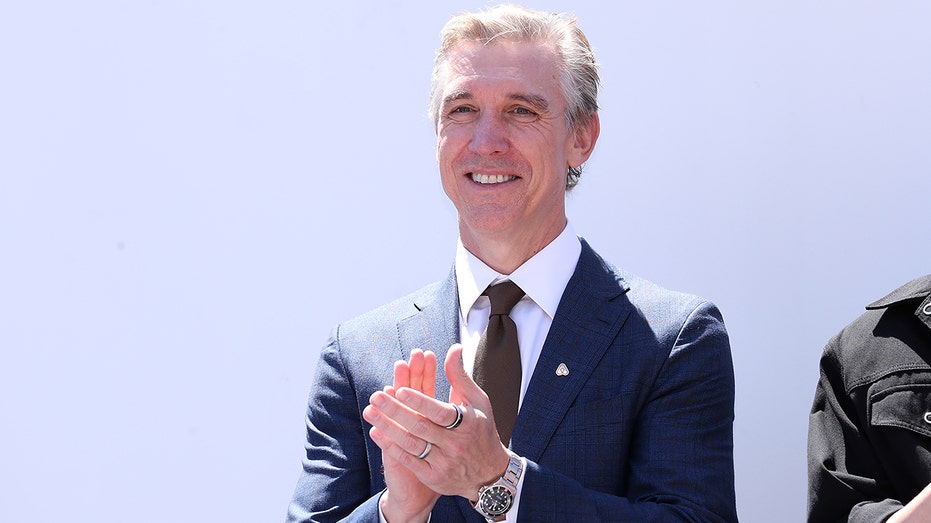
Airbnb Chief Business Officer Dave Stephenson of Airbnb is pictured on May 28, 2024, in Seoul, South Korea.  (Han Myung-Gu/WireImage / Getty Images)

The company is also leaning into FIFA World Cup 2026 travel with exclusive fan events and athlete-led experiences.

Stephenson said Airbnb expects World Cup demand to outpace the surge it saw during the Paris Olympics, when more than 700,000 guests stayed in Airbnb properties.

“The average homeowner is going to earn about $3,000 from sharing their place,” he said.

Advertisement

Airbnb is also adding new social and group-planning tools. A revamped Trips tab will show reservations alongside nearby restaurants, attractions and experiences, letting users save spots and build shared itineraries.

Later this summer, Airbnb will launch a new travel map and “connections” feature, allowing users to see where friends have stayed, browse their reviews and bookings, and message them directly for travel tips.

SPIRIT AIRLINES LAWYER APOLOGIZES TO AMERICANS ‘PRICED ENTIRELY OUT’ OF AIR TRAVEL AFTER SUDDEN COLLAPSE

The Airbnb logo is displayed on a smartphone in front of property listings.

The Airbnb logo is displayed on a smartphone in front of home listings. (Mateusz Slodkowski/SOPA Images/LightRocket via Getty Images)

GET FOX BUSINESS ON THE GO BY CLICKING HERE

Advertisement

“These group itineraries — I think it’s going to be a really cool new feature that people will find really valuable, because when you travel in Airbnb, you tend to travel with family and friends,” Stephenson said.

The new services and hotel offerings are available now in select markets, while car rentals and additional app features are expected to roll out later this summer.

Continue Reading

Business

Authentic Brands Is Finally Going Public

Published

on

Authentic Brands Is Finally Going Public
Authentic Brands Is Finally Going Public – Moby

BREAKING NEWS

Our analysts just identified a stock with the potential to be the next Nvidia. Tell us how you invest and we’ll show you why it’s our #1 pick. Tap here.

Authentic Brands Group is going public within the next 12 months, founder Jamie Salter told CNBC Wednesday, and the company has spent the last several months making exactly the kind of moves that tend to precede that kind of announcement. Salter is stepping up to executive chairman and handing the CEO role to Matt Maddox, the former Wynn Resorts CEO who joined as president in January 2025 after nearly 15 years in Wynn’s C-suite spanning CFO, president, and CEO at a publicly traded $10 billion company. Wall Street has seen enough founder-to-operator transitions to know what it means when one happens six months before an S-1.

One stock. Nvidia-level potential. 30M+ investors trust Moby to find it first. Get the pick. Tap here.

Advertisement
Continue Reading

Business

Meta Stock Rises 0.6% as Layoffs Begin in AI Restructuring Amid Strong Q1 Results

Published

on

Meta Strikes $10 Billion Cloud Deal With Google Amid AI

NEW YORK — Meta Platforms Inc. (NASDAQ: META) shares gained modestly in midday trading Wednesday, climbing about 0.58% to $606.08 as the company proceeded with a major workforce restructuring involving roughly 8,000 job cuts tied to its push into artificial intelligence.

The stock traded at $606.08, up $3.47, as of approximately 11:44 a.m. EDT on May 20, 2026, with trading volume in line with recent averages. The move came as Meta began notifying employees of layoffs starting in Asia and rolling out in other regions, part of a broader efficiency drive.

Meta reported strong first-quarter results on April 29. Revenue reached $56.31 billion, up 33% from $42.31 billion a year earlier. Net income rose 61% to $26.77 billion, or $10.44 per diluted share, from $16.64 billion, or $6.43 per share. The earnings included an $8.03 billion one-time income tax benefit.

Excluding the tax benefit, adjusted earnings per share stood at approximately $7.31. Operating income increased 30% to $22.87 billion, maintaining a 41% operating margin. Ad impressions grew 19% year-over-year, while average price per ad rose 12%.

Advertisement

Family daily active people averaged 3.56 billion in March 2026, up 4% year-over-year. Headcount stood at 77,986 as of March 31, up 1% from the prior year.

Mark Zuckerberg, Meta founder and CEO, said in the earnings release: “We had a milestone quarter with strong momentum across our apps and the release of our first model from Meta Superintelligence Labs. We’re on track to deliver personal superintelligence to billions of people.”

The company raised its full-year 2026 capital expenditures forecast to $125 billion to $145 billion from a prior range of $115 billion to $135 billion, citing higher component pricing and additional data center costs for AI infrastructure. It guided second-quarter revenue between $58 billion and $61 billion.

Meta announced plans in April for the layoffs, targeting about 10% of its global workforce, or roughly 8,000 positions. Notifications began Wednesday, starting with employees in Singapore at around 4 a.m. local time, followed by other regions. The company also scrapped plans to fill about 6,000 open roles.

Advertisement

In an internal memo shared with employees on May 18, Meta Chief People Officer Janelle Gale detailed additional changes, including reassigning about 7,000 staff to new AI-focused initiatives and eliminating layers of management to create flatter organizational structures. The restructuring affects around 20% of staff when including transfers.

The layoffs and reassignments aim to improve efficiency and redirect resources toward AI development as the company invests heavily in infrastructure. Meta has projected continued strong operating income growth for 2026 despite elevated spending.

Cash, cash equivalents and marketable securities totaled $81.18 billion at the end of the first quarter. Free cash flow for the period was $12.39 billion. The company paid $1.35 billion in dividends and dividend equivalents.

Meta maintains a quarterly dividend of $0.525 per share, equating to an annual yield of about 0.35% at recent prices. It has returned capital through dividends and share repurchases in prior periods.

Advertisement

The stock has traded in a 52-week range of $520.26 to $796.25. Market capitalization stands near $1.53 trillion. Analysts have offered varied price targets, with some forecasting potential upside toward $1,000 by year-end based on AI-driven growth.

Meta faces ongoing legal and regulatory matters, including scrutiny over youth safety on its platforms. The company warned in its earnings release that such issues “could significantly impact our business and financial results” and noted potential material losses from upcoming U.S. trials.

The company operates Facebook, Instagram, WhatsApp and Messenger, with a heavy emphasis on AI enhancements for content recommendation, ad targeting and new experiences. It has released models through Meta Superintelligence Labs and continues work on AI agents and infrastructure.

Industry-wide, major tech firms have adjusted workforces amid AI investments. Meta’s changes include shifting employees to teams focused on applied AI engineering and agent development. Severance packages for laid-off workers include at least 16 weeks of pay plus additional benefits.

Advertisement

Shares reacted negatively after the April earnings release due to the raised capex outlook but have shown resilience in recent sessions amid broader market conditions. The stock closed at $602.61 on May 19, down 1.41% for that session.

Meta expects full-year 2026 total expenses between $162 billion and $169 billion, unchanged from prior guidance. It anticipates its tax rate for remaining quarters at 13% to 16%, absent changes in the tax landscape.

The next earnings report is scheduled for late July. Investors continue to monitor user engagement metrics, ad revenue trends and progress on AI monetization amid competition from other tech giants.

Meta’s balance sheet remains strong, supporting ongoing investments while returning capital to shareholders. The company employed about 78,000 people at the end of 2025 before the current round of changes.

Advertisement

Broader market factors, including interest rates and sector rotation, have influenced trading in recent weeks. Meta has outperformed some peers in advertising revenue growth despite macroeconomic pressures.

The restructuring underscores Meta’s commitment to becoming an AI-first company, with CEO Zuckerberg emphasizing long-term bets on superintelligence and efficiency gains from AI tools.

Continue Reading

Business

Mark Zandi puts U.S. recession odds at 40%, warns economy is ‘on edge’

Published

on

Mark Zandi puts U.S. recession odds at 40%, warns economy is 'on edge'

Despite triumphant headlines from Wall Street, one prominent economic forecaster is sounding the alarm that the U.S. economy is sitting on a razor’s edge.

In a recent interview with TheStreet, Moody’s Analytics chief economist Mark Zandi placed the probability of a U.S. recession within the next year at 40%, compared to a historical average of about 15%.

Advertisement

“So, 40% is very elevated, very uncomfortable — it gives you a sense of how close I think things are to the edge here,” he said.

LEGENDARY ECONOMIST KNOWN FOR 1969-70 RECESSION PREDICTION WARNS DOWNTURN MAY HIT IN 2026

Though his comments come on the heels of a better-than-expected April jobs report and stocks reaching fresh highs in recent weeks, Zandi pointed out that real disposable income has stalled year over year, showing 0% net growth.

Trader on New York Stock Exchange floor

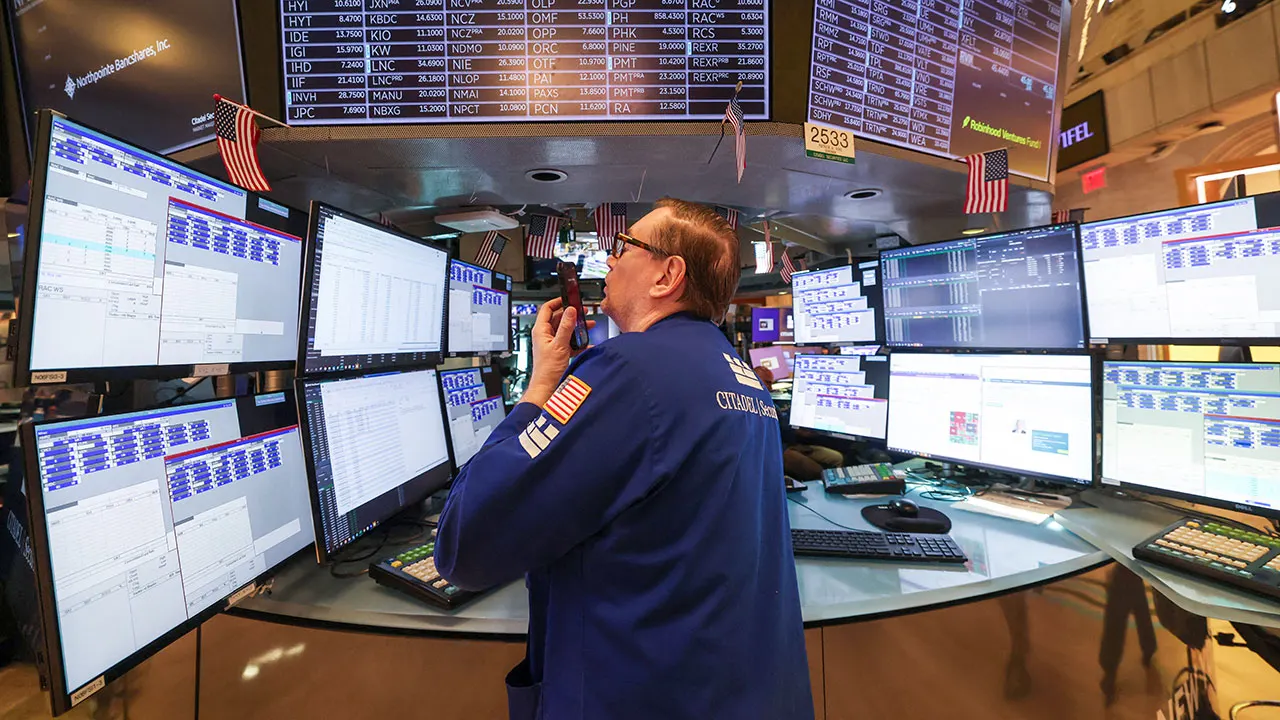
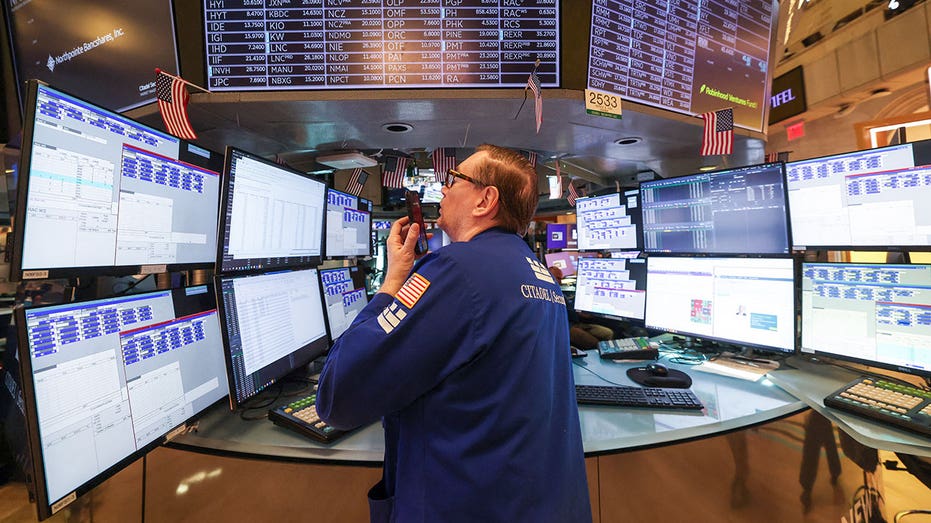
A trader works on the floor of the New York Stock Exchange (NYSE) in New York on May 19, 2026. (Getty Images)

“Real disposable income — that’s after tax, after accounting for inflation — is no higher today than it was a year ago. So, there’s been no growth in purchasing power, and that’s going to get worse and start declining,” the economist noted, adding that lower- and middle-class consumers are “living more paycheck to paycheck.”

Advertisement

“You’re gonna have to trade down,” Zandi continued. “You can’t have beef — you gotta have chicken.”

The S&P 500, Nasdaq and Dow have posted a modest pullback since those fresh highs, which Zandi attributed to strength in artificial intelligence-related companies. He further explained the divergence between corporate equity gains and the broader U.S. economy.

“The stock market’s not the economy. In my 36 years as a professional economist, the stock market’s never been more disjointed from the economy,” he said.

Advertisement

“What’s driving the stock market train is these big hyperscalers and chip companies,” Zandi added. “Valuations are awfully high… except for perhaps during the internet bubble, which didn’t end so well.”

GET FOX BUSINESS ON THE GO BY CLICKING HERE

When it comes to equity investors banking on political intervention, Zandi said traders are increasingly betting that President Donald Trump will adjust policy levers to support the markets or the economy if a correction begins.

Advertisement

“Stock investors are looking at the president, the president’s looking at the stock market. That doesn’t feel like a stable… equilibrium — it’s kind of like a hall of mirrors,” he cautioned.

READ MORE FROM FOX BUSINESS

Continue Reading

Business

RBI to infuse liquidity via $5 billion dollar rupee swap auction on May 26

Published

on

RBI to infuse liquidity via $5 billion dollar rupee swap auction on May 26
The Reserve Bank will conduct a $5 billion dollar-rupee buy and sell swap auction next week to infuse long-term liquidity in the banking system and boost its foreign exchange stockpile.

The auction will be held on May 26.

“On a review of current and evolving liquidity conditions, it has been decided to conduct a USD/INR buy/sell swap auction of $5 billion for a tenor of three years,” the central bank said in a circular.

This comes on the backdrop of around 6% depreciation of the local currency since the beginning of the Iran wao on February 28. The rupee on Wednesday saw a new closing low of 96.83 a dollar after recovering a bit from the all time low of 96.96 a dollar. In the one-year forward market, the rupee was seen traded over 100 a dollar.

Advertisement

“The dollar-rupee swap is expected to cool down the forward premium from the recent highs, besides improved rupee-liquidity in the banking system” an economist with a foreign bank said.


The dollar-sell swap move will also boost the country’s forex reserves, he added.
The RBI has been digging its foreign exchange reserves to sell dollars to reduce the rupee volatility. The reserves stood at $696.988 billion at the end of May 8, ass compared to its all-time peak of $728.49 billion seen on February 27,This will be the first dollar-sell swap by the central bank amid the geopolitical conflict, which started on February 28. It had done two such swaps of $10 billion each on February 4 and January 13,

The swap will be in the nature of a simple buy/sell foreign exchange swap from the Reserve Bank side. Banks will sell dollars to the central bank and simultaneously agree to buy the same amount at the end of the swap period.

The auction cut-off would be based on the premium amount in paisa terms up to two decimal points. The market participants would be required to place their bids with the premium that they are willing to pay to the RBI for the tenure of the swap expressed in paisa terms up to two decimal places. Successful bids will get accepted at their respective quoted premium, the central bank said.

Advertisement
Continue Reading

Trending

Copyright © 2025