Connect with us
DAPA Banner

Business

Perma-Pipe International : From High Expectations To A More Attractive Entry Point (NASDAQ:PPIH)

Published

on

steel long pipes in crude oil factory during sunset

This article was written by

My name is María Fernanda and I’m currently studying an MBA. My inspiration investors are Warren Buffett, Peter Lynch and Terry Smith, so I look for quality companies at a reasonable valuation. I believe that, in the long term, fundamentals are what drive the share price, so I look to predict what a business’s earnings per share will do.

Analyst’s Disclosure: I/we have a beneficial long position in the shares of PPIH either through stock ownership, options, or other derivatives. I wrote this article myself, and it expresses my own opinions. I am not receiving compensation for it (other than from Seeking Alpha). I have no business relationship with any company whose stock is mentioned in this article.

Seeking Alpha’s Disclosure: Past performance is no guarantee of future results. No recommendation or advice is being given as to whether any investment is suitable for a particular investor. Any views or opinions expressed above may not reflect those of Seeking Alpha as a whole. Seeking Alpha is not a licensed securities dealer, broker or US investment adviser or investment bank. Our analysts are third party authors that include both professional investors and individual investors who may not be licensed or certified by any institute or regulatory body.

Advertisement
Continue Reading
Click to comment

You must be logged in to post a comment Login

Leave a Reply

Business

Form 13G Vita Coco Co Inc/The For: 21 April

Published

on


Form 13G Vita Coco Co Inc/The For: 21 April

Continue Reading

Business

Trump says ‘maybe’ government should help struggling Spirit Airlines

Published

on

Trump says 'maybe' government should help struggling Spirit Airlines
President Trump: I'd love someone to buy Spirit Airlines

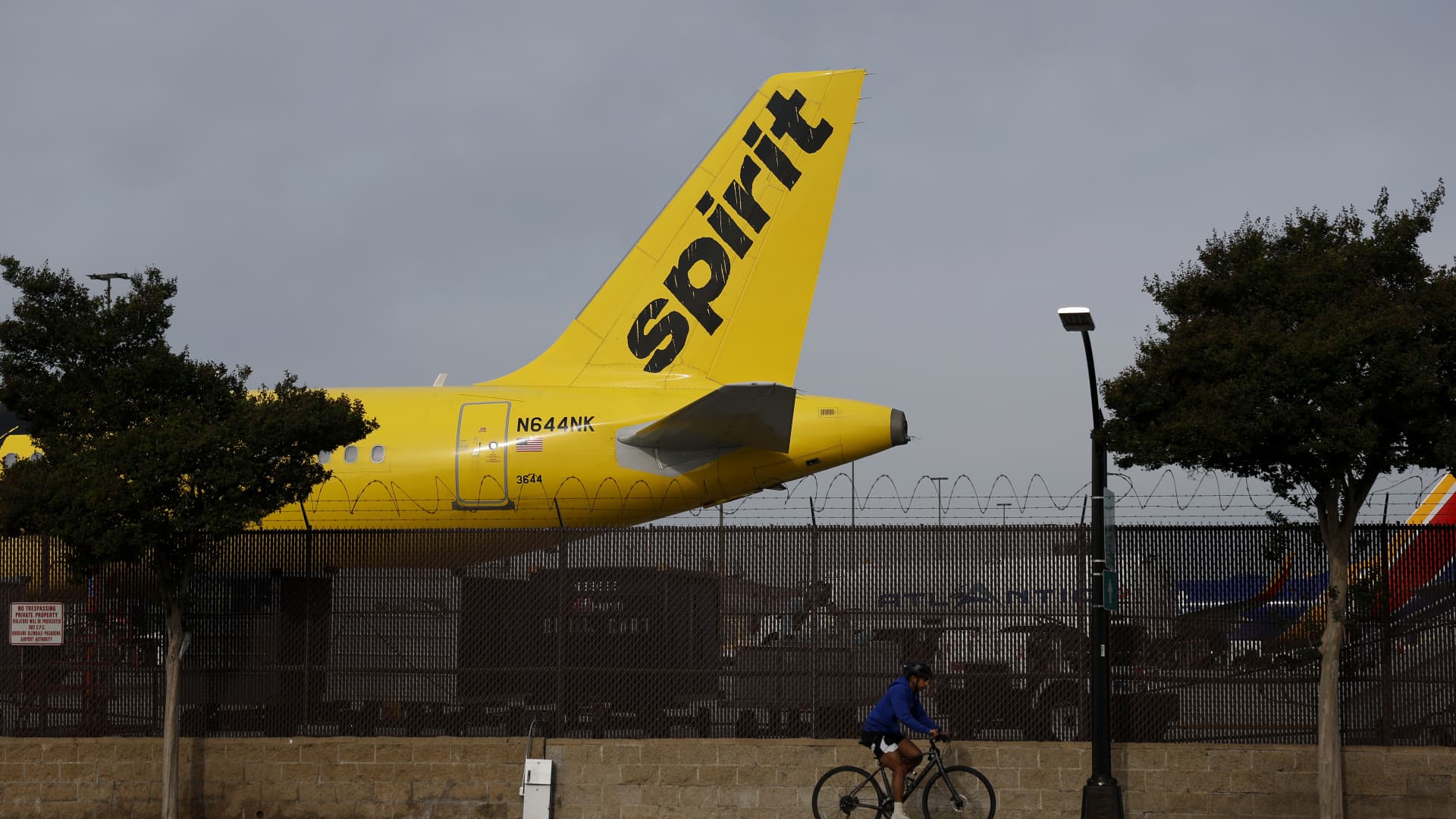
President Donald Trump said Tuesday that the federal government could help struggling Spirit Airlines as the discount carrier faces the possibility of liquidation.

Trump told CNBC’s “Squawk Box“: “I don’t mind mergers. I think I’d love somebody to buy Spirit, as an example. You know, Spirit’s in trouble. … Maybe the federal government should help that one out.

Spirit has sought government aid from the Trump administration in recent days, according to people familiar with the matter who were not authorized to speak to the media about the discussions. The request was first reported by aviation news publication The Air Current.

The airline has been struggling to find its footing after filing for bankruptcy protection in August for the second time in less than a year.

Advertisement

Spirit expected to emerge from bankruptcy in the middle of 2026, after selling more aircraft and narrowing its focus to several key cities. But the surge in fuel prices since the U.S. and Israel attacked Iran in February has become an added challenge. Fuel is airlines’ biggest expense after labor.

Jet fuel prices have nearly doubled this year since the attacks on Iran, with a gallon going for $3.87 on average on Monday in Los Angeles, Chicago, Houston and New York, according to Argus data published by Airlines for America. That’s up about 55% from before the war started on Feb. 28.

Transportation Secretary Sean Duffy later on Tuesday is set to meet with several discount carriers to discuss the impact of higher fuel on their businesses, and attendees are expected to ask for potential tax relief, people familiar with the matter said, requesting anonymity to speak about matters that had not yet been made public.

It wasn’t immediately clear if the administration would provide the Florida-based carrier with a lifeline. The U.S. government gave the airline industry billions of dollars during the Covid-19 pandemic, but that money went to many companies, not to one single carrier.

Advertisement
Choose CNBC as your preferred source on Google and never miss a moment from the most trusted name in business news.
Continue Reading

Business

OpenAI faces criminal probe over role of ChatGPT in shooting

Published

on

OpenAI faces criminal probe over role of ChatGPT in shooting

The firm, co-founded by Sam Altman, said it is “not responsible” for the attack at Florida State University

Continue Reading

Business

Buy or Sell Navitas Semiconductor Stock in 2026? Analysts Split Amid AI Power Boom

Published

on

Buy or Sell Navitas Semiconductor Stock in 2026? Analysts Split

TORRANCE, Calif. — Navitas Semiconductor Corp. shares have delivered explosive gains in 2026, surging hundreds of percent on enthusiasm for its gallium nitride and silicon carbide chips powering artificial intelligence data centers, yet Wall Street analysts remain divided on whether the stock is a buy, hold or sell at current elevated levels.

As of April 21, Navitas (NASDAQ: NVTS) traded near $15-16 after a sharp early-session rally, extending a remarkable run that has seen the stock climb more than 400% over the past year. The rally reflects investor bets on the company’s “Navitas 2.0” strategy, which shifts focus from lower-margin mobile charging to high-power applications in AI infrastructure, grid modernization and industrial electrification. Yet with the stock trading at a premium valuation and analysts’ average price targets well below current levels, the question of whether to buy or sell Navitas in 2026 elicits no consensus.

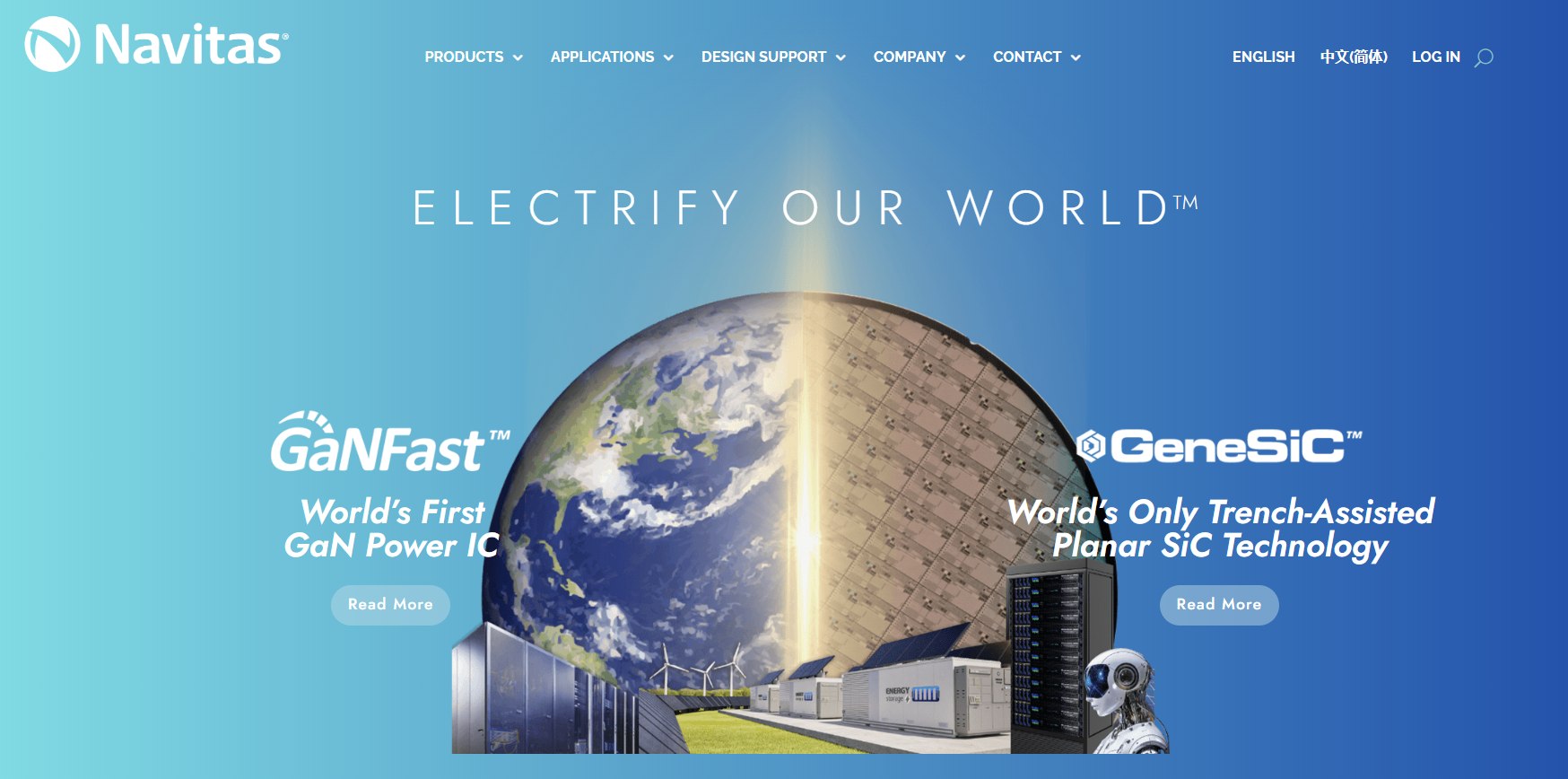
Navitas specializes in next-generation power semiconductors that offer superior efficiency, smaller size and better thermal performance than traditional silicon devices. Its GaNFast power ICs and GeneSiC SiC solutions address a critical bottleneck in AI data centers, where massive electricity consumption makes even modest efficiency gains highly valuable. The company estimates a $3.5 billion serviceable addressable market in high-power segments by 2030, with AI-related demand as the primary driver.

The strategic pivot has shown early progress. High-power applications now exceed 50% of revenue, while mobile has fallen below 25%. Management guided for a return to sequential revenue growth starting in the first quarter of 2026, with Q1 results scheduled for release after market close on May 5. Fourth-quarter 2025 revenue beat expectations at $7.3 million, and the company ended the year with a strong cash position and no debt, providing runway for continued investment.

Advertisement

Recent catalysts have fueled the rally. In March, Navitas launched new 1200V SiC MOSFET packages optimized for AI servers and energy infrastructure. At NVIDIA’s GTC 2026 conference in April, the company demonstrated an 800V-to-6V GaNFast power delivery board for the MGX platform and a high-efficiency 10kW all-GaN solution. On April 13, the appointment of semiconductor veteran Gregory M. Fischer to the board added governance credibility as Navitas scales operations.

Despite the momentum, risks abound. Navitas remains unprofitable, posting adjusted losses as it invests heavily in growth. Analysts project continued revenue pressure in 2026 due to the business mix transition, with some forecasting declines before a sharp rebound in 2027. Consensus ratings lean toward Hold, with an average 12-month price target around $6.78 to $7.60 — implying significant downside from current levels near $15-16. Targets range from as low as $3.50 to a high of $13.00.

The valuation debate centers on execution versus potential. Bulls highlight Navitas’ technological edge, patent portfolio and alignment with the AI megatrend. Successful conversion of design wins into volume shipments could drive meaningful revenue inflection starting late 2026 or 2027. Optimists see the stock as a long-term winner for patient investors willing to endure near-term volatility and margin pressure.

Bears counter that the current price already bakes in substantial optimism. With a high price-to-sales multiple and no near-term profitability in sight, any delay in AI-related ramps or margin improvement could trigger sharp pullbacks. Competition in the GaN and SiC spaces is intensifying from larger players, and broader semiconductor cyclicality adds another layer of risk. Some forecasts suggest the stock could trade in a range between roughly $3 and $9 through the end of 2026 under conservative scenarios.

Advertisement

Q1 2026 earnings on May 5 will provide the next major test. Investors will scrutinize revenue trends, gross margin progress, operating expenses and any updates on design-win conversions or AI customer engagements. Management has emphasized gradual improvements in gross margins and bottom-line results alongside renewed top-line growth. Positive surprises could sustain momentum; misses or cautious guidance might cool enthusiasm.

Broader market context also matters. Enthusiasm for AI infrastructure stocks has lifted many names in the semiconductor supply chain, but elevated valuations leave limited room for error. Geopolitical tensions, interest rate movements and energy costs could indirectly influence demand for efficient power solutions.

For individual investors, the decision hinges on time horizon and risk tolerance. Long-term believers in the AI power story may view dips as buying opportunities, especially given Navitas’ strong cash position and debt-free balance sheet. Shorter-term traders might prefer to wait for clearer signals of profitability or revenue acceleration before committing capital at current levels.

Technical indicators show strong momentum in recent sessions, with the stock breaking out on high volume. However, overbought readings suggest potential for near-term consolidation or pullbacks. Options activity reflects elevated implied volatility, consistent with expectations for significant moves around earnings.

Advertisement

Navitas operates with a lean team of roughly 190 employees and benefits from strategic foundry partnerships, including efforts to expand U.S.-based manufacturing. Its CarbonNeutral certification and focus on sustainability add to the appeal for ESG-minded investors. Yet as a smaller player, it faces execution risks in scaling production to meet potential hyperscaler demand.

The company’s long-term roadmap targets compound annual growth exceeding 60% in its addressable market. If Navitas captures even a modest share while improving margins, the upside could be substantial. Conversely, prolonged transition challenges or competitive pressures could weigh on the stock for an extended period.

As April 21 trading continued with strong gains, the narrative around Navitas remained one of high risk and high reward. The stock’s dramatic 2026 performance has rewarded early believers but also attracted profit-taking and skepticism from valuation-focused investors.

Ultimately, whether to buy or sell Navitas Semiconductor in 2026 depends on individual conviction in the AI infrastructure thesis and tolerance for volatility. Wall Street’s Hold consensus and low average price targets suggest caution at current prices, but bullish voices see the potential for outperformance if execution aligns with ambitious goals.

Advertisement

With Q1 results approaching and the AI buildout accelerating, the coming months will offer fresh data points to assess whether Navitas can translate technological promise into sustainable financial results. Investors should weigh the compelling long-term story against near-term transitional pressures before making portfolio decisions.

Continue Reading

Business

One of Wales’ leading tech firms collapses into liquidation

Published

on

Business Live

Amplyfi has secured equity backing from the Cardiff Capital Region and the Development Bank of Wales

One of Wales’ leading tech firms Amplyfi, whose expansion plans were backed with equity investment of £7m from the Cardiff Capital Region and the Development Bank of Wales, has collapsed into liquidation.

The Cardiff-based firm had developed an AI powered market intelligence platform used by global clients to better identify and react to market changes. However, with advances in AI platforms, such as ChatGPT, the business had come under increasing market pressures.

Bethan Evans and John Cullen of the Cardiff-based office of insolvency practice Menzies have been appointed joint liquidators.

Advertisement

Menzies said the the position is a creditors voluntary liquidation driven by Amplyfi’s board and not a result of a creditor petition to liquidate the business. What creditors, both secured and unsecured, are owed is is expected to be confirmed in the coming days with liquidators publishing, via Companies House, a statement of affairs.

Equity holders are the lowest ranked in any liquidation process, so even assuming there is any IP asset realisation through the insolvency process – the Development Bank of Wales and the Cardiff Capital Region’s equity fund are not expected to get any return.

The Development of Wales backed Amplyfi with a £2.6m equity investment to become a minority shareholder as part of an investment round that was led by Hong Kong-based QBN Capital back in 2022.

The Cardiff Capital Region’s £50m Innovation Investment Capital (IIC) fund, which is managed by Capricorn Fund Managers, made an equity investment of £4.7m into the company in 2023.

Advertisement

It was the fund’s maiden investment and now represents its first failure, although its other investments could generate significant returns via future exits. To date the fund has made ten equity investments, with a mandate per deal of between £3m to £5m.

The Cardiff Capital Region is made up of the ten local authorities of south-east Wales. The IIC fund, through the region’s £1.3bn now nearly fully invested £1.3bn City Deal, was funded by the UK and Welsh goverments. The Development Bank of Wales is wholly-owned by the Welsh Government.

A spokesperson for the Cardiff Capital Region said: “Innovation Investment Capital is a £50m fund established as an arms-length, FCA regulated limited partnership. It is independently administered by specialist fund managers to provide scale up investment to growing businesses from across south east Wales and attract inward investment to the region.

“Following a rigorous process, IIC invested £4.7m in Amplyfi. Sustained efforts were made to support Amplyfi, alongside co-investors, in a challenging and rapidly evolving AI landscape. As a minority shareholder, we will wait on the outcome of the liquidation process.”

Advertisement

A spokesperson for the Development Bank of Wales said: ‘We were sorry to be informed that the directors of Amplyfi have taken the decision to proceed with the liquidation of the company. The Development Bank of Wales last invested in the business in 2022.

“We have invested £2.6m in equity in Amplyfi and, as a minority investor, we will now await the outcome of the liquidation process. It would not be appropriate to comment further at this stage.”

Amplyfi, based at offices at the 1 Central Square office scheme, had made a number of redundancies last year. At one stage it has a workforce of around 40.

Advertisement
Continue Reading

Business

US stocks today: US markets plunge as Middle East concerns offset earnings optimism

Published

on

US stocks today: US markets plunge as Middle East concerns offset earnings optimism
U.S. stocks closed lower on Tuesday, with early gains evaporating as renewed concerns about the Middle East war outweighed initial optimism over a round of solid corporate earnings. Iran could attend talks with the United States in Pakistan if Washington abandons its policy of pressure and threats, a senior Iranian official told Reuters, adding that Tehran rejects negotiations aimed at surrender.

Equities extended declines late in the session after reports that U.S. Vice President JD Vance ‌had called off his ⁠trip to Pakistan ⁠for peace talks.

Stocks have rallied in recent weeks on the belief that a peace deal could be on the horizon.

“There’s two things going on – what is the resolution going to be or the path going to be for Iran, but in the meantime if that wasn’t there, you’ve got really good expectations for earnings coming in and the companies are pretty much reporting that way, and the economy is doing fine,” said Thomas Martin, senior portfolio manager at GLOBALT Investments in Atlanta.

Advertisement

“The wild card is indeed what happens with Iran, and nobody knows, and it’s baffling to me to think that people think that it’s going to be OK.”


The Dow Jones Industrial Average fell 292.96 points, or 0.59%, to 49,149.60, the S&P 500 declined 45.09 points, or 0.63%, to 7,064.05, and the Nasdaq Composite dropped 144.43 points, or 0.59%, to 24,259.96.
Earlier economic data from the ⁠Commerce Department showed U.S. retail sales increased more than expected in March as the war with Iran boosted gasoline prices and led to a record surge in receipts at service stations. Retail sales jumped 1.7% last month, the largest rise since March 2025, after an upwardly revised 0.7% gain in February and above the 1.4% estimate of economists polled by Reuters.

EARNINGS, AI REASSURE INVESTORS

Optimism around AI and upbeat earnings have cheered investors, with first-quarter growth expectations of around 14%, according to LSEG data. J.P. Morgan raised its year-end target for the S&P 500, citing AI and tech-driven earnings, while Amazon said on Monday it will invest up to $25 billion in Anthropic, signaling megacap companies are still willing to spend massively on the AI technology. The S&P 500 energy index rose as the ‌best-performing among the major S&P sectors due to another jump in crude prices on Middle East tensions. UnitedHealth jumped after the healthcare conglomerate raised its annual profit forecast and beat Wall Street expectations for the first quarter, and was the biggest boost to the Dow. Apple shares also garnered attention, losing ground after the ⁠company said CEO Tim Cook would hand over the reins to longtime hardware boss John Ternus.

WARSH HEARING

Investors were also digesting comments from Kevin Warsh, Trump’s nominee to lead the Federal Reserve, whose confirmation hearing wrapped up in the Senate on Tuesday.

Warsh said he had made no promises to President Donald Trump about cutting interest rates, as he tried to assure U.S. senators mulling his confirmation to lead the U.S. central bank that he would act independently of the White House while pursuing broad reforms.

Advertisement

Republican Senator Thom Tillis has promised to block Warsh’s confirmation until the Department of Justice ends an investigation into current Fed Chair Jerome Powell that Tillis says threatens the central bank’s independence.

The impasse could impact monetary policy, especially as Trump has vowed to fire Powell if he does not leave when his term ends in May.

Continue Reading

Business

Solar Foods cleared to produce protein ingredient in US

Published

on

Solar Foods cleared to produce protein ingredient in US

Company receives patent from United States Patent and Trademark Office. 

Continue Reading

Business

Once Again launches protein butter packs

Published

on

Once Again launches protein butter packs

The protein snack packs are available in four flavor varieties. 

Continue Reading

Business

Papa John’s delivery fee message ignites debate as people grow exhausted with tipping

Published

on

Papa John's delivery fee message ignites debate as people grow exhausted with tipping

A message encouraging Papa Johns customers to tip their delivery drivers has enraged social media users, as frustration over America’s expanding “tipping culture” continues to ferment.

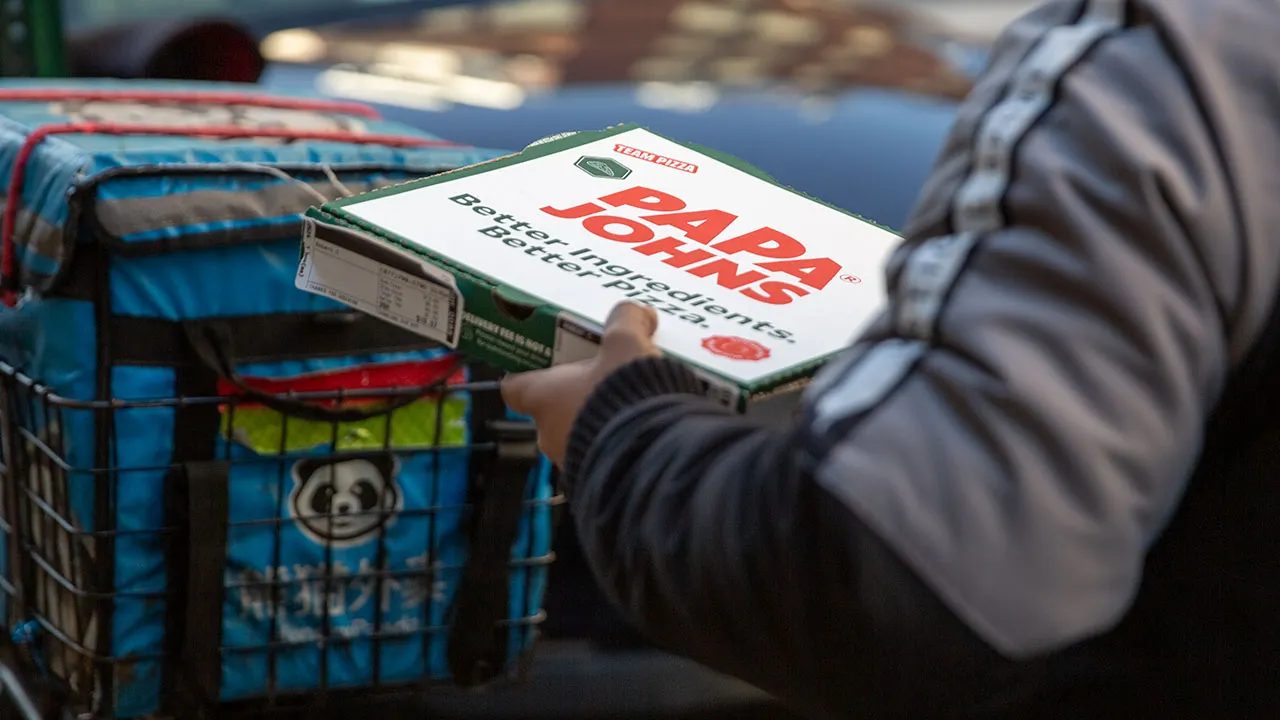
TikTok user @sydneeee___ posted a video last week showing a box from the pizza chain that stated: “DELIVERY FEE IS NOT A TIP. Please reward your driver for outstanding service.” The message left viewers fuming, sparking a collective debate over the purpose of delivery fees and whether corporations should be responsible for paying their workers livable wages.

Advertisement

Users labeled the message “tone-deaf,” arguing that the company is shifting the financial responsibility of employee compensation onto the consumer.

DOMINO’S PIZZA DEBUTS STUFFED CRUST IN EFFORT TO BOOST SALES 

Papa John's

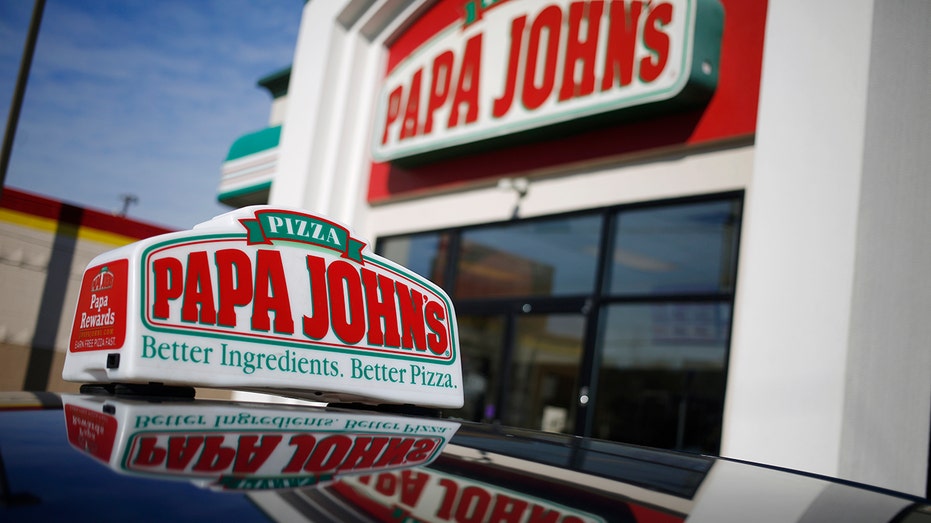
Papa John’s International Inc. signage is displayed on top of a delivery vehicle outside the company’s restaurant in Nashville, Tenn., Feb. 9, 2017. (Luke Sharrett/Bloomberg via Getty Images / Getty Images)

“Companies telling us to tip their workers knowing they won’t pay them is crazy lol,” one user commented. 

Another questioned the logic of the charge, asking, “So wtf are we paying a delivery fee for?” 

Advertisement

A third user noted, “If a delivery fee is not a tip… then why is there a delivery fee being paid to the business? It should be paid to the driver.” 

One commenter pointed out the executive pay scale, writing, “Papa Johns CEO makes $8.44M annually btw.”

Rather than serving as a lighthearted reminder to reward good service, some users argued the message creates unnecessary friction between the customer and the delivery person.

KFC BRINGS BACK A TASTE OF NOSTALGIA WITH FAN-FAVORITE ITEM

Advertisement
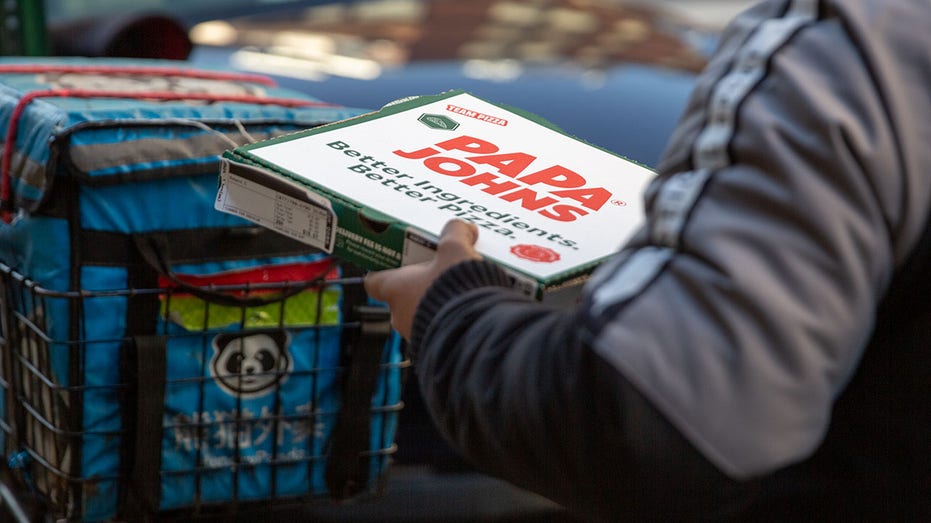
A man carrying a Papa Johns pizza box

A delivery worker carries a Papa John’s pizza outside a restaurant in New York. A message on its pizza boxes encouraging customers to tip delivery drivers fueled a debate online over tipping culture.  (Shelby Knowles/Bloomberg via Getty Images / Getty Images)

This backlash comes as more Americans express exhaustion with tipping practices creeping into industries that traditionally never requested them. Customers now frequently face “tip screens” for mundane tasks or at self-service kiosks, leading to awkward social scenarios.

A WalletHub survey released in March found that nearly nine in 10 Americans believe the country’s tipping culture is “out of control.” Similarly, a recent Popmenu report found that 77% of consumers agree the practice has gone too far, with two-thirds of respondents admitting they only tip out of guilt.

FOX Business has reached out to Papa Johns for comment.

pizza

A Papa John’s International Inc. pepperoni pizza. (Luke Sharrett/Bloomberg via Getty Images / Getty Images)

GET FOX BUSINESS ON THE GO BY CLICKING HERE

Advertisement

The viral video arrives at a difficult time for the pizza giant, which recently announced plans to close 300 underperforming restaurants across the U.S.

Papa Johns Chief Financial Officer Ravi Thanawala described these “doomed” locations as being primarily franchise-owned, more than a decade old, and generating less than $600,000 in annual unit volume (AUV).

Continue Reading

Business

Tony’s Chocolonely debuts sensory-focused bars

Published

on

Tony’s Chocolonely debuts sensory-focused bars

The confectionery line features two chocolate bar varieties. 

Continue Reading

Trending

Copyright © 2025