

Business
Preparing for Climate-Related Losses

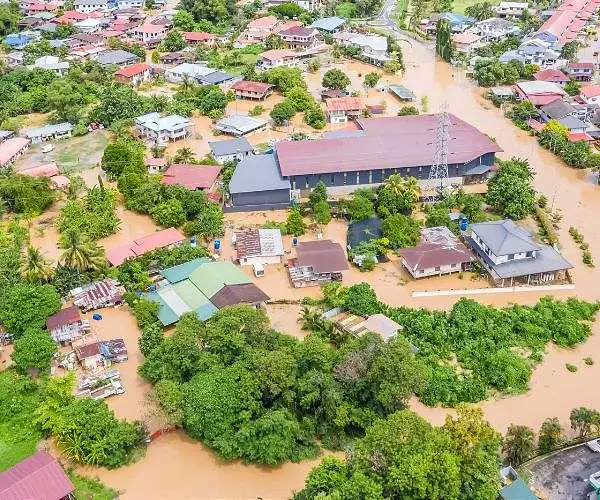
The floods that submerged Hat Yai were not just another natural disaster. They were warning. Climate change is now hitting harder and faster than Thailand can keep up with.
The challenges ahead are manifold. The country definitely must strengthen measures to mitigate and adapt to the more frequent and more ferocious weather brought by global warming. Equally important, however, is the need to address the loss and damage wrought by the climate crisis.
The recent flooding in southern Thailand, particularly in Hat Yai district of Songkhla province, made that painfully clear. The scale and intensity of the rainfalls and the speed of the deluge overwhelmed routine disaster management capacity. As global warming brings ever more violent weather, the devastation simply cannot be prevented, and the environmental damage often cannot be restored or repaired.
Thailand is not alone. Countries around the world are facing similar risks. As climate impacts intensify, “Loss and Damage” — the harm caused by climate change that cannot be prevented or fully repaired, including the aftermath of natural disasters — has become a central issue in global negotiations. It featured prominently at the recent COP30 meeting, the annual UN climate summit where governments negotiate global climate action.
In international forums, small island states such as Vanuatu and Tuvalu have long pushed this issue. For them, “Loss and Damage” is a matter of climate justice. They contribute little to global emissions, yet face existential threats. Developed countries acknowledge the principle. But many remain cautious due to the resulting financial liability.
COP30, however, marked an important step forward. Negotiations on the Fund for Responding to Loss and Damage (FRLD) have advanced, with an initial allocation of more than US$250 million to support developing countries in submitting funding proposals.
Many developing countries are moving quickly. Bangladesh, Nepal and several African nations have begun integrating Loss and Damage into their National Adaptation Plans (NAPs) and Nationally Determined Contributions (NDCs). By embedding the issue in national frameworks, they strengthen their case for accessing global support.
Thailand has yet to do so clearly. True, its first Biennial Transparency Report (BTR1) — Thailand’s regular report to the UN on what it is doing about climate change and how it is being affected — contains information on disaster-related damage. But it does not clearly categorise or systematically assess Loss and Damage in a way that can guide policy or connect effectively with international funding.
This gap matters.
Thailand already collects disaster damage data across multiple agencies. Yet the information is not developed in a systematic way. There is limited follow-up after recovery. Losses are not clearly classified. Data is not fully linked to resource mobilisation or national reporting systems.
Even where post-disaster damage assessment tools exist, their use remains limited. They are not yet structured in a way that strengthens Thailand’s ability to seek support from relevant international mechanisms.
The floods in Hat Yai also revealed something else. Losses are not confined to economic costs or damaged property. They reach into daily life. Access to basic public services became difficult. People’s livelihoods were suddenly shaken. Physical and mental health suffered. Living conditions deteriorated.
There were ecological consequences too. Large volumes of freshwater flowed into the sea, potentially affecting coastal ecosystems and, over time, the income security of communities that depend on them.
These dimensions are not always captured in traditional assessments. When Loss and Damage is measured narrowly, critical realities fall through the cracks.
Thailand, therefore, needs a more comprehensive system for assessing and managing Loss and Damage.
It must pay attention to local contexts and vulnerabilities, not rely solely on aggregate figures.
Thailand may not be among the highest-priority countries for accessing the FRLD fund. Yet it qualifies to apply. If it can present clear impact data and well-designed projects aligned with the criteria set by the UNFCCC (United Nations Framework Convention on Climate Change) and the FRLD Board, support is within reach.
But eligibility is not readiness.
Thailand must urgently improve its impact assessment tools. Data systems must be strengthened. Project pipelines must be prepared to connect with international funding.
At the same time, insurance systems and disaster risk management mechanisms need to be accelerated. These instruments are essential for managing Loss and Damage — both in prevention and in recovery — particularly in the immediate aftermath of disasters, when needs are most acute.
A national Loss and Damage database is not a bureaucratic luxury. It is core infrastructure. It would allow Thailand to design financial instruments with appropriate risk layering, tailored to national circumstances. Building such a system requires coordination across agencies, with a clear purpose: to ensure that data serves policy planning, risk management and long-term climate resilience.
To move forward, To move forward, Thailand must first define Loss and Damage clearly within its national context and integrate it systematically into national plans. Structural readiness must be strengthened. Assessment tools must be able to classify different types of losses properly.
A unified data management framework is also essential. Post-disaster assessments, recovery monitoring and national reporting systems should be connected and standardised. This would enable data to inform policy, guide risk management and support access to international finance.
Institutional capacity matters as well. The Department of Climate Change and Environment and the Department of Disaster Prevention and Mitigation should be empowered to work closely together. Thailand should also use its position within ASEAN to enhance regional cooperation — linking with the FRLD under the UNFCCC framework and with regional insurance instruments such as SEADRIF (Southeast Asia Disaster Risk Insurance Facility.)
Financial mechanisms for disaster risk management — including insurance and preventive financial tools — must be positioned within a coherent system, not treated as isolated measures.
And non-economic losses must be addressed seriously. Impacts on mental health, ways of life and community identity are not intangible extras. They shape how communities endure, recover and adapt. Recognising them makes policy more grounded in lived reality.
Disasters are becoming more frequent. More severe. If Thailand does not prepare now, it may find that access to funding and assistance comes too late.
Thailand must invest in its own readiness. That means strengthening institutions, building reliable databases and developing the capacity to present clear evidence of impacts. Without this groundwork, the country cannot effectively claim or access the financial support and mechanisms available, both domestically and internationally.
The climate shocks will hit Thailand again. The real question is whether Thailand will be ready — not only to confront what cannot be prevented, but to secure the tools and resources it needs to endure an era of climate upheaval.
Chayapat Patarapanchai is a researchers at the Thailand Development and Research Institute (TDRI). Their policy analyses appear in the Bangkok Post on 22 April 2026
Other People are Reading


Tesla Stock Aims for 3 Weekly Gains. Trump’s China Trip Could Stop It.


Republican Senator Cassidy loses re-election bid as two others advance to runoff

Nicholas Hawkins
MD, CEO & Executive Director
Good afternoon, everyone, and welcome to IAG’s 2026 Investor Day. I’m joined here by our Chief Financial Officer, William McDonnell; our COO, Neil Morgan; the CEOs of our divisions, Julie, Jarrod and Phil and other members of the executive team of IAG are all sitting in the front row here in Sussex Street. We’re holding today’s event on IAG Sydney’s offices on the lands of the Gadigal people. And so we acknowledge the traditional owners of country throughout Australia, and we recognize their continuing connection to lands, waters and the community. I pay my respects to elders past, present and emerging.
Many of you have been on the bus trip this morning attending the showcases at our research center and the major event command center. And I hope you enjoyed the insights and the kind of uniqueness of IAG that you’ve just seen. Just in terms of agenda, as you can see, we’ve got a full agenda this afternoon. But within that, we’re going to break for a couple of times for questions after a couple of the sessions. And

My Top 5 Dividend Stocks For May


Federal funding for Trump’s ballroom in jeopardy after Senate ruling

Chicago Atlantic BDC: An Outlier In The BDC Sector

↘️ Applied Materials (AMAT): The semiconductor-equipment maker expects stronger sales this year than it previously forecast as demand for AI computing continues to surge. Still, its shares edged 0.9% lower amid a broader selloff in AI-related stocks.


Freelance Financial Writer | Investments | Markets | Personal Finance | RetirementI create written content used in various formats including articles, blogs, emails, and social media for financial advisors and investment firms in a cost-efficient way. My passion is putting a narrative to financial data. Working with teams that include senior editors, investment strategists, marketing managers, data analysts, and executives, I contribute ideas to help make content relevant, accessible, and measurable. Having expertise in thematic investing, market events, client education, and compelling investment outlooks, I relate to everyday investors in a pithy way. I enjoy analyzing stock market sectors, ETFs, economic data, and broad market conditions, then producing snackable content for various audiences. Macro drivers of asset classes such as stocks, bonds, commodities, currencies, and crypto excite me. My thing is communicating finance with an educational and creative style. I also believe in producing evidence-based narratives using empirical data to drive home points. Charts are one of the many tools I leverage to tell a story in a simple but engaging way. I focus on SEO and specific style guides when appropriate.
Analyst’s Disclosure: I/we have no stock, option or similar derivative position in any of the companies mentioned, and no plans to initiate any such positions within the next 72 hours. I wrote this article myself, and it expresses my own opinions. I am not receiving compensation for it (other than from Seeking Alpha). I have no business relationship with any company whose stock is mentioned in this article.
Seeking Alpha’s Disclosure: Past performance is no guarantee of future results. No recommendation or advice is being given as to whether any investment is suitable for a particular investor. Any views or opinions expressed above may not reflect those of Seeking Alpha as a whole. Seeking Alpha is not a licensed securities dealer, broker or US investment adviser or investment bank. Our analysts are third party authors that include both professional investors and individual investors who may not be licensed or certified by any institute or regulatory body.

SanDisk Stock Is Up 494% This Year. Insiders Are Cashing In on the AI-Fueled Surge.


Conservative individual investor that tends toward value investing but not exclusively. Learning new strategies and look forward to sharing in dialogue with others here to learn. I taught a financial management for non-financial managers class as an adjunct professor that touches on financial statement and project financial analysis but am on an extended sabbatical due to other time commitments. At times a Seeking Alpha Top 40 REIT Contributor, Top 100 Mutual Funds and Financials contributor. Occasional blogger and public speaker on financial, political and spiritual education and improvement.
Analyst’s Disclosure: I/we have no stock, option or similar derivative position in any of the companies mentioned, and no plans to initiate any such positions within the next 72 hours. I wrote this article myself, and it expresses my own opinions. I am not receiving compensation for it (other than from Seeking Alpha). I have no business relationship with any company whose stock is mentioned in this article.
This article is written for informational and academic purposes only. Each investor should seek licensed investment, accounting and legal advice for their own situation before making any investment decision.
Seeking Alpha’s Disclosure: Past performance is no guarantee of future results. No recommendation or advice is being given as to whether any investment is suitable for a particular investor. Any views or opinions expressed above may not reflect those of Seeking Alpha as a whole. Seeking Alpha is not a licensed securities dealer, broker or US investment adviser or investment bank. Our analysts are third party authors that include both professional investors and individual investors who may not be licensed or certified by any institute or regulatory body.

Ripple XRP CONFIRMED JULY 4 TRIGGERS MOON BUY IT ALL DAVID SCHWARTZ SINISTER PREDICTION!!!
Tesla Stock Aims for 3 Weekly Gains. Trump’s China Trip Could Stop It.

Dave Allen makes feelings clear on his corner throwing in the towel to stop Hrgovic fight

Manchester United reach agreement with Casemiro over contract clause amid transfer speculation

US brings back mandatory military draft registration

Steven Gerrard disagrees with Gary Neville over ‘shock’ Chelsea and Arsenal claim | Football
Ripple XRP CONFIRMED JULY 4 TRIGGERS MOON BUY IT ALL DAVID SCHWARTZ SINISTER PREDICTION!!!

How To Manage Salary | How To Manage Your Money | Financial Planning

I Don’t Think About Americans’ Financial Situation, Not Even A Little Bit
-

 Crypto World1 day ago
BloFin War of Whales 2026 Grand Prix opens registration for $5M trading championship
-

 Fashion1 day ago
Weekend Open Thread: Theory – Corporette.com
-

 Crypto World1 day ago
E-Estate Announces 1 Year Live: Washington DC Summit as Real Estate Tokenization Enters Its Next Phase
-

 Fashion5 days ago
Coffee Break: Travel Steam Iron
-

 Fashion6 days ago
What to Know Before Buying a Curling Wand or Curling Iron
-

 Politics5 days ago
What to expect when you’re expecting a budget
-

 Tech7 days ago
Auto Enthusiast Carves Functional Two-Stroke Engine from Solid Metal
-

 Tech2 days ago
Tech Moves: Microsoft AI leader jumps to OpenAI; former AI2 exec joins Meta; and more
-

 Tech6 days ago
GM Agrees To Pay $12.75 Million To Settle California Lawsuit Over Misuse Of Customers’ Driving Data
-
Crypto World4 days ago
Bitcoin Suisse expands with Digital Asset License and Investment Business Act Registration Approval in Bermuda
-

 Crypto World7 days ago
CZ says US crypto rivals tried to block Trump pardon
-

 Tech5 days ago
GM agrees to $12.75M California settlement over sale of drivers’ data
-

 Politics4 days ago
Pakistan to enter Chinese capital market as war inflation bites
-

 Crypto World4 days ago
Bitcoin Suisse expands with Digital Asset License and Investment Business Act Registration Approval in Bermuda
-
 Crypto World3 days ago
Google’s Gemini AI Predicts Incredible Solana Price by the End of 2026
-

 Politics7 days ago
Sky News Presenter Says Keir Starmer Is Not Waving But Drowning
-

 Business1 day ago
H&R Real Estate Investment Trust (HR.UN:CA) Q1 2026 Earnings Call Transcript
-

 Tech1 day ago
Google reimburses Register sources who were victims of API fraud
-

 Fashion7 days ago
Amazon Sundays: Spring Glassware & Vases
-
 Entertainment6 days ago
Prime Video’s Forgotten but Brilliant 2-Part Horror Anthology Is a Perfect Binge
You must be logged in to post a comment Login