

Business
Reeves downgraded growth as business leaders demand urgent action

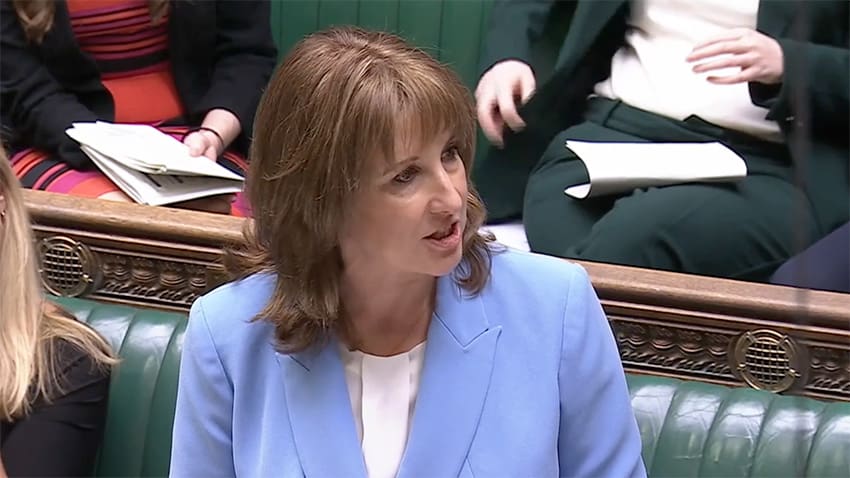
Chancellor Rachel Reeves delivered her Spring Statement to the House of Commons under the shadow of escalating conflict in the Middle East and mounting fears of a renewed inflation shock driven by surging energy prices.
In a speech lasting just over 20 minutes, Reeves stressed the importance of “stability in an increasingly uncertain world”, pointing to falling inflation and previous interest rate cuts as evidence that the cost-of-living squeeze on households is easing. However, beyond presenting updated forecasts from the Office for Budget Responsibility (OBR) and criticising opposition parties, she unveiled no new tax or spending measures.
The Chancellor has pledged to hold only one fiscal event each year, the autumn Budget, meaning the Spring Statement was positioned as a forecast update rather than a policy platform.
Growth downgraded for 2026
The OBR has revised down its forecast for UK economic growth in 2026 to 1.1 per cent, weaker than the 1.4 per cent predicted in November. Reeves insisted that the longer-term outlook remains resilient, with growth forecast to reach 1.6 per cent in both 2027 and 2028, slightly stronger than previously projected, before settling at 1.5 per cent in 2029 and 2030.
The downgrade comes amid soft domestic demand, geopolitical instability and renewed energy market volatility following military escalation in the Gulf region. Rising oil and gas prices threaten to complicate the inflation trajectory, particularly if disruption to global supply chains persists.
Unemployment to rise before falling
Unemployment is forecast to peak at 5.3 per cent later this year as weaker labour demand feeds through the economy. The rate is then expected to decline steadily, ending the parliamentary term at 4.1 per cent, lower than at the start.
The Chancellor framed this as evidence that the labour market remains fundamentally strong despite short-term headwinds. However, youth unemployment and business hiring caution remain key concerns across several sectors.
Borrowing falls and headroom improves
The OBR forecasts that borrowing will be nearly £18 billion lower than anticipated in the autumn. Public sector net borrowing is projected to decline from 4.3 per cent of GDP this year to 1.8 per cent by 2030.
Reeves highlighted that fiscal “headroom” against her self-imposed rules has increased from £21.7 billion in November to £23.6 billion. The buffer is designed to reassure financial markets and protect against unexpected shocks.
She also confirmed plans to meet North Sea energy industry leaders to discuss the implications of Middle East tensions on domestic production and energy security.
Night-time economy: “Stability rhetoric won’t save us”
Despite the Chancellor’s emphasis on stability, business leaders were quick to challenge what they described as a disconnect between Westminster messaging and frontline reality.
Michael Kill, chief executive of the Night Time Industries Association (NTIA), said the statement failed to recognise the acute pressures facing hospitality and leisure businesses.
“Across the UK, major brands and corporates are collapsing at pace. Confidence is fragile. Margins are exhausted,” he said.
Kill warned that escalating energy costs, higher National Insurance contributions and ongoing business rates burdens are placing “compounding pressure” on the sector. He called for a VAT cut for hospitality, arguing that targeted intervention would stimulate demand, protect jobs and restore confidence.
With youth unemployment rising, the NTIA stressed that the night-time economy has traditionally provided entry-level employment for young people, and warned that increased employment costs are making it harder to sustain those roles.
Business confidence remains fragile
Separate research from the Zoho Digital Health Study 2026 underscores the cautious mood across UK businesses. Twenty-one per cent of business leaders cited high inflation, recession risk and rising interest rates as their biggest external challenge.
Half of firms reported rising costs per employee over the past year, ahead of a further 4.1 per cent rise in the National Living Wage due in April 2026.
Sachin Agrawal, managing director at Zoho UK, said leaders are prioritising productivity and automation over expansion.
“Businesses want to grow, but they’re doing so more selectively by investing in technologies that deliver clear efficiency gains,” he said.
AI platform Photoroom also urged the government to match pro-entrepreneur rhetoric with tangible digital support for SMEs, arguing that access to AI tools can significantly reduce overheads and increase productivity.
Thames transport: a missed green opportunity
Uber Boat by Thames Clippers said the Spring Statement missed an opportunity to accelerate London’s transition to greener river transport.
Geoff Symonds, chief operating officer at Uber Boat by Thames Clippers, said regulatory reform and green fuel incentives could be implemented at minimal cost.
“Low-key budgets don’t have to mean low ambition for the environment,” he said, calling for parity in green incentives between river transport and land-based networks.
A cautious tone in uncertain times
The Spring Statement was deliberately restrained. Reeves’ strategy is to project fiscal discipline and market stability while preserving room for manoeuvre ahead of the autumn Budget.
However, with energy prices climbing, geopolitical tensions rising and consumer confidence fragile, the path ahead is far from settled. The coming months will test whether stability alone is sufficient, or whether targeted intervention becomes unavoidable.
For now, the Chancellor’s message is clear: hold the line, protect fiscal credibility and hope that inflation continues to fall despite global turbulence. Whether businesses and households feel that stability in practice remains an open question.

Paul Jones
Harvard alumni and former New York Times journalist. Editor of Business Matters for over 15 years, the UKs largest business magazine. I am also head of Capital Business Media’s automotive division working for clients such as Red Bull Racing, Honda, Aston Martin and Infiniti.


MF3d/iStock via Getty Images

Listen below or on the go on Apple Podcasts and Spotify

Bulls and bears battle as oil, dollar rally. (0:15) Paramount debt cut to junk. (2:39) Amazon buys George Washington University satellite campus. (2:52)
This is an abridged transcript of the podcast:
Our top story so far, the dip-buyers and the froth-fighters are trading blows on Wall Street today.
Stocks sank at the opening bell on a global tech selloff sparked by a 7% plunge in South Korea’s Kospi — driven by double-digit declines in Samsung and SK Hynix.
The selloff deepened, and the Dow Jones (DJI) shed 1,200 points — on pace for its worst drop since Liberation Day — while the S&P 500 (SP500) hit its lowest level of 2026.
Treasury yields shot higher, with the 10-year (US10) topping 4.1%. The VIX (VIX) — the fear gauge — hit a three-month high. And gold (GLD) and silver (SLV) sank.
That move in metals looked counterintuitive — gold usually gets a safe-haven bid.
But former J.P. Morgan strategist Marko Kolanovic has pointed out that the silver ETF (SLV), along with the South Korea equity ETF (EWY), has been acting more like a meme stock lately.
But the bears couldn’t keep up the momentum. Stocks caught a bid about an hour into trading.
At the time of recording, the major averages are down less than 1.5% at their highs of the day.
A couple of assets, though, are trading with more conviction.
The greenback keeps catching a bid — hitting its highest level since mid-January and on pace for its strongest two-day rally in about a year. The dollar index (DXY) moved back above its 200-day moving average.
And oil prices are going parabolic — with Brent (CO1:COM) and WTI (CL1:COM) up another 7%.
Iraq has cut production by nearly 1.5M barrels per day, and that could rise to 3M if disruptions at the Strait of Hormuz continue.
Robert Brooks, senior fellow at the Brookings Institution, says there’s “a weird tendency in markets to downplay unexpected shocks when they happen.
People don’t like to look like they didn’t see it coming, so they downplay the shock and the impact, he said.
What’s happening now in oil “is absolutely massive.”
Among active stocks, Cigna (CI) slipped after the company said CEO David Cordani is retiring. He’ll be replaced by President and COO Brian Evanko on July 1.
Evanko currently oversees Cigna’s Evernorth Health Services unit, which includes its pharmacy benefit manager, Express Scripts.
Best Buy (BBY) is up after boosting profit despite soft sales.
“Moving forward to FY27, we are excited about the momentum in our business,” CFO Matt Bilunas said. “We also expect to continue to navigate a mixed macro environment.”
Credo Technology (CRDO) is getting slammed after its Q3 beat wasn’t enough to satisfy investors given valuation.
Needham came to the company’s defense, with analyst N. Quinn Bolton — who really does sound like a Sherlock Holmes character — saying revenue growth is being driven by Active Electrical Cable proliferation and customer diversification.
And Fitch Ratings cut Paramount Skydance’s (PSKY) corporate and long-term debt ratings to junk after the company agreed to acquire Warner Bros. Discovery (WBD).
The deal is expected to leave the combined entity with roughly $79B in net debt.
In other news of notes, tired: educating humans. Wired (quite literally): powering AI bots.
Amazon (AMZN) has struck a deal to acquire George Washington University’s Virginia Science and Technology Campus in Ashburn, Va., for about $427M.
The deal was executed through Amazon Data Services, and the price comes out to roughly $3.5M an acre for the 120-acre site.
It’s in Loudoun County — a major U.S. data center hub — and the deed allows Amazon to develop the property into a data or IT center to support its expanding cloud and AI infrastructure.
GW has the option to keep programs and services at the site for up to five years.
And in the Wall Street Research Corner, on Monday, we told you about the Jefferies AI Risk Basket.
On the flip side, Jefferies has now updated its AI Beneficiaries Basket.
The quant team says the bullish AI basket is broadly flat this year — with trading shifting toward risks from AI disintermediation. That’s analyst speak for cutting out the middleman.
They built the basket by using AI to identify about 30 stocks with market caps above $20B that are “direct beneficiaries of the AI boom.”
You know the big names. So here are a few that may not be on your radar: Digital Realty Trust (DLR), Monolithic Power Systems (MPWR), CoreWeave (CRWV), Microchip Technology (MCHP) and Iron Mountain (IRM).
Check out the full list here.


Keep It Real Foods is a private label, contract manufacturing platform.

Alphabet Inc. (NASDAQ: GOOG) shares closed at $306.36 on March 2, 2026, down 1.63% or $5.07 from the prior session, reflecting broader market pressure from escalating Middle East conflict and investor caution over the company’s aggressive capital expenditure plans for artificial intelligence infrastructure.

The Class C shares opened at $302.96, ranged from a low of $301.06 to a high of $308.14, and traded on volume of about 21.8 million shares. Pre-market activity on March 3 indicated further softness, with quotes dipping toward $298-$305 amid risk-off sentiment tied to oil price surges and regional instability. Alphabet’s market capitalization hovered near $3.7 trillion, underscoring its position as one of the world’s most valuable companies despite the recent pullback.
The decline followed a volatile February, when shares peaked near $345-$350 early in the month before retreating. Year-to-date performance has been modest, with GOOG down roughly 2-3% in 2026 after strong gains in late 2025. Over the trailing 12 months, however, the stock remains up significantly, reflecting sustained momentum in search, cloud and AI-driven segments.
The latest session’s weakness aligned with broader tech sector headwinds. Escalating U.S.-Israeli military actions against Iran over the weekend triggered fears of prolonged energy disruptions, pushing Brent crude higher and compressing valuations for growth-oriented names like Alphabet. Analysts noted that while Alphabet’s core advertising business shows resilience, higher energy costs and macroeconomic uncertainty could indirectly pressure digital ad spending.
Alphabet’s fourth-quarter 2025 earnings, released Feb. 4, 2026, provided a strong backdrop. The company reported consolidated revenues of $113.8 billion, up 18% year-over-year (17% in constant currency), surpassing expectations. Google Services revenues climbed 14% to $95.9 billion, led by 17% growth in Search & other, 17% in subscriptions, platforms and devices, and 9% in YouTube ads. Full-year YouTube revenue across ads and subscriptions exceeded $60 billion, while paid subscriptions topped 325 million.
Google Cloud delivered standout performance, with revenues surging 48% to $17.7 billion, driven by demand for AI infrastructure, enterprise solutions and core GCP products. The segment’s operating income reached $5.3 billion, reflecting improved margins amid scaling efficiencies.
Consolidated operating income rose 16% to $35.9 billion, with a 31.6% margin (including a $2.1 billion Waymo compensation charge). Net income jumped 30% to $34.5 billion, and diluted EPS climbed 31% to $2.82, beating estimates. CEO Sundar Pichai highlighted Gemini 3’s launch as a milestone, with first-party models processing over 10 billion tokens per minute via API and the Gemini App reaching 750 million monthly active users.
For 2026, management guided capital expenditures of $175 billion to $185 billion — a substantial increase — to meet surging AI demand and expand infrastructure. The outlook has sparked debate: bulls view it as essential for maintaining leadership in AI and cloud, while some warn of near-term free cash flow pressure and depreciation impacts on margins.
Analysts remain largely constructive. Consensus 12-month price targets cluster in the $340-$350 range, implying 10-15% upside from current levels. Recent commentary emphasizes Alphabet’s AI moat, with Search seeing record usage and Gemini adoption accelerating. Google Cloud’s run rate now exceeds $70 billion annually, positioning it as a key growth engine.
Challenges include competitive pressures in digital advertising, regulatory scrutiny (including ongoing antitrust cases) and the high cost of AI investments. Depreciation rose sharply in 2025, and further acceleration is expected in 2026, potentially weighing on short-term profitability.
Technical levels show support near $300-$305, with resistance around $320-$330. The stock trades at a forward P/E of about 27-29 based on 2026 estimates, reasonable given projected revenue growth of 12-15% and operating margin expansion.
Investors eye the next earnings report, expected around April 23, 2026, for updates on Q1 performance, AI monetization (including potential Gemini ads) and capex execution. Amid geopolitical uncertainty, Alphabet’s diversified revenue streams — from resilient Search to high-growth Cloud — offer defensive qualities within tech.
As shares consolidate after earlier highs, Alphabet balances near-term macro risks with long-term AI and cloud tailwinds, keeping it a core holding for growth-oriented portfolios.

Loveholidays reportedly delays London IPO amid Iran war
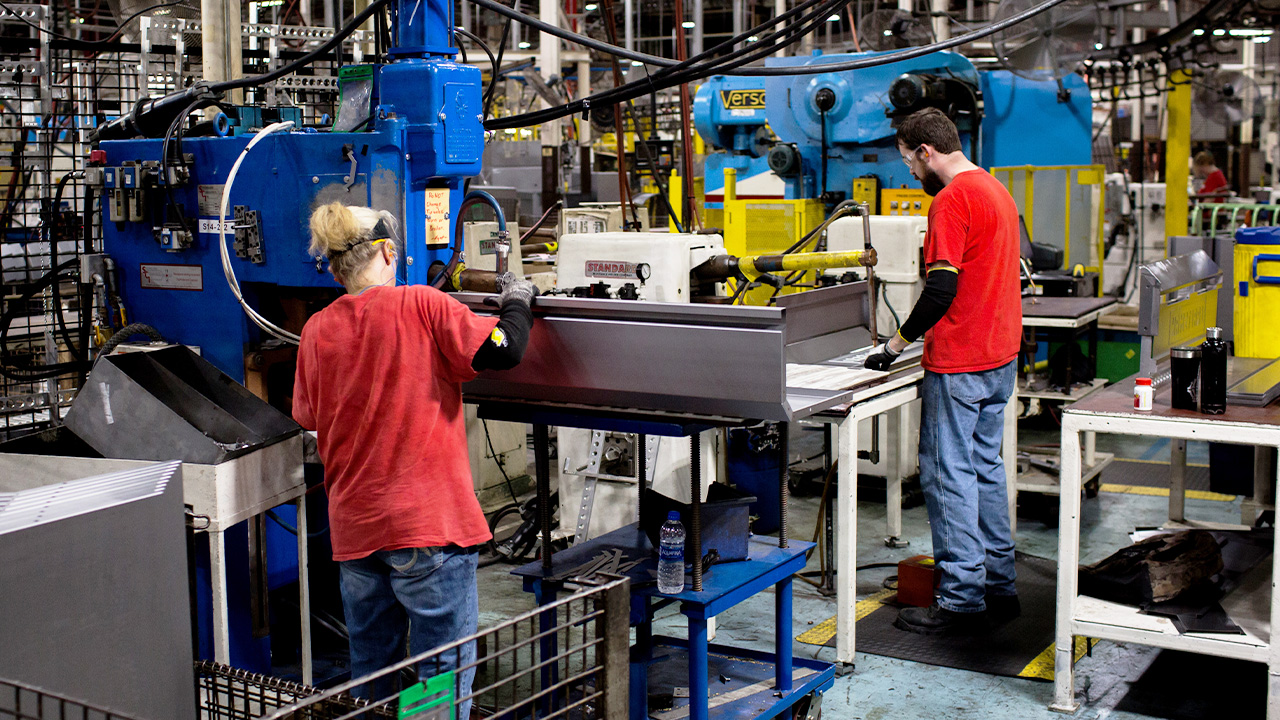
Bianco Research president and strategist Jim Bianco and The Expert Press CEO Dave Maney break down pressures U.S. CEOs are facing in the labor market.
Stanley Black & Decker said it will eliminate roughly 300 positions in New Britain, Connecticut, and close a manufacturing facility that produces single-sided tape measures as part of its ongoing restructuring efforts.
The move is tied to what the company described as a sustained decline in demand for the product category. The New Britain site primarily manufactures single-sided tape measures, which the company said are becoming obsolete in certain markets.
“As a result of a structural decline in demand for single-sided tape measures, we have decided to close our facility in New Britain that predominantly makes these products,” Debora Raymond, vice president of external communications for Stanley Black & Decker, said in a statement to WFSB. “These products are quickly becoming obsolete in the markets we serve.”
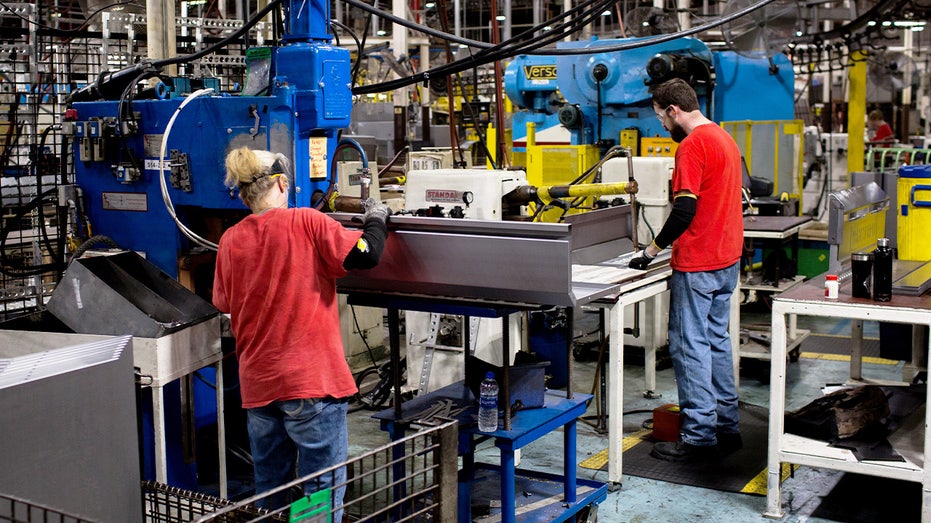
The move is tied to what the company described as a sustained decline in demand for the product category. (Alex Flynn/Bloomberg via Getty Images)
Raymond said the company is focused on assisting affected workers through the transition, including exploring opportunities at other locations as well as providing severance and job placement support for both salaried and hourly employees.
The reduction affects approximately half of the company’s roughly 600 employees in New Britain as of 2024. Stanley Black & Decker said its world headquarters in the city will remain open. The company has not disclosed a timeline for the facility’s closure.

DeWalt power tools are displayed at a Home Depot store. (Michael M. Santiago/Getty Images)
The decision comes as Stanley Black & Decker continues executing a multiyear cost-reduction and operational simplification plan. Since late 2023, the company has reduced its global workforce by about 7,000 employees and completed a $2 billion savings program that included facility consolidations and supply chain adjustments.
Stanley Black & Decker has been headquartered in New Britain since the 19th century, and its longstanding presence contributed to the city’s “Hardware City” identity.
| Ticker | Security | Last | Change | Change % |
|---|---|---|---|---|
| SWK | STANLEY BLACK & DECKER INC. | 84.04 | -2.45 | -2.83% |
Connecticut Gov. Ned Lamont acknowledged the impact on workers and families, saying workforce transitions are difficult but expressed hope that affected employees will find new opportunities.
Stanley Black and Decker is assisting affected workers through the transition, said Debora Raymond, vice president of external communications. (Getty Images)
“Although Stanley has made the decision to discontinue operations for manufacturing outdated products, a change in workforce opportunities is difficult for employees, their families, and any community,” Lamont said in a statement to WFSB. “However, I am hopeful that these skilled workers will be repurposed with the help of Stanley Black & Decker, a company that will still proudly be headquartered here in Connecticut. My administration is working closely with local and state leaders to support affected workers and to reimagine the factory site so it can continue to create opportunity and strengthen New Britain’s economic future.”
CLICK HERE TO GET FOX BUSINESS ON THE GO
The company has not indicated whether additional workforce actions are planned at other locations.
FOX Business reached out to Stanley Black & Decker for comment.

Oscar-winning actor Christian Bale has cautioned his admirers against meeting him in person, insisting the encounter would lead to “terrible disappointment” as his real-life persona falls short of the intense, charismatic characters he portrays on screen.

The 52-year-old star, best known for roles in “The Dark Knight” trilogy, “American Psycho” and “The Fighter,” made the self-deprecating remarks during a red-carpet interview with Entertainment Tonight at the London premiere of his latest film, “The Bride!,” on Feb. 26, 2026. The comments quickly went viral, amassing millions of views across social media platforms and sparking a mix of amusement, admiration and defense from fans.
“I’m never cool,” Bale told the outlet. “Not in those instances. I don’t want to meet people that I see in films, I don’t want to meet my heroes.” He explained that he has observed fans’ reactions firsthand: “I see it in people’s eyes when they’ve watched my movies and loved them, and then they meet me and I see their eyes, that terrible disappointment about who I really am. And it’s true, what a disappointment. That’s me at my best in the movie.”
Bale advised following the adage “never meet your heroes,” applying it to himself with a humorous twist. “Definitely don’t meet me,” he said, emphasizing that the idealized versions of actors exist primarily on screen. The clip, shared widely on Instagram, YouTube Shorts and X, drew reactions ranging from “He’s the most humble actor” to “This is why we love him — brutal self-awareness.”
The interview resurfaced discussions about the gap between celebrity personas and reality, a theme Bale has touched on before. Known for his method acting and extreme physical transformations — including losing over 60 pounds for “The Machinist” and gaining muscle for Batman — Bale often embodies larger-than-life figures. Fans project those intensities onto him, only to find a more reserved, private individual off-screen.
Social media erupted with memes and commentary. On Instagram reels from accounts like Viral Pop and Entertainment Tonight, users posted captions such as “Christian Bale warns fans they don’t want to meet him, they’ll just be disappointed 😭” and “The disappointment we need.” Reddit threads in r/popculturechat praised his humility, with one top comment noting his real-life philanthropy, including support for children’s causes that keep siblings together in foster care.
Some outlets tied the remarks to Bale’s past controversies, including his infamous 2008 on-set rant captured on audio, which he later apologized for. The Daily Mail highlighted the 17-year-old incident in coverage, suggesting Bale’s self-criticism stems from awareness of his public image.
Bale’s latest project, “The Bride!,” directed by Maggie Gyllenhaal, features him in a supporting role alongside Jesse Buckley and Penélope Cruz. The film, a reimagining of Frankenstein themes with a focus on the bride character, premiered to positive early buzz at festivals before its wider release push in 2026. Bale’s appearance at the London event marked one of his rare promotional outings, as he maintains a low public profile compared to many Hollywood peers.
Fans and commentators largely embraced the honesty. BuzzFeed called it “brutal self-awareness” that made people love him more, while Yahoo Entertainment and AsiaOne echoed the “terrible disappointment” line in headlines. Korean media, including Chosun, framed it as concern over the “gap between on-screen persona and real-life persona,” resonating with global audiences.
Bale has long avoided the spotlight outside work. He rarely engages in social media and has spoken about protecting his family’s privacy. In past interviews, he expressed discomfort with fame’s trappings, preferring roles that challenge him over celebrity status.
The viral moment underscores a recurring celebrity theme: the burden of fan expectations. Similar sentiments from stars like Keanu Reeves — often cited alongside Bale for humility — highlight how actors navigate pedestal placement. Bale’s warning, delivered with dry humor, served as both deflection and genuine reflection.
As “The Bride!” builds anticipation, Bale’s comments have paradoxically boosted goodwill. Online reactions leaned positive, with many calling him “real as f*ck” and appreciating the candor. One Instagram commenter summed it up: “Saying he’s not ‘cool’ automatically makes him the coolest actor.”
For now, Bale seems content letting his performances speak louder than personal encounters. His message to fans remains clear: admire from afar — the screen version might be the best he’ll ever be.


CEO says all CPGs in the center of the store are “under consideration.”


Food technology startup receives “no questions” letter.

The U.S. Air Force’s B-1B Lancer, nicknamed the “Bone,” has surged back into the spotlight with its high-profile strikes deep inside Iran as part of Operation Epic Fury, the ongoing U.S.-led campaign against Iranian military infrastructure in early March 2026.

On March 2, 2026, U.S. Central Command confirmed that B-1B Lancers flew nonstop from Ellsworth Air Force Base in South Dakota to target ballistic missile sites and command-and-control centers in Iran. The mission, involving multiple bombers, marked a shift from initial stealth B-2 Spirit operations to the Lancer’s high-payload, supersonic capability, signaling established air superiority and the ability to deliver massive conventional ordnance.
The deployment underscores the B-1B’s enduring role as a long-range strike platform amid escalating tensions. Here are 10 essential facts about the B-1B Lancer in 2026:
1. **Supersonic Speed and Massive Payload** — The B-1B reaches Mach 1.25 (about 900 mph at altitude) and carries up to 75,000 pounds of ordnance — the largest conventional payload in the Air Force inventory. It can haul 24 AGM-158 JASSM standoff missiles, JDAMs, cluster munitions or hypersonic weapons in ongoing upgrades.
2. **Variable-Sweep Wings for Versatility** — Its swing-wing design allows swept-back configuration for high-speed dashes and forward extension for low-altitude efficiency and loiter time, blending speed, range and maneuverability.
3. **Crew and Design Origins** — Four crew members — pilot, copilot and two weapon systems officers — operate the variable-geometry bomber, originally developed in the 1970s as a low-level nuclear penetrator before shifting to conventional missions post-Cold War.
4. **Key Specifications** — Powered by four General Electric F101-GE-102 afterburning turbofans (30,000+ pounds thrust each), it spans 137 feet with wings extended (79 feet swept), measures 146 feet long, stands 34 feet high, and has a maximum takeoff weight of 477,000 pounds with intercontinental range.
5. **Recent Upgrades for Modern Threats** — The Air Force pursues the “Super Bomber” configuration in 2026, including the Load Adaptable Modular (LAM) pylon program restoring external hardpoints for 50% more standoff weapons and integration of hypersonic missiles like the AGM-183A, bridging to the B-21 Raider.
6. **Combat Proven Across Decades** — The B-1B debuted in combat during the 1991 Gulf War and supported operations in Afghanistan, Iraq, Libya, Syria and recent 2026 actions in Venezuela and Iran, often flying ultra-long missions with aerial refueling.
7. **Ellsworth and Dyess Squadrons** — Active units operate from Ellsworth AFB, South Dakota, and Dyess AFB, Texas. The March 2 Iran strikes launched directly from Ellsworth, demonstrating transcontinental reach without forward basing initially.
8. **Non-Stealth but Survivable Design** — While lacking full-aspect stealth like the B-2, the B-1B incorporates reduced radar cross-section features and excels in post-air-defense-suppression environments, as seen in Epic Fury after initial B-2 strikes cleared threats.
9. **Long-Range Missions Highlight Endurance** — Recent Iran sorties lasted up to 37 hours round-trip with refueling, showcasing the bomber’s global strike capability. U.K. approval for Diego Garcia and RAF Fairford basing now shortens future missions.
10. **Bridge to B-21 Raider** — With about 45 airframes in service as of 2026, the B-1B serves as a high-volume “bomb truck” until the stealth B-21 fully replaces it around 2036-2038, maintaining U.S. long-range bomber capacity amid peer threats.
The B-1B’s involvement in Operation Epic Fury — following B-2 strikes — highlights its role in degrading Iran’s ballistic missile arsenal after air defenses were neutralized. Analysts note the transition to the Lancer allows sustained, high-volume precision strikes once superiority is achieved.
As the conflict widens, the “Bone” remains a cornerstone of U.S. power projection, blending Cold War origins with modern upgrades for 21st-century warfare.


Co-founders will continue to be actively involved in the company.

Israel-Hezbollah fire escalates, Israeli troops push into south Lebanon

Wall Street Lunch: Dow Plunges 1,200 Points Before Dip-Buyers Pitch In

BNB holds near $630 as YZi Labs pumps $100M into Hash Global Fund


-

 Politics5 days ago
ITV enters Gaza with IDF amid ongoing genocide
-

 Fashion4 days ago
Weekend Open Thread: Iris Top
-

 Politics10 hours ago
Alan Cumming Brands Baftas Ceremony A ‘Triggering S**tshow’
-

 Tech3 days ago
Unihertz’s Titan 2 Elite Arrives Just as Physical Keyboards Refuse to Fade Away
-

 Business7 days ago
True Citrus debuts functional drink mix collection
-

 NewsBeat6 days ago
Cuba says its forces have killed four on US-registered speedboat | World News
-
Sports4 days ago
The Vikings Need a Duck
-
 NewsBeat3 days ago
Dubai flights cancelled as Brit told airspace closed ’10 minutes after boarding’
-
 NewsBeat6 days ago
Manchester Central Mosque issues statement as it imposes new measures ‘with immediate effect’ after armed men enter
-
 NewsBeat3 days ago
The empty pub on busy Cambridge road that has been boarded up for years
-

 NewsBeat2 days ago
‘Significant’ damage to boarded-up Horden house after fire
-

 NewsBeat3 days ago
Abusive parents will now be treated like sex offenders and placed on a ‘child cruelty register’ | News UK
-
 NewsBeat7 days ago
Police latest as search for missing woman enters day nine
-

 Entertainment1 day ago
Baby Gear Guide: Strollers, Car Seats
-

 Business6 days ago
Discord Pushes Implementation of Global Age Checks to Second Half of 2026
-

 Business5 days ago
Only 4% of women globally reside in countries that offer almost complete legal equality
-
 Tech4 days ago
NASA Reveals Identity of Astronaut Who Suffered Medical Incident Aboard ISS
-
Politics3 days ago
FIFA hypocrisy after Israel murder over 400 Palestinian footballers
-

 Crypto World7 days ago
Entering new markets without increasing payment costs
-
 NewsBeat2 days ago
Emirates confirms when flights will resume amid Dubai airport chaos