
Business
Three forecasts in the Spring Statement that could affect you and your money


The government’s policy on tax thresholds – the point at which you start to pay tax, and the point where you tip into paying a higher rate of tax -has had an impact on this number. In last year’s Budget, Chancellor Rachel Reeves said these would stay frozen until 2031. That is three years longer than previously planned.

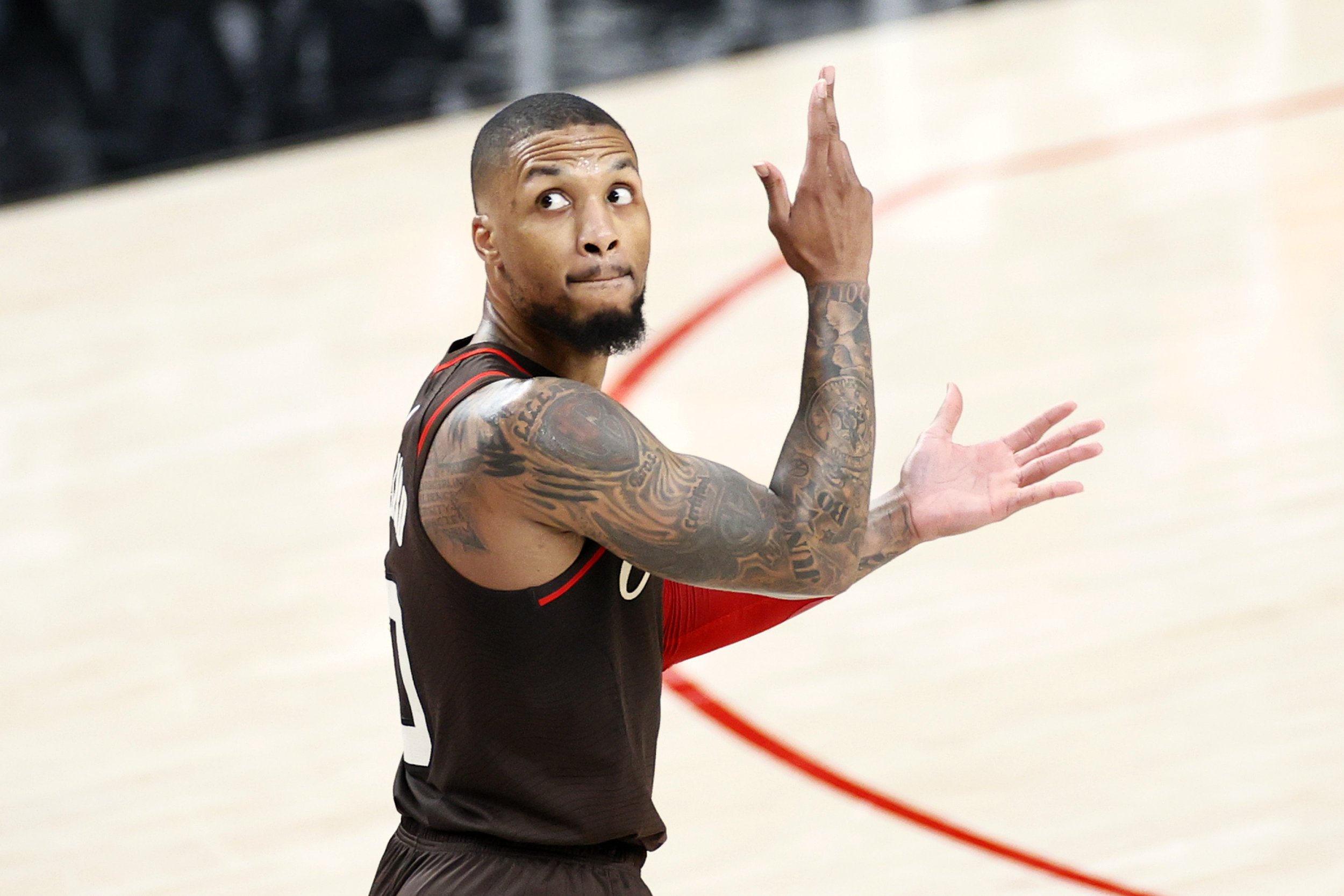
PORTLAND, Ore. — Portland Trail Blazers guard Damian Lillard remains sidelined with a torn left Achilles tendon and is not expected to play in the 2025-26 postseason, including the team’s upcoming play-in tournament game against the Phoenix Suns. The 35-year-old nine-time All-Star is targeting a full return for the start of the 2026-27 NBA season after a deliberate, season-long rehabilitation process.
Lillard suffered the injury in late April 2025 during Game 4 of the Milwaukee Bucks’ first-round playoff series against the Indiana Pacers. He underwent surgery in early May 2025. The Bucks waived him in the offseason using a stretch provision, clearing cap space while allowing Lillard to return home to the franchise that drafted him in 2012. Portland signed him knowing he would miss the entire 2025-26 campaign to prioritize long-term health.
As of mid-April 2026, more than 11 months after surgery, Lillard continues individualized rehab that includes on-court shooting and light basketball activities. Full-contact, high-speed play and competitive games remain off limits. The NBA’s official injury report lists him as out for “left Achilles tendon; injury management.” Blazers officials have consistently supported the cautious timeline, describing the current season as a bridge year focused on his recovery rather than any short-term contribution.
Achilles tendon ruptures rank among the most serious injuries for NBA players, particularly explosive guards who rely on quick first steps, lateral movement and repeated jumping. Recovery typically requires 10 to 12 months or more before an athlete can approach pre-injury form. At 35, Lillard and the organization opted against rushing the process. “I’m running my own race,” Lillard told reporters earlier this year when asked about his physical progress. “If I were 23, 24, 25, I probably would be more competitive about who is doing what, but I know where I am physically. I can feel it.”
Social media videos shared in recent weeks show Lillard moving fluidly, cutting, jumping and draining three-pointers in controlled workouts. In February, he participated in the NBA All-Star Weekend three-point contest — his first on-court appearance since the injury — and demonstrated that his elite shooting touch remains intact. The appearance served as a public sign of progress but did not alter the organization’s plan to keep him out for the full season.
Lillard has emphasized patience throughout the process. He has described the early months as frustrating yet manageable with the right mindset. “It’s going well,” he said in a December interview. “I think it’s one of those injuries where you just have to take your time. The first few weeks to a couple of months can be frustrating because you’re so limited, but with patience, giving yourself grace, and doing what’s necessary to keep progressing, you eventually start to see the light at the end of the tunnel.”
The decision to sit out the entire 2025-26 season aligns with modern medical protocols for older athletes recovering from Achilles tears. While some players have returned in nine months, the Blazers and Lillard prioritized ensuring he enters the 2026 offseason with a complete training block. He has expressed confidence that he can return at or near his previous All-Star level when the 2026-27 season tips off in October. “I plan to return and be myself,” Lillard has stated, adding that he is “excited” about reuniting with Portland’s young core.
Without Lillard on the floor, the Blazers have leaned heavily on their developing roster. Guards such as Scoot Henderson and Shaedon Sharpe have logged increased minutes, while forward Deni Avdija earned his first All-Star nod this season. The team has remained competitive enough to reach the play-in tournament, validating the front office’s long-term vision. Lillard has stayed engaged off the court, attending games, team events and locker-room sessions. “I’m in the locker room with them, the team events, all of those things,” he said. “I’ve definitely kept connected to the team. I try not to just be the veteran guy … I do a lot of listening, and when guys have questions, I’ll share what I think.”
The Achilles injury capped a turbulent 12 months for Lillard. Earlier in the 2024-25 season he dealt with a deep vein thrombosis diagnosis in his right calf, an issue that required careful management. The playoff injury, followed by the Bucks’ decision to move on, tested his resilience. Yet Lillard has framed the year as one of growth. “Over the past year, I’ve faced a lot — dealing with a blood clot, tearing my Achilles, being waived, being away from my kids and family — but I kept my head down and pushed forward,” he reflected. “God has been faithful, and through His grace, we’ve made it here. Now, I move forward with my head held high, still in one piece, and I’m really excited about what’s ahead, especially being back home in Portland.”
NBA history offers mixed lessons on Achilles recoveries for players of Lillard’s age and position. Kevin Durant returned to All-NBA form after his 2019 tear, but he was 30 at the time of injury. Guards such as DeMarcus Cousins faced longer struggles regaining quickness. Lillard’s case benefits from his elite shooting and basketball IQ, traits less dependent on raw explosiveness. Still, the organization has made clear that any return will come only when medical staff and Lillard himself confirm he can “play every year for the rest of my career as the best version of myself.”
Portland’s front office views the 2025-26 season as an investment. By granting Lillard the full calendar year, the Blazers position him to pair with a roster that has taken meaningful steps forward in his absence. Analysts note that a healthy Lillard next season could elevate a young, athletic group into a legitimate playoff contender in the Western Conference. Lillard has echoed that optimism, saying the team’s growth during his recovery makes him even more motivated. “Looking at our team’s growth, if I can come back right, we’ll have a great shot next season,” he said.
Fans in Portland have followed Lillard’s progress closely on social media. Clips of his workouts have gone viral, sparking renewed excitement for “Dame Time” in Rip City. The three-point contest appearance in February reminded supporters of the clutch performer who once led the Blazers to multiple playoff runs and earned a reputation as one of the league’s most loyal and skilled point guards.
Medical experts generally advise that full return to elite performance after an Achilles rupture can extend beyond the initial 10-to-12-month window, especially for athletes over 30. Strength training, blood-flow restriction therapy and gradual load management have become standard. Lillard’s regimen appears to follow these best practices. As of mid-April, he has not experienced setbacks publicly reported, and the Blazers continue to describe his outlook as positive.
The broader context of Lillard’s career adds weight to the recovery narrative. Drafted ninth overall in 2012, he spent 11 seasons as the face of the Blazers franchise, leading it to the playoffs eight times and earning All-Star honors seven times while in Portland. His 2023 trade to Milwaukee paired him with two-time MVP Giannis Antetokounmpo in a bid for a championship. Though the partnership produced strong regular-season results, postseason exits and the subsequent injury shifted the trajectory. Returning to Portland allowed Lillard to close his career where it began, mentoring the next generation while chasing unfinished business.
As the 2025-26 season winds toward its conclusion, the Blazers prepare for their play-in game without their veteran leader. Lillard will watch from the sidelines or the broadcast booth, continuing his rehab in the background. The organization has left the door technically open to an earlier return only if medical evaluations warrant it, but all current reporting points to a firm focus on 2026-27.
Lillard’s story this season has become one of resilience and strategic patience. At an age when many guards face declining athleticism, he has chosen the longer road to protect his legacy. If the plan holds, fans could see the familiar step-back three and “Dame Time” celebration again when the new season opens in October 2026. For now, the message from Portland is clear: the priority is not rushing back but ensuring Lillard returns as the player who has defined excellence for more than a decade.

Australia’s share market has crimped a three-week win streak despite market optimism the US-Iran conflict could be partially resolved in the near term.

LM Ericsson B ADR earnings missed by $0.09, revenue fell short of estimates

Rates Spark: Expectation Management
Business
Telefonaktiebolaget LM Ericsson (publ) 2026 Q1 – Results – Earnings Call Presentation (NASDAQ:ERIC) 2026-04-17


Seeking Alpha’s transcripts team is responsible for the development of all of our transcript-related projects. We currently publish thousands of quarterly earnings calls per quarter on our site and are continuing to grow and expand our coverage. The purpose of this profile is to allow us to share with our readers new transcript-related developments. Thanks, SA Transcripts Team

Token incentives are a foundational element of many Web3 applications, shaping how users interact with platforms and how ecosystems grow over time. These incentives are often discussed alongside broader market awareness, where shifts in crypto prices draw attention to digital assets and decentralized platforms.
Beyond market movements, token incentives play a deeper role, shaping participation, engagement, and long-term commitment in Web3 environments. Understanding how these mechanisms influence user behavior provides insight into why certain applications gain traction while others struggle to maintain activity.
What Are Token Incentives Designed To Accomplish?
Token incentives are designed to align user actions with a platform’s goals. By offering digital tokens in exchange for participation, platforms encourage behaviors such as contributing resources, providing feedback, or supporting network security. These incentives create measurable value around actions that help sustain the system.
Unlike traditional reward systems, token incentives often grant users a stake in the ecosystem itself. This shared ownership can encourage longer-term thinking, as participants benefit from the platform’s growth and continued activity.
The design of these incentives directly influences whether users engage briefly or develop ongoing involvement. Effective token incentives balance immediate rewards with longer-term alignment, shaping how users prioritize their actions within the platform.
Encouraging Early Adoption and Participation
One of the primary functions of token incentives is to attract early users. New platforms often face the challenge of building activity before network effects take hold. Token rewards help overcome this barrier by offering tangible value for participation during early stages.
Early adopters may be incentivized to test features, identify issues, or contribute to initial liquidity or data. These contributions help establish a functional ecosystem that later users can rely on. Without incentives, many platforms would struggle to generate the activity needed to demonstrate usefulness.
Reinforcing Desired User Behaviors
Token incentives also shape behavior by reinforcing specific actions. Platforms can design reward structures to prioritize behaviors that support stability, security, or quality. For example, incentives may favor consistent participation over one-time activity, encouraging users to remain engaged.
This reinforcement mechanism mirrors principles found in behavioral economics, where rewards influence decision-making. When incentives are aligned with platform goals, users naturally gravitate toward behaviors that sustain the ecosystem.
However, poorly designed incentives can encourage unintended behaviors, such as short-term exploitation or excessive speculation. This highlights the importance of carefully designed incentives.
Creating Long-Term Engagement
Sustained engagement is an important challenge for many digital platforms. Token incentives can support long-term participation by linking rewards to continued involvement rather than isolated actions. Vesting schedules, participation thresholds, or contribution-based rewards encourage users to remain active over time.
When users see ongoing value in participation, they are more likely to contribute thoughtfully rather than focusing solely on immediate gains. This dynamic supports healthier ecosystems with more stable activity patterns. Long-term incentives also help align user interests with platform sustainability, reducing the likelihood of rapid disengagement.
Shared Ownership and Psychological Impact
Tokens often represent more than financial value. They can create a sense of ownership and belonging within a platform. This psychological impact influences how users perceive their role in the ecosystem.
When participants hold tokens, they may feel invested in the platform’s success and more inclined to act in its best interest. This sense of shared ownership can strengthen community ties and encourage collaborative behavior.
The Risks of Misaligned Incentives
While token incentives can drive engagement, they also carry risks if not carefully designed. Overemphasis on short-term rewards may attract users who are primarily interested in extracting value rather than contributing meaningfully.
This behavior can lead to instability, reduced trust, and eventual decline in platform activity. Additionally, overly complex incentive structures may confuse users or create barriers to entry. Designing incentives requires balancing accessibility, fairness, and sustainability. Platforms that fail to address these factors may experience rapid initial growth followed by equally rapid decline.
Governance and Participation Incentives
In many Web3 apps, token incentives are tied to governance mechanisms. Token holders may be able to participate in decision-making processes, influencing platform direction and policy.
This governance role incentivizes informed participation, given that users with voting power have a direct stake in outcomes. When governance incentives are well-structured, they encourage thoughtful engagement rather than passive holding.
Adapting Incentives Over Time
Token incentive models are not static. As platforms evolve, incentive structures often need to be adjusted to reflect changing priorities and user behavior. Early-stage incentives may focus on growth, while mature platforms emphasize sustainability and quality.
Ongoing evaluation allows platforms to refine incentives based on observed outcomes. This adaptability supports long-term viability and reduces the risk of incentive fatigue.
Motivation Built Into the System
Token incentives shape user behavior by aligning participation with platform goals, encouraging engagement, and fostering shared ownership. When thoughtfully designed, they support sustainable growth and meaningful involvement within Web3 apps.

Tom Zaunmayr speaks to Jack McGinn about the new Pastoralists and Graziers Association of WA president Digby Stretch.

Indigenous contractor Maali Group has been placed into administration for a second time, after shareholders failed to settle disputes.

TUCSON, Ariz. — More than two and a half months after 84-year-old Nancy Guthrie vanished from her Catalina Foothills home, authorities and medical experts continue to express grave concerns about her fragile health, with no confirmed sightings or proof she remains alive despite ongoing FBI DNA analysis and new ransom claims.

Guthrie, the mother of NBC’s “Today” co-anchor Savannah Guthrie, was last seen Jan. 31, 2026, after a family dinner. She was reported missing the next morning when she failed to join friends for an online church service. Investigators believe she was abducted in the early morning hours of Feb. 1, citing surveillance footage of a masked, armed individual tampering with her doorbell camera around 1:47 a.m. and data showing her pacemaker disconnecting from her phone at approximately 2:30 a.m., indicating the device moved out of range.
Drops of blood confirmed to match Guthrie’s DNA were found on her front porch, though the scene showed relatively little disarray, leading some experts to suggest something went wrong quickly during the incident. No signs of a major struggle were reported, but the presence of blood and the abrupt pacemaker disconnection heightened immediate worries about injury and her underlying medical conditions.
From the outset, law enforcement has emphasized Guthrie’s precarious health as a critical factor. The 84-year-old relied on daily medications for high blood pressure and other cardiac issues, and she had a pacemaker. Family members and authorities noted she was not in robust condition, with limited mobility due to a bad back and other age-related ailments. Doctors warned that missing even a short period of her prescribed regimen could prove life-threatening, raising risks of heart attack, stroke, dehydration or other complications exacerbated by stress and possible captivity.
Pima County Sheriff Chris Nanos stated early in the investigation that Guthrie was “sharp as a tack” mentally but physically vulnerable, with her life potentially at risk without prompt access to medication. A doctor appearing on media outlets highlighted how abduction stress on an elderly person with cardiac problems could trigger fatal events, noting adults over 60 often feel heightened terror and vulnerability in such situations.
As weeks turned into months, those concerns have only deepened. By early April, former detectives and criminal profilers suggested kidnappers may have fatally underestimated Guthrie’s fragility. One Indiana detective told NewsNation that the abductors likely assumed they could hold an elderly woman for ransom briefly before releasing her, but her health may have deteriorated rapidly under duress, possibly leading to a medical event or the decision to dispose of her body when she was “no longer of value.”
Forensic nurse and criminal profiler Ann Burgess theorized that “something went very wrong” inside the home, pointing to the limited blood evidence and wondering about its source and spread. Experts have speculated the perpetrators might have planned a quick operation but encountered complications due to Guthrie’s condition, shifting from ransom to potential cover-up.
The investigation has yielded incremental developments but no breakthrough in locating Guthrie or identifying suspects. The FBI recently received and is analyzing a mixed DNA sample recovered from her home, including results from a hair sample, using advanced new technology in hopes of generating leads. Sources familiar with the probe described the DNA as potentially critical, though results have not yet been publicly linked to any individual.
Multiple ransom notes have surfaced, some sent to TMZ demanding cryptocurrency payments. Earlier demands carried deadlines that passed without resolution. In recent days, additional letters claimed knowledge of Guthrie’s body location and the kidnapper’s identity, but their authenticity remains unverified and authorities have not confirmed any payments or credible breakthroughs from them.
No suspects have been named publicly more than 75 days into the case. Surveillance video, DNA from gloves or other items, and neighborhood canvassing have not produced arrests. Some experts suggest the perpetrator could be someone Guthrie knew or who had scouted the home weeks earlier, based on timeline details shared by the sheriff.
Savannah Guthrie has stepped away from “Today” show duties at times amid the anguish, with family maintaining a low public profile while cooperating fully with investigators. Friends described Nancy as mentally sharp, socially active — she played mahjong, read books and celebrated her birthday shortly before disappearing — despite physical limitations that made even walking to the mailbox challenging on difficult days.
Health experts consulted on the case have painted a bleak picture for prolonged captivity. Without blood pressure medication and cardiac support, an 84-year-old with a pacemaker faces elevated risks of arrhythmia, hypertension crises or strokes. Stress from abduction could compound these, potentially causing a fatal cardiac event within days or weeks. Dehydration, lack of proper nutrition or injury from the initial incident would accelerate decline.
Some analysts note that dropping ransom amounts in later communications might signal desperation on the perpetrator’s side — or indicate that the victim’s health had already failed, reducing leverage. Odds of a safe rescue after this length of time for an elderly person with medical needs are estimated low by some observers, though officials continue to urge the public for tips and treat the case as an active abduction.
The broader context adds layers of complexity. The case has drawn national attention due to Savannah Guthrie’s prominence, sparking a media circus with amateur sleuths and vloggers trespassing in the neighborhood, prompting sheriff’s warnings. It also highlights vulnerabilities for elderly residents in upscale areas, where targeted crimes can exploit perceived isolation.
Pima County investigators, working with the FBI, maintain a team of about two dozen on the case. Recent activity included renewed neighborhood presence, though residents expressed frustration over disruptions. Advanced DNA testing represents the latest hope for a genetic match that could identify a suspect or confirm connections.
Family and friends have expressed profound worry, not only about Nancy’s safety but specifically her ability to survive without medical intervention. In early statements, they stressed she could not go long without her prescriptions. The pacemaker disconnection early in the timeline suggested rapid removal from her familiar environment, cutting off monitoring and support.
As the search enters its third month, authorities continue to appeal for information. Tips can be directed to the Pima County Sheriff’s Department or the FBI. While some profilers speculate the worst — that health complications led to disposal of remains — officials have not declared her deceased and emphasize every lead is pursued with urgency.
Medical realities for someone in Guthrie’s position make time the enemy. Experts repeatedly note that even if initially uninjured beyond minor blood loss, the combination of age, cardiac history, medication dependence and abduction trauma creates a narrow window for survival without intervention. Stories of other missing elderly individuals sometimes end with survival due to resilience or quick recovery, but those cases rarely involve suspected violent abduction.
The Guthrie family’s private pain has played out publicly through Savannah’s occasional on-air emotions and stepped-away moments, humanizing the ordeal for viewers. Nancy was portrayed as a devoted mother and grandmother with a quiet faith, mischievous humor and strong community ties in the Tucson area.
Whether new DNA analysis yields a suspect, or further ransom communications provide actionable intelligence, the health concerns remain paramount. Detectives fear the kidnappers’ miscalculation about an elderly woman’s endurance may have turned a planned extortion into tragedy. Until concrete evidence emerges — a safe return, recovery of remains or arrest — the uncertainty compounds the anguish for loved ones already racing against her medical vulnerabilities.
The case serves as a sobering reminder of how quickly an elderly person’s health can deteriorate under extreme circumstances. For now, Nancy Guthrie’s condition — wherever she may be — continues to drive the investigation’s sense of urgency, even as weeks stretch into months with more questions than answers.

NEW YORK — AXT Inc. shares exploded higher Thursday, surging nearly 30% to close at $81.78 after a volatile session that saw the stock swing from $59.30 to an intraday high of $82.19, as momentum traders piled into the compound semiconductor maker amid broader excitement over artificial intelligence infrastructure demand.

The dramatic one-day gain on April 16, 2026, came on heavy volume exceeding 16.7 million shares, more than 10 times the average, pushing the company’s market capitalization well above $3 billion despite trailing 12-month revenues of roughly $88 million and ongoing net losses. The rally extended a stunning run that has seen the stock climb from around $1 in early 2025 to current levels, delivering returns exceeding 2,800% for early holders.
Yet the surge has left many Wall Street analysts shaking their heads. Consensus price targets from five to 11 covering analysts hover between $14.75 and $35.60, implying potential downside of 55% to 82% from Thursday’s close. Ratings remain mixed, with a lean toward “Hold” overall — two Buy, two Hold and one Sell in recent tallies — even as some longer-term forecasts see revenue growth ahead.
AXT, based in Fremont, California, specializes in indium phosphide (InP), gallium arsenide (GaAs) and germanium substrates used in high-speed optical components, data center connectivity, wireless communications and other advanced applications. Indium phosphide has emerged as a critical material for optical interconnects that help alleviate bandwidth bottlenecks in AI training clusters and hyperscale data centers.
Management has highlighted strong underlying demand, particularly for InP wafers tied to the AI build-out. In comments accompanying delayed fourth-quarter 2025 results, Chief Executive Morris Young noted progress on export permits from China and expressed confidence in sequential revenue growth for the first quarter of 2026. The company plans to more than double its InP production capacity by the end of 2026, with potential for another doubling in 2027 to meet projected order growth.
First-quarter 2026 earnings are scheduled for release after the market close on April 30, with analysts expecting revenue around $26 million and a loss per share of about $0.05. Full-year 2026 revenue estimates range from roughly $100 million to $125 million in some models, reflecting optimism about recovering shipments and capacity expansion, though earlier guidance had been tempered by export control delays in late 2025.
The bullish case rests on AXT’s positioning in a multi-year growth cycle for optical communications. As AI models scale, the need for faster, more efficient data movement between servers drives demand for InP-based lasers and detectors. Company executives have pointed to broadening customer relationships, including with tier-one optical players previously underserved, and a robust backlog once permitting issues ease.
Yet skeptics argue the stock’s valuation has detached from fundamentals. At current levels, AXT trades at elevated multiples — roughly 20-30 times forward sales in some calculations — while still posting losses. Trailing earnings remain negative, and the company carried a net loss of $21.3 million on $88.3 million in revenue for fiscal 2025. Insider selling totaling millions of dollars in recent months has added to concerns about whether executives view the run-up as a selling opportunity.
Geopolitical risks loom large. A significant portion of AXT’s manufacturing occurs in China, subjecting indium phosphide shipments to export license approvals by Chinese authorities. Delays in permits contributed to a fourth-quarter 2025 revenue miss, and any future tightening of U.S.-China technology restrictions or retaliatory measures could disrupt supply chains or customer orders.
Analysts at firms like B. Riley have expressed incremental caution on the InP supply chain, while others note that competitors or alternative technologies could eventually ease the current bottleneck. Some models peg fair value closer to $28, suggesting the stock is overvalued by more than 50% even if growth materializes.
Technical analysts observe that the rapid ascent has left the shares extremely extended. The stock has broken out dramatically but now sits well above most moving averages, raising the risk of a sharp pullback if momentum fades or if the upcoming earnings disappoint. Short interest and options activity reflect heightened speculation, with traders betting on continued volatility.
For investors considering a position in 2026, the debate centers on timing and risk tolerance. Bulls point to the transformative potential of AI-driven demand and AXT’s capacity ramp as reasons to hold or add on dips, arguing that current prices bake in optimistic scenarios for 2027 and beyond when revenue could approach or exceed $200 million in some projections. Capacity expansion, if executed smoothly, could support higher margins and eventual profitability.
Bears counter that the market has gotten ahead of itself. With analyst targets clustered far below current trading levels and persistent losses, the risk-reward skews negative for new buyers at these prices. Those who rode the rally from single digits may consider taking profits, especially ahead of earnings that could serve as a reality check on near-term execution.
Broader semiconductor sector sentiment remains supportive, with AI spending by hyperscalers like Microsoft, Google and Amazon continuing to fuel optimism. However, AXT’s small size, customer concentration risks and exposure to policy shifts differentiate it from larger, more diversified chip players.
Longer-term forecasts vary widely. Some optimistic models see the stock reaching $85 or higher within 12 months under ideal conditions, while more conservative estimates warn of a return toward the $20-$30 range if growth disappoints or macro headwinds intensify. Revenue visibility improves in the second half of 2026 if capacity comes online and permits flow more freely, but investors should prepare for quarterly lumpiness.
Dividend investors will find little appeal, as AXT does not currently pay one and focuses resources on growth and operations. The balance sheet includes some cash but also reflects investments in expansion.
Market participants should monitor upcoming developments closely: the April 30 earnings report and conference call, any updates on China export permits, progress on capacity additions, and shifts in AI capital expenditure plans by big tech. Broader trade tensions or interest rate moves could also sway sentiment.
In summary, AXT Inc. offers exposure to a compelling secular theme in AI infrastructure but carries substantial valuation, execution and geopolitical risks. The explosive move to $81.78 in April 2026 has rewarded patient holders yet left new entrants facing a high bar for justification. Conservative investors may prefer to wait for a pullback or clearer evidence of sustained profitability, while aggressive growth-oriented traders might view volatility as opportunity — albeit with tight risk management.
Whether the stock ultimately justifies its current premium will depend on AXT’s ability to convert hype into consistent revenue growth and positive earnings in the quarters ahead. For now, the market appears split between euphoria over AI tailwinds and skepticism about stretched fundamentals.

‘I love The Real Housewives Of Beverly Hills – but this one issue has to change’

Portland Trail Blazers Star Targets Full Return for 2026-27 Season

Jon Rahm calm about LIV Golf future amid talk Saudi backers could pull funding


-

 Politics7 days ago
US brings back mandatory military draft registration
-
 Sports7 days ago
Man United discover Nico Schlotterbeck transfer fee as defender reaches Dortmund agreement
-

 Fashion7 days ago
Weekend Open Thread: Veronica Beard
-

 Politics5 days ago
World Cup exit makes Italy enter crisis mode
-

 Business6 days ago
Tesla Model Y Tops China Auto Sales in March 2026 With 39,827 Registrations, Beating Cheaper EVs and Gas Cars
-

 Crypto World4 days ago
The SEC Conditionalises DeFi Platforms to Be Avoided for Broker Registration
-

 Crypto World3 days ago
SEC Signals Exemption for Crypto Interfaces From Broker Registration
-

 News Videos2 days ago
Secure crypto trading starts with an FIU-registered
-
 NewsBeat4 days ago
Pep Guardiola and Gary Neville agree over Arsenal title problem that benefits Man City
-

 Business6 days ago
Ireland Fuel Protests Enter Day 5 as Blockades Spark Shortages and Government Prepares Support Package
-

 Business7 days ago
OpenAI Halts Stargate UK Data Centre Project Over Energy Costs and Copyright Row
-

 Crypto World6 days ago
Federal judge blocks Arizona from bringing criminal charges against Kalshi
-

 NewsBeat3 days ago
Trump and Pope Leo: Behind their disagreement over Iran war
-

 Crypto World3 days ago
SEC Proposes Certain Crypto Interfaces Don’t Need to Register as Brokers
-
 NewsBeat5 days ago
JD Vance announces ‘no agreement’ with Iran over nuclear weapons fear
-

 Business6 days ago
IMF retains floor for precautionary balances at SDR 20 billion
-

 Business6 days ago
Former Liverpool CEO eviscerates FIFA for World Cup ticket pricing
-
 Crypto World4 days ago
Sei Network Enters Quiet Reset Phase as On-Chain Metrics Signal a Slowdown in 2026
-
Business6 days ago
Coreweave CSO Venturo sells $5.5m in class a common stock
-
Sports6 days ago
1st-Round WR Enters Vikings Mock Draft Orbit
You must be logged in to post a comment Login