

Business
Restoration Planning Tips for Buying an Old Home

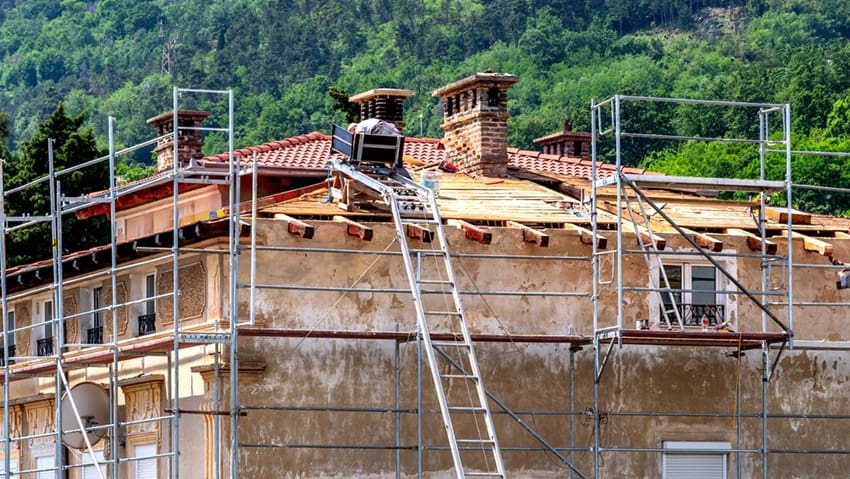
Older homes possess a distinctive charm that continues to captivate buyers across the property market. Character features, architectural individuality, and historical ambience often create a sense of warmth and authenticity that modern developments struggle to replicate.
However, purchasing an older property also introduces significant responsibilities. Restoration projects require careful planning, financial discipline, and realistic expectations. Property professionals, including experienced local agents such as Hunters ashford estate agents, frequently advise buyers that successful restoration begins long before renovation work actually starts. Thorough preparation is often the difference between a rewarding transformation and an overwhelming financial burden.
Understanding the Condition of an Older Property
One of the first priorities when purchasing an older home is obtaining a comprehensive understanding of its condition. Superficial appearance alone rarely reveals the full extent of potential issues hidden beneath floors, behind walls, or within structural elements.
Detailed building surveys are therefore essential. Older properties may contain problems such as subsidence, timber decay, roof deterioration, damp penetration, or outdated construction methods that require specialist attention.
A professional survey provides clarity regarding both immediate repair requirements and future maintenance considerations. This information is invaluable when assessing whether the restoration project remains financially and practically viable.
Setting a Realistic Restoration Budget
Restoration projects frequently cost more than buyers initially anticipate. While cosmetic improvements are relatively straightforward to estimate, structural repairs and hidden defects can significantly increase expenditure.
Creating a detailed and realistic budget is therefore crucial from the outset. Buyers should account not only for renovation costs but also professional fees, permits, temporary accommodation, contingency reserves, and rising material prices.
Including a contingency fund is particularly important. Unexpected discoveries during restoration are extremely common in older homes, and financial flexibility helps prevent delays or compromised workmanship later in the project.
Prioritising Structural Repairs First
Structural integrity should always take precedence over cosmetic improvements. While decorative upgrades may feel more immediately rewarding, unresolved structural issues can undermine the entire property if neglected.
Roof repairs, foundation stabilisation, damp treatment, and drainage improvements should therefore be addressed early within the restoration process. These elements protect the building itself and create a stable foundation for all subsequent renovation work.
Attempting aesthetic improvements before resolving structural concerns often leads to duplicated costs and unnecessary disruption later.
Researching Planning Permission and Regulations
Older homes, particularly listed buildings or properties within conservation areas, may be subject to strict planning regulations. These restrictions often exist to preserve architectural heritage and maintain historical integrity.
Before beginning restoration work, buyers should thoroughly investigate local planning requirements and obtain any necessary permissions. Certain modifications, including window replacements, extensions, or structural alterations, may require specialist approval.
Failure to comply with planning regulations can result in enforcement action, financial penalties, or costly remedial work. Understanding these obligations early prevents complications during the restoration process.
Preserving Original Character Features
One of the greatest appeals of older homes lies in their original architectural features. Fireplaces, exposed beams, sash windows, decorative cornicing, and traditional flooring contribute significantly to character and value.
Whenever possible, restoration should aim to preserve these elements rather than replace them entirely. Authentic restoration often enhances both aesthetic appeal and long term market desirability.
Balancing preservation with practicality is important, however. Some original features may require discreet modernisation to meet contemporary living standards while retaining historical authenticity.
Upgrading Essential Systems
Older properties frequently contain outdated infrastructure that requires substantial modernisation. Plumbing systems, electrical wiring, heating installations, and insulation standards may no longer meet modern safety or efficiency expectations.
Upgrading these systems is essential for both comfort and regulatory compliance. Modern electrical systems improve safety, while efficient heating and insulation significantly reduce long term running costs.
Careful planning ensures that these upgrades integrate sympathetically within the property’s original design rather than compromising its historical character.
Finding the Right Contractors and Specialists
Restoration work requires specialised expertise. Builders experienced primarily in modern construction may lack the technical understanding necessary for heritage properties and traditional building methods.
Selecting contractors with proven restoration experience is therefore critical. Buyers should review previous projects, request references, and verify relevant qualifications before appointing specialists.
Communication is equally important. Restoration projects often evolve as hidden issues emerge, making transparency and adaptability essential qualities within the contractor relationship.
Managing Restoration Timelines Effectively
Restoration projects frequently take longer than initially expected. Delays may arise from material shortages, weather conditions, planning approvals, or unforeseen structural discoveries.
Creating a phased renovation schedule helps maintain organisation and prioritise essential work logically. Structural repairs, infrastructure upgrades, and weatherproofing should generally occur before cosmetic improvements begin.
Realistic timelines reduce frustration and allow for more controlled financial management throughout the project.
Combining Modern Living with Historic Charm
Many successful restorations achieve a balance between traditional character and modern functionality. Buyers increasingly seek homes that retain period charm while accommodating contemporary lifestyles.
Open-plan kitchen extensions, discreet smart-home technology, and energy-efficient improvements can coexist harmoniously within older properties when designed thoughtfully.
The key lies in respecting the architectural identity of the home while enhancing usability. Poorly integrated modernisation can diminish both aesthetic coherence and long term value.
Understanding Long Term Maintenance Requirements
Older homes generally require more ongoing maintenance than newer properties. Traditional materials and ageing structures demand regular attention to prevent deterioration.
Routine inspections, preventative repairs, and careful upkeep are therefore essential aspects of ownership. Maintaining roofs, gutters, timber elements, and ventilation systems helps preserve structural integrity and reduce larger repair costs later.
Prospective buyers should approach restoration not as a one-time project but as an ongoing stewardship responsibility.
Restoration as a Long Term Investment
Restoring an older home can provide both emotional satisfaction and long term financial benefits. Well-executed restorations often enhance market value significantly, particularly where original character has been preserved successfully.
However, the rewards extend beyond financial return alone. Many homeowners value the opportunity to preserve architectural heritage and create uniquely personal living spaces.
Patience, planning, and attention to detail are central to successful restoration. Buyers who approach the process strategically are often rewarded with homes that combine historical richness, modern comfort, and enduring market appeal.
Buying and restoring an older home is both a challenge and an opportunity. While restoration projects require careful financial planning, specialist expertise, and ongoing commitment, they also offer the chance to preserve architectural character and create highly distinctive living environments. By prioritising structural integrity, respecting original features, and planning renovations strategically, buyers can transform ageing properties into valuable and deeply rewarding long term homes.


10x Genomics: Temporary Pain, Long-Term Gain As Atera Rollout Approaches

NEW YORK — The 2026 NBA Finals shift back to Madison Square Garden on Wednesday night for Game 4, with the New York Knicks holding a 2-1 series lead over the San Antonio Spurs after a thrilling 115-111 Spurs victory in Game 3. Victor Wembanyama’s dominant performance has San Antonio believing it can even the series on the road, while the Knicks aim to reclaim momentum and move within one win of their first championship since 1973.
Tipoff is scheduled for 8:30 p.m. ET. The Knicks enter as 2.5-point favorites, with the over/under set at 216.5 points. After dropping the first two games in San Antonio, the Spurs stole Game 3 in New York behind Wembanyama’s explosive 32-point, eight-rebound, six-assist, three-block, two-steal masterpiece and strong contributions from rookie Stephon Castle.
Wembanyama’s Emergence as the Focal Point
The 7-foot-4 phenom has elevated his play as the series progresses. In Game 3, Wembanyama delivered a full 48-minute effort that turned the tide in the fourth quarter. His ability to dominate both ends of the floor has become the Spurs’ clearest path to victory. Analysts highlight his improved low-post scoring and defensive versatility as keys to sustaining pressure against New York’s physical frontcourt.
For San Antonio to force a Game 5 back home, Wembanyama must continue anchoring the offense while disrupting the Knicks’ rhythm. His presence forces constant adjustments from New York coach Tom Thibodeau, who must decide between double-teaming the big man or living with his scoring outbursts.
Knicks’ Response and Home Advantage
The Knicks, led by Jalen Brunson, have shown resilience throughout the playoffs. Brunson delivered 32 points in Game 3 but could not overcome the Spurs’ late surge. At Madison Square Garden, the Knicks will lean on their raucous home crowd and defensive identity to reassert control.
New York’s strength lies in its balanced attack and ability to grind out possessions. Players like Karl-Anthony Towns and Mikal Bridges provide secondary scoring and defensive versatility that can counter San Antonio’s length. The Knicks’ 13-game playoff winning streak ended in Game 3, adding urgency to avoid falling into a 2-2 tie.
Tactical Keys and Adjustments
Coaches on both sides face critical decisions. For the Spurs, maintaining defensive intensity while feeding Wembanyama in advantageous spots will be paramount. San Antonio’s bench, including Castle’s fourth-quarter impact, must provide consistent energy on the road.
The Knicks will likely emphasize containing Wembanyama through help defense and forcing the ball out of his hands. Brunson’s pick-and-roll mastery and New York’s transition game could exploit any lapses in Spurs’ rotations. Rebounding and three-point efficiency are expected to be decisive factors in a series defined by half-court execution.
Series Context and Stakes
The Finals matchup pits two franchises with storied histories but very different recent paths. The Knicks have built a contender through smart drafting and free agency, while the Spurs have ridden Wembanyama’s meteoric rise following years of rebuilding. A Spurs victory in Game 4 would send the series back to San Antonio with renewed belief, while a Knicks win would put them firmly in the driver’s seat.
Injuries and fatigue could play roles as the series reaches its midpoint. Both teams have managed minutes carefully, but the physical toll of playoff basketball intensifies with each game. Wembanyama’s durability after a strong Game 3 performance will be closely monitored.
Broader Implications
A prolonged series benefits the NBA’s global audience, with stars like Wembanyama and Brunson showcasing the league’s future. Wembanyama’s ability to “bring victory once again” could cement his status as a generational talent capable of leading a championship charge in only his third season.
For the Knicks, closing out games at home remains a point of emphasis after letting Game 3 slip away. Thibodeau’s defensive schemes have been a hallmark of their success, and adjustments to counter San Antonio’s length will define the remainder of the series.
What to Watch in Game 4
Expect high-intensity basketball from the opening tip. Early foul trouble on either star could shift momentum quickly. Three-point shooting, particularly from the Spurs’ supporting cast, may determine if they can stretch the floor effectively against New York’s pack-line defense.
Fan atmosphere at Madison Square Garden is expected to be electric, providing the Knicks with a tangible home-court edge. The Spurs must withstand the pressure and execute their game plan to force the series back to Texas.
Analysts project a competitive contest, with models favoring the under on total points due to strong defensive showings in prior games. Individual performances from Wembanyama and Brunson will likely dictate the outcome, as both have shouldered heavy scoring loads.
Historical Parallels and Outlook
The series echoes past Finals battles where young superstars faced veteran-led squads. Wembanyama’s poise under pressure has drawn comparisons to legendary big men, while the Knicks embody a gritty, team-first approach reminiscent of championship clubs from previous eras.
Regardless of Game 4’s result, the matchup has delivered compelling basketball and highlighted the league’s parity at the highest level. As the series continues, focus will remain on execution in critical moments and the ability of star players to elevate their teams.
The Knicks hold the series advantage and home-court momentum, but Wembanyama’s Game 3 heroics have proven the Spurs are far from finished. Wednesday night’s contest promises another chapter in what has become a hard-fought, entertaining NBA Finals.
Both sides possess the talent and coaching to compete at an elite level. The outcome of Game 4 could shift the narrative dramatically, setting the stage for a memorable conclusion to the 2026 postseason. Fans and analysts alike will be watching to see if Wembanyama can once again deliver a victory that keeps San Antonio’s championship hopes alive.

Needham raises CECO Environmental stock price target on Thermon deal
Business
Fifth Third Bancorp (FITB) Presents at Morgan Stanley US Financials Conference 2026 – Slideshow

Fifth Third Bancorp (FITB) Presents at Morgan Stanley US Financials Conference 2026 – Slideshow
Canaccord raises Datadog stock price target on AI product growth
Why is Alibaba ADR stock sliding today?

According to the company, the approval covers Tofacitinib Tablets indicated for the treatment of adult patients with moderately to severely active rheumatoid arthritis (RA), active psoriatic arthritis (PsA), active ankylosing spondylitis (AS), moderately to severely active ulcerative colitis (UC), active PsA, and active polyarticular course juvenile idiopathic arthritis (pcJIA).
The regulatory approval has been granted by the U.S. Food and Drug Administration, the company said in its filing. Concord Biotech stated that the approval aligns with its growth strategy and is expected to strengthen its position in the U.S. market. The company added that the clearance allows it to expand its product portfolio and pursue opportunities in the U.S. and international markets.
According to market estimates cited by the company, the U.S. market opportunity for Tofacitinib Tablets across the 5 mg and 10 mg strengths is approximately $500 million. The approval pertains specifically to the company’s ANDA for Tofacitinib Tablets in the two approved dosage strengths. The company said the development supports its long-term growth plans and enhances its ability to participate in the relevant therapeutic segments in the United States.
The company noted that the approval for Tofacitinib Tablets, 5 mg and 10 mg, is expected to strengthen its presence in the U.S. market while broadening its range of offerings. The approval also provides access to a market that the company estimates at approximately $500 million for the two strengths combined.

Concord Q4 snapshot
The R&D-focused biopharmaceutical company reported a 36.8% year-on-year decline in fourth-quarter net profit at Rs 88.8 crore, compared with Rs 140.4 crore in the corresponding period last year, as lower revenue and margin compression weighed on earnings.
Revenue from operations fell 24.1% to Rs 326.1 crore from Rs 429.9 crore a year earlier. EBITDA for the quarter declined 37.8% year-on-year to Rs 118.5 crore, while the EBITDA margin contracted to 36.4% from 44.3% in the year-ago quarter.
Concord share price is down 36% in the last 1 year. (Disclaimer: Recommendations, suggestions, views and opinions given by the experts are their own. These do not represent the views of The Economic Times)
Oppenheimer reiterates ServiceNow stock rating on AI growth outlook

OPINION: Caution about AI is understandable but must not become an excuse for delay.

Investors seeking exposure to the artificial intelligence surge in 2026 are focusing on companies leading advancements in chips, cloud computing, software and data infrastructure, with Nvidia, Microsoft and Alphabet frequently cited among the strongest positioned players as capital spending on AI remains robust.
The AI sector continues to drive significant market gains, with infrastructure buildouts by hyperscalers fueling demand for semiconductors, enterprise tools and applications. While volatility persists amid high valuations and execution risks, analysts highlight a core group of stocks benefiting from secular tailwinds in data centers, generative AI and automation.
1. Nvidia (NVDA) Nvidia dominates AI accelerators with an estimated 80-90% market share in high-end GPUs. Its Blackwell platform and upcoming architectures underpin massive data center demand, with revenue growth exceeding 60% in recent periods. The company’s CUDA ecosystem creates strong competitive moats, making it a foundational pick for AI infrastructure exposure.
2. Microsoft (MSFT) Microsoft integrates AI across Azure, Copilot tools and Office suite, partnering closely with OpenAI. Cloud revenue acceleration and enterprise adoption position it for sustained growth, balancing high-margin software with infrastructure investments.
3. Alphabet (GOOGL) Google’s parent leverages Gemini models, custom TPUs and cloud services while maintaining advertising dominance. AI enhancements across search and YouTube, combined with growing cloud backlog, support optimistic outlooks for 2026 performance.
4. Broadcom (AVGO) Broadcom excels in custom AI accelerators and networking chips, supplying major hyperscalers. Strong order momentum and diversification beyond consumer markets have driven outperformance, with analysts noting its role in AI hardware ecosystems.
5. Meta Platforms (META) Meta invests heavily in AI for content recommendation, advertising efficiency and metaverse initiatives. Robust user growth and high-margin ad revenue provide funding for infrastructure, with efficiency gains from AI already visible in results.
6. Advanced Micro Devices (AMD) AMD challenges Nvidia in GPUs and leads in certain CPU segments with EPYC processors. Its Instinct accelerators gain traction as companies diversify suppliers, offering investors a growth story at relatively more accessible valuations.
7. Amazon (AMZN) Amazon Web Services leads cloud computing with extensive AI services and custom Trainium/Inferentia chips. E-commerce scale and advertising further bolster the company’s diversified AI exposure.
8. Taiwan Semiconductor Manufacturing (TSM) As the world’s leading chip foundry, TSMC manufactures advanced processors for Nvidia, Apple and others. Its process technology leadership remains critical to the AI supply chain.
9. Palantir Technologies (PLTR) Palantir delivers AI-powered data analytics platforms to governments and enterprises. Commercial momentum and platform adoption have accelerated, positioning it as a software beneficiary of AI deployment.
10. Micron Technology (MU) Micron provides high-bandwidth memory essential for AI training and inference. Strong demand for its DRAM and NAND products has driven exceptional performance, with analysts projecting continued growth as AI workloads expand.
Market Context and Investment Considerations
AI-related capital expenditures by major tech firms are projected to remain elevated in 2026, supporting the entire ecosystem from chips to applications. Morningstar and other analysts identified several of these names as undervalued or fairly priced with strong moats as of early June.
Risks include potential slowdowns in AI hype cycles, geopolitical tensions affecting supply chains, regulatory scrutiny and high valuations leaving limited room for error. Diversification across hardware, software and services mitigates single-company exposure.
Analysts emphasize long-term horizons. Companies demonstrating clear paths to monetization, strong balance sheets and technological leadership are best positioned. Quarterly results, product roadmaps and hyperscaler spending updates will provide key signals throughout the year.
Broader AI Investment Landscape
Beyond the top 10, names like Accenture, Arista Networks, Adobe and Dell also feature in many lists for their roles in implementation, networking and services. The sector’s expansion into edge AI, autonomous systems and industry-specific applications creates additional opportunities.
Investors should conduct thorough due diligence, considering individual risk tolerance and portfolio allocation. Many experts recommend a balanced approach rather than concentrating solely in a few high-profile names. Professional financial advice is essential, as past performance does not guarantee future results.
The AI transformation is reshaping industries from healthcare and finance to manufacturing and entertainment. Stocks with deep technical expertise and scalable business models are viewed as long-term winners in this shift. As 2026 unfolds, execution on massive infrastructure investments and innovation pipelines will differentiate leaders.
Market participants remain optimistic about AI’s productivity benefits, though debates continue over near-term returns on investment. The selected companies represent a cross-section of the value chain, offering investors varied ways to participate in what many consider a multi-decade opportunity.
Careful monitoring of macroeconomic conditions, interest rates and competitive dynamics will be crucial. With AI adoption accelerating, these stocks are expected to remain in focus for growth-oriented portfolios throughout 2026 and beyond.

World Cup team forced to release statement after footage emerges of arrival into US

10x Genomics: Temporary Pain, Long-Term Gain As Atera Rollout Approaches

SpaceX IPO Could Open at $1,000 Despite ‘Frothy’ Valuation, NYSE Veteran Predicts



-

 Fashion5 days ago
Weekend Open Thread: Evereve – Corporette.com
-
 Crypto World5 days ago
Jensen Huang Approves Samsung, SK Hynix, and Micron for NVIDIA (NVDA) HBM4 Memory Supply
-

 Crypto World2 days ago
Anatomy of the June crypto crash: Fed, Iran, Saylor
-
 Entertainment3 days ago
The Best Mystery Series of All Time Is Surging on Streaming 30 Years After It Ended
-

 NewsBeat3 days ago
Alexander Zverev wins the French Open to finally earn a 1st Grand Slam title
-

 Tech4 days ago
Suspicious Polyfill login prompts pop up on Toshiba, Muji websites
-
 Crypto World4 days ago
Senator Cynthia Lummis Calls CLARITY Act the Most Consequential Financial Legislation of This Generation
-

 Tech3 days ago
Microsoft unveils seven homegrown AI models in new bid for ‘long term self-sufficiency’
-

 Tech5 days ago
Microsoft launches MXC, an OS-level sandbox for AI agents, with OpenAI and Nvidia already on board
-

 Business5 days ago
(VIDEO) Justin Bieber Delivers Surprise Happy Birthday Serenade to Diners at Los Angeles Mexican Restaurant
-
 Business3 days ago
The Pain Points Taking a Fragile Tech Rally Down a Notch
-
Crypto World5 days ago
LBank Surpasses 25 Million Users Worldwide as AFA Partnership Continues to Drive Global Growth
-

 Crypto World3 days ago
Trump’s AI Ownership Plan Could Benefit Anthropic at OpenAI’s Expense
-

 Tech5 days ago
Meta steals a tactic from Tesla and builds data centers in tents
-

 Tech4 days ago
Von der Leyen’s AI envoy pick draws conflict-of-interest fire
-
 Sports20 hours ago
Bangladesh beat Australia after 20 years in ODIs, register only their second win over six-time world champions | Cricket News
-

 Business2 days ago
High Stakes for Wembanyama as New York Pushes for 3-0 Lead
-
 Crypto World2 days ago
Eli Lilly (LLY) Stock Surges 4% Following Breakthrough Sleep Apnea Trial Results
-

 Tech4 days ago
Hackers now exploit SolarWinds Serv-U flaw to crash servers
-

 Tech3 days ago
Notion restores access to Anthropic after service disruption
You must be logged in to post a comment Login