

Business
Stellantis unveils strategic plan, targets positive cash flow by 2028

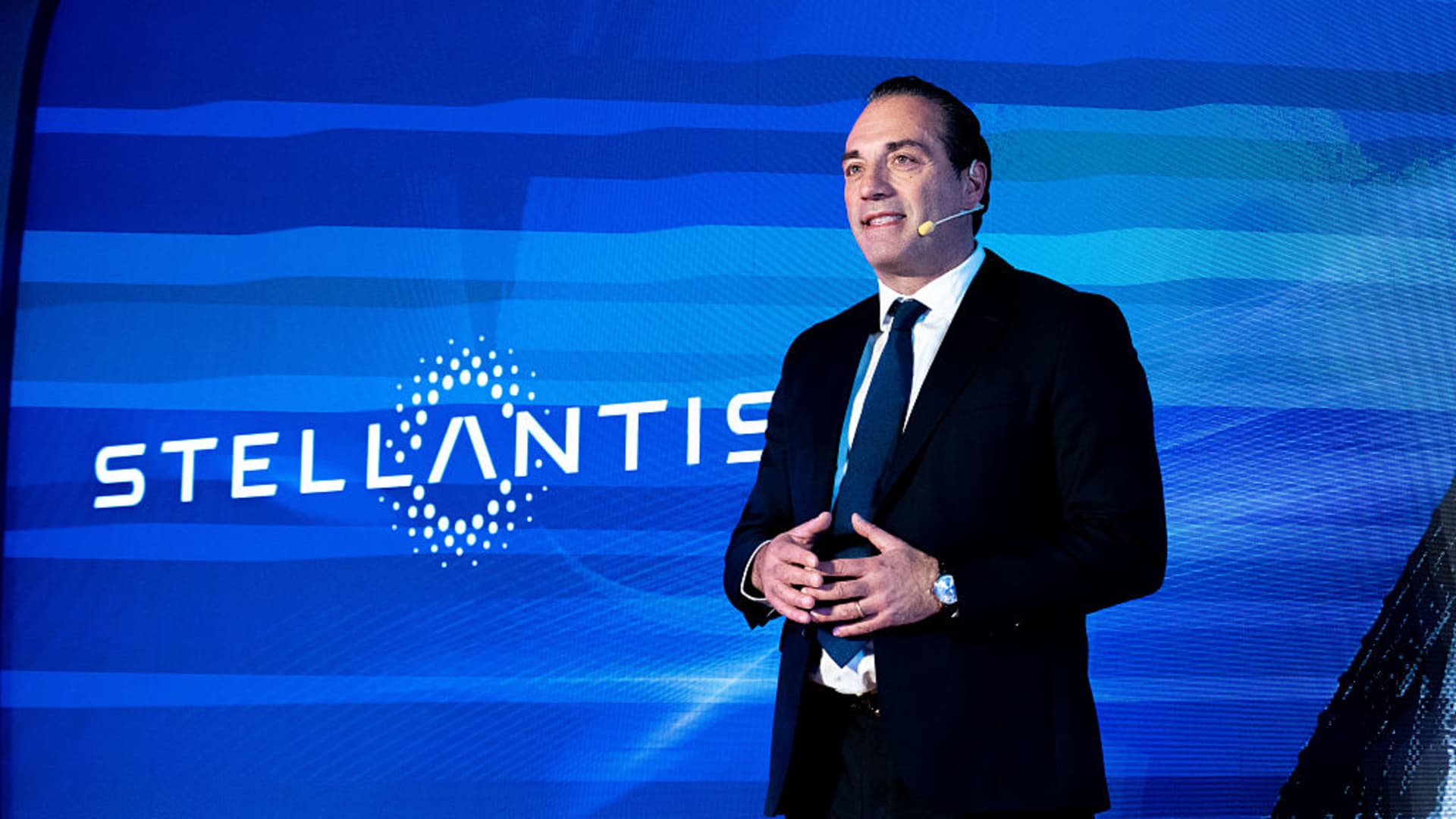

AUBURN HILLS, Mich. — Stellantis said Thursday it plans to invest 60 billion euros (US$69.7 billion) under a new five-year strategic plan by CEO Antonio Filosa that also targets annual cost savings of 6 billion euros by 2028.
The plan includes putting 36 billion euros toward the company’s massive portfolio of automotive brands to launch more than 60 new vehicles as well as major refreshes of 50 other models, including all-electric vehicles, hybrids and traditional internal combustion engines.
The other 24 billion euros will be put toward global vehicle platforms and new technologies for the automaker and its products, according to the company.
Tune in Thursday, May 21, at 10:25 a.m. ET: CNBC’s Phil LeBeau interviews Stellantis CEO Antonio Filosa. Watch in real time on CNBC+ or the CNBC Pro stream.
Stellantis also said it plans to achieve positive free cash flow by 2028 after losing 22.3 billion euros last year that included a 22 billion euro restructuring pulling back from all-electric vehicles.
Shares of Stellantis on the New York Stock Exchange were off 4% during pre-market trading on Thursday.
Under the plan, Stellantis will not eliminate any of its 14 automotive brands, but it will fold operations of its DS and Lancia European units into Citroen and Fiat, respectively, according to the company.
Fiat is one of four designated “global brands” alongside Jeep, Ram Trucks and Peugot. That division also includes the Pro One commercial operations. Its regional brands will include Chrysler, Dodge, Citroen, Opel and Alfa Romeo. It also owns luxury brand Maserati.
To assist in reducing costs, the company plans to launch a new “STLA One” vehicle platform in 2027. The new platform is designed to bring together five different platforms into “one scalable architecture, reducing complexity and expanding coverage.” It targets achieving 20% cost efficiency, the company said.
Antonio Filosa attends the presentation of the new Fiat 500 Hybrid at the Stellantis FIAT Mirafiori plant in Turin, Italy, on November 25, 2025.
Nurphoto | Nurphoto | Getty Images
By 2030, Stellantis targets 50% of its volume will be produced on three global platforms, with up to 70% component reuse.
Filosa — who began leading the automaker less than a year ago — and other executives are set to lay out details of the “FaSTLAne 2030” plan throughout the day Thursday during his first investor day as CEO at the company’s North American headquarters near Detroit.
Stellantis Chairman John Elkann, a scion of Fiat’s founder and CEO of Europe’s prominent Exor, on Thursday called the plan “ambitious, but realistic” while outlining industry challenges as well as opportunities for the company under Filosa and his new plan.
The plan’s core pillars include “sharper management” of the brand portfolio, new investments, enhanced partnerships, an optimized manufacturing footprint, “excellence in execution” and empowerment of the company’s regions and local teams.
“What we want you to take away from today is that Stellantis, with all its assets, its capabilities, and its new strategic plan, is well positioned to succeed,” Filosa said to open the event. “You will hear from us today how we leverage our regional roots, our global scale, our partnerships and the new technologies in our journey going forward.”
The company this week announced several new or expanded tie-ups that included Jaguar Land Rover for the U.S. as well as with Chinese automakers Leapmotor and Dongfeng Group, primarily for Europe and China.
As the company partners with Chinese automakers, it’s also competing against them as many of the companies increase sales in Europe.
Amid such competition, Stellantis said it expects to cut European capacity by more than 800,000 units, while repurposing plants and leveraging partnerships as well as “aiming to preserve manufacturing jobs.”
In both Europe and the U.S., Stellantis said it targets 80% plant utilization in 2030.



A version of this article first appeared in CNBC’s Inside Wealth newsletter with Robert Frank, a weekly guide to the high-net-worth investor and consumer. Sign up to receive future editions, straight to your inbox.
Public stocks are the largest and fastest-growing asset class for family offices, while their real estate assets are shrinking, according to the new CNBC Family Office Portfolio Tracker.
Family offices now manage over $5.5 trillion in wealth globally, rivaling hedge funds in total assets. Yet because family offices – the private investment arms of ultra-wealthy families – aren’t required to disclose their investments, their portfolios are largely secret.
CNBC has teamed up with Addepar, a foundational data and AI platform used by financial professionals globally, to provide a regular snapshot of family office portfolios. Addepar’s data includes the portfolios of hundreds of family offices, ranging in size from $200 million in assets to over $10 billion, representing a total of $1.4 trillion in assets.
The tracker will be released every quarter, showing how family offices are shifting their investments in stocks, bonds, private equity and other asset classes. It will include comparisons with the previous quarter, the previous year and previous five years, showing both the short-term and long-term trends.
The tracker is useful to family offices and ultra-high-net-worth investors looking for comparisons and benchmarks. It will also be valuable to the fast-growing industry of wealth management firms, advisors and funds vying for family office business.
Family office wealth is expected to top $9 trillion by 2030, according to Deloitte, making the group increasingly powerful players in financial markets and the broader industry.
“Many firms across the wealth and investment ecosystem look to family offices as an important indicator of how sophisticated investors are approaching their strategic and tactical asset allocation,” said Eric Poirier, CEO of Addepar.
Poirier said family offices can shed light on ways to balance risk, liquidity, performance and diversification all while navigating changing market environments.
“By bringing together an anonymized and aggregated view of cross-platform holdings, Addepar can help clients understand broader allocation trends and evaluate their own strategies over time,” he said.
In first quarter, the Family Office Portfolio Tracker showed the continued importance of public stocks.
Equities were one of the only asset classes that grew as a share of family office portfolios over the past year. Stocks accounted for 34% of portfolios for the family offices covered by the tracker, up from 32% a year ago. There is a strong home bias for U.S. family offices, with 80% of their equity holdings invested in domestic stocks, the review found.
The only other category to show annual growth “other alts,” a broad segment that includes mixed allocation of funds, other collective vehicles, commodities and collectibles.
Private equity holdings dipped slightly to 6% while private credit also fell marginally to under 1%. Family office real estate holdings slid by nearly 2 percentage points, now accounting for 7.5% of their portfolios.
Also down slightly over the last year were hedge funds, at 6%, and venture capital at roughly 2%. Their investments in private companies remained sizable but flat, at 16%, as many family offices either own private companies or are investing directly in private businesses.
The broad collection of “alts,” defined as every category outside of publicly traded stocks and bonds, accounted for 48% of family office portfolios, while public markets accounted for 52%.
Their holdings of cash and cash equivalents remained at nearly 10%, suggesting family offices want to retain dry powder in the event of a possible crisis or decline in asset prices that could pose a buying opportunity.
Family offices are the ultimate long-term investors, investing for generations rather than individual retirement. They rarely make major changes to their portfolios or react to short-term events. Yet tracking the evolving family office portfolios over time will give some clues into how they view current markets and macro trends.
“Many of these portfolios are intentionally diversified across public and private markets and built around longer investment horizons, particularly across alternatives, so positioning often evolves more gradually over time,” Poirier said. “More broadly, the data reflects how family offices are evolving — operating more globally, more institutionally and focusing on diversification, liquidity planning and long-term strategic decision-making across changing market environments.”
The tracker will also become more robust over time as Addepar adds more family offices to its platform. More than 1,400 firms — including family offices, RIAs and wealth managers, private banks and institutions across 60 countries — use Addepar to manage and advise on $9 trillion in assets.
Family offices use Addepar primarily to show their vast array of private and public investments in one platform. A large family office can have dozens or even hundreds of private investments, each with unique reporting formats. Addepar’s software brings it all together in one place.
A growing number of banks and wealth managers are also using the platform, to better sync with their family office clients.
The platform recently launched “Addison,” the company’s native AI tool.
“Addepar’s view is that AI will augment — not replace — investment professionals,” Poirier said. “Increasingly, AI is helping surface actionable insights faster and reduce manual operational work, allowing teams to spend more time focused on long-term planning, strategic advice and deeper relationships with family members.”
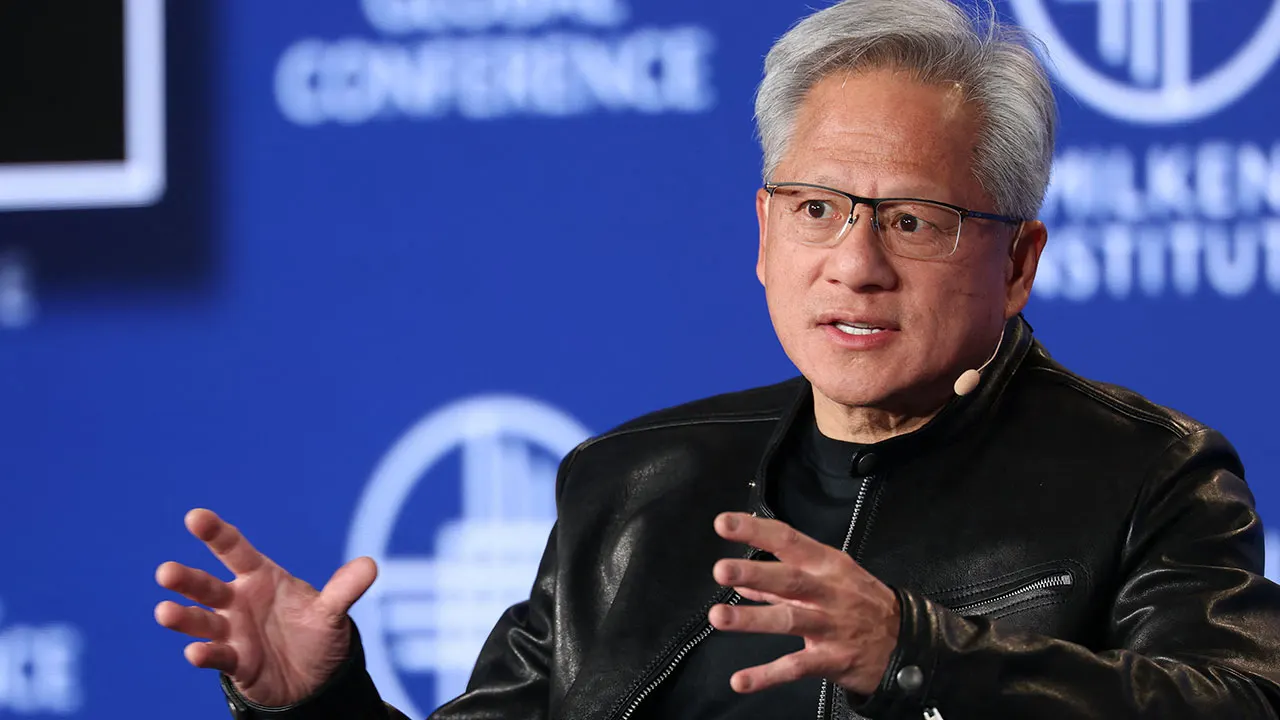
Nvidia founder and CEO Jensen Huang joins ‘Mornings with Maria’ to discuss the U.S. winning the AI race, the role of their technology for national security, the economic impact of the AI buildout and more.
In a stark warning to Washington policymakers, Nvidia CEO Jensen Huang revealed that U.S. technology export bans may be triggering unintended consequences, declaring that China already has “all the chips they need” while state-backed rival Huawei is actively “flourishing in our absence.”
“Critics would say that selling advanced chips to China helps China close the gap and perhaps beat the U.S. in AI,” FOX Business host Maria Bartiromo told Huang, “and yet the other angle is the fact that if we block all sales, then China does it anyway, simply accelerating the growth coming out of companies like Huawei.”
“You’ve summarized it really well… The president would like us to win in every aspect,” Huang responded. “The United States has to be absolutely certain and determined to lead the world in every aspect, every layer of that five-layer cake, from energy, of course, from chips.”
“China obviously has all the chips they need. That’s the reason why they don’t need ours. And Huawei has done a very good job there, obviously, one of the largest companies in the world. They had a record year. They’re flourishing in our absence. And they’re now exporting their technology out to the rest of the world, competing with American companies around the world,” he continued.
TRUMP’S TAIWAN ‘NEGOTIATING CHIP’ REMARK SPARKS ALARM OVER HOW FAR HE’D SHIFT U.S.-CHINA POLICY
“And so I think that their ability to secure technology for their national security reasons, I think they have more than ample… for their own needs.”
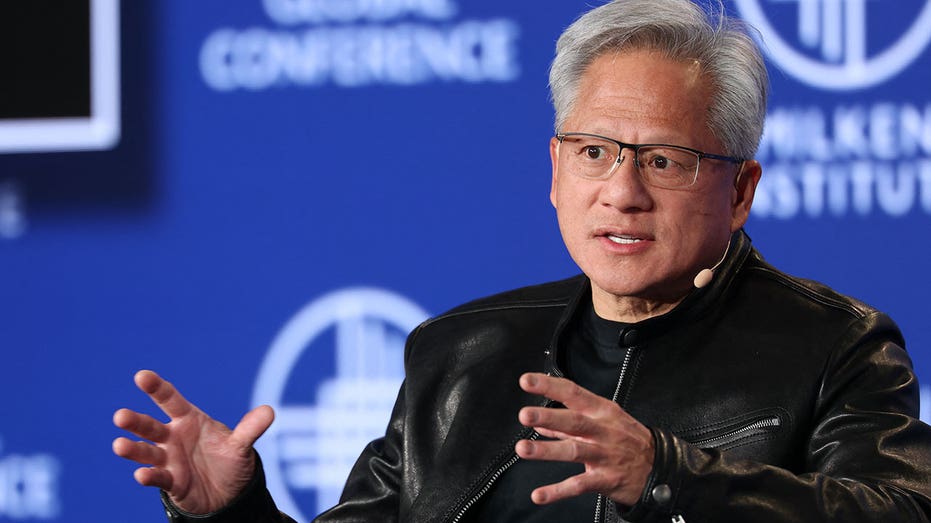
Nvidia founder and CEO, Jensen Huang, speaks during the 29th annual Milken Institute Global Conference on May 4, 2026. (Getty Images)
The tech pioneer’s admission exposes a critical national security dilemma: instead of crippling Beijing’s capabilities, aggressive decoupling has forced the communist regime into tech self-sufficiency, turning domestic competitors into a global threat to American industry.
Huang’s comments come on the heels of his recent trip with the president to Beijing, and the U.S. government officially approving licenses for Nvidia’s advanced H200 chips for select Chinese clients.
Nvidia founder and CEO Jensen Huang joins ‘Mornings with Maria’ to break down the company’s record-breaking first-quarter earnings, the demand driving the AI super cycle and business regarding China.
“[President Trump’s] been very clear that he would like American companies to win around the world. Winning around the world allows us to, one, export, generate revenues for the country, bring back tax dollars for the country, create jobs in America,” Huang said. “It allows us also to diffuse and spread the American technology stack around the world, so that the rest of the world can be built on top of American technology and standards.”
The CEO also highlighted Nvidia’s critical role in American defense infrastructure, specifically confirming that U.S. military intelligence and radar run on its systems.
GET FOX BUSINESS ON THE GO BY CLICKING HERE
Gatestone Institute senior fellow Gordon Chang joins ‘Varney & Co.’ to react to President Donald Trump’s meeting with Xi Jinping, warning China used the summit to project strength and threaten the US over Taiwan.
“We do a lot of work in imaging, and most of the world’s radar systems and imaging systems has Nvidia chips in it. And, and we’re just incredibly honored,” Huang said. “The Department of War has access to Nvidia’s technology, and our technology is completely open-source so that it could be modified and enhanced for the applications of our military.”
“We’re a very large technology company, and we’re [an] American technology company. We want America’s technology industry to be a national treasure of the United States,” he added. “And manufacturing is a core part of our national security. And we play a very central role in doing that.”

Why Gilead Sciences Is Now A Hold (Rating Upgrade)

Eli Lilly on Thursday said its next-generation drug cleared a crucial late-stage trial in patients with obesity, delivering significant weight loss across doses.
The results bring Lilly one step closer to filing for approval of the weekly injection, called retatrutide, which works differently from existing shots and pills from both Lilly and Novo Nordisk. It also appears to be more effective than those options.
The highest dose of retatrutide helped patients lose 28.3% of their weight — or 70.3 pounds — on average over 80 weeks, compared with 2.2% with placebo, when evaluating only patients who stayed on the drug.
Roughly 45% of the 2,500 patients in the Phase 3 trial achieved 30% or more weight loss, Lilly said.
The highest dose also helped patients with a body mass index of 35 or above who participated in an extension of the study lose 30.3% of their weight on average over 104 weeks. That BMI threshold puts people at higher risk of cardiovascular complications or diabetes.
While the drug appeared to show higher rates of certain gastrointestinal side effects, such as nausea and diarrhea, especially at the highest dose, they were generally consistent with a previous Phase 3 trial of retatrutide in patients with obesity and a type of knee arthritis pain. Some analysts previously said those side effects highlight the speed and strength of the drug’s weight loss.
A lower dose of retatrutide that Lilly tested in the latest study was also associated with fewer discontinuations due to side effects.
Dan Skovronsky, Lilly’s chief scientific and product officer, called the 30% weight loss an “incredible number to see,” as it has previously only been associated with bariatric surgery.
“We haven’t seen that level of weight loss before with these kinds of medicines,” Skovronsky told CNBC in an interview.
Around 65% of people taking the highest dose of retatrutide also achieved a BMI of less than 30, which falls under the threshold for obesity, at 80 weeks.
Ahead of the results, some analysts said they were expecting to see weight loss higher than that seen with Lilly’s blockbuster weight loss drug Zepbound, which is around 20% to 22%.
The data is the third late-stage result to date on retatrutide, which succeeded in a diabetes trial earlier this year and cleared a smaller study on patients with obesity and a type of knee arthritis in December. Lilly is betting big on retatrutide as the next pillar of its obesity portfolio after its injection Zepbound and newly launched pill, Foundayo.
In a January note, TD Cowen analysts estimated that retatrutide could rake in sales of $3.8 billion in 2030.
Retatrutide is also critical to the drugmaker’s plan to maintain its market share majority over Novo in the booming market for weight loss and diabetes drugs. Some analysts estimate the segment could be worth about $100 billion by the 2030s.
A new lower dose
Notably, Lilly also tested a lower 4-milligram dose not used in other trials, and it helped patients lose 19% of their weight, or 47.2 pounds, over 80 weeks.
Skovronsky said the weight loss seen with that lowest dose is similar to that of Zepbound at high doses, but “with a really excellent tolerability profile” that exceeded Lilly’s expectations. That refers to how well patients handle the drug – a key metric in trials on medicines containing GLP-1s, which often bring gastrointestinal side effects.
The number of patients at the 4-milligram dose who discontinued treatment due to side effects was lower than the placebo group, which Skovronsky called “remarkable to see.” Around 4% of patients on that dose stopped the drug due to side effects, compared with nearly 5% with the placebo.
That compares with a discontinuation rate of 11.3% among patients who took the highest dose.
Still, Skovronsky said, “I think we’re making history here, both on the high end with the high dose and on the low dose for what we can offer patients.”
“For some patients, 30% weight loss may be more than what they’re seeking,” Skovronsky later added. “For other patients, that may be what they need to get healthy. So not everyone will go up to the highest dose level and stay on it for two years.”
Retatrutide safety
The safety data on Lilly’s drug was consistent with other GLP-1-containing medications, with the most common side effects being gastrointestinal.
Around 42% of patients on the highest dose experienced nausea, while roughly 32% and 26.1% had diarrhea and constipation, respectively. More than 13% of patients on that dose also experienced an upper respiratory tract infection, a contagious illness affecting the nose, sinuses and throat.
Meanwhile, more than 12% of patients on the highest dose also experienced dysesthesia, which is an unpleasant nerve sensation observed in previous trials of the drug.
Ahead of the results, some analysts said they were watching to see if retatrutide would cause any cardiac issues, such as arrhythmia, an irregular heartbeat. That’s because the drug works by targeting three gut hormones, including one called glucagon, which increases energy expenditure.
But Lilly said it did not observe any cardiac or liver issues. The company did notice a slightly higher rate of urinary tract infections in people on the drug compared with placebo, but most were mild and resolved while people stayed on treatment, Skovronsky said. More than 8% of patients at the highest dose had a UTI.
He said it’s unclear why more patients had UTIs, but that the side effect is also seen with bariatric surgery, so it may be the result of “the velocity of weight loss” people experience.
Dubbed the “triple G” drug, retatrutide targets GLP-1, GIP and glucagon rather than just one or two like existing treatments. That appears to have more potent effects on a person’s appetite and satisfaction with food than other treatments.
Tirzepatide, the active ingredient in Zepbound, mimics GLP-1 and GIP. Novo Nordisk’s semaglutide, the active ingredient in Wegovy, mimics only GLP-1.
Lilly held a 60.1% share of the U.S. obesity and diabetes drug market in the first quarter, according to an earnings presentation, while Novo’s market share in the period was 39.4%.
As retatrutide inches closer to the market, Novo is racing to catch up to Lilly. In March 2025, Novo said it agreed to pay up to $2 billion for the rights to an early experimental drug from the Chinese pharmaceutical company United Laboratories International.
Novo’s newly acquired drug is a clear potential competitor to retatrutide because it similarly uses a three-pronged approach to promoting weight loss and regulating blood sugar. But Novo’s treatment is much earlier in development, meaning it will take several years before it reaches patients.

The traditional gear stick, that small, mechanical talisman of British motoring, is being quietly stripped out of new car ranges, and according to fresh forecasts it will be all but extinct by the end of the decade. The diesel engine, long the workhorse of the company car park, is heading for the same exit door.
Analysts at Vehicle Data Global (VDG) say the manual gearbox will disappear from mainstream UK showrooms inside the next three years, well ahead of the 2030 ban on the sale of new petrol and diesel vehicles. Their argument is not sentimental; it is, as the report puts it bluntly, “hard economics”. Electric cars almost universally use single-speed automatic transmissions, and as the EV share climbs, manufacturers are increasingly reluctant to carry the research, development, certification and tooling overheads needed to keep manual variants on the price list for a shrinking pool of buyers.
For the UK’s small and medium-sized businesses, many of which still run mixed fleets of combustion and electrified vehicles, the implications are more than nostalgic. The transmission and fuel choices on offer over the next 36 months will reshape how SMEs specify company cars, train drivers, calculate residual values and plan capital expenditure on vans and pool vehicles.
The numbers behind the obituary
A market-wide review earlier this year found that just 23 per cent of new cars on UK forecourts now have a gear stick, down from roughly two-thirds a decade ago. Where buyers still have a genuine choice between manual and automatic on a petrol or diesel model, only 34 per cent opted for the manual in 2025, a sharp fall from 55 per cent as recently as 2019.
Diesel’s slide has been even more dramatic. Fewer than one in 20 new cars registered in 2026 (4.8 per cent) is a diesel, down from one in two just over a decade ago, according to the latest SMMT registration data. The reputational fallout from the 2015 emissions scandal, tightening clean-air zones and the rise of plug-in hybrids and pure EVs have all combined to push diesel out of the mainstream — a shift Business Matters has tracked in detail in its coverage of how British drivers are sending a “clear signal” in support of electric cars as petrol and diesel sales nosedive.
Ben Hermer, operations director at VDG, summed up the manufacturers’ calculus. “The moment is fast approaching when the economics of maintaining a manual transmission option don’t add up, given the R&D, certification and other overheads involved in developing and refining gearboxes, even if there remains some demand in the market,” he said. “Based on current trend data, between 5 and 10 per cent of cars will theoretically still be manual by 2030. But manufacturers will be looking hard at whether maintaining manual gearbox programmes for a shrinking share of the market makes economic sense.”
Analysis by CarGurus shows the squeeze in real time: just 67 of the 292 new models sold by the UK’s top 30 manufacturers are currently offered with a manual option, down from 197 models in 2016.
What it means for SME fleets and company car schemes
For finance directors and operations managers running small fleets, three practical consequences stand out.
First, residual values for manual diesels are likely to soften faster than the wider market as supply of replacement parts thins and used-buyer appetite narrows. Owner-managers approaching a vehicle refresh in 2027 or 2028 should not assume that today’s resale benchmarks will hold.
Second, driver training and recruitment policies will need a refresh. Auto-only licence holders cannot legally drive a manual car, and as Business Matters has previously reported in its business owner’s guide to volatile fleet costs in 2026, grey-fleet and pool-car policies are already a hidden compliance risk for many SMEs. With automatic-only learners now the fastest-growing segment of new drivers, employers will need to widen their definition of an “eligible driver”, or accept a shrinking talent pool.
Third, capital allowances, benefit-in-kind treatment and total-cost-of-ownership models will tilt sharply in favour of electrified vehicles. The 2030 ban is no longer a distant policy threat; it is a 36-month operational deadline that intersects directly with vehicle replacement cycles. SMEs that delay their transition planning risk being forced into a depleted second-hand market for manuals and diesels just as supply dries up.
Learners are already voting with their feet
The driving school sector is a leading indicator. Figures from the Driver and Vehicle Standards Agency, set out in the DVSA Annual Report and Accounts 2024-25, show that of the 1,839,753 practical driving tests taken in 2024/25, some 479,556, 26.1 per cent, were in automatics. That is up from 23.4 per cent the previous year, 19.2 per cent in 2022/23 and a mere 6.9 per cent a decade earlier.
In other words, automatic tests have moved from fewer than one in 14 examinations ten years ago to more than one in four today, and trade body projections suggest the figure could touch a third by 2027.
Despite the popular belief that they are easier, pass rates in automatics remain stubbornly lower than for manuals: 43.9 per cent versus a 48.7 per cent overall average in the last fiscal year. The catch, of course, is that an auto-only licence is a one-way door. Holders are legally barred from manual cars, which can sting when hiring abroad in markets where stick-shift rentals still dominate and automatic surcharges remain steep.
The models still flying the flag
For motorists, and fleet buyers, who still want a third pedal, the choice is narrowing but not yet bare. Dacia leads the field, offering manual transmissions across its entire six-strong combustion range (only the Spring EV is auto-only). Ford, Hyundai, Kia, Skoda and Volkswagen all still field five or six manual options, while Porsche keeps a manual 911 in the catalogue as a halo product. Jaguar, Honda, Lexus, Mercedes-Benz, Mini, Tesla, Land Rover and Volvo no longer offer a single manual variant in the UK.
Even Seat has thinned its line-up, with Ateca production ending in the past month. The direction of travel is unambiguous.
For SME owners weighing their next purchase, the message from VDG, the SMMT data and the DVSA’s own statistics is consistent: the era of the manual diesel, the so-called “motorway mile-muncher” beloved of sales reps under New Labour’s generous tax regime, is closing fast. The businesses that plan now for an auto-only, increasingly electrified fleet will be the ones least exposed when the showroom shutters finally come down on the gear stick.

Jamie Young
Jamie is Senior Reporter at Business Matters, bringing over a decade of experience in UK SME business reporting.
Jamie holds a degree in Business Administration and regularly participates in industry conferences and workshops.
When not reporting on the latest business developments, Jamie is passionate about mentoring up-and-coming journalists and entrepreneurs to inspire the next generation of business leaders.
NEW YORK — Quantum computing stocks rose sharply on Thursday, May 21, 2026, after the Trump administration announced $2 billion in grants to nine companies in the sector, with the U.S. government set to take equity stakes in return.
The U.S. Department of Commerce is awarding the funding, drawn from the 2022 CHIPS and Science Act. IBM will receive $1 billion, while GlobalFoundries is set to receive $375 million.
Other recipients include D-Wave Quantum, Rigetti Computing and Infleqtion, each expected to receive about $100 million. Additional companies such as Atom Computing, PsiQuantum, Quantinuum and Diraq are also part of the package, with Diraq receiving around $38 million.
The deals include the U.S. government acquiring minority equity stakes in the companies. Commerce Secretary Howard Lutnick described the initiative as a push for a new era of American innovation amid competition with China.
Shares of companies involved rose significantly in premarket and early trading. Infleqtion jumped as much as 24%, while other quantum stocks posted gains between 7% and 25%. IBM and GlobalFoundries also advanced.
The announcement builds on discussions that began in October 2025, when the White House first indicated it might take equity stakes in quantum computing firms. The funding aims to strengthen U.S. leadership in the technology, which holds potential for advances in drug discovery, cryptography, materials science and artificial intelligence.
Quantum computing uses principles of quantum mechanics to perform calculations far beyond the capabilities of traditional computers. The sector has attracted growing investor interest as companies work toward practical, error-corrected systems.
The Trump administration’s move represents one of the largest direct federal investments in the quantum sector to date. Officials view quantum technology as strategically important for national security and economic competitiveness.
IBM, a leader in the field with its Quantum System Two, has been expanding its quantum hardware and cloud services. The company has partnerships with universities and corporations for research and development.
GlobalFoundries, a major semiconductor manufacturer, plays a key role in producing chips that support quantum systems. Other recipients like Rigetti Computing and D-Wave Quantum focus on different technical approaches, including superconducting and annealing systems.
The equity component of the deals allows the government to share in potential upside from commercial success. This structure differs from traditional grants and reflects a more active industrial policy approach.
Analysts have noted increased government support for critical technologies under the current administration. The funding complements earlier initiatives under the CHIPS Act aimed at bolstering domestic semiconductor and advanced technology manufacturing.
Quantum stocks have shown volatility in recent years but gained momentum in 2025 and 2026 amid technological milestones and growing commercial interest. Companies in the sector continue to face technical challenges, including error rates and scalability.
The Department of Commerce did not immediately release the full list of recipients or exact terms beyond the major allocations. Further details are expected in coming days.
Broader market reaction extended to related stocks in semiconductors and technology infrastructure. The announcement comes as global competition in quantum computing intensifies, particularly with China’s own heavy investments in the field.
Industry groups have welcomed the funding as a boost for U.S. innovation. The sector employs researchers, engineers and technicians across multiple states, with clusters in California, New York, Maryland and Colorado.
No official comment was immediately available from all recipient companies beyond initial statements confirming the agreements. IBM and GlobalFoundries acknowledged the funding in separate releases.
The grants are part of a larger strategy to maintain technological superiority in emerging fields. Quantum computing is seen as a foundational technology for the next decade, with applications in optimization, simulation and secure communications.
Trading volume in quantum-related stocks increased significantly following the news. Market participants will monitor how the equity stakes and funding translate into accelerated development timelines.
The development underscores growing bipartisan interest in securing supply chains and technological edges in strategic areas. Previous administrations also supported quantum research through various federal programs.
Further updates on project milestones and commercialization efforts are anticipated as companies deploy the new capital. The sector continues to attract private investment alongside government support.

KULR partners with Factorial on drone battery integration
Form 8K Pathward Financial Inc For: 21 May
Form 8K Old Dominion Freight Line Inc For: 21 May
Earnings call transcript: BingEx Q1 2026 sees revenue drop, stock dips

Mercedes-AMG’s GT 4-Door Coupe Finally Goes Electric, Packs Over 1,110HP

Bitcoin und Ethereum, ich erwarte immernoch ein weiteres Tief und dann eine Rally!

Dunkin’ to launch viral 48oz beverage buckets nationwide

US brings back mandatory military draft registration

Steven Gerrard disagrees with Gary Neville over ‘shock’ Chelsea and Arsenal claim | Football

Register Renaming | Hackaday
Bitcoin und Ethereum, ich erwarte immernoch ein weiteres Tief und dann eine Rally!

Mesh Rashi Daily Horoscope: Big Financial Gains for You! | 20 May 2026 #acharyaritu #aries
![DO NOT Watch This BITCOIN Video In Public... [this is EXTREMELY BIG]](https://wordupnews.com/wp-content/uploads/2026/05/1779371664_maxresdefault-80x80.jpg)
DO NOT Watch This BITCOIN Video In Public… [this is EXTREMELY BIG]
-

 Crypto World6 days ago
BloFin War of Whales 2026 Grand Prix opens registration for $5M trading championship
-

 Fashion6 days ago
Weekend Open Thread: Theory – Corporette.com
-

 Crypto World6 days ago
E-Estate Announces 1 Year Live: Washington DC Summit as Real Estate Tokenization Enters Its Next Phase
-

 Tech6 days ago
Tech Moves: Microsoft AI leader jumps to OpenAI; former AI2 exec joins Meta; and more
-

 Tech6 days ago
Google reimburses Register sources who were victims of API fraud
-

 Business6 days ago
H&R Real Estate Investment Trust (HR.UN:CA) Q1 2026 Earnings Call Transcript
-
 Entertainment7 days ago
Zara Larsson Has Blunt Response To Chris Brown Diss
-

 Sports6 days ago
Napoleonic enters 2026 Doomben 10,000 field via Abounding withdrawal
-

 Crypto World6 days ago
BeInCrypto 100 Institutional Awards Nomination: KAST for Best Digital Assets Neobank and Best Digital Assets Fintech
-
 Crypto World6 days ago
Bitcoin Battles US Bond Nerves With BTC Price Dip Toward New May Lows
-

 Fashion4 days ago
On the Scene at Gucci’s Cruise Show in New York City: Mariah Carey, Kim Kardashian, Lindsay Lohan, Iman, and More!
-
 Crypto World6 days ago
Wall Street’s Boldest Gold Prediction Has Russians Rushing to Buy
-

 Crypto World6 days ago
ICE and CME urge US regulators to curb Hyperliquid energy trading
-

 Politics7 days ago
DWP PIP Timms review continues to be an absolute farce
-

 Crypto World6 days ago
IREN closes $3 billion convertible notes deal amid AI infrastructure expansion
-

 Fashion5 days ago
Trending Western Style Vests Perfect for Summer
-

 Entertainment6 days ago
David Letterman Returns to Late Show, Blasts Cancellation
-
 Crypto World7 days ago
Lido Finance Selects Chainlink CCIP as the Official Cross-Chain Infrastructure for wstETH Security
-

 Fashion4 days ago
Amazon Sundays: Memorial Day Hosting
-

 Fashion6 days ago
Creative Ideas for Custom T-Shirts
You must be logged in to post a comment Login