
Business
Sydney House Prices Dip in Early 2026 as Affluent Suburbs Feel Pinch Amid Rate and Geopolitical Pressures

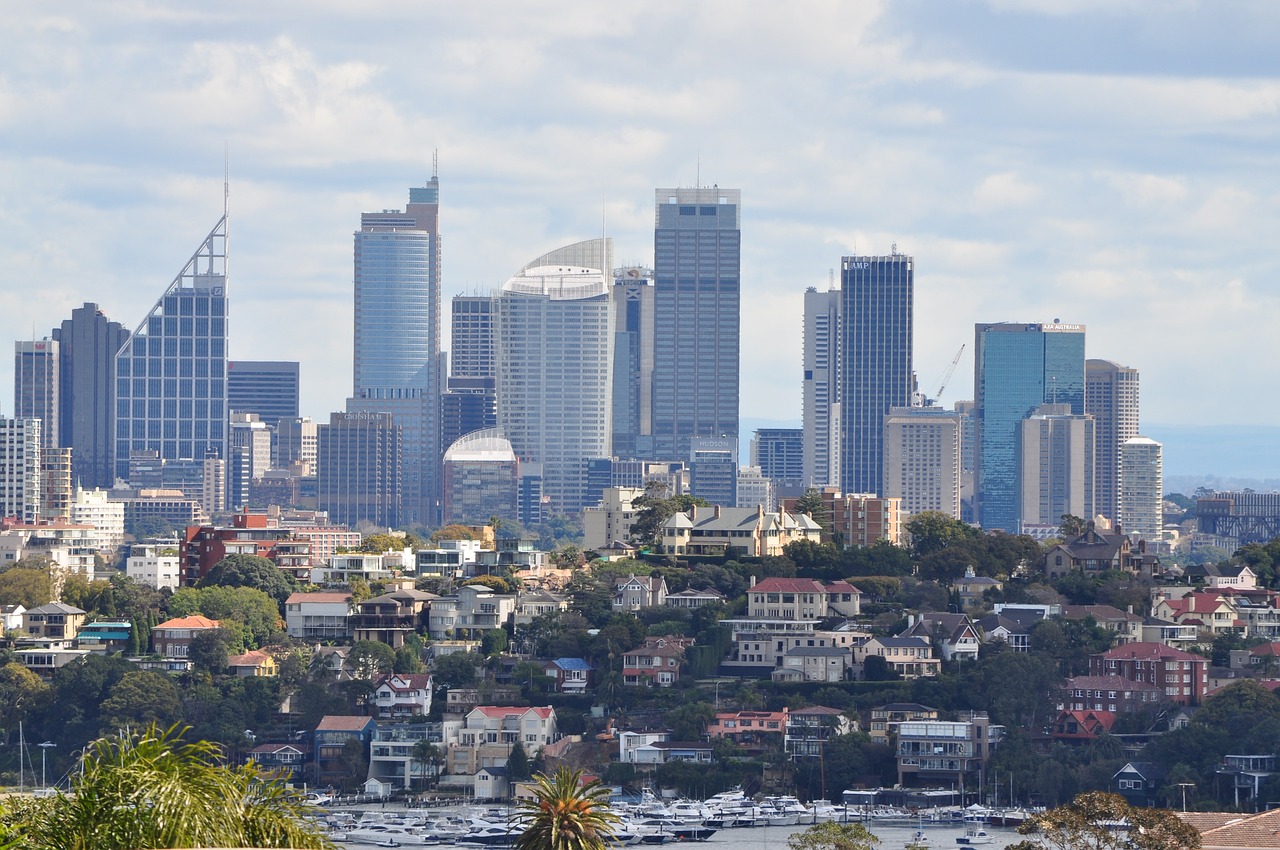
SYDNEY — Sydney’s housing market has hit a speed bump in the first quarter of 2026, with home values falling modestly as buyers grapple with higher borrowing costs, cost-of-living pressures and uncertainty from the Middle East conflict, according to the latest data from major property analysts.

Pixabay
Cotality’s Home Value Index showed Sydney dwelling values edged down 0.1% in February and 0.2% over the March quarter, with affluent suburbs hit hardest. The median dwelling value stood at approximately $1.296 million as of early April, reflecting annual growth of around 6% but a clear slowdown from stronger gains in 2025. House values softened more than units, with upper-quartile properties declining while more affordable segments showed relative resilience.
The downturn contrasts with optimistic forecasts issued at the start of the year. Domain’s 2026 Forecast Report predicted Sydney house prices would rise 7% over the calendar year, pushing the median toward $1.924 million by year-end and edging closer to the symbolic $2 million mark. KPMG projected more moderate growth of 5.8% for houses and 5.3% for units, while several major banks forecasted between 3% and 5% overall.
Analysts attribute the recent softness to the Reserve Bank of Australia’s February rate hike, which tightened serviceability and dampened buyer sentiment. Higher fuel prices linked to Middle East tensions have further squeezed household budgets, prompting some sellers to list properties preemptively in case values fall further. Affluent eastern and northern suburbs have seen the steepest quarterly declines, while outer western and southwestern areas with more affordable stock have held up better.
Despite the quarterly dip, longer-term fundamentals remain supportive. Chronic undersupply of housing, strong population growth driven by migration, and low vacancy rates in the rental market continue to underpin demand. Rental growth has remained robust, with house rents up around 5.7% annually, reinforcing investor interest particularly in units.
SQM Research’s Louis Christopher revised forecasts downward in March, warning of potential falls of up to 6% in Sydney over 2026 if interest rate hikes materialize as priced by futures markets. Other voices, including PropTrack and Domain, maintain that any correction will be mild and that growth should resume as the year progresses, especially if inflation moderates and rate relief eventually arrives.
The market split is widening. Lower-quartile house values in Sydney rose 0.8% in one recent month while upper-quartile values fell 0.9%, highlighting how affordability constraints are shifting competition toward cheaper segments. First-home buyers face particular challenges, with entry-level house prices around $1.15 million requiring years of saving for a deposit.
Units have shown greater resilience than detached houses. The median unit value sits near $903,000, with some analysts forecasting 5-6.5% growth in 2026 as investors seek relatively more accessible entry points and stronger rental yields.
Auction clearance rates have moderated from peaks seen in late 2025, and days on market have edged higher in premium segments, signaling a more balanced dynamic between buyers and sellers. Listings remain relatively constrained overall, which has prevented sharper declines.
Economists note that Sydney’s position as Australia’s largest jobs hub and gateway for international talent provides underlying support. However, persistent affordability issues — with median prices more than 10 times average household incomes in many areas — continue to limit participation from younger buyers and upgraders.
Perth, Brisbane and Adelaide have outperformed Sydney and Melbourne so far in 2026, with stronger monthly gains driven by tighter stock levels and more affordable entry points relative to the eastern capitals. This fragmentation underscores how national trends mask significant regional variations.
Looking ahead, forecasts for the remainder of 2026 vary widely. Bullish projections from Domain see Sydney house prices climbing toward $1.92 million by December, assuming steady income growth and continued supply constraints. More cautious outlooks, including those adjusted for geopolitical risks and potential further rate hikes, point to flat or slightly negative growth.
Buyers entering the market are advised to focus on areas with strong infrastructure links, such as Western Sydney near the new airport or established inner-ring suburbs with good amenity. Investors may find better value and rental returns in units, particularly in high-demand precincts.
Sellers in premium markets are encouraged to price realistically, as evidence shows over-ambitious listings are taking longer to sell. First-home buyers and investors alike should factor in potential interest rate volatility and prepare for a market that rewards patience and thorough due diligence.
The broader Australian property story in 2026 remains one of divergence. While Sydney and Melbourne have cooled, resource-driven and more affordable capitals continue posting solid gains. National house prices are still expected to rise overall, with KPMG forecasting 7.7% growth across the country, led by Perth and Brisbane.
For Sydney specifically, the coming months will test whether recent softness evolves into a deeper correction or proves a temporary pause before renewed upward momentum. Chronic supply shortages and demographic pressures suggest prices are more likely to moderate than crash, but elevated borrowing costs and external shocks could prolong the current flat period.
Prospective buyers and sellers should monitor Reserve Bank decisions, inflation data and global energy prices closely. Professional advice from mortgage brokers and property experts remains essential in a market where local conditions can vary dramatically between suburbs.
Sydney’s housing market, long one of the world’s most expensive, continues to evolve under the twin pressures of demand and affordability. While the dream of home ownership grows more distant for many, the city’s enduring appeal as an economic powerhouse ensures it will remain a focal point for property investors and families alike.
As April trading in the property sector unfolds, the latest data suggests caution in the short term but guarded optimism for the longer horizon — provided global and domestic headwinds do not intensify further.


Industry profitability is expected to be muted due to market conditions, Emkay said in a report. It said the nearly 14% decline in the Nifty 50 during Q4 and a 40-basis point rise in bond yields weighed 4-5% negative economic variance for private life insurers and 1% negative for Life Insurance Corp (LIC)-the biggest local institutional holder of stock.
The annualised premium equivalent (APE) in FY26 at life insurers would expand in high single digits. This slowdown in life insurance demand is partly driven by equity market volatility and rising yield expectations, which have dampened demand for ULIPs and non-par guaranteed products.
However, Axis Max Life is expected to lead followed by Life Insurance Corporation of India.
HDFC Life is expected to report single-digit APE growth, with traction balanced across savings products, while value of new business (VNB) margins are likely to remain stable at around 24.5%. ICICI Prudential Life may see higher single-digit growth, with VNB margins at about 24%.

SBI Life is likely to report high single-digit APE growth in the quarter, with FY26 APE growth estimated at around 14% year-on-year, impacted by a slowdown in ULIP sales toward the latter half of March amid volatile equity markets. Its VNB margins are expected to remain stable at around 27%. LIC is likely to report a relatively stronger 13% growth, aided by group business, with VNB margins around 20% as it continues to pivot toward non-participating products.
In contrast, general and standalone health insurers are expected to deliver robust growth. ICICI Lombard General Insurance is likely to report 10-12% growth in gross written premium, supported by motor and health segments, although commercial lines may see a slowdown. Its combined ratio is expected to remain broadly flat at around 102.6%, weighed down by higher expense ratios. Star Health and Allied Insurance is expected to post strong double-digit growth, aided by improved affordability following GST rate changes and normalisation of earlier regulatory impacts. Both claims and combined ratios are likely to improve.

Edwards Lifesciences CVP Lippis sells $82,522 in stock

Americans want weight-loss pills for cost and convenience

Lacheev/iStock via Getty Images

By Jennifer Nash
The latest employment report showed that 178,000 jobs were added in March, up from February’s 133,000 loss. This figure was better than the projected addition of 65,000 jobs and marks the largest gain since

The long-awaited $120 million Perth Surf Park has been at least 10 years in the making.
One of Australia’s biggest banks will no longer require several identity documents every time you open an account after a technology change.

Grewal Harpreet, Penumbra director, sells $32,822 in stock

Form 13G Sifco Industries For: 6 April

KWEB: Legacy Businesses Take Time To Phase-Out

The rise in remote working means many professionals are choosing to settle in coastal and rural towns.
Non-life insurers seen holding up better than life peers

Is CRV price about to break below $0.20 support?

This Cruelly Canceled Prime Video Fantasy Show Deserves Another Look


-

 NewsBeat4 days ago
Steven Gerrard disagrees with Gary Neville over ‘shock’ Chelsea and Arsenal claim | Football
-

 Business4 days ago
No Jackpot Winner and $194 Million Prize Rolls Over
-

 Fashion3 days ago
Weekend Open Thread: Spanx – Corporette.com
-

 Crypto World5 days ago
Gold Price Prediction: Worst Month in 17 Years fo Save Haven Rock
-

 Business1 day ago
Three Gulf funds agree to back Paramount’s $81 billion takeover of Warner, WSJ reports
-
Crypto World7 days ago
Dems press CFTC, ethics board on prediction-market insider trades
-

 Sports2 days ago
India men’s 4x400m and mixed 4x100m relay teams register big progress | Other Sports News
-

 Business5 days ago
Login and Checkout Issues Spark Merchant Frustration
-

 Tech7 days ago
EE TV is using AI to help you find something to watch
-

 Sports6 days ago
Tallest college basketball player ever, standing at 7-foot-9, entering transfer portal
-
Tech7 days ago
Daily Deal: StackSkills Premium Annual Pass
-

 Tech7 days ago
Flipsnack and the shift toward motion-first business content with living visuals
-

 Tech7 days ago
How to back up your iPhone & iPad to your Mac before something goes wrong
-
Crypto World7 days ago
Valinor raises $25m to put private credit on-chain
-

 Tech7 days ago
What Are The Biggest Limitations Of Supercomputers?
-

 Crypto World6 days ago
Bitcoin enters the public bond market as Moody’s gives a first-of-its-kind crypto deal a rating
-

 Politics7 days ago
Transform Your Space with Stunning Small Works
-

 Politics7 days ago
‘Out of touch, smug and overpaid’
-

 Politics6 days ago
Starmer’s centre has collapsed, and the left was right all along
-
Crypto World6 days ago
Bitcoin stalls below key resistance as technical signals skew bearish
You must be logged in to post a comment Login