Tali Raphaely (born 27 December 1977) is a Miami-based real estate entrepreneur, attorney, and investor known for his hands-on approach to property ownership and development.
At 48, he has built a growing portfolio across South Florida focused on single-family homes, multifamily apartment buildings, luxury rentals, Section 8 housing, and ground-up construction projects.
Originally from Baltimore, Maryland, Raphaely attended law school in Florida on a full merit-based scholarship and graduated in the top 3% of his class. He later returned to Maryland and served as a Law Clerk for the Court of Special Appeals of Maryland for two years. After briefly practising as a litigation attorney, he transitioned into real estate law and title insurance, eventually owning a nationwide real estate title company.
Over time, Raphaely shifted his focus from legal work to real estate investment and operations. Today, he specialises in purchasing underperforming multifamily properties, renovating them, and managing them through his own team. His portfolio is centred entirely in South Florida, where he has lived for more than a decade.
Raphaely is also the owner of South Florida Home Group, a property management company, and a yacht charter business. He is the author of The Complete Guide on How to Negotiate and is recognised for combining legal knowledge, operational discipline, and practical experience in the real estate industry.
Advertisement
Outside of work, his interests include fitness, boxing, chess, boating, reading, and exploring Miami’s restaurant scene.
Q&A With Real Estate Entrepreneur Tali Raphaely
Q: What first interested you in real estate?
Tali Raphaely: I did not begin in real estate investing. I started in law. I attended law school in Florida on a full scholarship and graduated near the top of my class. After that, I worked as a Law Clerk for the Court of Special Appeals of Maryland. That experience taught me discipline and attention to detail.
Later, I briefly practised litigation, but I realised I wanted to build businesses rather than only work on disputes. Real estate became the natural fit because it combines negotiation, operations, long-term thinking, and problem-solving.
Q: How did your legal background help your career in property investment?
Tali Raphaely: It helped a lot. Before becoming an investor, I worked in real estate law and eventually owned a nationwide title company. That gave me insight into transactions, contracts, and risk.
Advertisement
You start understanding how deals are structured and where problems usually happen. I think that gave me a strong foundation before I began buying my own properties.
Q: What type of properties do you focus on today?
Tali Raphaely: My main focus is multifamily apartment buildings in South Florida. I also own single-family homes, luxury rentals, and Section 8 properties.
I like properties that need improvement. I enjoy buying buildings that are underperforming, renovating them, and improving the operations. Sometimes the biggest value comes from organisation and management, not just construction work.
Q: Why Miami?
Tali Raphaely: I moved to Miami about 13 years ago and stayed because of the energy here. Miami is constantly evolving. There is always development happening and the market moves quickly.
Advertisement
It is competitive, but that also creates opportunities. You need to pay attention to trends and stay flexible. My entire portfolio today is based in South Florida because I prefer to stay close to my projects and operations.
Q: You are known for being hands-on. Why is that important to you?
Tali Raphaely: Real estate is not passive for me. I self-manage my properties along with my team. I believe owning buildings is only one part of the business. Managing them properly is equally important.
I like being involved in renovations, tenant issues, maintenance decisions, and operational planning. Staying close to the day-to-day side of the business helps you understand what is really happening.
Q: What do you enjoy most about renovations and construction?
Tali Raphaely: I enjoy the transformation process. There is something satisfying about taking an older property and improving it.
Advertisement
I also do ground-up construction of single-family homes, which is a different challenge. With new construction, you control everything from the design to the final product. With rehabs, you are solving existing problems. I enjoy both because they require different ways of thinking.
Q: Has negotiation played a major role in your success?
Tali Raphaely: Absolutely. Negotiation is part of every business decision. That is why I wrote The Complete Guide on How to Negotiate.
People often think negotiation is about being aggressive, but I see it differently. A good negotiation is really about understanding the other side, listening carefully, and finding practical solutions. That applies to real estate, business partnerships, and everyday operations.
Q: What challenges do you see in today’s real estate industry?
Tali Raphaely: The market changes constantly. Costs change, regulations change, and buyer behaviour changes. You cannot become too comfortable.
Advertisement
I think adaptability is important. Investors and operators need to stay organised and understand their numbers, but they also need patience. Real estate is a long-term business.
Q: What keeps you motivated after all these years?
Tali Raphaely: I genuinely enjoy the process. I like finding opportunities, improving properties, and building systems.
Outside of work, I stay active with fitness and boxing, and I enjoy boating, chess, reading, and exploring restaurants around Miami. But overall, I still enjoy the business itself. That makes a big difference.
The best offer you can make a new customer is one where all the risk sits with you. It sounds obvious, but most businesses hedge. They ask for a card upfront, bury the exit in small print, or make the trial so limited it proves nothing.
Online casinos have been doing this better than almost anyone.
In a market with hundreds of platforms competing for the same players, operators who survived long-term built their entire acquisition strategy around one principle: let people experience the product first, with real stakes, using the operator’s money.
Ownership is Everything
Once someone has used a product and found value in it, the prospect of losing access feels worse than the cost of paying. That psychological shift is the engine behind every effective trial model, and it is why the no deposit bonus became standard practice across the online casino industry.
Players receive free credits or spins with no deposit required, they explore the platform on the operator’s dime, and the ones who enjoy it convert. The ones who don’t were never going to stay anyway. That is not a loss; it is the model working correctly.
Advertisement
The conversion logic is simple. Someone who has navigated a platform, found games they like, and had a real experience is a fundamentally different prospect than someone reading a banner ad. The trust is already partly built before any money changes hands.
It was Acquisition That Drove Change
Casino operators work in one of the most expensive paid media environments in digital marketing. Cost-per-click is high, competition is relentless, and players churn fast if the platform doesn’t deliver immediately. Those conditions forced operators to get precise about what they were actually spending per converted customer, and whether that number made sense against lifetime value.
The no-deposit trial gave them a predictable answer. They know what a free spin costs to offer, they know redemption rates, and they can compare the lifetime value of a player who came in through a trial offer versus one acquired through paid search. For business owners in other sectors, that kind of acquisition clarity is worth building toward.
Transparent Terms Improve Conversion Rates
A headline offer with opaque conditions is worse than a modest offer with honest terms. Early casino bonuses often had wagering requirements so steep that players felt misled even after enjoying the product, which eroded trust faster than any competitor could.
Advertisement
The platforms that built lasting businesses made their trial terms legible. Players could see exactly what was required to withdraw, which games counted, what the ceiling was. That transparency converted better long-term because it removed the anxiety that something was being hidden.
The same principle transfers to any sector. A trial that is hard to cancel or structured to trap users signals exactly the wrong thing about the product behind it. If the product is good, the exit should be easy.
A Lesson to Others
SaaS, retail, hospitality, and professional services all use versions of this model now, but most arrived at it later and with less precision than the casino industry did. The competitive pressure in that market forced a level of iteration that other sectors rarely experience.
If acquisition costs are climbing and cold-channel conversion is disappointing, the question is whether you are confident enough in your product to let it make the case for itself, risk-free, in front of someone who owes you nothing yet.
Advertisement
The Bottom Line
The no-risk trial works because it is a statement of confidence, not a discount. The businesses that execute it well are not afraid of users who leave after the trial. They are building toward the ones who stay, and those customers, the ones who experienced the product and chose to commit, are worth considerably more than anything a paid channel delivers.
U.S. President Donald Trump has lashed out at allies for not doing more to support the United States’ war effort in Iran, whose chokehold on the strait has crippled international shipping and sent energy prices soaring. In March, Trump told NATO allies to “go get your own oil” and secure the strait themselves.
On the southern tip of the Iberian Peninsula, in the British Overseas Territory of Gibraltar, the U.K.’s Royal Navy is preparing to do that – but only once a peace agreement is reached. Trump said Saturday that a deal with Iran has been “largely negotiated” after calls with Israel and other allies in the region, but it still needs finalizing.
Britain’s Armed Forces Minister Al Carns took a small group of reporters to visit the RFA Lyme Bay as it prepares for a possible international operation, led by the U.K. and France, to secure the strait. As Carns spoke, the amphibious landing vessel, docked at the gateway to the Mediterranean, was being loaded with ammunition and mine-hunting sea drones equipped with sonar.
With a crew of several hundred sailors, the RFA Lyme Bay will soon depart Gibraltar to link up with the U.K. destroyer HMS Dragon and allied ships for air support before sailing through the Suez Canal to the Persian Gulf.
Advertisement
Live Events
“Which other country can pull together 40 nations and come up with a solution to deal with a complex problem that we couldn’t predict because we weren’t involved?” asked Carns, responding to a question from The Associated Press about what Trump wants from his British ally. After the U.S. and Israel launched the war on Feb. 28, Tehran retaliated by effectively closing the strait, a key waterway for the region’s oil, natural gas and fertilizer, causing global economic pain. The U.K. in particular has drawn the ire of Trump, who has described Britain’s navy as “toys” and Prime Minister Keir Starmer as “not Winston Churchill.”At least 6,000 ships have been blocked from passing through the strait since the conflict began, Carns said.
There could be a range of threats from Iran’s mines
Iran could have a “huge” variety of mines throughout strait, said Cmdr. Gemma Britton, who is in charge of the Royal Navy’s Mine and Threat Exploitation Group. Mines could be rocket-propelled, cabled or sit on the seabed and be triggered by sound, movement or light.
AP was shown autonomous systems that can scan the seabed and the water with sonar in about half the time it takes for a crewed vessel to enter and map potential dangers. The sea drones equipped with sonar produce a picture of objects under the water, from fishing traps to pipelines. The picture is used to identify mines that can be explored with advanced acoustic systems and cameras, Britton said.
Some of the systems on the RFA Lyme Bay can be loaded onto a smaller vessel that can be launched and piloted autonomously from the ship, which acts as a mother ship, waiting outside any potential minefield, Britton said. That reduces the number of people needed to enter, she said.
Advertisement
Once a mine has been located, a diver with explosives normally places a charge on the mine before swimming away to detonate it. But RFA Lyme Bay is trialing a remotely operated vehicle that dives and drops a charge by a mine before setting it off, Britton said.
The priority, she said, will be to clear a transit lane in the strait to allow around 700 ships to leave. A lane flowing in the opposite direction will then be cleared, allowing ships to enter, she said, but added that clearing the entire strait could take months or years.
It’s still not clear if the UK and its allies will be deployed
It’s still not clear if any mines are in the strait – or if the U.K. and its allies will be deploying to remove them.
Advertisement
A U.S. official speaking on condition on anonymity to discuss sensitive military matters told the AP that the U.S. has not found or destroyed any mines in the strait, nor have any ships been damaged. Commercial traffic has quietly continued to flow, though at a much lower volume than before the conflict.
When asked by the AP if the British effort was partly for show, to curry favor with the U.S., Carns said he was sure some mines had been blown up or floated away but that assurance is not good enough for commercial insurance companies. He said those companies need “absolute certainty” to get vessels traveling through the strait again.
“That’s what this capability will provide,” he said.
The international effort to secure the strait would happen only once hostilities are over.
Advertisement
“Final aspects and details of the Deal are currently being discussed, and will be announced shortly,” Trump said Saturday on social media, with no details on timing.
This is not the first time in recent weeks that a deal has been described as close.
“We don’t know when the Americans, Iranians and Israelis are going to come up with a suitable solution,” Carns said.
In the meantime, the RFA Lyme Bay and its crew will be waiting and will be “really, really ready,” Carns said.
The report examined 310 local authorities across England and Wales
13:30, 25 May 2026Updated 13:36, 25 May 2026
Colourful houses in Totterdown, Bristol(Image: Ben Birchall/PA Wire)
Bristol is the best place in the South West to be a buy-to-let landlord, new research has revealed. The city tops the regional ranking in a new property index examining 310 local authorities across England and Wales.
The report, by property investment firm ERE, measured average property prices, annual rental yield, five-year property price growth, private-rented sector share, and average monthly rent.
Advertisement
Bristol ranked first in the West Country with an annual rental return of 6.5 per cent – the second-highest of any local authority in the country, behind only Newcastle upon Tyne. The average property in Bristol now costs £346,796 and 26.2 per cent of households rent privately, according to the report.
The South West city was named the 14th best-performing in the UK.
In second place on the regional list was Plymouth, with an average property price of £217,671 and the strongest five-year price growth in the South West top 10 at 24.8 per cent.
Gloucester came in third with an average property price of £238,506 and an annual return of 5.5 per cent, while Exeter ranked fourth with the second-highest private rented sector share in the regional top five at 24.9 per cent. Bath and North East Somerset meanwhile placed fifth.
Advertisement
Helen Mercer-Jones, managing director at ERE Property , said: “London is no longer the default choice for the modern landlord.
“With only one London borough even making the top 50, our research highlights a massive geographic pivot in the UK property market. For those seeking returns above six per cent or seven per cent, the smart money is moving North to cities that offer both lower barriers to entry and a much higher ceiling for rental growth.”
At the other end of the regional table, South Hams in Devon ranked last of the South West’s 25 local authorities, with an annual return of 3.46 per cent on an average property price of £345,188. East Devon, Forest of Dean, Cotswold and Stroud completed the regional bottom five.
Across the wider UK index, the strongest performers were concentrated in the north of England, with seven of the top 10 areas in the North West or North East.
Advertisement
Manchester took first place nationally with an annual return of 6.4 per cent and a property price below the UK average. Newcastle upon Tyne was ranked second – and the only local authority in the country to deliver an annual return above seven per cent, while Blackpool was third with the cheapest average property price among the top 10 at £136,609.
Just one London borough – Newham at 38th place – made the top 50, while Kensington and Chelsea finishes last of the 310 areas, with the highest average property price in the country and a price tag that has fallen by 10.5 per cent over the past five years.
The South West’s top 10 buy-to-let areas and average property prices
Munis declined slightly. U.S. investment-grade bonds, including municipal bonds (munis), declined slightly in the quarter. Surging interest rates in March largely drove the quarter’s decline. The volatile period included renewed tariff concerns, a Federal Reserve policy pause, mixed economic data, war
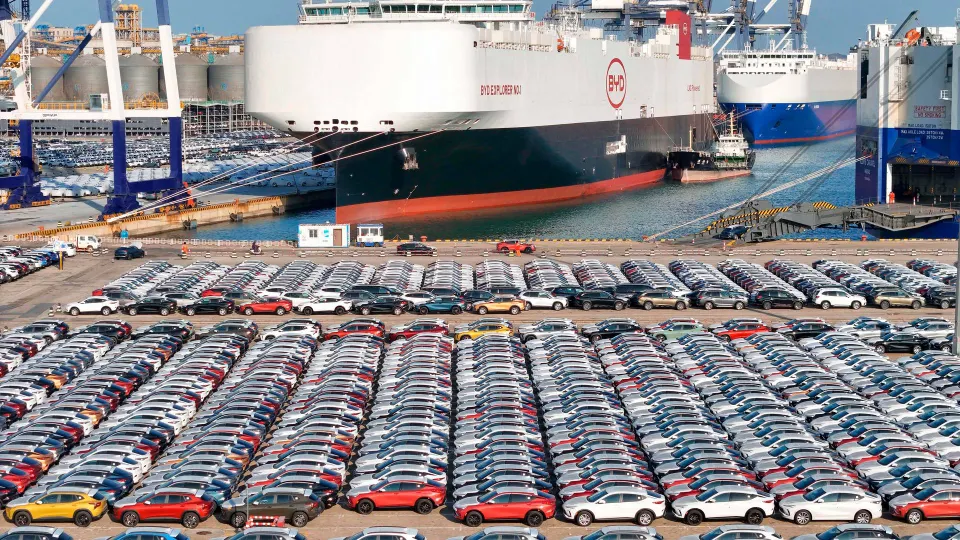
China has overtaken Japan as the dominant force shaping Thailand’s industrial economy, leading Eastern Economic Corridor investment approvals, capturing 42 percent of total foreign investment value, and establishing manufacturing plants for electric vehicles through companies such as BYD, Great Wall Motor, and Changan. Chinese firms also built the EEC’s core digital infrastructure through Huawei and Alibaba Cloud.
Japan’s decades-long role in building Thailand’s automotive and manufacturing base has not been formally displaced, but the direction of new investment has shifted decisively. Chinese EV brands held 89 percent of Thai EV sales in early 2024, while nearly 3,800 Thai manufacturing firms deregistered between 2021 and 2025, coinciding with accelerating Chinese competitive pressure and a record trade deficit.
Walk into a major car dealership strip in Bangkok today and count the badges. A few years ago, you would have found Toyota, Honda, Isuzu, and Mitsubishi dominating every forecourt — the familiar insignia of a five-decade partnership between Thailand and Japan that built one of Asia’s most sophisticated manufacturing ecosystems from scratch. Today, you will find BYD, MG, Great Wall Motor, Changan, and GAC Aion competing aggressively for the same space — and, in many cases, outselling the Japanese brands they sit next to.
That showroom shift is the most visible sign of a transformation that is happening across every layer of Thailand’s industrial economy: in the Eastern Economic Corridor’s investment approvals, in the collapse of Thai manufacturing firm registrations, in the digital infrastructure running underneath Thai e-commerce and logistics, and in the trade flows that define what Thailand imports, from whom, and at what price.
China has not merely become Thailand’s largest trading partner or its biggest source of foreign investment. It has begun replacing Japan as the structural anchor of Thai industry — the country that shapes the manufacturing base, sets the technological standards, and determines which sectors grow and which stagnate. That is a different and more consequential thing. And the remarkable fact is that neither of the two most detailed accounts of China’s manufacturing investment in Thailand — one focused on industrial FDI, one on electric vehicles — names it directly. Read together, however, the scale of what is happening is hard to miss.
The five-decade foundation
To appreciate how significant this shift is, it helps to understand what Japan built.
Thailand’s automotive sector was effectively created by Japanese capital. Toyota, Honda, Isuzu, and Mitsubishi invested collectively tens of billions of dollars in Thai manufacturing over five decades, establishing deep supplier networks, training a skilled workforce, and making Thailand the largest automotive exporter in Southeast Asia. By the early 2020s, the so-called “Detroit of Asia” title was not just a marketing phrase — it reflected a genuinely integrated industrial ecosystem in which Japanese firms occupied the commanding heights and Thai manufacturers supplied the ecosystem around them.
Advertisement
The Eastern Economic Corridor — the 30,000-square-kilometre special economic zone stretching across Chonburi, Rayong, and Chachoengsao that now anchors Thailand’s industrial ambitions — was designed in part to extend that ecosystem into higher-value sectors. Japan was expected to lead that extension, as it had led every previous wave of Thai industrialisation.
That expectation is not being met.
The reversal in the EEC
In the first eleven months of 2025, China led all foreign business approvals in the Eastern Economic Corridor. Japan — which built Thailand’s auto industry and had dominated Thai industrial investment for decades — came second.
That is one data point. But it sits inside a pattern that is hard to explain away as a temporary fluctuation. By 2024, Chinese investors accounted for more than 42 percent of Thailand’s total foreign investment value — a figure that dwarfs any other single country’s contribution. In just two years, Chinese firms registered 588 projects worth nearly $7 billion, targeting the high-value sectors — electric vehicles, digital infrastructure, new energy — that will define Thailand’s industrial economy for the next decade.
Advertisement
Huawei and Alibaba Cloud have built the backbone of the EEC’s digital infrastructure: 5G networks, cloud computing platforms, and industrial AI systems that optimise logistics, port management, and smart grid operations. The Thai-Chinese Rayong Industrial Park alone has attracted $2.5 billion in investment and employs over 20,000 Thai workers. For Chinese manufacturers arriving in the EEC, the digital environment feels familiar. That familiarity reduces friction and accelerates operational ramp-up in ways that, for manufacturers from other countries, it does not.
None of this happened because Japan withdrew. Toyota, Honda, and their tier-one suppliers are still present, still investing, still employing large numbers of Thai workers. What has changed is the direction of gravity: new investment, in the sectors that define the future, is increasingly flowing from China.
The automotive inflection point
The electric vehicle market is where the displacement is most visible and most consequential.
Thailand’s government made a deliberate choice when it launched its 30@30 electrification policy in 2022 — the target of producing 30 percent of all vehicles as EVs by 2030. That choice was, in effect, a bet on a different set of partners. Japanese automakers, dominant in internal combustion engine vehicles, were moving more slowly toward EVs than their Chinese counterparts — a consequence of deep commitment to hybrid technology, reliance on legacy powertrain supply chains, and a corporate culture that historically favours incremental over disruptive change. Thailand decided not to wait for its existing partners to catch up.
Advertisement
The invitation was accepted quickly. BYD, Great Wall Motors, and Changan have collectively committed over $1.4 billion to Thai EV manufacturing — physical plants, not showrooms. BYD opened a Rayong facility with annual capacity of 150,000 units. Great Wall converted its existing Thai facility from ICE production to EV. Changan committed 9.8 billion baht to a dedicated production plant targeting 100,000 EVs annually.
The consumer market followed. EV registrations in Thailand quadrupled from under 25,000 units in 2022 to nearly 90,000 in 2024. Chinese brands — led by BYD, MG, and NETA — captured 89 percent of all EV sales in the January–April 2024 period. By 2025–2026, 7 of the top 10 EV brands in Thailand are Chinese. That is not a trend. It is a structural realignment.
Toyota remains the overall market leader in total Thai vehicle sales. Japanese brands still dominate the ICE segment. But the ICE segment is the one that is shrinking. The response is now underway — Toyota has announced hybrid expansion investment, Honda is committing to new EV models, Mitsubishi is partnering with Nissan on shared EV platforms. The question is timing. Chinese manufacturers are already at scale in Thailand. They are producing, exporting, and competing on price. The window for Japanese brands to reclaim dominance in the EV segment is narrow, and it will not stay open indefinitely.
What happened in automotive is not a story confined to automotive. It is a demonstration of a dynamic that is replicating across sectors: a technology transition exposes an incumbent’s slowness; a better-capitalised competitor moves into the gap; and a market position built over decades is disrupted in years.
The displacement no one is tallying
The manufacturing FDI data tells the story of what China is building in Thailand. A different number tells the story of what that building is replacing.
Advertisement
Between January 2021 and October 2025, 3,796 Thai manufacturing firms deregistered, while 650 new Chinese firms entered the market. The displacement ratio — roughly six Thai closures for every new Chinese entrant — captures a dynamic that sits largely outside the headline narrative of Chinese investment as opportunity. Some portion of those Thai firm closures reflects normal business attrition. But the correlation with the acceleration of Chinese competitive pressure — cheaper components, lower-priced finished goods, integrated supply chains that Thai SMEs cannot match — is hard to dismiss.
This is where the Japan comparison becomes sharpest. Japanese industrial investment, whatever its limitations, developed deep local linkages over decades. Japanese tier-one suppliers established Thai counterparts. Technology transfer, however incomplete, created Thai manufacturing capabilities. The Thai industrial SME ecosystem that Chinese competition is now eroding was, in significant part, built around and within the Japanese manufacturing ecosystem that preceded it.
Chinese industrial investment is, so far, displaying a different pattern. Many Chinese-owned operations in Thailand import the majority of their components and inputs from China, limiting the supply chain spillover that Thailand’s government hoped would accompany the investment. Thailand’s trade deficit with China hit a record $19.23 billion in just the first four months of 2025, as Thai businesses stocked Chinese machinery, components, and raw materials. A country importing at that scale from its primary investor faces a structural dependency that Japan, even at the peak of its influence, never created in quite the same way.
What the articles don’t say — but show
The two most detailed accounts of China’s industrial surge in Thailand — one on manufacturing FDI, one on the EV transition — both note Japan’s displacement as a data point and move on. Neither attempts to name the broader pattern.
Advertisement
That reticence is understandable. Both articles are written for business executives assessing opportunities in Thailand, not for historians documenting a strategic inflection point. Japan’s displacement is, from that perspective, context rather than thesis.
But context shapes everything. The EEC’s digital infrastructure runs on Huawei’s 5G backbone and Alibaba Cloud’s computing layer — which means that the Japanese manufacturers still operating inside the EEC are doing so on infrastructure built by their competitors’ home-country firms. The automotive ecosystem that Japanese companies spent 50 years constructing is now producing electric vehicles, at scale, under Chinese brand names. The sector-specific incentives Thailand is deploying to attract the next wave of investment — semiconductors, batteries, green energy, digital infrastructure — are structured around Chinese investors’ capabilities and Chinese firms’ capital requirements.
Japan has not lost Thailand. But it is no longer shaping it. That distinction, quiet as it is, may prove to be the defining industrial story of the decade in Southeast Asia.
The lesson that travels
The EV article offers a formulation that applies beyond automotive: a market position built over decades can be disrupted in years when the underlying technology changes and a better-capitalised competitor is willing to move fast.
Advertisement
Japan moved slowly because its legacy strengths — ICE technology, hybrid systems, deeply integrated powertrain supply chains — became liabilities when the market shifted toward electrification. The capital it had invested in those capabilities made it harder, not easier, to pivot. China had no such legacy to defend. Its manufacturers entered the EV era without incumbency costs, moved aggressively on price, and used Thailand’s own policy framework to establish manufacturing positions that are now generating exports to markets from Indonesia to Europe.
The broader question, which neither article quite asks, is whether China’s current position in Thailand creates the same kind of incumbency advantage that Japan once had — and whether, in a decade, another technology shift will find China defending a legacy and a new competitor moving fast into the gap.
For executives making long-term investment decisions in Thailand’s industrial economy, that question may be the most important one to hold alongside the opportunity data.
The bottom line
China has not formally replaced Japan in Thailand. There has been no ceremony, no announcement, no moment of handover. Japan’s companies are still there, still relevant, still employing hundreds of thousands of Thai workers. But the structural facts have shifted: China leads EEC approvals, dominates EV market share, accounts for 42 percent of FDI by value, and has built the digital backbone on which the next generation of Thai industrial activity will run.
Advertisement
The handover is not complete. It may never be, in any absolute sense — Thailand’s multi-alignment strategy is specifically designed to prevent any single partner from becoming indispensable. But it is further advanced than most headlines suggest, and it is moving in one direction.
The factory of the future in Thailand, increasingly, was funded, equipped, and built by China. Japan built the factory of the past. The question for everyone else is which generation of factory they are positioned for.
This article draws on the five-part series “Thailand × China: The Business Opportunity,” which examines the bilateral relationship across trade, manufacturing, electric vehicles, digital infrastructure, and geopolitics.
The shares of the respective parent companies of Nykaa and Mamaearth saw a sharp surge on Friday, after the two beauty and skincare companies posted strong surge in profitability and leading to bullish calls from international brokerages, with analysts highlighting which stock investors should consider buying now.
Nykaa-parent FSN E-Commerce Ventures on Thursday reported a consolidated net profit of Rs 78 crore for the March quarter of FY26, marking a 286% jump from Rs 20 crore in the same period last year. Its revenue from operations meanwhile rose 28% year-on-year (YoY) to Rs 2,648 crore, compared with Rs 2,062 crore in Q4 FY25.
Mamaearth-parent Honasa Consumer on the other hand reported a whopping 177% year-on-year (YoY) jump in consolidated net profit to Rs 69 crore for the fourth quarter of the financial year 2026, from Rs 25 crore in the year-ago period. Honasa’s revenue from operations, meanwhile, jumped over 23% YoY to Rs 657 crore during Q4 of FY26, compared to the Rs 533 crore revenue reported in the corresponding quarter of FY25.
Nykaa shares gained more than 4% to hit an intraday high of Rs 285.60 apiece on NSE, before paring some gains to close at Rs 277.25 apiece on Friday. The shares of the company gained more than 6% in one month, 4% in 2026 so far and 27% in one year. The company has a market capitalisation of Rs 79,176 crore.
Advertisement
Honasa Consumer shares meanwhile saw a sharper rally, jumping around 12% to hit an intraday high of Rs 402.80 apiece on NSE, before paring some gains and closing at Rs 384.35 apiece. The stocks gained over 7% in one week, 10% in one month and 34% in 2026 so far. The company has a market capitalisation of Rs 12,361 crore.
Live Events
Nykaa vs Honasa: Which stock should you buy?
At current levels, neither Nykaa nor Honasa offers a clean enough risk-reward for fresh allocation, according to Harshal Dasani, Business Head at INVasset PMS. “Nykaa’s Q4 was operationally stronger, with healthy revenue growth, sharp profit improvement and better margin delivery. The fashion business moving closer to breakeven is also a positive signal. But the market is already discounting a fair part of that improvement. At these valuations, Nykaa needs consistent margin expansion and execution discipline, not just one strong quarter,” the analyst said. On the other hand, Honasa’s Q4 also showed a strong rebound, helped by revenue growth, better profitability and operating leverage. “The concern is not the quarter; the concern is durability,” according to Dasani. “This is still a young brand portfolio where repeat behaviour, distribution depth and category leadership need more evidence across cycles,” he added. Between the two, Nykaa has the stronger platform and clearer category positioning, while Honasa has the sharper near-term recovery, Dasani believes. He, however, concluded by saying that neither looks compelling enough to chase after the results reaction. “This is a setup where patience is better rewarded than momentum chasing. Fresh exposure can wait until valuations offer a wider margin of safety and earnings delivery becomes more repeatable,” he further said.
(Disclaimer: Recommendations, suggestions, views and opinions given by the experts are their own. These do not represent the views of The Economic Times)





















































You must be logged in to post a comment Login