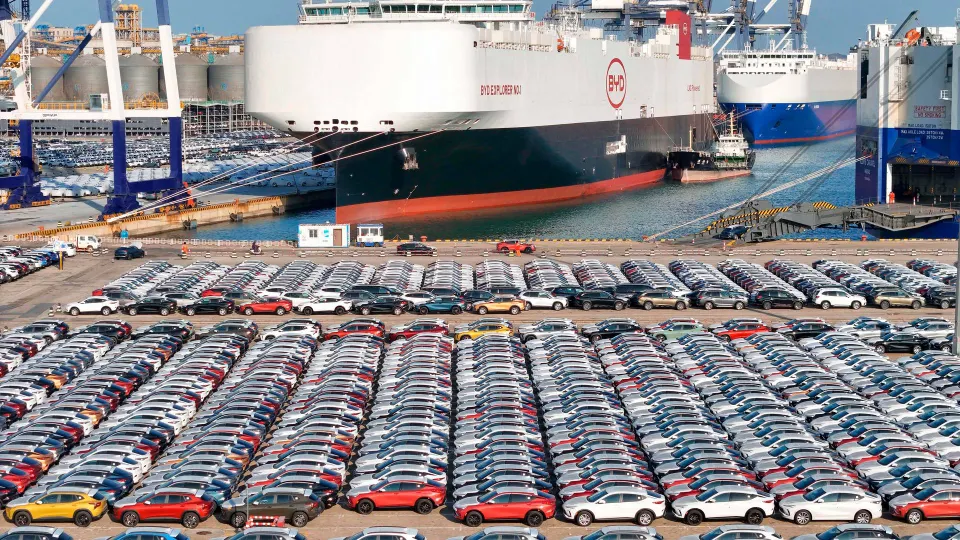
Walk into a major car dealership strip in Bangkok today and count the badges. A few years ago, you would have found Toyota, Honda, Isuzu, and Mitsubishi dominating every forecourt. Today, you will find BYD, MG, Great Wall Motor, Changan, GAC Aion, and Chery competing aggressively for the same space — and, in many cases, outselling the Japanese brands they sit next to. The cars are sleek, well-specified, and priced at levels that legacy automakers struggle to match. The buyers are noticing.
This is not just a showroom story. It is a story about industrial strategy, national ambition, and a $28 billion bet that Thailand can reinvent itself as the electric vehicle capital of Southeast Asia — with China as its primary partner in doing so.
Key takeaways
China now dominates Thailand’s EV market with a force that has no precedent in Thai automotive history. By 2025–2026, Chinese brands hold between 70 and 80 percent of EV market share, with 7 of the top 10 EV brands in Thailand being Chinese. This is not a trend — it is a structural realignment of the market.
Thailand’s 30@30 target is ambitious, but China’s capital and technology are what make it plausible. BYD, Great Wall Motors, and Changan have collectively committed over $1.4 billion to Thai EV manufacturing. Chinese firms have supplied the capital, technology, and production speed that Thailand needed to leapfrog into the EV era. Without them, the 30@30 goal would remain a policy document.
The opportunity is real, but so are the headwinds. Domestic auto sales fell to a 15-year low in 2024. Chinese EV makers face oversupply, price wars, and high household debt among Thai consumers. Investors and executives who treat Thailand’s EV story as guaranteed upside are misreading the risk profile. The kingdom is betting big — and the outcome is not yet decided.
The 30@30 ambition
In 2022, Thailand’s government announced one of the most aggressive electrification targets in Southeast Asia: 30 percent of all vehicles produced in the country to be electric by 2030. The policy, known as 30@30, was backed by a suite of incentives — production subsidies, consumer purchase rebates, tax exemptions for manufacturers, and BOI incentive packages targeting EV assembly, battery production, and EV charging infrastructure.
The scale of ambition was not accidental. Thailand had spent five decades building Southeast Asia’s most sophisticated automotive manufacturing ecosystem — the so-called “Detroit of Asia” — largely on the back of Japanese investment and Japanese technology. By the early 2020s, it was clear that the global automotive industry was shifting toward electrification at a pace that threatened to strand that entire ecosystem. Japanese automakers, dominant in internal combustion engine vehicles, were moving more slowly toward EVs than their Chinese counterparts. Thailand had to decide whether to wait for its existing partners to catch up, or to actively recruit a new generation of EV investors who were already ahead. It chose the latter.
The decision was pragmatic rather than ideological. Chinese EV manufacturers — facing intensifying domestic competition, rising tariff barriers in the US and Europe, and a strategic imperative to globalise — were looking for exactly what Thailand offered: a stable manufacturing base, favourable trade access, government support, and proximity to Southeast Asia’s 680 million consumers.
The interests aligned. The investments followed.
Advertisement
How Chinese brands captured the Thai market
The speed of Chinese EV brands’ market penetration in Thailand has been remarkable even by the standards of fast-moving consumer industries.
BYD, Great Wall Motor, and SAIC’s MG brand established early footholds, investing in local manufacturing, building dealer networks, and pricing aggressively against both each other and the Japanese incumbents. BYD opened a manufacturing plant in Rayong with an annual capacity of 150,000 units. Great Wall Motors converted its existing facility — originally built for ICE vehicles — to EV production. Changan committed 9.8 billion baht to a dedicated Thai production facility targeting 100,000 EVs annually. GAC Aion, Chery, and Hozon followed with their own investment commitments.
The consumer response has been significant. EV registrations in Thailand quadrupled from under 25,000 units in 2022 to nearly 90,000 in 2024. In the January–April 2024 period, Chinese brands — led by BYD, MG, and NETA — accounted for 89 percent of all EV sales, leaving Tesla and all other non-Chinese brands competing for the remaining 11 percent. By 2025–2026, 7 of the top 10 EV brands in Thailand are Chinese. The market transformation, measured in years rather than decades, is the fastest segment shift in the history of Thai automotive retail.
Seventy-two percent of Thai consumers now hold generally favourable perceptions of Chinese cars, according to research by Vero and WeBridge — citing affordability, technology, and design as the primary drivers. That figure would have been unthinkable a decade ago, when “Chinese car” was synonymous with low quality in the minds of most Thai buyers. The reputational turnaround is one of the most significant marketing achievements of the Chinese auto industry’s internationalisation push.
The Japanese dilemma
No honest account of Thailand’s EV transition can avoid the uncomfortable question it raises for Japan.
Advertisement
Japanese automakers built Thailand’s car industry. Toyota, Honda, Isuzu, and Mitsubishi have invested collectively tens of billions of dollars in Thai manufacturing over five decades, creating hundreds of thousands of jobs, establishing deep supplier networks, and making Thailand the region’s largest automotive exporter. That legacy is not disappearing overnight. Toyota remains the overall market leader in Thai vehicle sales. Japanese brands still dominate the ICE segment.
But the ICE segment is shrinking. And in EVs, Japan has been consistently slower to move than China — a consequence of its deep commitment to hybrid technology, its reliance on legacy powertrain supply chains, and a corporate culture that historically favours incremental over disruptive change.
The response is now underway. Toyota has announced substantial investments in hybrid production expansion in Thailand. Honda has committed to launching new EV models. Mitsubishi is partnering with Nissan on shared EV platforms. But the timeline matters. Chinese manufacturers are already at scale in Thailand. They are producing, exporting, and competing on price. The window for Japanese brands to reclaim dominance in the EV segment is narrowing, and it will not stay open indefinitely.
For executives from other industries watching this dynamic, the lesson is transferable: a market position built over decades can be disrupted in years when the underlying technology changes and a better-capitalised competitor is willing to move fast.
Advertisement
Battery supply chain: the next frontier
If EV assembly is the visible part of Thailand’s electric transition, the battery supply chain is the strategic foundation — and it is being built, largely, with Chinese capital.
China’s Sunwoda Electronic received approval to invest over $1 billion in EV and energy storage system battery production facilities in Thailand, with its first factory under construction in Chonburi Province. This is significant not just for the investment quantum, but for what it represents: the beginning of a vertically integrated EV supply chain in Thailand, extending upstream from vehicle assembly into the core technology components that determine competitive advantage in the EV era.
Thailand’s government has actively promoted this development. BOI incentives for battery cell manufacturing are among the most generous in the ASEAN region, and the government has extended timelines for local battery production requirements to give manufacturers time to build supply chains rather than simply import finished cells from China.
The long-term vision is clear: Thailand as ASEAN’s lithium processing and battery manufacturing hub, leveraging its geographic centrality, its established logistics infrastructure, and its relationships with Chinese technology partners to create a regional centre of gravity for EV supply chain activity. Whether that vision is realised depends on whether Thailand can attract the upstream mining and refining investment — lithium, cobalt, manganese — that battery production requires. That piece of the puzzle is still being assembled.
Advertisement
The headwinds executives must price in
Thailand’s EV ambitions are real, and the Chinese investment backing them is substantial. But the business environment is more complicated than the headline numbers suggest, and executives entering this market need a clear-eyed view of the challenges.
Oversupply is the most immediate concern. Production mandates tied to BOI incentives require manufacturers who received subsidies to produce locally — whether or not domestic demand absorbs that production. As multiple manufacturers ramp up simultaneously, the market faces a structural imbalance between supply and demand. The result has been an aggressive price war, with Chinese brands cutting prices sharply to move inventory, compressing margins across the sector, and creating a difficult operating environment for new entrants.
Consumer demand has been softer than projected. Thailand’s domestic auto market hit a 15-year low in 2024, driven by high household debt levels, tightening consumer credit, and economic uncertainty. EV adoption has grown impressively in percentage terms, but from a smaller base than originally forecast. The 30@30 goal requires significant demand-side acceleration that the market has not yet demonstrated it can sustain.
Regulatory uncertainty adds another layer of complexity. Import tariff structures for EV components, rules-of-origin requirements for export market eligibility, and evolving subsidy frameworks have all shifted since the initial investment wave. Manufacturers who built their business cases on specific incentive assumptions are navigating a policy environment that continues to evolve.
Advertisement
What investors and executives should watch
The 2026 production recovery. Thailand’s Federation of Thai Industries is forecasting automotive production of 1.5 million units in 2026, following a 2025 dip. Whether that target is met — and how much of it comes from EV versus ICE production — will be an important indicator of whether the transition is on track.
Battery localisation progress. The Sunwoda investment and others like it will determine whether Thailand builds genuine supply chain depth or remains an assembly-dependent hub. Watch for additional upstream investments in battery materials processing as the leading indicator.
Japanese response strategy. How Toyota, Honda, and their tier-one suppliers adapt to the Chinese competitive challenge in Thailand will shape the broader competitive dynamics of the sector. A credible Japanese EV response would increase competition and ultimately benefit Thai consumers and the market’s long-term health.
Export performance. Thai-made Chinese-brand EVs are already reaching markets from Indonesia to Europe. If export volumes grow significantly, it validates Thailand’s value proposition as a manufacturing base and justifies the investment levels already committed.
Advertisement
The bottom line
Thailand has placed a large, deliberate bet on electric vehicles and on China as the partner to help it win that bet. The wager has already changed the face of Thai automotive retail, attracted billions in new manufacturing investment, and begun to build a supply chain infrastructure that could underpin a generation of industrial growth.
The risks are real: oversupply, soft demand, price wars, and policy uncertainty are not trivial challenges. But the strategic logic is sound. A country that successfully transitions from ICE manufacturing hub to EV manufacturing hub — with a deep-pocketed, technology-leading partner backing that transition — will be one of the most important industrial economies in Asia by 2030.
The kingdom is making its move. The question for investors and executives is not whether to pay attention, but how quickly they can afford not to.
Next in the series — The Digital Silk Road: E-Commerce, Fintech, and AI Connecting Thailand and China
There’s a massive behavioral shift going on in the world, that makes financial technology incredibly important right now. Technology completely alters how South Africans navigate their online entertainment hubs.
Mobile financial tools break down massive barriers across many different industries. People without traditional bank accounts can suddenly shop online very easily. Anyone with a smartphone can now manage their digital payments instantly. This newfound accessibility is fueling huge growth across local e-commerce sectors. Digital subscriptions and mobile businesses are thriving primarily because of this.
Mobile payment systems are the actual engine behind this digital transformation. Smartphones are the only internet gateway for many people in South Africa. Mobile-friendly financial tools remain absolutely essential for modern digital commerce. Fintech companies are building incredibly lightweight and extremely fast payment solutions. These smart apps work perfectly even when internet connections randomly drop.
These modern technologies simplify transactions while cutting out annoying banking delays. Consumers absolutely refuse to wait around for slow payment processing anymore. People expect their checkout experiences to be completely fast and intuitive. Payments must blend seamlessly into the applications we use every single day.
Advertisement
Retail platforms and interactive services heavily prioritize smooth user onboarding processes. Companies integrating secure fintech infrastructure easily retain their most active users. Cloud computing acts as the hidden backbone for this massive expansion. Modern payment networks rely entirely on massive cloud servers to function. These systems process millions of real-time transactions without crashing a single time.
Real-time payment processing is non-negotiable within modern online ecosystems today. Shoppers expect instant deposits and rapid confirmations across all their platforms. Fintech providers spend millions building automated transaction systems right now. Artificial intelligence completely changes how these financial operations run on a daily basis. Machine learning tracks spending habits and personalizes the user experience completely. AI security tools monitor behavioral signals to spot hidden fraud instantly.
Cybersecurity remains a massive priority for South Africa’s expanding digital economy. Digital financial growth naturally attracts hackers and serious online phishing threats. Companies constantly fight against payment fraud and stolen user identities online. Fintech providers use strong encryption technologies to keep consumer data safe. Biometric verification completely changes how we log into our mobile apps. Fingerprint scanners and facial recognition make account access incredibly secure today.
Embedded finance is another massive trend currently shaping the local market. Apps now build digital wallets directly into their own user interfaces. Users never have to leave the application to process their payments. Rapid digital expansion demands incredibly powerful and scalable backend server infrastructure. Cloud networks help companies scale their resources during incredibly busy hours.
Advertisement
Digital entertainment markets clearly highlight all of these recent technological shifts. Platforms hosting live online roulette for South Africans depend heavily on speed. Secure payments and low-latency servers keep these specific platforms highly competitive.
Expanded mobile networks allow more consumers to enjoy these digital services. Faster internet speeds make real-time cloud applications incredibly reliable almost everywhere. Younger generations push this fintech adoption faster than anyone else today. Digital natives expect immediate results and highly simplified smartphone banking apps. Their specific habits dictate exactly how companies design new financial tools.
Government regulations also heavily influence local fintech innovation and overall growth. Authorities are drafting strict rules regarding digital identity and online privacy. Startups and global brands fight aggressively for valuable local market share. Consumers want financial tools to operate invisibly within their favorite apps. Future digital growth depends entirely on adapting to these technological shifts. Smart infrastructure and artificial intelligence will definitely drive the next phase.
“This slowdown in sales was caused by unseasonably cool weather impacting our heat-related categories, which normally begin to ramp this time of year as summer heat begins to take hold,” said Chief Executive Phil Daniele, citing lower volumes in categories including air conditioning, starting and charging.
In an era where passive investing, benchmark tracking and broad diversification dominate investor conversations, Sameer Shah believes long-term wealth creation still comes from identifying transformative business trends early and backing them with conviction.
Over the past 15 years, ValueQuest Investment Advisors has built its investment framework around what Shah describes as a “private equity approach” to public markets—focusing on deep research, management quality, industry structures and long-term profit pools before making investment decisions.
In this edition of ETMarkets PMS Talk, Shah discusses how the firm’s investment philosophy has evolved across market cycles, why concentrated portfolios can outperform when backed by rigorous analysis, and the structural themes—from manufacturing and defence to AI, aerospace and energy transition—that could shape the next decade of investing.
He also shares his views on where alpha opportunities lie in today’s market and why some of the most compelling investment ideas remain under-owned and under-appreciated by the broader market. Edited Excerpts –
Advertisement
Q) Value Quest has completed 15 years in the investment management business. How has your investment philosophy evolved over the years, especially across different market cycles?
Live Events
A) Over the last 15 years, our philosophy has remained anchored in identifying structural themes and trends early, supported by a strong top-down understanding of the economy and industry cycles. We combine this with deep bottom-up research to identify businesses that are emerging leaders or credible challengers within those themes. What has evolved over time is the institutionalisation of our process — we have added stronger guardrails around risk, portfolio construction and governance to improve consistency of outcomes across market cycles. This balance of conviction-led investing and disciplined risk management continues to define ValueQuest’s approach.
Q) Your firm follows a high-conviction and concentrated portfolio strategy. In a market where diversification is often emphasised, what gives you confidence in this approach? A) At ValueQuest, we follow what we often describe as a “private equity approach” to public markets — spending significant time understanding industries, management teams, competitive advantages, and long-term profit pools before making investment decisions.
We have always believed that informed concentration is different from speculative concentration. When you understand management quality, industry structure and business fundamentals deeply, a concentrated portfolio can lead to better risk-adjusted outcomes.
Diversification beyond a point it can dilute conviction and impact. Our focus remains on understanding businesses deeply and managing risks proactively.
Advertisement
Q) ValueQuest has consistently focused on identifying structural megatrends early. Which themes currently excite you the most over the next 5–10 years? A) Over the next 5–10 years, we remain highly constructive on India’s manufacturing opportunity, driven by both domestic demand and global supply chain diversification. AI is emerging as a defining global theme, and select Indian companies are increasingly becoming part of the hyperscaler and data centre ecosystem.
We also see strong long-term potential in defence and precision engineering, especially across aerospace and space-linked opportunities. Energy transition continues to benefit from powerful structural and geopolitical tailwinds, while pharma CDMO and the emerging GLP-1 ecosystem remain compelling healthcare themes. These opportunities are being shaped by policy support, technological disruption and rising strategic self-reliance globally.
Q) Given the current market valuations, where are you finding alpha opportunities today — largecaps, midcaps, or emerging businesses? A) We do not approach markets through the lens of market-cap segmentation. Our investment process is driven more by identifying emerging trends, structural shifts, and areas where large profit pools can potentially develop over the next 5–10 years.
Our top-down thematic research helps us identify sectors and businesses that are beneficiaries of these long-term changes, irrespective of whether they are classified as largecaps, midcaps, or emerging companies.
Advertisement
Historically, alpha generation has often come from identifying under-appreciated businesses early in their growth journey rather than focusing on size classifications.
Q) The factsheet highlighted sectors such as energy transition, defence, aerospace, and manufacturing as key focus areas. What makes these sectors particularly attractive from a long-term investment perspective? A) These sectors are attractive because they are aligned with powerful structural, geopolitical and policy-led tailwinds. Energy transition is likely to accelerate further amid recurring oil shocks and the increasing global focus on energy security and localisation.
Defence spending is also set to rise meaningfully over the next decade as countries prioritise self-reliance and modern warfare shifts from traditional platforms towards drones, anti-drone systems and advanced technologies.
In aerospace and precision engineering, India has a strong structural advantage driven by its engineering talent, cost competitiveness and growing role in global supply chains.
Advertisement
Q) India’s manufacturing story is gaining global attention due to supply chain diversification and policy support. How are you positioning portfolios to capture this opportunity? A) Manufacturing is entering a multi-year upcycle as the world moves from an asset-light model towards rebuilding hard assets and resilient domestic supply chains, creating long-duration opportunities for globally competitive Indian businesses.
We are positioning portfolios to capitalise on this opportunity largely through “picks and shovels” businesses – particularly capital goods, industrial technology and engineering-led companies that enable this broader manufacturing buildout.
Our focus remains on identifying companies with strong execution capabilities, technological differentiation and the ability to gain market share as both domestic capex and global supply chain diversification accelerate. Q) As a firm managing over Rs 27,000 crore across mandates, how do you maintain agility and continue generating alpha at scale? A) Generating alpha at scale requires staying ahead of emerging trends while maintaining deep research and strong risk discipline.
We prefer scalable businesses with strong execution and market leadership, which allows us to deploy capital meaningfully without losing agility.
Advertisement
Our “private equity lens” helps us develop differentiated insights, assess industries with a long-term ownership mindset, and identify early signs when an investment thesis is evolving or getting challenged.
We believe intellectual agility and deep engagement with portfolio companies are far more important than attempting to mirror benchmarks or cover every sector.
Q) Which sectors or themes do you believe are still under-owned or under-appreciated by the broader market? A) Many of the most compelling opportunities today are still in relatively early stages of growth and often lie outside benchmark indices, which naturally leads to lower institutional ownership and market attention.
Aerospace, precision engineering and AI/ data center plays are still early in their growth journey and not fully reflected in market positioning.
Advertisement
Similarly, energy transition continues to be viewed narrowly despite the long runway and shifting profit pools emerging across the ecosystem. We recently put out a note highlighting the same.
(Disclaimer: Recommendations, suggestions, views, and opinions given by experts are their own. These do not represent the views of the Economic Times)
That work is due to start with phase one focused around dismantling the former shopping centre and Graeme House buildings.
Bosses behind the scheme say the first step will be to close the precinct car park at the end May 2026.
New hoardings will be put up around the site, and the cut through via Manchester Road to Nicolas Road will be closed to pedestrians and vehicles for safety reasons.
Advertisement
Demolition of the existing buildings is expected to begin in June and finish in August. Material from the existing buildings are set to be reused during construction of the new neighbourhood, to reduce vehicle trips during the work.
The approved plans include building 262 apartments with a mix of one, two and three bedrooms, all with access to outdoor space through balconies and gardens. A total of 53 affordable homes will be available through a mix of tenures, with 49 for social rent.
That’s alongside 3,500 sq metres of public open space, including a ‘fully walkable route’ through Manchester Road and outdoor seating areas. Among the mix of new shops, there will be a new ‘Makers Yard’ said to be suitable for smaller, start-up businesses.
All the homes in the scheme will be designed and built to reduce energy demand and residents’ bills, bosses said.
Advertisement
The neighbourhood will be all-electric with some renewable energy generation on site and future proofed EV charging.
Up to 60 new trees will be planted across the site, with ‘maximised retention’ of the existing set.
The scheme was brought forward in partnership with the Greater Manchester Pension Fund.
Georgina Lynch, managing director at PJ Livesey, said: “Demolition marks another major milestone for the project which will completely transform the former shopping centre.
Advertisement
“Keeping local people safe and minimising disruption is our top priority. We’ve been working with the existing traders to carefully manage any disruption during the demolition.
“This has included arranging new servicing access for the businesses on Wilbraham Road.
“Our demolition contractor will carefully manage any issues throughout the work, and we will continue to stay in regular contact with local residents and businesses as the demolition progresses.”
To find all the planning applications, traffic diversions, road layout changes, alcohol licence applications and more in your community, visit the Public Notices Portal.
Fifa is under investigation over its ticket pricing ahead of the 2026 World Cup.
The attorneys general of New York and New Jersey are investigating the association over allegations of “artificially inflating prices” and “misleading fans” over the sale of tickets. Fans have reportedly been “misled” about the location of seats, including through the creation of more expensive “front” category tickets released after the initial sales, according to the report.
Fifa president Gianni Infantino defended the prices earlier in May, saying they reflect the public’s “absolutely crazy” appetite, though Fifa declined to comment on recent events.
BBC’s Nada Tawfik explains what comes next with the World Cup just days away.
Oil prices climbed on Thursday after fresh US strikes in Iran reignited fears of disruptions to commercial shipping through the Strait of Hormuz.
Brent crude, the global benchmark, surged more than 3% to $97.29 a barrel, while US West Texas Intermediate (WTI) crude jumped 3.42% to $91.71 a barrel.
Iran’s Revolutionary Guards said that they struck a US airbase at around 4:50 a.m. local time, according to the country’s semi-official Tasnim news agency, though the IRGC did not disclose the location of the base.
US officials said Central Command forces shot down four Iranian one-way attack drones that posed a threat near the Strait of Hormuz. The US military also struck an Iranian ground control station in Bandar Abbas that was preparing to launch a fifth drone.
Advertisement
The latest escalation comes days after the US military carried out what it described as “self-defense strikes” in southern Iran, targeting vessels allegedly attempting to deploy mines along with missile launch sites. US Central Command said the operation was aimed at protecting American troops and commercial shipping routes.
Live Events
Iran’s Islamic Revolutionary Guard Corps later said it would respond to ceasefire violations after detecting and engaging US drones and an F-35 fighter jet that had entered Iranian airspace. A US official said the latest strikes targeted an Iranian military facility believed to pose a threat to American forces and maritime traffic moving through the strait. Meanwhile, President Donald Trump said Iran was “negotiating on fumes” and added that the upcoming US midterm elections would not pressure him into rushing a deal to end the nearly three-month-old conflict.In a note released late Wednesday, Citi said oil markets were stabilising as investors gradually moved away from pricing in severe supply disruption risks amid signs of progress in negotiations between Washington and Tehran.
However, the bank said uncertainty around the timing of any agreement continued to keep central banks cautious, as policymakers assessed the inflationary impact of elevated energy prices.
Citi added that the sustained rise in crude prices was beginning to feed into broader inflation pressures through what it described as “second round effects”, pushing some central banks toward a more hawkish stance.
Swiss investment bank UBS said on Friday that pressure on the global oil market was intensifying as inventories continued to shrink amid disruptions to shipments through the Strait of Hormuz. The bank noted that global oil inventories declined by a combined 246 million barrels in March and April, while cumulative production losses could exceed 1 billion barrels by the end of May.
Advertisement
Analysts said that even if a deal is reached, shipping activity through the strait may take several months to normalise, while damaged energy infrastructure could take even longer to recover fully.
Earlier this month, Saudi Aramco CEO Amin Nasser warned that disruptions in Hormuz could delay stability in global oil markets until 2027, with nearly 100 million barrels of oil supply per week potentially impacted. Saudi Aramco is the world’s largest oil producer.
Morgan Stanley described the current oil market as being in “a race against time”, saying the factors that have so far prevented a sharper rise in crude prices may weaken if the Strait of Hormuz remains shut through June.
The brokerage said higher US crude exports and softer demand from China had helped absorb part of the supply shock. However, it cautioned that an extended closure of Hormuz could tighten global supplies again if disruptions continue beyond what the US and China can comfortably offset.
Advertisement
(Disclaimer: Recommendations, suggestions, views and opinions given by the experts are their own. These do not represent the views of The Economic Times)
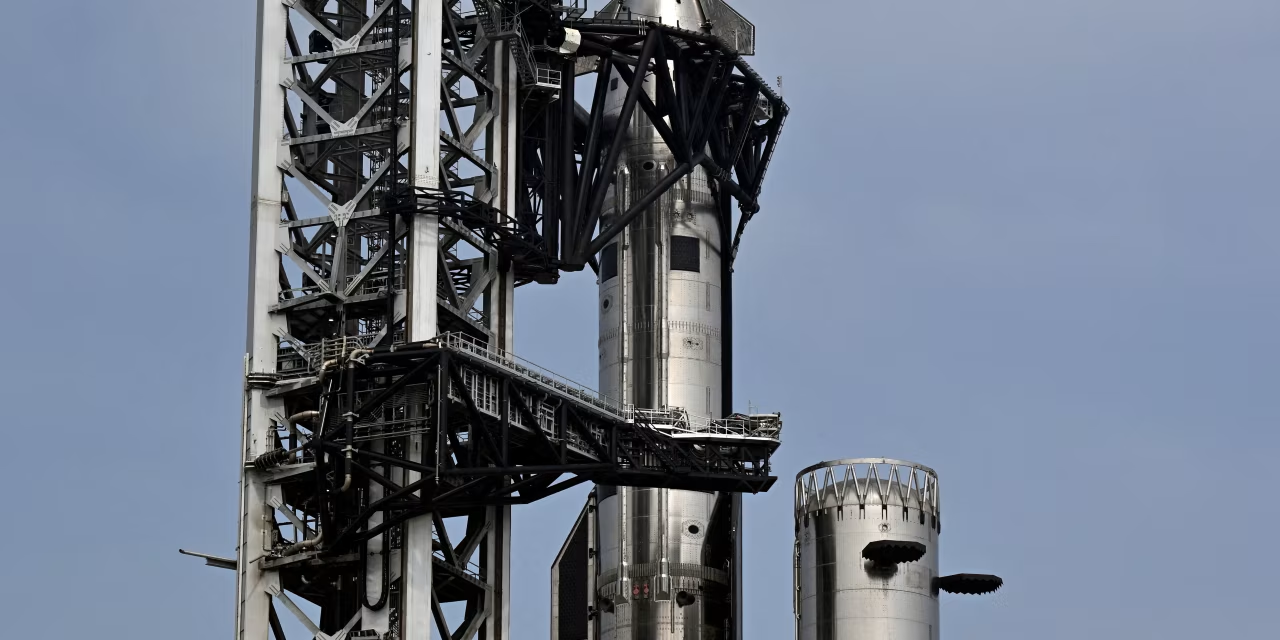
SpaceX’s regulatory filing last week ahead of its IPO revealed a financially smart marriage between its space-launch services division and its profitable Starlink satellite internet operation.
| Revenue of $14.41B (8.99% Y/Y) beats by $337.07M
This article was written by
Seeking Alpha’s transcripts team is responsible for the development of all of our transcript-related projects. We currently publish thousands of quarterly earnings calls per quarter on our site and are continuing to grow and expand our coverage. The purpose of this profile is to allow us to share with our readers new transcript-related developments. Thanks, SA Transcripts Team
NEW YORK — As investors weigh opportunities in the semiconductor sector amid the ongoing artificial intelligence boom, the choice between Intel, NVIDIA and Taiwan Semiconductor Manufacturing Co. (TSMC) has become a central debate for portfolios seeking exposure to chips powering data centers, consumer devices and advanced computing.
Each company occupies a distinct position in the semiconductor ecosystem. NVIDIA dominates AI accelerator chips, TSMC leads as the world’s premier contract chip manufacturer, and Intel is executing a high-stakes turnaround in both processor design and foundry services. With the sector facing strong long-term demand but short-term volatility from capital spending cycles and geopolitical risks, analysts differ on which stock offers the most compelling risk-reward profile heading into the final months of 2026.
NVIDIA: AI Dominance with Premium Valuation
NVIDIA remains the clearest pure-play beneficiary of the AI surge. The company continues to command an estimated 80-85% share of the AI GPU market, with its Blackwell and upcoming Rubin platforms driving substantial revenue. First-quarter fiscal 2027 results showed record performance, though some investors have expressed caution over high valuations and potential slowdowns in hyperscaler spending.
The stock has delivered strong returns but experienced periods of consolidation in 2026 as the market digests massive prior gains. Analysts generally maintain bullish outlooks, citing sustained AI infrastructure buildouts and new applications in robotics and autonomous systems. However, the premium multiple leaves limited margin for error if AI capital expenditure growth moderates.
Advertisement
TSMC: Stable Foundry Leader with Clear Visibility
TSMC stands out as the most consistent and lower-risk option among the three. As the manufacturer for NVIDIA, Apple, AMD and others, it captures broad industry growth with exceptional execution. The company has raised full-year growth guidance multiple times in 2026, benefiting from strong demand for advanced 2nm and 3nm processes.
Analysts frequently describe TSMC as the “picks and shovels” play in the AI gold rush, with more predictable revenue streams and strong margins. Geopolitical risks tied to its Taiwan base remain a concern, but the company’s strategic importance has drawn international support and diversification efforts. For conservative investors seeking semiconductor exposure with lower execution risk, TSMC often ranks as the preferred choice.
Intel: High-Risk Turnaround with Significant Upside Potential
Intel has delivered one of the most dramatic stock recoveries in the sector during 2026, with shares surging over 200% in some periods after a multi-year slump. The company’s 18A process node has shown promising yields, and it has secured partnerships with NVIDIA, Tesla and others for foundry services. U.S. government support and foundry ambitions have fueled optimism.
However, Intel still faces profitability challenges in its foundry business and must prove it can consistently win major external customers against TSMC. Some analysts have grown cautious on valuation after the sharp rally, with recent downgrades citing rich pricing relative to near-term execution risks.
Advertisement
Comparative Outlook for Late 2026
NVIDIA offers the highest growth potential but carries elevated valuation risk. Strong AI demand should continue, yet any signs of hyperscaler budget fatigue could trigger volatility.
TSMC provides the most balanced profile — strong secular tailwinds, industry-leading technology and more stable financials. It benefits regardless of which chip designer wins market share.
Intel represents the highest-risk, highest-reward option. Successful foundry execution and data center CPU gains could drive further upside, but delays or competitive losses might pressure the stock.
Diversification across all three may offer the most prudent approach for many investors, balancing NVIDIA’s growth, TSMC’s stability and Intel’s turnaround optionality. Sector fundamentals remain supportive, with global semiconductor sales projected to approach or exceed $1 trillion in 2026, driven primarily by AI infrastructure.
Advertisement
Key Risks Across the Sector
Geopolitical tensions, particularly around Taiwan, represent a shared risk for all three companies. Supply chain disruptions, export restrictions and capital expenditure shifts by major cloud providers could influence performance. Additionally, energy costs for AI data centers and potential economic slowdowns remain watchpoints.
Longer-term, the AI investment cycle, advancements in alternative computing architectures and regulatory developments will shape relative performance.
Investment Considerations
Investors should assess their risk tolerance, time horizon and portfolio allocation before deciding. Those with higher risk appetites may favor NVIDIA or Intel for potential outsized returns, while conservative investors might prefer TSMC’s more predictable growth profile.
Dollar-cost averaging and thorough fundamental analysis remain advisable in this dynamic sector. Professional financial advice tailored to individual circumstances is recommended before making investment decisions.
Advertisement
The semiconductor industry’s importance to technological progress and economic growth ensures continued attention on these leading players. As 2026 progresses, quarterly results, AI adoption metrics and geopolitical developments will provide further clarity on which company is best positioned for sustained success.

























































You must be logged in to post a comment Login