Financial Markets Economist John Lonski discusses whether the U.S. economy is reaccelerating under Trump. Lonski analyzes rising bond yields and consumer sentiment.
Yields on U.S. Treasurys hovered near multi-year highs on Wednesday, as the global bond market experienced a sell-off amid concerns over energy prices keeping inflation elevated as well as government debt burdens.
The yield on the benchmark 10-year Treasury note was around 4.8% in the early afternoon on Wednesday, slightly lower than the intraday high of 4.818% – which was the highest level since November 2023.
Advertisement
Sovereign debt yields were elevated in other notable developed countries, with Japan’s 10-year yield above 3% for the first time in 30 years, German 10-year Bund yields at their highest level since 2011, and Britain’s equivalent yield at its highest since 2008. Bond yields rise as prices fall, and vice versa.
Bond yields have been under pressure since the Iran war began earlier this year due to the disruption of oil supplies causing gas prices to rise, putting inflationary pressure on consumers. Concerns about government debt have also contributed to the rise in yields.
Government bond yields have been near multi-year highs amid a selloff caused by uncertainty over inflation and sovereign debt. (Michael Nagle/Bloomberg via Getty Images)
Angelo Kourkafas, senior global strategist for investment strategy at Edward Jones, said in a statement, “Rising government bond yields have been the primary challenge for markets amid solid economic growth and strong corporate earnings, as higher rates continue to put pressure on equity valuations.”
Advertisement
“We believe several factors have contributed to the rise in yields, including uncertainty surrounding the Fed’s policy path and increased bond issuance from both public and private borrowers,” Kourkafas added. “More recently, however, investor concerns have shifted toward the potential inflationary impact of higher energy prices.”
Government bond yields are also facing pressure from increased issuance of corporate debt, as tech giants and firms in other sectors use debt to help finance the buildout of artificial intelligence (AI) infrastructure, such as data centers.
Naka Matsuzawa, chief macro strategist at Nomura Securities, said the AI hyperscalers’ willingness to pay reasonably high rates was pulling up yields broadly, with the focus now on whether economic growth can rise along with them to help economies cope with higher borrowing costs.
Federal Reserve Chair Kevin Warsh said the central bank is focused on bringing down inflation during his Jackson Hole address. (Li Yuanqing/Xinhua via Getty Images)
State Street’s head of macro strategy, Michael Metcalfe, said rising energy prices are causing traders to bet on interest rate hikes by the Federal Reserve to tamp down inflation.
Metcalfe added that the “narrative is also getting wrapped up with longer-term concerns about the fiscal path,” and said the bond market sell-off was “orderly.”
The Fed is set to hold its next monetary policy meeting in two weeks on Sept. 15-16, with markets seeing a 64.2% probability that policymakers will hike the benchmark federal funds rate by 25 basis points from the current target range of 3.5% to 3.75%, according to the CME FedWatch tool.
Those odds shifted dramatically over the last week, when the tool showed a 63.4% chance of rates remaining at their current level following the Fed’s meeting this month.
Fed Chair Kevin Warsh’s keynote address at the annual Jackson Hole Symposium emphasized that the central bank is aware that inflation remains above its 2% target, with the most recent reading of the Fed’s preferred measure – the PCE index – showing prices 3.7% higher than a year ago.
Warsh said policymakers’ focus should be on the price stability side of the Fed’s dual mandate given “concerning” inflation data and jobs data reflective of a labor market that is “broadly consistent with full employment.”
Policymakers will get fresh data on both the labor market and inflation ahead of the meeting later this month, with the August jobs report due out this Friday and last month’s CPI inflation report set to be released next Friday.
NEW YORK — Shares of Pfizer Inc. climbed further Wednesday morning, trading at $29.09, up 54 cents, or 1.89%, as of 10:02 a.m. ET, matching a fresh 52-week high the pharmaceutical giant first touched earlier this week amid a wave of positive news for the company.
Pfizer’s stock has now gained approximately 20% since the start of the year, marking a significant recovery for the drugmaker as it works to move past two years of declining COVID-related revenues and reposition itself around a broader portfolio spanning oncology, cardiometabolic disease and vaccines.
The stock’s climb this week has been driven by a combination of factors, including a landmark drug pricing agreement with the Trump administration, a stronger-than-expected second-quarter earnings report, and the resolution of a major legal settlement tied to one of the company’s contraceptive products.
Pfizer was among the pharmaceutical companies that reached a new drug pricing deal with President Donald Trump’s administration as part of the White House’s push to align U.S. drug prices with those paid in other developed countries, a policy the administration has branded “most-favored-nation” pricing. Under the agreement, Pfizer said it would voluntarily align prices for its drugs in Medicaid programs with those charged internationally, while also offering medicines directly to consumers at steep discounts through a new government-run website, TrumpRx.gov.
Advertisement
Pfizer said the majority of its primary care treatments and certain other brands, including the rheumatoid arthritis drug Xeljanz, the dermatitis treatment Eucrisa and the post-menopausal osteoporosis medicine Duavee, would be offered to patients at average savings of around 50%, with some discounts reaching as high as 85%.
In exchange for the pricing concessions, along with a commitment to invest $70 billion in U.S. research and manufacturing, Pfizer secured a three-year grace period from potential pharmaceutical tariffs, a provision that removed a significant source of policy uncertainty that had weighed on the sector for much of the year.
The White House said the Trump administration has now reached similar drug pricing deals with 26 pharmaceutical companies in total, including Eli Lilly and Novo Nordisk, building on agreements first struck with major drugmakers last year and expanded this week to include nine additional midsize firms.
Alongside the pricing news, Pfizer’s stock has also been buoyed by a strong second-quarter earnings report. The company posted adjusted earnings per share of 77 cents, beating analyst expectations of 68 cents, while total revenue reached $15.03 billion, ahead of the $14.42 billion Wall Street had anticipated and up 2.6% from the same period a year earlier. Trading volume surged past 8.3 million shares in the session following the report, well above the stock’s typical activity levels, reflecting heightened investor attention to the results.
Advertisement
Following the earnings beat, Pfizer raised its full-year 2026 adjusted earnings guidance to a range of $2.80 to $3.00 per share, with Wall Street analysts currently projecting the company will land near $2.98 for the full fiscal year. The company also lifted the midpoint of its 2026 revenue guidance by $500 million, to $61.5 billion.
Also contributing to the stock’s momentum this week was the resolution of a major legal matter facing the company. Pfizer reached a confidential settlement covering more than 6,000 federal lawsuits alleging a connection between its contraceptive injection Depo-Provera and intracranial meningioma, a type of brain tumor. While the company did not disclose specific financial terms of the settlement and maintained that it had not engaged in any wrongdoing, resolving the litigation removed a lingering legal overhang that had weighed on investor sentiment surrounding the stock.
Pfizer has also continued to expand its regulatory and clinical pipeline in recent weeks. The company and its partner BioNTech announced that the U.S. Food and Drug Administration approved their updated 2026-2027 Comirnaty mRNA COVID-19 vaccine formulation, tailored to the XFG variant, for use in adults. Separately, Pfizer reached a settlement extending the effective U.S. patent expiry for its cardiovascular drug Vyndamax to June 1, 2031, subject to the outcome of other related litigation, a development that helps push back one of the looming patent cliffs the company has faced in its cardiovascular portfolio.
Insider activity at the company has also drawn attention from investors in recent weeks. Pfizer’s chief executive was reported to have made a $1 million purchase of company stock following the second-quarter earnings report, a move some market watchers have pointed to as a signal of management’s confidence in the company’s direction even as broader concerns about long-term growth persist.
Advertisement
Despite the recent rally, analysts covering the stock remain cautious about Pfizer’s longer-term growth trajectory. Concerns center on a series of upcoming patent expirations across the company’s product portfolio, along with the pace at which its oncology pipeline, which includes drugs such as Ibrance, Xtandi, Padcev and Adcetris, can offset revenue pressure from products losing patent protection in the coming years. Pfizer has also announced plans for roughly $2.5 billion in productivity-enhancement savings between 2027 and 2029, part of a broader effort to control costs while continuing to invest in newer areas of its pipeline, including obesity, autoimmune disease and additional oncology programs.
Short interest in Pfizer shares currently stands at roughly 161.5 million shares, representing about 2.8% of the stock’s public float, according to data tracking short positions in the stock. While that figure has increased significantly since last September, the overall level remains relatively low, suggesting limited bearish sentiment toward the stock even amid ongoing questions about the company’s long-term growth outlook.
With shares now trading at the top of their 52-week range and above key technical moving averages, investors will likely continue watching closely for further details on Pfizer’s expanding pipeline of obesity, oncology and autoimmune treatments, along with any additional developments tied to the broader wave of drug pricing agreements reshaping the pharmaceutical industry’s relationship with the Trump administration heading into the final months of 2026.
Teva Pharmaceutical Industries Limited (TEVA) Discusses Positive Topline Results for Anti-IL-15 Antibody in Phase IIa Celiac Disease Study September 2, 2026 8:00 AM EDT
Company Participants
Christopher Stevo – Senior Vice President of Investor Relations & Competitive Intelligence Richard Francis – President, CEO & Director Eric Hughes – Executive VP of Global R&D and Chief Medical Officer
Advertisement
Conference Call Participants
David Amsellem – Piper Sandler & Co., Research Division Corey Rosenbaum – Scotiabank Global Banking and Markets, Research Division Anthea Li – Jefferies LLC, Research Division Jason Gerberry – BofA Securities, Research Division Matthew Dellatorre – Goldman Sachs Group, Inc., Research Division Ashwani Verma – UBS Investment Bank, Research Division Umer Raffat – Evercore ISI Institutional Equities, Research Division Luisa Hector – Joh. Berenberg, Gossler & Co. KG, Research Division
Presentation
Advertisement
Operator
Hello, everyone, and thank you for joining us today for the IL-15 Celiac Disease Phase 2a Topline Results Conference Call. My name is Sami, and I’ll be coordinating your call today. [Operator Instructions] I’ll now hand over to your host, Christopher Stevo, Head of IR, to begin. Please go ahead, Christopher.
Christopher Stevo Senior Vice President of Investor Relations & Competitive Intelligence
Advertisement
Thanks, Sami. Good morning, and good afternoon, everyone. Thank you for joining us for the celiac disease results for TEV-‘408 (Anti-IL-15). The materials are posted to our website this morning in the Investor Relations section, as always, please see those.
And before I turn the call over to Richard Francis, I’d like to remind everyone that we’ll be making forward-looking statements on this call. The company cautions investors that any forward-looking statement involves risks and uncertainties and is not a guarantee of future performance. Actual results may differ materially from those expressed or implied in the forward-looking statements due to a variety of factors.
These factors are described in our earnings press release
The government’s ability to play with the public finances is limited by the so-called fiscal rules it has set for itself.
So, if it needs more money to pay back higher borrowing costs, it has less to spend on other things (under its self-imposed rules).
The possibility now looms of less support for households struggling with the cost of living, or of tax rises to pay for any support.
Importantly, these are choices – not certainties – so the chancellor might free up some money by spending less elsewhere.
Advertisement
Some may be wondering about the impact of higher gilt yields on the mortgage market, particularly after what followed Liz Truss’s mini-Budget in September 2022.
Analysts believe that mortgage rates could go up on new fixed deals, as funding costs for lenders rise. But this is very different to 2022, when they shot up over a couple of days.
That speedy rise led to lenders quickly pulling deals while they tried to work out what interest rate to charge.
However, the market could be more favourable to anyone currently buying an annuity – a product from an insurance company that gives a retirement income for the rest of their life, bought only once.
With over a decade of institutional investment experience, I specialize in identifying growth opportunities at the intersection of technological disruption and macro-thematic energy shifts. I’ve spent the majority of that time at a hedge fund here in Rotterdam, working my way up as an analyst. My work reflects rigorous standards as I myself have a very high standard as to what I invest my money in. My primary coverage spans the technology sector—with a focus on SaaS and cloud infrastructure—and the energy and minerals markets. I tend to be very data and trend driven in my work, analyzing unit economics and supply chain gaps among a number of other often overlooked areas in business and industries.I find these offer incredible growth opportunities and are also very fun to research and follow. It’s a very active space with plenty of news coming out each week. Work is my own thoughts and research is done only by myself.
Analyst’s Disclosure: I/we have no stock, option or similar derivative position in any of the companies mentioned, and no plans to initiate any such positions within the next 72 hours. I wrote this article myself, and it expresses my own opinions. I am not receiving compensation for it (other than from Seeking Alpha). I have no business relationship with any company whose stock is mentioned in this article.
Seeking Alpha’s Disclosure: Past performance is no guarantee of future results. No recommendation or advice is being given as to whether any investment is suitable for a particular investor. Any views or opinions expressed above may not reflect those of Seeking Alpha as a whole. Seeking Alpha is not a licensed securities dealer, broker or US investment adviser or investment bank. Our analysts are third party authors that include both professional investors and individual investors who may not be licensed or certified by any institute or regulatory body.
NEW YORK — Longtime Fox 5 New York anchor Rosanna Scotto became overcome with emotion live on air Tuesday during her first broadcast back following the death of her mother, Marion Scotto, who died at age 90.
The 68-year-old co-host of “Good Day New York” broke down in tears during the Tuesday, Sept. 1, broadcast after B.J. Thomas’ 1969 hit “Raindrops Keep Fallin’ on My Head” played ahead of the morning weather segment, unexpectedly stirring memories of her late parents.
“Sorry, sorry. This song reminds me of my parents,” Scotto said as she struggled to regain her composure on air.
Advertisement
Scotto quickly turned her attention to thanking viewers for the outpouring of support she had received since announcing her mother’s death roughly a week earlier.
“Anyway, thank you so much for all the comments and text messages and whatever,” she continued, before adding, “I just want to say thank you to everybody who has been so kind and supportive of my mother’s passing.”
She then looked upward, speaking directly to her late mother.
“Anyway, like I said. Mom, I’m sorry,” Scotto said.
Advertisement
In a lighter moment amid the emotional segment, Scotto joked about her mother’s likely reaction to the on-air tears.
“My mother would kill me right now if she saw me crying on the air, so we’re going to get it together,” Scotto said.
Co-anchor Dan Bowens offered support to Scotto in the moment, telling her, “Rosanna, you have our deepest condolences from all of us here at Fox 5 and all of our viewers.”
Scotto first announced her mother’s death in a heartfelt tribute posted to Instagram on Aug. 26. The news prompted an outpouring of condolences from a wide circle of Scotto’s friends and colleagues in media and entertainment, including Hoda Kotb, Al Roker, Andy Cohen, Gloria Gaynor, Debi Mazar, Jill Martin, Dolores Catania and Margaret Josephs.
Advertisement
Following the announcement, Scotto took time away from her anchor duties before returning to “Good Day New York” on Tuesday. In a video posted to her Instagram grid marking her return, Scotto explained that going back to work reflected what she believed her mother would have wanted for her.
“We’re back on the saddle; mom would have wanted it that way,” Scotto told her followers. “So, thank you for the text messages, the comments, the Instagram messages. I appreciate it so much. It was really lovely. I’m still going through everything.”
Scotto went on to describe her mother’s own approach to grief and work, recalling how Marion Scotto had insisted the family return to their restaurant business almost immediately after the death of Scotto’s father.
“It’s time to get back to work. Mom would have wanted that,” Scotto said. “In fact, after Dad died, she had us back in the restaurant that night. I’ve taken more time than she would have allowed, if she was around. So thank you, thank you, thank you. See you on Good Day.”
Advertisement
Marion Scotto was widely regarded as the heart of the Scotto family’s restaurant business, Fresco by Scotto, an Italian eatery in Manhattan that has long been associated with the family name. According to accounts of the family’s history, Marion mortgaged the family’s Brooklyn home decades ago to help launch the restaurant, a decision that became a foundational part of the Scotto family’s story in the New York restaurant scene.
Rosanna Scotto has anchored “Good Day New York” on Fox 5’s WNYW since 2008, first alongside Greg Kelly and later with Lori Stokes, becoming one of the most recognizable and longest-tenured local news anchors in the New York City market. Scotto, born in New York City in 1958, comes from a well-known New York family; her father, Anthony Scotto, and her grandfather, Anthony Anastasio, were prominent figures in the city’s labor and civic circles.
Scotto’s emotional return to the anchor desk drew significant attention across entertainment and local news outlets, many of which highlighted both the raw, unscripted nature of the on-air moment and the broader outpouring of public sympathy that followed. Moments of visible grief from longtime, familiar television personalities have increasingly resonated with audiences in recent years, often prompting widespread sharing on social media as viewers respond to the authenticity of an anchor processing personal loss in real time, in contrast to the typically polished and controlled tone of live morning television.
The moment also underscored the particular pressures faced by broadcast journalists and anchors, who are often expected to return to public-facing roles relatively quickly after personal loss, balancing professional obligations with the ongoing process of grief. Scotto’s remarks suggested she viewed her return to work not as a departure from mourning, but as an extension of values she said her mother had modeled for the family throughout her life.
Advertisement
This is not the first time this year that Scotto has publicly mourned the loss of someone close to her professional life. Earlier in 2026, Scotto spoke publicly about the death of her former Fox 5 co-anchor Ernie Anastos, who died at age 82, recalling how Anastos had offered her early career guidance when she was still a college student exploring a path into television news. Scotto described Anastos at the time as “a terrific newsman — compassionate and fair,” and said she had learned from him how to “stay cool under pressure” throughout her decades-long broadcasting career.
Scotto has not indicated whether she plans to take any further scheduled time away from “Good Day New York” in the coming weeks, and the program has continued its regular broadcast schedule following Tuesday’s emotional segment. Fox 5 has not issued any additional statement beyond the on-air remarks offered by Scotto’s colleagues during Tuesday’s broadcast.
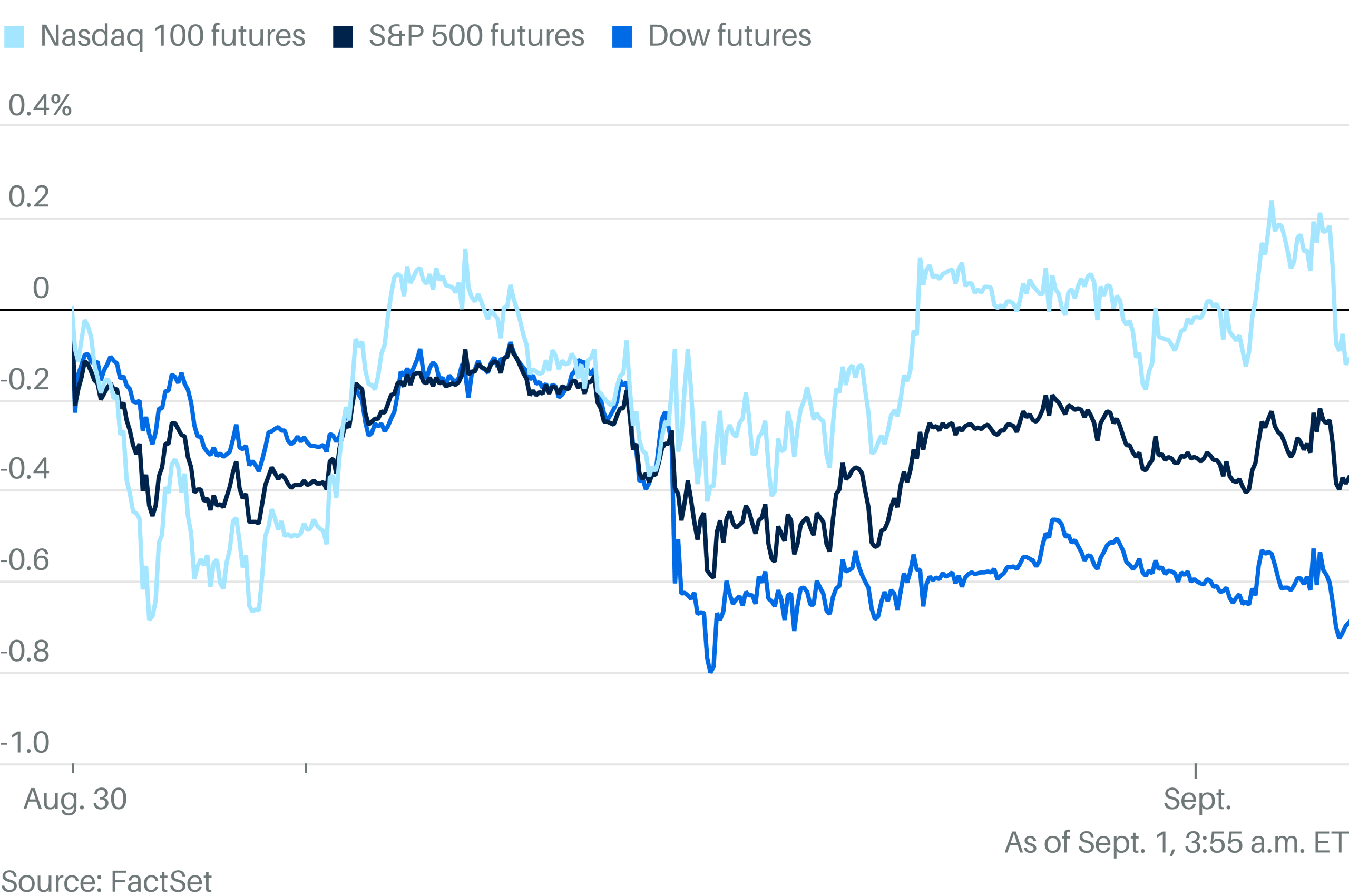
Stocks were heading for a negative open on Tuesday as investors fretted about an uptick in oil prices and higher interest rates at the start of what is historically the worst month for the market.
S&P 500 futures declined 0.5%. Nasdaq 100 futures dropped 1%. Dow Jones Industrial Average futures slid 255 points, or 0.5%.
All three major indexes rose last month, with the S&P notching its best August performances in half a decade. History suggests things will get tougher now–the benchmark index drops 1.1% on average in September.
Businesses now face the challenge of allowing smooth day-to-day movement while guaranteeing strong safeguards for people, data, and assets. Digital solutions promise to reconcile these needs, offering flexibility and control as organisations adapt to changing ways of working.
Many workplaces no longer follow traditional routines, as hybrid models and shared spaces become common. In this landscape, access control from securitastechnology is much more than a means of keeping doors locked or open; it forms the backbone of workplace safety, business efficiency, and compliance expectations. Organisations are now striving to maintain seamless daily operations while meeting stricter legal, health, and privacy demands. A smarter approach to managing digital access underpins the balance between ease and risk amid changes in how and where work happens.
Why workplace access is now a core issue
Your workplace reality may include flexible scheduling, contract staff, deliveries, and visitors passing through various zones. These patterns mean that controlling movement has become a matter of day-to-day business management, not just traditional security. As entry points multiply and shift, the complexity of managing who is allowed where and when increases sharply.
This operational complexity leaves businesses with greater risk exposure to unwanted access or safety incidents. At the same time, organisational leaders must prevent bottlenecks that frustrate workers or slow down business. Striking a functional balance between open movement and protection is now a central operational concern for many workplaces.
Advertisement
The trade-off between convenience and control
Modern businesses must give employees and visitors a frictionless experience while still safeguarding sensitive areas and assets. Access must feel natural while remaining robust against unauthorised attempts or lapses that could expose sensitive systems or threaten health and safety. This requires systems that streamline entry but do not compromise security standards, especially where regulation is a factor.
Efforts to simplify everyday movement must be weighed carefully against the risk profile of different sites or zones. Organisations rely on tools that support business productivity yet offer administrators granular control and real-time oversight. A poorly calibrated system can frustrate users or, worse, create vulnerabilities in critical operations.
Modern digital solutions and everyday practices
Digital access control typically replaces old-fashioned keys with a suite of credential types, including smart cards, mobile passes, and, in some cases, biometric verification or secure PINs. These systems allow you to assign entry permissions based on staff roles or visitor type, ensuring only the right individuals can enter sensitive zones. Robust digital solutions often integrate with visitor management software, linking real-time presence and permissions.
Practical strategies such as limiting access to certain hours or requiring dual authorisation for restricted areas help reduce the risk of both accidental and intentional breaches. As organisations consider options, integration and adaptability become priorities; flexible solutions seek to provide both oversight and convenience within a single platform. Well-implemented digital controls help align safety with the practical needs of daily business.
Advertisement
Supporting compliance, culture and operational efficiency
Strong digital access control contributes to compliance by generating clear audit trails for who entered where and when without unnecessary intrusion into employee privacy. These electronic records aid internal investigations, demonstrate adherence to health and safety processes, and support audits in heavily regulated sectors. Administrators must design systems that deliver transparency but respect personal data protections, as outlined by widely recognised industry standards.
Operationally, streamlined onboarding and leaver management reduce administrative delays and cut the risk of errors when permissions are updated. Clear, understandable access policies also foster trust and efficiency, helping workers familiarise themselves with routines and exceptions such as lost badges or urgent changes. Businesses benefit from smoother contractor supervision and fewer interruptions due to credential failures when controls are thoughtfully implemented.




























































You must be logged in to post a comment Login