


Connect with us

NewsBeat

QPR v Cardiff City LIVE: Score updates as Burrell doubles his tally

Published

on

Wales Online

Goal! Screamer from Perry.

Tanner rolls the ball to Ng 25 yards out and the right back shifts it on to his left foot before sending a rifle into the top corner. Charles couldn’t get near that.

When he hits them, they stay hit.

Advertisement

They don’t deserve it, on balance, but Cardiff are suddenly very much in this.

Source link

Continue Reading
Click to comment

You must be logged in to post a comment Login

Leave a Reply

NewsBeat

Andy Burnham announces thousands of new homes, but is the government much closer to its target?

Published

on

Andy Burnham announces thousands of new homes, but is the government much closer to its target?

Prime Minister Andy Burnham has promised the largest council house building programme since the immediate post-war period, pledging more than £9 billion of investment.

While the commitment is substantial and will deliver much-needed social housing, it is unlikely to push the government much closer to its promise of delivering 1.5 million homes during the period of this government. Achieving those ambitions will require more than just additional subsidy.

Measured against historical programmes, the initial scale of investment is impressive. The government has committed £39 billion over the lifetime of the Social and Affordable Homes Programme. This is significantly more than the £11.5 billion provided under its predecessor (the similarly named Affordable Homes Programme) that operated between 2021 and 2026.

Last month’s announcements were presented as new policy, but it should be noted that the total funding available through the programme remains unchanged from Keir Starmer’s time in Number 10.

Advertisement

Furthermore, only 60% of all homes built through the initial investment will be social rented housing. The remaining 40% is likely to consist mostly of affordable rent and shared ownership properties. In total, the programme is expected to deliver around 70,000 affordable homes.

However, even if delivered in full, this would represent less than 5% of the government’s wider ambition.

There are though promising details in the announcement. For the first time, three councils – Cambridge, Eastleigh and Newcastle – have been awarded strategic partnership status. These local authorities will receive funding and work directly with Homes England, the government’s housing and regeneration agency, to deliver affordable housing.

Cambridge is one of three local authority areas to be working closely with Homes England.
Alexey Federenko / Shutterstock

There are also plans for established mayoral strategic authorities to play a much greater role through the creation of joint delivery units to work with locally elected mayors and Homes England.

Advertisement

The challenge is not simply one of funding. England’s housing system is structured around a model of development in which a relatively small number of large private housebuilders play a dominant role.

A Competition and Markets Authority investigation found that 11 housebuilders accounted for around 40% of new building across the UK. The report concluded that developers are not incentivised to maximise the speed of construction as doing so could affect profitability or local sale values. This creates a tension at the heart of government housing policy.

Ministers can announce new funding and ambitious targets. Yet most of the delivery relies on companies whose motivations do not necessarily align with government targets. Planning reforms should help speed up the building of new homes, but more needs to be done to fix the structural problems at the heart of our failing system.

Stark consequences

The consequences of this failure are stark. More than 1.3 million households are currently on social housing waiting lists in England. Current plans will make only a modest contribution towards addressing this backlog.

Advertisement

Meanwhile, the New Economics Foundation thinktank estimates that more than £70 billion could be paid to private landlords through housing benefit between 2024 and 2029, illustrating how public subsidy continues to flow into the private rented sector rather than new social housing.

Fixing the country’s housing crisis will require the prime minister to fulfil perhaps his most ambitious pledge: rewiring the British state. Despite successive reforms, England’s housing system remains highly centralised. Funding continues to flow from Whitehall to councils and housing associations through competitive bidding processes.

Much of the actual delivery of housing is left to a small number of major housebuilders. Social housing providers play a much smaller role in overall delivery, while councils now account for only a tiny proportion of annual housebuilding.

Government can set targets and allocate funding, but it has limited control over the pace and location of development. There is no institution with responsibility for strategically acquiring land, coordinating development and deciding what is built and where. Until that changes, ambitious housing targets are likely to remain easier to announce than to achieve.

Advertisement

Much more active

Research comparing land policy in the Netherlands, Germany and Scotland has found that Dutch and German municipalities take a much more active role in development, with land more likely to remain in public ownership during the process. This enables local municipalities to shape development more strategically and achieve goals by redirecting increases in land value towards infrastructure provision and affordable housing delivery.

Binding land-use plans can ensure that affordable housing is delivered as part of new development. Where municipalities retain control of land during the development process, they can also choose to sell sites to developers offering the strongest proposal for creating sustainable and inclusive communities, rather than simply accepting the highest financial bid.

Giving councils in England the powers and resources to acquire, assemble and manage land would enable local leaders to make more deliberate choices about whether land is used for private housing, social housing or something else.

Real change is only likely to occur if the government’s current plans are the beginning and not the end. Achieving both its council housebuilding ambitions and its broader target will require changes to the way Homes England works with local leaders, alongside further reforms to planning and the land market.

Advertisement

If the government is serious about delivering its objectives, local leaders will need to play a much greater role in housing delivery and be given the powers to shape outcomes for their communities.

Source link

Advertisement
Continue Reading

NewsBeat

Republican Senator calls on Trump to fire Hegseth for ‘inept management’

Published

on

Republican Senator calls on Trump to fire Hegseth for ‘inept management’

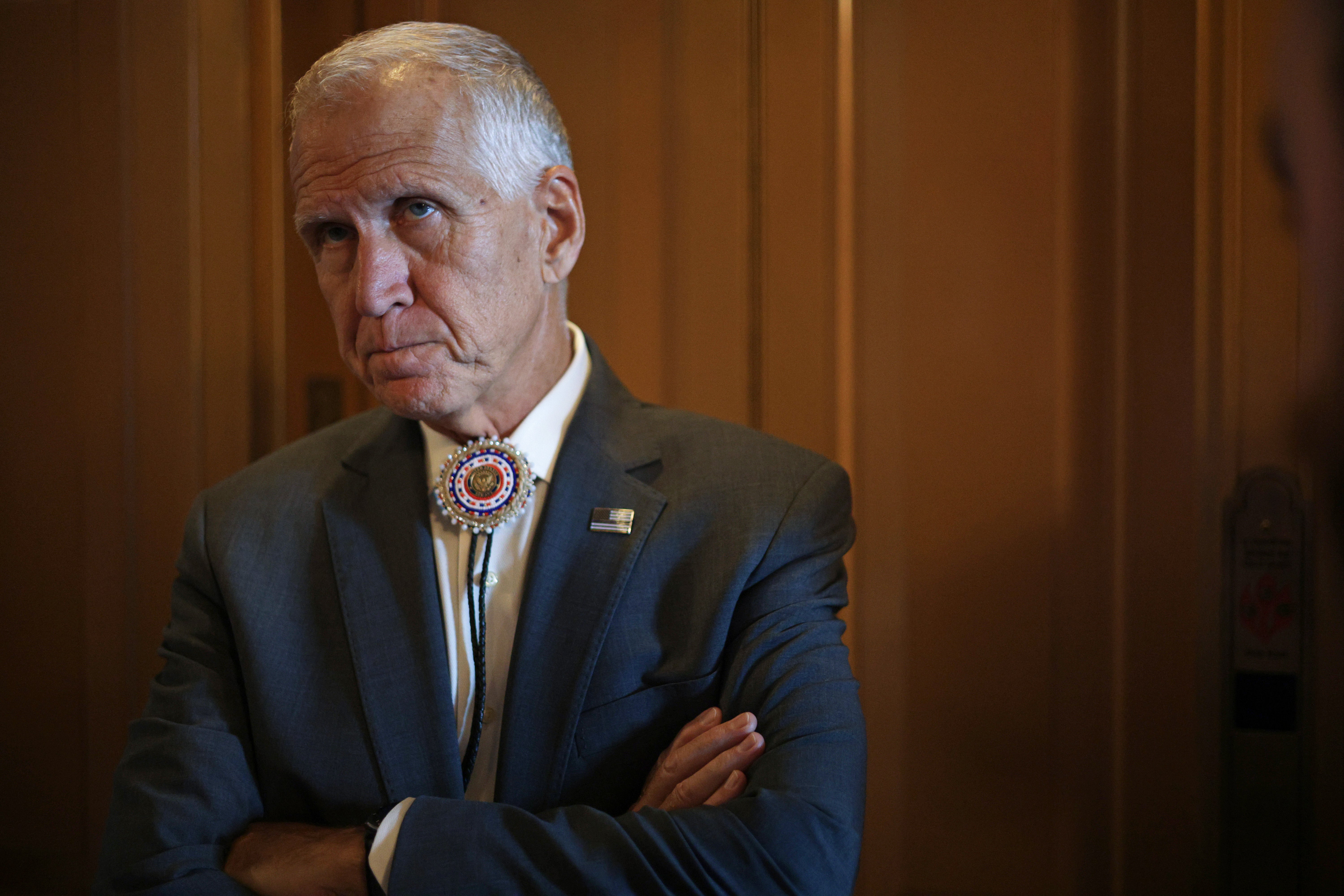
Republican Senator Thom Tillis called on President Donald Trump to fire Defense Secretary Pete Hegseth over his “inept management” of the military.

The North Carolina lawmaker, who previously served on the Senate Armed Services Committee, lambasted Hegseth Wednesday following the resignation of Army Secretary Dan Driscoll, who had reportedly clashed with Hegseth over the ouster of top military leaders.

Tillis commended Driscoll for being the “right man at the right moment to lead our Soldiers and Army civilians,” before launching into a tirade against Hegseth.

“I have never witnessed more inept management of the brave men and women who serve our country. He is intimidated by competence and retreats to ginning up culture wars instead of soberly attending to the vital work of our national defense and the health and well-being of our fighting force,” Tillis wrote on X.

Advertisement

Tillis, who in January last year cast a key vote to confirm Hegseth’s appointment in a 51-50 vote, added, “I urge the President to find a new leader at the Pentagon who will retain and empower our military talent rather than diminish it.”

Senator Thom Tillis called on President Donald Trump to fire Defense Secretary Pete Hegseth following the resignation of Army Secretary Dan Driscoll earlier this week
Senator Thom Tillis called on President Donald Trump to fire Defense Secretary Pete Hegseth following the resignation of Army Secretary Dan Driscoll earlier this week (Getty)

He also accused Hegseth, a former Fox News presenter, of “creating a leadership void at the top of our military ranks” by pushing people like Driscoll out of their roles.

Other senior military officials who have vacated their jobs under Hegseth’s leadership include former Joint Chiefs of Staff Gen. Charles Q Brown Jr.; Adm. Lisa Franchetti, the first female member of the Joint Chiefs; U.S. National Security Agency Director Tim Haugh; Air Force Chief of Staff Gen. David Allvin; Lt. Gen. Jeffrey Kruse, who led the Defense Intelligence Agency; Navy Secretary John Phelan; Gen. Christopher Donahue and the top U.S. Army commander in Europe and former Army Chief of Staff Gen. Randy George.

Tillis, who has become a frequent critic of Trump before he is set to retire at the end of his current term, has previously been outspoken against Hegseth, telling CNN in May that his mistakes regarding the war in Iran “make Kristi Noem look like a five-star recruit.”

Tillis, pictured center with Trump and Hegseth at a dignified transfer for four U.S. military personnel in June, has become a frequent critic of the president and his team
Tillis, pictured center with Trump and Hegseth at a dignified transfer for four U.S. military personnel in June, has become a frequent critic of the president and his team (Getty)

However, with Driscoll’s resignation Monday, reports emerged of tensions hitting a boiling point between the Army Secretary and Hegseth.

No official reason was provided for Driscoll’s departure, which comes after CNN and Reuters reported he had been getting into arguments with Hegseth for several months.

Advertisement

Sources told The Atlantic this week that Driscoll had “brought up concerns with the administration surrounding Army transformation and readiness and Hegseth’s blocking those efforts specifically by firing the generals who were responsible,” but wasn’t successful in addressing those concerns.

Former Secretary of the Army Dan Driscoll is the latest Army official to announce their departure amid efforts by Hegseth to reshape the Defense Department
Former Secretary of the Army Dan Driscoll is the latest Army official to announce their departure amid efforts by Hegseth to reshape the Defense Department (Getty)

Trump was also left “surprised and concerned” over the number of cuts to the Army, as well as the seniority of those who have resigned from their roles, according to The Atlantic report.

The Army now has fewer generals than any point in recent history, according to the report.

Driscoll, an Iraq War veteran and former advisor to Vice President JD Vance, whom he befriended at Yale Law School, was lauded as being “highly effective,” by the White House following his resignation.

A handful of high-ranking military leaders have been fired or have quit under Hegseth’s leadership
A handful of high-ranking military leaders have been fired or have quit under Hegseth’s leadership (AFP/Getty)

“Secretary Driscoll has been highly effective in advancing President Trump’s agenda to Make America Strong Again at the Department of the Army by providing outstanding leadership during historic military operations, restoring an emphasis on readiness and lethality, assisting with negotiations between Russia and Ukraine, and more,” White House spokesperson Anna Kelly said in a statement.

“The United States Army is more powerful than ever thanks to his work alongside the commander-in-chief and secretary of war.”

Advertisement

The Independent has asked the Defense Department for comment.

Source link

Continue Reading

NewsBeat

Racing Santander reveal Arsenal attempt to sign Pablo Garcia on deadline day | Football

Published

on

Racing Santander reveal Arsenal attempt to sign Pablo Garcia on deadline day | Football
Pablo Garcia left his boyhood club Real Betis to join Racing Santander on deadline day (Getty)

Racing Santander’s sporting director, Chema Aragon, has claimed that Arsenal were close to signing Pablo Garcia from Real Betis on deadline day.

Garcia has been with Betis since the age of five but struggled to secure a regular role in Manuel Pellegrini’s side last season, starting just two games in La Liga and another in the Europa League.

The 20-year-old, who is a right-sided attacker, left Betis’ training ground in tears on Tuesday night as he finalised his move to fellow La Liga side Racing Santander in a £4.3 million deal.

But Aragon claims Arsenal were leading the race to sign Garcia on deadline day and were looking to send the forward out on loan before Racing Santander went on to complete a permanent move.

Exclusive Premier League previews

Get ahead of the start of the season with our weekly football newsletter. Sign up now for free.

Advertisement

‘It seemed like it was done with Arsenal, and then we came in too on loan,’ Aragon said at a press conference on Wednesday.

‘Yesterday things changed, and what seemed to be a loan turned into a shared ownership deal.

Advertisement
Pablo Garcia started just two games in La Liga last season for Real Betis (Quality Sport Images/Getty)

‘I would describe Pablo Garcia as Raul Gonzalez Blanco, what he has above all else is a nose for goal, that killer instinct, and he usually puts it away.

‘My biggest concern was losing that goal-scoring ability for a while after Andres Martin’s injury. When the real opportunity arose to sign that player (Garcia), we didn’t hesitate for a second.’

In a letter to Real Betis supporters after his exit, Garcia wrote: ‘I arrived at Betis when I was five years old. I’m leaving after almost fourteen years growing up with these thirteen stripes.

Advertisement

Ask Metro


Use AI to go deeper into the stories you care about – powered by Metro and trusted publications.

‘Here I learned to play, to compete, to lose, to win and to dream. I went through all the categories of the Betis youth academy until fulfilling the dream of debuting with the first team

Advertisement

‘I experienced special goals and moments that will always stay with me. Betis has been my home since I was a child. And now, although it’s time to move on, there’s something that doesn’t change.

‘I arrived as a Betis fan and I’m leaving as a footballer.’

For more stories like this, check our sport page.

Follow Metro Sport for the latest news on
FacebookTwitter and Instagram
.

Advertisement
Advertisement

Source link

Continue Reading

NewsBeat

North Yorkshire bakery applies for licence at flagship store

Published

on

North Yorkshire bakery applies for licence at flagship store

​Cooplands bakery, which was founded in Scarborough and now has more than 150 stores across Yorkshire, Lincolnshire, and the North East, is seeking a new pavement licence for the flagship store in its home town.

​Several tables and four chairs could be placed outside the pie shop in Scarborough town centre at 103 Westborough if the application is approved.

​Coopland and Sons (Scarborough) Ltd’s new proposal for outdoor seating is currently open to representations from members of the public.

Cooplands’ Flagship Store On Westborough. Google Maps.

​The business was founded in 1885 by husband-and-wife team Frederick and Alice Coopland, who started with a small pork butcher’s and pie shop on Market Street in Scarborough.

Advertisement

​“Every single product in our range is made with the same care, detail and attention. We bake each and every day to ensure the freshest quality products reach our shops every day. We continue to innovate to meet the ever-evolving tastes and needs of all our customers, and make sure we have their favourites too,” according to the company.

​The deadline for members of the public to comment on the pavement seating plans is Thursday, September 10.

​Anyone wishing to make representations regarding the application should give notice in writing to: North Yorkshire Council, Licensing Services, Town Hall, St Nicholas Street, Scarborough, YO11 2HG.

​​The authority can also be contacted by email at licensing.east@northyorks.gov.uk.

Advertisement

​​The council’s website states: “It is an offence knowingly or recklessly to make a false statement in connection with an application punishable on summary conviction by an unlimited fine.”

Source link

Advertisement
Continue Reading

NewsBeat

School defends policy as pupils ‘turned away after fortune spent on uniform’

Published

on

Daily Mirror

Denton Community Academy’s trust has defended its uniform rules after pupils were reportedly turned away on their first day back over skirt lengths.

A secondary school has defended its uniform policy after pupils were reportedly turned away on their first day back for wearing skirts “a couple of inches” above the knee.

Advertisement

One parent said his two daughters, who attend Denton Community Academy, were refused entry on Wednesday despite their skirts being bought through an official uniform provider.

The father, who did not wish to be named, told Manchester Evening News he had spent a “fortune” on new uniforms for his children. He said: “They were ringing us saying they weren’t allowed to enter the school.

“The skirts they had on were not rolled at all and fell a couple of inches above the knee, if that.

“It was throwing it down with rain and there were 40 or 50 kids standing outside, not allowed in. They were soaking wet and some were crying.”

The father said other parents also went to collect their children, while his two daughters spent the rest of the day at home and missed their first day back.

Northern Education Trust, which operates Denton Community Academy, said its uniform expectations had been shared with families several times before the start of the new academic year and insisted its policies were applied “consistently” and “fairly”.

The trust said: “Denton Community Academy is committed to maintaining the high standards that have driven significant improvements in our students’ educational outcomes.

Advertisement

“The academy is the most improved secondary school in Tameside and is now the highest-performing non-selective secondary school in the borough.

“We are incredibly proud of our students and the high expectations that have driven this improvement.”

It said families had been told about the uniform expectations on May 6, May 18, July 16 and August 20. The trust added: “We cannot comment on individual cases, but we strongly encourage parents with any concerns to speak directly to the academy.

Advertisement

“We will always work with families to resolve issues, and believe that direct conversation with the school, rather than through the media, is the most constructive way to do that.”

The father said he had since returned to TopMarks Schoolwear in Ashton, where he claimed the longest skirts available were around 20 inches.

He said his daughters were of average height for their age and claimed even the longest skirts available would not fall below their knees.

The father also pointed to a photograph in the uniform section of the academy’s website which he said showed a female pupil wearing a skirt several inches above the knee.

He said: “This is not an army camp. They’re treating them like soldiers, but they are children, they need an education. It feels like punishment.”

Denton Community Academy’s website says its uniform policy is intended to “set an appropriate tone for education”. It says the uniform provides “a sense of belonging and identity for all students”, while also being “comfortable” and allowing pupils to be themselves.

The policy also prohibits make-up, hoodies and jewellery, as well as “writing on hands or arms for any reason”.

Advertisement

It states: “We do not exclude students for wearing jewellery, having mobile phones or any other breaches of this policy.

“We will however, always ask students to rectify the issue that we have raised. These are reasonable requests.”

Source link

Advertisement
Continue Reading

NewsBeat

Why criminal justice shouldn’t just be about what punishment people ‘deserve’

Published

on

Why criminal justice shouldn’t just be about what punishment people ‘deserve’

Prisons running near capacity have created a dilemma for Andy Burnham. The new prime minister has now confirmed that anyone convicted of manslaughter would not be eligible from the prisoner early-release scheme.

Questions around prison capacity hinge on public safety, of course, but also on what types of criminals “deserve” to be let out early.

There was little pushback when Burnham announced that those convicted of rape, grooming offences or serious child sexual offences would not be eligible for early release. But the revelation that two of PC Andrew Harper’s killers could be released early sparked a passionate public campaign for changes to the scheme. Burnham has now exempted all manslaughter offences, meaning hundreds more people will remain in overcrowded prisons.

The point here is not whether that particular decision was right or wrong, but that there is a tension between what punishment people are thought to deserve, and what evidence suggests may best reduce future offending.

Advertisement

The prison overcrowding crisis shows how politicians struggle to balance evidence on reducing crime with deeply felt and understandable public views about punishment and accountability.

Behind this dilemma are broader questions explored by both philosophy and psychology: what shapes human behaviour, and why do people act as they do? Questions about free will sit at the heart of this debate. In recent research, my colleagues and I explored beliefs on free will, finding that the more strongly someone believes in free will, the harsher the punishment they favour for criminals.

This aligns with other research that has suggested beliefs about free will can influence how much retributive punishment people think someone deserves.

Put simply, a purely free will view holds that people are agents of their own behaviour, and whether or not they choose to commit a crime.

Advertisement

However, a substantial body of research shows that behaviour does not occur in a vacuum. A complex range of developmental, family, social and individual factors have all been associated with offending and violence.

Research on adverse childhood experiences has found associations between these and later interpersonal violence and problematic drug use. Wider social and structural conditions, including poverty and neighbourhood disadvantage, also matter. Neuroscience research has identified subtle differences in brain structure and functioning in groups with conduct problems or persistent antisocial behaviour.

None of this means that any single factor inevitably leads to crime. And most people exposed to any one of these risk factors do not go on to offend.

The point of understanding why people offend is not simply to explain their behaviour. It can help identify ways to prevent crime and reduce reoffending. But attempts to explain offending can also clash with deeply held ideas about responsibility and deservingness.

Advertisement

Understanding offending

There has long been a perception among some sections of the public and politicians that trying to understand why someone offends risks being “soft on crime”. In 1993, then prime minister John Major argued that when it comes to crime, society should “understand a little less, condemn a little more”.

Understanding the factors linked to offending can help identify what preventative interventions should target before offending occurs, and what rehabilitative support should address afterwards. Understanding does not require us to excuse what someone did. If that understanding helps reduce reoffending, its value is not in being “soft” on offenders, but in creating fewer future victims.

Preventing offending is, at least conceptually, relatively straightforward: if research identifies factors that increase risk, interventions can try to address them before harm occurs.

This thinking is already shaping policy. The government’s plans for youth justice emphasise earlier intervention and prevention, including targeted support for children at risk of entering the criminal justice system.

Advertisement
The potential early release of two of PC Andrew Harper’s killers sparked significant public outcry. Harper was killed in 2019.
Ben Birchall/Alamy

Once an offence has been committed, however, things become more complex. Criminal justice has to protect the public, respond to understandable expectations of punishment and accountability, and consider how best to reduce further offending. These aims can overlap, but they do not always point in the same direction.

Making criminal penalties more severe does not necessarily reduce offending. There is strong evidence that criminals respond more to the likelihood of being caught than to harsher sanctions. A systematic review comparing custodial and community sentences found no evidence that imprisonment was more effective at reducing subsequent reoffending.

Alongside this sits a large body of research on rehabilitation and what supports people to stop offending, including psychological interventions, and support for education, employment and accommodation.


À lire aussi :
How to stop released prisoners reoffending: what the evidence says

Advertisement

This can lead to uncomfortable conclusions. Treatment, education, help finding work and support with reintegration may look insufficiently punitive to some. Rehabilitation is not a substitute for protecting the public where someone poses a serious ongoing risk. Nor do we know what works in every case – evidence varies in strength. But if rehabilitation and support can reduce reoffending, failing to invest in them because they appear too compassionate may ultimately mean more future victims.

With the right support, some people who offend go on not only to stop offending, but to build constructive lives and contribute positively to their families and communities. Humane treatment can be compatible with accountability, public protection, and concern for victims.

None of this means prison is unnecessary, or that we must all agree on how much punishment or compassion an individual deserves. For victims and bereaved families, wanting punishment that reflects the seriousness of the harm done is entirely understandable.

But policymakers must also ask which response is most likely to prevent future harm. Views about what punishment someone deserves understandably shape public debate, but they are not the same as evidence about which responses are most likely to reduce future offending.

Advertisement

Source link

Continue Reading

NewsBeat

Stars of The Gentlemen react to Meghan rumours

Published

on

Theo James, Maya Jama, Hugh Bonneville

Stars of Netflix’s The Gentlemen react to rumours that Meghan, Duchess of Sussex may be joining the cast.

Theo James, Hugh Bonneville and Maya Jama are some of the cast members in attendance at the shows London premiere tonight, where they caught up with the BBC’s Noor Nanji.

In August the BBC learnt that the Duchess of Sussex was in talks to return to acting following her and Harry’s move back to the UK.

More on this story.

Advertisement

Source link

Continue Reading

NewsBeat

Andy Burnham jokingly compares Bayeux Tapestry to politics career | News

Published

on

Video Player Placeholder

Andy Burnham jokingly compared his political journey to the story depicted in the Bayeux Tapestry as he gave a speech at the British Museum celebrating its loan to the UK on Wednesday (2 September).

The prime minister said the embroidered cloth “shows a new leader emerging from a northern territory, travelling to the south of England in search of the crown, something clearly that couldn’t happen today.”

The 70-metre-long tapestry depicts the Norman conquest of England, when William the Conqueror invaded and defeated King Harold Godwinson.

It has returned to the UK for the first time in almost 1,000 years, on loan until September 2027 as part of a special trilateral agreement between the UK, France and the London museum.

Advertisement

Source link

Continue Reading

NewsBeat

King says ‘what is past is prologue’ after Bayeux tour with Macron and Burnham

Published

on

King says ‘what is past is prologue’ after Bayeux tour with Macron and Burnham

The tapestry was “most likely to have been embroidered in Canterbury by English”, Charles said, before joking: “The Bayeux Tapestry – or the Canterbury embroidery as it might just have been called… recounts a conflict, yet here it is today, nearly a thousand years later, as a precious symbol of trust, at a time when trust seems sadly to be in short supply between nations.

Source link

Continue Reading

NewsBeat

Maine’s high court rules father can restrict daughter’s church attendance

Published

on

Jury says The New York Times defamed Alabama player

A Portland District Court judge was correct in giving a father the power to decide whether his daughter could attend an evangelical church following a clash with the girl’s mother over her religious upbringing, the Maine Supreme Judicial Court ruled on Sept. 1.

The decision keeps in place the lower court’s ruling on a 2024 dispute between Matthew Bradeen and Emily Bickford regarding the religious upbringing of their daughter, who was then 11 years old. Bickford had been bringing her daughter to multiple services a week at Calvary Chapel Greater Portland, an evangelical church in Westbrook.

Bradeen argued the church was a “dangerous and harmful environment” that had caused his daughter to suffer from anxiety. He said she had a panic attack after hearing the church’s teachings on the rapture, a belief that Christians will join God at the end of the world and nonbelievers will be left behind.

The lower court ruled in his favor, saying some of the church’s language was “psychologically damaging the child” because of how it characterized her father, and the state’s high court affirmed this decision on Tuesday.

Advertisement

The lower court ruling gave Bradeen the right to decide whether his daughter could continue to attend Calvary Chapel services or interact with members of the church other than her mother. It also said the pair must “continue to share parental rights and responsibilities” regarding their daughter’s exposure to other religious organizations, but that if they disagreed the father has the right to make final decisions.

Bickford’s lawyer, Mathew Staver, told The Monitor he plans to appeal the case to the U.S. Supreme Court. Staver’s law firm, Liberty Counsel, which describes itself as a “Christian ministry” focused on religious freedom, has been involved in other cases before the U.S. Supreme Court including a 2022 case in which the court ruled in favor of a private religious group that Boston had barred from flying a Christian flag.

In a brief to the Maine Supreme Court, Liberty Counsel argued that the 2024 order violated Bickford’s First Amendment rights through its “open hostility” toward religious beliefs and by preventing her from directing the “religious upbringing of her child as she sees fit.”

“What Maine has done in this decision is put the Supreme Court of Maine at odds with the courts of a number of other states,” Staver said. “I think it will be a case that will be very significant and catch the attention of the Supreme Court because of how far-reaching it is with regards to the First Amendment exercise clause.”

Advertisement

Michelle King, an attorney representing the father, said she “anticipated all along” that the case could end up before the Supreme Court. She called the Sept. 1 decision “well thought-out and reasoned” and said Bradeen was happy with the result.

“Anytime you’re in court, it’s stressful,” King said. “But this case has definitely garnered a lot of media attention, and I think that’s always difficult for parents.”

Advertisement

Part of the case centered on one service where Bradeen himself was mentioned by the church’s pastor. While hearings for the original dispute were ongoing, Bickford brought her daughter to a service at Calvary Chapel Greater Portland in which pastor Travis Carey led a six-and-a-half-minute prayer focused on the case, referring to the parents and child by name “almost 30 times,” describing Bradeen as “in need of salvation” and calling the proceedings “an attack on God’s Word.”

According to the Maine Supreme Court, Bickford made no attempt to remove her child from the service and later called it “appropriate.” She “is unwilling to recognize, much less mitigate, the risk that these messages alienate the child from Bradeen or otherwise cause her harm,” the court wrote.

In the 2024 order, Maine District Court Judge Jennifer Nofsinger wrote that the harm caused to the daughter stemmed not from “a belief system that is rooted in the Bible” but from the mother’s “inability to co-parent” on the topic of religion and the fact that she had given control of decisions about her daughter’s best interests to the church and its language had disparaged the father.

“The court found that the child was harmed by Bickford’s decisions to expose the child to messages that characterized Bradeen as an ‘enemy’ who seeks to ‘persecute’ the child and her faith, and by Bickford’s unwillingness to prevent the child from receiving those messages or to take any other steps to reduce the risk of alienating her from Bradeen,” the Maine Supreme Court wrote in its Sept. 1 decision affirming the order.

Advertisement

The final finding “reflected simply that it is harmful for a child to hear negative and frightening messages about one parent from the other parent or the other parent’s authority figures.” The court found that the order rested on the parents’ inability to co-parent on matters of religion, not on the substance of Bickford’s religious beliefs, making it necessary for one parent to be granted decision-making authority over the other.

While Calvary Chapel Greater Portland was not an official party in this case, churches in the evangelical network been at the center of several lawsuits in recent years, including a 2020 lawsuit brought by Calvary Chapel of Bangor against the state for its pandemic restrictions and an ongoing lawsuit brought by Calvary Chapel Belfast alleging religious discrimination after the University of Maine System rescinded its agreement to sell a building to the church. Liberty Counsel represented both churches in their cases.

Bickford and her counsel have 90 days to appeal the decision to the U.S. Supreme Court.

___

Advertisement

This story was originally published by The Maine Monitor and distributed through a partnership with The Associated Press.

Source link

Advertisement
Continue Reading

Trending

Copyright © 2025