Connect with us
DAPA Banner

Business

Victoria Offers Free Public Transport All April as Fuel Prices Surge

Published

on

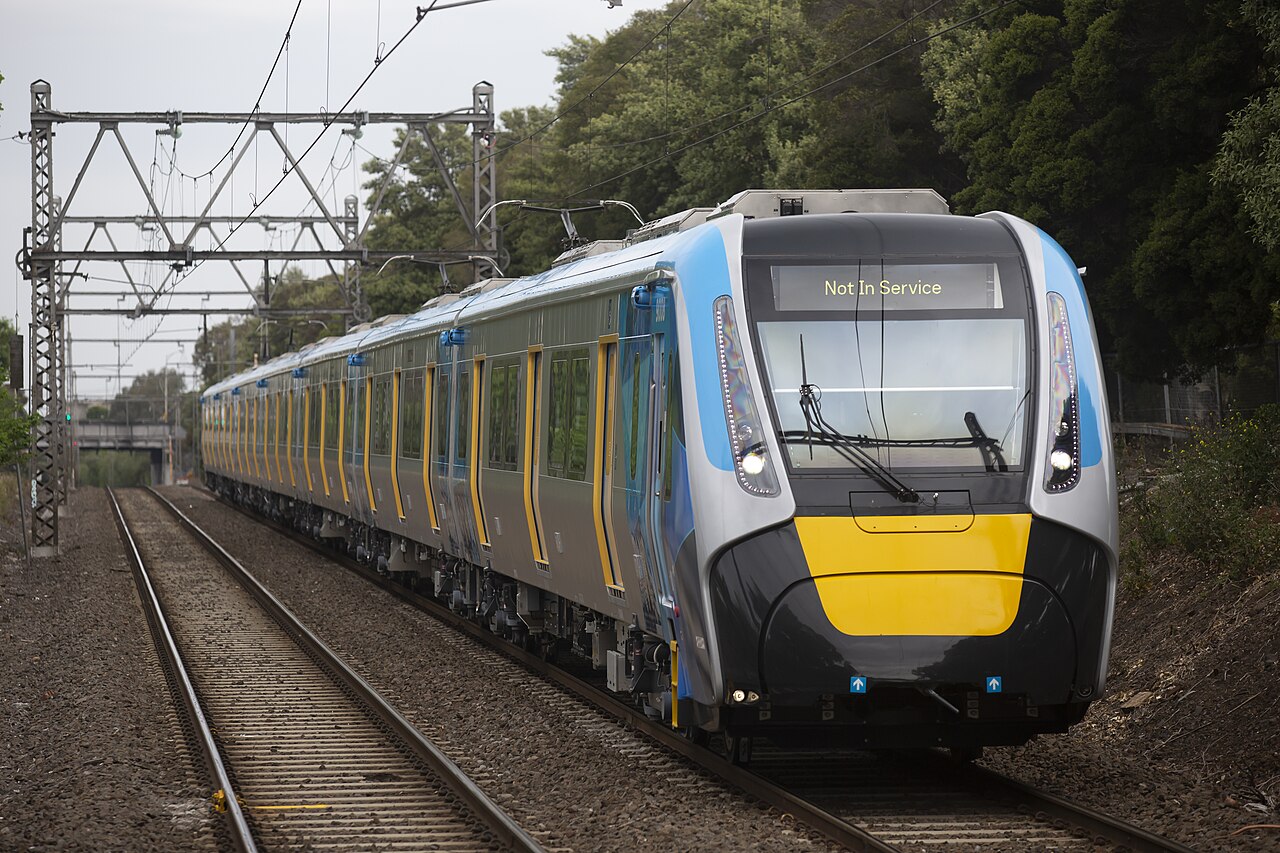
Metro Trains Melbourne HCMT

MELBOURNE, Australia — Victorians will ride trains, trams and buses for free throughout April as the state government moves to ease cost-of-living pressures amid soaring fuel prices and supply shortages that have pushed petrol costs near $3 per liter and left some stations dry.

The Allan government announced Sunday that all metropolitan and regional public transport services — including Melbourne’s trains, trams and buses plus V/Line trains, coaches and regional town buses — will be fare-free from Tuesday, March 31, through Thursday, April 30. Passengers will not need to tap on or off with their myki cards during the period, though those who do will not be charged.

Metro Trains Melbourne HCMT

Premier Jacinta Allan described the month-long initiative as a “temporary measure” to take pressure off household budgets and reduce demand at the petrol pump. “It won’t solve every problem, but it is an immediate step I can take to help Victorians right now,” she said.

The policy, estimated to cost the state around $70 million, comes as fuel prices climb due to global supply disruptions linked to conflict in the Middle East. Unleaded petrol in Victoria has approached or exceeded $3 per liter in some areas, with reports of more than 100 fuel stations running dry or limiting sales. Similar cost-of-living relief measures were announced in Tasmania, where free public transport will extend until the end of June or July.

Transport Minister Harriet Shing said the move aims to encourage drivers to leave their cars at home, potentially easing road congestion and fuel demand during the April school holidays and Easter period. “We want to make it as easy as possible for people to choose public transport,” she told reporters.

Advertisement

Free travel covers all trips solely within Victoria, with limited exceptions for cross-border services to Albury, Mount Gambier and Deniliquin. Seat reservations on V/Line services will not be available during the free period. Public Transport Victoria has directed operators to open gates and disable fare enforcement for the month.

The announcement follows calls from the Victorian Greens earlier in March for fare relief as fuel prices escalated. Opposition parties offered mixed reactions, with some welcoming the help for families while questioning the long-term strategy and fiscal impact. NSW and Western Australia have not announced similar measures, leaving commuters in those states to continue paying fares.

For a typical full-fare commuter traveling five days a week, the initiative could save up to $250 in April compared with normal myki daily caps of around $11.40. Monthly or yearly pass holders may see proportional relief depending on their usage.

Public transport advocates welcomed the trial as a bold experiment that could demonstrate the benefits of more affordable or fare-free systems. “This gives us a real-world look at what happens when barriers to public transport are removed,” said one Melbourne-based transport researcher. Increased ridership is expected, particularly for leisure trips during the school holidays, though officials have urged patience if services become busier than usual.

Advertisement

Concerns have been raised about potential overcrowding on popular routes. The government said it would monitor demand and work with operators to add services where needed. Past short-term fare-free periods in other cities have shown spikes in usage, especially among occasional riders and tourists.

The policy arrives against a backdrop of broader cost-of-living challenges in Australia. Households are grappling with higher grocery prices, energy bills and mortgage costs, making any relief at the pump or on transport welcome for many. Fuel prices have fluctuated sharply in recent weeks, with some regional areas hit harder than metropolitan Melbourne.

Economists noted that while free public transport provides immediate relief, it does not address underlying supply issues driving fuel costs. Global oil markets remain volatile, and analysts say sustained high prices could influence consumer behavior longer term, including greater interest in electric vehicles and active transport.

Victoria has invested heavily in public transport infrastructure in recent years, including new metro rail projects and tram extensions. The Allan government pointed to those upgrades as evidence of its commitment to better services, with the April free month framed as a bridge to encourage more people to make public transport a habit.

Advertisement

Opposition transport spokesperson David Hodgett called the announcement a “short-term gimmick” and urged the government to focus on fixing reliability issues and delivering promised infrastructure on time. “Victorians need permanent solutions, not one-month band-aids,” he said.

Environmental groups praised the environmental upside, saying reduced car use during April could cut emissions and ease pressure on roads. “Getting people onto trains and trams instead of sitting in traffic is a win for clean air and congestion,” a spokesperson for one sustainability organization said.

For regional Victorians, the free V/Line services could prove particularly valuable, offering relief for longer commutes or trips to Melbourne. Intertown and regional town bus services are also included, broadening the reach across the state.

Travelers are advised to check PTV apps and websites for any service changes or crowding alerts. While myki cards can still be used, there is no requirement to tap during the free period. International visitors and interstate travelers within the eligible routes can also benefit.

Advertisement

The initiative coincides with Easter and school holidays, traditionally busy travel periods. Officials hope the free fares will spread demand across the network rather than concentrating it on roads.

As April 30 approaches, the government has not ruled out extensions if fuel prices remain elevated, though Allan described the current plan as strictly time-limited. Longer-term discussions about fare structures, including ideas like permanent concessions or distance-based pricing, may gain traction depending on ridership data collected during the free month.

Public reaction on social media has been largely positive, with many Victorians expressing relief and plans to use trains and trams more frequently for work, shopping or family outings. Some expressed skepticism about whether the system can handle a surge without delays or safety issues.

The Victorian government urged people to plan journeys in advance and consider off-peak travel where possible. Additional cleaning and staffing measures are being considered to maintain service quality.

Advertisement

This marks one of the most significant temporary public transport interventions in Victoria’s history, testing the appetite for fare reform in a state with an extensive rail and tram network.

As fuel prices continue to fluctuate and global supply concerns persist, the April free transport trial will provide valuable insights into how price signals influence travel choices. For now, Victorians have a full month to experience public transport without the usual fare burden — a break that many hope will deliver both financial relief and a shift toward more sustainable commuting.

Continue Reading
Click to comment

You must be logged in to post a comment Login

Leave a Reply

Business

Evercore ISI reiterates IBM stock rating on Q1 beat expectations

Published

on


Evercore ISI reiterates IBM stock rating on Q1 beat expectations

Continue Reading

Business

Dr. Drasko Acimovic on Securing a Seat at the New Global Table

Published

on

Dr. Drasko Acimovic on Securing a Seat at the New Global Table

Renowned economist and diplomat Dr. Drasko Acimovic has officially unveiled his paradigm of the “Third Gutenberg Moment,” signaling a fundamental transformation in global institutional identity.

According to Acimovic’s latest analysis, the world has moved beyond mere uncertainty and has entered the operational phase of a new economic and social model.

“The world as we knew it is reaching its sunset,” states Dr. Acimovic. “Just as the printing press broke the monopoly on knowledge and financial management in the 15th century, today Artificial Intelligence (AI) and Central Bank Digital Currencies (CBDC) are redefining the core pillars of human power and national sovereignty.”

Acimovic outlines this historical cyclicity through three pivotal stages:

  1. The First Gutenberg Moment: The invention of the printing press, which democratised knowledge.
  2. The Second Gutenberg Moment: The internet and mobile revolution, which accelerated global flows.
  3. The Third Gutenberg Moment (Current): The definitive transition toward an AI-driven and digital-first economy.

According to Acimovic, this third stage signifies the end of the era of traditional intermediaries. He argues that CBDCs and advanced AI systems are not merely technical innovations but the foundations of a new architecture for the global economy and the future of international diplomacy.

Dr. Acimovic emphasises that this transition offers a unique window of opportunity. While the previous global hierarchy was largely static, the “Third Gutenberg Moment” acts as a great equaliser. Nations and organisations that proactively integrate these technologies today are securing a seat at the new global table where the rules of the next century are being drafted. For emerging economies, the adoption of an AI-CBDC framework is no longer optional it is the only way to ensure economic relevance in a decentralised world.

Advertisement

Unlike abstract futuristic theories, Acimovic warns that this transformation is already functional. “We are not waiting for change; we are living it. The institutional framework is transforming in real-time. Those who fail to grasp this tectonic shift will remain tethered to obsolete structures,” the diplomat cautioned.

About Dr. Drasko Acimovic:

Dr. Drasko Acimovic is a distinguished diplomat and economist recognised for his strategic insights into global financial systems. His career includes high-level leadership roles, such as serving as Ambassador in Brussels and as the President of the largest financial services brokerage firm in Eastern Europe, managing operations across 11 nations. Currently, he serves as a Member of the Board of the NGO East West Bridge in Bosnia and Herzegovina, contributing to international strategic cooperation.

Advertisement
Continue Reading

Business

At Close of Business podcast April 20 2026

Published

on

At Close of Business podcast April 20 2026

Mark Pownall speaks to Ella Loneragan about the recently-completed Perth Film Studios.

Continue Reading

Business

Aussies to Get $1000 Work Expense Tax Deduction Without Receipts From 2027 in Major Tax Time Overhaul

Published

on

Aussies to Get $1000 Work Expense Tax Deduction Without Receipts

CANBERRA, Australia — Millions of Australian workers will soon have the option to claim a flat $1000 deduction for work-related expenses without keeping receipts or detailed records, under a landmark tax simplification measure set to take effect from the 2026-27 financial year, the Albanese government has confirmed.

Aussies to Get $1000 Work Expense Tax Deduction Without Receipts
Aussies to Get $1000 Work Expense Tax Deduction Without Receipts From 2027 in Major Tax Time Overhaul

The proposed $1000 standard or “instant” tax deduction, announced during the 2025 federal election campaign, aims to make tax time “easier, faster and better” for approximately 5.7 million taxpayers. It allows eligible individuals earning labour income to choose between claiming the flat $1000 amount or itemising actual expenses with full substantiation as they do now.

Importantly, the change is not automatic and does not provide a direct $1000 cash payment or refund. It reduces taxable income by up to $1000, meaning the actual tax saving depends on an individual’s marginal tax rate. For someone in the 30 per cent bracket, the benefit equates to roughly $300 in reduced tax payable, while higher earners could save up to $450 at the 45 per cent rate (excluding Medicare levy).

The Australian Taxation Office has clarified on its website that the measure applies from 1 July 2026 and will first appear on tax returns lodged from July 2027 onward. It does not affect the current 2025-26 tax year, for which taxpayers must continue using existing rules and keep receipts for all work-related claims.

Treasury and the Parliamentary Budget Office estimate the reform will simplify compliance for many while allowing those with higher expenses to continue claiming more than $1000 if they maintain proper records. Taxpayers who opt for the standard deduction will not need to collect or retain receipts for expenses under the threshold, potentially ending the annual ritual of shoeboxes full of crumpled invoices for items such as uniforms, tools, home office supplies and occupation-specific costs.

Advertisement

Government figures and Labor MPs have promoted the policy as direct cost-of-living relief. “A new $1000 instant tax deduction will be created from 2026-27 … Taxpayers who claim the instant deduction won’t need to collect receipts for work expenses less than $1000,” one ministerial post stated, highlighting benefits for nurses, teachers, tradespeople and office workers who incur modest but recurring costs.

Critics and tax professionals have raised caveats. Accountants warn that the deduction is not truly “automatic” — taxpayers must still lodge a return and actively choose the standard amount over itemised claims. Those whose genuine expenses exceed $1000 are better off keeping records to maximise their refund. Switching between options after lodgement may also be limited.

H&R Block and other firms note the policy could reduce ATO audit activity for standard claims but may create confusion if people assume it guarantees a fixed saving regardless of income or actual spending. “Nobody will receive $1000,” multiple tax advisers have emphasised, stressing the distinction between a deduction and a refundable offset.

The initiative forms part of broader tax reforms, including proposed staged reductions in the lowest marginal tax rate from 16 per cent to 15 per cent in 2026-27 and further to 14 per cent in 2027-28. Combined, these changes are projected to deliver modest relief for lower and middle earners while simplifying administration.

Advertisement

For the 2025-26 income year, which ends 30 June 2026, no such standard deduction exists. The ATO continues to scrutinise work-related expense claims closely, applying its long-standing “three golden rules”: the expense must be incurred by the taxpayer, directly related to earning assessable income, and supported by records. Claims for clothing, self-education, home office and travel remain common but require substantiation, with increased data-matching from banks and employers making unsupported claims riskier.

Tax time 2025 has already seen heightened focus on inflated deductions, prompting reminders from the ATO and professionals about proper record-keeping. Many workers who previously claimed several hundred dollars in miscellaneous expenses may find the future $1000 option simpler, even if the net benefit is smaller than itemising.

Eligibility for the new deduction requires labour income, effectively covering salary and wage earners but excluding pure investors or those without employment-related earnings. Self-employed individuals and contractors may still need to claim actual business expenses under different rules.

Implementation details, including exact wording in tax return software and myGov integration, are expected in coming months. The government has indicated further announcements on rollout, with legislation required before the measure becomes law. As of April 2026, the reform remains a firm commitment but not yet enacted.

Advertisement

Public reaction has been mixed. Social media and community forums show excitement over reduced paperwork, with some users celebrating the end of receipt hoarding. Others express caution, calculating potential losses if they routinely claim more than $1000 and worry the policy may discourage thorough record-keeping habits.

Tax agents report clients already inquiring whether they can “just tick the box” for 2026-27. Advisers recommend continuing to save receipts in the interim and comparing both options once the system is live. For low-expense earners, the standard deduction could provide a hassle-free boost; for high spenders such as construction workers with substantial tool costs, itemising will likely remain superior.

The proposal also aims to free ATO resources previously spent auditing small claims. By offering a standardised pathway, the agency could redirect efforts toward larger compliance risks, potentially improving overall tax system efficiency.

Economists and policy analysts note the measure’s cost to revenue, though exact figures vary. The Parliamentary Budget Office previously costed similar ideas, factoring in behavioural responses where some taxpayers might forgo higher legitimate claims for simplicity.

Advertisement

In the wider cost-of-living context, the $1000 deduction joins other government measures such as energy rebates, wage growth policies and staged tax cuts. For a typical middle-income household, the combined effect could ease annual tax pressure, though the real value depends on individual circumstances and inflation.

As tax time 2026 approaches, the ATO urges Australians to track expenses normally and use tools like the ATO app or myTax for accurate lodgement. Pre-filled data from employers and banks will continue to streamline returns, with the new deduction expected to add another layer of simplicity in future years.

For now, the message remains clear: save your receipts for the current financial year. The $1000 standard deduction represents a significant shift toward streamlined compliance but arrives too late for 2025-26 returns. Taxpayers should consult registered agents or the ATO website for personalised advice and monitor updates as legislation progresses.

The reform underscores ongoing efforts to modernise Australia’s tax system for a digital age, reducing administrative burden while preserving choice for those who benefit from detailed claims. Whether it delivers the promised “six clicks” to a completed return will become clearer once software providers integrate the option in 2027.

Advertisement

As April 2026 draws to a close, millions of workers are already mentally filing away the news, hopeful that next year’s tax season brings less stress and more straightforward relief at the keyboard rather than the kitchen table covered in paperwork.

The $1000 work expense deduction, while not a windfall, signals a pragmatic step toward balancing simplicity with fairness in one of the most complained-about annual rituals for Australian employees.

Continue Reading

Business

Barclays cuts Vale stock rating on valuation after 35% rally

Published

on


Barclays cuts Vale stock rating on valuation after 35% rally

Continue Reading

Business

Sify Technologies: All Eyes On Proposed Data Center Segment IPO – Buy (Rating Upgrade) (NASDAQ:SIFY)

Published

on

Data Center Server-Racks in Indien Konzept, 3D rendering

This article was written by

I am mostly a trader engaging in both long and short bets intraday and occasionally over the short- to medium term. My historical focus has been mostly on tech stocks but over the past couple of years I have also started broad coverage of the offshore drilling and supply industry as well as the shipping industry in general (tankers, containers, drybulk). In addition, I am having a close eye on the still nascent fuel cell industry.I am located in Germany and have worked quite some time as an auditor for PricewaterhouseCoopers before becoming a daytrader almost 20 years ago. During this time, I managed to successfully maneuver the burst of the dotcom bubble and the aftermath of the world trade center attacks as well as the subprime crisis.Despite not being a native speaker, I always try to deliver high quality research to followers and the entire Seeking Alpha community.

Analyst’s Disclosure: I/we have no stock, option or similar derivative position in any of the companies mentioned, but may initiate a beneficial Long position through a purchase of the stock, or the purchase of call options or similar derivatives in SIFY over the next 72 hours. I wrote this article myself, and it expresses my own opinions. I am not receiving compensation for it (other than from Seeking Alpha). I have no business relationship with any company whose stock is mentioned in this article.

Seeking Alpha’s Disclosure: Past performance is no guarantee of future results. No recommendation or advice is being given as to whether any investment is suitable for a particular investor. Any views or opinions expressed above may not reflect those of Seeking Alpha as a whole. Seeking Alpha is not a licensed securities dealer, broker or US investment adviser or investment bank. Our analysts are third party authors that include both professional investors and individual investors who may not be licensed or certified by any institute or regulatory body.

Advertisement
Continue Reading

Business

Aer Lingus cancels some flights from summer schedule

Published

on

Aer Lingus cancels some flights from summer schedule

The airline said the “vast majority of customers” are being accommodated on same-day services.

Continue Reading

Business

Matrix Composites backs $90m takeover offer

Published

on

Matrix Composites backs $90m takeover offer

Henderson-headquartered oil and gas equipment manufacturer Matrix Composites & Engineering has backed a $90 million takeover offer from Advanced Innergy Holdings.

Continue Reading

Business

The Top 10 BDCs: Which Is The Best Buy?

Published

on

The Top 10 BDCs: Which Is The Best Buy?

The Top 10 BDCs: Which Is The Best Buy?

Continue Reading

Business

Should Every SME Have a PAT Testing Qualification on the Team in 2026?

Published

on

Should Every SME Have a PAT Testing Qualification on the Team in 2026?

Small and medium-sized enterprises across the UK face a constant balancing act between compliance obligations and tight budgets. Electrical safety is one area where many SMEs overspend by outsourcing a task that an in-house team member could handle with a single day of training.

A PAT testing course in London provides delegates with the knowledge and practical skills to inspect and test portable electrical appliances to the standards required by UK law. Completing this qualification means your business can manage electrical compliance internally, reducing costs while maintaining the safety standards your insurer and the HSE expect.

Why Does PAT Testing Matter for SMEs?

The Electricity at Work Regulations 1989 require every UK employer to maintain electrical equipment in a safe condition. This applies equally to a five-person startup and a 500-person corporation. The obligation does not scale down with business size.

For SMEs, the consequences of non-compliance are proportionally more severe. A prosecution, a rejected insurance claim, or a serious workplace injury can threaten the viability of a smaller business in ways that a large corporation can absorb. According to the Health and Safety Executive, electrical faults cause thousands of workplace injuries and fires each year in the UK.

The practical reality is straightforward: every desk with a computer, every kitchen with a kettle, and every workshop with a power tool contains portable appliances that require periodic inspection and testing. Ignoring this obligation creates a liability that grows with every untested device.

Advertisement

What Does the Training Cover?

The one-day course equips delegates to carry out PAT testing competently and independently. The programme covers:

  1. The legal framework: Electricity at Work Regulations 1989, Health and Safety at Work Act 1974, and the IET Code of Practice for In-Service Inspection and Testing.
  2. Appliance classification and risk assessment: identifying Class I, Class II, and Class III equipment and determining appropriate test schedules.
  3. Visual inspection: checking plugs, cables, casings, and earthing for signs of damage, wear, or incorrect assembly.
  4. Practical testing: operating a portable appliance tester to perform earth continuity, insulation resistance, and functional safety tests.
  5. Interpreting results: determining pass or fail outcomes against established threshold values.
  6. Record-keeping: maintaining testing registers, applying pass/fail labels, and producing documentation for audits and insurance reviews.

Delegates leave the course qualified to test immediately. No follow-up assessments or additional certification stages are required.

How Does In-House PAT Testing Reduce Costs?

The maths favouring in-house testing is clear for most SMEs.

An external PAT testing contractor typically charges £1.50 to £3.00 per appliance. An SME with 200 portable items pays £300 to £600 per annual visit. Over five years, that totals £1,500 to £3,000 for a service that a trained staff member could deliver for only the cost of their time.

  • One-time training cost: £200 to £350 for the course.
  • Equipment cost: £200 to £500 for a quality PAT tester.
  • Total initial investment: Under £850, which pays for itself within the first or second year.
  • Ongoing annual cost: Staff time only (approximately four to eight hours for a 200-appliance site).
  • Five-year saving: £1,000 to £2,500 compared to outsourcing.

Beyond direct cost savings, in-house capability provides responsiveness. When a new appliance arrives, when equipment is moved between sites, or when a staff member reports a suspected fault, your trained delegate can inspect and test immediately rather than scheduling a contractor visit.

What Should SME Owners Consider Before Training a Team Member?

Choosing the right person for PAT testing training matters. The ideal delegate is already responsible for facilities, health and safety, or equipment management within the organisation.

Advertisement
  • Facilities managers and office managers are natural candidates because they already oversee the physical workspace.
  • Health and safety officers benefit from adding PAT testing to their compliance toolkit.
  • IT managers handle much of the portable equipment inventory (computers, monitors, printers) and can integrate PAT testing into their existing maintenance schedules.
  • Caretakers and maintenance staff in schools, churches, and community buildings gain a skill that serves the organisation year after year.

According to the Chartered Institute of Personnel and Development, investing in staff development improves retention as well as capability. The delegate gains a transferable professional skill, and the business gains a permanent compliance resource.

SME Compliance Essentials

  • Every UK employer must maintain portable electrical equipment in a safe condition, regardless of business size.
  • A one-day PAT testing course qualifies delegates to inspect and test appliances independently.
  • In-house testing costs under £850 to set up and saves £1,000 to £2,500 over five years compared to contractors.
  • Trained staff provide immediate response capability for new equipment and reported faults.
  • Documented testing records strengthen insurance positions and demonstrate due diligence during audits.
  • Facilities managers, H&S officers, and IT managers are ideal candidates for the training.

Compliance That Pays for Itself

For SMEs watching every pound of expenditure, PAT testing training is one of the rare compliance investments that genuinely reduces costs rather than adding to them. The qualification takes one day, the equipment is affordable, and the savings compound every year that your trained team member handles testing in-house.

FAQ

Is PAT testing a legal requirement for small businesses?

The legal requirement is to maintain electrical equipment in a safe condition. PAT testing is the most widely accepted method for demonstrating this compliance. While the specific testing method is not prescribed by law, it is the standard expected by the HSE and insurers.

How many appliances can one person test in a day?

An experienced delegate can test 100 to 200 appliances per day depending on the environment and equipment types. A typical 50-person office with 200 items requires one to two working days for comprehensive testing.

Does my business need PAT testing records for insurance purposes?

Most commercial insurance policies expect evidence of electrical equipment maintenance. Having documented PAT testing records available during claims or renewal assessments strengthens your position and demonstrates responsible management.

Can the same person do PAT testing and other health and safety duties?

Yes. Many SME employees combine PAT testing with fire safety checks, risk assessments, and other compliance responsibilities. The one-day qualification adds minimal additional time commitment to an existing role.

Advertisement

Continue Reading

Trending

Copyright © 2025