







Connect with us
DAPA Banner
DAPA Coin
DAPA
COIN PAYMENT ASSET
PRIVACY · BLOCKDAG · HOMOMORPHIC ENCRYPTION · RUST
ElGamal Encrypted MINE DAPA
🚫 GENESIS SOLD OUT
DAPAPAY COMING

Business

(VIDEO) Luka Doncic Finishes Fourth in NBA MVP Voting Amid Ongoing Hamstring Injury Recovery Concerns

Published

on

Luka Doncic

LOS ANGELES — Luka Doncic finished fourth in 2025-26 NBA Most Valuable Player voting, a respectable but somewhat disappointing result for the Lakers superstar who battled a nagging hamstring injury throughout much of the season, limiting his availability and impacting his statistical dominance as the franchise fell short of championship expectations.

The Slovenian guard, widely regarded as one of the league’s most talented players, received significant first-place votes but ultimately placed behind Shai Gilgeous-Alexander, Nikola Jokić and Giannis Antetokounmpo in the final tally released by the NBA on Monday. Despite missing 18 games due to the hamstring strain suffered in early April, Doncic still posted impressive averages of 28.7 points, 8.9 assists and 8.1 rebounds per game in 64 appearances, showcasing his elite playmaking and scoring ability when healthy.

Lakers coach JJ Redick expressed pride in Doncic’s resilience. “Luka played through significant discomfort for much of the season,” Redick said. “To put up those numbers while managing an injury that would sideline most players shows the kind of competitor he is. Fourth in MVP voting is still an honor, and we’re excited about what’s ahead once he’s fully healthy.”

Advertisement

The hamstring injury, initially diagnosed as Grade 2, kept Doncic out for the Lakers’ playoff run, where the team was eliminated in the second round by the Oklahoma City Thunder. His absence was widely cited as a major factor in the team’s inability to advance further, despite strong contributions from LeBron James and supporting pieces.

Injury Timeline and Recovery Update

Doncic first felt the injury during a late regular-season game against the Houston Rockets on April 2. He attempted to play through it initially but was eventually shut down for the postseason after further imaging revealed more significant damage than first thought. The Lakers took a conservative approach, prioritizing long-term health over a rushed return.

As of mid-May 2026, Doncic has restarted the same strict high-protein diet and conditioning program that produced dramatic physical improvements last offseason. Sources close to the team say he is pain-free, has resumed light on-court work and is expected to participate in five-on-five scrimmages within the next two to three weeks.

The 27-year-old has been diligent in his rehabilitation, working closely with his personal training staff and Lakers medical personnel. His commitment to the recovery process has impressed the organization, which views a fully healthy Doncic as essential for maximizing the team’s contention window alongside the 41-year-old James.

Advertisement

MVP Voting Breakdown

Gilgeous-Alexander claimed his second straight MVP award after leading the Thunder to the top seed in the West. Jokić finished second in his bid for a fourth MVP, while Antetokounmpo placed third. Doncic’s fourth-place finish marks the second time in his career he has finished in the top five, a strong achievement considering the injury-limited campaign.

Voters cited Doncic’s per-game efficiency and ability to elevate teammates even while not at full strength. His advanced metrics, including player efficiency rating and win shares, remained elite among qualified players. However, the missed games and reduced availability in the final stretch likely cost him higher placement.

Doncic has historically thrived in the MVP conversation when healthy, finishing as runner-up in 2024. This season’s injury served as a reminder of the physical toll the position can take, particularly for a player of his size who absorbs significant contact while creating offense.

Lakers’ Offseason Plans

The Lakers front office faces critical decisions this summer. With James entering his 24th season at age 41, the window for contention is narrowing. A fully healthy Doncic paired with James and Austin Reaves could form one of the league’s most potent offensive trios. General manager Rob Pelinka is expected to target shooters and defenders in free agency and trades to better complement the two stars.

Advertisement

Doncic’s injury recovery will be closely monitored. The team has emphasized long-term durability in his training regimen, focusing on core strength, flexibility and load management to reduce future injury risk. If the strict diet and conditioning program delivers similar results to last offseason, Doncic could enter 2026-27 in the best shape of his career.

Expert Analysis and League-Wide Reaction

Analysts largely viewed Doncic’s fourth-place finish as fair given the circumstances. “Injury-limited seasons make MVP voting tricky,” said ESPN’s Tim MacMahon. “When healthy, Luka is absolutely a top-three player in this league. The fact he still finished fourth while missing significant time shows how highly regarded he is.”

League insiders expect Doncic to use the snub as motivation heading into next season. His competitive fire and work ethic have been consistent themes throughout his career. Teammates describe him as quietly driven, someone who internalizes setbacks and responds with improved performance.

The broader Lakers roster will also factor into next season’s outlook. Adding depth and defensive versatility around Doncic and James remains a priority. The team’s cap flexibility and draft assets provide tools for meaningful improvements if the right opportunities arise.

Advertisement

Broader Implications for Doncic’s Career

At 27, Doncic is entering what should be the prime of his career. His skill set — elite passing, scoring versatility and improving defense — positions him to be a perennial MVP candidate for years to come. The hamstring injury, while concerning, appears manageable with proper care and conditioning.

Doncic has expressed a strong desire to win a championship in Los Angeles. His partnership with James offers a unique opportunity to learn from one of the greatest players ever while establishing himself as the franchise’s long-term face. The coming seasons will test whether this duo can deliver another title for the Lakers.

For now, the focus remains on full recovery and preparation for the 2026-27 campaign. Doncic’s fourth-place MVP finish, while not the outcome he or the Lakers hoped for, still underscores his elite status and the bright future ahead once healthy.

As the NBA offseason begins, all eyes will be on Doncic’s rehabilitation progress and the Lakers’ efforts to build a more complete roster around their two stars. The hamstring injury may have cost him higher MVP placement this season, but it has also highlighted his toughness and commitment to returning stronger. Lakers fans and the broader NBA community will be watching closely to see how the Slovenian superstar rebounds in what could be a pivotal year for both him and the franchise.

Advertisement
Continue Reading
Click to comment

You must be logged in to post a comment Login

Leave a Reply

Business

Kuwait International Airport Fully Open Today as Phased Recovery Continues After Two-Month Regional Closure

Published

on

Kuwait International Airport

KUWAIT CITY — Kuwait International Airport is open and operating today, with commercial flights continuing their phased recovery after a nearly two-month suspension triggered by regional security concerns tied to tensions with Iran.

Kuwait International Airport

The airport reopened its airspace on the evening of Thursday, April 23, 2026, ending one of the longest temporary closures in the facility’s modern history. Passenger flights resumed in stages starting Sunday, April 26, with operations initially limited to Terminals 4 and 5 serving selected destinations.

As of May 18, 2026, Kuwait International Airport remains in Phase 2 of its restart, with Kuwait Airways operating from Terminal 4 and Jazeera Airways based in Terminal 5. Both carriers are gradually expanding their routes and flight frequencies as the facility continues its slow return to normal service.

The two-month suspension, which began February 28, 2026, was a precautionary measure imposed amid regional developments and conflict-related security threats. More than 200,000 passengers were affected during the closure, with many travelers rerouted through Dubai, Doha and Riyadh while Kuwait Airways operated a temporary dual-hub model from bases in other Gulf states.

Director General of Civil Aviation officials have described the current phase as a “careful and gradual return to service,” emphasizing that safety remains the absolute priority as the airport restores full capacity.

Advertisement

Phase 2 launched on May 3, 2026, expanding the number of destinations served by both Kuwait Airways and Jazeera Airways. The airport’s airspace now supports 29 Kuwait Airways routes and 27 Jazeera Airways destinations, according to travel industry tracking data.

International carriers including Emirates have resumed limited operations, though many routes remain at reduced frequencies compared to pre-closure levels. Passengers are being advised to check directly with airlines for real-time flight updates, as schedules remain fluid during the recovery period.

Jazeera Airways, Kuwait’s leading low-cost carrier, has centralized all operations in Terminal 5 and is steadily rebuilding its schedule. A company spokesperson said the airline is “thrilled to be back home” but acknowledged recovery is still in early stages, with flights initially limited to daytime hours between 6 a.m. and 6 p.m..

Terminal 1, which sustained damage during the period of heightened regional tensions, remains closed for repairs with no official reopening timeline announced. All current commercial operations are concentrated in Terminals 4 and 5.

Advertisement

The extended closure severely disrupted Kuwait’s connectivity during the peak spring travel period. Aviation supports tourism, trade and finance in Kuwait, and businesses reliant on air cargo reported major losses while the tourism sector saw sharp declines in visitor numbers.

The partial reopening brings some economic relief, though full recovery is expected to take several more months given that daily flight numbers remain below normal capacity. Officials anticipate a stronger rebound during the summer travel season if operations continue to scale up safely.

Enhanced security screening measures remain in place at both terminals, leading to longer processing times for passengers. Travelers are advised to arrive at least three hours before departure and to check flight statuses multiple times before heading to the airport.

The closure was prompted by regional developments including drone strikes and security threats that forced authorities to suspend operations as a precaution. Repairs to damaged infrastructure and enhanced security protocols across the airport have been major priorities for the Directorate General of Civil Aviation.

Advertisement

Aviation experts note that Kuwait’s experience highlights the vulnerability of critical infrastructure in geopolitically sensitive regions. The swift but cautious reopening reflects improved coordination among Gulf aviation authorities and a strong commitment to passenger safety.

For Kuwaiti and expatriate residents, the partial return of flights has been met with mixed reactions. Many welcomed the ability to fly directly again, while others voiced disappointment over limited destinations and ongoing schedule uncertainties. Social media posts showed travelers celebrating direct flights while others expressed frustration over cancellations and delays.

Regional aviation consultants view the current situation as positive but incomplete. “Kuwait’s quick decision to resume limited operations shows resilience,” said one consultant. “However, full recovery will depend on completing repairs to Terminal 1 and restoring confidence among international carriers.”

The DGCA continues working closely with airlines and international partners to expand the flight schedule safely. Officials say they are prioritizing routes with the highest demand while maintaining strict safety standards throughout the recovery process.

Advertisement

Looking ahead, authorities are focusing on scaling up capacity and preparing Terminal 1 for eventual reopening. Long-term development plans for the airport, including modernization projects, remain active and are expected to support future growth once full operations resume.

The incident has also prompted broader discussions about aviation resilience in the Gulf region. Neighboring countries provided support during the closure, strengthening ties among regional aviation authorities.

For travelers planning to use Kuwait International Airport in the coming weeks, the advice is clear: verify all flight details directly with airlines, allow extra time for security procedures, and remain flexible as schedules continue to evolve.

As flights slowly return and passengers begin to reconnect with the world, Kuwait International Airport’s partial reopening marks an important step toward normalcy. While challenges remain and full capacity is still some time away, today’s operations represent progress and renewed hope for Kuwait’s aviation sector and broader economy.

Advertisement

The skies above Kuwait are once again seeing increasing activity, symbolizing resilience and a cautious but determined return to connectivity after a difficult two-month period. Officials and airlines alike are committed to restoring full service as safely and quickly as conditions allow.

Continue Reading

Business

At Close of Business podcast May 18 2026

Published

on

At Close of Business podcast May 18 2026

Ella Loneragan speaks to Claire Tyrrell about a new initiative intending to attract more international performing artists to WA.

Continue Reading

Business

Auction of seized Russian gold producer stake fails to attract bidders

Published

on


Auction of seized Russian gold producer stake fails to attract bidders

Continue Reading

Business

Market moves driven more by psychology than fundamentals: Samir Arora

Published

on

Market moves driven more by psychology than fundamentals: Samir Arora
Indian equity markets continue to move between global uncertainty and domestic earnings strength, with foreign flows, crude oil volatility, and macro headlines shaping near-term sentiment. In a conversation with ET Now, Samir Arora, Founder, Helios Capital shared a grounded but cautious reading of the current environment.

On foreign institutional investors, Arora said there is no fresh insight into their behaviour, but sentiment naturally weakens in falling markets. He remarked, “Everybody is a little bit upset… I do not have any new update.” According to him, the current phase is more about sentiment pressure than any structural shift in outlook.

On earnings, Arora noted that corporate results have actually surprised on the upside. He said, “Earnings have been better than one would have imagined,” although he added that the macro backdrop has turned less supportive in the near term. He suggested that while earnings strength was visible earlier, the current cycle is being weighed down by external conditions, even if these could improve if macro issues resolve over time.

On oil prices and currency pressure, Arora downplayed extreme concerns and emphasized that markets tend to overreact. He said, “It is all psychological,” arguing that even higher crude prices do not automatically translate into long-term economic damage. In his view, such shocks are often treated as permanent by markets, even though economies tend to adjust over time.

Advertisement

On portfolio positioning, Arora confirmed that his funds remain almost fully invested despite volatility. He stated, “Yes, absolutely,” and added that cash levels are minimal, saying, “Must be zero… 99% invested.” His approach, he indicated, is driven by staying invested rather than attempting to time macro swings.


On Adani-related stocks, Arora remained strongly positive, calling it a “100%” opportunity. He suggested that institutional participation and renewed buying interest from large investors have helped ease earlier concerns and improve confidence around these names.
On infrastructure, he highlighted that the space is highly selective rather than uniformly attractive, with segments like airports and certain large enterprises standing apart from traditional road and bridge construction businesses. On private banks, he acknowledged that performance has been weak in recent years but maintained that valuations have become attractive, while also pointing out that sustained foreign institutional selling has been a key overhang on the sector.Overall, Arora’s message was that markets often amplify short-term fears while underestimating longer-term adjustments. He summed up the sentiment by saying, “It is all mental… it is psychological,” reflecting his belief that much of the current volatility is driven more by perception than lasting structural damage.

Continue Reading

Business

Britain’s Billionaire Exodus Accelerates as Non-Dom Reforms Bite

Published

on

Britain’s Billionaire Exodus Accelerates as Non-Dom Reforms Bite

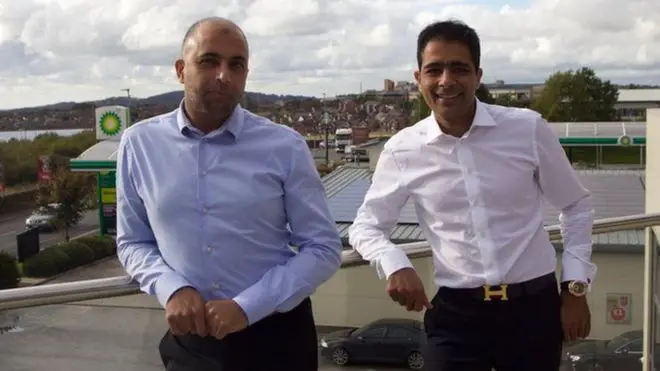
For nearly four decades, The Sunday Times Rich List has been the closest thing Britain has to a national league table of money. This year’s edition reads less like a celebration of enterprise and more like a departures board.

Revolut chief executive Nik Storonsky and the publicity-shy quant trader Alex Gerko have broken into the top 10 for the first time. But the headline story, according to the list’s compiler Robert Watts, is not who has arrived, it is who has gone.

As many as one in six of the individuals and families who appeared on the 2024 ranking are missing from this year’s edition, with the compiler warning that the figures lay bare the scale of Britain’s wealth exodus.

Many foreign billionaires who have been living in the UK have… dropped out because they have moved away,” Mr Watts said.

The top of the table holds, but the cracks are widening

Sanjay and Dheeraj Hinduja, the British-Indian brothers behind the Mumbai-headquartered Hinduja Group, kept top spot with a combined fortune of £38bn. The rest of the podium was likewise unchanged, with the famously secretive property magnates David and Simon Reuben and Ukrainian-born industrialist Sir Leonard Blavatnik both still sitting on fortunes north of £25bn.

Advertisement

The most dramatic faller was Sir James Dyson. The inventor’s eponymous engineering empire was hit hard by Donald Trump’s swingeing tariff regime, and his estimated net worth nearly halved over the year from £20bn to £12bn, enough to send him tumbling from fourth to 13th. It is not the first time Sir James has tangled with policy: he has been one of the most vocal critics of Rachel Reeves’s inheritance tax changes, branding them “spiteful” and warning of the consequences for British family businesses.

City money muscles into the top 10

If old money is having a wobble, the new money minted in the City of London is flexing. Mr Storonsky cracked the top 10 in the same year his fintech juggernaut was finally granted a UK banking licence and clinched a $75bn valuation in a November funding round.

A place behind him in eighth sat Mr Gerko, the cerebral force behind XTX Markets, the quantitative trading shop that has quietly become one of the City’s biggest tax payers. His estimated fortune sits north of £16bn.

Both men were born in Russia, and both have renounced their citizenship in protest at Vladimir Putin’s illegal invasion of Ukraine — a reminder that the City’s talent pool is global, and mobile.

Advertisement

A tale of two exoduses

The list’s real story, however, is in the gaps.

For the first two decades of this century, Britain’s super-rich enjoyed a near-uninterrupted bull run. Rich List wealth grew by close to 600 per cent between 2000 and 2022, according to The Sunday Times. That run is now over. The number of sterling billionaires in the UK peaked at 177 in 2022; this year’s tally of 157 was barely up on 2025.

Under the survey’s rules, foreign-born residents who leave automatically fall out of the rankings, while British citizens who emigrate remain. Both groups are now visibly thinning. Mr Watts said he had seen a “sharp rise in the number of British nationals now resident in Dubai, Switzerland and Monaco”, warning the “twin exoduses” represented a worrying development for the British economy and the public finances.

His unease is echoed by international data. The Henley Private Wealth Migration Report has the United Kingdom haemorrhaging high-net-worth residents at a faster clip than any other major economy, with the UAE, Italy and Switzerland the biggest beneficiaries.

Advertisement

“Will more of the wealthy now set up or grow their ventures overseas and in doing so create fewer jobs here?” Mr Watts asked. “How much tax – if any – will Rachel Reeves’ Treasury be able to extract from those affluent Brits who have now left the country?”

The Reeves effect

Critics increasingly point the finger at Whitehall. The Chancellor has been accused of accelerating departures with a string of measures aimed at ultra-high-net-worth residents and their assets.

In her first Budget in October 2024, Ms Reeves pressed ahead with the abolition of the non-domicile tax regime, slapped VAT on private school fees, raised capital gains tax and tightened several inheritance tax carve-outs. Her 2025 intervention added a so-called mansion tax on properties worth more than £2m and further narrowed the inheritance tax net.

Advisers say the cumulative effect has been a stampede. Research from consultancy Chamberlain Walker, cited by Business Matters, suggests around 1,800 non-doms left Britain in the months after April’s tax changes — 50 per cent more than the Treasury had pencilled in.

Advertisement

The casualties include some of the City’s biggest names: former Goldman Sachs International chief Richard Gnodde and steel magnate Lakshmi Mittal, both long-standing Rich List fixtures, have moved on. Only one billionaire is recorded as having moved the other way in the past year — the new US ambassador to the Court of St James’s, Warren Stephens.

What it means for SME Britain

For the small and medium-sized businesses that read this magazine, the implications run deeper than schadenfreude over a few moving vans full of Old Master paintings.

Wealthy entrepreneurs are typically the angel investors, family-office backers and growth-stage cheque writers that smaller firms rely on when banks turn cautious. If they decamp to Dubai or Lugano, that capital tends to follow them. The same goes for the philanthropic giving, board memberships and mentoring that often anchor a city’s business community.

The harder question for the Chancellor, and for the firms that depend on a healthy ecosystem of British-based capital, is whether the additional tax raised from those who stay can outweigh the receipts and investment lost from those who leave. On the evidence of this year’s Rich List, that calculation is starting to look uncomfortable.

Advertisement

Continue Reading

Business

New govt committee to advise on data sharing

Published

on

New govt committee to advise on data sharing

The inaugural members of a state government committee advising on privacy and information sharing in the public sector have been appointed, ahead of new laws that will take effect this year.

Continue Reading

Business

Former medicinal cannabis boss Adam Blumenthal fights scope of document haul

Published

on

Former medicinal cannabis boss Adam Blumenthal fights scope of document haul

Banned director and corporate adviser Adam Blumenthal is fighting the scope of a planned document haul by the liquidators of failed medical cannabis play Melodiol.

Continue Reading

Business

Fidelity National Information Services, Inc. 2026 Q1 – Results – Earnings Call Presentation (NYSE:FIS) 2026-05-18

Published

on

OneWater Marine Inc. (ONEW) Q1 2026 Earnings Call Transcript

This article was written by

Seeking Alpha’s transcripts team is responsible for the development of all of our transcript-related projects. We currently publish thousands of quarterly earnings calls per quarter on our site and are continuing to grow and expand our coverage. The purpose of this profile is to allow us to share with our readers new transcript-related developments. Thanks, SA Transcripts Team

Continue Reading

Business

Ryanair says it is ‘better prepared’ for European jet fuel crisis than rivals

Published

on

Business Live

Dublin-based budget airline upbeat despite Strait of Hormuz uncertainty

A Ryanair passenger plane coming into land at Liverpool John Lennon Airport

A Ryanair passenger plane coming into land at Liverpool John Lennon Airport(Image: PA)

Ryanair has insisted it is better placed to handle the looming jet fuel crisis than its European rivals, with the airline anticipating it will “widen the cost advantage” over competitors.

Advertisement

The Dublin-based carrier posted surging pre-tax profit, climbing 35 per cent, while maintaining a confident outlook despite the threat of fuel shortages.

The blockage of the Strait of Hormuz amid the Iran conflict has pushed global jet fuel shipments to their lowest level on record, potentially forcing the cancellation of thousands of summer flights.

However, Ryanair said fixed-term contracts covering the bulk of its fuel needs, combined with its “effectively debt free” status, leave it best equipped to ride out the turbulence, as reported by City AM.

“This financial strength further widens the cost gap between Ryanair and our competitors, many of whom are exposed to expensive (long-term) finance, rising aircraft lease costs and unhedged jet-fuel,” the company stated in its accounts.

Advertisement

Ryanair revealed that 80 per cent of its jet fuel requirements for the year ahead are locked in at $67 per barrel, while current market prices have rocketed beyond $150 per barrel.

While other airline chiefs have cautioned that this surge in jet fuel costs is proving more damaging than the Covid-19 pandemic, the Irish carrier maintained that Europe “remains well supplied” via routes through West Africa, the Americas and Norway. Yet the conflict leaves the industry in a state of uncertainty, with Ryanair chief executive Michael O’Leary stating: “The conflict in the Middle East has created economic uncertainty and we still don’t know when the Strait of Hormuz will reopen.”

The Irish carrier, which is listed on the Euronext Dublin, recorded an 11 per cent rise in revenue in the year to March, reaching €14.5bn (£12.6bn).

Passenger numbers climbed by four per cent to 208m, while pre-tax profit surged by 36 per cent to €2.4bn.

Advertisement

Ryanair anticipates passenger numbers will rise again in the coming year – by four per cent to 216m – however, the airline noted that holidaymakers are increasingly booking last-minute due to disruption caused by the Iran conflict on travel routes.

In December, the airline was handed a €256m fine by Italy’s competition watchdog over its allegedly “abusive” use of its dominant market position to restrict sales through online travel agents.

On Monday, Ryanair confirmed its lawyers are “confident” that they will overturn the “baseless” charge on appeal.

Nevertheless, the firm included an €85m charge on its balance sheet as a provision against the fine, accounting for roughly a third of its total value.

Advertisement

The airline also warned that EU environmental taxes are expected to surge by €300m this year to €1.4bn in total. The levies render air travel within the bloc “even less competitive,” Ryanair said.

Mr O’Leary has recently found himself at loggerheads with the boss of JD Wetherspoon over whether airports should serve early morning pre-flight pints. Ryanair’s chief executive accused airports of “profiteering” from enabling drunken behaviour, but pub chief Tim Martin came to the defence of his pubs, which have a large presence at airports.

Continue Reading

Business

Australian shares plunge to seven-week low

Published

on

Australian shares plunge to seven-week low

Australia’s share market has fallen to a seven-week low, as the ongoing conflict in Iran bolsters oil prices and inflation fears darken the global economic outlook.

Continue Reading

Trending

Copyright © 2025