
Business
WOMEN Stumps Many as Puzzle #1771 Proves Tricky


NEW YORK — Wordle fans faced a deceptively simple yet surprisingly challenging puzzle on Saturday, April 25, 2026, as the New York Times’ daily word game delivered “WOMEN” as the solution to puzzle #1771, leaving many players scrambling in the later guesses and sparking widespread discussion across social media.

The five-letter plural word, referring to adult human females, caught solvers off guard despite its everyday usage. With two vowels and no repeating letters, the answer rewarded strategic openers while punishing those who leaned too heavily on common consonant clusters early on. Players who started with strong openers like “SLATE,” “CRANE” or “ADIEU” often found themselves with limited green or yellow feedback after the first two guesses.
Many reported using four or five attempts, with the NYT’s own testers averaging 4.2 attempts. The word’s structure — beginning with W and ending in N — proved difficult for those who exhausted common letters without hitting the correct combination. Hints circulating online proved helpful for stuck players, noting one vowel pair and a plural form that pointed solvers in the right direction once they narrowed the possibilities.
Social media erupted as usual. On X and Reddit’s r/wordle, thousands shared their grids, with reactions ranging from frustration (“How did I miss that plural?”) to celebration (“Got it in 3 after starting with CRANE!”). The answer’s everyday nature made it relatable, prompting lighthearted memes about gender discussions, family references and weekend plans.
For Wordle enthusiasts, April 25’s puzzle continued a streak of moderately difficult entries. The previous day’s answer “DRUNK” had focused on intoxication themes, while earlier in the week players tackled words like “SNORE.” The rotating selection keeps the game fresh while testing vocabulary depth and pattern recognition.
The New York Times acquired Wordle from creator Josh Wardle in 2022, and the game has since become a global daily ritual for millions. Its simple interface — six guesses, color-coded feedback, and one puzzle per day — creates a perfect balance of accessibility and challenge. No ads, no paywall for the core experience, and a shareable grid system fuel its viral staying power.
Strategy experts recommend starting with words rich in vowels and common consonants. “RAISE,” “SLATE,” “CRANE,” and “TRACE” remain popular openers because they test multiple high-frequency letters immediately. Once feedback appears, eliminating impossible combinations quickly narrows the field. On days like April 25, avoiding heavy vowel guesses after an initial miss proved crucial, especially with the plural ending.
“WOMEN” joins a long list of past answers that blend common language with occasional trickiness. Previous notable solutions have included everyday terms that still manage to stump because of letter placement or less obvious vowel positioning. The game’s algorithm ensures variety while avoiding obscure or offensive words.
For those who missed it, the official Wordle review page on the New York Times site offers deeper analysis, including average solve times and community discussion. The game resets at midnight in each time zone, giving players worldwide a fresh chance every 24 hours.
Wordle’s cultural impact extends far beyond casual play. It has inspired variants like Wordle Unlimited, geography-based spin-offs, and even classroom uses for vocabulary building. Celebrities and politicians have shared their results, turning daily solves into water-cooler conversation topics.
Educational value remains one of its strongest draws. Regular play expands vocabulary, improves pattern recognition, and encourages logical deduction. Parents report children picking up spelling skills, while seniors use it as a mental exercise to stay sharp. The game’s universal appeal crosses age groups and backgrounds.
As April 2026 progresses, players can expect continued variety in difficulty. The NYT carefully curates the word list to maintain engagement without excessive frustration. Future puzzles will likely mix in more common words with occasional curveballs that test deeper linguistic knowledge.
For those seeking extra help, numerous sites provide hints without spoiling the full answer immediately. Community forums offer gentle nudges, alternative strategies, and post-solve discussions. Competitive players track their statistics — average guesses, win streaks, and hard-mode performance — adding another layer of enjoyment.
April 25’s “WOMEN” solution served as a reminder that sometimes the most familiar words hide in plain sight. Whether you solved it quickly or needed every guess, the daily ritual continues to unite millions in a shared linguistic challenge that starts the morning with a small mental victory — or a humbling lesson in humility.
Looking ahead, tomorrow’s puzzle promises another fresh test. Until then, players can review today’s grids, refine their starting strategies, and prepare for whatever five-letter surprise awaits on April 26. The beauty of Wordle lies in its consistency: one word, six chances, endless replay value.
Whether you’re a daily streak holder aiming for perfection or a casual solver enjoying the occasional win, today’s answer highlighted the game’s enduring charm. “WOMEN” may have tripped up many, but it also delivered that satisfying click when the final letter turned green — the exact moment that keeps players coming back day after day.


“So, actually, we have turned quite constructive over the last, I would say, two months broadly since the whole panic and the sharp selloff and correction, valuations have turned attractive,” he said. For nearly 15 months, his portfolio remained largely tilted towards largecaps and midcaps, with less than 10% exposure to smallcaps. That stance is now changing. “We are finally turning constructive on smaller caps as well and as we speak we have been increasing some exposure to the smallcaps in our portfolio.”
Vora added that “the peak pessimism seems to be behind us now,” prompting a gradual reweighting towards smaller companies while maintaining a disciplined sectoral approach.
Metals, Power, Materials Continue to Dominate
The core thesis driving his portfolio remains intact: crude long, India short. “Metals continue to be the largest overweight,” Vora said, noting that 25–27% of the portfolio is allocated to the sector, with another 5–7% to cement. Combined materials exposure is roughly 30%, significantly above benchmark weights.
Power, energy and utilities make up another 15% through names such as Coal India, NTPC and Torrent Power. Pharma also accounts for 10–12% of the portfolio.

Within metals, Vora owns a broad basket: “Tata Steel, JSW Steel, Hindalco, Nalco, Sail, Hindustan Copper… Vedanta.” Both ferrous and non-ferrous themes, he said, enjoy tailwinds from pricing, supply constraints, currency trends and China dynamics.
IT Still a Clear Avoid
On IT, Vora said his models show little reason to turn positive. “Valuations are not tremendously cheap given the growth. The guidance has been also very weak. There is no momentum in the sector.” IT, he added, “does not have enough legs for a sustained move.”
Turning Contrarian on OMCs
Interestingly, he has recently exited ONGC after the crude-linked rally played out, calling it a capped upside story given regulation and taxation risks. The contrarian opportunity, he believes, now lies with oil marketing companies.
“It is a good time to start looking at some contrarian plays around crude rather than play the Oil India, ONGC theme,” Vora said, citing decades of crude-market data that signal strong equity performance after crude price peaks.
(Disclaimer: The recommendations, suggestions, views, and opinions given by the experts are their own. These do not represent the views of The Economic Times.)
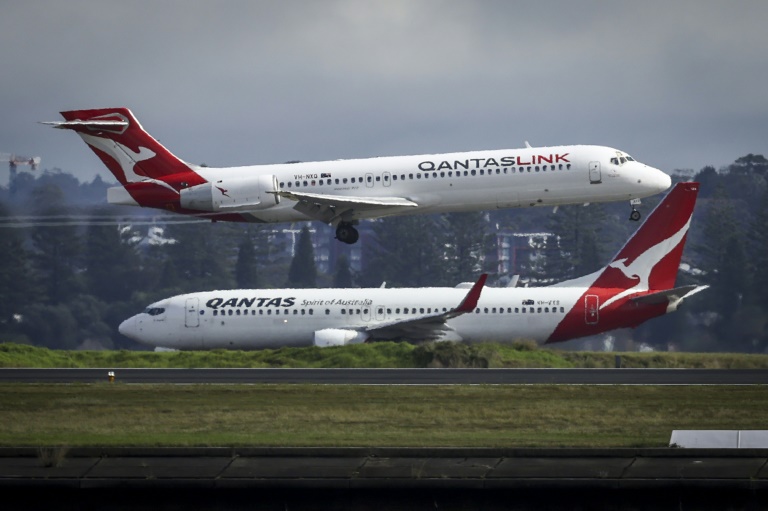
SYDNEY — Airlines around the world are caught in a classic squeeze: soaring fuel prices driven by Middle East tensions are pushing costs higher, yet major carriers like Qantas and Virgin Australia are simultaneously running aggressive domestic fare sales as demand softens in key markets.

AFP
The apparent contradiction has left many travelers confused when trying to book flights in April 2026. Industry executives and analysts say the dual strategy reflects the complex economics of modern aviation, where pricing is driven by route-specific demand, competition, hedging practices and the need to fill seats on less popular flights.
Qantas and Virgin Australia both warned this week that higher jet fuel prices and operational disruptions linked to the ongoing Iran-related conflict are forcing capacity reductions on some international routes. Fuel typically accounts for 25-35% of an airline’s operating costs, and sustained prices above $100 per barrel for Brent crude have created significant pressure.
Yet both airlines launched major domestic sales this month, with discounted fares across popular routes in Australia. Industry observers say this is not inconsistency but sophisticated revenue management at work.
“Airlines use dynamic pricing,” said aviation analyst Gerry Toft of the University of Sydney. “They charge premium prices on high-demand routes or peak times while offering discounts on off-peak or lower-demand flights to maximize load factors. Rising fuel costs don’t change the fundamental need to fill aircraft.”
Data from flight booking platforms shows international long-haul fares, particularly to Europe and parts of Asia affected by airspace restrictions, have climbed 12-18% year-over-year. Domestic leisure routes in Australia, however, have seen promotional pricing as carriers compete for discretionary travel spending amid economic caution from households.
The Middle East conflict has complicated global supply chains for jet fuel. Reduced shipments through key chokepoints have driven up refining and transportation costs. Airlines with poor fuel hedging positions are feeling the pain most acutely, forcing them to either absorb higher costs or pass them on through fare increases on less elastic routes.
At the same time, softer domestic demand in Australia — driven by high interest rates, cost-of-living pressures and increased competition from new entrants — has prompted carriers to stimulate travel with sales. Empty seats generate zero revenue, so even with higher fuel costs, it can be more profitable to sell a ticket at a discount than fly with it empty.
Qantas CEO Vanessa Hudson acknowledged the balancing act in recent comments. “We’re seeing strong demand on certain international corridors, but domestic leisure travel has been softer. Our job is to match capacity with demand while managing significant cost headwinds.”
Virgin Australia has taken a similar approach, cutting some international capacity while promoting domestic deals to boost load factors. The airline recently expanded its sales calendar with fares as low as $49 one-way on select routes, a move designed to stimulate travel during traditionally quieter periods.
Experts say this pricing strategy has become more sophisticated with the help of advanced revenue management systems. Airlines now use artificial intelligence to analyze booking patterns in real time, adjusting prices multiple times per day based on demand signals, competitor pricing and fuel cost fluctuations.
“Modern airline pricing is incredibly granular,” said Professor Rigas Doganis, a longtime aviation economist. “A single flight might have dozens of different fare buckets. Rising fuel costs might push up the price of flexible business class tickets while the airline still offers deep discounts in the lowest economy bucket to ensure the plane flies full.”
The strategy carries risks. If too many passengers book heavily discounted fares, it can erode overall yields. Carriers must carefully balance load factor gains against revenue per passenger. In the current environment, many airlines are accepting slightly lower yields on certain routes to protect cash flow and market share.
Fuel hedging also plays a crucial role. Airlines that locked in lower prices earlier are better positioned to run promotions. Those without effective hedges face more pressure to raise base fares. Qantas has historically been an active hedger, which has helped cushion some of the current volatility.
Broader industry trends show mixed signals. While international premium travel remains relatively strong, leisure domestic markets in several countries are showing price sensitivity. This has created opportunities for low-cost carriers and aggressive pricing from full-service airlines seeking to protect their market positions.
For consumers, the environment creates both challenges and opportunities. Strategic travelers can find genuine bargains on domestic routes by being flexible with dates and monitoring sales. However, those needing to book peak international travel or last-minute flights are facing noticeably higher prices.
The situation highlights the cyclical and unforgiving nature of the airline industry. Carriers must navigate volatile fuel prices, geopolitical risks, changing consumer behavior and intense competition while trying to deliver consistent returns to shareholders.
As the northern summer travel season approaches, analysts expect continued pricing volatility. Airlines will likely maintain a dual-track approach — protecting revenue on constrained or high-demand routes while using promotions to stimulate traffic elsewhere.
For now, travelers are advised to shop around, remain flexible and book early where possible. The current mix of rising costs and promotional pricing creates a complex but navigable market for those willing to put in the effort.
The paradox of higher fuel costs alongside fare sales ultimately comes down to one simple aviation truth: an empty seat is the most expensive seat of all.
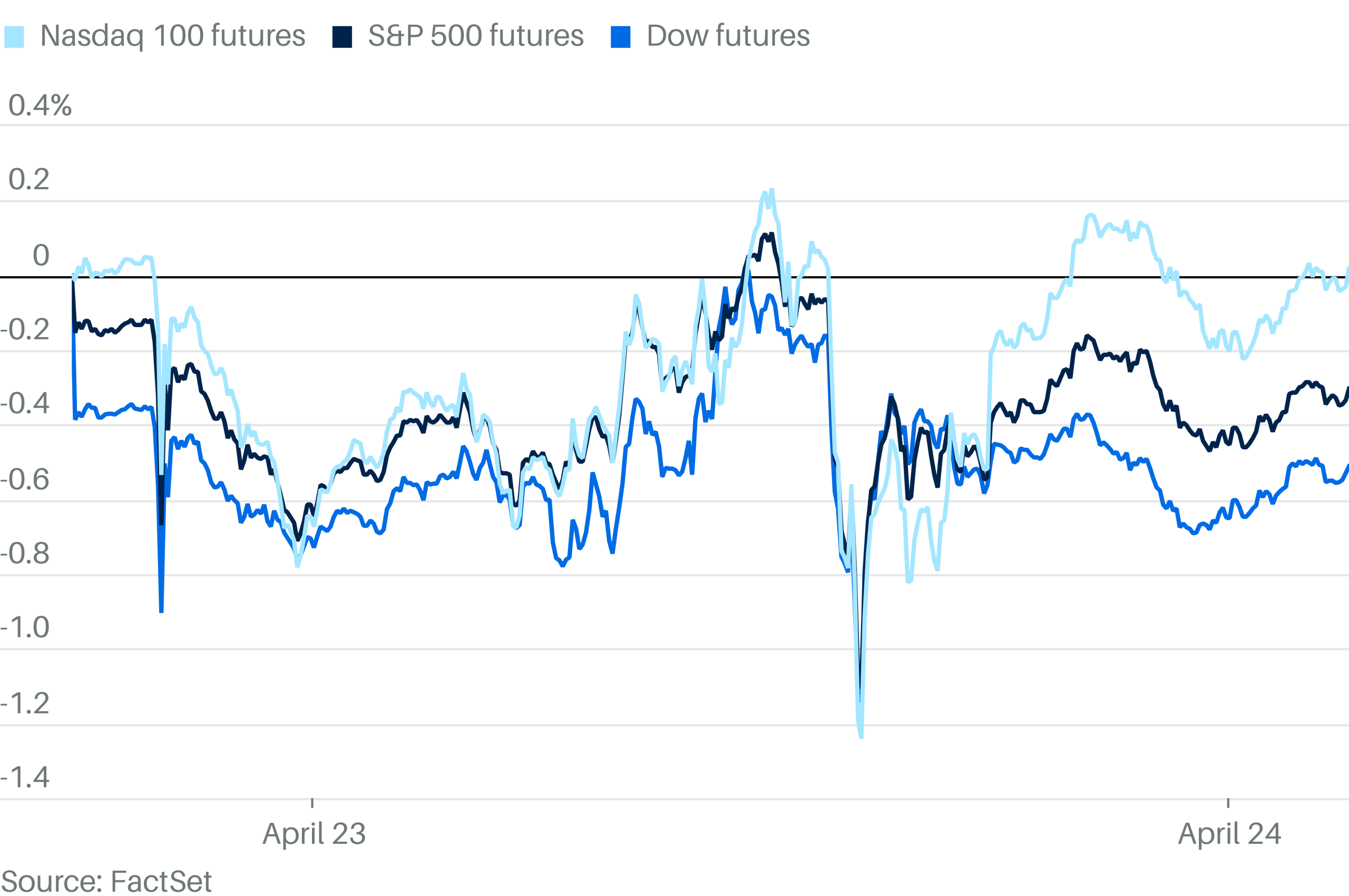
Stocks looked set to rise on Friday as solid tech earnings helped reassure investors who were questioning whether the market could keep its recent rally going.
Dow Jones Industrial Average futures slid 161 points, or 0.3%. But the blue-chip gauge looked likely to be an outlier: futures tracking the S&P 500 climbed 0.1% and contracts tied to the Nasdaq 100 jumped 0.6%.

Maheshwari’s overarching message was simple: caution over action. “The best thing is to avoid it for the time being. The runup has been pretty strong,” he said, adding that despite buying equities when the Nifty slipped below 23,000, he prefers to remain on the sidelines now. “It is too early to actually do anything… Just wait it out.”
On sectors he accumulated during the recent dip, Maheshwari highlighted a consistent leaning toward structural themes. “Power is a well-known theme across the market… power and solar has been two sectors which I have been positive about and have accumulated.” Alongside this, he continues to favour metals and banking, sectors he believes still enjoy strong fundamentals and macro visibility.
One space he isn’t touching is IT. Despite steep corrections, he sees no clarity on the earnings bottom. “I would tend to avoid it because even this quarter there has been no commentary which says that we are close to the bottom… it is best to avoid for the moment.” For existing IT investors, his advice is unequivocal: “I would tend to actually get out of this.”
Maheshwari is equally cautious on the auto sector, citing the potential ripple effects of weakness in technology-led employment. “I for the moment would avoid autos… the biggest fallout is going to come in autos.”
On Reliance Industries, he acknowledged its history of subdued stock performance while still flagging meaningful catalysts. “Reliance has been attractive for a long period of time. Unfortunately, it does not perform,” he noted. Yet, at current levels, he sees merit in accumulating. “I do agree at Rs 1300, 1325 Reliance is a buy.”
Consumption stocks, particularly FMCG names, may offer tactical opportunities, he added. “It could be a good trading bet… there has been a sector rotation… there is a good trading play available in the FMCG side.”(Disclaimer: The recommendations, suggestions, views, and opinions given by the experts are their own. These do not represent the views of The Economic Times.)

RIL on Friday reported a 12.6% year-on-year decline in consolidated net profit for the quarter ended March 31, 2026, as weakness in the oil-to-chemicals segment and higher costs weighed on the bottom line. The company’s consumer-facing businesses, however, continued to scale, with Jio Platforms posting strong earnings growth and Reliance Retail crossing 20,000 stores.
Consolidated net profit attributable to owners of the company came in at Rs 16,971 crore for Q4FY26, down from Rs 19,407 crore in the same quarter last year. Gross revenue rose 12.9% year-on-year to Rs 3,25,290 crore.
The company’s revenue also hit a record for the full year. Gross revenue for Q4FY26 rose 13% year-on-year to Rs 3,25,290 crore. For the full year, consolidated gross revenue rose 9.8% to a record Rs 11,75,919 crore. Full-year EBITDA also hit a record at Rs 2,07,911 crore, up 13.4% year-on-year.
Despite a 15% correction in 2026 so far, RIL shares are commanding a market capitalisation of over Rs 18 lakh crore.
While the earnings season is now at the end of its second week, its nearest rivals HDFC Bank and PSU lender State Bank of India (SBI) have significant ground to cover to reach that mark.
HDFC Bank, the next most valuable company by market capitalisation (Rs 12.08 lakh crore), reported a consolidated net profit of $8.07 (Rs 76,026 crore) billion in FY26 versus $7.51 billion (Rs 70,792 crore) in the previous FY, up 7.4% YoY.
While SBI is yet to announce its January-March quarter earnings, its 9MFY26 PAT stands at Rs 63,656 crore. Top brokerages like Nomura and Nuvama Institutional Equities have pegged the Q4 bottom line at Rs 18,700 crore to Rs 20,090 crore.
If the estimates hold true, the FY26 PAT for India’s largest lender could be Rs 83,746 crore, implying a net profit of $8.89 billion.
Domestic IT bellwether Tata Consultancy Services’ (TCS) FY26 PAT stood at Rs 49,454 crore ($5.25 billion).
(Disclaimer: The recommendations, suggestions, views, and opinions given by the experts are their own. These do not represent the views of The Economic Times.)

Some private-credit investors are shifting cash from one kind of debt fund to another, capitalizing on the differences in how they are valued. All of these funds hold private loans, but some are trading at a discount to others. Wall Street has a name for trades of this nature: arbitrage.

Pilgrim's Pride: Cheap On Multiples, But The Cycle Is Rolling Over

The bank, where Emirates NBD is set to acquire a majority stake up to 74% for approximately $3 billion, saw its annual net profit rise 18% year-on-year at Rs 822 crore.
RBL board proposed a dividend of Re 1 per share having Rs 10 face value, making it 10% dividend for FY26.
The bank’s net interest margin however fell to 4.41%, the lowest in the past five quarters. NIM was 4.63% in the preceding quarter while it was 4.89% in the year-ago period.
Net interest income grew 7% year-on-year at Rs 1671 crore while other income stood 7% higher at Rs 1069 crore. Its operating profit grew 11% year-on-year at Rs 955 crore.
“There has not been any material impact of the West Asia crisis on our business so far,” managing director R Subramaniakumar said.
“We delivered growth that meaningfully outpaced normalised industry trends, led by sharp momentum in granular retail advances and sustained strengthening of our granular deposit franchise,” he said.The bank’s net advances grew 23% year-on-year to Rs 1.14 lakh crore with retail segment contributing 59% of it while it saw contraction in credit card receivables and personal loan portfolio. Its total deposits grew 25% to Rs 1.39 lakh crore.
Its asset quality improved with gross non-performing assets ratio falling to 1.45% at the end of March from 1.88% three months prior, helped by Rs 911 crore of technically written-off loans during the quarter. Net NPA ratio was at 0.39% against 0.55% for the same period. The quarterly provisions were lower at Rs 678 crore as compared with Rs 785 crore in the year-ago period when the bank had made accelerated provisions to cover the credit risks arising from its microfinance portfolio.
The MD said that the share of the lender’s unsecured loans reduced to 24% from 285 a year back and the bank would like to maintain it between 20 and 25%.
During the quarter, It opened 23 branches, taking the total tally to 603.
“This expanded footprint strengthens our ability to deepen customer relationships, enhance sourcing capabilities, and support growth across our retail businesses as we enter the new financial year,” the MD said.
On the strategic investment by Emirates NBD which will transform RBL into a foreign bank subsidiary, approvals from the Reserve Bank of India and Competition Commission of India are already in place while RBL is awaiting the government’s approval, required for the foreign direct investment.
(Disclaimer: The recommendations, suggestions, views, and opinions given by the experts are their own. These do not represent the views of The Economic Times.)


In Supreme Court fight against deportation shield, Trump says judges have no role


– Building a consistent, low-risk passive income portfolio—no gambling, no hype, just fundamentals. I aim to generate ~12% average annual returns with minimal downside risk, prioritizing capital preservation and stable value compounding over short-term momentum. – With over a decade of professional experience in equity research, I specialize in analyzing cash-generative businesses, special situations, and corporate restructurings across developed markets. My investment strategy emphasizes risk assessment over speculative growth, aligning with contrarian and value-driven principles. – Influenced by legendary investors like Warren Buffett and Howard Marks, I rely on deep fundamental analysis, macroeconomic context, and rigorous valuation discipline. I hold a First-Class Honors degree in Economics from the University of London and am passionate about translating complex financial insights into actionable long-term investment ideas.
Analyst’s Disclosure: I/we have a beneficial long position in the shares of BRK.B either through stock ownership, options, or other derivatives. I wrote this article myself, and it expresses my own opinions. I am not receiving compensation for it (other than from Seeking Alpha). I have no business relationship with any company whose stock is mentioned in this article.
Seeking Alpha’s Disclosure: Past performance is no guarantee of future results. No recommendation or advice is being given as to whether any investment is suitable for a particular investor. Any views or opinions expressed above may not reflect those of Seeking Alpha as a whole. Seeking Alpha is not a licensed securities dealer, broker or US investment adviser or investment bank. Our analysts are third party authors that include both professional investors and individual investors who may not be licensed or certified by any institute or regulatory body.

Gladiators’ Giant To Leave Show After Choice That ‘Didn’t Align’ With His Values

YZERR – MONEY RAIN feat. YTG (Official Video)

Saltburn ‘Knitting Nannas’ raise funds for Indian elephants

Manchester United reach agreement with Casemiro over contract clause amid transfer speculation

US brings back mandatory military draft registration

Steven Gerrard disagrees with Gary Neville over ‘shock’ Chelsea and Arsenal claim | Football


-

 Business6 days ago
Powerball Result April 18, 2026: No Jackpot Winner in Powerball Draw: $75 Million Rolls Over
-

 Politics6 days ago
Zack Polanski demands ‘council homes not luxury flats for foreign investors’
-

 Fashion18 hours ago
Weekend Open Thread – Corporette.com
-
Entertainment6 days ago
NBA Analyst Charles Barkley Chimes in on Ice Spice McDonald’s Fiasco
-

 Tech6 days ago
Auto Enthusiast Scores Running Tesla Model 3 for Two Grand and Turns It Into Bare-Bones Go-Kart
-

 Politics5 days ago
Gary Stevenson delivers timely reminder to register to vote as deadline TODAY
-

 Politics3 days ago
Making troops accountable for war crimes threatens US alliance, ex-SAS colonel warns
-

 Business3 days ago
Rolls-Royce Voted UK’s Most Iconic Trade Mark as IPO Register Hits 150
-

 Politics3 days ago
Disabled people challenge government SEND proposals over segregation concerns
-
 Crypto World5 days ago
Bank of Hawai’i (BOH) Q1 2026: Net Income Drops to $57.4M as Net Interest Margin Expands
-

 Politics3 days ago
Zack Polanski responds to home secretary’s taser threat
-
Politics3 days ago
Wings Over Scotland | How To Get Away With Crimes
-

 Politics3 days ago
Starmer handler McSweeney to be dragged from shadows by Foreign Affairs Committee
-
Crypto World6 days ago
Kelp DAO rsETH Bridge Hack Drains $292M as DeFi Losses Top $600M in Two Weeks
-

 Politics3 days ago
‘Iran is still a nuclear threat’
-
 Crypto World4 days ago
Five Value Stocks with Recovery Potential in 2026: PayPal (PYPL), Nike (NKE), and More
-

 Crypto World4 days ago
New York sues Coinbase, Gemini over prediction market offerings
-

 Business3 days ago
The Job Benefits Most Men Don’t Know to Negotiate
-

 Crypto World1 day ago
Michael Saylor says BTC winter is over. Market analyst disagrees, says bitcoin was in a pullback
-

 Politics6 days ago
Reform investigating candidate who ‘hates’ the NHS
You must be logged in to post a comment Login