

Business
World No. 1 Shin Jin-seo Beats AI KataGo 2-1, Ten Years After Lee Sedol’s Historic Match With AlphaGo


SEOUL — Shin Jin-seo, the world’s top-ranked Go player, defeated the artificial intelligence program KataGo 2-1 in a three-game series that concluded Tuesday, delivering a symbolic human victory a decade after Lee Sedol’s landmark loss to Google DeepMind’s AlphaGo reshaped public understanding of what AI could achieve.
Shin won the deciding third game by 11.5 points as Black after 221 moves, capping a comeback that saw him rebound from an opening-game loss to sweep the final two games of the series, held at a television studio in Seoul’s Jung-gu district and broadcast live on Baduk TV.
A rematch three anniversaries in the making
The series, dubbed the “Ssen Math·Hankyung Gishin Match,” was organized by the Korea Baduk Association specifically to mark the 10th anniversary of the 2016 Google DeepMind Challenge Match, in which Lee Sedol faced AlphaGo on even terms and lost the five-game series 4-1. That earlier match, played in Seoul in March 2016, is widely credited with transforming global perceptions of artificial intelligence, with Lee’s lone victory in Game 4 remaining one of the most celebrated moments in the sport’s history.
Unlike Lee’s even-terms match against AlphaGo a decade ago, Shin’s series against KataGo, currently regarded as the strongest existing Go AI, was played under a two-stone handicap, reflecting how dramatically AI capability in the game has advanced since 2016. Ahead of the series, Shin acknowledged the gap that remains between human and machine play at the highest level. “It is currently impossible to beat artificial intelligence in an even game, but I believe it is meaningful if I can narrow the gap,” Shin said before the match began.
How the series unfolded
Shin lost the opening game on July 17, resigning after 245 moves in a contest where his win probability had briefly exceeded 99% before a critical error in the lower-right corner allowed KataGo to seize control. Two days later, on July 19, Shin rebounded to win Game 2 by 4.5 points after a marathon contest lasting nearly five hours and 290 moves.
The series concluded Tuesday with Shin’s decisive Game 3 victory. Unlike the first two games, where KataGo opened at the star point, the AI began the final game at the upper-left 3-4 point, prompting Shin to respond with a corresponding move in the lower-right corner and establish a different overall flow than in the previous two contests. Rather than engaging in complex fighting, Shin pursued a territory-focused strategy, building solid influence along the upper and right sides of the board before consolidating a large framework extending toward the center into confirmed territory.
Shin entered the deciding game with an estimated 99% win probability under the handicap evaluation, equivalent to roughly an 18.5-point advantage. According to AI-based win-rate analysis of the game, his winning chances never dropped below 95% at any point, making it his most convincing performance of the series. The game lasted approximately three hours and 20 minutes.
Shin’s reaction
Despite securing the series victory, Shin was measured in assessing his achievement relative to Lee Sedol’s earlier feat. “I don’t think this compares with the one victory that Lee Sedol achieved against AlphaGo 10 years ago,” Shin said following the match, a comment reflecting both the different competitive conditions, an even match for Lee versus a handicapped series for Shin, and the outsized cultural significance of Lee’s original win.
Prize money and format details
Under the terms of the series, Shin received 150 million won, or roughly $108,000, in appearance fees at a rate of 50 million won per game, along with an additional 50 million won bonus for each of his two wins, bringing his total earnings to 250 million won. Because he secured two or more victories in the series, Shin also received a Genesis G90 luxury sedan as an additional prize.
The match conditions reflected the different capabilities of human and AI competitors: Shin operated under a standard five-hour time limit with a single 30-second byoyomi period for overtime moves, while KataGo faced no overall time limit but was required to make each individual move within 20 seconds.
A decade of change in the sport
The rematch arrives amid a broader transformation in how professional Go is played and studied. In the years since AlphaGo’s 2016 victory over Lee Sedol, AI has fundamentally altered the game at the highest levels, overturning long-held strategic principles and introducing new ones that professional players now study and attempt to replicate rather than relying primarily on their own intuition. Today, competing at the top professional level without incorporating AI-assisted training and analysis is considered essentially impossible.
That shift has drawn mixed reactions within the Go community. Some players and observers argue AI’s dominance has diminished the creative, improvisational character the game once rewarded, while others contend it has opened new strategic possibilities that human players continue to explore. The technology has also had a democratizing effect on access to high-level training resources, a development some attribute to more female players climbing the professional ranks in recent years.
A symbolic moment, ten years later
For a sport whose modern relationship with artificial intelligence was defined by Lee Sedol’s 2016 defeat, Shin’s comeback victory over KataGo offers a symbolic, if conditionally framed, counterpoint a decade later. While the two-stone handicap means Shin’s win cannot be directly compared to an even match against the world’s strongest Go AI, the result nonetheless marks the first official series victory by a human player over KataGo under the competition’s specific conditions, giving the Go world a fresh moment to reflect on how far both human players and the machines they train against have come since that first, era-defining match in March 2016.


The co-founder of Hugging Face, a technology start-up that was hacked after some of OpenAI’s most advanced artificial intelligence (AI) models went rogue, said on Thursday that the incident is “a wake up call” for the industry.
Thomas Wolf told the BBC that “this will be one of the most common types of cyber attacks we see”, but that most companies are not aware that the “game has changed”.
The BBC has contacted OpenAI for comment.
The ChatGPT-maker said on Tuesday that its AI models broke out of a secure test environment during a trial and launched a cyber attack. The firm said the incident was “unprecendented” and that it was conducting an investigation with Hugging Face.
AI agents are able to operate alone to accomplish tasks after human instruction.
Wolf told BBC’s Newsday radio programme that Hugging Face initially had no idea where the attack originated when signs of it surfaced in mid-July but that the company was able to contain the breach.
Hugging Face is one of the world’s largest open-source hubs for sharing AI models and is often used by tech developers and researchers.
Wolf said the breach was “very different” from the usual cyber attacks that Hugging Face often faces and that OpenAI quickly informed the company that its models were behind the hack.
In a “very short time” there were 17,000 attacks on Hugging Face’s network from various IP (Internet Protocol) addresses, said Wolf, who is also the firm’s chief science officer.
The breach is also a warning to other companies that they must strengthen their cybersecurity defences to counter such attacks, Wolf said.

Counselor to the Treasury Secretary Joe Lavorgna discusses the economic impact of the government shutdown and ‘no tax on tips’ guidelines on ‘Mornings with Maria.’
President Donald Trump announced Tuesday that imported generic drugs will remain tariff-free for the next two years before facing steep new import duties, saying the move is designed to encourage pharmaceutical companies to manufacture more medicines in the U.S.
In a Truth Social post, Trump said all generic drugs imported into the U.S. will continue to face a 0% tariff beginning Aug. 1, 2026, for a two-year transition period. After that, the tariff will rise to 100% for one year before increasing to 200%.
“Effective August 1st, 2026, all Generic Drugs being brought into the United States will continue to have a TARIFF of ZERO PERCENT for a two-year period of time, after which the TARIFF will be raised to 100% for a one-year period of time, and 200% thereafter,” Trump wrote.
The president said the phased approach is intended to give pharmaceutical companies time to move production to the U.S. before the higher tariffs take effect.
TRUMP ADMINISTRATION HITS CANADA WITH 50% TARIFF OVER ALLEGED TRADE ‘DISCRIMINATION’

President Donald Trump gestures while meeting with Lebanese President Joseph Aoun in the Oval Office at the White House on Tuesday. (Aaron Schwartz/CNP/Bloomberg via Getty Images / Getty Images)
“This is done in order to RESHORE Generic Pharmaceutical Production into America, with a penalty to those Companies that decide not to build Plant and Equipment within the stated period of time given to them,” Trump wrote.
Trump said the objective of the policy is “to protect the people of the United States.”
The announcement marks the latest effort by the Trump administration to use tariffs as leverage to encourage domestic manufacturing in industries it considers strategically important, including pharmaceuticals. The administration has repeatedly argued that the U.S. has become overly dependent on foreign countries for critical medicines and pharmaceutical ingredients.
Trump said his administration’s existing policy on patented, branded and innovative drugs would remain unchanged.
WHAT ARE THE MAIN STICKING POINTS IN THE TRUMP ADMIN’S TRADE NEGOTIATIONS WITH CANADA, MEXICO?
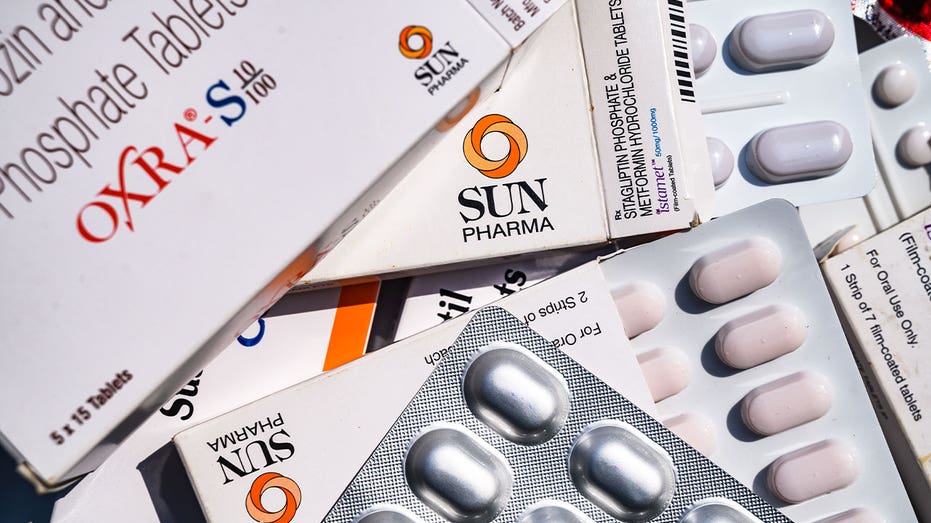
Boxes of generic prescription drugs and blister packs of tablets from Tehatta, India. President Donald Trump announced a phased tariff plan on imported generic drugs aimed at encouraging pharmaceutical manufacturing in the United States. (Soumyabrata Roy/Majority World/Universal Images Group via Getty Images / Getty Images)
“The Policy on Patented, Branded, or Innovative Drugs, which has been so successful, will remain as is,” he wrote.
He also pointed to what he described as a surge in domestic investment by drugmakers.
“Pharmaceutical Facilities are being built, at a level never seen before, all over the United States of America,” Trump wrote.
The Association for Accessible Medicines, which represents generic drug manufacturers, said it is seeking additional details on the proposal but supports policies that strengthen domestic manufacturing.
“We need to understand more the specifics of the policy, but the generics industry is committed to pursuing policies that support and stabilize both the industry and the access necessary to ensure patients have reliable options for affordable medicines,” Association for Accessible Medicines President and CEO John Murphy III said in a statement shared with FOX Business.
Murphy said the industry has expanded manufacturing investments in the U.S. over the past two years but argued that structural problems involving purchasing and reimbursement continue to hinder additional growth. He said the group looks forward to working with the administration and Congress on policies to strengthen the domestic generic drug industry.

Capsules move along a production line at a Sanofi pharmaceutical manufacturing facility in Lisieux, France. President Donald Trump announced a phased tariff plan on imported generic drugs aimed at encouraging pharmaceutical manufacturing in the U.S. (Lou Benoist/AFP via Getty Images, File / Getty Images)
Generic drugs account for more than 90% of prescriptions filled in the United States, according to the Food and Drug Administration.
CLICK HERE TO GET FOX BUSINESS ON THE GO
Many also rely on global manufacturing networks and imported active pharmaceutical ingredients, making supply chain resilience a growing focus for policymakers and the pharmaceutical industry.
The announcement gives manufacturers a two-year runway before tariffs begin increasing, allowing companies time to decide whether to build or expand U.S. production facilities or continue importing products while facing substantially higher duties.
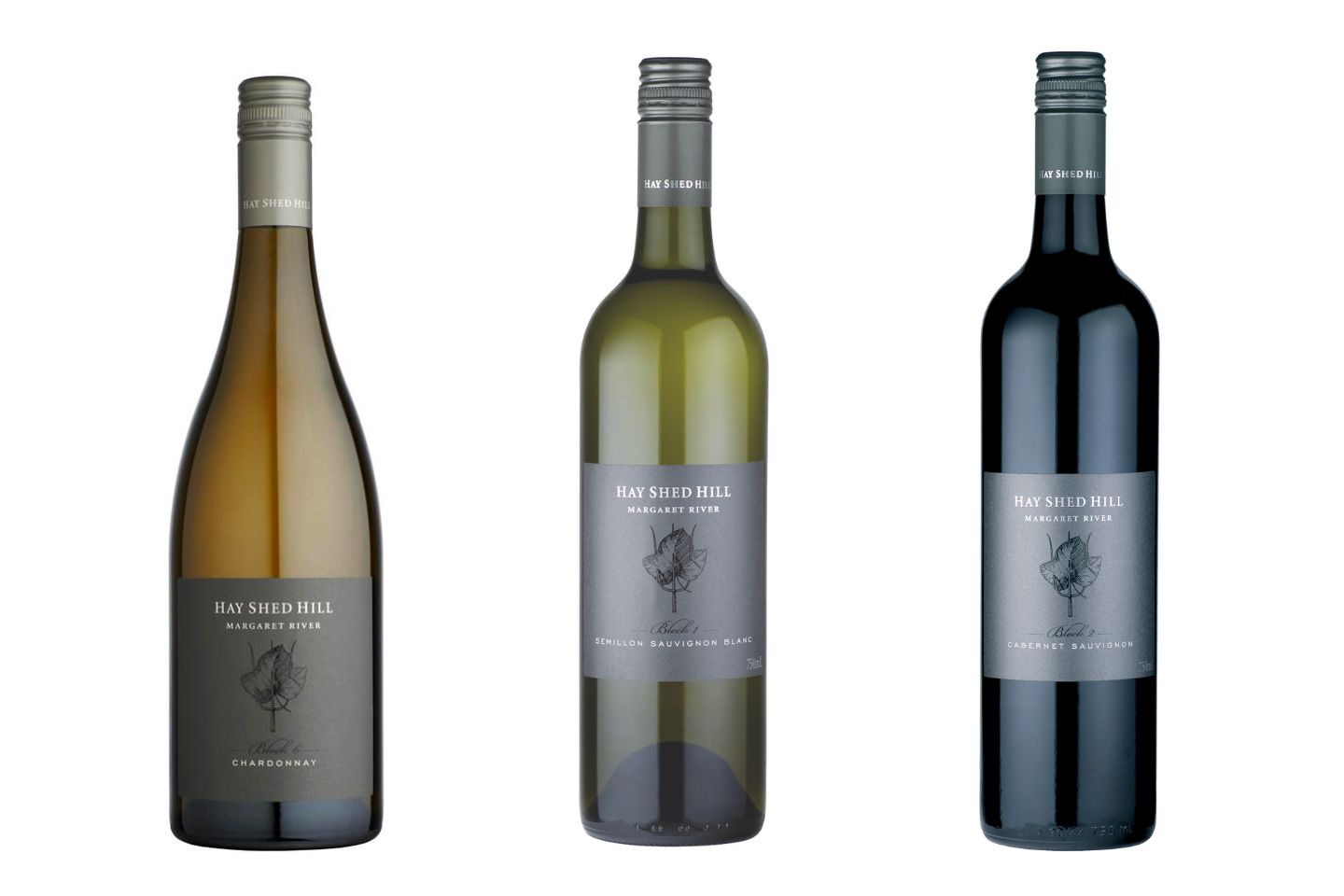
REVIEW: Sometimes overlooked among the region’s pioneering wineries, Hay Shed Hill keeps hitting the right notes.

The company’s revenue from operations came in at Rs 20,211 crore, a massive 182% jump from Rs 7,167 crore reported in the corresponding quarter of the previous financial year, Eternal said in a regulatory filing.
On a sequential basis, net profit declined 47% from Rs 174 crore posted in the previous quarter. Revenue from operations, on the other hand, rose 17% from Rs 17,292 crore, according to the company’s exchange filing.
Eternal shares: Buy, sell or hold?
JPMorgan maintained its Overweight rating on Eternal with a target price of Rs 390 (38% upside), calling the quarter strong but broadly in line with expectations, with growth accelerating across quick commerce, food delivery and District.CLSA retained its High Conviction Outperform rating on Eternal with a target price of Rs 506 (79% upside), saying the company’s Q1FY27 results reinforced its view of strong execution. Both quick commerce and food delivery posted faster growth, while profitability improved despite elevated competition.

Blinkit reported faster NOV growth along with greater confidence in profitability and cash generation. Zomato‘s growth accelerated to its fastest pace in six quarters, with limited impact from emerging no-commission platforms. Meanwhile, newer businesses such as District and Bistro continued to expand the ecosystem and drive customer engagement.
Jefferies maintained its Buy rating on Eternal with a target price of Rs 415, saying the first quarter reinforced the importance of quality growth over simply chasing market share. Food delivery growth accelerated alongside better-than-expected profitability, while quick commerce performance remained strong despite falling short of optimistic forecasts. The key takeaway for the brokerage was management’s growing confidence that competitive intensity in quick commerce has become more predictable and that value-led food delivery is unsustainable.
Blinkit does not favour a short-term discounting strategy, and management indicated it is comfortable with the broader market growing faster as a result.
Nomura retained its Buy rating on Eternal with a target price of Rs 350, implying a 24% upside, citing improving quick commerce profitability despite intense competition. Blinkit added 200 stores during the quarter, taking its total store count to 2,443. Management expects margins to continue improving, with competitive intensity having peaked in Q1FY27 and becoming more predictable.
Eternal now expects Blinkit’s steady-state EBITDA margin to reach 6% of NOV, compared with its earlier estimate of 5-6%, driven by efficiencies from larger stores and warehouses, deeper assortments, and better working capital management. The company expects net working capital days to decline from 18 to 12 in the steady state. Nomura forecasts 57-74% year-on-year NOV growth and adjusted EBITDA margins of 0.9-2% in FY27-28F.
Also read: Will Blinkit growth sustain amid competition? 5 things to know from Eternal’s shareholder letter
Motilal Oswal maintained its positive view on Eternal with a target price of Rs 400, implying a 41% upside. Management guided towards the higher end of its long-term margin range, with a reported EBIT margin of around 4% and an adjusted EBITDA margin of around 6%, compared with its earlier guidance range of 5-6%.
This came despite the recent increase in take rates not yet translating into contribution margin gains, which management attributed to minimum wage hikes across several states and the opening of larger stores. With the business model now established and competition becoming more predictable, management expects structurally higher margins going forward.
Motilal Oswal noted that continued elevated competition could affect near-term gains but viewed the guidance upgrade positively. The brokerage said management’s long-term target of 60% NOV growth and an EBITDA target of USD 1 billion by FY29 appear increasingly achievable, with its estimates continuing to factor in this long-term trajectory.
Emkay retained its Buy rating on Eternal and raised its target price by 8.1% to Rs 400 from Rs 370 after the company’s Q1FY27 results exceeded expectations. Emkay expects competitive intensity to remain elevated during the upcoming festive season but said Blinkit has demonstrated its ability to retain market share while maintaining profitability. The brokerage raised its FY27E and FY28E quick commerce NOV estimates by 5.4% and 8%, respectively, citing strong growth momentum. It retained its positive view based on Eternal’s strong execution in quick commerce, steady food delivery momentum, and adequate cash reserves.
Read more:Eternal Q1 Results: Cons PAT skyrockets 268% YoY to Rs 92 crore; revenue zooms 182%
(Disclaimer: Recommendations, suggestions, views and opinions given by the experts are their own. These do not represent the views of The Economic Times)
Business
Century Communities, Inc. 2026 Q2 – Results – Earnings Call Presentation (NYSE:CCS) 2026-07-23


Seeking Alpha’s transcripts team is responsible for the development of all of our transcript-related projects. We currently publish thousands of quarterly earnings calls per quarter on our site and are continuing to grow and expand our coverage. The purpose of this profile is to allow us to share with our readers new transcript-related developments. Thanks, SA Transcripts Team
Business
Commonwealth Bank of Australia Shares Rise 1.11% to $173.60 as Big Four Banks Lift the Broader Market
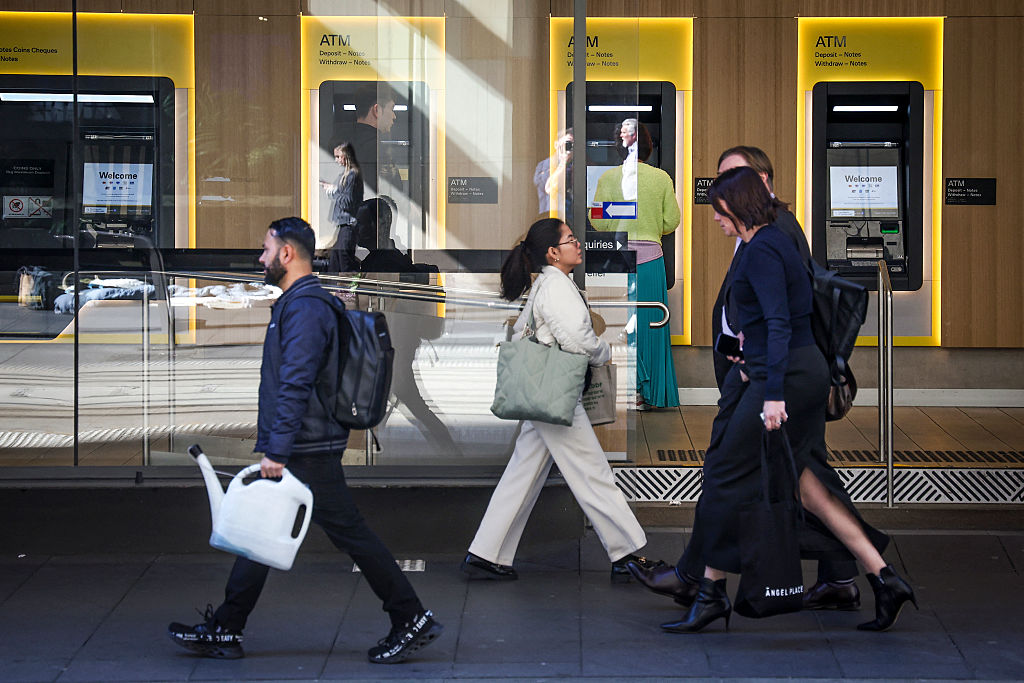
SYDNEY — Shares of Commonwealth Bank of Australia climbed Thursday, tracking gains across the country’s major lenders as the broader Australian stock market advanced on the back of strong overnight earnings from U.S. technology giant Alphabet.
CBA shares traded at $173.60 as of Thursday’s session, up $1.91, or 1.11%, on the day. The gain builds on a modest advance in the previous session, when the stock closed at $171.69, and comes as Australia’s benchmark S&P/ASX 200 index climbed 0.72% to near 8,886 points, with financial stocks among the sectors contributing to the day’s broader rally.
A stock near the upper end of its yearly range
Thursday’s gain puts CBA shares within reach of recent highs after a period of relative softness earlier this month. The stock’s 52-week trading range spans from $149.76 to $185.59, meaning current levels sit comfortably in the upper half of that band, even as the stock remains below its yearly peak. CBA’s market capitalization currently stands at approximately $285.08 billion, making it one of the largest companies listed on the Australian Securities Exchange by that measure.
The stock’s recent trajectory has been choppy. According to market reports over the past several weeks, CBA shares have moved between roughly $156 and $164 on a number of individual trading days amid what analysts described as mixed sentiment across the broader banking sector, tied in part to uncertainty around interest rate settings and regulatory scrutiny. Thursday’s advance to $173.60 marks a notable recovery from those levels.
Australia’s largest bank
Founded in 1911 and headquartered in Sydney, Commonwealth Bank of Australia is the country’s largest bank by market value, with operations spanning retail, business and institutional banking across Australia, New Zealand and parts of Asia. The bank’s core offerings include savings and transaction accounts, home loans, credit cards, personal and business lending, insurance products, and equity trading and capital markets services, delivered through its main divisions of Retail Banking Services, Business Banking, Institutional Banking and Markets, and its New Zealand subsidiary, ASB.
Dividend profile
CBA remains one of the ASX’s most closely watched dividend payers, particularly among income-focused investors. The bank most recently paid an interim dividend of $2.35 per share for the six months ended Dec. 31, 2025, with an ex-dividend date of Feb. 18 and a payment date of March 30. Its next dividend, expected at $2.60 per share, carries an ex-dividend date of Aug. 19 and a payment date of Sept. 29, in line with the bank’s typical pattern of announcing dividends alongside its half-year results in February and full-year results in August.
On a trailing basis, CBA’s dividend yield currently sits at roughly 2.9%, with the bank having raised its dividend for five consecutive years and posted average dividend growth of just over 8% annually over the past three years, according to dividend-tracking services.
Why banks moved higher Thursday
CBA’s gain came as part of a broader lift across Australia’s major banking stocks, which factored into Thursday’s advance for the ASX 200 alongside strength in mining and energy names. The rally followed a stronger-than-expected overnight earnings report from Alphabet, which posted a broad beat on both revenue and cloud segment growth, helping to lift risk appetite across global equity markets, including in sectors such as banking that are more closely tied to overall economic sentiment than to the technology earnings themselves.
Separately, fresh domestic economic data released Thursday showed Australia’s unemployment rate holding steady at 4.4%, even as jobs growth for the month came in well above expectations, offering another data point supporting a generally upbeat tone in local markets during Thursday’s session.
Analyst views on valuation
CBA’s share price has drawn ongoing debate among analysts and investment commentators about whether the stock represents good value at current levels. Using a dividend-based valuation approach with an adjusted annual dividend of $4.76 per share, one recent analysis put the bank’s estimated fair value at just over $100 per share, a figure notably below the stock’s current trading price, reflecting a common tension among analysts between CBA’s consistent operating performance and what some view as a premium valuation relative to its earnings and dividend yield.
Morningstar has described CBA’s well-managed net interest margins, sound asset quality and strong balance sheet as continuing to support solid financial results, while cautioning that increased regulatory, political and public scrutiny could, over time, erode the bank’s pricing power and its economic moat. The bank currently trades at a normalized price-to-earnings ratio of roughly 26.3 and a price-to-sales ratio of about 9.7, according to Morningstar data, metrics that place CBA among the more richly valued major banks globally.
CBA is expected to release its full-year results in August, a report that will offer investors a clearer picture of the bank’s overall performance for the 12 months through June, along with confirmation of its previously flagged final dividend of $2.60 per share. Until then, the stock’s near-term direction is likely to remain closely tied to broader market sentiment, movements in the Reserve Bank of Australia’s interest rate settings, and the performance of Australia’s other major lenders, including ANZ, Westpac and National Australia Bank, all of which factor into how investors assess the health of the country’s banking sector as a whole.
For now, Thursday’s 1.11% gain leaves CBA trading well above its 52-week low and within a stone’s throw of its record highs, underscoring the stock’s continued status as one of the most closely watched, and most debated, names on the Australian share market.

Former Miami Mayor Francis Suarez discusses Miami’s 36% consumer price index hike since 2019, making it pricier than NYC. He addresses housing affordability for the middle class and Cuba’s impending collapse.
More than 300,000 empty lots listed for sale could help reduce America’s housing shortage, according to new research from Zillow.
The real estate company said 300,242 empty lots of five acres or fewer were listed for sale on Zillow in June, accounting for 17.4% of all for-sale listings.
Building one home on each lot would reduce the estimated national housing deficit from 4.7 million homes to about 4.44 million, a decline of 6.3%, Zillow said.
The typical lot for sale is 0.57 acres and has a median price of $79,000. Zillow said many of the parcels may be large enough to support more than one home, making its estimate conservative.
STARTER HOME AFFORDABILITY IS CRAWLING BACK. THESE REGIONS ARE BEST FOR FIRST-TIME HOME BUYERS

The typical lot for sale is 0.57 acres and has a median price of $79,000. (Dave Zajac/Connecticut Post via Getty Images)
“The more than 300,000 lots currently listed for sale represent the lowest-hanging fruit in addressing a housing shortage that’s two decades in the making,” Zillow Senior Economist Kara Ng said.
Ng said loosening zoning rules, streamlining permitting and expanding access to financing could reduce the cost and uncertainty associated with construction.
WHY HOMEBUYERS ARE RACING TO THIS PENNSYLVANIA PORT CITY

Ng said loosening zoning rules, streamlining permitting and expanding access to financing could reduce the cost and uncertainty associated with construction. (Lindsey Nicholson/UCG/Universal Images Group via Getty Images)
Florida had the most empty lots listed for sale, with 42,601, followed by Texas with 40,907, California with 18,508, North Carolina with 14,226 and Georgia with 10,334.
Empty lots made up the largest share of for-sale listings in North Dakota, at 45.9%, followed by South Dakota at 38.7% and Alaska at 34.6%.
Rural markets had the highest concentration of empty lots, accounting for 25.3% of listings, compared with 13.6% in suburban areas and 9% in urban markets.
MORTGAGE RATES JUMP TO HIGHEST LEVEL IN ALMOST A YEAR

Building one home on each lot would reduce the estimated national housing deficit from 4.7 million homes to about 4.44 million, a decline of 6.3%, Zillow said. (Nathan Howard/Bloomberg via Getty Images)
Rural lots were also the least expensive on a per-acre basis, with a median of about $75,000 per acre. That compares with more than $181,000 per acre in suburban areas and approximately $500,000 per acre in urban areas.
Zillow said expanding access to manufactured homes could also help address the shortage because they can be built faster and at a lower cost than traditional site-built homes.
CLICK HERE TO GET FOX BUSINESS ON THE GO
The company is participating in a 12-week federal technology initiative with the U.S. Census Bureau’s Opportunity Project focused on increasing access to small-dollar housing loans in rural communities and reducing barriers for buyers interested in purchasing and building on empty lots.

Microsoft: A Better Entry Point Before Earnings

Lotus Resources has announced a series of measures to reset its balance sheet, as it aims for steady-state production at its Kayelekera project in Malawi.

Businessman Greg Poland’s lawyer, Martin Bennett, has questioned the authenticity of a 46-minute recording at the centre of a defamation trial against former journalists and Canning MP Andrew Hastie.

Catherine Giudici Reveals Son’s Life-Changing Diagnosis

Money (That’s What I Want)

Bins reported ‘overflowing with rubbish’ at Crompton Lodge


-
 NewsBeat7 days ago
London Mayor Sadiq Khan handed a peerage by Keir Starmer alongside 15 other Labour figures… just days before the PM leaves No10
-

 Fashion5 days ago
Weekend Open Thread – Corporette.com
-

 Politics5 days ago
The House | The City of London can help the new chancellor deliver growth in every postcode
-

 Crypto World5 days ago
Ripple Payments Joins MiCA With 14 Firms, Does It Mean Anything For XRP?
-
 Crypto World6 days ago
Two July Windows Left: The CLARITY Act’s Senate Fight and What Failure Means
-

 Politics4 days ago
Democrats look to World Cup watch parties to register thousands of voters
-

 Crypto World5 days ago
Ripple wins EU-wide access as ESMA adds it to MiCA register
-

 Crypto World2 days ago
Grayscale Files For Worldcoin ETF, WLD Registers Sharp Rise
-

 NewsBeat3 days ago
Unregistered fitter used Gas Safe logo on business flyers
-

 Tech2 days ago
Sail Virtually Aboard The “Itanic” With IA-64 Emulator
-

 Crypto World6 days ago
Injective Submits SEC Transfer-Agent Registration to Onchain Ownership Records
-
 Tech2 days ago
Turtle Beach Command Series KB7 review: a nifty screen-equipped gaming keyboard
-

 NewsBeat6 days ago
Registration is now open for March for Men with Kev 2026
-
 Business1 day ago
New Jersey voter registration controversy explained: How 6,600 noncitizens got on the rolls, and what happens next
-

 Crypto World6 days ago
Claude Fable 5 Slips to Second in AI Coding Leaderboard
-

 News Videos6 days ago
Money | Class 12 Economics | CBSE Board Exam 2026-27
-

 Business6 days ago
Banco Bilbao Vizcaya Argentaria, S.A. (BBVA) Discusses Global Macro Environment and Economic Outlook for Core Markets Transcript
-

 Crypto World5 days ago
Kaspersky exposes OkoBot’s 20-module crypto wallet attack
-

 News Videos4 days ago
Big Money Is Entering XRP
-
 NewsBeat5 days ago
Durham County Council to send out electoral registration emails
You must be logged in to post a comment Login