Connect with us

Business

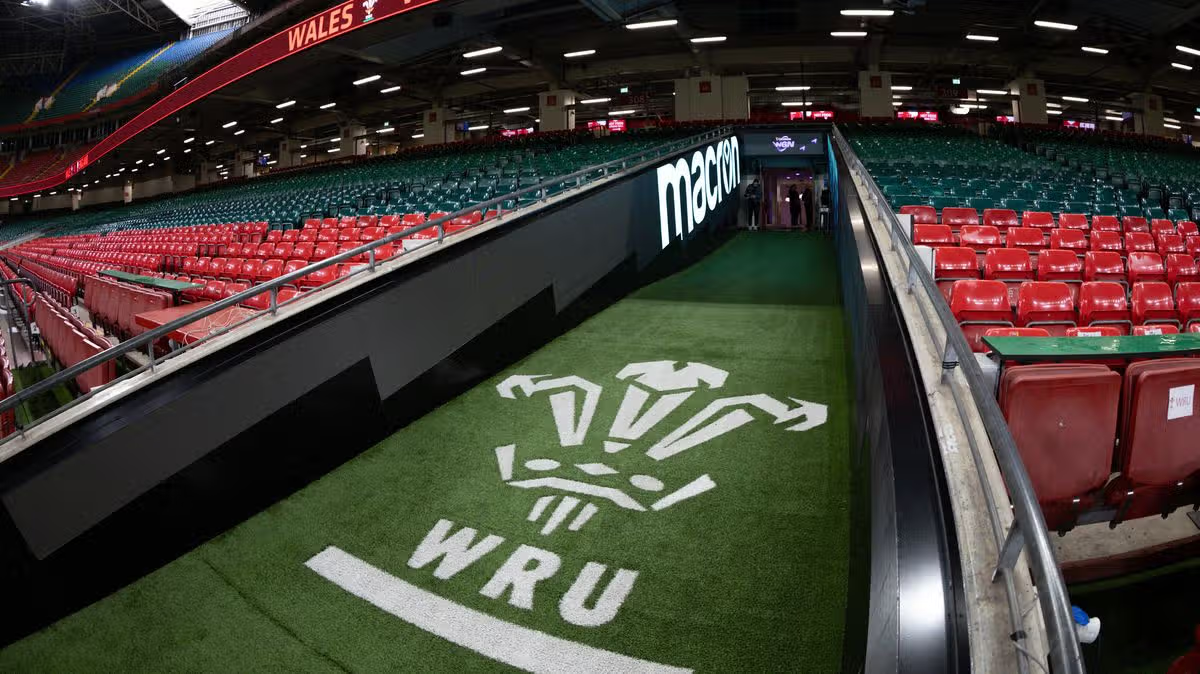
WRU could face EGM with motion calling on members clubs to oust its entire board

Published

on

Former Principality Building Society chief operating officer Rob Regan

A leading figure in the campaign to challenge the existing Welsh Rugby Union leadership has expressed confidence that sufficient backing already exists amongst member clubs to trigger a dramatic Extraordinary General Meeting, featuring a motion to remove the entire board.

The group, which describes itself as a “coalition of the willing”, is demanding the WRU suspend proposals to reduce regional teams from four to three until the decision-making process undergoes independent examination.

Hayley Parsons, who founded GoCompare, one of the UK’s leading price comparison firms, argued that the plan to axe a region and maintain just a single team in west Wales requires independent evaluation, with the union disclosing all relevant data and explaining why it determined that sustaining four regions is now “unsustainable”, even with any new unequal funding arrangement.

'Welsh rugby’s problem may not be the number of professional teams but a fragmented and poorly aligned operating model'

Additional members of the group include Rob Regan, former chief operating officer at Principality Building Society and Legal and General, alongside technology entrepreneur Glenn Melford-Colegate.

Advertisement

Hayley Parsons.

(Image: Rob Browne)

The WRU has signalled it will soon release data – though the level of detail and presentation format remain uncertain – regarding this decision, along with the scoring criteria should the Scarlets and Ospreys choose to participate in a competitive bid process for the single WRU licence allocated to west Wales.

However, the coalition’s stance is that the union cannot cherry-pick what information is disclosed, and that an EGM would effectively provide the clubs with a referendum on whether a region should be eliminated, reports Wales Online.

Regardless of the outcome, even with three clubs, benefactor backing will be essential. There is also the ever-present risk, as witnessed not only in Wales but across the professional game in England in recent years, of another club collapsing financially.

Advertisement

The deadline for submitting a motion for the WRU’s annual general meeting this autumn has now elapsed, so the coalition, which is in discussions with numerous clubs, is concentrating on securing an EGM.

A motion, which, if approved, would result in the current board being required to step down with immediate effect, would not encompass the chief executive of the WRU, Abi Tierney, who, while serving on the board, is an employee of the union and therefore cannot be removed by the clubs.

Under section 62 of the WRU’s articles of association, a no-confidence resolution would need only a simple majority of clubs voting at the EGM to pass. To be quorate, it would require 95 members in attendance.

Proxy and remote electronic voting would be permissible.

Advertisement

For the EGM to proceed, it would first require support from 10% of the 282 member clubs. Should this threshold be met, the union would have 21 days to formally acknowledge the request and schedule the meeting.

This would usually be around a month later. Should the board be removed, a temporary board would need to be created, comprising representatives from the districts – though not those currently serving on the board.

They would not require club approval to bolster their ranks by bringing in external people with commercial expertise.

However, what is being contemplated by the coalition, based on initial legal advice and discussions with club representatives, is another possible motion to change the articles of association, which would require a 75% majority, so that any temporary board would have external members from the outset. This could be voted on at the EGM before the vote of no confidence.

Advertisement

The WRU would be confident of seeing off any no-confidence motion against the entire board. Should the EGM be called, it would lobby hard, making the case for three regions and a commitment to invest £28m in the pathway development of the game over the next five years.

Last year, with lower attendances than projected at international games at the Principality Stadium, the WRU’s original revenue forecast was blown off course by around £6m. If that were to be repeated this autumn – though the Six Nations home games against England and Ireland should sell out – their argument that four regions is financially unsustainable would be amplified.

The governing body has drawn up a shortlist for a new chair. It is understood that a number of potential candidates ruled themselves out due to an expectation of having to endorse the four-to-three strategy.

Should an EGM be called, the WRU is unlikely to pause announcing the new chair, even if there is a possibility that they could be removed along with all other board members.

Advertisement

Swansea Council has also restarted its legal action against the union over its plans for just one region in west Wales, while effectively protecting the Dragons and Cardiff, which they own. Other interested parties may soon join the action.

Ms Parsons said: “We have clubs contacting us and, from those conversations, we are confident that they have more than enough clubs for an extraordinary general meeting. So, we have the numbers now, but we will be looking to put the EGM to the WRU in a few weeks’ time. We have some really impressive people, literally from around the world, contacting us and offering their support free of charge.”

She said the temporary board could involve some of the figures supporting the coalition of the willing, but there is also scope to bring in external advisory board members to support the WRU going forward in sustaining four regions – though she noted that, after a review period of around six months, the conclusion could be that three is the right number.

She said: “So, what we do need is fresh, independent people. I don’t think we could have anyone involved before, as that just wouldn’t work. What we need is the right group of people, and there is a right group of people to do this.

Advertisement

“At no point have I ever said I was going to be putting my name forward for the chair role. I would be involved in the short term, because I think it would be the right thing to do, not because I would want any involvement long term.

“And I think that is quite important, as one of the problems I think you do have in rugby is that some people are in it for their own self-interest. What we are proposing for board members is no salaries or expenses.”

The temporary board would at some point give way to a new permanent board based on three-year terms.

Should an EGM take place and the motion to remove the board fail, she said: “I don’t think there would then be anything that people could do, and we would just sit back and watch our game die over the next five years.”

Advertisement

Yet, if a new direction is taken, there remains time to fully examine the case for maintaining four regions. The WRU plans to have three teams in the United Rugby Championship for the start of the 2028-29 season.

Ms Parsons said: “There is time here to look at generating new revenue lines. If you look at the latest statement [from the WRU on three regions], it is a defeatist attitude. But in that time we could bring in people to secure additional investment and look at things differently.

“We also need to think more about what could be done with the stadium, the hotel, Cardiff Rugby, etc.”

However, even if the board are ousted and the new one looks to support the WRU executive in seeking to drive revenues to maintain four regions, there are no guarantees it will result in a significant uplift.

Advertisement

A social impact rugby bond would require regulatory approval. It would need to appoint a fund manager to raise funds and invest in conventional assets such as shares and bonds.

Investors could forego an element of projected returns for investment into the game.

This could be hypothetical in specific areas, such as the community and women’s game. But to have an impact, the funds under management would have to run into the tens of millions, which, even if achievable, could take years to reach.

Previous WRU regimes considered a sale-and-leaseback of the Principality Stadium and securitisation deals by drawing down capital against future income from rugby matches and other events such as concerts.

Advertisement

However, things like a sale-and-leaseback, while providing a huge upfront sum, would have to be repaid, with a profit margin for the lender(s) over the duration of the arrangement.

The stadium is a valuable asset, although it requires continuous investment. Any sale-and-leaseback would also need approval from Cardiff Council, as it is a shareholder in the WRU subsidiary company that owns and operates the stadium, Principality Stadium Plc.

There is certainly scope, with rugby touching all communities in Wales and rugby clubs also serving as community hubs, to secure more funding for the community game – which could be separated from the governance of the professional game – in the form of grant funding from the Welsh and UK governments.

While the WRU is in receipt of government funding, it could learn from how the Football Association of Wales has, in recent years, secured millions of pounds in funding for the growth and infrastructure of the game, especially at grassroots level. But this will take time and investment.

Advertisement

The coalition of the willing are also exploring the tax benefits of all community clubs acquiring charitable status. But, like their position on the WRU plans, this would need to be challenged and tested.

Former Principality Building Society chief operating officer Rob Regan

Rog Regan.

On the WRU’s decision to publish data, Mr Regan said it had to do so for every scenario assessed.

He added: “Just sharing data to show that one could work with a set of assumptions doesn’t change anything, as it doesn’t answer the question of how do we know that is the only one. While constitutionally they can do this, ultimately they should give the choice to the clubs. So, if they are confident this has support, then give the rugby public (member clubs) their vote.

“So, we continue as planned (EGM). Our interest is to ensure that decisions about the number of pro clubs in Wales, that have distracted so many for so long, sucking energy, focus and money out of the game, are made based on evidence and data and in an open, transparent and engaging way.

Advertisement

“We have been building a long list of people who would be prepared to step in and support an interim transition with a transparency mandate.

“We are looking to maximise breadth of capability for a core group of 8-10 people, with an advisory panel supporting. We have set out principles that this should be short-term, pro bono work with no conflicts.

“We want to plug core gaps in current board capabilities. We want to engage the entire rugby family in creating a credible, capable, values-driven group who bring deep understanding of Wales’s rugby heritage and culture, as well as strong commercial skills. More collaboration, less ego. A genuine desire to listen, learn and build relationships. We imagine a transition and support period of at least six months, where we’d be looking for people to be able to dedicate a couple of days a week to public scrutiny of current plans and governance documents while we build a new board with a new mandate.”

Ms Parsons was on the board of Cardiff Rugby for six years before it collapsed into administration and was acquired in a pre-pack deal by the WRU with the joint administrators from PwC.

Advertisement

Also on the board at the time was current WRU board member and former chief executive of FTSE 100 company Halma, Andrew Williams.

Following the death of former chairman and long-term benefactor Peter Thomas, the club needed new benefactors to fulfil the then funding agreement with the WRU.

Helford Capital, a Jersey-based special purpose vehicle with no assets, owned by co-directors Neal Griffith and Phil Kemp, became majority owners of the club. However, they failed to inject the required benefactor funding agreed, and the club’s board had no alternative but to put the business through administration. The WRU would have faced significant penalties from the United Rugby Championship if they had not acquired Cardiff Rugby by leaving the league one team short.

The board of Cardiff were seduced by the promise of major investment, via Helford, from the Middle East, but they also needed to secure new benefactors.

Advertisement

Ms Parsons said: “I was on the board for six years and we made great strides in lots of areas, but Peter [Thomas, the former chair] passed and the investors came in and they were absolute fantasists.

“They had this big deal coming from Abu Dhabi and it even got to the point where we were told the deal was done and the money was there, worth millions of pounds, but we were just saying, ‘Show us the evidence.’ It never happened.”

She said that, in the aftermath of the Rafferty report into allegations of sexism and racism at the WRU – although the terms of reference never required an assessment of the BBC documentary that led to its establishment – the union was always going to appoint a woman in a senior role.

Ms Parsons said: “This is not about Abi, but you cannot say one of the jobs [chair or CEO] had to go to a female. That was fundamentally wrong and wouldn’t happen in business.

Advertisement

“A man was appointed as chair [Richard Collier-Keywood], so the CEO had to be a woman. You also automatically put a target on that woman straight away.

“There were men who had applied who had done that type of role elsewhere in rugby and with more experience to do that job.”

Continue Reading
Click to comment

You must be logged in to post a comment Login

Leave a Reply

Business

Veezu donation to cricket club after vandals destroyed scoreboard

Published

on

Business Live

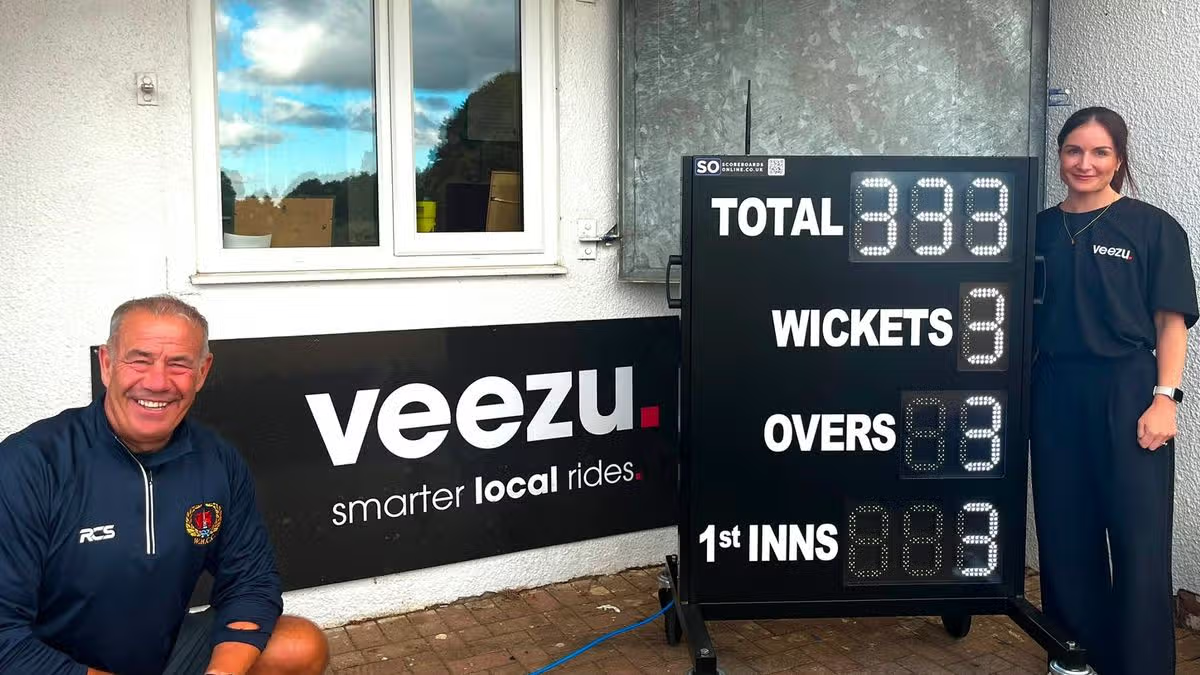
Veezu has donated £1,000 to Whitchurch-Heath Cricket Club

Private hire car venture Veezu had donated £1,000 to a Cardiff cricket club to replace equipment damaged in an arson attack at its ground.

Whitchurch-Heath Cricket Club has received a £1,000 donation after vandals targeted its facilities earlier this year, with its scoreboard set on fire and other equipment damaged. It left the volunteer-run club facing an unexpected bill to replace essential equipment.

The contribution from Cardiff headdquartered Veezu has helped Whitchurch-Heath replace the destroyed scoreboard with a new electronic model.

Advertisement

Sally Krouma, brand activation manager at Veezu, said: “When we heard what had happened at Whitchurch-Heath we wanted to see what we could do to help.

“Grassroots sports clubs play such an important role in their communities and rely on an enormous amount of hard work from volunteers.

“It was really disappointing to see the damage that had been caused, so we were very happy to provide £1,000 to help the club replace some of the equipment.”

Alastair Milburn, chair of Whitchurch-Heath Cricket Club, said: “We are incredibly grateful to Veezu for their amazing support.

Advertisement

“The damage was heartbreaking for everyone involved with the club. Our facilities and equipment have been built up through years of hard work by members and volunteers, so seeing the scoreboard destroyed by fire was particularly difficult.

“What was uplifting was the response we received from people who wanted to help. Sally contacted me almost immediately after seeing what had happened and simply asked what Veezu could do to support us.

“Their incredibly generous contribution has helped us replace the damaged scoreboard with a new electronic one, so there is now something really positive to come out of what was a very distressing and hurtful incident.

“Support like this makes a genuine difference to a community sports club and we can’t thank Veezu enough for standing alongside us when we needed it.”

Advertisement

Whitchurch-Heath Cricket Club provides cricket for players of different ages and abilities and is run with the support of volunteers from across the club.

Continue Reading

Business

Weak economy, consumer demand shifts hit Flowers Foods

Published

on

Weak economy, consumer demand shifts hit Flowers Foods

THOMASVILLE, GA. — Intensifying economic pressures, changing consumer preferences and stiffer competition translated into weaker second-quarter results at Flowers Foods, Inc. than the company had anticipated. Particular pressure on the company’s loaf bread business, including its Wonder and Dave’s Killer Bread brands, contributed to decreases in sales and profits during the period.

The setback in the second quarter has prompted Flowers to take additional cost-reduction efforts while accelerating growth initiatives. Sales and earnings guidance for the current year were lowered.

Net income in the second quarter ended July 18 totaled $40.66 million, equal to 19¢ per share on the common stock, down 30%, from $58.37 million, or 28¢ per share, in the second quarter of 2025. Sales were $1.19 billion, down 4% from $1.24 billion a year earlier. The sales decrease marked a reversal from the company’s first quarter, when Flowers Foods generated an increase of 1.1% in sales.

In the second quarter, volume dropped 5.8% while pricing/mix were up 1.8%.

Advertisement

A. Ryals McMullian, chairman and chief executive officer, pinpointed soft demand for bread as the key to the weak financial results, reflecting “ongoing pressure on household budgets, evolving consumer purchasing behavior, and continued competitive dynamics.”

The competitive dynamics were responsible for a “more difficult operating environment” than Flowers had anticipated, McMullian said.

“While we expected many of these headwinds to persist, their pace and magnitude intensified during the quarter, contributing to softer demand across much of our portfolio and results that fell short of our expectations,” he said.

Economic weakness prompted consumers to trade down to more affordable options as well as toward formats where Flowers is still building scale, McMullian said.

Advertisement

 “Those shifts were compounded by consistent promotional intensity and strong competition across pricing and assortment,” he said.

Flowers is accelerating initiatives to strengthen competitiveness, improve execution, advance innovation, and prioritize the highest-value opportunities, McMullian said. He said the efforts already are generating “tangible commercial momentum.”

“Recent progress includes new business wins, entry into new markets, and key wins in away-from-home and cake categories, which we expect to contribute meaningfully to sales as those opportunities fully ramp,” he said.

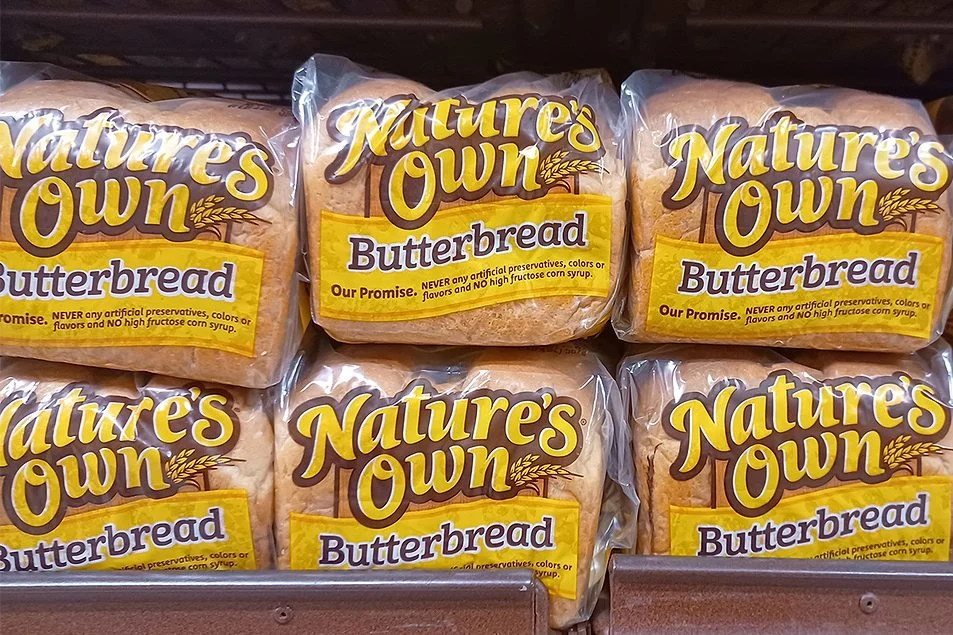
The effects of the consumer and competitive pressures McMullian cited were particularly pronounced in the loaf bread category, including the company’s major Nature’s Own and Wonder brands. In the case of Nature’s Own, mainline product sales were weak, but the brand overall benefited from strength in its Perfectly Crafted sub-brand, with sales rising more than 9%. McMullian described new sourdough and Italian herb varieties as growth drivers.

Advertisement

The relaunch of Nature’s Own, reformulated with fewer ingredients and without flour enrichment, was described by McMullian as a “a key step” in the company’s efforts to revitalize its bread business. The move was announced midway through the second quarter.

“Early feedback from customers and distribution partners has been excellent, particularly around the brand’s simpler ingredients, stronger better-for-you positioning, and Non-GMO Project verified offering at national scale,” McMullian said. “While this initiative remains in its early stages and has not yet meaningfully contributed to results, positive customer feedback and the brand’s growing presence in the better-for-you segment reinforce our confidence in Nature’s Own’s ability to extend its category leadership over time.”

To achieve success for the relaunch, McMullian said Flowers is focused on building awareness, securing displays, improving shelf communication, and supporting the brand across the full path to purchase.”

He said the marketing campaign associated with the launch featuring spokesperson John Cena has begun to “generate stronger consumer engagement and positive social media feedback.”

Advertisement

While citing Nature’s Own as brand with Wonder that was pressured during the quarter, McMullian later said the Nature’s Own brand “performed very well, gaining 30 basis points of dollar share and 20 basis points of unit share.”

“Nature’s Own Perfectly Crafted was the primary driver and continued to build momentum, increasing dollar sales and gaining 20 basis points of unit share in the quarter, helping offset some of the pressure on our overall performance in the category,” McMullian said. “During the July Fourth holiday period, we held unit share and grew dollar share during this important seasonal window.”

By contrast, Dave’s Killer Bread lost unit and dollar share during the quarter. McMullian attributed the performance to planned reductions in marketing spending, changing consumer preferences, intensifying competition and consumer price sensitivity. He said Flowers is working to improve performance through innovation, expanded distribution, and advertising.

During an analyst call Aug. 21, McMullian said marketing dollars redirected from core Dave’s Killer Bread products are shifting back.

Advertisement

“We should see more normalized levels of promo and marketing spend with DKB for the balance of the year,” he said.

Asked about the consumer shifts weighing on DKB, McMullian cited one product in particular.

“We think that it’s the growth of sourdough,” he said. “It’s pretty remarkable, actually. I mean that subsegment of the category has already grown to be a $1.3 billion subcategory, pretty tremendous growth. In DKB, we only have sourdough on the West Coast currently.”

Price sensitivity also factored into the results, he said.

Advertisement

“But I said earlier, I don’t think it’s all price,” he said. “It’s a combination of price for some consumers, but also offering and product attributes that are driving some of that decline.”

Canyon Bakehouse, the company’s gluten-free bread brand, gained both unit and dollar share, and Nature’s Own Keto gained dollar share during the quarter.  In the company’s better-for-you snacking business, McMullian said Simple Mills retail sales increased 13%, driven by strength in cookies and crackers, reinforcing the resilience and appeal of the brand.

epub_Flowers-Foods-Lead_800x800_webp.jpg

The marketing campaign associated with the launch featuring spokesperson John Cena has begun to “generate stronger consumer engagement and positive social media feedback,” said A. Ryals McMullian, chairman and chief executive officer.

| Photo: Flowers Foods, Inc.

“This performance was driven by a combination of distribution expansion, ecommerce performance, and strong velocities on core lines in the food and mass channels,” McMullian said, noting that new product launches have exceeded distribution goals, fueling optimism that the brand’s growth will accelerate in the second half of 2026.

Advertisement

Amid rumors the company’s Tastykake business may be sold, McMullian said the company “generally held share” in the snack cake category, thanks to strong results from the company’s Wonder brand.

“Wonder cake was a clear standout, gaining 60 basis points of unit share while also growing dollar share, underscoring the brand’s strong consumer relevance and the important role our cake business can play within our broader portfolio,” McMullian said. “Wonder’s continued momentum gives us a strong foundation from which to build in this category.”

Speculation about the sale of Tastykake was not addressed either in McMullian’s remarks or during the analyst call.

Asked whether pricing Flowers took earlier in the year was responsible for the downturn in sales, McMullian again said other factors may have been more important.

Advertisement

“Under-penetration in half loafs, sourdough, protein, fiber, some of these more functional attributes that consumers are looking for —that’s where our primary focus is,” he said. “Which is not to say that we’re ignoring the price equation. We are taking a hard look at that, and my initial thesis is there probably are some pockets of the portfolio where that’s a factor. But I don’t think it’s the overall driving force of our performance.”

Flowers trimmed the company’s earnings per share guidance for 2026 to 75¢ to 80¢from its earlier guidance of 80¢ to 90¢ and compared with $1.09 in 2025. The company revised its sales forecast to $5.07 billion to $5.142 billion, down from earlier guidance of $5.163 billion to $5.267 billion, and down 2.2% to 3.5% from 2026.

“Given our first-half performance and the current category environment, we are updating our full-year outlook to reflect a more cautious view for the balance of 2026,” McMullian said. “While near-term conditions remain challenging, we are confident that the actions underway will strengthen our top-line trajectory and better position our portfolio to meet evolving consumer demand.”

“We are taking targeted steps to strengthen competitiveness, sharpen execution, reduce costs, and better align resources with the opportunities that can create the greatest long-term value,” McMullian said. “Consistent with these priorities, we are executing additional cost actions designed to improve efficiency, reduce our cost base, and better align our operating structure with customer needs and current market realities. While difficult, we expect these actions to create a more agile organization and better position Flowers for profitable growth over time.”

Advertisement

Embedded in the outlook is improvements Flowers expects from its Nature’s Own relaunch, said Anthony Scaglione, chief financial officer.

“Additionally, it reflects the actions we are taking to improve performance, including cost controls, reorganization savings, targeted brand investment, innovation launches, and related execution,” Scaglione said.

The cost controls are expected to generate annualized savings over time of $20 million, including $9 million in 2026, but also will result in $6 million in one-time costs, Scaglione said.

Flowers sees longer-term headwinds for 2027, including escalating commodity ingredient and fuel costs, Scaglione said. He said the company is fully hedged for 2026 for its principal ingredients.

Advertisement

“We remain vigilant in implementing actions to help mitigate some of this risk, including expanding our hedging program and improving our price-pack architecture to better align with consumer preferences,” he said. “This work will lead to more stabilized cost inputs from a planning standpoint as well as opportunities to offer our best-selling brands in smaller loaf sizes and ensure our snack packs are appropriately sized for consumer demand.” 

Continue Reading

Business

GR to raise $110m, net profit hits $39m

Published

on

GR to raise $110m, net profit hits $39m

GR Engineering Services boss Tony Patrizi says the company will maintain an open mind regarding potential acquisition opportunities moving forward.

Continue Reading

Business

Paramount-WBD antitrust challenge may hold up more media deals

Published

on

Paramount-WBD antitrust challenge may hold up more media deals
What makes Paramount Skydance's deal for Warner Bros. Discovery so unique

Long-awaited media M&A appeared to be finally getting off the ground in recent months.

But the delay of Paramount Skydance’s $110 billion proposed acquisition of Warner Bros. Discovery has industry insiders now citing a chill on mergers and acquisitions.

Last month, Paramount agreed to put its tie-up with WBD on hold until as late as June 2027, roughly nine months past its planned closing, while an antitrust challenge brought by a group of state attorneys general heads to trial. In recent days, The New York Times reported Paramount and California Attorney General Rob Bonta, who is leading the charge against the tie-up, would begin preliminary settlement talks — which were then swiftly called off, according to the paper.

The deal had already won approval by global regulators, including from the Antitrust Division of the U.S. Department of Justice.

Advertisement

Media executives and onlookers say the threat of increased scrutiny by state regulators, as well as a monthslong process before the dust settles, could put more than just Paramount’s megamerger on ice.

“It feels like the landscape has shifted significantly in the last few weeks around larger deals and combinations,” said Jonathan Miller, a media industry veteran who currently serves as CEO of Integrated Media, which owns a portfolio of media and creator ventures.

“I think we’re going to see a lull in deals,” Miller said.

Return of regulatory uncertainty

What once felt like a regulatory environment welcoming of mergers during President Donald Trump’s second term now feels hampered by the threat that states could take up the regulatory baton.

Advertisement

U.S. companies have inked just over 7,500 deals so far this year through Aug. 20, up from 7,015 during the same period last year, according to data provider Dealogic. Collective deal value is up considerably, too, as more megadeals get across the finish line.

Media companies have been raring for some time to be part of the action as they seek to cut costs and add scale to their businesses amid the bleed of pay TV subscribers.

Besides Paramount’s takeover of WBD — which itself came months after David Ellison’s Skydance completed its acquisition of Paramount — the industry has seen announcements of combinations, spinoffs and partnerships accounting for tens of billions of dollars in media market cap.

The Roku logo is displayed at Roku headquarters on in San Jose, California, Feb. 12, 2026.

Advertisement

Justin Sullivan | Getty Images

Fox Corp. plans to acquire Roku for $22 billion. Comcast, after separating out its portfolio of cable networks into Versant, is now planning to spin off NBCUniversal — which also recently formed a partnership between its Peacock streaming service and YouTube. Netflix has also come to the negotiating table after long vowing to build rather than buy.

The future of Fox and Roku’s marriage was called into question in a recent analyst note, despite the transaction having relatively fewer antitrust concerns than Paramount-WBD. The deal got a lukewarm reception from investors in June but is nonetheless considered a strategic pivot for Fox into streaming distribution.

Bernstein analysts noted what could be a “regulatory timing risk, particularly given the ongoing PSKY-WBD process.”

Advertisement

“While we do not view [the] Roku transaction as creating meaningful horizontal or vertical concentration concerns, current regulatory developments for [the] PSKY-WBD process indicate that transaction timing can be unpredictable even when the underlying antitrust arguments appear relatively weak,” according to the Bernstein analysts’ note.

The Fox-Roku deal is expected to close in the first half of 2027.

A similar dynamic is playing out with broadcast station owners hungry for consolidation, CNBC previously reported. Nexstar Media Group’s $6.2 billion acquisition of Tegna was announced in August 2025 and formally closed in March, but a group of state attorneys general sued to unwind the agreement. A trial is slated for next year.

The Comcast-NBCU calculus

Comcast and NBCUniversal signage on the 10 Universal City Plaza building in Universal City, California, June 29, 2026.

Advertisement

Jill Connelly | Bloomberg | Getty Images

Meanwhile, Comcast’s planned separation of NBCUniversal — expected to be completed next summer — swiftly raised hopes of more M&A to come when the move was announced in June.

Both companies are well positioned and flexible to do deals once they trade as standalone entities. NBCUniversal will include the Universal movie studio, Peacock streaming business, NBC broadcast network and related assets, while Comcast will house the Xfinity-branded services including broadband and mobile.

Executives for both NBCUniversal and Comcast have previously thrown cold water on the idea that the separation was for the purpose of dealmaking, but each company will undoubtedly have more avenues for M&A once the spinoff is complete.

Advertisement

As NBCUniversal prepares for its future as a standalone company, internal discussions have revolved around partnerships, bundles and other similar opportunities with media and tech companies, people familiar with the matter said. M&A has not been a topic of discussion for the near term, although minority-stake opportunities could be on the table, according to two of the people, who spoke on the condition of anonymity to discuss internal strategy.

Michael Angelakis walks to the morning session during the Allen & Co. Media and Technology Conference in Sun Valley, Idaho, July 10, 2025.

David Paul Morris | Bloomberg | Getty Images

Incoming Comcast CEO Michael Angelakis — known in the industry as a dealmaker — said during an investor call he believed Comcast had the scale to compete, but he also didn’t dismiss future M&A. While a much-speculated combination with cable peer Charter Communications doesn’t appear to be in the cards, other opportunities in the broadband and tech industry could be attractive, one of the people said.

Advertisement

Yet executives at both of the soon-to-be separated companies are likely to avoid M&A discussions until Paramount-WBD’s process is resolved, some of the people familiar said, taking that result as an indication of what deals may or may not be doable in a more scrutinous environment.

Comcast and NBCUniversal leadership have become less inclined to consider near-term dealmaking with such potential regulatory pressure, according to those people.

For years, NBCUniversal, like Warner Bros. Discovery, has been frequently floated as a potential takeover target. The two companies have similar portfolios made up of linear TV, film production and streaming.

In the event Paramount’s marriage with WBD gets blocked by the state AGs, NBCU could look less appealing to some would-be suitors.

Advertisement

Partnership potential

A stall on media M&A could spur an uptick in partnerships and bundles, Integrated Media’s Miller said.

NBCUniversal’s Peacock deal with YouTube to effectively ingest content from NBCU into YouTube for Premium subscribers could be a model for one of those options. YouTube has long topped Nielsen’s streaming viewership list, and deals that see more of traditional media’s content embedded into the tech platform could become more commonplace.

Pavlo Gonchar | Lightrocket | Getty Images

Many in the industry have argued that creating bundles between various streaming services is the most consumer-friendly and profit-driving alternative to the current decentralized ecosystem. Peacock and Apple TV offer bundled plans, Disney offers a bundle of its various streaming services — Disney+, ESPN and Hulu — and Fox One and ESPN offer a separate bundle.

Advertisement

NBCUniversal has had conversations with various media players about potential bundles and content partnerships similar to the recently announced YouTube deal, according to one of the people familiar with the matter.

In place of M&A, media companies are also likely to focus more on deals with content creators and for intellectual property to bulk up their platforms. Media companies have been gravitating toward adding this content — along with short-form programming — to their platforms in a bid to attract younger viewers.

The economics of a deal

Paramount Skydance CEO David Ellison, left, and Warner Bros. Discovery President and CEO David Zaslav.

Caroline Brehman | Mike Blake | Reuters

Advertisement

One thing is certain: Ellison’s Paramount won’t be merged with WBD as easily as it planned.

Both Ellison and WBD CEO David Zaslav recently voiced their confidence in the deal, but the delay will be costly for Paramount. Under the terms of its agreement, Paramount will owe WBD shareholders a so-called ticking fee the longer the deal is delayed, beginning Sept. 30. The fee could amount to roughly $650 million in cash value per quarter.

Paramount last week filed to compel the suing states to post a $1.88 billion bond that it says would cover the ticking fee as well as other costs associated with the delay.

Regardless, the economics of the deal look very different if it’s completed in June of next year versus September of this year. The threat of similar holdups for other deals could infiltrate deal discussions and shift financial terms.

Advertisement

“The market-definition fight just got a price tag. A March 2027 trial date turns what had been an abstract antitrust debate into a potential billion-dollar delay cost before the court even rules,” said Mike Proulx, vice president and research director at Forrester. “The deal may still close, but the clean-close scenario is now gone.

“Paramount can still argue that the states are defining the market too narrowly,” Proulx said, “but proving that point just became much more expensive.”

Disclosure: Versant Media Group is the parent company of CNBC.

Choose CNBC as your preferred source on Google and never miss a moment from the most trusted name in business news.
Advertisement
Continue Reading

Business

Faults expose larger cable issue

Published

on

Faults expose larger cable issue

Experts are warning subsea cables have become one of the nation’s largest vulnerabilities.

Continue Reading

Business

FTSE 100 today: Stocks reverse losses as Iran sanctions loom

Published

on


FTSE 100 today: Stocks reverse losses as Iran sanctions loom

Continue Reading

Business

Prenetics Global: Marketing Mastery The Key To Robust Revenue Growth

Published

on

Prenetics Global: Marketing Mastery The Key To Robust Revenue Growth

Prenetics Global: Marketing Mastery The Key To Robust Revenue Growth

Continue Reading

Business

‘Economic D-Day’ on Iran puts trading partners in crosshairs as Tehran threatens retaliation

Published

on

Scott Bessent outlines 5 principles for Trump economic statecraft plan

The Trump administration is preparing to launch what Treasury Secretary Scott Bessent called an “economic D-Day” against Iran, escalating pressure not only on Tehran but also on foreign governments, financial institutions and businesses that continue providing the country with economic lifelines.

The campaign could raise the stakes for companies and countries with financial, shipping and energy ties to Iran, as Tehran threatens to treat participation in the U.S. pressure campaign as an “act of war” and potentially disrupt oil exports across the Persian Gulf.

Advertisement

“At dawn begins an economic D-Day — the single greatest financial offensive ever marshalled against an adversary,” Bessent wrote in a Financial Times op-ed published Sunday ahead of planned remarks Monday.

Bessent said the administration intends to target the remaining commercial and financial links sustaining Iran, including countries and entities involved in purchasing and transporting Iranian petroleum, moving money through exchange houses and free-trade zones, maintaining ship registries and facilitating other financial activity.

US WARNS OF ACTIVE CYBER THREAT TARGETING CRITICAL INFRASTRUCTURE

Treasury Secretary Scott Bessent speaks

Scott Bessent, U.S. Treasury secretary, and Bret Baier, Fox News anchor, speak during an Economic Club of New York (ECNY) event in New York on Tuesday, June 23, 2026. (Krisanne Johnson/Bloomberg via Getty Images / Getty Images)

“Any nation that serves as a financial artery of a withering regime should expect to share in its isolation,” Bessent wrote.

Advertisement

President Donald Trump has separately described the campaign as the “MOST CRUSHING ECONOMIC OPERATION EVER TAKEN AGAINST ANY COUNTRY,” warning that countries allowing their banks, businesses, airports or government entities to provide Iran with an economic “lifeline” could face U.S. economic consequences.

A POWERFUL COUNTRY ON THE OTHER SIDE OF THE WORLD IS QUIETLY SHAPING TRUMP’S LATEST TRADE FIGHT

Trump specifically cited oil smuggling, swap lines, cash transfers, exchange houses, ship registries and front companies among the activities Washington is targeting.

Trump with crypto executives

Trump stands at the lectern alongside a group of tech and crypto executives on Aug. 19, 2026. (Al Drago/The Washington Post/Bloomberg via Getty Images / Getty Images)

Iran, meanwhile, is seeking to raise the potential cost for countries that align with Washington’s campaign.

Advertisement

Mohsen Rezaei, secretary of Iran’s Supreme National Security Council, warned Sunday that Tehran could move against oil exports from the region if the pressure continues.

“If the economic war continues, not a single drop of oil will be exported, neither through the Strait of Hormuz nor from anywhere in the Persian Gulf,” Rezaei wrote on X. “Iran will regard any country’s participation in or support for America’s economic war against the Iranian people as an act of war.”

The dueling warnings are increasing pressure on governments and companies weighing whether to maintain economic ties with Iran and risk consequences from Washington or distance themselves from Tehran amid threats of Iranian retaliation.

Iran flag in rubble and debris

The Iranian flag in rubble and debris in Tehran, Iran. (ATTA KENARE / AFP / Getty Images)

China said Monday that sanctions and pressure would not resolve the dispute and that Beijing would take necessary steps to protect its rights and interests, according to reporting from Reuters. Chinese Foreign Ministry spokesperson Lin Jian also urged the parties to act with restraint.

Advertisement

Pakistan, meanwhile, has continued its efforts to mediate between Washington and Tehran. Pakistani army chief Asim Munir arrived in Tehran Monday for talks that Pakistan’s military said were part of efforts to promote regional peace and stability.

Bessent has not yet publicly detailed the full legal and financial measures that will make up the new campaign. His op-ed said the administration is prepared to use “every agency, every authority” to isolate Iran economically.

CLICK HERE TO GET FOX BUSINESS ON THE GO

FOX Business has reached out to the Treasury Department for additional details on the scope of the planned measures. Bessent is expected to provide additional details on the administration’s Iran strategy later Monday.

Advertisement
Continue Reading

Business

‘Half my business will be gone’ – firms in Canada and US fear trade war

Published

on

Cindy Baldassi is in the foreground wearing sunglasses and a dark hoody and navy blue dress. She is looking at the camera and behind her is a beautiful blue lake and towering mountain peaks with snow on top of them.

While the tariffs could mean changes for the Paloma Clothing company, other American companies are facing the same battle they have faced since Trump returned to office and began imposing his levies.

Bill Easton, owner of Terre Rouge Wines in Plymouth, California, has been unable to ship his wine north to Canada for the past year and a half due to a boycott of US alcohol.

He is currently paying $2,400 a month to store that wine in a warehouse in the hope that he will one day be able to ship it to the Canadian markets he sells to.

“The wine has just gotten better in the warehouse, but I can’t expect my customer in Canada to pay that extra cost that I’ve assumed over the last year and a half as part of the price, if I was able to sell it tomorrow,” Easton told the BBC.

Advertisement

And then there are the American businesses impacted by proximity to the Canadian border.

The number of Canadian customers travelling across the border to shop at Heather Seevers’ craft shop, Northwest Yarns and Mercantile in Bellingham, Washington, has gone down some 20% since the tariff war began over a year ago. What has further irked Canadians has been Trump musing on Canada becoming a 51st US state.

The shop sits 25 minutes from the US-Canada border and since the “war” ensued Seevers said her business received emails from Canadian customers saying they could not patronise her business “due to anti-Canadian rhetoric”.

“We completely understood that,” she said.

Advertisement

But the combined impact of fewer customers and higher prices has left the shop asking for help from the community recently via a fundraising initiative to stay afloat.

And then, over the weekend, when the new tariffs struck, Seevers saw another hurdle appear.

“It’s going to get worse before it gets better,” she said. “It’s going to take years and years and years to get a relationship back with Canada, and I think these new tariffs are digging us deeper into a hole.”

Additional reporting from Nadine Yousif

Advertisement
Continue Reading

Business

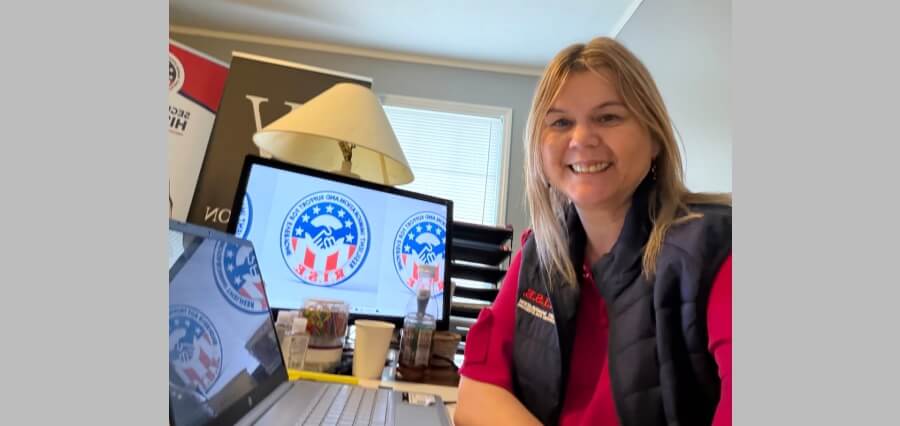
Laura Ward’s Vision for R.I.S.E.: Building an Immigration Organization Designed to Outlast Its Founder

Published

on

Laura Ward's Vision for R.I.S.E.: Building an Immigration Organization Designed to Outlast Its Founder

Laura Ward does not simply want R.I.S.E. Immigration Services to become bigger. She wants it to become better. That distinction sits at the center of how Ward thinks about growth, leadership, and the organization she is building. Her ambitions extend beyond increasing the volume of work or expanding the reach of a founder-led business. She is focused on a harder question: How can an organization grow while preserving the standards, knowledge, culture, and sense of responsibility that gave it purpose in the first place?

For Ward, the answer begins with infrastructure. Stronger operations, better technology, employee development, educational resources, consistent processes, clearer communication, and dependable client experiences are not secondary administrative concerns. They are part of the service itself. Her view is that an organization serving immigrant families cannot rely on good intentions alone. It needs systems capable of turning those intentions into consistent action.

That philosophy reflects Ward’s professional background as well as her ambitions for R.I.S.E. Before starting the project, she had more than 15 years of service as a social worker, an experience that her approved biography connects to a longstanding concern for the well-being of people in Latin America and the United States. Her leadership philosophy now brings that service orientation into an organizational context, where compassion must operate alongside accuracy, accountability, and professional discipline.

Excellence and Compassion as Operating Principles

Ward aims to implement a unique culture at R.I.S.E. combining excellence with compassion. Ward asserts that, in the area of immigration, both are crucial.

Advertisement

It is particularly important in immigration as clients are dealing with complex processes involving paperwork, deadlines, courts, systems, and languages. At the same time, the issues involved in immigration are often of a personal nature: family issues, job-related, emotional, and financial.

Compassion is relevant to understanding clients. Excellence is relevant to carrying out the agencies’ work. Ward believes that compassion cannot replace excellence and vice versa. In other words, technical process knowledge without compassion can leave people even more traumatized. On the other hand, compassion without professionalism may create problems as clients rely on the agency to take care of things.

Ward thus looks for certain qualities when hiring staff – not just those mentioned in CVs. She values accountability, discipline, communication, compassion, and willingness to learn which all affect how the agency works.

Exactness matters in a situation when processes require it. Communication matters in a situation when clients need to know what needs to be done. Compassion determines whether people are treated with patience. However, accountability and discipline are needed to ensure everything that should be done is carried out. Finally, willingness to learn becomes important because immigration issue processes and technologies are constantly developing.

Advertisement

This is the reason why Ward cares about teaching employees instead of just filling positions. In the long term, she wants the employees to evolve into qualified professionals.

Building an Organization That Does Not Depend on One Person

Founder dependence is a familiar challenge in entrepreneurship. In an organization’s early development, the founder can become the keeper of its relationships, standards, knowledge, decisions, and problem-solving habits. That concentration may work at a smaller scale, but it can also become a structural weakness as complexity increases.

Ward’s three-to-five-year vision for R.I.S.E. addresses that problem directly. She wants to strengthen operations, develop the team, improve technology and internal systems, expand educational reach, and create greater consistency in the client experience. Her interest in growth is therefore closely connected to organizational capacity.

Technology has a practical role in that vision. Ward sees appropriate systems as tools for improving communication, tracking responsibilities, reducing administrative mistakes, preserving institutional knowledge, and giving clients greater transparency. Her focus is not on technology for its own sake. It is on what stronger systems can make possible inside an organization where details and communication matter.

Advertisement

This is where Ward’s preference for “better” over merely “bigger” becomes most consequential. More activity creates more complexity. Serving more people or developing a larger organization would also create more responsibilities to coordinate, knowledge to preserve, employees to prepare, and standards to maintain. Sustainable growth therefore requires stronger foundations behind the visible work.

Ward’s own description of leadership reinforces that incremental approach. She views successful organizations as the product of thousands of decisions: improving a process, training someone, solving a problem, learning from a mistake, and repeating the work. Institution-building, in that sense, is less about a single expansion milestone than about steadily making quality reproducible.

Professional Development From the Founder Outward

Laura Ward’s recent accreditation by the U.S. Department of Justice adds another dimension to that emphasis on development. In July 2026, she was announced as a DOJ Accredited Representative. According to the accreditation announcement, she is authorized through the Department of Justice’s Executive Office for Immigration Review to provide qualified immigration legal services through a recognized organization.

The credential is significant within Ward’s professional development, but it also fits a larger pattern in how she describes R.I.S.E. She expects employees to remain teachable, develop competence, understand their responsibilities and limitations, and continue educating themselves. Her own continued professional development applies that same expectation to the founder.

Advertisement

That alignment matters for the culture Ward wants to establish. Leadership development is difficult to make credible if continuous learning is expected only from employees. Ward’s approach instead suggests that stronger organizations are built as people throughout them expand their capabilities, including the person at the top.

Her background in social work also helps explain why competence and service are so closely linked in her thinking. Ward advises people entering service-oriented careers to listen first, develop competence, respect the dignity of those they serve, and recognize that good intentions are insufficient when others depend on them. Those principles now inform her approach to organizational leadership.

Education as Institutional Capacity

Education is another component of Ward’s vision that reaches beyond individual client interactions. She wants people to become informed participants in their immigration journeys, with a clearer understanding of procedures, documentation requirements, deadlines, responsibilities, and when qualified legal advice may be necessary.

Her broader ambition includes community education, digital content, social media, and accessible educational resources, with particular attention to making information understandable for Spanish-speaking communities and people who may not know where to begin. These are presented as areas of continued development rather than a catalogue of completed programs.

Advertisement

The distinction is important because Ward sees education as a form of empowerment rather than simply information distribution. Her goal is for people to understand enough to ask better questions, identify potential problems earlier, and advocate more effectively for themselves and their families.

Education also serves an institutional purpose. Knowledge captured in useful resources can travel beyond a single conversation. Knowledge transferred to employees can become organizational capability. Employees who gain knowledge, judgment, confidence, and responsibility can eventually become leaders. In each case, value becomes less dependent on one person’s direct involvement.

That is the deeper thread connecting Ward’s interest in technology, processes, education, client communication, and employee development. Each can help turn individual expertise into organizational capacity.

A Definition of Legacy Built Around Continuity

Ward’s definition of success has evolved beyond conventional measures of organizational growth. She wants R.I.S.E. to be financially strong, operationally effective, respected, and capable of growing, but she does not consider numbers sufficient. Success, as she describes it, also means creating an organization people trust, developing capable professionals and leaders, establishing systems that function consistently, and producing educational resources that remain useful beyond the walls of an office.

Advertisement

Her view of leadership is particularly revealing: one of its greatest measures is whether an organization becomes stronger because someone led it, rather than permanently dependent on that person.

That idea brings the bigger-versus-better distinction full circle. Becoming bigger can be measured through scale. Becoming better requires examining whether an organization is more capable, whether employees are developing, whether knowledge is being preserved, whether clients receive consistent experiences, whether communication is improving, and whether the institution can uphold its purpose as responsibilities increase.

Ward ultimately describes herself as someone who wants to build. Her stated legacy includes organizations, opportunities, leaders, educational resources, and systems that continue creating value for other people.

For R.I.S.E. Immigration Services, that makes the long-term ambition larger than the founder without diminishing the founder’s importance. Ward’s role is to establish the standards, develop the people, strengthen the infrastructure, and create the conditions under which the organization can eventually carry its knowledge and purpose forward.

Advertisement

The clearest measure of that work may come much later. If R.I.S.E. can continue educating communities, creating opportunities, developing leaders, employing people, and serving immigrant families without requiring Laura Ward to remain at the center of every decision, it will have achieved the kind of growth she considers most meaningful. It will not simply have become bigger. It will have become strong enough to endure.

Continue Reading

Trending

Copyright © 2025