
Crypto World
Arthur Hayes Dumped HYPE and NEAR: Shill, Pump, Dump, Repeat

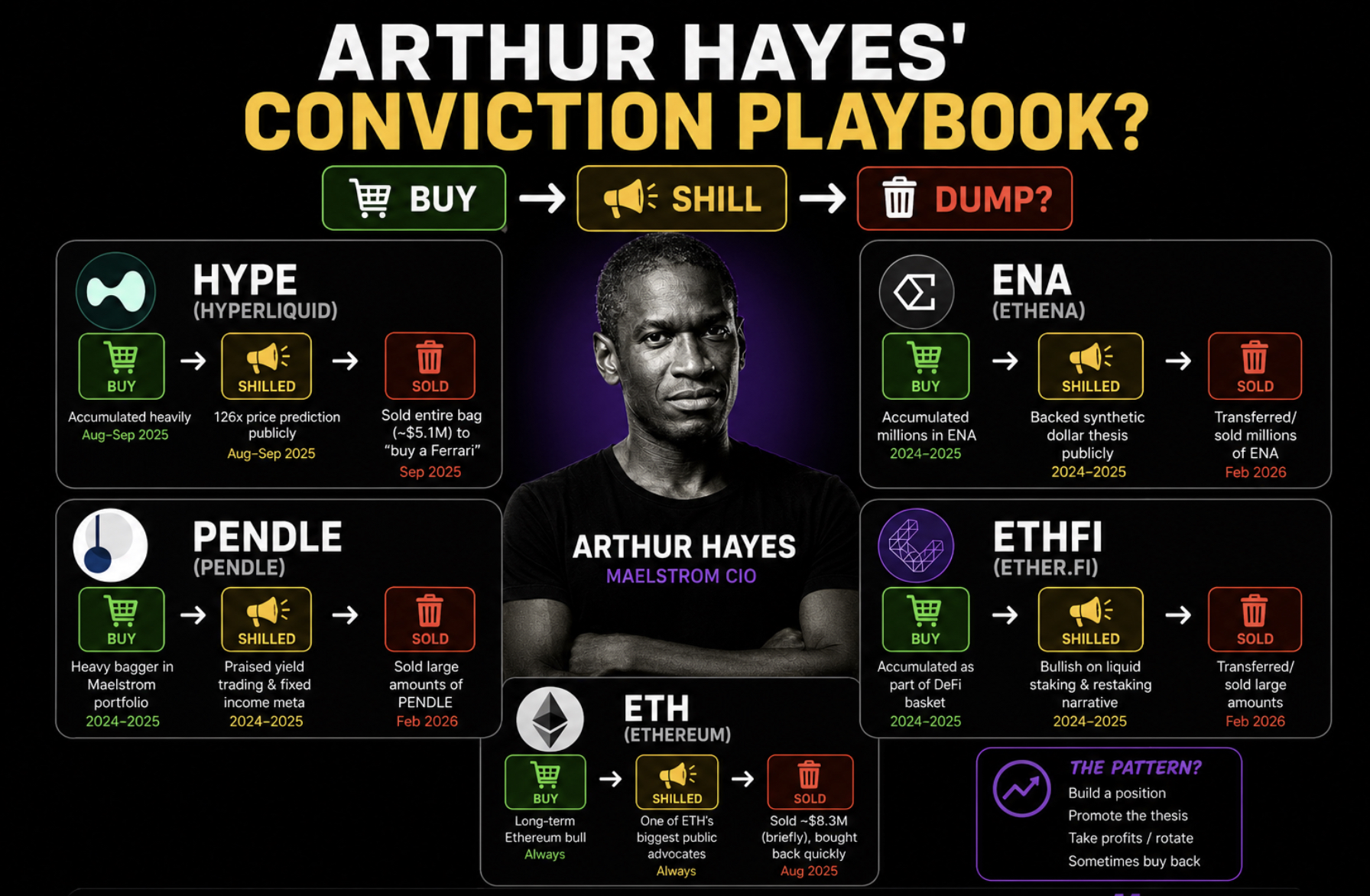
Arthur Hayes has done it again. Just now, the BitMEX co-founder and Maelstrom CIO revealed he had sold his entire HYPE and NEAR positions. Why? Rising energy prices tied to tensions in Iran, looming AI IPOs that could drain market liquidity, and a belief that markets may peak sometime between now and September. His solution is to take profits and rotate into Bitcoin.
Fair enough, but the problem is that just four days earlier, Hayes was singing a different song. Just days ago, he posted “Meow — $HYPE to $150” alongside a cat meme while continuing to promote what he called his “holy trinity” of altcoins: HYPE, ZEC, and NEAR. He even made a $100,000 charity bet with Kyle Samani that Hyperliquid would outperform every top-10 cryptocurrency by year-end.
Then came the exit. There’s nothing wrong with taking profits. The issue is that this pattern has become familiar.
Back in September 2025, Hayes was also aggressively bullish on Hyperliquid, floating a potential 126x rally and repeatedly talking up the token before later selling millions of dollars worth. At the time, he famously admitted some of the proceeds went toward buying a Ferrari.
Eventually, he bought back in, renewed his bullish outlook, and resumed promoting the trade. Fast forward to 2026, and it’s the same script all over again, fresh price targets, fresh conviction, fresh narratives, and then another exit.
Discover: The best crypto to diversify your portfolio with
Arthur Hayes vs. the Community
The community is on point. Arthur Hayes would buy a token that’s already moving, promote increasingly aggressive targets, then sell into the resulting momentum. Others questioned how someone could spend days discussing a $150 target only to liquidate an entire position almost immediately afterward.
Some Hyperliquid supporters defended Hayes’ right to trade however he wants. They’re correct. He’s under no obligation to hold forever, and nobody is forced to copy his trades.
Still, Hayes isn’t just another crypto influencer. He’s one of the industry’s most recognizable figures, a pioneer of crypto derivatives, and someone whose market commentary still carries weight. When he repeatedly builds bullish narratives around a token and then exits shortly afterward, people are naturally going to question him.
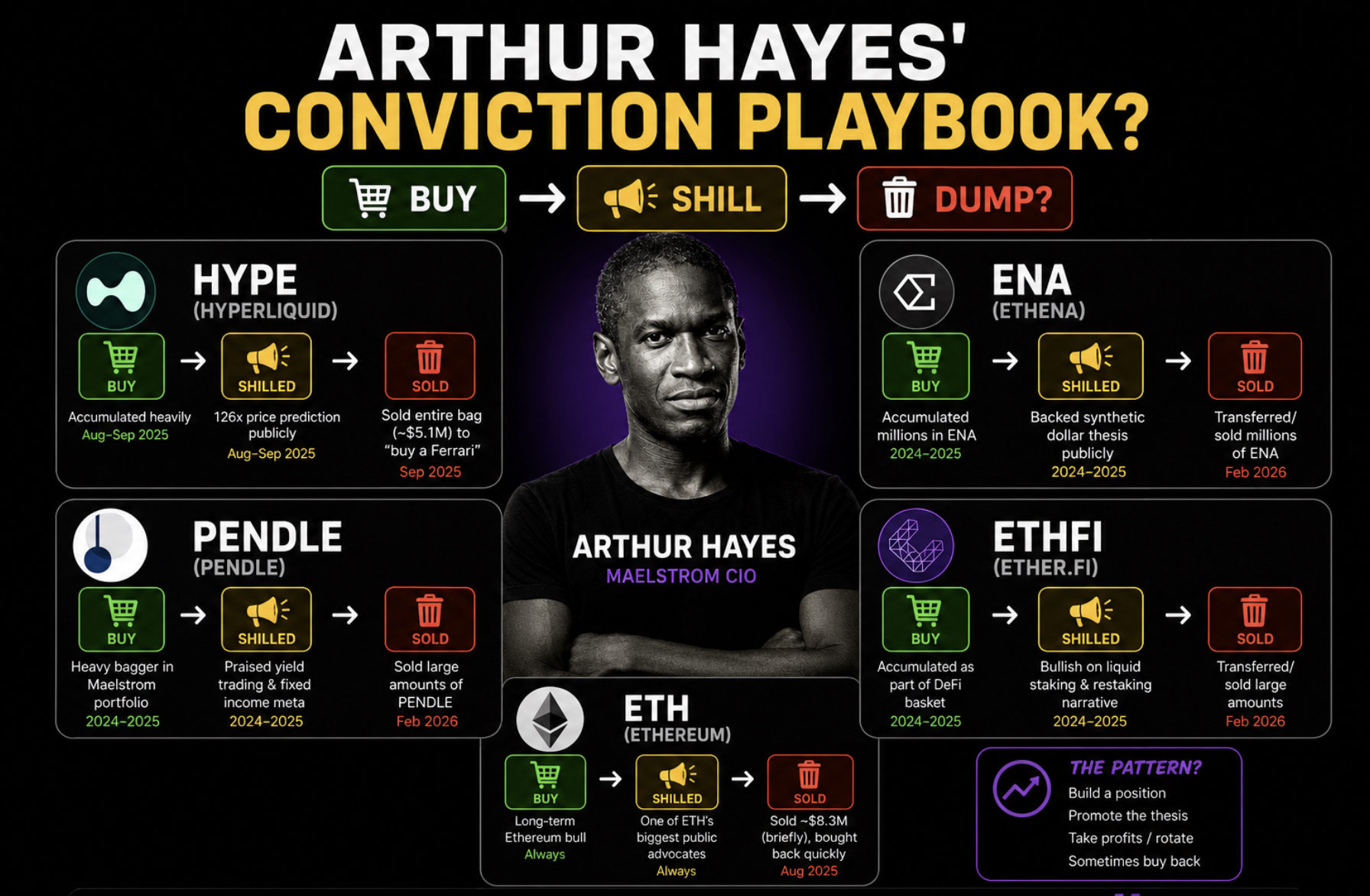
The frustration isn’t really about just this one trade. It’s becoming a pattern we’ve seen before across ETH, PEPE, ENA, HYPE, and other positions. Hayes’ wallets are public, so everyone can peek at them. But transparency alone doesn’t eliminate criticism when the same sh*t keeps repeating.
Hayes is expected to publish a longer essay explaining the decision, and perhaps his macro concerns will prove correct. Markets can change quickly, and prudent risk management is part of the game.
In all honesty, crypto doesn’t lack for bullish narratives. What it lacks is accountability when those narratives suddenly disappear the moment profits are on the table.
Discover: The best pre-launch token sales
The post Arthur Hayes Dumped HYPE and NEAR: Shill, Pump, Dump, Repeat appeared first on Cryptonews.

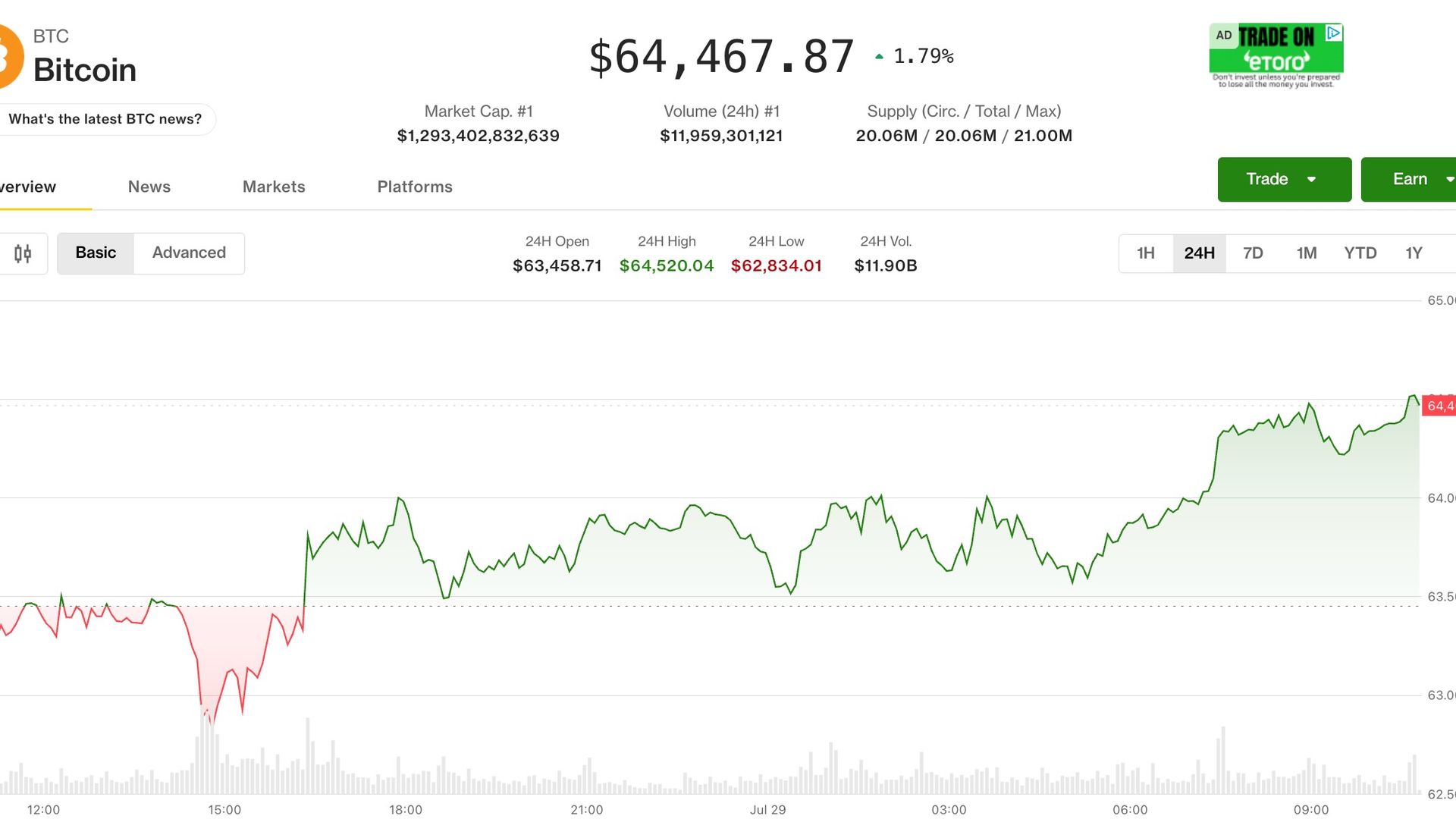
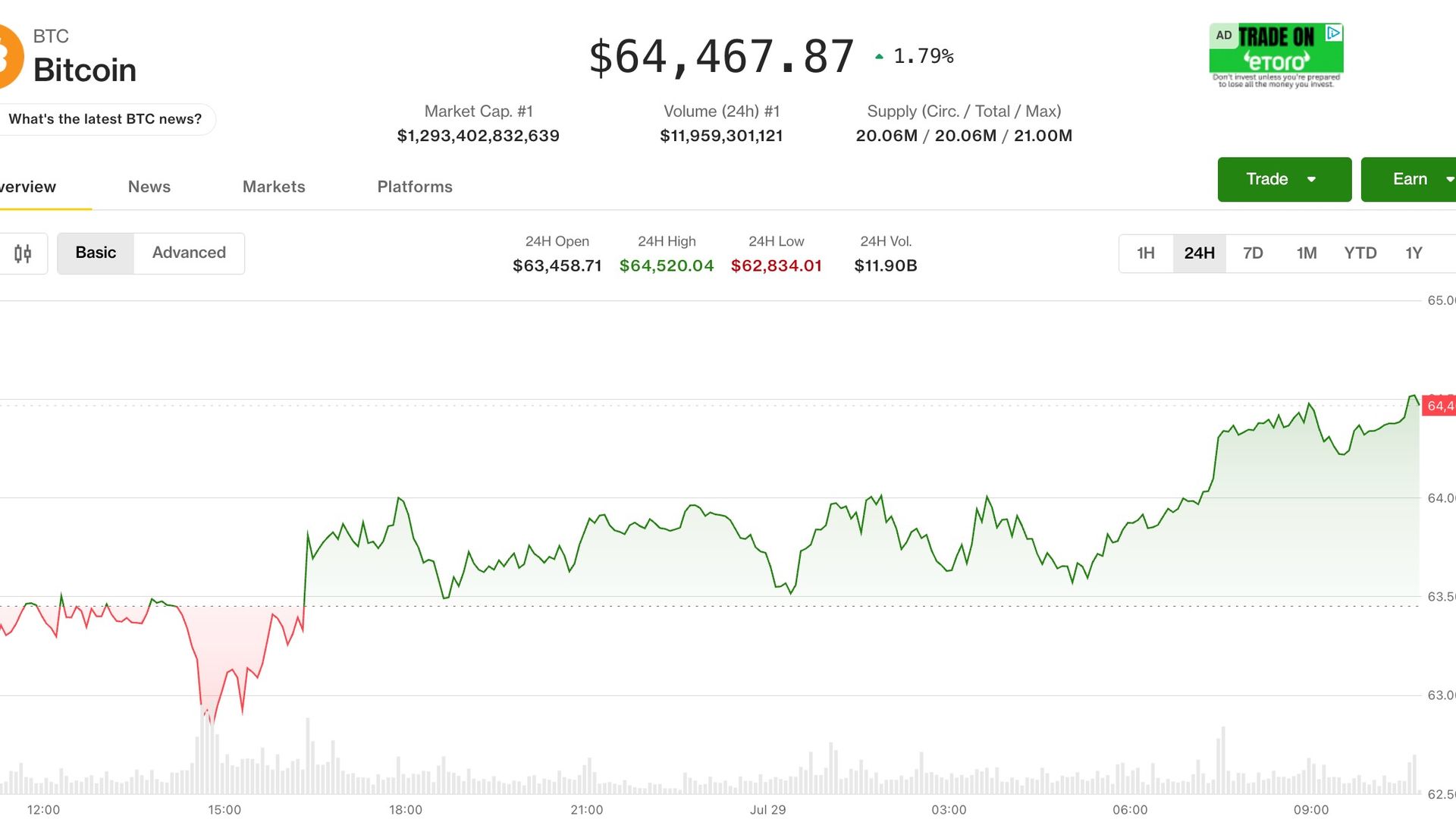
The crypto market was mixed before the Federal Reserve’s interest-rate decision later Wednesday. The CoinDesk 20 Index has added 0.41% since midnight UTC, with 10 members advancing and 10 declining.
Bitcoin , the largest cryptocurrency, added 0.75% to claw back some of Tuesday’s losses after a volatile 48 hours that saw it spike to $66,700 last week before crashing to $62,400 in the wake of the rout in South Korean stocks.
Inflation running at 4.1% makes the case for the Fed to raise the fed funds target rate for the first time in three years. Balanced against that, a pause in Iran-U.S. hostilities has taken some of the heat out of oil prices and slightly trimmed the odds of an increase.
Ether (ETH) is down 0.13% on the day. S&P 500 and Nasdaq 100 index futures are both positive, while gold holds above $4,000 and silver gained 1.40%, suggesting markets are hedging rather than committing ahead of the announcement.
Derivatives positioning
- Steady positioning ahead of Fed meeting: The crypto taker long-short volume ratio is almost in a perfect balance ahead of the Fed meeting. Open interest (OI) has held steady near $113 billion over the past 24 hours while volume increased by 10% to $205 billion. Taken together, the numbers point to steady positioning but slightly higher churn.
- Spot gains yet to lift futures participation: Both BTC and ETH’s spot prices have risen more than 1% in 24 hours, but the moves have yet to translate into increased participation in futures. BTC’s OI remains steady near 750K BTC. ETH’s dropped for a fourth straight day to 14.14 million ETH.
- UNI is an exception: Most of the top-20 tokens have seen OI hold steady or fall over 24 hours. UNI is an exception, with OI up slightly to 68.53 million tokens, the most since July 13. This validates the 5% upswing in the token’s price in the wake of BlackRock’s decision to bring its tokenized Treasury fund to the decentralized exchange.
- Mixed signals from OI-adjusted CVD: The 24-hour OI-adjusted CVD paints a mixed picture. It’s positive for tokens such as ADA, TRX, XRP, CC, UNI and ETH, a sign of more and more traders going long at market orders rather than passive limit orders. Other coins display the opposite dynamic.
- Implied volatility stays near recent lows: Bitcoin and ether’s 30-day implied volatility indexes remain near recent lows, a sign that traders do not expect any near-term jitters. It also contradicts the unease in the analyst community over the fact that traders still assign a 35% probability of the Fed raising rates on Wednesday. This is unusual as markets typically reach a consensus on what the Fed will do before the decision.
- Puts dominate BTC options volume: In Deribit-listed options, BTC puts at strikes $62,000, $60,000 and $54,000 dominate the 24-hour volume rankings. A put option offers insurance against price drops in the underlying asset. In ETH’s case, calls are at the top of the list.
Token talk
- XRP led altcoin gains on Wednesday, rising 1.72% to $1.086, with rising 1.48%. Both are continuing to recover from their July lows as the major cryptocurrencies consolidate.
- Jupiter (JUP) was the standout 24-hour performer among DeFi coins, rising 5.79% as trading volume ticked up, extending a recovery that has now seen it rise in three of the past four days.
- FET continued its retreat, falling 4.60% since midnight and 6.78% over 24 hours. The AI token is now down nearly 14% over the past week as the sector’s early-July momentum continues to unwind.
- shed 5.14%, giving back the bulk of last week’s speculative gains as retail enthusiasm fades.
- Monero (XMR) bucked the trend with a 1.82% gain to $347, quietly extending a run of outperformance from the privacy coin sector that has gone largely unnoticed amid the broader market turbulence.

The Core Team behind the popular project revealed more details about how its platform can support future ecosystem tokens.
They explained that, unlike other token launches in which projects typically keep the funds raised, their model sends the committed Pi coins directly into a liquidity pool paired with the newly issued ecosystem asset.
The idea is to give each new coin an active liquidity foundation from the beginning while tying tokens to real application functions such as access, payments, rewards, governance, and user engagement.
Pi’s Approach
The new update published by the team hours ago comes just a few days after they confirmed they had completed the token distribution of the Testnet coin called SLICE. With its launch, they created a pool containing the newly-created coin as well as Test-Pi. Users, known as Pioneers within the broader Pi Network ecosystem, can trade through Pi’s decentralized order book.
However, swaps can also be completed automatically through an automated market maker. The mechanism adjusts the token price depending on the amount of SLICE and Test-Pi remaining in the pool.
Upon exchanging Test-Pi for SLICE, the former enters the pool while the latter leaves it. As SLICE becomes scarcer relative to Test-Pi, its displayed price increases and vice versa when users sell SLICE back to the pool.
The system uses a constant-product formula designed to keep the relationship between the two reserves balanced during each swap.
Over 240,000 Joined the Test
The participation period for the new token ran from June 11 until June 28 (Pi2Day). More than 240,000 Pioneers committed almost 16 million Test-Pi to acquire a supply of 10 million SLICE test tokens.
The difference with the first Pi Launchpad trial is that SLICE is now connected to a working third-party game called Slice of Pi. This allowed the network to test engagement-based bonuses through a functioning application rather than a dummy project.
The team explained that this option better reflects the intended purpose of future ecosystem tokens as it supports product utility, attracts new users, and encourages activity instead of primarily raising capital.
Users can select how much Test-Pi they want to commit, and the Launchpad automatically does the rest, calculating fair-access requirements and any engagement bonuses. Participants can review their allocations, launch prices, effective purchase prices, and the SLICE liquidity pool now that the distribution phase has been completed.
The team emphasized once again that SLICE will remain a Testnet-only asset with no real value and will never migrate to Mainnet.
The post Pi Network Explains New Launchpad Model After Big Token Distribution appeared first on CryptoPotato.
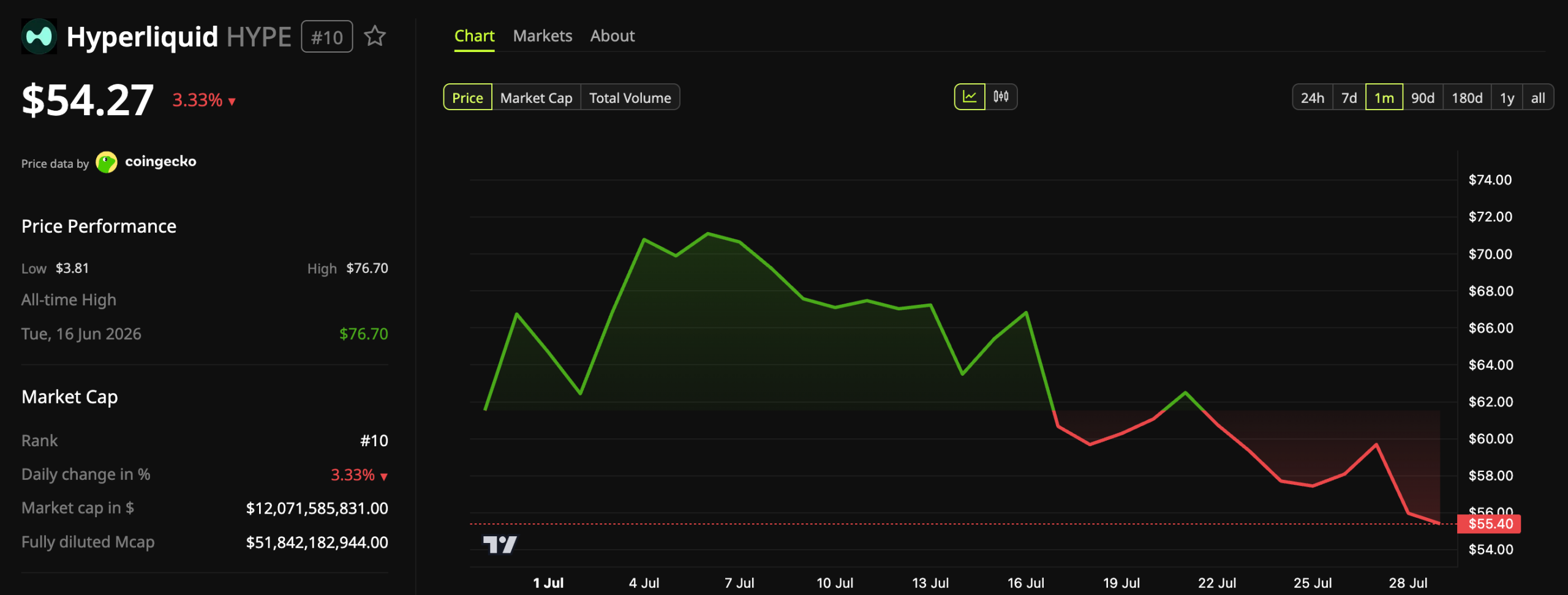
Grayscale Research says Hyperliquid (HYPE) may be undervalued against fintech equities.
The asset manager argues that the token can be valued based on cash flows, like a stock, and, on that basis, it looks cheap.
Grayscale Builds Its Case on a $1 Billion Hyperliquid Earnings Assumption
In a note published Tuesday, Head of Research Zach Pandl valued HYPE using an “earnings per token” method. The approach adapts the earnings-per-share metric used for stocks, since Hyperliquid issues no shares.
Grayscale assumes Hyperliquid will earn roughly $1 billion in 2027, up about 20% from 2025. The firm expects recovering crypto trading volumes and stablecoin reserve income under Hyperliquid’s Aligned Quote Asset framework to drive the growth.
Pandl estimates the circulating supply will reach 270 million to 310 million tokens by the end of 2027. That produces projected earnings of $3.25 to $3.75 per token. At $54, the resulting forward multiple sits at roughly 15x to 18x.
“Despite the gains in Hyperliquid’s HYPE token this year, it still looks cheap compared to fintech equities,” the note read.
Pandl flagged weaker network revenue growth and faster token supply growth as the main risks to the forecast.
Follow us on X to get the latest news as it happens
HYPE Token Price Slides 29% From June Peak
The valuation call arrives during a difficult stretch for the token. HYPE has dropped over 13% in the past month, diverging from large-cap assets that held gains.
At press time, the token traded near $54, roughly 29% from its all-time high set in mid-June.

Institutional unstaking and fund outflows have pressured the token through July. Multicoin Capital and Paradigm unstaked around $291 million in HYPE last week.
At the same time, Spot HYPE funds posted $8.6 million in outflows last week, their second straight weekly loss, while assets fell 18% from a July 10 peak.
While Grayscale maintains that HYPE remains undervalued relative to fintech peers, the token continues to face near-term headwinds.
Slowing institutional demand and large-scale unstaking could weigh on sentiment, suggesting Hyperliquid’s long-term valuation thesis will depend on whether the protocol can deliver the revenue growth underpinning Grayscale’s forecasts.
Subscribe to our YouTube channel to watch leaders and journalists provide expert insights
The post Grayscale Says HYPE Still Looks Cheap Against Fintech Stocks appeared first on BeInCrypto.

Bitcoin price is trading at $64,500, down 0.2% over the past 24 hours, with a bad prediction from Peter Schiff. The headline number masks a more uncomfortable story developing underneath.
Peter Schiff has sharpened his critique of Michael Saylor’s Strategy, and this time, he is leaning on the company’s own data instead of ideology.
Schiff posted on X, highlighting a sharp erosion in Strategy’s Bitcoin Yield, the metric Saylor uses to justify holding MSTR over spot BTC. That yield has fallen from 13.3% year to date on May 25 to 4.5% after Strategy’s latest capital raise. That represents roughly a 66% decline in under two months.
Schiff argued that if the trend continues, Strategy’s 2026 Bitcoin Yield could turn negative. In his view, that would weaken the case for owning MSTR instead of Bitcoin. He also pointed to Strategy’s sale of 3,588 BTC for about $216 million to fund preferred dividend obligations, marking its first meaningful Bitcoin sale in years.
Meanwhile, Bitcoin remains well below its all-time high, leaving sentiment sensitive to fresh narratives. As a result, the latest exchange between Schiff and Saylor arrives at a critical moment. Whether investors embrace Strategy’s long-term approach or Schiff’s criticism could influence the debate if market volatility picks up.
Discover: The Best Token Presales
Bitcoin Price Prediction: Hold $64K, Or Is $50,000 the Real Next Stop?
At $65,000, Bitcoin is holding just above a zone attracting increasing technical attention. The current level remains a provisional buffer instead of a confirmed floor. Recent BTC price analysis has identified this range as a key decision point. Direction will likely depend on macro catalysts and ETF flows rather than chart patterns alone.
The key levels remain well defined. The $58,000 area is the first major support below current prices. Schiff has argued that the level will not hold, citing potential selling pressure if Strategy needs to raise cash. He then points to $50,000, followed by $20,000, with a long-term target near $10,000 under a worst-case scenario. Those targets reflect his view that Strategy could eventually liquidate up to $3.25 billion in Bitcoin under its new monetization framework.

Prediction markets continue to price Bitcoin downside risk more aggressively than upside. Polymarket currently assigns a 62% chance of Bitcoin falling below $50,000 this year. Meanwhile, the probability of dropping below $40,000 stands at 30%. Those odds stop short of signaling panic, but they also suggest investors are not becoming complacent.
The bullish scenario assumes ETF inflows recover while Strategy keeps its Bitcoin holdings intact. That could help Bitcoin reclaim $70,000 and eventually retest previous highs. TD Cowen’s $100,000 target by the end of 2026 remains part of that long-term narrative.
The base case sees Bitcoin trading between $60,000 and $68,000 as markets digest the Strategy yield debate. Meanwhile, a confirmed break below $58,000 with accelerating ETF outflows would strengthen the bearish case. A large-scale Bitcoin sale by Strategy would likely add pressure and challenge the bullish outlook.
Trade Bitcoin on Bybit and Get a Chance to Win Our $1,000 USDT Airdrop
Bitcoin Hyper Targets Early Mover Upside as Bitcoin Tests Key Levels
When spot BTC corrects, and MSTR’s structural thesis gets stress-tested simultaneously, some capital starts looking for asymmetric upside elsewhere in the Bitcoin ecosystem, specifically, infrastructure plays that benefit from BTC’s long-term network effect regardless of near-term price volatility. That’s the rotation trade worth examining here.
Bitcoin Hyper ($HYPER) is positioned squarely in that infrastructure category. It’s the first Bitcoin Layer 2 integrating the Solana Virtual Machine, delivering sub-second finality and low-cost smart contract execution on top of Bitcoin’s security layer, without sacrificing the trust model that makes BTC compelling in the first place. Fast execution, programmability, and Bitcoin-native settlement: that’s a stack the existing L2 landscape hasn’t delivered in this combination.
The presale numbers are specific: $0.0136838 per token, with $33 million raised to date. Staking is live with a high APY for early participants. The project also runs a Decentralized Canonical Bridge for BTC transfers and targets performance metrics that benchmark against Solana’s own throughput.
Traders looking to size up should research Bitcoin Hyper against the technical whitepaper before making any allocation decision.
Discover: The Best Crypto to Diversify Your Portfolio
The post Bitcoin Price Prediction: Peter Schiff Fuds Michael Saylor’s Strategy Yield’s Model appeared first on Cryptonews.
Crypto World
Binance offers gold and silver options after commodity futures pull in billions in daily volume


Options are derivative contracts used by traders to hedge price volatility risks. A call option offers asymmetric upside exposure in the underlying asset for a small upfront payment, much like a lottery ticket. A put option represents an insurance against price drops.
Exchanges typically follow a playbook when offering derivatives as a product. They start with futures to build a deep, liquid order book and tight spreads, and only once that core market is humming do they layer on options as a second wave of more complex, higher‑margin products.
A Binance representative shared volume figures for gold and silver perpetual futures that underscore their popularity. Gold perpetuals, according to the representative, have hit a peak daily volume of $7.77 billion, while silver perpetuals reached $7.27 billion. These peaks represented roughly 3–8% of COMEX gold volume and 9–20% of COMEX silver volume at that time.
“The volume growth suggests that when access to traditional market exposure becomes simpler and more integrated, user participation can ramp up quickly,” the representative said. “Liquidity can become relevant quickly.”
The new options are European-style and settled in USDT. The contracts reference a weighted average of prices drawn from multiple independent third-party data vendors that report the traditional gold and silver markets. This approach produces a robust, market-representative benchmark that does not rely on any single venue or token, according to Binance.
Crypto World
Clarity Act Delayed Again As US Senate Prioritizes Russian Sanctions, Other Legislative Business

The CLARITY Act is facing another delay as US lawmakers prioritize federal nominations, a Russian sanctions package, and other legislative business ahead of its summer recess.
The development makes it increasingly likely the bill will not be deliberated upon during the ongoing session and will be discussed during the autumn session.
Clarity Act Faces Another Delay
The United States Senate has put the CLARITY Act on the back burner as it debates federal nominations, new sanctions against Russia, and other legislative business. According to a CoinDesk report, the bill is unlikely to be taken up by the Senate before its summer recess on August 8. Journalist Eleanor Terrett revealed that the Senate leadership is discussing deliberations beyond the planned recess if they can garner enough votes to invoke cloture and press ahead with the bill. Additionally, some senators also want a vote on the SAVE America Act and Russia-Iran sanctions.
Terrett stated on X,
“A must-read on the Senate math behind the Clarity Act without the hype. I reported this morning that Senate leadership has discussed potentially keeping members in Washington beyond the scheduled recess if they have the votes to invoke cloture on the motion to proceed.”
Democratic lawmakers remain hopeful of a compromise banning senior government officials, including President Donald Trump, from investing in crypto projects.
A Procedural Delay
However, the delay is not due to Republicans and Democrats failing to agree upon the way forward. Senate Majority Leader John Thune has prioritized discussion on the Russian sanctions package, and Senate rules outline that only one contested bill can be considered at a time. Additional Senate business has also reduced floor time. As a result, lawmakers have found it difficult to discuss the CLARITY Act during the ongoing session.
Meanwhile, SEC Chair Paul Atkins reiterated his belief that the Senate will pass the CLARITY Act. Atkins added that the SEC is ready to create rules to implement the bill once it becomes law. He added that it can also address market issues if Congress delays the bill. However, the SEC Chair stressed the importance of regulatory clarity to “future-proof” crypto in the US.
President Trump Can Reconvene Senate
According to legal analyst MetaLawman, Article II, Section 3 grants President Trump the authority to reconvene the Senate during the August recess, allowing lawmakers to vote on the CLARITY Act and other delayed bills.
“President Trump Has Legal Authority to CANCEL THE SENATE RECESS. The President has the Constitutional authority to call an “extraordinary session” of the Senate to vote on the SAVE AMERICA ACT and the CLARITY ACT.”
However, as things stand, a final Senate vote on the CLARITY Act looks unlikely before next week.
How The Delay Impacts Crypto
The CLARITY Act is a crucial piece of legislation for the cryptocurrency industry. If it fails to advance during the ongoing session, it could face a substantial delay as lawmakers focus on other priorities in upcoming sessions, including election-related legislation. The delay effectively leaves the industry in limbo, with only the GENIUS Act offering some regulatory clarity. For now, the industry will rely on SEC and CFTC oversight while waiting for the bill to pass.
Disclaimer: This article is provided for informational purposes only. It is not offered or intended to be used as legal, tax, investment, financial, or other advice.
The dollar’s next move hinges on tonight’s Fed decision, and this time markets genuinely don’t know what to expect. While economists still lean toward a hold—with CME FedWatch odds sitting near 68.5% for no change—Kevin Warsh’s hawkish rhetoric on having “no tolerance” for inflation, paired with growing internal FOMC support for a hike, has pushed hike odds up sharply from just 18% two weeks ago to over 30% today. Complicating things further, Warsh has deliberately scaled back forward guidance, meaning tonight’s press conference may offer fewer clues than usual.
The euro, meanwhile, has already had its say: the ECB held rates steady at 2.25% last Thursday, as expected, with Lagarde reaffirming the 2% target while flagging that energy-driven inflation risks from the Middle East conflict have yet to fully play out. Eurozone inflation cooled to 2.8% in June, but sticky services inflation near 3.5–4% keeps the door only cautiously open for a September move in either direction.
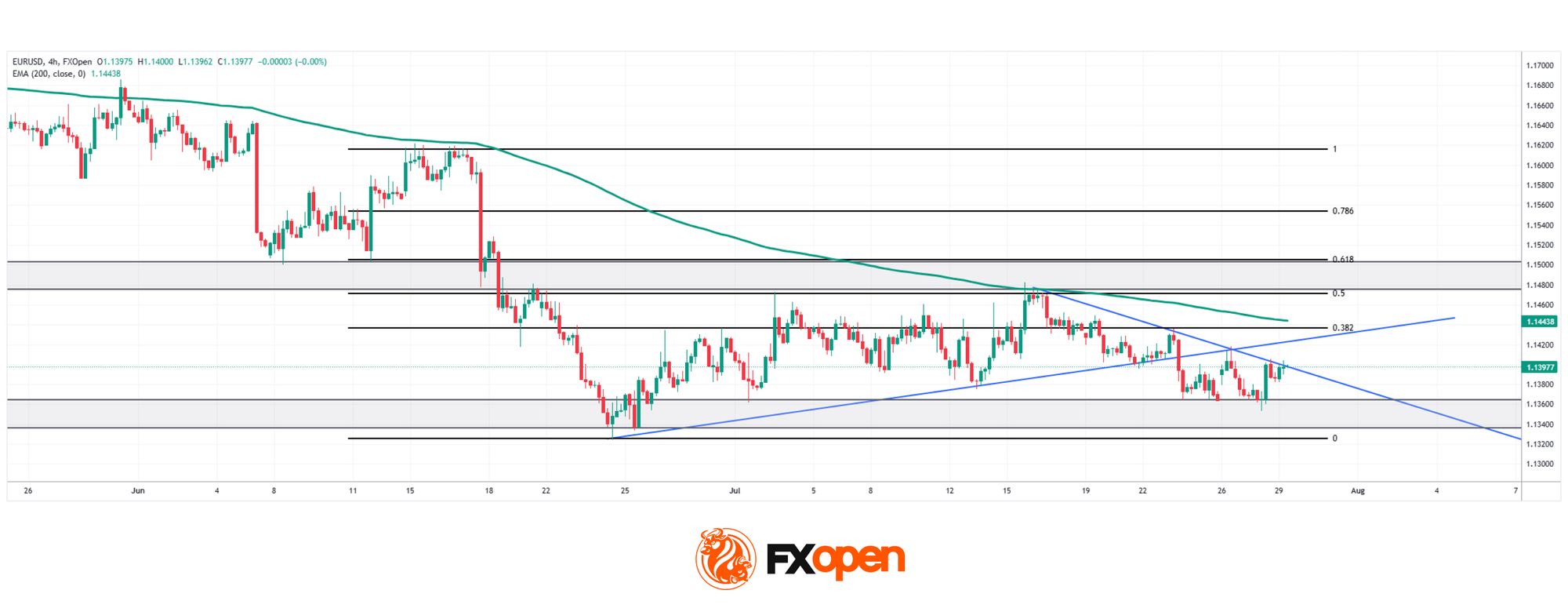
With EUR/USD trading near 1.1408, tonight’s Fed decision—not the ECB—is what will likely determine the pair’s next major direction.
EUR/USD Technical Analysis
As the EUR/USD chart shows, the pair has been consolidating within a defined range since late June, squeezed between an ascending trendline and a descending trendline, both converging around the current price near 1.1400. The 200-period EMA continues to slope lower above price, reinforcing a cautious backdrop ahead of tonight’s Fed decision.
Bullish Scenario
Should the dollar weaken on a dovish Fed outcome, price would need to break above the converging trendlines and reclaim the 0.382 Fibonacci retracement near 1.1420, with the 200-period EMA just above acting as the next key test. A confirmed break above the EMA would open the path towards the 0.5 and 0.618 retracements near 1.1480–1.1500, where stronger resistance has capped rallies since late June.
Bearish Scenario
Conversely, a hawkish surprise—or even a hike—could send the euro sharply lower, breaking both the ascending trendline and the psychological 1.1360 support level. A confirmed break here would expose the 1.1320 zone, the 0.0 Fibonacci level marking the origin of the entire recovery move, with further downside risk towards fresh multi-week lows if selling pressure accelerates.
With price coiled right at the intersection of both trendlines and the Fed decision just hours away, EUR/USD looks primed for a decisive move. Will the dollar reassert its dominance, or will the euro finally break free of this range?
Trade over 50 forex markets 24 hours a day with FXOpen. Take advantage of low commissions, deep liquidity, and spreads from 0.0 pips (additional fees may apply). Open your FXOpen account now or learn more about trading forex with FXOpen.
This article represents the opinion of the Companies operating under the FXOpen brand only. It is not to be construed as an offer, solicitation, or recommendation with respect to products and services provided by the Companies operating under the FXOpen brand, nor is it to be considered financial advice.


Hungary is rolling back strict crypto rules as CoinCash prepares to resume services after receiving authorization under the European Union’s Markets in Crypto-Assets (MiCA) regulation.
The Hungarian parliament voted to repeal the country’s crypto validator requirement, removing mandatory third-party approval for certain crypto transactions, the Hungarian tax and legal publication Ado.hu reported on Tuesday.
Finance Minister Kármán András said the government removed the validation requirement after the previous rules disrupted Hungary’s crypto market, prompting some service providers to halt operations in the country.
“Due to the negative and market-shaking regulations so far, many players have terminated their services related to cryptocurrencies in Hungary, but the market is now showing signs of recovery,” he wrote in a Tuesday Facebook post.
The development marks a significant shift in Hungary’s crypto sector, removing an additional approval step while leaving broader licensing and compliance requirements in place.
How Hungary’s crypto checks worked
Hungary introduced the requirement through its 2024 crypto assets law, creating a separate validation process for certain crypto conversions.
The rules, which took effect on July 1, 2025, required a licensed validator to verify details including the origin of crypto assets, wallet ownership and customer information before issuing a compliance declaration.
Related: Hungary to reverse crypto trading crackdown after EU scrutiny
The system added another transaction-level approval step alongside MiCA. Hungary also applied a shortened MiCA transition period for crypto asset service providers (CASPs), requiring compliance by July 1, 2025, compared with the EU’s maximum transition deadline of July 1, 2026.
The stricter regulatory environment prompted some crypto platforms to suspend services in Hungary, including Budapest-based crypto platform CoinCash, which voluntarily paused operations in December 2025 while pursuing MiCA authorization.
CoinCash receives Hungary’s first MiCA license
The National Bank of Hungary (MNB) granted CoinCash operator Tiwala Solutions authorization under the EU’s MiCA regulation on July 20, according to a company announcement reviewed by Cointelegraph.
“We’re the first and only Hungarian company authorised directly by the National Bank under the EU framework,” CoinCash co-founder said in a LinkedIn post on Friday.
Related: Unauthorized crypto trading now carries 2 years of prison in Hungary
The authorization covers custody, crypto-to-fiat and crypto-to-crypto exchange, transfers, investment advice and portfolio management.
CoinCash said it completed a months-long compliance review before receiving approval and paused operations while preparing to meet the requirements. The company plans to gradually resume services and expand beyond trading into additional MiCA-regulated offerings.
Magazine: The real reason DeFi projects that survived 2022 crash are shutting down now


Coinbase appointed Rob Witoff as chief technology officer on July 28, bringing an early company engineer into the role as the U.S. crypto exchange expands AI-assisted product development.
Summary
- Coinbase appointed longtime engineer Rob Witoff as chief technology officer, confirming the leadership change Tuesday.
- Witoff first joined Coinbase in 2014, returning as platform head in December 2024 after entrepreneurship.
- Coinbase cut approximately 14% of employees in May while rebuilding teams around AI-assisted workflows companywide.
Coinbase’s official leadership page now lists Witoff as CTO.
Chief Executive Brian Armstrong announced the appointment on X and credited Witoff with helping turn Coinbase into “one of the most AI-enabled companies in the world.” That description is Armstrong’s assessment rather than an independently measured ranking.
Rob Witoff returns to a role shaped by Coinbase’s early years
Witoff first joined Coinbase in 2014 and worked there until 2017. Coinbase said he led security and infrastructure, became chief architect and helped build some of the exchange’s earliest systems. He later founded institutional crypto custody company Unit 410, which Coinbase acquired.
Witoff said his interest in Bitcoin began in 2009. He recalled that Coinbase initially supported one cryptocurrency, used a single codebase and ran with a small engineering team. The account provides historical context from the incoming executive, although Coinbase has not independently detailed every technical claim in the July 27 post.
The company brought him back in December 2024 as head of platform and a member of the executive team. Witoff said his latest “tour of duty” began with a goal of making Coinbase “the best place in the world to build.” That remains a forward-looking management objective.
Coinbase CTO appointment comes during an AI overhaul
The promotion follows a broad change in how Coinbase develops software and organises teams. In May, the company announced plans to reduce its workforce by about 14%, or roughly 700 roles, while flattening management and building smaller teams around AI tools.
Armstrong said AI allowed engineers to complete work in days that previously took teams weeks. He also outlined experiments with “one person teams” combining engineering, product and design work. Those plans describe Coinbase’s intended operating model; their long-term effect on output, costs and staff workloads is not yet established.
Coinbase later said nearly all newly merged code had become AI-generated and human-reviewed. Its July engineering report said the share rose from 5.7% in the first quarter of 2025 to roughly 100% by mid-2026, while maintaining human review and compliance controls.
Witoff inherits reliability and security responsibilities
The CTO will oversee technology while Coinbase expands derivatives, stablecoin payments, prediction markets and services for AI agents. Each product increases the need for dependable infrastructure, security controls and fast incident response.
Coinbase experienced a roughly 50-minute service disruption on July 14 after a routine configuration update affected a shared production cluster. Transfers, card payments and some onchain services were interrupted. The company said customer funds were not at risk and later announced new deployment safeguards and recovery procedures.
Witoff’s background in security, architecture and platform engineering gives him direct experience with those areas. However, Coinbase has not published new performance targets, budget commitments or a separate technology roadmap tied to his appointment.
Leadership changes continue across Coinbase
The CTO appointment follows another executive transition. Chief Legal Officer Paul Grewal notified Coinbase on July 8 that he would leave his post on July 31. Molly Abraham is expected to become general counsel and corporate secretary, while Grewal will serve as an adviser through October.
As crypto.news previously reported, Coinbase’s May restructuring placed AI-native development at the centre of its operating plan. In related coverage, crypto.news reported that Coinbase had launched tools allowing authorised AI agents to trade, make payments and perform financial tasks.
Coinbase plans quarterly reviews of its AI-focused engineering interview process and 45-day and 90-day assessments for new hires. The next test for Witoff will be whether the company can keep releasing products quickly while maintaining security, reliability and regulatory controls.


It raised $400 million in June through a private placement of convertible preferred shares and warrants. The preferred shares, priced at $53 each, converted into common stock upon completion of the listing. Investors agreed not to transfer the securities below $70 until six months after the listing, according to the filing.
Ionic decommissioned bitcoin mining at its Ward County, Texas, site in December and committed its 234 MW of capacity to Nscale under a 126-month lease carrying $1.95 billion in contracted revenue, according to the registration statement.
The company said it expects as much as $195 million in revenue this year, with more than 90% coming from infrastructure leasing. It held 2,815.6 bitcoin worth $192.1 million and had no debt as of March 31.

Alpine Income Property Trust: This High-Yield REIT Looks Expensive – Until You Look Closer

Bitcoin bounces to $64,300 but the real move waits on the Fed: Crypto Markets Today

Whitney Port Cancels Surrogacy to Attempt Being Own ‘Vessel’


-

 Fashion5 days ago
Weekend Open Thread: Brooks Brothers
-
 Sports3 days ago
Commonwealth Games boxing: Jadumani Singh seals dominant 5-0 win over Pakistan’s Sumama Rehman to enter quarter-finals | Commonwealth Games News
-

 Tech2 days ago
Intel is reversing course and bringing hyper-threading back to its server chips
-

 Crypto World6 days ago
Ethics, other provisions in crypto Clarity Act to be further discussed
-

 Politics2 days ago
Luke Littler dismantles Gerwyn Price to retain title in Blackpool
-

 Sports5 days ago
2026 3M Open leaderboard: Scottie Scheffler finds putter in Round 1, sits three back
-

 Politics1 day ago
The Part of the Electric Transition Nobody Wants to Discuss
-

 Fashion5 days ago
16 Dresses for the High Summer Event
-
 Entertainment5 days ago
A New Post-Apocalyptic Gundam Anime Series Blasts Into SDCC
-

 News Videos3 days ago
BITCOIN JUST ENTERED THIS CRITICAL ZONE…
-

 News Videos6 days ago
The Peugeot Family: How 200 Years of an “Old Money” Dynasty Died in A Boardroom
-

 Crypto World4 days ago
Ripple bought a bank in pieces. The $4 billion audit
-

 Politics3 days ago
Spain sweeps the board at 2026 World Cup with individual awards
-

 Business5 hours ago
Major shareholder moves on Canyon
-

 Crypto World3 days ago
XRP Ledger adds $2.6B as RWA inflows rank second
-

 Crypto World6 days ago
Uniswap (UNI) pushes deeper into tokenized RWAs with permissioned trading pools
-
 Entertainment15 hours ago
‘Stargate’ Creator’s New Sci-Fi Series Returns for Season 3 Tomorrow
-

 Tech4 days ago
Anthropic launches Claude Opus 5, a cheaper AI model for coding, agents and enterprise workflows
-
Crypto World6 days ago
SEC Agrees to Overhaul Recordkeeping After Settling Coinbase Lawsuit Over Gensler’s Lost Texts
-

 News Videos14 hours ago
Claude: Build Financial Dashboards in Minutes (2026)
You must be logged in to post a comment Login