

Crypto World
Binance CEO pushes back on WSJ sanctions report



Binance CEO Richard Teng has rejected a new Wall Street Journal report, saying it contains wrong claims about the exchange’s sanctions controls.
Summary
- Richard Teng said Binance did not allow sanctioned individuals to transact on its platform.
- The WSJ report adds pressure after Binance’s $4.3 billion U.S. settlement and monitorship.
- Binance says its sanctions exposure fell 96.8% as it expanded compliance and law-enforcement work.
Teng said in a post on X that the WSJ report contains “fundamental inaccuracies” about Binance and its compliance program. He said Binance did not permit transactions with sanctioned individuals and that the transactions mentioned by the publication happened before the people involved were sanctioned.
The WSJ reported that Iranian-linked networks used Binance accounts to move large sums, including funds allegedly tied to sanctioned activity. The report said the activity involved accounts connected to financier Babak Zanjani and crypto firm Zedcex. Binance disputed the claims and said the information was inaccurate.
Teng says Binance reviewed the matter
Teng said Binance had already reviewed the issues before the WSJ contacted the company. He also said Binance gave those details to the publication, but they were not included in the report.
He added that Binance has “zero-tolerance for illicit activity” and will continue working with U.S. and global law-enforcement agencies to fight financial crime. The comment keeps Binance’s defense focused on timing, internal review, and cooperation with authorities.
Compliance record stays under review
The latest dispute follows earlier reports and government questions about Binance’s sanctions systems. In March, Binance formally denied allegations that it allowed transactions linked to Iran and said media reports cited in a U.S. Senate inquiry contained false claims about its compliance program.
Binance said at the time that it requires identity checks for every user and bars people located in Iran from using the exchange. The company also said it uses more than 25 monitoring tools to screen users and review transactions.
Past settlement shapes the debate
The issue remains sensitive because Binance pleaded guilty in 2023 to U.S. anti-money-laundering and sanctions violations. The Justice Department said Binance agreed to pay more than $4.3 billion and retain an independent compliance monitor as part of that resolution.
U.S. officials said the case included failures that allowed transactions between U.S. users and users in sanctioned jurisdictions, including Iran, between 2018 and 2022. Binance has since said it rebuilt parts of its compliance system and improved its monitoring.
Binance points to stronger controls
Binance has repeatedly pointed to recent metrics as proof of progress. Earlier reports said the exchange claimed sanctions-related exposure fell 96.8% between January 2024 and July 2025, from 0.284% of total exchange volume to 0.009%.
The company also said more than 1,500 workers now support compliance, sanctions screening, investigations, and risk functions. Binance said it processed more than 71,000 law-enforcement requests in 2025 and helped authorities recover funds linked to illicit activity.

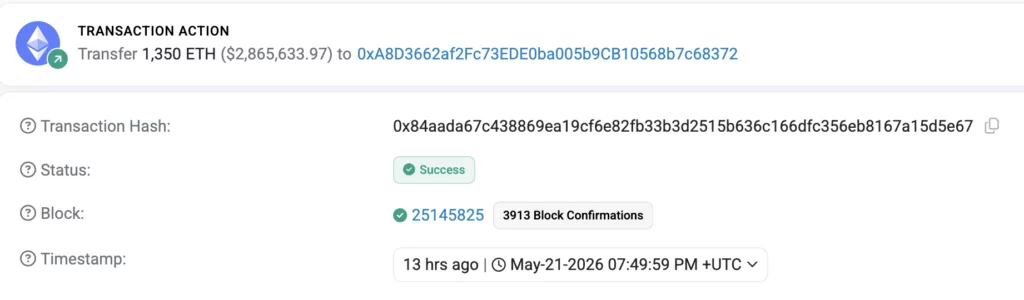
The Verus Ethereum bridge exploiter has returned 4,052 ETH to the project team after a settlement offer, while keeping 1,350 ETH as a bounty.
Summary
- PeckShield says the Verus bridge exploiter returned 4,052 ETH, equal to 75% of stolen funds.
- The exploiter kept 1,350 ETH as a bounty after Verus proposed settlement terms publicly.
- Earlier reports linked the Verus bridge exploit to missing validation checks in cross-chain transfer logic.
PeckShield said the Verus bridge exploiter returned 4,052.4 ETH, worth about $8.5 million, to a Verus team address. The firm said the returned assets represented 75% of the stolen total.
Etherscan data shows a successful transfer of 4,052 ETH from a wallet labeled Verus Exploiter 2 to the address 0xF9AB…C1A74 on May 21. The transaction was valued at about $8.59 million at the ETH price shown by the explorer.
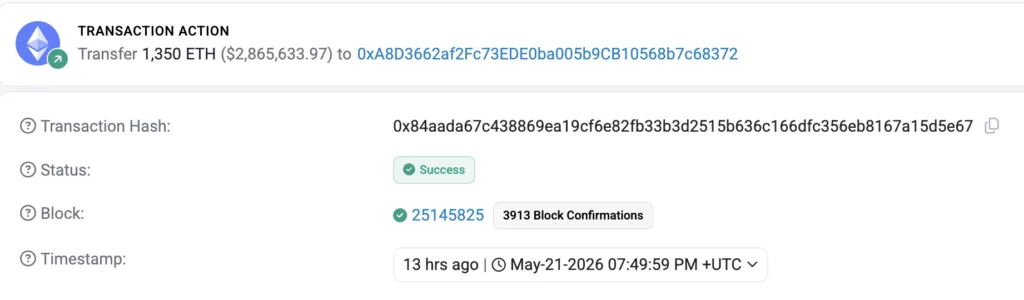
PeckShield said the remaining 25% stayed with the exploiter as a bounty. A separate Etherscan transaction shows 1,350 ETH, worth about $2.86 million, moved from the exploiter wallet to a new address minutes after the return transfer.
Some X users framed the recovery as a win for negotiated returns. Bee Swarm said “75% recovery is the new standard” and argued that bounty deals can work better than legal threats after funds are gone.
Others said the exploit still points to deeper bridge risks. Zenthis argued that partial recovery does not fix “centralized custody in bridges,” while pointing to atomic swaps as an alternative.
Bounty offer followed public Verus terms
Verus had earlier posted a message to the bridge exploiter, saying its community and developers had discussed terms for the fund return. The post said the terms covered the bounty size, the exploiter’s obligations, and how the assets could be returned.
According to the public Verus message from X, the community had agreed to a 1,350 ETH bounty. The offer was tied to returning the remaining funds and settling the matter under the proposed terms.
The return now makes the Verus case different from many bridge attacks, where stolen funds often move through mixers or remain under attacker control. In this case, most of the drained ETH moved back to a team address after the bounty offer.
Earlier exploit drained $11.5M
The fund return follows the May 18 Verus Ethereum bridge attack. Earlier coverage reported that the bridge lost more than $11.5 million after attackers used what security researchers described as a forged cross-chain transfer message.
PeckShield had reported that the drained assets included 103.6 tBTC, 1,625 ETH, and nearly 147,000 USDC. The attacker later swapped the stolen assets into 5,402 ETH, worth about $11.4 million at the time.
Blockaid linked the exploit to missing source-amount validation inside the bridge logic. The firm said the issue was not an ECDSA bypass, not a notary key compromise, and not a parser or hash-binding bug.
Bridge security remains under pressure
The Verus recovery comes during a busy period for cross-chain security incidents. Recent coverage said MAPO fell 96% after attackers exploited the Butter Network bridge and minted a huge amount of unauthorized tokens.
Echo Protocol also paused cross-chain activity after an attacker minted about $76.7 million in unauthorized eBTC on Monad. On-chain investigators said the exploiter used fake eBTC as collateral before moving funds through Tornado Cash.
These cases show why bridge validation remains a core risk for DeFi. Bridges hold assets across chains, so weak checks can allow attackers to trigger transfers, mint tokens, or move reserves before teams can stop the flow.
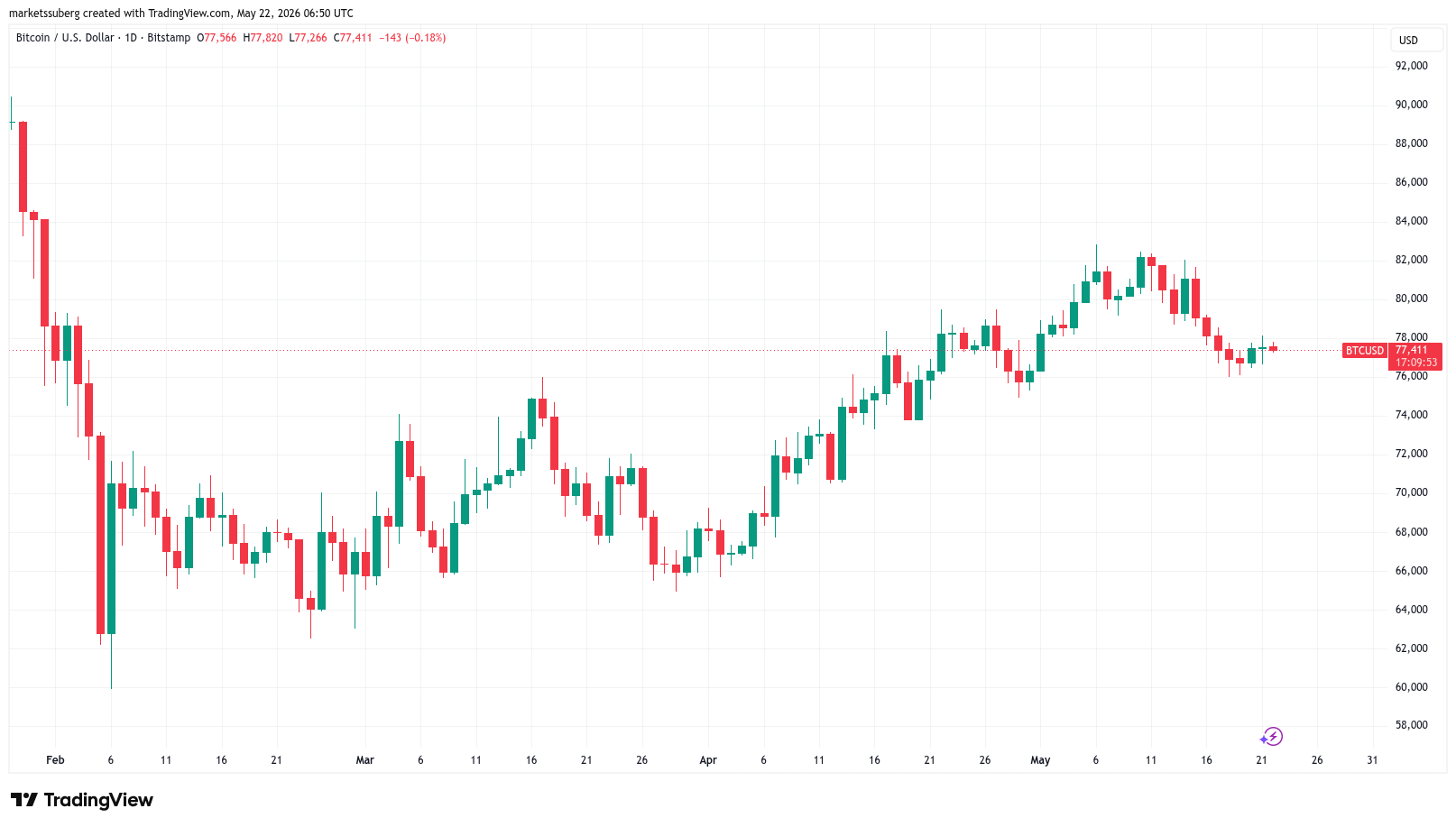
Bitcoin (BTC) has trended up for 90 days and is seeing a “bull market rally,” analysis says.
Key points:
- Bitcoin has trended up for 90 days within its bear market — something that has never happened before.
- Analysis thus sees price as being in a “bull market rally,” with February’s macro lows untouched.
- Separate commentary calls for a reclaim of the weekly supertrend nearer to $90,000 to confirm that bulls are back.
Bitcoin internal bear-market uptrend makes history
In a post on X on Thursday, trader and analyst Matthew Hyland said that Bitcoin’s recent rebound from macro lows has been unlike any other in history.
“This BTC rally resembles a bull market rally NOT a bear market rally,” he summarized.
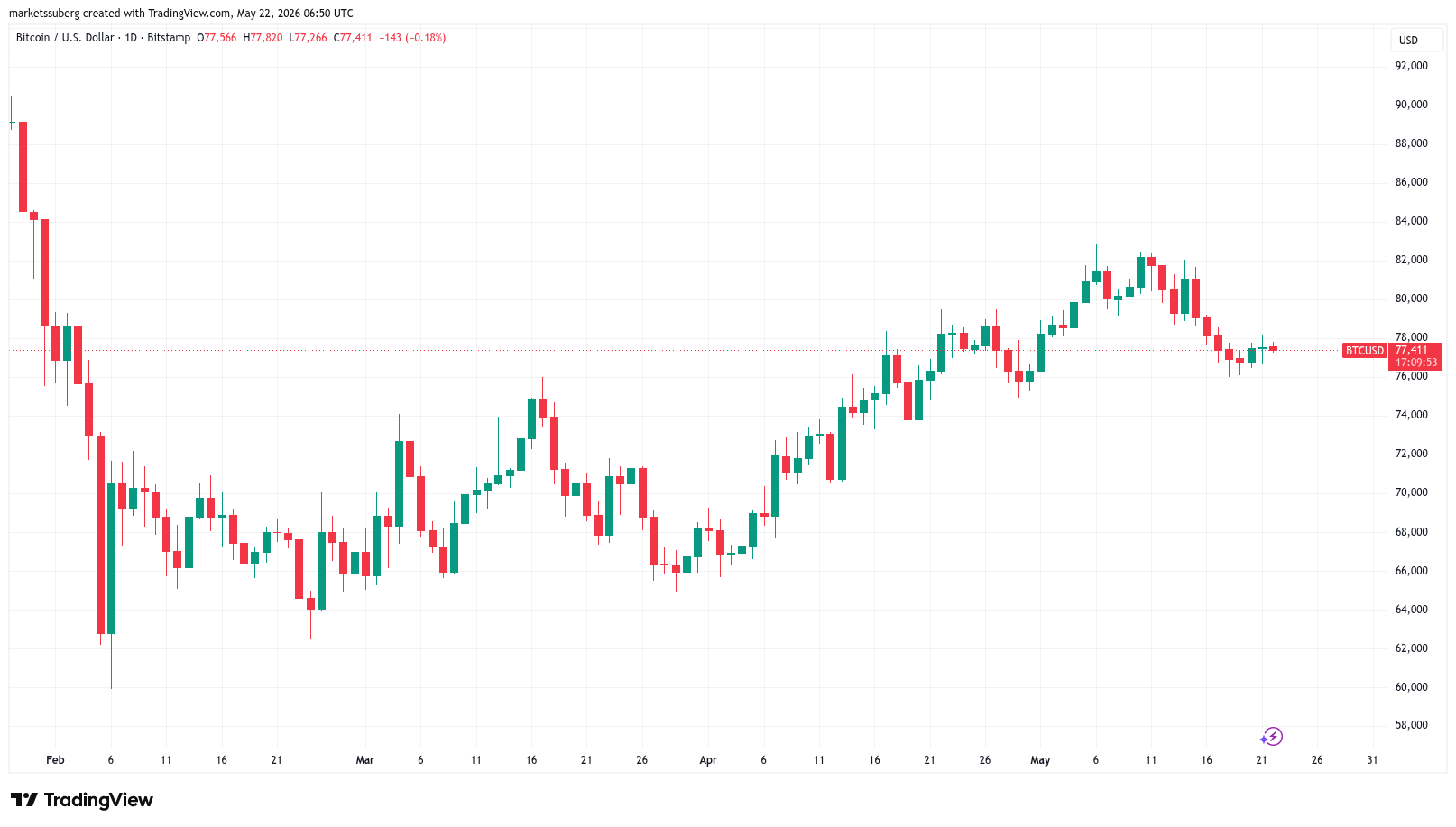
BTC/USD one-day chart. Source: Cointelegraph/TradingView
According to Hyland, BTC/USD has been in a fresh uptrend since the last week of February. At the start of the month, the pair briefly fell below $60,000, hitting its lowest levels since late 2024.
Since then, relief has taken over, with Bitcoin reaching local highs near $83,000 exactly three months after the February bottom, data from TradingView confirms.
“There has NEVER been a rally that trended upward for 89 days ever in a bear market in BTC history,” he continued.
“The break of high time frame resistance also has marked the start of a bull market rally the prior three times.”
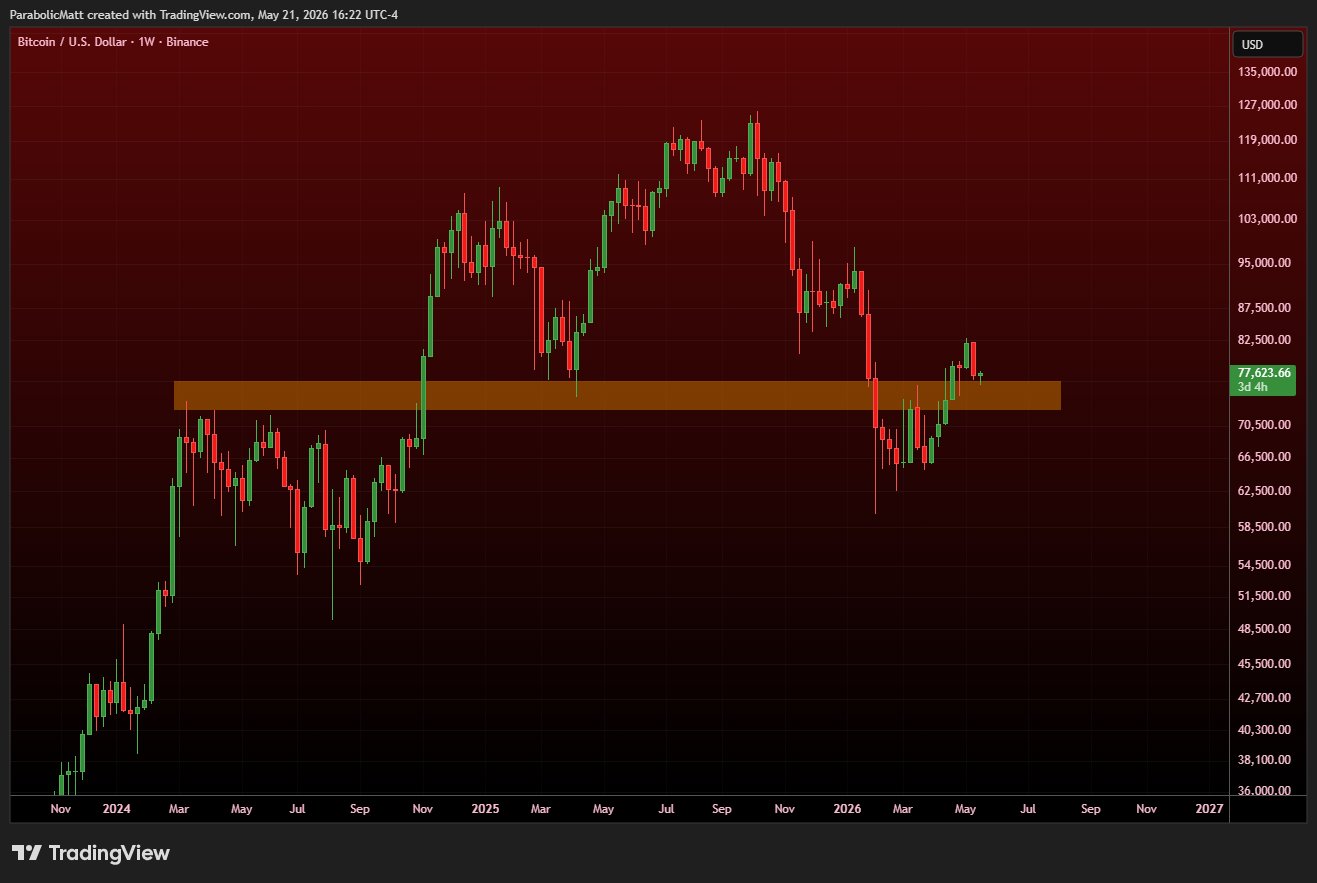
BTC/USD one-week chart. Source: Matthew Hyland/X
An accompanying chart shows that resistance was cleared when the price first broke above and held $77,000.
“Both of these characteristics are characteristics of a bull market rally NOT a bear market rally,” Hyland reiterated.
Analyst: BTC price needs $88,000 rebound
On the topic of bear market expirations, independent analyst Filbfilb demands a higher resistance reclaim for confirmation that bulls are back in control.
Related: Bitcoin due ‘5%+’ move as analysis stays bullish on BTC price outlook
Bitcoin’s weekly supertrend, currently near $90,000, is the line in the sand to watch.
“The last 2 BTC bear markets ended with a >+20% weekly candle and a break of the weekly super trend – presently around $ 88k,” he told X followers.
“If the bearish move we see in play at the moment fails, I’m expecting one of those candles to happen rather than much messing about around these levels.”
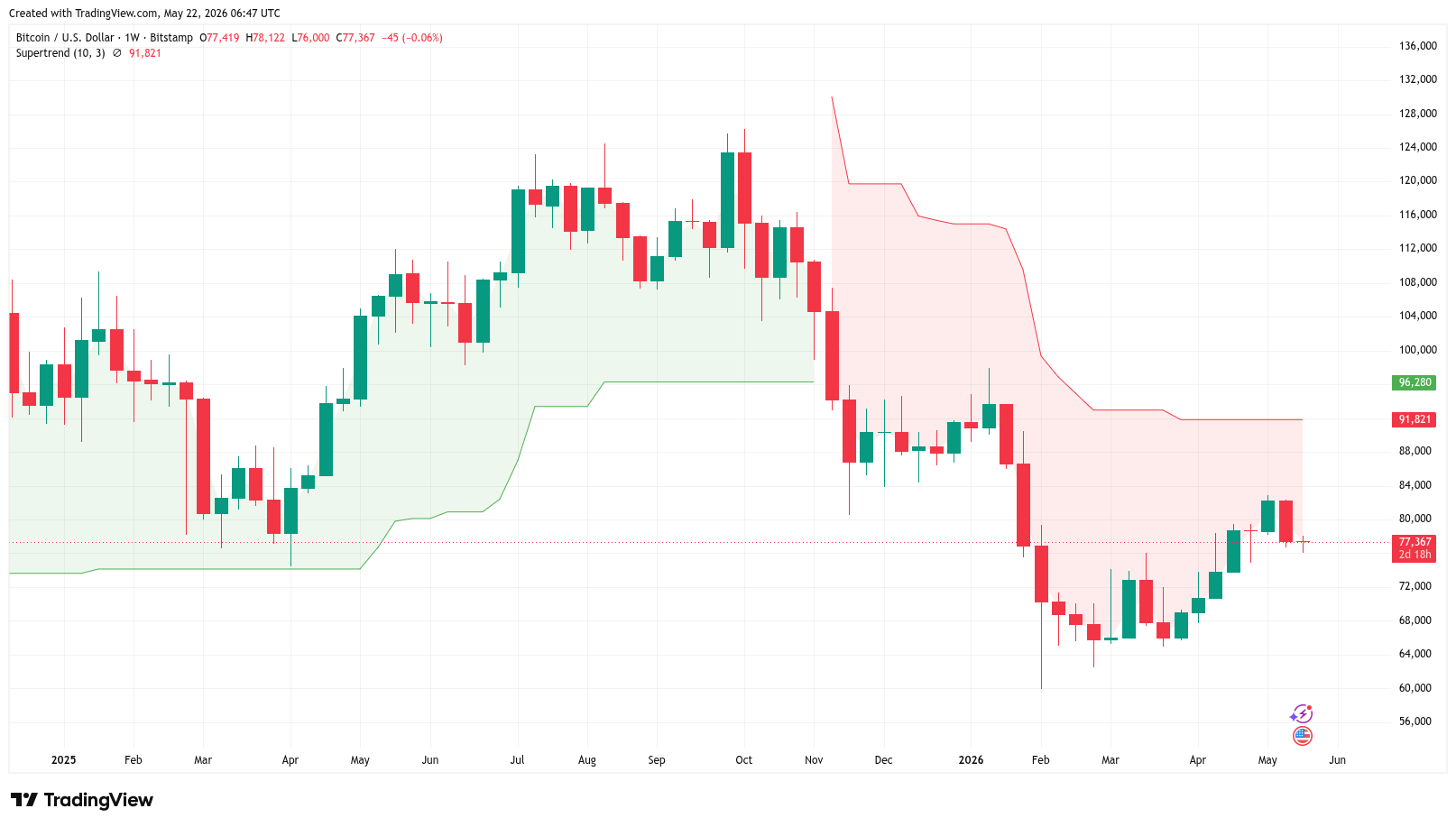
BTC/USD one-week chart with supertrend data. Source: Cointelegraph/TradingView
The super trend is calculated using the average true range of price, coupled with a multiplier. BTC/USD last had a weekly close above the supertrend line in early November 2025.


Layer-1 blockchain Near’s forthcoming upgrade will allow the network to scale dynamically without human intervention.
The market is giving it a thumbs-up, sending the native token’s price sharply higher. NEAR has gained more than 27% in the last 24 hours to trade at $2.25.
“Dynamic resharding is coming to NEAR. The upcoming network upgrade will enable the protocol to add shards automatically as demand grows,” the protocol announced on X. “This delivers on NEAR’s founding vision of building the world’s most scalable blockchain protocol at the highest level of performance.”
Shards are smaller, independent partitions of the blockchain network that process transactions and smart contracts in parallel. Imagine a grocery store with multiple checkout lines. This helps Near handle more traffic than typical blockchains with a single checkout line.
The catch? Until now, opening a new partition on Near has been a slow, manual process, requiring weeks of validator coordination, a vote, and a staged rollout.
The upcoming dynamic resharding in June will automate this process. In other words, when the network sees a specific check out line, a shard, getting too full, it doesn’t wait for a human to fix it. It automatically splits, not in half, but by adding more independent parallel validators to the system, just as the grocery store would hire new cashiers and customer staff.
“Adding shards has required a full protocol upgrade: weeks of validator coordination, a vote, a staged rollout. Dynamic resharding makes it automatic: a shard hits a state size threshold, splits deterministically, and is validated by state witnesses with no human intervention,” Near said in an explainer.
The new feature is particularly foundational to an AI-led onchain economy, where bots are doing business with each other, it explained.
Quantum-proof
Scaling isn’t the only thing changing with the impending upgrade. Near is also adding “post-quantum-safe signing.”
Quantum fears have gripped the developer community ever since Google researchers warned that a sufficiently powerful quantum computer might be able to crack today’s blockchains with significantly less firepower than initially expected.
Near, therefore, is installing new locks so that years from now, those super quantum machines won’t be able to touch funds of Near users.
Native token NEAR is the best-performing cryptocurrency among the top 100 coins by market cap over the past 24 hours thanks to the rally. Bitcoin has dropped 0.4% to $77,360.
NEAR’s external performance is supported by strong demand for the Bitwise Near Staking ETF (exchange-traded product) listed in Europe. This week, the ETP has pulled in $7 million in investor money, according to data shared by Bitwise’s CEO Hunter Horsley.
US Securities and Exchange Commissioner Hester Peirce has told the crypto industry to cool its expectations about a potential “innovation exemption” to allow tokenized stock trading after a report earlier this week about what it could entail.
Her comments were made after a Bloomberg report on Monday. Brett Redfearn, president of tokenization platform Securitize, expressed concern following the report, arguing that enabling third parties to tokenize stock “without an issuer at the table” could lead to fragmentation issues.
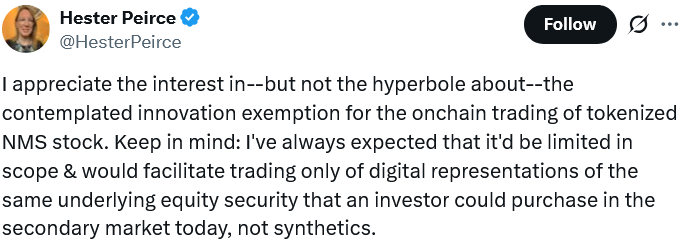
In a post to X on Thursday, Peirce said her expectation has always been that any exemption would be “limited in scope” by only permitting “digital representations of the same underlying equity security that an investor could purchase in the secondary market today.”
Peirce said she doesn’t expect synthetic tokens to be included, which would make it more challenging for third parties to offer stock-price tracking tokens under the exemption.
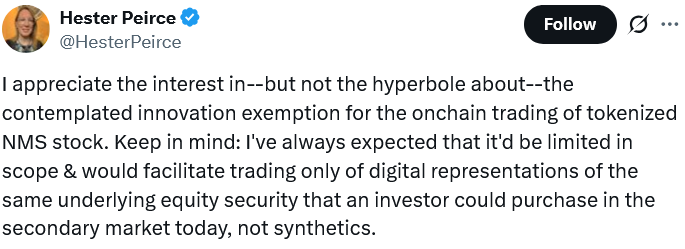
Source: Hester Peirce
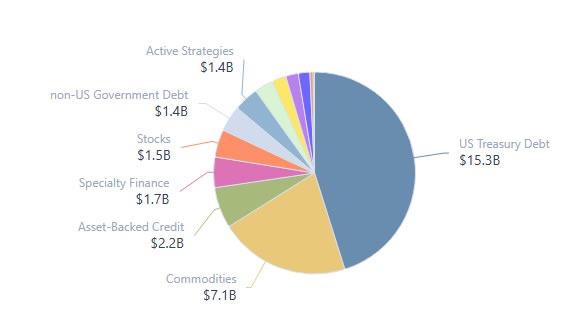
Data from RWA.xyz shows that $1.48 billion worth of stocks are tokenized onchain, including shares linked to stablecoin issuer Circle, Bitcoin buying firm Strategy and Google (GOOG).
However, it hasn’t boomed as rapidly as some financial institutions have expected, including Citibank and McKinsey & Co, which predicted in 2022 and 2024 that the tokenization sector would become a trillion-dollar market by or before 2030.
Peirce’s comments cleared the air
Peirce’s comments are in line with Bloomberg’s report stating that the securities regulator is only considering permitting tokens that carry the same benefits as common stock, such as voting rights and dividends.
Robert Leshner, the CEO of crypto tokenization platform Superstate, said this stricter approach would enable decentralized finance and tokenization to expand “without compromising the standards that make the USA the center of capital markets.”
Carlos Domingo, CEO of Securitize, also said the approach would mitigate the risk of ownership fragmentation in the tokenization market.
“This is good, we want to do on-chain trading, but for the right assets, and not to help proliferate those derivatives that are fragmenting the market and introducing additional risks.”
Bloomberg said the SEC reportedly spoke with “hundreds of market participants” for feedback on how best to tailor the rules for tokenized trading.
Related: Kraken parent Payward sees revenue surge as tokenization expands
Details haven’t been finalized and could change before an exemption is made, Bloomberg added in the report, citing people familiar with the matter.
Despite the possible exemption, Bloomberg reported that some SEC officials weren’t in support of permitting tokenized stock trading.
Magazine: 5 tech predictions the mainstream media got horribly wrong
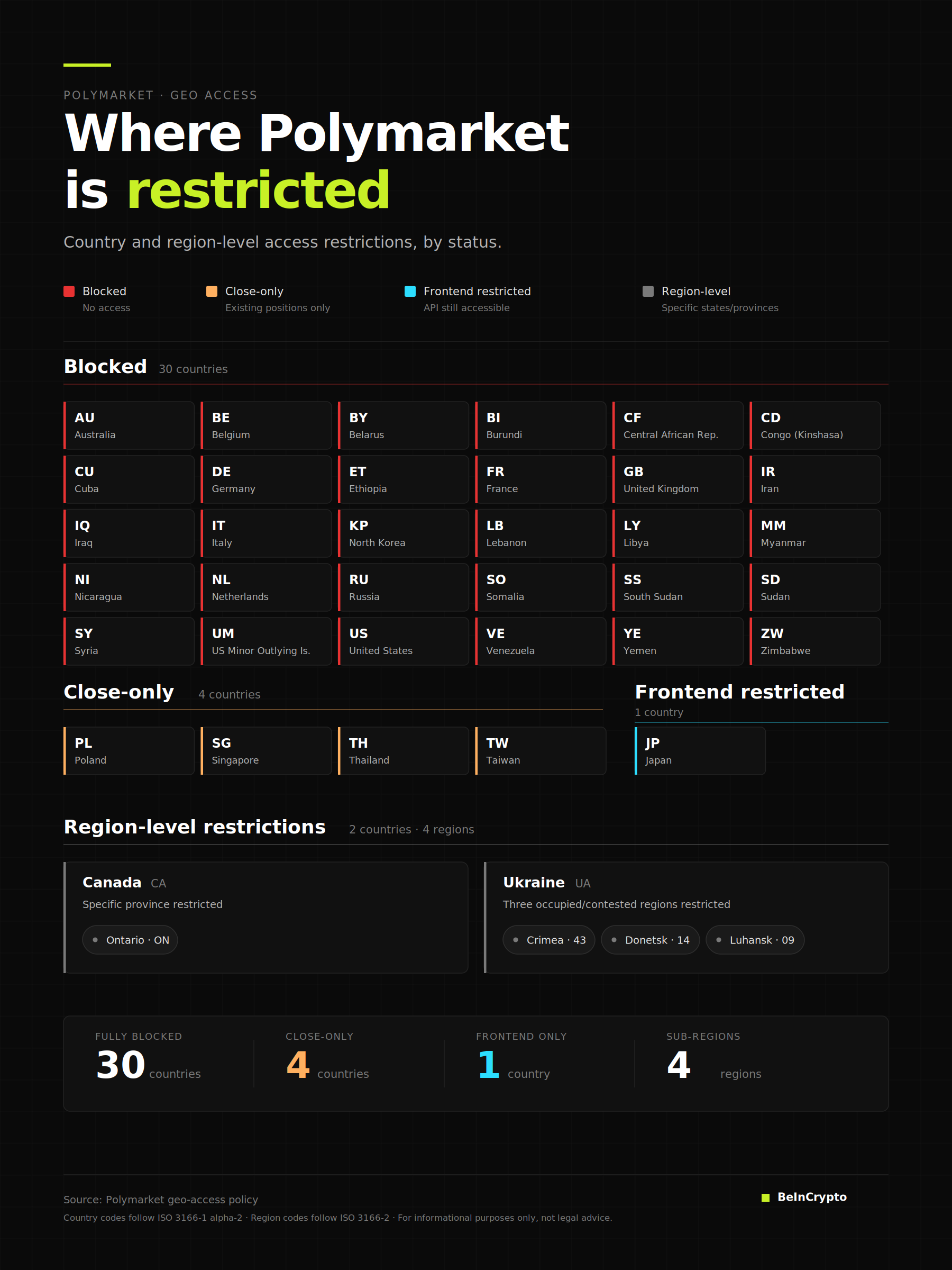
Polymarket reportedly aims to secure government approval for prediction markets in Japan by 2030.
Bloomberg, citing people familiar with the plans, reported that the platform appointed Mike Eidlin to lead the efforts.
Polymarket’s Japan Push Tests 2030 Regulatory Timeline
Eidlin currently heads Japan operations at crypto firm Jupiter. Polymarket sees Japan as a large untapped opportunity, Bloomberg‘s sources said. The country currently sits on the platform’s frontend-restricted list.
The four-year timeline gives Polymarket room to court Tokyo regulators. The company is leaning into new markets as US scrutiny tightens and other governments shut the door.
Argentina ordered a nationwide Polymarket block in March. The platform already restricts or blocks access in more than 30 countries, including France, Germany, Italy, Australia, and Poland.
Follow us on X to get the latest news as it happens

Polymarket itself was barred from the US for roughly three years before regaining CFTC clearance in September 2025. Whether Tokyo proves more receptive depends on how Japanese regulators classify event contracts.
Polymarket isn’t alone in facing regulatory heat. According to ThePrint, India’s electronics ministry is set to issue a blocking order to Kalshi as soon as Friday.
Subscribe to our YouTube channel to watch leaders and journalists provide expert insights
The post Polymarket Reportedly Targets Tokyo Approval by 2030 in Japan Lobbying Effort appeared first on BeInCrypto.
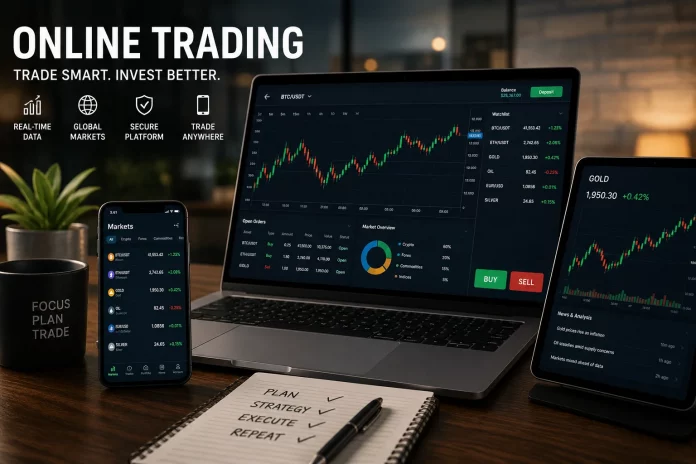

A New Generation of Trading Platforms Is Emerging
Online trading platforms have changed a lot over the past few years. Traders today expect more than basic charts and market access. They want speed, flexibility, mobile functionality, and access to different markets without needing multiple accounts across different platforms.
That shift is creating space for newer platforms to grow, especially those focused on simplicity and modern trading habits. One name that has started appearing more frequently in online trading discussions is Patexone.
The platform has been gaining visibility among traders looking for access to crypto, commodities, forex, and other markets through a single environment that feels easier to navigate than many traditional trading platforms. So, what exactly is Patexone , and why are more people starting to pay attention to it?
What Is Patexone?
 Patexone is an online trading platform that provides users with access to multiple financial markets through one account.
The platform focuses heavily on:
- Cryptocurrency trading
- Multi-market accessibility
- Mobile trading
- Fast execution and usability
Rather than building a platform designed only for highly technical traders, PatexOne appears to focus on creating a smoother experience that works for both newer users and active traders. The result is a platform that feels modern without becoming overly complicated.
Crypto Trading Remains a Major Focus
One of the biggest reasons traders are discovering PatexOne is because of its crypto trading environment.
Crypto markets move quickly, and traders often need:
- Real-time price updates
- Fast execution
- Responsive charts
- Mobile access at all times
Patexone performs well in these areas, which helps explain why it’s increasingly appearing in conversations among active crypto traders. The platform supports access to major digital assets while maintaining a relatively clean and accessible interface.
That combination matters because many crypto platforms either:
- Feel too limited or
- Feel overloaded with unnecessary complexity
Patexone sits somewhere in the middle.
More Than Just a Crypto Platform
 Although crypto trading is a major attraction, the platform also gives users access to additional markets such as:
- Gold and silver
- Oil and commodities
- Forex markets
- Other trading instruments
This creates more flexibility for traders who want to diversify instead of keeping their entire portfolio tied to one asset class. And honestly, diversification is becoming more important as traders realize opportunities shift constantly between markets.
One-month momentum is in Bitcoin Currency. The next month it’s gold or oil. Platforms that allow traders to move between markets easily are becoming increasingly valuable.
The Platform Feels Built for Mobile Trading
A major part of modern trading now happens on mobile devices. People monitor positions during work, check charts while travelling, and react to market moves throughout the day. Platforms that still treat mobile access like an “extra feature” are starting to feel outdated.
Patexone seems to understand this shift. The mobile experience feels smooth, responsive, and practical for day-to-day trading.
Users can:
- Monitor live markets
- Manage positions
- Access trading tools
- Move between assets quickly
without feeling restricted compared to desktop trading. That flexibility is becoming one of the platform’s stronger selling points.
Simplicity Is Part of the Appeal
 A surprising number of trading platforms make simple tasks feel unnecessarily complicated. Overloaded dashboards, endless menus, and confusing layouts can quickly frustrate users, especially newer traders.
Patexone takes a different approach. The platform focuses on keeping navigation relatively clean while still providing the tools active traders actually use.
That balance makes the platform feel more approachable without sacrificing functionality. For many users, that’s a major reason they continue using it after the initial signup phase.
Growing Attention Around the Platform
Patexone has also started gaining momentum through online discussions, reviews, and user feedback. As traders share their experiences across forums and social media, awareness around the platform continues growing, particularly among users interested in:
- Crypto trading
- Commodity markets
- Mobile trading flexibility
- Multi-market access from one platform
This type of organic visibility often matters more than aggressive marketing because it reflects actual user interest.
Bottom Line
Patexone is part of a broader shift happening in online trading. Traders are moving away from platforms that feel outdated, overloaded, or limited to one market category. Instead, they’re looking for environments that combine:
- Speed
- Simplicity
- Flexibility
- Multi-market access
- Strong mobile functionality
PatexOne appears to be building around exactly those priorities. And while every trader should always do their own research before choosing a platform, the growing attention around PatexOne suggests it’s becoming a platform more traders are starting to take seriously.
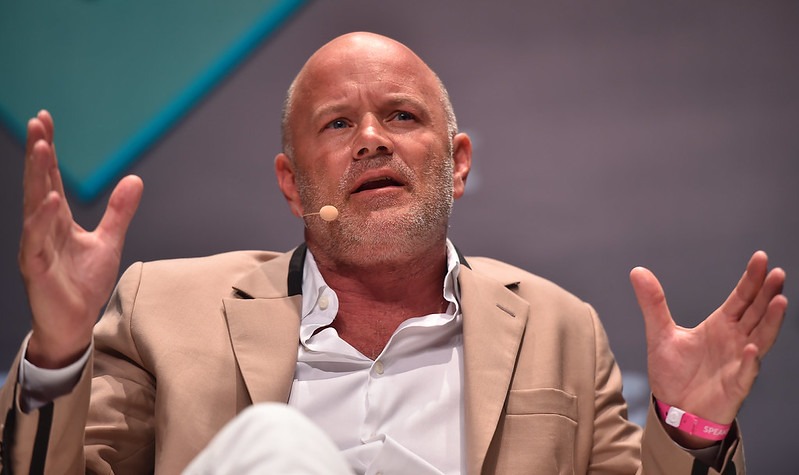
Galaxy Digital founder Mike Novogratz appeared in court on Tuesday to face off against BitGo CEO Mike Belshe in a long-running legal fight over a failed proposed $1.2 billion merger in 2021.
The planned deal was the largest-ever crypto merger at the time, set to create a massive conglomerate offering a suite of services at a time when investor interest in crypto was high.
Galaxy called off the deal in August 2022 as the crypto market was reeling from the collapse of the Terra ecosystem. BitGo has asked Galaxy to pay a $100 million fee for pulling out of the deal and also hid it was being probed by US authorities, while Galaxy has claimed BitGo failed to provide financial information on time.
According to Bloomberg, Novogratz testified in Delaware Chancery Court on Tuesday that he was “pushing to get this deal done,” but Galaxy and BitGo realized regulatory approval for the merger was unlikely because the Securities and Exchange Commission, then headed by Gary Gensler, made it “very difficult.”
Mike Novogratz, pictured in 2018 at a conference in Hong Kong, has appeared in court over a failed merger with BitGo. Source: RISE
He also said Galaxy was not the subject of the probe and it would not have affected the merger, while BitGo did not provide the needed financial information in time, forfeiting its right to a $100 million termination fee.
Related: On-Chain, In Court: What happened in crypto legal news this week
BitGo bargained for the termination fee, including a deadline to hand over financial statements, but that was complicated by the SEC’s accounting rules requiring companies to record customer crypto holdings as liabilities.
“This was incredibly damaging,” Belshe testified on Monday, claiming that BitGo had provided all the needed information. “Galaxy is telling the world we can’t pass an audit.”
The trial is set to end this week, and a judge will decide whether BitGo should receive the $100 million fee.
Magazine: Guide to the top and emerging global crypto hubs: Mid-2026
The US Securities and Exchange Commission’s move to allow third parties to list tokenized stocks could risk two structural disruptions with liquidity and revenue fragmentation, according to Tiger Research.
Liquidity fragmentation may occur as capital disperses from centralized exchanges across multiple blockchain platforms, said Tiger Research director and head of research Ryan Yoon on Friday.
“Traditional finance views the breakup of its previously consolidated, centralized liquidity as a serious structural threat,” said Yoon.
When third parties tokenize the same listed stock across different blockchain networks and decentralized platforms, the trading volume and order flow that should concentrate on a single venue, such as the NYSE or Nasdaq, instead disperses across multiple venues, he explained.
“This creates price discrepancies across platforms, increases slippage on large orders, and ultimately degrades overall market efficiency.”
The research comes five days after the SEC announced its “innovation exemption” on Monday, which would allow third-party exchanges to list tokenized stocks without needing the issuer’s approval.
Revenue fragmentation remains a risk
The second potential structural disruption is revenue fragmentation, which follows directly from market fragmentation.
“As tokenized stocks trade across multiple platforms in disaggregated form, financial revenues that should accrue to domestic exchanges instead flow offshore, with direct implications for national financial competitiveness,” said Yoon.
Capital fragmentation is already underway with real-world asset open interest on the Hyperliquid decentralized exchange hitting an all-time high of $2.6 billion this week.
Related: Tokenized RWA market grows 420% since 2025 on regulatory clarity, access
Yoon concluded that this shift “poses the deepest strategic dilemma for incumbent financial institutions and regulators alike.”
CEO of digital assets at FG Nexus, Maja Vujinovic, also cautioned that markets could be split into “disconnected pools” which can create “dangerous price tracking errors and shadow-shorting vulnerabilities where there aren’t enough localized buyers to stabilize a specific token’s price.”
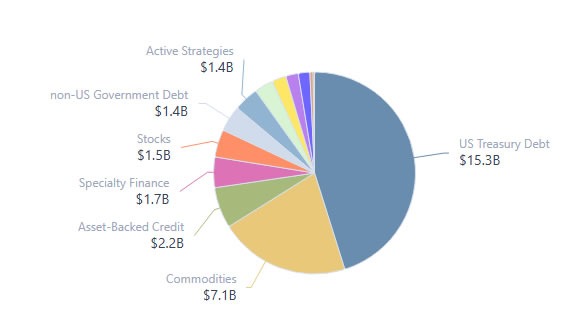
Tokenized stocks make up just 4.4% of total RWA onchain value. Source: RWA.xyz
Meanwhile, SEC Commissioner Hester Peirce said on Thursday that any exemption would be “limited in scope” by only permitting “digital representations of the same underlying equity security that an investor could purchase in the secondary market today.” The full ruling for what will and won’t be permitted has yet to be finalized.
Many practical market benefits
There are arguments that tokenized stocks provide practical market benefits, such as faster settlement, fractional ownership, lower transaction costs and the potential for round-the-clock trading, according to the Blockchain Council.
Global accessibility lets non-US investors gain exposure to high-demand US stocks without being blocked by local brokerage limitations.
Senior research analyst at Siebert Financial, Brian Vieten, said “We believe this will accelerate the transition of the US financial system from legacy rails to onchain blockchain-based rails.”
“We expect a portion of this flow to eventually flow to high-quality blockchain networks like Bitcoin and Hyperliquid,” he added.
Magazine: Crypto scammers face death, Aussie CGT makes Asian hubs attractive: Asia Express


- REAL Finance signs first securities tokenization deal with Factori AD.
- Agreement activates institutional pipeline exceeding $100 million in assets.
- Pilot covers 5 million Alpha Bulgaria warrants valued near €2.75 each.
REAL Technologies Inc., the parent company of REAL Finance, has signed its first securities tokenization agreement with Factori AD, a fully licensed and EU-regulated investment broker.
The deal marks the first live deployment of REAL Finance’s infrastructure for regulated securities and activates an institutional pipeline of more than $100 million in client assets.
The initial transaction will involve equity derivatives linked to Alpha Bulgaria AD, a Bulgarian Stock Exchange-listed investment company, and will be executed on an EVM-compatible blockchain before the planned launch of REAL Finance’s Layer 1 mainnet.
REAL Finance moves from infrastructure build-out to live deployment
REAL Technologies said the agreement with Factori AD represents a major step in the commercial rollout of REAL Finance’s tokenization infrastructure.
The company said the deal activates a committed institutional pipeline exceeding $100 million in client assets.
It also marks the first live deployment of REAL Finance’s tokenization infrastructure for regulated securities.
Under the structure, Factori AD will direct institutional and client assets through REAL’s infrastructure.
The broker will continue to manage all regulated brokerage functions, including client onboarding, KYC, AML compliance, licensed OTC execution, and segregated custody arrangements.
International securities custody will be maintained through Bank of New York. Bulgarian securities will be held at the Central Depository in Bulgaria.
The model is designed to keep regulated brokerage and compliance functions with the licensed broker, while REAL Finance provides the infrastructure and settlement layer for tokenization.
REAL Finance said its approach focuses exclusively on tokenizing real securities.
These include publicly traded equities and derivatives, private market shares, and bonds. The company said it does not focus on synthetic exposure products.
First tranche linked to Alpha Bulgaria warrants
The first transaction under the agreement involves equity derivatives tied to Alpha Bulgaria AD, a publicly traded investment company listed on the Bulgarian Stock Exchange under the ticker ALFB.
The pilot includes 5,000,000 warrants currently valued at approximately €2.75 each.
These warrants have been designated for tokenization through REAL’s infrastructure under Factori AD’s licensed custody and transfer-agent framework.
The transaction represents the first tranche of a broader institutional pipeline.
Factori AD has committed more than $100 million in additional client assets for tokenization through REAL’s infrastructure.
The transaction will be executed on an EVM-compatible blockchain before the planned launch of REAL Finance’s Layer 1 mainnet.
REAL Technologies said the pilot is designed to validate the full workflow for tokenized securities.
That workflow includes regulated sourcing, licensed OTC execution, regulated custody, and on-chain tokenization.
Dimitar Tsvetanov, managing director at Factori AD, said institutional interest in regulated tokenization infrastructure is growing.
We see growing institutional demand for regulated tokenization infrastructure that can bridge traditional securities markets with blockchain-based settlement systems. Through this agreement with REAL Finance, we are able to provide clients with a compliant framework for bringing real financial instruments on-chain while maintaining regulated execution, custody, and onboarding standards.
Regulated custody remains central to the model
REAL Technologies positioned the agreement as evidence that its tokenization model is now operational and under contract with a regulated broker.
“Signing this agreement demonstrates that REAL’s tokenization capabilities are operational and under contract with real securities and a regulated broker. The pilot allows us to validate the full model before we scale to service our multi-nine-figure committed assets pipeline,” said Ivo Grigorov, chief executive officer of REAL Technologies.
Valentin Dimitrov, chief operating officer of REAL Technologies, said the company had built the system around compliance and real financial instruments.
“We designed the architecture around licensed custody, full compliance, and genuine instruments. This first executed deal, together with the committed flow, confirms institutional demand for the infrastructure we are building,” Dimitrov said.
The deal comes amid rising institutional interest in tokenized real-world assets and blockchain-based settlement systems.
Key Highlights
- Steven McClurg, CEO of Canary Capital, forecasts XRP may reach prices exceeding $2.80 before 2026 concludes, anticipating a 30% surge in ETF participation.
- Last week witnessed XRP exchange-traded funds attracting $60 million in net capital, marking the most robust weekly showing in 2026 and pushing total inflows to $1.39 billion.
- XRPL mainnet version 3.1.3 deployment is confirmed for May 27, with half of all network nodes already running the updated software.
- Large holders purchased more than 71 million XRP tokens during the previous seven days, while 4,300 fresh addresses appeared within a single day.
- CME Group’s XRP derivatives products generated $62.87 billion in notional trading volume during their inaugural twelve months, with daily averages reaching $238 million.
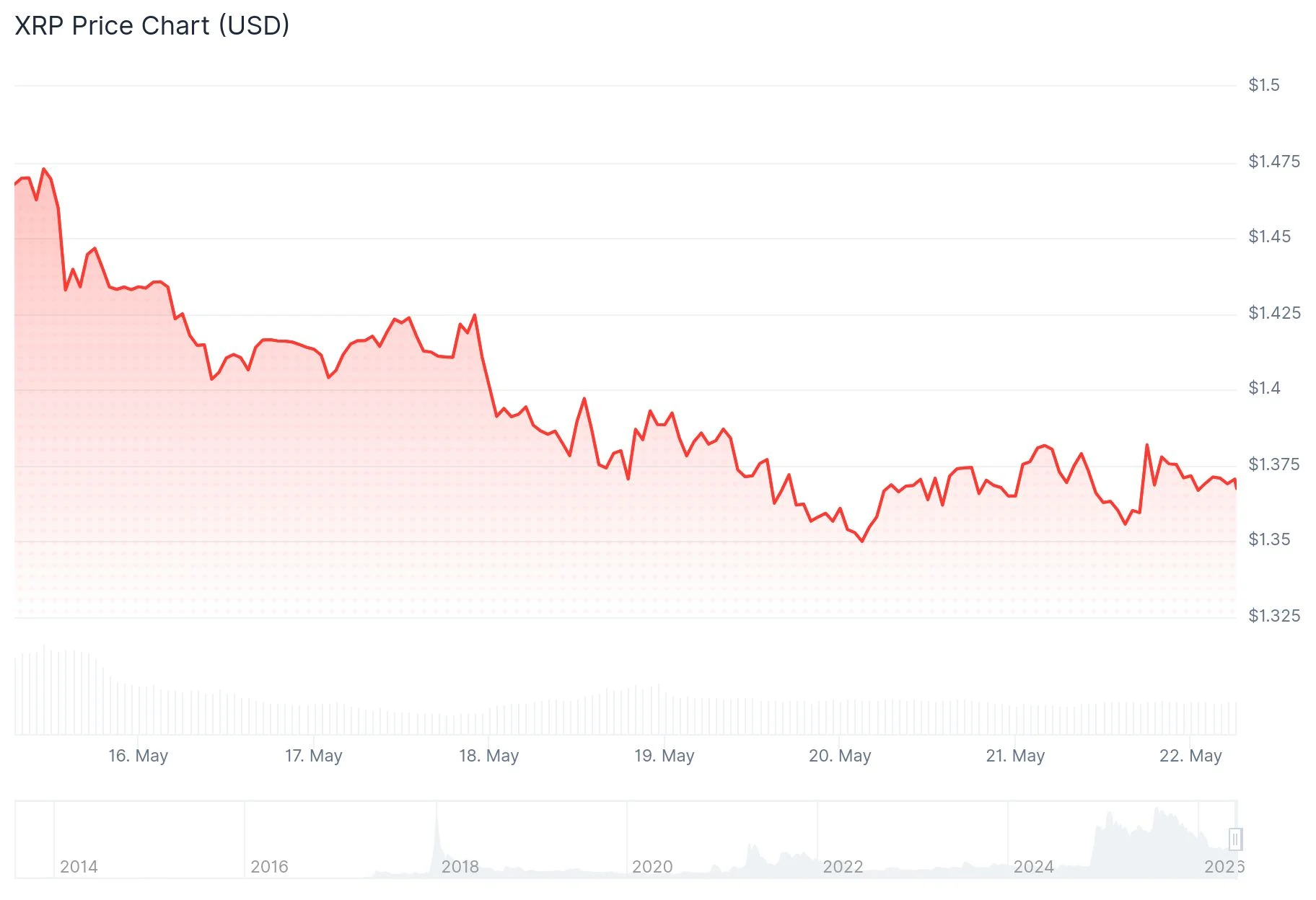
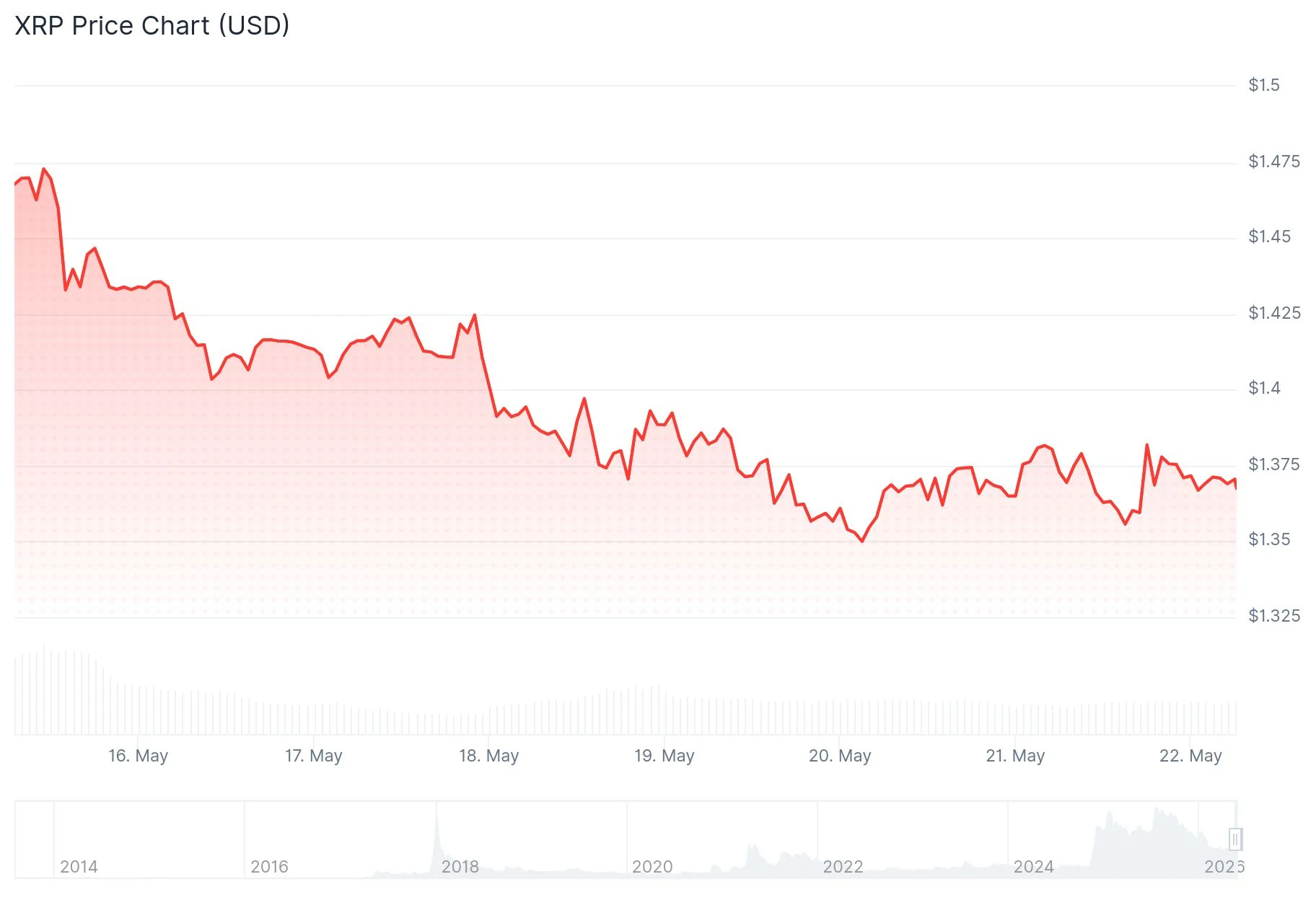
Ripple’s native token currently hovers between $1.36 and $1.40, encountering significant price resistance at the $1.40 threshold. While institutional backing remains consistent, recent trading sessions have shown limited directional movement.
CME Group reported that its XRP futures offering surpassed $62.87 billion in notional value during the first year of operation. Daily trading volume averaged $238 million, representing approximately 1.32 million executed contracts and total exposure equivalent to roughly 28.6 billion XRP tokens.
Speaking with reporters this week, Canary Capital’s Steven McClurg stated that XRP has the potential to “probably double in price by the end of the year.” Based on the current trading range near $1.40, this projection would place XRP above the $2.80 mark by December 2026.
McClurg simultaneously projected a 30% expansion in exchange-traded fund participation before year-end. However, he cautioned against expecting a linear trajectory, characterizing the upcoming summer months as “a tough summer for equities and crypto across the board.”
His market outlook divides into three distinct phases. The initial phase involves challenging summer conditions. The second phase encompasses reduced market activity during the midterm electoral cycle as investors retreat from risk assets. The final phase anticipates a powerful post-election rally fueled by ETF capital deployment, implementation of the CLARITY Act, and accelerated tokenization of real-world assets.
XRP-focused exchange-traded products registered $60 million in net inflows during the previous week, representing the strongest seven-day performance recorded in 2026. Total cumulative inflows have now reached $1.39 billion.
Network Activity Demonstrates Growth
Blockchain analytics provider Santiment identified a significant increase in XRP network expansion this week. Data from Santiment reveals that 4,300 new wallet addresses were generated within a 24-hour window — representing the fourth-largest single-day increase observed in 2026. The firm emphasized that network growth metrics serve as reliable early indicators for identifying potential price trend reversals.
Large holder activity also demonstrated accumulation patterns. Blockchain monitoring data confirms that whale addresses acquired over 71 million XRP tokens throughout the past week, although the accumulation rate has decelerated compared to earlier monthly activity.
Major XRPL Network Enhancement Scheduled for May 27
The XRP Ledger mainnet is preparing for a significant upgrade scheduled for May 27 at 03:49 AM UTC. Version 3.1.3 incorporates the fixCleanup3_1_3 amendment, designed to resolve existing issues affecting NFTs, Permissioned Domains, Vaults, and the network’s Lending Protocol functionality.
Current statistics indicate that 50% of network nodes have successfully implemented the latest software version. Validator nodes have achieved complete 100% consensus regarding the proposed amendment. Nodes failing to complete the upgrade face the risk of becoming “amendment-blocked,” which would prevent them from processing transactions or participating in the consensus mechanism.
David Schwartz, Ripple’s CTO Emeritus, has responded to various community questions concerning the upcoming upgrade. This enhancement represents one component of the comprehensive XRPL development roadmap, which encompasses tokenized real-world asset integration, permissioned decentralized exchange capabilities, and post-quantum cryptographic security implementations.
Derivatives traders maintain optimistic positions on XRP reclaiming the $1.40 level before month-end. Open interest across futures markets has expanded in recent days as the upgrade date approaches, though diminished spot market volume continues to suggest potential headwinds for near-term price momentum.
Market analyst CRYPTOWZRD observed that a decisive breakthrough above $1.40 would establish a clear pathway toward $1.55, with subsequent movement beyond that level potentially targeting the $2.00 price zone.

JPMorgan Asset Management cuts stake in Wickes Group below 5%

Verus bridge attacker sends back $8.5M, keeps bounty
“Survivor 50” winner Aubry Bracco reveals what happened when the cameras turned off

US brings back mandatory military draft registration

Steven Gerrard disagrees with Gary Neville over ‘shock’ Chelsea and Arsenal claim | Football

Register Renaming | Hackaday

ICPAK and bankers oppose new Finance Bill taxes, warn of job losses in service sector

What is Cryptocurrency? Difference in Digital Currency and Cryptocurrency explained | Economy UPSC

Financial Accounting – 3 | Bcom Sem 2 As Per NEP | Gujarat University | UGT
-

 Crypto World6 days ago
BloFin War of Whales 2026 Grand Prix opens registration for $5M trading championship
-

 Fashion7 days ago
Weekend Open Thread: Theory – Corporette.com
-

 Crypto World7 days ago
E-Estate Announces 1 Year Live: Washington DC Summit as Real Estate Tokenization Enters Its Next Phase
-

 Tech6 days ago
Google reimburses Register sources who were victims of API fraud
-

 Business7 days ago
H&R Real Estate Investment Trust (HR.UN:CA) Q1 2026 Earnings Call Transcript
-

 Entertainment7 days ago
David Letterman Returns to Late Show, Blasts Cancellation
-

 Sports6 days ago
Napoleonic enters 2026 Doomben 10,000 field via Abounding withdrawal
-

 Crypto World6 days ago
BeInCrypto 100 Institutional Awards Nomination: KAST for Best Digital Assets Neobank and Best Digital Assets Fintech
-
 Crypto World6 days ago
Bitcoin Battles US Bond Nerves With BTC Price Dip Toward New May Lows
-

 Crypto World6 days ago
ICE and CME urge US regulators to curb Hyperliquid energy trading
-

 Fashion5 days ago
On the Scene at Gucci’s Cruise Show in New York City: Mariah Carey, Kim Kardashian, Lindsay Lohan, Iman, and More!
-
 Crypto World6 days ago
Wall Street’s Boldest Gold Prediction Has Russians Rushing to Buy
-

 Crypto World6 days ago
IREN closes $3 billion convertible notes deal amid AI infrastructure expansion
-

 Fashion6 days ago
Trending Western Style Vests Perfect for Summer
-

 Politics6 days ago
Watch: far-right flag-fanatics run over victim, attack locals – Setup By the Left wing for your entertainment
-

 Fashion7 days ago
Creative Ideas for Custom T-Shirts
-

 Fashion5 days ago
Amazon Sundays: Memorial Day Hosting
-

 Crypto World15 hours ago
Blockchain.com files with SEC for U.S. IPO
-
 Fashion7 days ago
Philip Jones Wedding Jewellery For Women
-

 Crypto World6 days ago
Crypto Market Structure Bill Clears Committee; Senate Vote in Focus
You must be logged in to post a comment Login