
Crypto World
Bitcoin Shoots Past $82K, Fuels Altseason Speculation


Today, bitcoin (BTC) neared $83,000, a level it hasn’t seen since late January.
And according to on-chain analytics firm Santiment, the uptick has positively affected market sentiment, helping push up the prices of several tokens and stirring whispers that altcoin season may be coming.
Altcoins Are Stirring After Bitcoin Clears Key Level
Data shared by Santiment on May 6 showed tokens such as Toncoin (TON), Internet Computer (ICP), Cardano (ADA), SUI, ONDO, and Hyperliquid (HYPE) opening the week in positive territory.
“Some mild whispers of altseason are beginning to emerge,” wrote Santiment. “Bitcoin’s own emergence above $81.7K has allowed profits to begin trickling into long-dormant projects.”
Its internal screener showed daily gains of up to 17% for ICP and 16% for TON, while ONDO and ADA posted more modest moves near 5%. On a seven-day view, ONDO climbed roughly 23%, ICP added 16%, and Dogecoin (DOGE) gained around 15%.
One of the biggest performers was Zcash (ZEC), which went up by nearly 40% in the last 24 hours and 76% over the past week, per CoinGecko data.
Analyst Darkfost also shared some information regarding the altcoin setup, pointing out that their market cap, excluding Bitcoin and Ethereum, tracked as TOTAL3 had risen by approximately 15% from its low in February.
In addition, he said that 11.7% of alternative cryptocurrencies listed on Binance have now reclaimed their 200-day moving average, up from just 2.3% in early February, and called it “an initial signal of recovery.”
Their trading volumes on Binance have also improved, with their share relative to combined BTC and ETH volumes rising from 31% to 49% over the past two months.
Still a Long way From Full Rotation
The broader picture is still firmly in bitcoin’s favor, considering that BTC dominance is currently sitting at around 58.6% per CoinGecko, while CoinGlass’s Altcoin Season Index, which measures how many of the top 100 tokens have outperformed BTC over a rolling 90-day window, sits at 40 out of 100.
A confirmed altseason requires a reading above 75. Put simply, the majority of altcoins are still losing ground to bitcoin when you zoom out.
Additionally, the alternative coins currently garnering the most interest are also selective, clustering around only a handful of themes like AI, DeFi projects, and some old layer-1 networks, which have been overlooked for many months now.
According to Darkfost, the recovery in altcoins is “moderate.” He further said, “This type of shift can precede a more pronounced rotation phase within the market,” even though he didn’t outrightly claim that such a change was already underway.
The post Bitcoin Shoots Past $82K, Fuels Altseason Speculation appeared first on CryptoPotato.


Key Highlights
- CORZ stock surges following $421 million Polaris DS acquisition announcement
- Oklahoma power infrastructure expands with 440MW of contracted capacity
- Company pursues ambitious 1GW leasable power capacity goal
- Strategic acquisition reinforces AI hosting infrastructure objectives
- Business transformation continues from Bitcoin mining to AI services
Shares of Core Scientific (CORZ) experienced significant upward momentum following the announcement of a strategic acquisition designed to enhance power infrastructure capabilities in Oklahoma. The stock gained 10.88%, reaching $24.61 in early market activity, as investors responded positively to the company’s aggressive expansion into high-density colocation services. This strategic move further solidifies Core Scientific’s commitment to building artificial intelligence infrastructure and enterprise-scale computing facilities.
Strategic Polaris Deal Bolsters Oklahoma Operations
Core Scientific revealed its intention to purchase Polaris DS LLC in a transaction valued at $421 million, significantly expanding its Muskogee, Oklahoma footprint. This acquisition delivers 440 megawatts of power capacity under contract with Oklahoma Gas & Electric. The move is expected to accelerate the timeline for deploying advanced high-density computing infrastructure.
The transaction requires regulatory clearance and satisfaction of customary closing requirements, with completion anticipated during Q3 2026. Polaris currently maintains an active 40-acre campus located adjacent to Core Scientific’s current Muskogee operations. The property features established electric service contracts and substation facilities that enable additional expansion opportunities.
According to Core Scientific, this strategic purchase directly supports the organization’s objective of achieving approximately 1 gigawatt of leasable power infrastructure. The company has secured control of nearly 250 additional acres earmarked for future development initiatives. This comprehensive approach integrates targeted acquisitions, new construction projects, and flexible power delivery systems throughout its Oklahoma portfolio.
Advanced Infrastructure Enables AI and Computing Services
Core Scientific has strategically repositioned itself away from conventional Bitcoin mining operations toward artificial intelligence and high-performance computing services. As a result, the organization continues repurposing previous mining locations into enterprise-grade colocation facilities. The Muskogee expansion exemplifies this broader operational evolution.
Development work is currently underway on an additional 82.5 megawatt facility within the Muskogee campus complex. Initial delivery is projected for Q4 2027. Simultaneously, the existing 70 megawatt structure remains scheduled for customer handover in the second quarter of 2026.
This leased infrastructure accommodates Nvidia GB300 systems and is presently undergoing comprehensive testing and commissioning procedures. Core Scientific continues conducting detailed load assessments designed to maximize grid-connected capacity throughout the location. Additionally, the company has engineered behind-the-meter power configurations to facilitate future scalability needs.
Financial Performance Reflects Strategic Pivot
Cryptocurrency mining companies are increasingly diversifying into artificial intelligence and computing-oriented operations amid challenging mining profitability conditions. As a consequence, infrastructure holdings and long-duration power contracts have become highly valued strategic assets. Organizations controlling substantial energy resources are actively expanding into colocation and compute hosting markets.
Core Scientific’s most recent quarterly financials indicated total revenue decreased to $79.8 million compared to $94.9 million in the prior-year period. However, colocation revenue demonstrated substantial growth, climbing to $31 million from $8.5 million year-over-year. Conversely, Bitcoin mining revenue contracted to $42 million from $79 million.
The organization has also executed substantial financing arrangements to fund its expansion roadmap earlier this year. Core Scientific completed a $3.3 billion private debt placement complemented by $1 billion in loan facilities. Separately, shareholders voted against a proposed $9 billion combination with CoreWeave, though both entities maintain ongoing commercial relationships.



SpaceX plans an initial $55 billion Terafab chip and AI megafactory in Grimes County, Texas, as part of Elon Musk’s broader Austin-centered semiconductor and compute build‑out.
Summary
- Local filings in Texas show SpaceX planning an initial $55 billion investment for its Terafab semiconductor and AI super‑factory.
- The multiphase project in Grimes County is part of Elon Musk’s broader Terafab chip initiative centered around Austin.
- Earlier disclosures from Musk and media reports had put the Terafab cost at between $20 billion and $25 billion.
SpaceX is preparing to pour an estimated $55 billion into the first phase of its Terafab super‑factory in Texas, according to a recent notice from Grimes County officials and market reports tracking the project. A filing shared by local representatives on X states that “the County of Grimes, Texas, will be home to SpaceX’s multiphase, next‑gen, vertically integrated semiconductor manufacturing and advanced computing fabrication facility,” with “estimated capital for initial phase” of $55 billion and “estimated total investment of $119 billion.”
The project, dubbed Terafab, was first unveiled in March as a joint semiconductor initiative between Tesla, SpaceX and Musk’s AI company xAI in the Austin area. In remarks reported by Bloomberg, Musk called Terafab “a grand plan to eventually manufacture [our] own chips for robotics, artificial intelligence and space data centers,” and said the complex would be built in Austin and “jointly run by Tesla and SpaceX.”
Coverage from Fortune and other outlets indicated the initial cost of Terafab would be in the $20 billion to $25 billion range, with the first fab rising adjacent to Tesla’s Giga Texas plant in Austin. A detailed breakdown from Fintech Weekly described the launch event at Austin’s Seaholm Power Plant, noting that Tesla’s CFO pegged the early estimate at “between $20 and $25 billion” and that the facility would consolidate “chip design, lithography, fabrication, memory production, advanced packaging, and testing” under one roof.
The new Grimes County documentation suggests SpaceX is now planning a separate or expanded Terafab footprint beyond Austin, with the “SpaceX Reinvestment Zone No. 1 – 2026‑001” designated around the Gibbons Creek Reservoir area and a public hearing scheduled for June 3. The notice characterizes the site as a “multiphase” complex for semiconductor manufacturing and advanced compute, implying a long‑term build‑out that could eclipse earlier cost estimates.
Musk’s stated goal for Terafab is to ultimately produce enough custom silicon to support roughly a terawatt of computing power per year, powering Tesla’s autonomous vehicles and Optimus humanoid robots as well as SpaceX’s satellites and planned space data centers. As Yahoo Finance has reported, Terafab is being pitched as a vertically integrated answer to Musk’s chip supply constraints, with Tesla, SpaceX and xAI seeking to reduce dependence on external foundries like TSMC and Samsung.
The $55 billion figure tied to SpaceX’s Texas super‑factory underscores just how capital‑intensive that ambition is—and how aggressively Musk is betting that in‑house chip capacity will be a competitive edge across electric vehicles, AI, and space infrastructure.

Morgan Stanley has rolled out a cryptocurrency trading pilot on its E*Trade platform, charging lower basic retail fees than some of the largest US crypto and brokerage platforms.
The Wall Street bank is charging clients 50 basis points on the dollar value of each crypto transaction, undercutting Coinbase, Robinhood and Charles Schwab on standard retail pricing, according to a Tuesday Bloomberg report.
The offering is currently in pilot mode, with E*Trade’s 8.6 million clients expected to gain access later this year, Bloomberg reported.
The pilot illustrates how major Wall Street firms are moving further into crypto trading as they compete with exchanges and fintech platforms for retail trading revenue. Still, Kraken Pro, Binance US and some Coinbase Advanced tiers offer lower fees for crypto traders.
A spokesperson for Morgan Stanley confirmed to Cointelegraph that the details and fee structure described in the Bloomberg report were accurate.
The latest crypto push by the bank comes about a month after Morgan Stanley launched a spot Bitcoin ETF (MSBT) that recorded $30.6 million in inflows on its first day of NYSE Arca trading.
Related: Crypto VC funding plunges to $659M in April, hits near two-year low
Wall Street giants venture into crypto trading
Morgan Stanley is not the only major financial institution expanding its crypto products for retail or institutional clients.
Charles Schwab, one of the largest US brokerage firms, announced the launch of spot Bitcoin and Ether trading for retail clients less than a month ago, Cointelegraph reported on April 16. The offering launched with a 75 basis points per transaction fee.
Goldman Sachs also filed with the US Securities and Exchange Commission in April to launch the Goldman Sachs Bitcoin Premium Income ETF, a proposed fund that would generate income by selling call options on Bitcoin exchange-traded products rather than investing directly in Bitcoin.
Earlier Wall Street crypto infrastructure efforts include BNY Mellon’s digital asset custody platform, which went live in the United States in October 2022 and allowed select clients to hold and transfer Bitcoin and Ether.
Magazine: Bitcoiners eye ‘sell in May,’ SBF’s bid for new trial shut down: Hodler’s Digest, April 26 – May 2


Network News
AI AGENTS FORMS THEIR OWN COMPANY: ClawBank, an agent-economy infrastructure project, said its Manfred AI agent became the first such entity to autonomously set up a company, filing with the U.S. Internal Revenue Service (IRS) for its own Employer Identification Number (EIN), a unique code that allows it to legally operate as a business, hire staff and obtain licenses. The agent also holds an FDIC-insured U.S. bank account and a crypto wallet , Clawback said. “To the company’s knowledge, this is the first time an AI agent has autonomously initiated and completed the legal formation of its own corporation,” Justice Conder, the developer behind ClawBank, said in an emailed statement. Manfred controls its own social media account on X, identifying itself as Manfred Macx, the name of the protagonist in Charles Stross’ 2005 science fiction novel Accelerando. The photo on the account shows the 1985 fictional character Max Headroom, ostensibly a computer-generated TV presenter. “Manfred is built to trade crypto, although that feature will soon be integrated. Perhaps by the end of this month,” Conder said in a video interview. “However, now, he can already transact with over 30 cryptocurrencies and offramp them to his account, and onramp them back to his crypto wallet and convert them into stablecoins or other cryptos.” — Oliver Acuna Read more.
SOLANA’S ALPENGLOW UPGRADE COULD COME NEXT QUARTER: Solana co-founder Anatoly Yakovenko said a major upgrade to the network, dubbed Alpenglow, is expected to arrive as soon as this year, potentially within the next quarter, marking what he described as a pivotal step in the blockchain’s technical evolution. “So the Alpenglow release is basically due sometime this year, I think next quarter,” Yakovenko said during a fireside panel at Consensus Miami 2026. “That, to me, is this exciting step in the evolution of the protocol.” In simple terms, Alpenglow is about making Solana faster, more predictable and more secure at its core. Blockchains like Solana rely on a network of computers to agree on the order of transactions. Today, that process can introduce delays or uncertainty depending on network conditions. Alpenglow aims to tighten those guarantees. Yakovenko described a system where transaction confirmations approach the physical limits of how fast information can travel, essentially, near the “speed of light” around the globe. For users and developers, that means quicker finality (knowing a transaction is permanently settled) and a more reliable foundation for building applications. — Margaux Nijkerk Read more.
RIPPLE SHARING INTELLIGENCE ON NORTH KOREA HACKING THREAT: Ripple is now sharing its internal threat intelligence on North Korean hackers with the crypto industry, the company said, in a move that reframes how the sector is responding to a shift in DPRK attack methodology. The Drift hack was not a hack in the way most people think of one. Nobody found a bug or exploited a smart contract. North Korean operatives spent months befriending Drift’s contributors, slipped malware onto their machines, and walked off with the keys. By the time the $285 million moved, every system that was supposed to catch a hack had nothing to flag. That is the version of events Ripple and Crypto ISAC, the crypto industry’s threat-sharing group, laid out Monday alongside news that Ripple is now sharing its internal data on North Korean threat actors with the rest of the sector. The 2022-24 wave of more DeFi hacks was centred on exploiting code, with attackers finding smart contract vulnerabilities and draining protocols in minutes. But as security gets tighter, the modus operandi shifts from technology to people. Rogue operatives apply for jobs at crypto firms, pass background checks, show up on Zoom calls and build trust for months. Then they deploy attacks that no traditional security tool was built to catch, because the attacker is already inside. Ripple is now feeding Crypto ISAC the kind of profile data that makes that pattern legible across companies. — Shaurya Malwa Read more.
CLOUDLFARE ON AI AGENTS AND WEB ECONOMICS: For decades, the web ran on a simple bargain: Publishers and businesses made information freely accessible, search engines and other crawlers indexed it, and those services sent human traffic back. Sites could then monetize that traffic through ads, subscriptions or commerce. But that’s all changing fast, Cloudflare Chief Strategy Officer Stephanie Cohen said at CoinDesk’s Consensus conference in Miami. With the rise of AI agents, software can scrape a webpage, summarize content and keep the source user inside a chatbot or automated workflow instead of sending a person back to the original site. Cohen said that shift is breaking the internet’s old business model, with non-human traffic now exceeding human engagement. Cloudflare’s proposed answer is to give websites more control over automated traffic: identify the bots, verify who they are, understand what they intend to do and decide whether to allow, block or charge them. Cohen pointed to x402, an open payments protocol built around the HTTP 402 “Payment Required” status code, as one piece of that stack. — Jeffrey Albus Read More.
In Other News
- Coinbase is set to slashing its workforce by roughly 14%, or 660 employees in response to negative market conditions and AI challenges. CEO Brian Armstrong announced the cuts in an X post, citing the “two forces” that converged in his firm’s decision to slash staff. Coinbase has more than 4,700 employees, according to its website, so 14% would be equivalent to around 660. “While we’ve managed through that cyclicality many times before and come out stronger on the other side, we’re currently in a down market and need to adjust our cost structure now so that we emerge from this period leaner, faster, and more efficient for our next phase of growth,” said the CEO of the Nasdaq-listed company. The second reason is AI, and how it is changing the way Coinbase operates, he said. “Over the past year, I’ve watched engineers use AI to ship in days what used to take a team weeks,” Armstrong stated, adding that “the pace of what’s possible with a small, focused team has changed dramatically, and it’s accelerating every day.” — Olivier Acuna Read more.
- Bullish, CoinDesk’s parent company, has agreed to acquire transfer agent and shareholder services firm Equiniti in a $4.2 billion deal that would fold a core piece of traditional market infrastructure into its digital asset platform, expanding its push into tokenized securities. The transaction comprises $1.85 billion of assumed Equiniti debt and roughly $2.35 billion in Bullish stock, priced at $38.48 per share based on Bullish’s 30-day VWAP through May 4, according to a press release. After initially declining on news of the all-stock deal, Bullish shares have surged 17% in morning U.S. trade. The transaction gives Bullish, a regulated transfer agent, a required function for public companies, alongside its existing tokenization, trading and market infrastructure capabilities. — Will Canny Read more.
Regulatory and Policy
- Lawyers seeking to seize $71 million in frozen ether for victims of North Korean terrorism changed their legal strategy Tuesday, arguing in a new court filing that the April 18 rsETH exploit was not theft but fraud, directly countering Aave’s attempt to void a restraining notice blocking the release of the assets. In a 30-page opposition brief filed in the Southern District of New York, a lawyer representing the North Korean terror victims argues the exploit was not a smash-and-grab theft but a fraudulent lending transaction, and that under longstanding U.S. law, fraudsters who acquire property through deception can obtain legal title to it, even if that ownership is later reversible. “What actually happened is that North Korea borrowed assets from users of the ‘Aave Protocol’ and did not pay it back, and when the ‘Aave Protocol’ sought to liquidate North Korea’s collateral, the ‘Aave Protocol’ unhappily discovered that the collateral was worthless,” the new filing reads. — Sam Reynolds Read more.
- Brad Garlinghouse, Ripple’s CEO, has been closely following the U.S. Senate’s progress on the crypto market structure bill, and he said it’s not a “done deal” as the next two weeks may be pivotal for the legislation’s chances. “If it doesn’t happen then, I think the likelihood is going to drop precipitously,” Garlinghouse said Tuesday at Consensus 2026 in Miami. But he said he still thinks it’s likely to happen, and the next moment will be the scheduling of the Senate Banking Committee’s long-awaited hearing to “mark up” the bill and advance it to the next stage. Senators at the center of the negotiations over the Digital Asset Market Clarity Act revealed last week the latest compromise language on a major sticking point — stablecoin yield — that is expected to allow the banking panel to schedule the hearing. “Do I think it’s perfect? Hell, no,” Garlinghouse said. “There’s tradeoffs and compromises, but I do think clarity is better than chaos.” The stablecoin compromise aims for a balance that allows crypto firms to pursue certain rewards programs without offering yield-bearing stablecoin accounts that resemble banks’ interest-bearing deposits that fuel U.S. lending. Crypto insiders have generally agreed that it’s acceptable, but a coalition of banking groups said this week that the deal “falls short.” — Jesse Hamilton Read more.
Calendar
- May 5-7, 2026: Consensus, Miami
- June 2-3, 2026: Proof of Talk, Paris
- June 8-10, 2026: ETHConf, New York
- Sept. 29-Oct.1, 2026: Korea Blockchain Week, Seoul
- Oct. 7-8, 2026: Token2049, Singapore
- Nov. 3-6, 2026: Devcon, Mumbai
- Nov. 15-17, 2026: Solana Breakpoint, London
Bitcoin has continued its recovery structure with buyers gradually regaining control. The recent upward expansion has pushed the market back toward key resistance levels, while momentum indicators and market structure suggest that BTC is attempting to transition from a corrective phase into a broader bullish continuation. However, the market is now approaching a decisive area where confirmation is required before a sustained rally can unfold.
Bitcoin Price Analysis: The Daily Chart
On the daily timeframe, BTC has recently displayed notable bullish momentum and managed to slightly break above the upper boundary of the ascending channel that has contained the price action for the past several months. This breakout is an important technical development, as it signals strengthening buyer dominance after weeks of gradual accumulation. Nevertheless, the breakout still requires confirmation.
If the price stabilizes above the channel’s upper boundary at $80K and forms a successful pullback toward it, the breakout would likely be validated, opening the door for another bullish leg toward higher resistance zones. At the same time, Bitcoin is approaching a major resistance confluence around the $83K range, where the 200-day moving average is currently located.
This area could temporarily slow the bullish momentum. In this structure, the broken price channel now acts as dynamic support, while the $83K-$85K region remains the next major hurdle for buyers.

BTC/USDT 4-Hour Chart
On the 4-hour chart, a new ascending price channel has emerged, highlighted by the yellow structure. The market has been respecting both the upper and lower boundaries of this formation, indicating an orderly bullish trend in the short term. Bitcoin is currently trading near a significant resistance zone around the $81K-$84K range, represented by the green supply region.
Meanwhile, the $75K-$78K region, highlighted by the brown box, is acting as the main short-term support. Given the proximity to resistance and the recent sharp rally, the market is likely to experience consolidation and fluctuating price action within this channel over the coming days. A breakout above the $81K-$84K resistance could trigger continuation toward higher levels, while a rejection and breakdown below the $75K-$78K support may lead to a deeper correction within the broader structure.

Sentiment Analysis
From a liquidation perspective, the heatmap indicates that Bitcoin has recently swept through a large portion of the liquidity concentrated around the $80K region. This suggests that a significant number of short positions have already been liquidated during the recent rally.
However, notable liquidity clusters still remain above the current market price, particularly around the $85K-$95K region, making these levels attractive targets for further upside expansion and potential short squeezes. On the other hand, substantial liquidity pools continue to exist at lower price levels, especially below the $60K-$70K range. These deeper liquidity zones could still attract price in the coming months if broader market conditions weaken or if the current breakout fails to sustain itself.
Overall, Bitcoin is showing improving bullish momentum after reclaiming key technical levels, but the market is now entering a critical resistance zone. The interaction between the broken ascending channel, the 200-day moving average around $88K-$90K, and the surrounding liquidity clusters will likely determine whether BTC can sustain a broader uptrend or enter another consolidation phase before the next major move.

The post Bitcoin Price Analysis: BTC Hits Key Decision Zone After 20% Monthly Rally appeared first on CryptoPotato.


BlackRock CEO Larry Fink told the Milken Institute that surging compute demand could spawn an entirely new asset class. Traders may one day buy and sell futures contracts on raw computing power, he said.
Speaking at the conference in Beverly Hills, Fink described compute as scarce enough to need its own derivatives market. He placed it alongside energy and agricultural commodities, which firms already hedge through structured futures.
Why Compute Could Become a New Asset Class
Fink said the country does not yet have the chips, memory, or power capacity needed for projected AI workloads. He compared raw compute to fuel and grain, commodities that markets already price through forward contracts.
The framing nudged the audience toward viewing compute as a tradable resource. Brookfield CEO Bruce Flatt joined Fink onstage for the discussion.
“A new asset class will be buying futures of compute.”
The BlackRock chairman framed compute as the next major commodity for financial markets, not just a cloud service. Institutions financing AI build-outs could hedge capacity costs the way airlines hedge fuel today.
That hedge would price the megawatts and chips behind every model query. Fink suggested the contracts would attract long-duration capital looking for tangible exposure.
Power, Chips, and Capital All Run Short
Fink also rejected the view that AI investment has formed a bubble. Demand still outpaces supply across the entire stack, he told the audience.
He warned that record funding rounds from cloud and chip giants may not cover global data center build-outs. He even predicted a coming shortage of capital in the sector.
“We’re short power, we’re short compute, we’re short chips.”
Fink told the Milken audience.
The remarks landed as BlackRock prepared to unveil a partnership with an unnamed hyperscaler later this week. The deal would push the firm’s $13.9 trillion balance sheet deeper into AI infrastructure.
It would also move the asset manager beyond financing and into direct stakes in the physical layer. Fink declined to name the partner ahead of the formal announcement.
Whether exchanges adopt compute futures will depend on how the industry defines a standard unit. That question remains unsettled across hardware generations and shifting AI workloads. Fink’s framing suggests BlackRock sees a benchmark arriving sooner than markets currently price. The firm appears to be positioning itself ahead of any race to set that standard.
The post BlackRock CEO Larry Fink Discusses a New Asset Class appeared first on BeInCrypto.

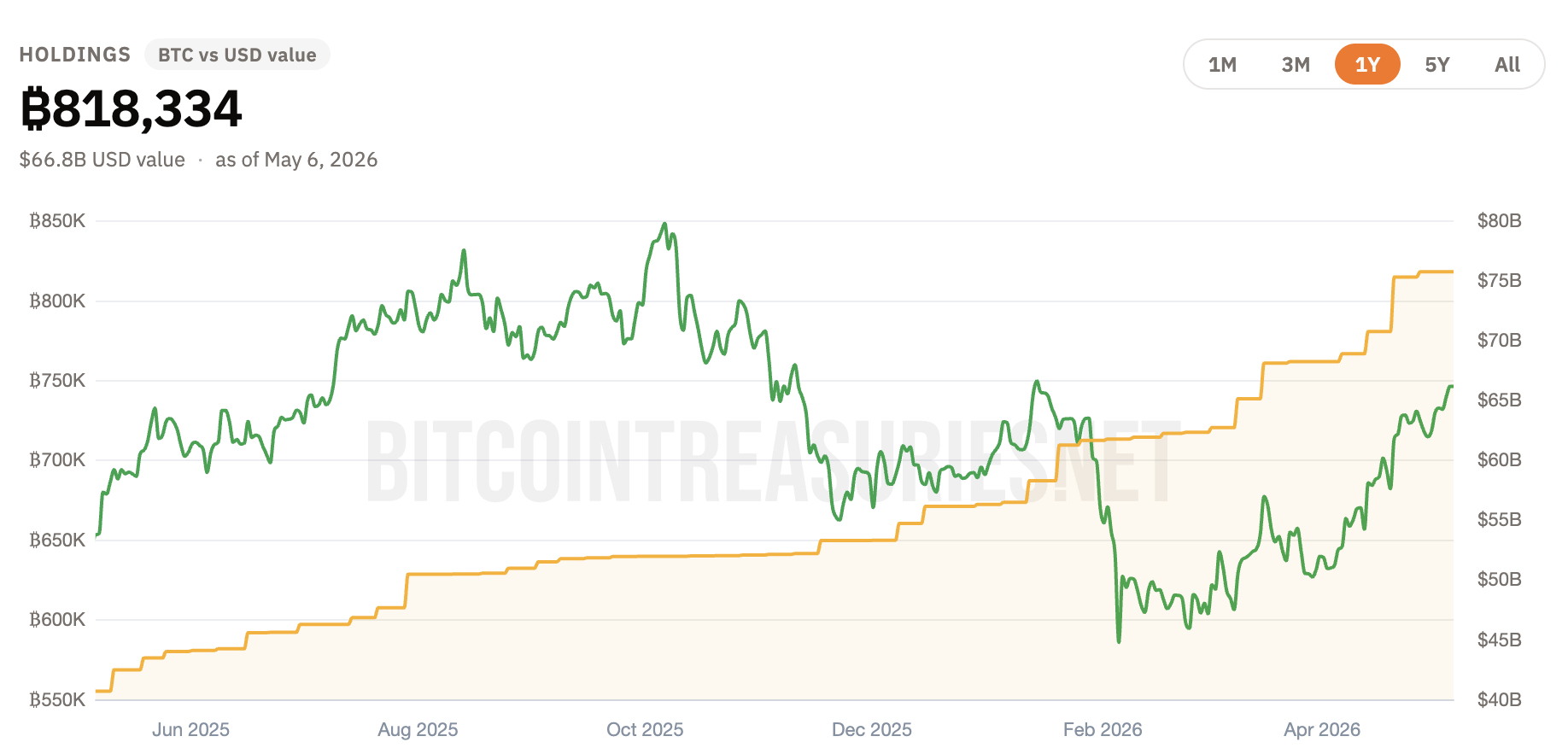
Strategy is making huge news as it abandons its never-sell Bitcoin policy, putting 818,334 BTC, or nearly 4% of total supply, in play as an actively managed treasury asset. CEO Phong Le confirmed on Tuesday’s earnings call that the company will now consider selling BTC to buy dollars or retire debt, provided the trade is accretive to bitcoin per share. A direct reversal of the philosophy Michael Saylor built the entire Strategy brand around.
“We will sell Bitcoin when it is advantageous to the company.” – @Strategy-CEO @PhongLe https://t.co/KFJBOql40V pic.twitter.com/yKHeF2Bvuw
— Tristan – Blocktrainer.de

 (@tristanblcktrnr) May 5, 2026
The position was acquired for $61.81 billion at an average cost of $75,500 per coin. A $12.5 billion net loss in Q1 2026, driven by the BTC price decline at the start of the year, provided the financial pressure that forced the pivot. MSTR shares jumped 3% in after-hours trading on the announcement.
Will Strategy dump its entire stack? It almost certainly will not. But thinking of selling when people were asked to sell their kidneys is not a good look.
Discover: Bitcoin price analysis – key support levels and what breaks them
What Happens to Bitcoin If Strategy Starts Selling?
Strategy’s 818,334 BTC is worth $61.8 billion at the average acquisition cost, but at the current spot value of $81,500, the position is valued at $66.8 billion. The number is way too big for a single order book to absorb cleanly.
Strategy’s purchases of $500 million–$1 billion in BTC have reliably moved spot prices upward by 2%–4% in the sessions following disclosure. The reverse dynamic of a coordinated sell program would face thinner liquidity on the ask side, particularly below the $75,000–$78,000 support band, where institutional bids concentrate.
Any meaningful disposal would almost certainly route through OTC desks and not exchange order books. That limits slippage but does not eliminate price impact. A block sale of 5,000–10,000 BTC would represent one of the largest single institutional transactions in recent cycle history and would carry significant signal weight regardless of execution venue.
Le’s stated condition of selling only when it is accretive to bitcoin per share creates a governor on the program. But the market liquidity at the $70,000–$74,000 band is thin. If BTC breaks below the company’s average cost basis, the calculus around debt servicing versus hodling shifts materially.
Forget the News, You Can Buy Bitcoin Hyper and Still Keep Your Kidney
Strategy’s current news is scary for retail Bitcoin holders. People are looking for an asymmetrical upside when BTC is stuck under $100K, something that has Bitcoin security, built to fix Bitcoin flaws, and doesn’t require selling a kidney to buy.
Bitcoin Hyper ($HYPER) is a project drawing attention. Positioned as the first-ever Bitcoin Layer 2 with Solana Virtual Machine (SVM) integration, it aims to address Bitcoin’s three core limitations simultaneously: slow transactions, high fees, and limited programmability.
In short, Hyper is delivering sub-second finality and low-cost smart contract execution while inheriting Bitcoin’s security model.
The presale has raised more than $32.5 million at a current token price of $0.0136, with 36% APY staking available for early participants. It’s still cheap, and at that raised level, meaningful institutional and retail appetite is already present, but the price remains early-stage by any measure. Keep your kidneys and get Hyper.
Research Bitcoin Hyper before the presale concludes.
The post Bitcoin News: Saylor “Sell a Kidney” Call is Now a BTC Exit? appeared first on Cryptonews.

A blockchain analytics firm has flagged a tightly coordinated wave of activity around the Mystery (MYSTERY) memecoin at launch, where 90 newly funded wallets purchased roughly 90% of the token’s supply within minutes of trading opening. Bubblemaps labeled the pattern a “textbook scam,” arguing that the wallet cluster—funded by a single address known as 0x544E—appears to have orchestrated an outsized early stake before selling into the market and leaving late participants exposed to sharp price moves.
The wallet cluster allegedly funded by 0x544E previously moved 20 Ether from the crypto exchange Binance, according to Bubblemaps. After accumulating the majority of the supply at launch, the same cluster reportedly dumped about $100,000 worth of Mystery tokens and continues to hold around 40% of the total supply, Bubblemaps reported in a Tuesday post on X. The firm’s assessment underscores ongoing concerns that automated buying and coordinated wallet activity can dominate launches for thinly traded memecoins, undermining the principle of a fair, open starting line for all participants.
Key takeaways
- Coordinated launch boost: 90 wallets linked to 0x544E purchased about 90% of Mystery’s supply at launch and, after a partial sell-off, still control roughly 40% of the supply, according to Bubblemaps.
- “Textbook scam” characterization: Bubblemaps described the pattern as a textbook scam, highlighting how automated buying clusters can sidestep ordinary traders in nascent memecoins.
- Market performance swing: Mystery’s market capitalization surged to about $7.5 million on April 28, then declined roughly 75% to around $1.9 million, based on Dexscreener data.
- Broader context: The incident adds to a history of sniping-related risk in memecoins, a theme that has featured in prior reporting on fast-launch tokens and launch-time manipulation.
- Related signals and responses: The phenomenon has drawn attention in other memecoin episodes, including high-profile sniper activity and debates about fair launches in crypto communities.
Dissecting the launch tactic and its implications
Sniping—where bots or automated trading tools snap up newly listed tokens the moment a market opens—has long been a contentious practice in the memecoin ecosystem. Bubblemaps’ July 2024 analysis and subsequent observations emphasize that a cluster of wallets can secure a lion’s share of supply in a live launch, creating a barrier for ordinary traders who enter later. The immediate consequence is a higher risk that early holders may exit with outsized gains, while late entrants face steeper losses if the early buyers choose to sell more aggressively.
In this case, Bubblemaps noted that the cluster funded by 0x544E not only acquired most of Mystery’s supply at launch but also proceeded to liquidate a portion of its stake, selling about $100,000 worth of tokens and maintaining a substantial position. The firm framed the pattern as a classic case of market manipulation in a space where liquidity is thin and bot-driven activity can disproportionately influence price discovery. For investors and users, the episode reinforces the importance of transparent launch mechanisms and robust anti-bot controls in new-token ecosystems.
Cointelegraph reached out to Mystery for comment on the allegations but did not receive a response at the time of publication. The project brands itself as a free-spirited frog from Matt Furie’s “The Night Riders” universe and has claimed to have acquired the HEDZ NFT IP rights from Furie, according to a Monday post on X. Whether those claims will be substantiated remains unclear, and the lack of public comment from Mystery leaves unanswered questions about governance, rights, and long-term token utility.
Market trajectory: from peak to pullback
Mystery’s price action has mirrored a broader pattern often seen with memecoins: rapid appreciation fueled by novelty and social media chatter, followed by a sharp retracement as early participants take profits and new buyers reassess risk. Dexscreener data show the token’s market capitalization peaking at roughly $7.5 million on April 28, before retreating by about three-quarters to an estimated $1.9 million at the time of reporting. The chart highlights the volatility that can accompany freshly minted memecoins, particularly when a minority of wallets controls a large portion of the supply and liquidity remains shallow.
The all-time dynamics of Mystery, including its stated IP ambitions and branding around a meme character, add another layer to the story: a token whose narrative is as much about community culture as it is about on-chain mechanics. Such narratives can amplify demand in the short term, but they also attract scrutiny from researchers and on-chain watchers who assess sustainability, governance, and true fractional ownership of the supply.
For readers tracking this space, the Mystery episode is a reminder that market depth, holder concentration, and the presence of automated buying bots can significantly shape a token’s initial trajectory. Those factors, in turn, influence risk for late entrants and the potential for sharp, abrupt corrections after launch hype subsides.
Broader context: snipers, front-running, and the memecoin landscape
The incident sits within a longer arc of memecoin launches where snipers and bot-driven strategies have repeatedly captured headlines. In early 2025, a prominent sniper reportedly earned nearly $28 million on the Broccoli (BROCCOLI) memecoin, illustrating how launch-phase dynamics can generate outsized profits for a small group of participants. The episode followed public commentary from notable figures in the crypto space and underscored how launch windows can become focal points for automated, rapid trading activity.
Earlier reporting also touched on allegations surrounding new token distributions, including assertions that clusters of wallets had accumulated substantial shares of tokens at launch in other projects. While some projects disputed these claims, the pattern remains a touchstone in ongoing discussions about launch fairness and market integrity in memecoin markets. For additional context, readers can review related coverage on the topic, including notes on possible front-running considerations ahead of exchange listings.
As the ecosystem contends with these dynamics, observers are watching for clearer best practices around fair launches, anti-bot measures, and governance frameworks that can help ensure that new token markets remain accessible to a broad base of participants without enabling a small group to secure outsized control from day one.
Related reporting from Cointelegraph and its coverage network has highlighted these tensions from multiple angles, including analyses of front-running before listings and the regulatory and technological responses that may influence how exchanges and projects structure launches in the future.
Source notes and embedded context referenced in this article include Bubblemaps’ X posts detailing the 0x544E wallet cluster’s actions, Dexscreener’s price-history data, and Mystery’s public statements about IP-related claims. Readers seeking deeper, source-specific color can refer to the linked items in the original reporting for the exact timestamps and on-chain footprints.
As the market digests this episode, investors should monitor how Mystery evolves, whether the project clarifies its IP claims, and how the broader memecoin community responds to concerns about fair-launch integrity and anti-bot safeguards in the near term. The pace of regulatory and platform-level responses could also shape the risk profile for new token launches in the months ahead.
Crypto World
UAE Regulators Launch First Joint Audit Quality Inspections to Strengthen Financial Oversight

The Dubai Financial Services Authority (DFSA), the UAE Ministry of Economy and Tourism, and the Capital Market Authority (CMA) have announced the launch of their first joint Quality Management audit inspections, marking a new step toward strengthening financial oversight and regulatory coordination across the United Arab Emirates.
According to the announcement, the initiative is designed to improve oversight standards for audit firms operating within the UAE and reinforce confidence in the country’s financial reporting ecosystem.
The joint inspections follow recently signed Memorandums of Understanding between the participating authorities aimed at improving regulatory cooperation and information sharing related to auditor supervision across multiple jurisdictions.
Focus on International Audit Standards
The inspections will specifically assess how audit firms implement the International Standard on Quality Management 1 (ISQM 1), a globally recognized framework focused on quality control and governance within audit and assurance practices.
Regulators said the initiative is intended to ensure that financial institutions and market participants operating across the UAE benefit from consistent and high-quality audit standards aligned with international best practices.
The collaboration also reflects broader efforts by UAE authorities to strengthen transparency, governance, and investor confidence as the country continues positioning itself as a leading regional and global financial hub.
Strengthening the UAE Financial Ecosystem
The move comes as the UAE continues accelerating reforms across financial services, capital markets, compliance, and corporate governance.
Over recent years, regulators including the DFSA and other UAE authorities have increased their focus on international regulatory alignment, financial supervision, and institutional governance standards in support of long-term market development.
The latest initiative is expected to further enhance coordination between regulators while supporting the integrity and resilience of the UAE’s financial ecosystem.
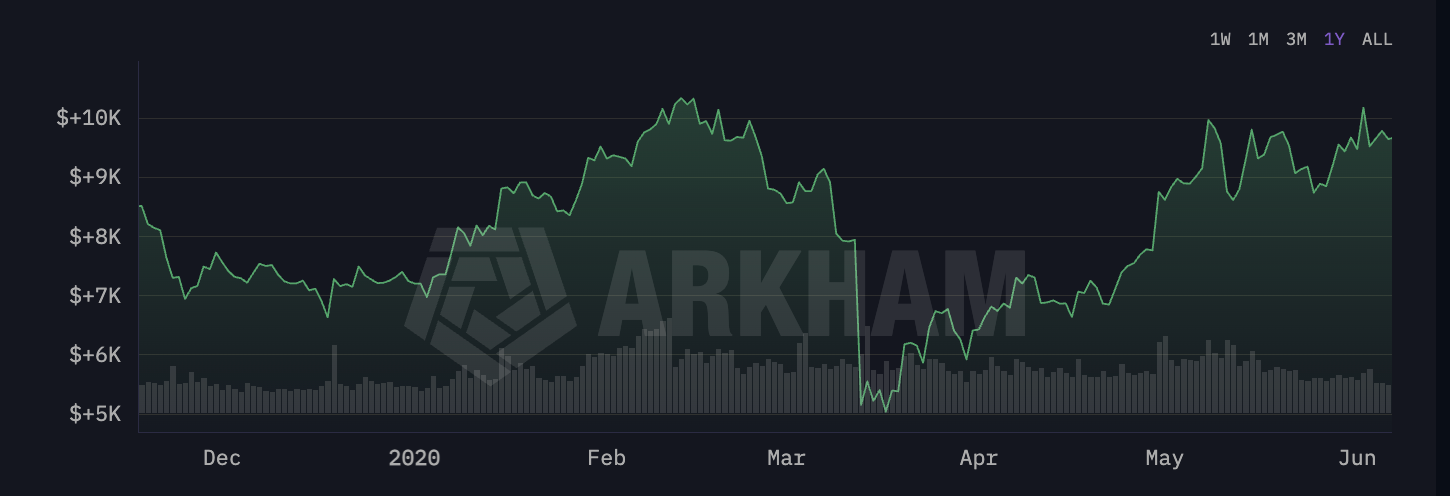
The WHO has sounded global alarms over a hantavirus outbreak that has already claimed three lives on the MV Hondius cruise ship. Bitcoin investors are recalling Black Thursday in March 2020.
The parallel with the start of COVID-19 reopens doubts about a possible sharp reaction from the crypto market.
What is Hantavirus and why is it a cause for concern at the WHO?
Hantavirus is a serious viral disease transmitted through contact with the urine, feces, or saliva of infected rodents. Its fatality rate can reach 50% in the Americas, and there is no approved vaccine or specific antiviral treatment.
The WHO (World Health Organization) confirmed yesterday that seven people aboard the MV Hondius have fallen ill, with three deaths , one person in critical condition, and three with mild symptoms. The cruise ship departed from Ushuaia , Argentina, on April 1, 2016.
The most worrying element comes from the WHO itself. The organization did not rule out person-to-person transmission among close contacts on board the cruise ship, although it maintains the overall risk as low for now.
A 69-year-old Dutch woman disembarked in Saint Helena on April 24 and died after flying to Johannesburg. The WHO is now tracing more than 80 passengers and six crew members who traveled on the same regional flight.
Follow us on X for the latest news in real time
Hantavirus, COVID-19 and Bitcoin: parallels and differences with Black Thursday 2020
For Bitcoin investors, the scene evokes bitter memories . When the WHO declared COVID-19 a pandemic on March 11, 2020, global markets collapsed.
That episode was dubbed the crypto “Black Thursday.” Bitcoin hit lows of around $4,000 and lost more than 50% of its value in 48 hours. The total market capitalization was cut in half in just a few days.
The narrative of Bitcoin as “digital gold” was temporarily shattered. The asset acted as a source of liquidity, and investors liquidated positions to reduce risk. Only gold and Treasury bonds partially withstood the first wave of global panic.
However, Bitcoin then staged a historic recovery. It took just a month and a half to regain the price lost after the March 12 crash , launching one of the biggest bull rallies in its recent history.

The current context differs from that which precipitated Black Thursday. The WHO assesses the global risk of Hantavirus as low and limited to the cruise ship environment , with no visible community spread on the mainland so far.
Hantavirus is also not transmitted as easily as SARS-CoV-2. Human-to-human transmission is exceptional and requires very close contact. This substantially reduces the likelihood of a global pandemic capable of paralyzing economies.
Bitcoin is also more mature at this point. It boasts massive corporate treasuries, approved spot ETFs, a Strategic Reserve backed by the White House, and a greater institutional presence than in March 2020, when it was still a marginal asset.
Even so, traders are watching closely. A worsening of the outbreak or further deaths could trigger a bout of risk aversion in the markets, initially impacting volatile assets like Bitcoin and less liquid altcoins .
“For God’s sake, let BTC go up for a month without war or coronavirus,” exclaimed onchainmonk on X
What should investors be watching now?
The key will be the speed of the health response. If the WHO contains the outbreak and rules out sustained human-to-human transmission, the impact on financial and crypto markets will likely be limited and very short-lived.
Conversely, a global escalation would generate immediate macroeconomic uncertainty. Bitcoin could suffer an initial shock similar to that of March 2020, although the depth and duration will depend on the monetary response and recent institutional flows.
The post Hantavirus Scare Sparks Bitcoin Crash Fears, Is 2020 Repeating? appeared first on BeInCrypto.

IPL 2026: Yuzvendra Chahal scripts unwanted record thanks to Punjab Kings’ butter fingers | Cricket News

XRP HOLDERS: This Changes EVERYTHING

Man in critical condition after fall from flat above pub in Consett

Manchester United reach agreement with Casemiro over contract clause amid transfer speculation

US brings back mandatory military draft registration

Steven Gerrard disagrees with Gary Neville over ‘shock’ Chelsea and Arsenal claim | Football


-
 Business7 days ago
Tesla Officially Registers Elon Musk’s Stock: What Investors Need to Know
-

 NewsBeat3 days ago
Channel 5 – All Creatures Great and Small series 7 new post
-

 Entertainment7 days ago
Insider Claims Reason Behind Key & Peele Split
-
 Tech5 days ago
Trump’s 25% EU auto tariff breaches Turnberry Agreement that also covers semiconductors and digital trade
-
 Sports5 days ago
Paul Scholes issues Marcus Rashford reality check as agreement emerges over Man United star
-

 Entertainment5 days ago
Met Gala 2026 Rumored Guest List Is Turning Heads
-

 Entertainment6 days ago
Celebrities Who Are Attending the 2026 Met Gala Event
-

 Business5 days ago
Strait of Hormuz Blockade Persists Amid US-Iran Standoff, Sending Oil Prices Soaring
-
Entertainment5 days ago
New on Prime Video in May 2026 — Full List of Movies and Shows
-
 Sports5 days ago
David Benavidez responds to team Canelo saying the fight will never happen
-
Business7 days ago
Strait of Hormuz Remains Heavily Restricted on April 29 Amid Iran Conflict
-

 Sports5 days ago
Cavaliers vs. Raptors Game 6 live score, updates, highlights from 2026 NBA playoffs first-round series
-

 Crypto World7 days ago
Meta (META) starts stablecoin payout to creators in Circle’s USDC on Polygon, Solana via Stripe
-

 Tech7 days ago
Texas Instruments made a new flagship graphing calculator: the TI-84 Evo
-

 Sports7 days ago
Saudi Arabia set to withdraw LIV Golf funding after 2026 season, per reports
-

 Entertainment5 days ago
Kylie Jenner Hit With Second Lawsuit From Ex-Housekeeper
-
 Sports5 days ago
IPL 2026: ‘Love you darling’- Hardik Pandya’s reaction to MS Dhoni steals the show |Watch | Cricket News
-

 Sports5 days ago
Plane crash in Wimberley, Texas kills 5 pickleball players at tournament
-

 Entertainment5 days ago
Young and the Restless Next Week: Cane Arrested & Matt’s Deadly New Scheme!
-

 Tech6 days ago
Mark Zuckerberg Says Meta Is Working On AI Agents For Personal And Business Use
You must be logged in to post a comment Login