

Crypto World
Cardano News: Cardano’s Quantum-Safe Roadmap vs. Muted Market Response: Why ADA Is Stagnant


Cardano News: ADA is trading near $0.25, stuck in a $0.25–$0.28 intraday band with neutral funding rates and whale accumulation at a 30-day low.
However, Cardano is executing one of the most aggressive post-quantum cryptography pushes of any major blockchain, complete with a live governance vote, a formal research proposal expected imminently, and a roadmap that places it ahead of Ethereum on quantum readiness.
The contradiction is stark and the market is not resolving it.
Technical milestones are piling up. Price is not moving. The question the market is sitting with is whether crypto security infrastructure has any near-term pricing power at all, or whether ADA is simply trapped in a broader altcoin liquidity drought that no governance vote can fix.

Discover: The best crypto to diversify your portfolio with
Cardano’s Post-Quantum Push: What the Roadmap Actually Says
Charles Hoskinson has framed Cardano’s quantum resistance strategy as an existential preparation play, not an emergency response.
Speaking publicly this week, Hoskinson described the quantum threat as “like an asteroid coming towards Earth”, a slow-moving but terminal risk that decentralized networks need to coordinate around before it becomes a market shock.
A formal IOHK research proposal is expected next week, building on a governance vote already in motion.
The technical architecture under discussion centers on a phased migration model. Hoskinson pointed to Cardano’s established hard fork cadence as a structural advantage, the network has executed regular protocol upgrades without fragmentation, which makes a future quantum-resistant migration more tractable than on chains with rigid upgrade cultures.
The planned approach would layer post-quantum cryptographic signatures alongside existing ones, preserving compatibility while adding quantum-safe security primitives.
Google Quantum AI reportedly ranked Cardano second among major blockchains for post-quantum security posture, behind only Bitcoin and ahead of Ethereum and Solana, a ranking that contributed to ADA’s inclusion in the Hashdex Nasdaq Crypto Index ETF despite persistent price underperformance.
Cardano also logs roughly 680 GitHub commits per week across ~80 repositories, placing it among the most active chains by development output. The work is real. The market premium for it is not.
Cardano is not alone in this race. Ripple has outlined a four-phase roadmap for the XRP Ledger targeting quantum resistance by 2028.
Bitcoin developers have circulated BIP-360 and BIP-361 as migration frameworks, with BIP-361 proposing a staged move away from vulnerable addresses that could freeze older coins after a deadline.
Cardano’s governance-first approach to this migration distinguishes it from those proposals, but the market has not assigned that distinction a valuation premium.
Can Cardano (ADA) Price Break Out of Its $0.28 Range?
ADA is sitting approximately 80% below its $3.10 all-time high and roughly 49% down year-to-date.
The $0.25–$0.28 range has acted as a soft floor through much of Q1–Q2 2026, but the 200-day moving average sits near $0.46 – a level the token has not challenged in months.
Resistance at $0.28 capped the intraday high this week; support near $0.258 held the low.
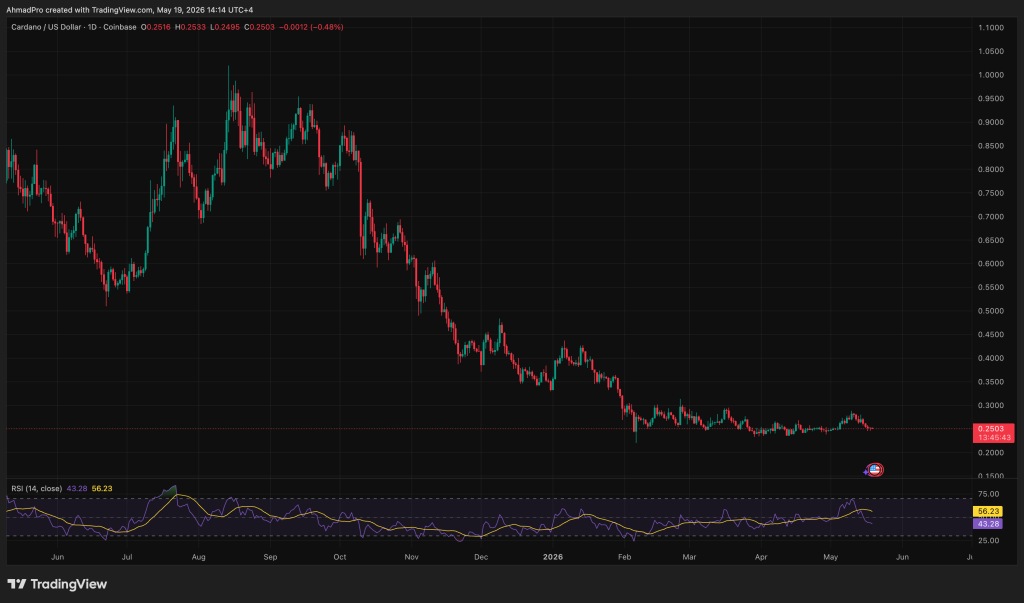
Funding rates have since normalized to neutral. Traders are using ADA as a volatility vehicle, not a conviction hold, and that dynamic suppresses the impact of any fundamental catalyst, including a quantum security roadmap.
If ADA breaks $0.28 on volume following the release of the formal IOHK quantum research proposal and Protocol 11 hard fork confirmation, targeting a retest of $0.34–$0.36. Catalyst is institutional re-rating of crypto security infrastructure as a premium.
However, a break below $0.258 support on sustained risk-off conditions opens a retest of $0.22–$0.24. Invalidation of the current range would erase the modest recovery from Q1 lows and delay any narrative re-rating.
Discover: The best pre-launch token sales
The post Cardano News: Cardano’s Quantum-Safe Roadmap vs. Muted Market Response: Why ADA Is Stagnant appeared first on Cryptonews.



- Morpho is slightly up over the past 24 hours, trading around $1.77.
- Bulls eye a rebound after the latest broader cryptocurrency market dip.
- Ecosystem growth appears to bolster a short-term uptick.
Morpho (MORPHO) price has staged a modest intraday recovery after tumbling to session lows of $1.64 earlier in the day.
The slide coincided with Bitcoin’s sharp pullback to about $76,000, which pulled most altcoins lower and sees many hovering at near-term support levels.
MORPHO, however, has since moved 3% off its intraday lows and was trading around $1.76 at the time of writing, reflecting a relief bounce as buyers stepped in.
According to CoinMarketCap data, intraday highs across exchanges stood at $1.77.
Key integrations in Morpho ecosystem
The gains cut weekly losses to 16% and monthly downturn to about 14%.
No major upward catalysts are helping buyers, but Morpho’s expanding ecosystem is worth noting.
The project recently launched its DeFi layer on Tempo, powered by RedStone oracle feeds, and went live with curated vaults managed by Gauntlet and Sentora.
Both teams selected RedStone as the primary Oracle infrastructure for the new markets.
Market participants could view the launch as a supportive development that could underpin short-term liquidity and use-case expansion.
1/ Tempo is positioned to route billions in stablecoin flows across onchain markets. With @Morpho now live on @tempo, that capital becomes productive.
Sentora is partnering with Tempo to bring structured risk management to new lending markets.https://t.co/L91qDZmTlF
— Sentora (@SentoraHQ) May 18, 2026
Morpho has also been named a launch partner for Upshift Clear, joining Superstate on the initiative.
Upshift Clear functions as an instant redemption facility for tokenized real-world assets (RWAs), beginning with USCC.
Under the arrangement, idle USDC deposited in Clear vaults is routed into Morpho markets between redemption events.
The platforms say this creates additional on‑chain capital flow into MORPHO liquidity pools.
MORPHO price analysis – relief rally or fresh momentum?
Bear dominance over the past month suggests that the drop to $1.64 and bounce to $1.77 could be a relief rebound rather than a definitive trend reversal.
The technical picture, however, shows early signs of bullishness.
Bulls holding above the $1.70 mark would be a constructive signal for short-term traders to breach the $1.80 supply zone.
If this happens, buyers could open the path toward a $2.00–$2.20 target zone.
That upside will likely depend on continued interest in Morpho’s ecosystem and broader market stability.
Notably, a recovery in Bitcoin would ease pressure across the sector, with an altcoin rally likely amid capital distribution.
Failure to sustain levels above $1.70 would, however, leave MORPHO exposed to further downside action.
The likelihood of a retest of $1.60, which stands as a key near-term support, remains.
A decisive break below this could invite deeper selling and shift the outlook back to bearish.
Crypto World
Live markets: Bitcoin hangs near $77,000 as interest rates continue surge, stocks continue slump


Crypto markets are flattish in early U.S. trading on Tuesday as stocks trade lower for a third consecutive session.
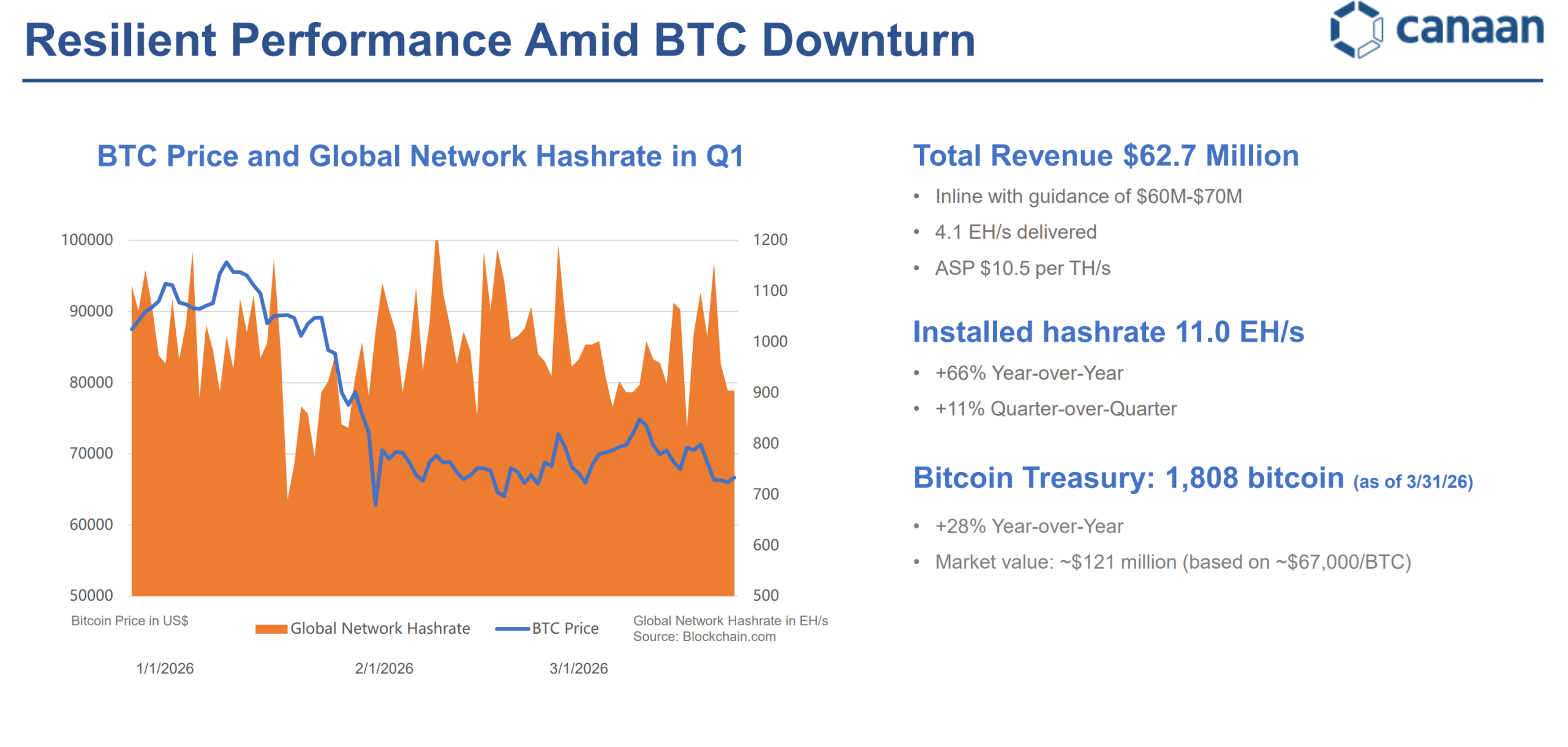
Bitcoin miner Canaan reported a net loss of $88.7 million for the first quarter of 2026, as falling Bitcoin (BTC) prices squeezed margins and triggered a significant inventory write-down.
The company posted total revenue of $62.7 million for the quarter ending March 31, a sharp decline from the $196.3 million it recorded in the previous quarter, according to a Tuesday press release.
Industrial mining equipment remained the company’s primary revenue driver at $39.6 million, though sales tumbled 75% from the prior quarter. Self-mining contributed $19.1 million, while the home mining segment brought in $2.7 million, a category that more than doubled year-on-year.
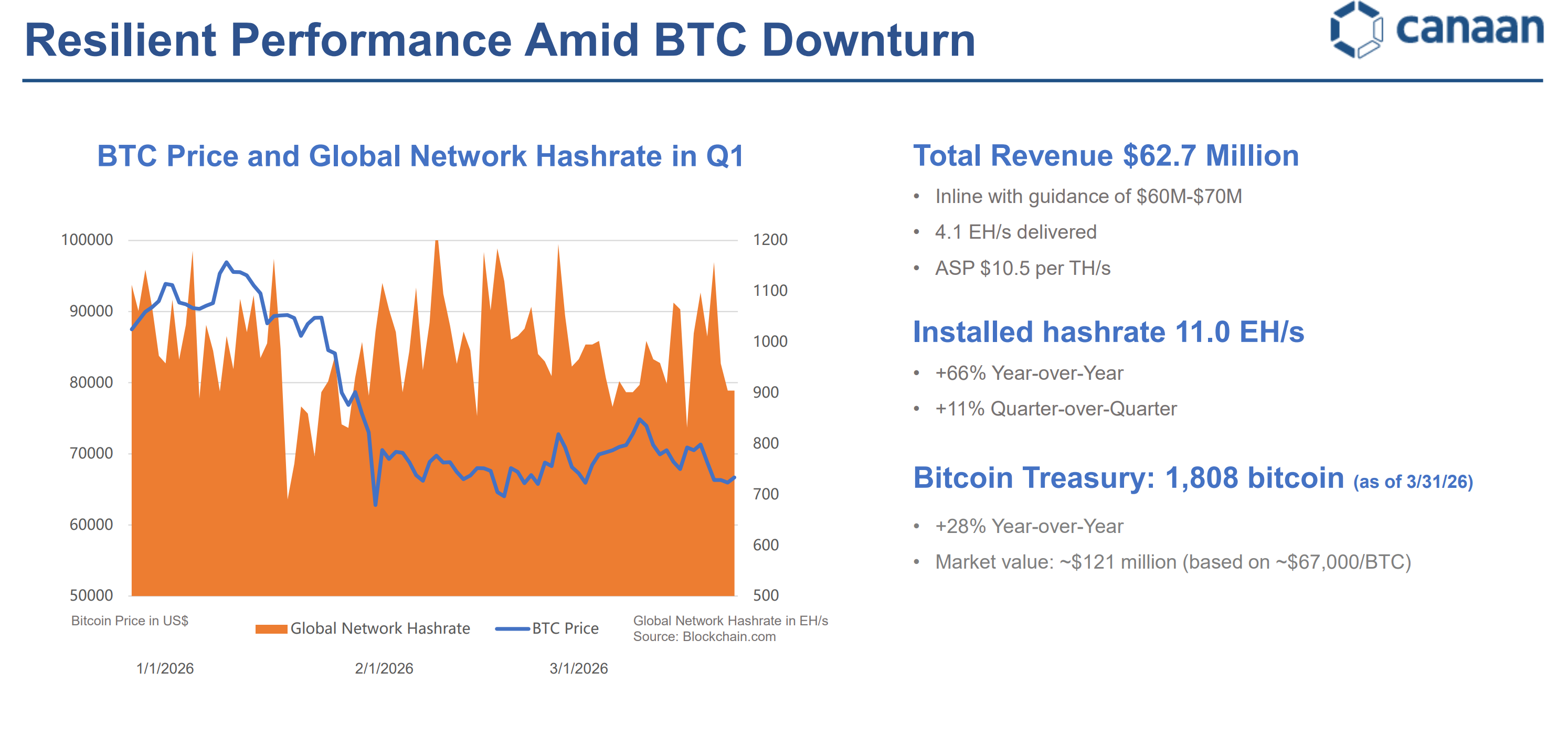
Source: Canaan
“Although average Bitcoin prices and hashprice declined significantly quarter-over-quarter, our bitcoin production experienced a comparatively smaller decrease, reflecting the resilience of our mining operations and continued hashrate deployment,” Jin (James) Cheng, chief financial officer of Canaan, said.
A $25 million inventory write-down weighed on the quarter’s gross loss of $23 million, while loss from operations reached $54.3 million.
Related: Bitcoin turns risk on as stocks hit new highs and miner profits rise: Is $85K BTC next?
Canaan’s self-mining hashrate surges 66%
Canaan expanded its self-mining footprint to 11 exahashes per second of installed computing power, a 66% jump from a year earlier. The company held 1,808 Bitcoin on its balance sheet as of March 31, valued at approximately $121 million.
In the quarter, Canaan also completed the acquisition of Cipher Mining’s 49% stake in three West Texas joint venture projects totaling roughly 4.4 EH/s in hashrate capacity and 120 megawatts of power. The deal, closed through a share issuance rather than cash, gives Canaan access to power rates below three cents per kilowatt-hour on the ERCOT grid.
Looking ahead, Canaan guided Q2 revenues between $35 million and $45 million, a further sequential decline.
Canaan shares closed down 3.54% at $0.4827 on Monday, shedding a further 7.71% in pre-market trading to $0.4455, according to Yahoo Finance.
Related: Hut 8 refinances Bitcoin-backed loan with $200M FalconX deal
Major miners report losses in Q1
Across the sector, major miners including Riot Platforms, Core Scientific, CleanSpark and TeraWulf all reported widening losses in Q1. MARA topped the group with a $1.3 billion net loss, roughly $1 billion of it tied to non-cash mark-to-market adjustments on its Bitcoin holdings.
As mining margins compress, a growing number of miners are pivoting toward AI and high-performance computing as an alternative revenue stream. On Monday, HIVE Digital Technologies announced plans to build a 320-megawatt AI data center campus near Toronto, capable of supporting more than 100,000 GPUs at full build-out.
Magazine: Guide to the top and emerging global crypto hubs — Mid-2026

Quick Overview
- Rocket Lab (RKLB) shares surged 5.1% on Monday, reaching an intraday peak of $138.38 with trading volume 36% higher than usual.
- First-quarter fiscal 2026 revenue reached $200.35M, marking a 63.4% increase year-over-year and surpassing analyst projections of $189.65M.
- Deutsche Bank increased its price target from $73 to $120; Craig Hallum upgraded the stock to Buy from Hold.
- Cantor Fitzgerald’s Andres Sheppard identified the forthcoming Neutron rocket launch as a “major catalyst” for the stock.
- Wall Street consensus stands at Moderate Buy, with 11 Buy ratings and 4 Hold ratings; the mean price target is $100.17.
Shares of Rocket Lab (RKLB) advanced 5.1% during Monday’s trading session, peaking at $138.38 intraday before closing at $131.16. The session saw 32.1 million shares change hands, representing a 36% increase over typical trading volumes.
The upward momentum came after the company posted impressive first-quarter fiscal 2026 results on May 7. Revenue totaled $200.35 million, comfortably exceeding the Street’s $189.65 million expectation and representing a 63.4% jump compared to the prior-year period.
Earnings per share registered at ($0.07), matching consensus forecasts. The company continues to operate with a negative net margin of -26.87% and a return on equity of -11.72%.
Rocket Lab closed the quarter with a contract backlog valued at $2.2 billion and confirmed access to over $2 billion in available liquidity.
Rocket Lab characterized the quarter as delivering record-breaking financial results, highlighting multiple significant contract wins and the successful completion of strategic acquisitions.
Wall Street Boosts Price Forecasts
Deutsche Bank significantly raised its RKLB price target on May 12, moving it from $73 to $120 while reaffirming its Buy rating. The investment bank noted that demand across Rocket Lab’s portfolio of services continues to accelerate.
Clear Street similarly increased its target, adjusting from $88 to $98 and maintaining its Buy recommendation. The firm highlighted the company’s record-setting Q1 revenue that exceeded projections by 5%, driven by robust performance in both launch operations and space systems divisions.
On May 8, Craig Hallum shifted its stance from Hold to Buy, establishing a $98 price objective. Citigroup confirmed its Outperform rating on the same date.
Andres Sheppard of Cantor Fitzgerald, recognized as a 5-star analyst, maintained his Overweight rating with a $96 target following the quarterly results. He suggested that a “major catalyst” may still lie ahead for investors.
Neutron Rocket Represents Key Milestone
Sheppard highlighted Rocket Lab’s forthcoming Neutron rocket as a critical element for future expansion. Company leadership reaffirmed that the Neutron program is progressing according to schedule for its inaugural launch later in the year.
With 87 successful launches already completed, Rocket Lab holds a competitive advantage over emerging rivals still working to validate their technology, according to Sheppard’s analysis.
Cantor Fitzgerald projects Rocket Lab will execute 27 launches during fiscal 2026, spanning both its Electron and Haste rocket platforms.
The aerospace company maintains launch facilities in New Zealand and the United States. Its three-pronged rocket portfolio — Electron, Haste, and Neutron — addresses distinct niches within the commercial space sector.
Institutional ownership accounts for 71.78% of outstanding RKLB shares. Vanguard expanded its holdings by 13.4% in the fourth quarter, while Baillie Gifford boosted its position by 47.2%.
Company insiders have divested 333,449 shares valued at approximately $28.3 million during the past 90 days.
The Street’s overall stance is Moderate Buy, derived from 11 Buy recommendations, 4 Hold ratings, and zero Sell opinions issued over the last three months. The consensus price target of $100.17 suggests potential downside from current trading levels following the stock’s recent sharp advance.
RKLB currently trades well above its 50-day moving average of $78.81 and its 200-day moving average of $70.85, indicating the stock has experienced substantial momentum.


Bitcoin Depot, a leading US operator of Bitcoin ATMs, has filed for voluntary Chapter 11 bankruptcy protection in a move designed to wind down operations and pursue a sale of its assets. The Atlanta-based company disclosed the filing in a Monday announcement, citing mounting regulatory pressure and financial strain as primary drivers behind the decision.
CEO Alex Holmes stated that the firm had strengthened anti-fraud protections in recent years, including stricter identity verification and lower transaction limits. Nevertheless, he argued that escalating compliance demands and enforcement actions rendered the current business model unsustainable. The filing is one of the most significant blows to the crypto ATM sector to date and underscores the intensifying scrutiny facing cash-to-crypto services in the United States.
The company’s announcement confirms that its network of Bitcoin ATMs has already been taken offline as part of the court-supervised restructuring. Bitcoin Depot reported operating more than 9,000 kiosk locations globally as of August 2025 and holding a substantial share of the North American market. The restructuring process is intended to support an orderly wind-down while management pursues a sale of the company’s assets.
First-day bankruptcy proceedings are scheduled to take place on Tuesday at 7:00 p.m. UTC, according to information published on Kroll’s restructuring portal. Bitcoin Depot has appointed Vinson & Elkins as its legal adviser, with Portage Point Partners overseeing the restructuring process. Canadian entities are also included in the restructuring, with separate proceedings anticipated to begin in Canada; remaining non-US entities will shut down under local laws.
The crisis at Bitcoin Depot comes amid a wider regulatory push against crypto ATMs, which have been popular for both purchasing Bitcoin with cash and cashing out by selling crypto. Regulators in several US states and in Canada have intensified scrutiny over consumer protection, scams, and money laundering risks linked to these machines. The sector has faced lawsuits and proposals for broad bans in certain jurisdictions, reflecting growing concerns about fraud and enforcement liability for operators.
Key takeaways
- Bitcoin Depot filed voluntary Chapter 11 bankruptcy protection in the U.S. Bankruptcy Court for the Southern District of Texas, signaling a court-supervised wind-down and sale process.
- The company has initiated an orderly wind-down of operations, with its network of Bitcoin ATMs taken offline as part of restructuring.
- Bitcoin Depot’s footprint included more than 9,000 kiosks globally as of August 2025, positioning it as a major player in the North American market.
- Canadian entities are encompassed in the proceedings, with separate Canadian filings expected; non-US entities will shut down under local law where applicable.
- Regulatory pressure on crypto ATM operators has intensified, with lawsuits and proposed restrictions in multiple jurisdictions, affecting business models and liability expectations.
- Market reaction was swift: premarket trading saw a sharp decline in Bitcoin Depot’s stock, which has fallen heavily since its public debut on Nasdaq in 2023 under the ticker BTM.
Chapter 11 filing and restructuring: what changed for Bitcoin Depot
The voluntary Chapter 11 filing places Bitcoin Depot under court supervision as it pursues an orderly exit from the business and a potential asset sale. The company retained Vinson & Elkins as its legal adviser and appointed Portage Point Partners to oversee the restructuring process. A first-day hearing was scheduled to be held remotely, providing creditors and other stakeholders an initial platform to review the debtor’s proposals and protections under bankruptcy law. This procedural framework is intended to preserve value for stakeholders while enabling management to negotiate terms with potential buyers or strategic partners.
Operational footprint and wind-down trajectory
Bitcoin Depot’s operational scale has been a defining feature of its exposure to regulatory risk. With more than 9,000 ATM locations worldwide at its peak, the firm ranked among the largest players in North America’s cash-to-crypto on-ramp. The restructuring plan contemplates a phased shutdown of non-essential operations and a sale of substantial assets, including network infrastructure, customer accounts, and partnered retail arrangements. Canadian affiliates are explicitly included in the filing, with separate proceedings anticipated under Canadian jurisdiction; remaining non-US entities will terminate in line with applicable local laws.
Regulatory pressure and policy context for crypto ATMs
The crypto ATM sector has encountered escalating oversight as regulators seek to curb scams, money-laundering risks, and consumer exposure to volatile digital assets. States and provinces have pursued enhanced licensing, stricter identity verification, stricter transaction monitoring, and greater operator liability for scam-related activity. In several jurisdictions, lawmakers have advanced or proposed prohibitions on crypto ATMs amid concerns about consumer protections and the potential for illicit use. The broader trend toward intensified regulatory standards has increased operating costs for ATM operators and compressed margins, complicating the viability of large nationwide networks.
According to Cointelegraph, industry observers view Bitcoin Depot’s bankruptcy as potentially indicative of broader headwinds for the sector in the near term. Analysts have noted that traditional revenue models—relying on significant transaction fees and relatively lighter regulatory scrutiny—are increasingly challenged as compliance requirements expand and enforcement actions sharpen. This dynamic elevates operator liability and necessitates more robust monitoring, reimbursement policies, and controls over cash handling and fraud remediation.
Implications for policy, market structure, and incumbents
The decision to pursue Chapter 11 underscores how rising regulatory expectations are reshaping the economics of cash-to-crypto services. For crypto exchanges, banks, and payment providers, the shift toward stricter consumer protections, KYC/AML compliance, and ongoing vigilance against scams translates into higher systemic costs and tighter risk management requirements. The unfolding proceedings highlight the need for clear licensing regimes, robust consumer protections, and enforceable requirements around transaction monitoring and dispute resolution.
From a policy perspective, the Bitcoin Depot case illustrates the challenges of balancing financial inclusion with consumer safety in a rapidly evolving asset class. As regulators coordinate domestically and with international peers, cross-border operators must navigate a patchwork of licensing standards, enforcement priorities, and liability frameworks—an environment that may influence future capital allocation, vendor selection, and partnership structures in the crypto ATM ecosystem. The broader policy context remains dynamic, with developments in areas such as MiCA and related regulatory reforms in other jurisdictions shaping how on- and off-ramps are regulated globally.
Investors and institutions will be monitoring court filings, asset sale processes, and potential settlements for indications of how liabilities, customer funds, and counterparties will be treated. While the Chapter 11 process is intended to maximize value for creditors, underlying regulatory and market risks persist for remaining operators and for the viability of large-scale ATM networks in the United States and beyond.
Closing perspective: The Bitcoin Depot filing signals a consequential inflection point for crypto on-ramps governed by cash-handling and consumer-protection rules. Stakeholders will be watching for the outcomes of the restructuring process, potential asset sales, and the direction of regulatory enforcement that could redefine the competitive landscape for crypto ATMs and similar cash-to-crypto services.
Bitget Wallet has integrated xStocks infrastructure, unlocking access to more than 130 tokenized stocks and ETFs for its 90 million users through its self-custodial wallet platform. The move broadens Bitget Wallet’s tokenized real-world assets portfolio to exceed 300 products, spanning equities, commodities, precious metals and index-linked assets, the company confirmed on Tuesday.
The expanded offering includes tokenized equities with a trading history that Bitget says surpassed $30 billion in transaction volume since launching in 2025. Access to these assets is restricted to jurisdictions where tokenized securities are permitted, with the United States, United Kingdom and other sanctioned regions remaining off-limits.
Bitget Wallet emphasizes zero trading fees and gasless execution, leveraging both request-for-quote (RFQ) and automated-market-maker (AAM) liquidity models. Users trade tokenized assets from the same interface used for cryptocurrency trading, swaps and custody while maintaining control of their private keys and funds.
Behind the scenes, Bitget Wallet is operated by Payward, the parent company of Kraken, which completed the acquisition of Backed Finance in late 2025 to bolster its tokenized equities capabilities.
Key takeaways
- Bitget Wallet expands tokenized assets to more than 300 products by integrating xStocks, opening access to 130+ tokenized stocks and ETFs for its vast user base.
- Tokenized equity products have processed over $30 billion in trading volume since the feature launched in 2025, with geographic restrictions limiting availability in the US, UK and other jurisdictions.
- Trading is offered through RFQ and AAM liquidity models, with zero trading fees and gasless settlement, streamlining participation in tokenized markets.
- Payward’s Kraken now operates Bitget Wallet, following the acquisition of Backed Finance, signaling ongoing consolidation in the tokenized-assets space.
- The broader market for tokenized equities is expanding rapidly, with major exchanges entering or expanding their offerings and data suggesting substantial growth potential in the coming years.
Bitget’s expansion underscores a shifting landscape for tokenized equities
The integration of xStocks into Bitget Wallet marks another milestone in a crowded race to bring real-world assets onto crypto rails. By connecting tokenized equity and other real-world assets directly into a wallet that already supports crypto trading and custody, Bitget aims to reduce the friction typically associated with accessing traditional financial instruments through digital-native interfaces. The stated model—zero fees and gasless execution—lowers the barrier to entry for new users and could accelerate activity in this niche, especially among traders seeking diversified exposure beyond crypto.
From a user experience standpoint, the arrangement promises a unified portal where traders can switch between crypto and tokenized assets without leaving the Bitget ecosystem. The ability to keep private keys in users’ hands while tapping into the liquidity of real-world instruments highlights a core attraction of tokenized assets: custody remains with the user, even as access is broadened via a centralized platform.
Industry observers are also watching how the governance and liquidity frameworks underlying tokenized stocks evolve. Bitget’s use of both RFQ and AAM liquidity models mirrors a broader industry push to balance price discovery with efficient execution, particularly for assets that may have less liquidity than their fiat-backed counterparts. In practice, RFQ can offer price transparency through dealer quotes, while automated market makers provide continuous liquidity at the potential cost of wider spreads during periods of volatility.
Competitive dynamics and the market trajectory for tokenized equities
Bitget’s announcement arrives amid a flurry of activity as major crypto platforms push further into tokenized stocks and stock-linked derivatives. In March, Coinbase launched stock perpetual futures for international users, delivering leveraged, 24/7 exposure to U.S. equities through its derivatives framework. Kraken has expanded its xStocks business with bundles that combine crypto and tokenized stock portfolios, alongside tokenized equity perpetual futures for non-U.S. users. Earlier this year, Binance signaled a renewed interest in tokenized equities after stepping back from its stock-token business in 2021 following regulatory scrutiny in Europe.
Market data from RWA.xyz paints a picture of a still-nascent but accelerating market. The tokenized equities sector has grown to roughly $1.5 billion in represented assets, with prominent tokens tied to companies such as Nvidia, Tesla, Alphabet, and others forming a core part of the landscape. Within this space, Ondo remains the largest tokenized stocks platform by asset value at about $883 million, followed by Bitget’s xStocks at roughly $391.5 million. The dominant assets tracked by RWA.xyz include tokenized versions of company shares and index-linked products such as those tied to the S&P 500, with Strategy and well-known names like Tesla and Nvidia among the frequently cited holdings.
These dynamics illustrate a broader shift as traditional financial infrastructure increasingly overlaps with crypto-native tooling. The presence of major players in tokenized equities signals growing investor appetite for regulated exposure to real-world assets via blockchain rails, while regulatory environments continue to shape where and how these products can be offered. For participants, the takeaway is clear: the bar for access to tokenized equities is gradually lowering, but regulatory clearance and platform risk remain the central considerations for what comes next.
Looking ahead, investors and builders should watch how custody approaches evolve as more platforms integrate tokenized equities into unified wallets, how liquidity models adapt to varying levels of on-chain activity, and how regulators respond to a market that blends traditional securities with decentralized technologies. The coming quarters will reveal whether the current expansion translates into sustained user adoption and meaningful liquidity across a broader spectrum of real-world assets.
As competition intensifies, the key questions for readers are what regulatory clarifications will emerge, how platforms will balance access with compliance, and which tokenized-asset offerings will reach scale first. The trajectory suggests tokenized equities will remain a developing frontier—one that could reshape how both institutions and individual traders approach traditional markets through a crypto-enabled lens.
Two members of a self-professed memecoin “cult” have been arrested after jumping into the enclosure of simian sensation Punch the monkey in an attempt to win a $1 million viral content competition.
Twenty four-year-old, Reid Jahnai Daysun, scaled the fence at the Ichikawa Zoo while 27-year-old Neal Jabahri Duan, filmed the stunt.
Zoo staff quickly escorted the intruder from the site, and the pair were arrested for obstructing zoo operations.
Read more: Is PUNCH token the new Moo Deng?
The stunt is likely linked to a $1 million content competition launched by the team behind the “coin that doesn’t need an introduction” $MEMECOIN. The competition asks hopefuls to generate viral content and, presumably, help pump Memecoin’s price in the process.
Indeed, to help them in their quest, content creators are able to claim their own Memecoin suit, like the one seen in the Punch stunt, for free so that they can go and “ignite the algorithm with viral chaos.”
The competition’s blurb states, “Our million-dollar war chest awaits the most daring, creative, and devastatingly viral content created.”
Read more: Memecoin traders praying for global hantavirus pandemic
Organizers of Memecoin cult aren’t sorry
In response to the stunt, Memecoin’s official X account said that it is “endlessly grateful for the cult we have built together,” but that it wants its members “to respect local laws and never put yourselves, others, or any animals at risk.”
The account also defended the pair, claiming, “No monkey was touched or harmed during the stunt. From what we can tell, the sole intention was to give Punch a fresh new teddy bear to keep him company.”
The account’s interpretation of the pair’s “sole intention” here seems to ignore their actual intention of winning the competition.


Read more: ‘Crypto Robin Hood’ faked prison for clout, rugged memecoins for Palestine
The account offered to donate 1 million yen, a little over $6,000, to the zoo and help improve the enclosure and support their work. It offered no apology.
The post was, however, subject to a community-note that pointed out that local Japanese laws, such as building intrusions and an obstruction of business by force, were potential violations.
Ichikawa Zoo is now upping security at monkey enclosure
In response, Ichikawa Zoo has “filed a damage report with the Ichikawa Police Station.”
It claims that it will expand the restriction area around the enclosure, install nets in the area, and hire staff to patrol the enclosure.
The zoo noted that no abnormalities have been spotted in the monkeys, and that it’s also considering a full-scale ban on filming at Punch’s home.
Another crypto influencer caught up in the drama was Ansem, whose real name is Zion Thomas. Ansem looks vaguely similar to the perpetrator in the suit, and so onlookers began to blame him for the crime.
He denied the accusations and noted that he was in New York at the time. He said, “Ive caught a lot of strays on this app but getting accused of abusing a monkey in a Tokyo zoo while I’m on the Q Train is definitely a new one.”
Punch previously went viral last February when he was filmed bonding with an IKEA plushie. At the time, memecoiners cashed in on the monkey’s popularity by launching $PUNCH.
Read more: Kash Patel ‘spiderkash’ leak triggers dozens of Solana memecoin scams
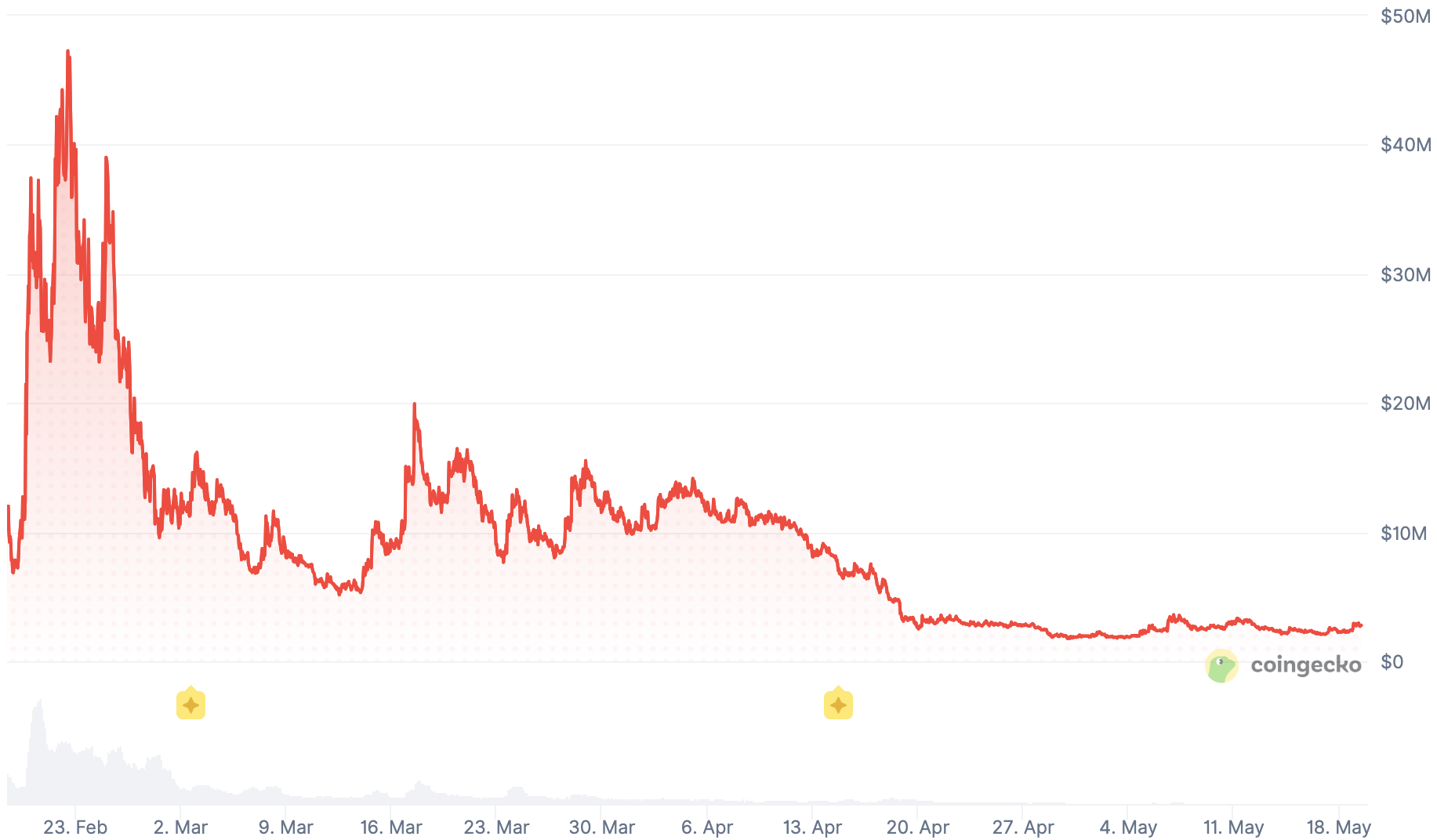
The token has made recent 20% gains following the latest stunt, but is still down 94% from the all-time highs it enjoyed in February when it hit a market cap of $43 million.
Memecoiners often do outlandish and illegal stunts for their tokens, such as setting themselves on fire, faking jet crashes, and illegally trespassing on the Hollywood sign.
Got a tip? Send us an email securely via Protos Leaks. For more informed news and investigations, follow us on X, Bluesky, and Google News, or subscribe to our YouTube channel.


Crypto exchanges and executives are spending more on personal security as kidnappings, home invasions, and “wrench attacks” become a growing risk across the industry.
Summary
- Coinbase spent about $8.7 million on Brian Armstrong’s security and protection costs in 2025.
- Gemini pays Winklevoss Capital Management $400,000 per month for executive protection services.
- crypto.news reported France logged 41 crypto-linked kidnappings in 2026 as attacks moved offline.
Bloomberg reported that crypto firms are raising security spending after a rise in violent attacks targeting executives, investors, and event attendees. The report linked the trend to kidnappings, home invasions, and physical threats aimed at forcing victims to transfer digital assets.
The concern has spread from online fraud to personal safety. In crypto, a “wrench attack” refers to an attack where criminals use threats or violence to force someone to hand over private keys, passwords, or access to wallets.
Related reports show the threat is no longer limited to wealthy public figures. crypto.news reported that France counted 41 crypto-linked kidnappings in 2026, equal to about one case every 2.5 days. The same report said France had become one of Europe’s main hotspots for crypto ransom attacks.
Coinbase security bill rises for Brian Armstrong
Coinbase’s latest proxy filing showed the exchange spent about $8.7 million in 2025 on CEO Brian Armstrong’s security and related protection measures, according to Bloomberg. That was up from about $6.2 million in 2024.
Coinbase’s prior proxy said the company may provide personal security services, including certified protection officers, secure lodging, and residential security, when its security team deems them needed. The filing said Coinbase views these costs as “reasonable and necessary expenses” for the company and stockholders.
The higher figure shows how public crypto executives now face risks that go beyond cyberattacks. Exchanges must protect data, wallets, employees, and, in some cases, the people most closely tied to their brands.
Gemini pays $400,000 per month for protection
Gemini has also raised executive security spending. Its latest filing said the company entered a January 2026 services agreement with Winklevoss Capital Management for executive protection, secure transportation, and risk advisory services.
The filing said Gemini pays a fixed monthly rate of $400,000, plus certain reimbursed expenses. The services cover the company’s CEO, president, their family members, and other individuals Gemini may name from time to time.
The arrangement shows how security is becoming a formal operating cost for crypto firms. It also reflects the exposure of executives whose names, wealth, and public profiles are closely tied to digital assets.
Crypto security risks move offline
Recent attacks show why exchanges are changing their approach. crypto.news reported that a French crypto worker fought off an armed intruder posing as a delivery driver during a home invasion. Police later arrested a suspect and charged him with attempted armed robbery.
Earlier market updates also covered a trader who offered a 10% bounty after claiming a violent $24 million crypto robbery. That case was described as part of the wider rise in wrench attacks, where criminals use force instead of code to steal crypto.

Minnesota lawmakers signing HF 3709 pave the way for state-based banks and credit unions to offer virtual-currency custody services in a nonfiduciary capacity beginning August 1. The measure, signed by Governor Tim Walz, amends state statutes to allow financial institutions to engage third-party service providers or subcustodians to facilitate crypto custody, provided funds are legally and operationally segregated from the institution’s assets and not treated as property of the bank or credit union.
According to Cointelegraph, the legislation is positioned within a broader regulatory push to bring crypto custody into regulated financial channels, reducing reliance on unregulated or out-of-state providers and aligning Minnesota institutions with compliance expectations around asset segregation and fiduciary risk controls.
The bill’s proponents argued the policy would enable Minnesota-based financial institutions to evolve alongside their customers while protecting residents from opaque or offshore custody arrangements. It takes effect in August and could influence operations across the state’s banking and credit-union landscape.
The Minnesota government information portal notes the scale of the state’s financial sector: as of May 2025, 240 commercial insured banks operated in Minnesota with about $128 billion in assets, and 82 member-owned credit unions were under the Minnesota Credit Union Network. Minneapolis is home to U.S. Bancorp, the country’s seventh-largest bank by assets, underscoring the potential impact on major state institutions.
The policy comes in a broader policy milieu. In Minnesota, lawmakers also advanced a separate bill to ban digital asset kiosks and ATMs in response to incidents of scams targeting residents, signaling a multifaceted approach to crypto-related risk within the state.
Key takeaways
- The new law authorizes Minnesota banks and credit unions to provide virtual-currency custody services in a nonfiduciary capacity starting August 1.
- Institutions may use third-party service providers or subcustodians to facilitate custody, with funds segregated from the bank’s or credit union’s assets and not treated as the institution’s property.
- The change could affect operations across the entire Minnesota financial-services sector, given the size of the state’s banking and credit-union markets.
- The move sits within a broader regulatory context, including federally focused custody initiatives and ongoing discussions about licensing and oversight for crypto firms seeking national charters.
Legal framework and operational mechanics in Minnesota
HF 3709 amends Minnesota’s statutes to permit supervised financial institutions to offer virtual-currency custody services without assuming fiduciary duties. The law explicitly allows engagement with third-party subcustodians or service providers to support custody activities, so long as the funds involved remain segregated from the institution’s assets and are not considered property of the institution. The framework thus creates a regulated channel for crypto custody within traditional banking and credit union operations, reducing the governance and insolvency risk associated with unregulated custody arrangements.
From a compliance perspective, the statute emphasizes asset segregation and operational separation, which are core elements of AML/KYC controls and banking supervision. While the law does not establish a broad fiduciary custodial obligation, it signals a move toward formalized oversight of crypto custody activities by Minnesota financial institutions, aligning state policy with evolving best practices in digital-asset stewardship.
Regulatory backdrop: federal charters, custody services, and market dynamics
Beyond state-level changes, the cryptocurrency custody landscape in the United States is shaped by federal regulatory initiatives and the pursuit of national charters. In a separate development, Payward—the parent company of the Kraken exchange—announced it had filed with the Office of the Comptroller of the Currency (OCC) for a national trust company charter intended to provide fiduciary custody and related services primarily for digital assets, subject to regulatory approval.
Historically, the OCC has approved or conditionally approved national-charter applications from other crypto-related firms, including Ripple Labs, BitGo, Circle, Fidelity Digital Assets, and Paxos, with discussions ongoing regarding additional candidates. Reports indicate that regulators are weighing how fiduciary custody fits within a unified national framework, a trend that could shape how state custody provisions, like Minnesota’s HF 3709, interface with federal licensing and oversight. This broader regulatory momentum was highlighted in reporting on the sector’s evolving charter landscape.
For institutions and firms seeking synchronized operations across state lines, the interaction between state authorization for in-state custody services and federal charter options remains a key area of policy development. The emergence of national trust charters could influence bank and nonbank participants’ willingness to provide custody services across multiple jurisdictions, intensifying AML/KYC, licensing, and prudential requirements across the ecosystem.
Policy alignment, risk considerations, and future outlook
The Minnesota statute’s design reflects a deliberate policy choice to retain custody capabilities within regulated domestic institutions, fostering in-state competition while mitigating the risks associated with unregulated custody arrangements. The development matters in practice because it has the potential to reshape the custodial outsourcing decisions of Minnesota-based banks and credit unions, with implications for risk management, vendor governance, and regulatory reporting.
From a compliance perspective, the policy underscores the importance of robust third-party risk management, asset segregation, and clear accounting treatment for crypto assets. It also highlights how state-level actions interact with federal licensing trajectories and international-policy considerations, including alignment with AML/KYC frameworks and any forthcoming cross-border regulatory guidance. The ongoing dialogue about national charters and the possible standardization of custody practices points to ongoing uncertainty and the need for institutions to monitor regulatory guidance, licensing pathways, and supervisory expectations as they implement custody offerings.
For market participants, the Minnesota step adds another layer to the evolving custody infrastructure in the United States, particularly for institutions seeking to offer digital-asset services in a regulated banking context. As state policies converge with federal charters and harmonized supervisory expectations, banks and credit unions may reassess their procurement, risk, and governance approaches to crypto custody, potentially impacting licensing, vendor selection, and operational resilience.
Looking ahead, policymakers will likely weigh the balance between enabling regulated custody services and maintaining robust consumer protections. The interaction between Minnesota’s framework and federal charter initiatives will be a focal point for institutional risk teams, compliance programs, and legal counsel as custody services mature within the U.S. financial system.
Closing observations: Minnesota’s approach signals a measured move toward regulated, domestic custody services within traditional banking structures, while the federal-charter conversation indicates a broader institutional shift toward standardized, scalable digit asset custody. Institutions should track regulatory developments at both state and federal levels to assess licensing requirements, custody governance, and cross-border implications.

NVIDIA has tapped SpaceX as one of the first customers to deploy its new Vera CPU, the chipmaker’s debut processor designed specifically for agentic artificial intelligence (AI) workloads.
The collaboration drew quick public backing from SpaceX chief executive Elon Musk, who reposted the announcement on X and joked that the chip lived up to its name.
NVIDIA Ships First Vera Units to SpaceX
NVIDIA confirmed that early Vera silicon went directly to SpaceX, OpenAI, Anthropic, and Oracle Cloud Infrastructure. The chipmaker’s hyperscale division hand-delivered the first units, framing the rollout as the start of a wider commercial deployment.
The Vera CPU houses 88 custom NVIDIA-designed Olympus cores and supports up to 1.2 TB/s of memory bandwidth using LPDDR5X memory. NVIDIA claims the chip runs agentic sandbox workloads up to 50% faster than competing rack-scale CPUs while doubling efficiency.
A new 256-CPU rack configuration sustains more than 22,500 concurrent agent environments at full performance, according to NVIDIA. The system is part of the broader Rubin platform revealed at GTC in March 2026.
Musk Reacts on X
Musk posted his reaction shortly after NVIDIA’s official AI Infrastructure account thanked SpaceX for testing the chip.
His enthusiasm follows the recent folding of xAI into SpaceX, which now operates the merged AI division under the SpaceXAI brand. The unit already runs the Colossus 1 and Colossus 2 supercomputers in Memphis.
Why Vera Matters for Agentic AI
Vera signals NVIDIA’s first serious push into CPUs aimed at AI agents rather than the GPU products that dominate its revenue. The launch coincides with rising enterprise demand for agent-based workloads that orchestrate many smaller models. NVIDIA chief executive Jensen Huang has called agent-based services the company’s next multi-trillion-dollar opportunity.
Customers lined up for deployment include Alibaba Cloud, ByteDance, Meta, CoreWeave, Lambda, and Nscale, alongside SpaceX. The breadth of early adopters suggests NVIDIA intends to extend its AI infrastructure dominance well beyond training silicon.
Whether Vera meaningfully shifts CPU market share will depend on how quickly customers like SpaceX move from testing to full production. Several rivals, including AMD, are also working on competing chips aimed at the same workloads.
The post Elon Musk Cheers NVIDIA’s Vera Launch After SpaceX Gets First Units appeared first on BeInCrypto.

West Coast Eagles vs GWS Giants Tips, Odds and Teams – AFL Round 10 2026

New Shai-Hulud malware wave compromises 600 npm packages

Strictly Come Dancing hosts announced as Emma Willis, Josh Widdicombe and Johannes Radebe

Manchester United reach agreement with Casemiro over contract clause amid transfer speculation

US brings back mandatory military draft registration

Steven Gerrard disagrees with Gary Neville over ‘shock’ Chelsea and Arsenal claim | Football

5 Best Part-Time Jobs for Students to Earn Money Tamil “Just copy me”

Stop Losing Money in IPOs:Use these 3 Indicators #ipo #iporeview #finance #financereels #indicators

Pray this and watch God change your financial situation. #faith #financialincrease #livingfaith
-

 Crypto World4 days ago
BloFin War of Whales 2026 Grand Prix opens registration for $5M trading championship
-

 Fashion4 days ago
Weekend Open Thread: Theory – Corporette.com
-

 Crypto World4 days ago
E-Estate Announces 1 Year Live: Washington DC Summit as Real Estate Tokenization Enters Its Next Phase
-

 Tech4 days ago
Tech Moves: Microsoft AI leader jumps to OpenAI; former AI2 exec joins Meta; and more
-
Crypto World6 days ago
Bitcoin Suisse expands with Digital Asset License and Investment Business Act Registration Approval in Bermuda
-

 Politics7 days ago
Pakistan to enter Chinese capital market as war inflation bites
-

 Crypto World7 days ago
Bitcoin Suisse expands with Digital Asset License and Investment Business Act Registration Approval in Bermuda
-
 Crypto World5 days ago
Google’s Gemini AI Predicts Incredible Solana Price by the End of 2026
-

 Business4 days ago
H&R Real Estate Investment Trust (HR.UN:CA) Q1 2026 Earnings Call Transcript
-

 Tech4 days ago
Google reimburses Register sources who were victims of API fraud
-

 Sports4 days ago
Napoleonic enters 2026 Doomben 10,000 field via Abounding withdrawal
-

 NewsBeat7 days ago
Comment on Keir Starmer surviving the day as Prime Minister like a turd that wont flush
-
 Entertainment5 days ago
Zara Larsson Has Blunt Response To Chris Brown Diss
-
 Crypto World6 days ago
Two AI Tokens Lead May Rally, But Risks Are Rising
-

 Fashion7 days ago
The Best-Kept Makeup Secret for a More Defined Face
-

 Fashion3 days ago
On the Scene at Gucci’s Cruise Show in New York City: Mariah Carey, Kim Kardashian, Lindsay Lohan, Iman, and More!
-

 Politics7 days ago
Palestine’s flag becoming a regular sight at European football stadiums
-
 Tech6 days ago
Why AI is making typography a boardroom conversation
-

 Crypto World4 days ago
BeInCrypto 100 Institutional Awards Nomination: KAST for Best Digital Assets Neobank and Best Digital Assets Fintech
-

 Politics7 days ago
The 81 MPs (so far) who have demanded tick-like Starmer out
You must be logged in to post a comment Login