
Crypto World
Circle Proposes Emergency Rate Changes to Unstick Aave’s Frozen USDC Pool



Stablecoin issuer argues Aave’s interest rate curve is failing to clear the $1.89B pool after four days at full utilization.
Circle has proposed an emergency overhaul of the interest rate parameters on Aave V3 Ethereum Core’s USDC pool, which has been pinned at 99.87% utilization for four days in the wake of the April 18 KelpDAO exploit.
In a governance post published Tuesday, Circle Chief Economist Gordon Liao argued Aave’s current interest rate mechanism is failing to clear the market. The pool holds $1.89 billion in supply against $1.89 billion in borrows, with less than $3 million in available liquidity. Borrow rates are flat at the post-kink ceiling of roughly 14%, and the pool has contracted about $60 million in the last 24 hours as repayments are matched dollar-for-dollar by queued withdrawals.
Liao’s proposal would raise the pool’s Slope 2 parameter for USDC deposits interest rate, from roughly 10% to 40% immediately, via a Risk Steward action. That would be followed by governance ratification of a 50% target within five to seven days.
Optimal utilization would fall from 92% to 87% on an interim basis and 85% on ratification. Under the target parameters, the maximum supply rate at 100% utilization would climb from roughly 12.6% to 48.2%.
Liao’s diagnosis is that current borrowers are using USDC borrowing as a queue-bypass mechanism to exit trapped positions and are insensitive to rates at current levels. The active lever, he argued, is supply attraction: yields in the 40–50% range should pull USDC from allocators within hours, restoring healthy utilization.
The proposal also recommends pausing Aave’s Slope 2 Risk Oracle for USDC, citing its documented underperformance during a February WETH spike and the April 6 offboarding of its maintainer, Chaos Labs.
Circle’s intervention is unusual: the stablecoin issuer is formally telling Aave that the market for its asset is broken.


At the LONGITUDE crypto conference in Paris, industry leaders gathered to map the path from regulatory clarity to practical adoption of digital assets. In a fireside chat, Blockstream CEO Adam Back—an enduring figure in Bitcoin lore—addressed renewed speculation that he might be Satoshi Nakamoto, offering a measured denial while reflecting on why the mystery still captures the imagination of the space.
Back told Cointelegraph that the Satoshi rumor is flattering in some sense, but not accurate. He pointed to his long-running presence on early cypherpunk forums as a likely fuel for the assumption that he could have penned Bitcoin. “It is flattering in some sense that they think you could have done it,” he said, noting that he was “the reply guy” when electronic cash was a hot topic on the Cryptography Mailing List in the 1990s. When the Bitcoin white paper appeared in October 2008, he said, the public’s curiosity about Satoshi’s identity became a persistent talking point in the industry.
Beyond the personal intrigue, Back described the Satoshi mystery as an “interesting question” that the community has lingered on for years, without any conclusive answer. The exchange of ideas at LONGITUDE underscored a broader shift in crypto discourse—from secrecy and novelty to questions of regulation, market structure, and the practical growth of stablecoins.
Key takeaways
- Adam Back acknowledges the Satoshi speculation but firmly denies being the Bitcoin creator, attributing much of the conjecture to his historic participation in early cypherpunk discussions.
- MiCA is widely seen as a watershed for regulatory clarity, but industry leaders warn that heavy oversight could slow innovation if not balanced with global coherence.
- Proponents of a U.S. framework, including the CLARITY Act, expect a more stable environment for crypto firms, though terms remain unsettled, and some voices urge caution about implementation details.
- Major players in payments view stablecoins as well-suited for settlement, provided regulatory clarity, while last-mile integration into local economies remains the key hurdle for widespread adoption.
- Stablecoin circulation sits around $317 billion and has surged roughly 50% year over year, signaling continued growth but also a need to solve local adoption challenges beyond cross-border use cases.
Regulatory clarity and the competition for global coherence
Onstage conversations at LONGITUDE highlighted a regulatory landscape that many in the industry view as progressively clearer, yet uneven in its global reach. Erald Ghoos, CEO of OKX Europe, participated in a discussion asserting that the Markets in Crypto-Assets (MiCA) framework has been “extremely beneficial for the industry.” He argued that MiCA’s framework helps build trust by treating crypto as a regulated asset class and ensuring participants “will be vetted and held up to the highest standards.”
Yet Ghoos also cautioned that the heavy regulatory overhead could dampen entrepreneurial momentum in Europe. He warned that the burden might drive startups to seek more permissive jurisdictions, potentially slowing local innovation. That sentiment echoed broader industry concerns about fragmentation in global regulatory regimes—an issue voiced by CertiK CEO Ronghui Gu, who noted that developers and crypto firms still operate under divergent compliance standards depending on their region.
Industry observers also weighed the U.S. policy horizon. The CLARITY Act—posed as a framework to bring structure to the crypto sector—was discussed as a potential catalyst for adoption beyond traditional financial channels. Cardano Foundation CEO Frederik Gregaard argued that the act is “extremely important,” adding that policymakers appear eager to advance it. He predicted that once the CLARITY Act passes, non-TradFi adoption could accelerate dramatically, claiming a “100X” acceleration as classical industries begin to embrace the technology once regulatory clarity is in place.
However, not everyone shares the same level of optimism about timeline and interpretation. U.S. Senator Thom Tillis indicated that he does not expect the Senate Banking Committee to mark up the CLARITY Act in April and suggested scheduling for the following month. The evolving political process underscores a broader tension: the sector seeks rapid clarity, while lawmakers balance consumer protections, stablecoin risk, and financial-system resilience.
Ronghui Gu of CertiK framed the broader challenge as a call for a unified, global framework. Without one, developers and crypto companies must navigate a mosaic of national standards, creating friction for cross-border projects and complicating risk management and compliance in multinational deployments. The dialog at LONGITUDE thus underscored a central truth: regulatory clarity matters to players across the ecosystem, but it must be congruent across borders to unlock scalable growth.
Payments rails and the march of stablecoins: benefits, burdens, and the last mile
Another thread at the event explored how stablecoins fit into real-world payments—and the friction that remains before they reach everyday users. Mastercard’s Christian Rau, speaking on a panel with Stella Development Foundation’s Raja Chakravorti and Ethereum Foundation enterprise lead Matthew Dawson, framed stablecoins as particularly well-suited for payments when backed by regulatory clarity. He described stablecoins as having more predictable behavior than other digital assets, which helps them function effectively in settlement and commerce, while acknowledging that most real-time payment experiences still rely on traditional rails.
Rau characterized the current payments landscape as one where real-time-like experiences are possible in practice but not yet achieved end-to-end in a fully digital sense. He noted that the existing card- and bank-based systems still require steps of authorization, clearing, and settlement, which introduces latency and costs—albeit with a degree of immediacy that resembles real-time payments in many cases. The implication is that stablecoins, if properly integrated with clear regulatory guardrails, could streamline settlement in certain use cases, particularly cross-border and cross-ecosystem transactions.
On the adoption front, Chakravorti pointed to the roughly $317 billion in stablecoin circulation as of the event, up about 50% from a year prior. He observed early signs of cooling, a healthy signal that infrastructure is maturing. The larger takeaway, he said, is that the next frontier for stablecoins lies in “local stablecoins”—efforts to embed digital assets into domestic economies and legal tender ecosystems. The last mile, he emphasized, remains the principal barrier: turning digital assets into something that works smoothly within local financial systems and everyday commerce.
That last-mile bottleneck aligns with a broader assessment that widespread adoption hinges on bridging on-chain activity with off-chain financial systems. In this view, robust on- and off-ramp infrastructure, clear regulatory expectations, and interoperable standards will determine whether stablecoins transition from a mainly cross-border instrument to a pervasive domestic payments layer.
For readers watching regulatory developments, the LONGITUDE conversations offered a clear signal: clarity is not enough. The rules must be practical, globally coherent, and paired with the kind of interoperable infrastructure that makes digital assets usable in day-to-day life. The path forward will likely hinge on coordinating policy globally while continuing to build the technical and regulatory guardrails that give institutions, developers, and users confidence to participate at scale.
Overall, the event illustrated a crypto ecosystem at a crossroads: maintain the momentum of innovation while embracing a framework that both protects consumers and accelerates real-world adoption. As policymakers weigh fresh measures and industry players push for cross-border harmonization, readers should monitor how quick regulatory signals translate into tangible, usable solutions—especially in the crucial last mile that connects digital assets to everyday commerce.
Readers should watch for updates on MiCA’s rollout across Europe, the CLARITY Act’s path through U.S. channels, and how large-scale stablecoin deployments evolve in local economies. The next phase will reveal whether regulatory clarity translates into faster, broader adoption or if the pace of policy development outstrips practical deployment.
Iran’s Revolutionary Guard seized two container ships in the Strait of Hormuz on April 22, hours after President Trump extended the ceasefire with Tehran indefinitely, while confirming the US naval blockade of Iranian ports would remain in place.
Summary
- Iran’s Revolutionary Guard seized two ships in the Strait of Hormuz and fired on a third, citing maritime violations.
- Trump extended the ceasefire with Iran to allow for further peace talks but kept the US naval blockade active.
- Brent crude surged past $100 per barrel following the incidents, adding pressure to global energy markets and crypto assets.
Iran’s Islamic Revolutionary Guard Corps Navy announced on April 22 that it had seized two container ships transiting the Strait of Hormuz, citing what it described as maritime violations, according to NBC News and CNBC. The seizures came hours after President Trump announced an indefinite extension of the ceasefire with Iran, saying he was giving Tehran’s leaders time to produce a unified peace proposal, while making clear the US naval blockade of Iranian ports would not be lifted.
Iran Strait of Hormuz Seizures Shake the Fragile Ceasefire
The two vessels, the MSC Francesca and the Epaminondas, were escorted to Iranian waters after being intercepted by the IRGC Navy, with the Guard claiming one of the ships was linked to Israel without providing supporting evidence. A third vessel was also reportedly targeted and disabled off Iran’s coast. CNBC reported that Brent crude briefly surpassed $100 per barrel following the incidents, with international benchmark prices rising more than 1.8% as markets weighed the impact on a waterway that normally carries roughly 20% of global oil and liquefied natural gas supply.
Trump Extends the Ceasefire But Keeps the Blockade
Trump had previously vowed not to extend the ceasefire beyond its original deadline, but reversed course on April 21, announcing the extension to give Iranian leaders time to produce a unified response to US terms. NPR reported that Trump posted on Truth Social that Iran is “collapsing financially,” losing $500 million a day under the blockade, and that the US loses nothing by maintaining it. Iranian Foreign Minister Seyed Abbas Araghchi has rejected the administration’s framing, calling the blockade “an act of war” and a violation of the ceasefire agreement in its own right. Peace talks scheduled for Islamabad have stalled, with Iran’s negotiating team declining to participate while the blockade continues.
What the Hormuz Crisis Means for Bitcoin and Crypto Markets
The Strait of Hormuz has been a direct driver of Bitcoin volatility since the conflict began in February. As crypto.news has tracked, each escalation event in the strait has triggered immediate Bitcoin selling rather than safe-haven buying, with BTC dropping below $74,000 earlier this week as peace talk prospects faded. Oil prices remaining above $100 per barrel sustains the inflation narrative that has suppressed Federal Reserve rate cut expectations, creating a prolonged headwind for risk assets including crypto. Any resolution that reopens the strait and brings oil back toward pre-war levels near $65 to $70 a barrel would, according to analysts covered by crypto.news, represent the largest positive catalyst for digital asset markets since Bitcoin’s all-time high of $126,000 in October 2025.
The situation in the Strait of Hormuz remains highly fluid, with Iran’s seizure of the two vessels and the breakdown of Islamabad talks raising the risk of further escalation before any diplomatic resolution is reached.


North Korea’s Lazarus Group has launched a new macOS malware campaign called Mach-O Man that uses fake online meeting invitations to trick crypto and fintech executives into executing malicious commands on their own devices, according to blockchain security firm CertiK.
Summary
- Lazarus Group’s new Mach-O Man campaign uses fake meeting invites to lure executives into pasting malicious terminal commands on their Macs.
- The malware auto-deletes after execution, making the breach nearly impossible to detect through standard forensic methods.
- CertiK links the same Lazarus push to over $500 million stolen from DeFi platforms Drift and KelpDAO in the past two weeks.
North Korea’s Lazarus Group is running a new campaign dubbed Mach-O Man that targets executives at crypto, fintech, and other high-value firms by disguising malware delivery as a routine technical fix during a fake business meeting, according to CertiK senior blockchain security researcher Natalie Newson. The campaign was disclosed on April 22 and represents one of the group’s most operationally sophisticated social engineering methods to date.
Lazarus Group Crypto Hack Hides Behind Routine Business Communications
The attack chain begins with an urgent-looking meeting invitation sent over Telegram, impersonating a Zoom, Microsoft Teams, or Google Meet call. The link leads to a convincing but fake website that tells the victim to paste a single command into their Mac terminal to resolve an apparent connection issue, a technique CertiK identifies as ClickFix. Once executed, the command installs a modular malware kit built from native Mach-O binaries tailored for Apple environments, which profiles the host, establishes persistence, and exfiltrates credentials and browser data through a Telegram-based command-and-control channel. Critically, the toolkit auto-deletes after completing its task, making detection and forensic analysis extremely difficult. “These fake verification steps guide victims through keyboard shortcuts that run a harmful command,” CertiK’s Newson told CoinDesk. “The page looks real, the instructions seem normal, and the victim initiates the action themselves, which is why traditional security controls often miss it.”
Why This Attack Is Harder to Catch Than Standard Phishing
Unlike traditional phishing attacks that rely on urgency cues or suspicious sender addresses, the Mach-O Man campaign is designed to look entirely routine at the moment of delivery. Executives in crypto and fintech routinely receive cold outreach from investors, researchers, and business partners, making the fake meeting invitation format a credible lure in a way that generalized phishing often is not. CertiK’s analysis notes that the Mach-O Man framework is tied to Lazarus’ Famous Chollima unit and distributed through compromised Telegram accounts specifically targeting high-value organizations in the digital asset space. Most victims will not realize they have been compromised until well after the malware has erased itself. “They likely don’t know it yet,” Newson said. “If they do, they probably can’t identify which variant affected them.”
The Scale of the Lazarus Threat to Crypto in 2026
CertiK has linked the Mach-O Man campaign to a broader Lazarus offensive that has siphoned more than $500 million from DeFi platforms Drift and KelpDAO in under two weeks, adding to a cumulative theft total estimated at $6.7 billion since 2017. The United Nations has previously estimated that North Korean hackers have stolen several billion dollars in digital assets to fund the country’s weapons programs. “What makes Lazarus especially dangerous right now is their activity level,” Newson said. “This isn’t random hacking. It’s a state-directed financial operation running at a scale and speed typical of institutions.” CertiK is advising crypto professionals to independently verify all meeting requests through a separate channel before clicking any link or downloading any attachment from an unsolicited invitation.
CertiK has shared indicators of compromise tied to the Mach-O Man campaign with the broader security community to support detection and defense efforts across the industry.
Key takeaways:
-
US government bailout plans and currency swap lines with the UAE are easing global liquidity fears and lowering credit crisis risks.
-
Record Bitcoin ETF inflows and rising BTC miner profits suggest strong bullish momentum despite the ongoing war in Iran.
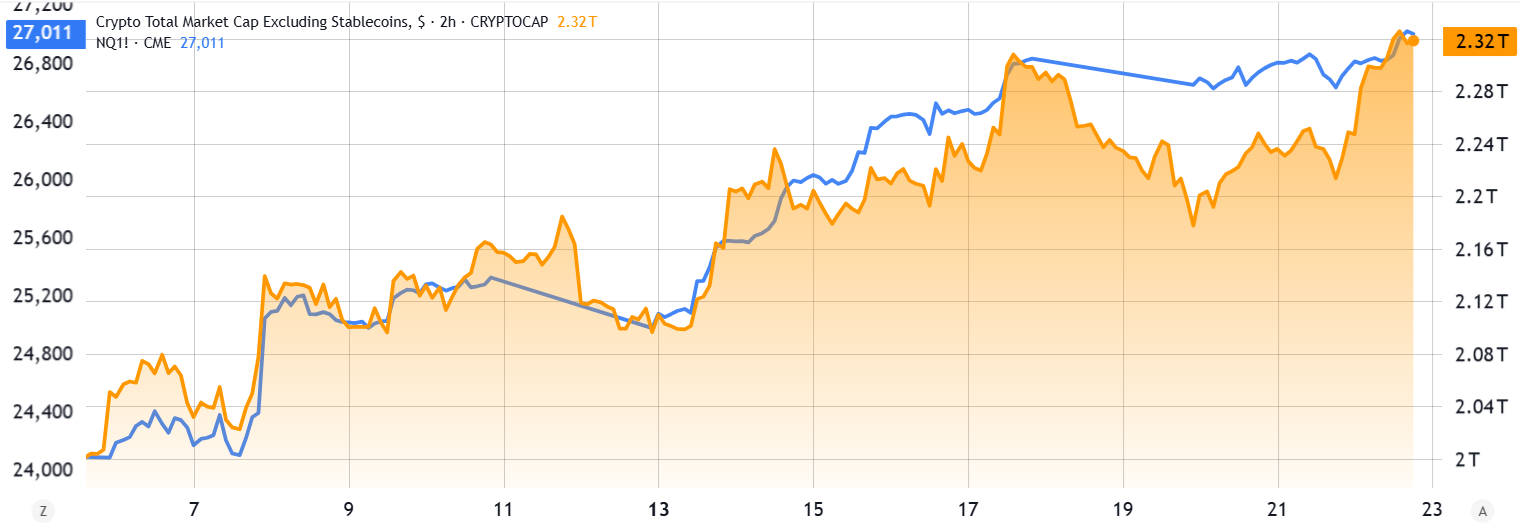
The total cryptocurrency market capitalization surged to an 11-week high on Wednesday as Bitcoin (BTC) climbed to $79,000 and Ether (ETH) reached $2,400. The bullish momentum occurred as investors grew more confident that immediate US recession risks were fading, despite sustained high oil prices resulting from the war in Iran.
Traders are now weighing whether Bitcoin and Ether are destined for further gains or if a short-term correction is imminent given that economic recession risks persist.

The tech-heavy Nasdaq-100 index reached a record high on Wednesday as traders awaited Tesla (TSLA US) quarterly earnings. Brent crude prices rose 9% over two days after reports indicated Iran targeted two vessels in the Strait of Hormuz. Elevated energy costs increase the likelihood of economic stimulus, providing a temporary buffer for risk assets.
US liquidity plans and Bitcoin ETF inflows may offset recession fears
US President Donald Trump reportedly stated during a CNBC interview that “the federal government should help” Spirit Airlines, a budget carrier that has experienced bankruptcy twice since 2025. The Trump administration previously provided capital to chipmaker Intel (INTC US), utility Southern Company (SO US) and defense contractor L3Harris (LHX US).
Direct US government intervention in private firms and the US Treasury signals that credit lines for allies have eased liquidity concerns. US Treasury Secretary Scott Bessent noted Wednesday that both the US and the United Arab Emirates would benefit from a currency swap line intended to “maintain order in the dollar funding markets.”
US allies are facing pressure to sell US bonds to raise dollars for local defense, imports and liquidity amid the collapse of oil revenue and disruptions in the Strait of Hormuz. Potential currency swaps ease these dollar shortages, preventing a spike in US Treasury yields. The overall impact includes lower borrowing costs and a reduced risk of an immediate credit crisis.
Six consecutive days of inflows into US-listed Bitcoin exchange-traded funds (ETFs), totaling $1.54 billion, have likely boosted sentiment. The successful launch of the Morgan Stanley Bitcoin Trust (MSBT US), which reached $145 million in total net assets in under three weeks, improved Bitcoin’s risk perception despite global socio-economic uncertainty.

Related: Bitcoin inflows to Binance fall to 2023 low as BTC bulls set target on $80K
Bitcoin miner profitability eases short-term sell pressure
As Bitcoin price neared $79,000, miner profitability hit its highest level since January, according to Luxor’s Hashprice Index.

Miners recently gained attention as firms sold significant Bitcoin holdings to fund investments in data centers and AI infrastructure. Examples include MARA Holdings (MARA US), Riot Platforms (RIOT US), Core Scientific (CORZ US) and Cango (CANG US). While higher profitability does not guarantee reduced selling pressure from miners, the bullish momentum creates an incentive to accumulate.
Ultimately, a short-term correlation with US stock markets continues to dictate cryptocurrency trends; therefore, the war in Iran and tech earnings remain decisive for trader sentiment.
As the US government signals that stimulus measures will be used to secure liquidity and address credit concerns, Bitcoin and Ether appear primed to sustain their upward momentum.
This article is produced in accordance with Cointelegraph’s Editorial Policy and is intended for informational purposes only. It does not constitute investment advice or recommendations. All investments and trades carry risk; readers are encouraged to conduct independent research before making any decisions. Cointelegraph makes no guarantees regarding the accuracy or completeness of the information presented, including forward-looking statements, and will not be liable for any loss or damage arising from reliance on this content.


OKX, Bybit, and Bitget are reportedly requiring all employees to use AI tools daily, according to a WuBlockchain report. Some exchanges now track token consumption as a performance metric.
The report marks one of the clearest signals yet that major centralized exchanges are treating AI not as optional but as core operating infrastructure.
OKX, Bybit, and Bitget Reportedly Mandate AI Tools for All Employees As CEXs Join the Fray
Based on the report, OKX purchased Anthropic’s Claude Enterprise edition for all employees. Meanwhile, Bybit, under CEO Ben Zhou’s direction, made both Claude and OpenClaw available company-wide.
At the same time, Bitget went further, requiring employees to meet minimum daily AI usage thresholds within a quarterly review cycle.
The most striking detail involves coding workflows. Allegedly, some exchanges now require over 90% of their code to be written with AI assistance.
At least one ranks individual token consumption as a key performance indicator, effectively incentivizing employees to maximize their use of large language models.
Neither, Bitget, Bybit, nor OKX immediately responded to BeInCrypto’s request for comment.
Nevertheless, the approach mirrors practices already documented at major tech firms. Companies including Meta and OpenAI run internal leaderboards for AI token usage, and generous token budgets have become a recruiting perk at some Silicon Valley employers.
Productivity Gains Driving the Push
The mandates align with measurable results these platforms have already reported.
Bybit’s AI4SE initiative improved engineering productivity by 30%, with a stated target of 50% efficiency gains across the full software development lifecycle.
Bitget separately reduced hiring timelines by 38% through AI-powered recruitment.
A recent Gate whitepaper on crypto industry employment noted that AI’s impact reached the sector faster than most expected.
Crypto.com cut 12% of its workforce in Q1 2026, while remaining staff faced rising expectations to integrate AI into daily output.
Anthropic, which builds Claude, now counts over 1,000 business customers paying more than $1 million annually for its enterprise AI services.
What This Means for the Industry
The shift reflects a broader trend across tech and fintech. JetBrains survey data from April 2026 shows 84% of professional developers now use AI coding tools daily.
However, crypto exchanges appear to be moving faster than most industries, tying AI fluency directly to performance reviews and career advancement.
At Paris Blockchain Week earlier this month, Zhou framed AI not as a consumer feature but as core operating infrastructure for financial platforms.
He described a future where finance becomes more intelligent, more accessible, and eventually invisible.
Subscribe to our YouTube channel to watch leaders and journalists provide expert insights
Whether token consumption proves to be a meaningful productivity metric or simply a volume incentive remains an open question.
Critics argue the approach rewards volume over value, while supporters point to measurable drops in development time and shipping speed.
These three exchanges are betting that mandatory crypto exchange AI adoption will translate into faster product cycles and leaner engineering teams.
How quickly competitors follow may determine whether this becomes an industry standard or an outlier experiment.
The post New Report Reveals AI Arms Race at 3 Major Exchanges appeared first on BeInCrypto.
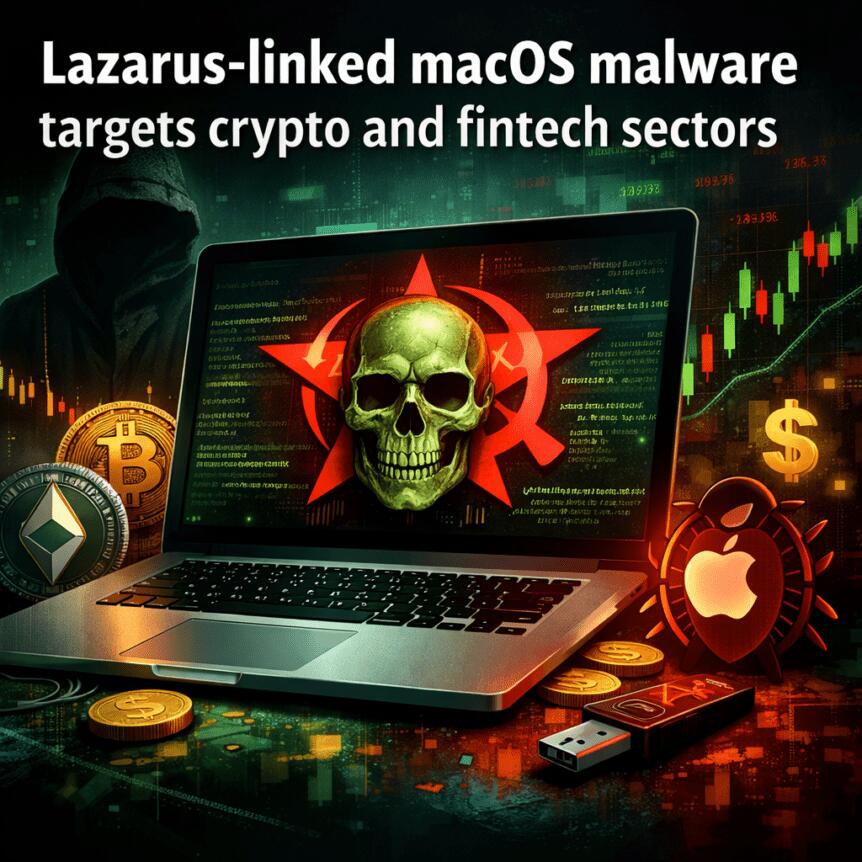
Security researchers have linked a fresh macOS malware campaign to the Lazarus Group, the North Korea-linked hacking outfit responsible for some of the crypto sector’s most consequential losses. The campaign, tracked by researchers as the Mach-O Man kit, is deployed through the ClickFix social-engineering framework that targets a broad spectrum of firms, including crypto companies.
According to Mauro Eldritch, an offensive security expert and founder of threat-intelligence outfit BCA Ltd., the Mach-O Man campaign leverages convincing calls to lure victims into executing commands that quietly pull down the malware in the background. The tactic enables attackers to bypass conventional security controls and slip into credentials and broader corporate environments, a pattern documented in a Tuesday report that cites the Any.run macOS analysis sandbox as a primary source of insight.
The operation culminates in a stealer payload designed to harvest a wide range of sensitive data, from browser extension data and stored credentials to cookies and macOS Keychain entries. Once collected, the information is zipped and exfiltrated through Telegram, after which the toolkit performs a self-deletion routine using the system rm command to erase traces without requiring user confirmation.
The emergence of Mach-O Man fits into a broader narrative around Lazarus’ evolving targeting beyond purely crypto-native incidents, underscoring the risk to corporate networks and supply chains alike. The group has long been associated with some of the industry’s largest heists, including the $1.4 billion attack on the Bybit exchange in 2025, cited as the era’s largest cryptocurrency breach to date.
For context, researchers emphasize that Lazarus has continued to widen its toolkit and attack surface in recent months. In April, the group was tied to AI-enabled social-engineering campaigns that breached Zerion by gaining access to team members’ sessions, credentials and private keys. The Zerion incident illustrated how attackers can blend social engineering with credential theft to reach privileged accounts and sensitive assets. Further coverage on that event is available from Cointelegraph.
Key takeaways
- Mach-O Man, a macOS malware kit attributed to Lazarus by researchers, is distributed via ClickFix social-engineering campaigns that reach traditional businesses and crypto firms alike.
- The final payload acts as a stealer, extracting browser data, credentials, cookies and macOS Keychain entries, with data zipped and exfiltrated through Telegram before the kit self-destructs using rm to erase traces.
- Victims are lured into fake Zoom or Google Meet calls, where they are prompted to run commands that trigger malware installation and deeper access, bypassing typical endpoint protections.
- The Lazarus operation continues to broaden its target scope beyond crypto-native companies, aligning with broader industry observations of the group’s expanding playbook and infrastructure access.
- Contextual benchmarks include the Bybit hack in 2025 and the Zerion breach in April, illustrating a pattern of high-stakes intrusions that blend phishing, social engineering and credential theft.
Mach-O Man: unraveling the attack sequence
At the core of the Mach-O Man campaign is a staged social-engineering flow centered on convincing calendar invites for popular virtual-meeting platforms. Victims receive a prompt that resembles a legitimate meeting notification, prompting them to join a so-called “Zoom” or “Google Meet” session. In the guise of a routine setup, victims are then steered to execute commands that quietly download and install the Mach-O Man components in the background. This stealthy delivery pathway helps attackers sidestep many traditional controls and allows credential harvesting to proceed with limited user friction.
Once the stealer is deployed, the toolkit targets data of high value to attackers. It raids browser extension data, stored credentials, cookies and Keychain entries, among other sensitive locally stored information. The extracted material is packaged into a zip archive and sent to the operators via Telegram, a channel chosen for its speed and relative resilience against standard enforcement actions. Following data exfiltration, the malware deploys a self-deletion routine, removing the entire kit from the host using the rm command—effectively leaving minimal traces and complicating post-incident forensics.
Context and implications for the crypto security landscape
The Lazarus Group’s alleged involvement in Mach-O Man extends a well-documented pattern of sophisticated, long-running campaigns that intensify the risk profile for crypto firms and their ecosystems. The group has become a persistent thorn in the side of exchanges, wallet providers and project teams, with past operations demonstrating a capacity to scale beyond traditional targets and adapt to evolving defense postures.
Bybit’s stunning $1.4 billion breach in 2025 stands as a benchmark for the scale of Lazarus-driven intrusions, underscoring not only the capital at risk but the potential for cascading effects across liquidity, market making and user trust. In parallel, the Zerion incident in April showcased how AI-augmented social engineering can accelerate the theft of credentials and private keys by exploiting legitimate team workflows and authorized sessions. The combination of social engineering with credential access remains among the most challenging vectors for defenders to preempt, particularly on macOS environments where threat actors have previously found gaps in application controls and user vigilance. Related reporting on Lazarus-linked activity continues to surface across industry coverage.
Defensive lessons and what to watch next
Mach-O Man reinforces the need for macOS-specific defense postures that blend user-education, application-control policies and robust-measurement of endpoint behavior. Key mitigations include enforcing least-privilege execution, deploying application allowlists, monitoring for anomalous download-and-execute sequences triggered from trusted apps, and tightening the wing of endpoint detection to catch command-and-control-like behaviors associated with staged infection chains. Given that the exfiltration route leverages Telegram, security teams should review outbound intelligence on uncommon channels used for data transfer and consider network-level constraints that challenge rapid egress of sensitive information.
For practitioners, the takeaway is clear: even as crypto-specific threats remain high-profile, attackers are expanding their targeting to encompass traditional businesses and cross-sector networks. This broadening of Lazarus’ reach increases the potential attack surface for exchanges, custodians and infrastructure providers alike, reinforcing the case for comprehensive, cross-platform threat intelligence integration and rapid response playbooks that can pivot as new malware kits surface. Any.run analysis provides a technical backdrop for understanding the Mach-O Man kit’s behavior and evolution.
As the industry absorbs these developments, observers will be watching for how defenders adapt to macOS-focused campaigns and whether new variants of Mach-O Man emerge with enhanced evasion techniques or more aggressive data-collection capabilities. The convergence of social engineering, credential theft and automated self-deletion marks a troubling trend—one that demands renewed emphasis on user education, secure access controls and vigilant incident-response strategies.
Readers should keep an eye on any updates about Lazarus’ tactics across platforms, especially as security teams track potential shifts in the group’s tooling, command channels and preferred data-exfiltration methods. The coming weeks may reveal whether Mach-O Man is a standalone spike or part of a broader, ongoing shift in the threat landscape facing the crypto ecosystem.
Crypto World
Ethereum Price News: Bitmine ETH Treasury Tops 4.98M Tokens, Pepeto Delivers the Viral Meme Energy ETH Misses
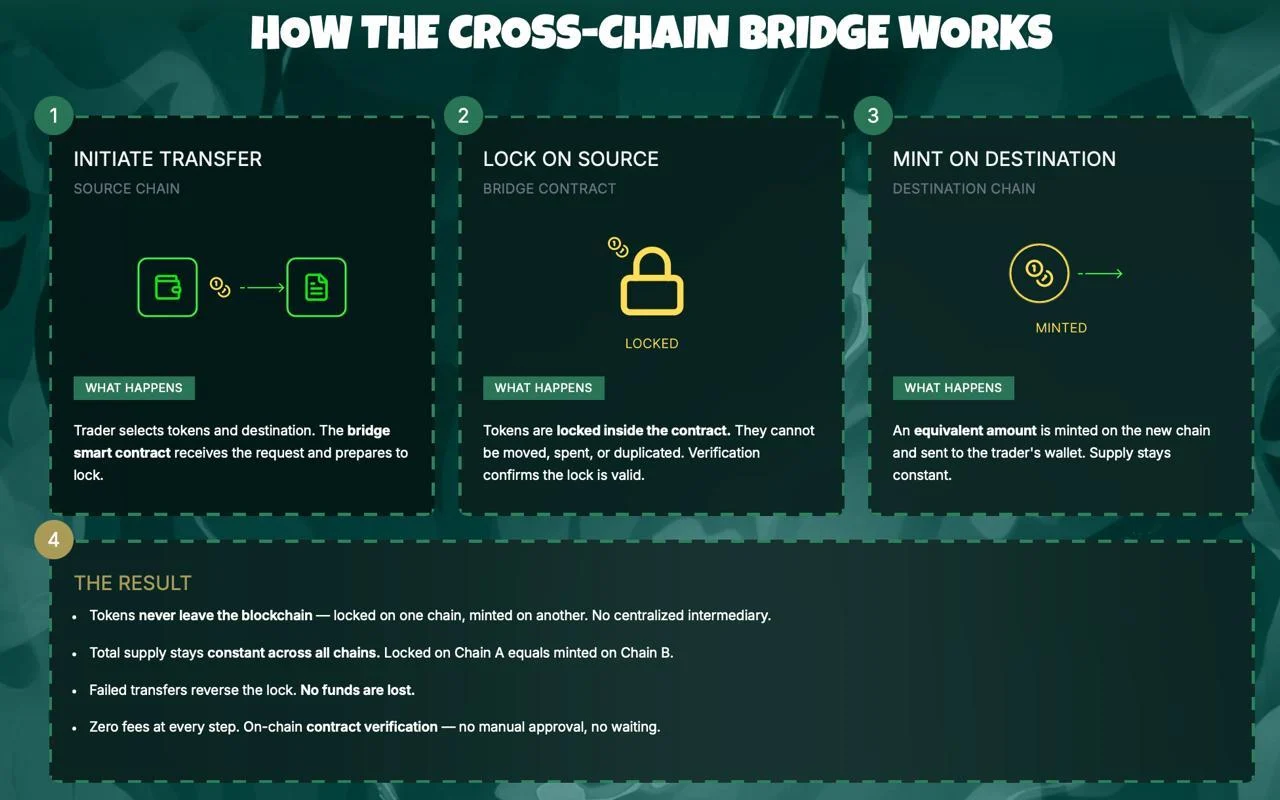
Ethereum price news on April 22 handed the bulls their sharpest read in months. Bitmine Immersion Technologies disclosed a 4.98 million ETH treasury worth roughly $11.5 billion with 101,627 tokens bought last week alone, the heaviest seven day stack of 2026 per CoinDesk, while ETH is marked at $2,410 with a 4.38% 24 hour gain.
Institutional treasuries stacking while the price reclaims levels is the footprint that has preceded every historic leg higher on ETH. Yet while most of the order book watches the $2,410 grind, $9.29 million is already inside a presale directed by the builder of the original Pepe with a confirmed Binance listing ahead, and Pepeto is the rare setup layering real utility onto the viral meme coin energy ETH no longer carries.
Bitmine chairman Tom Lee flagged clear evidence that the recent crypto correction is closing, citing ETH’s rebound and broader tape strength, per CoinDesk. The 101,627 ETH accumulated last week pushed the firm’s stack to 4.98 million tokens, roughly 4.12% of Ethereum’s 120.7 million supply, with 3.33 million of those tokens staked through the MAVAN validator infrastructure.
Spot ether ETFs strung together five positive sessions this week per CoinMarketCap as the Fear and Greed Index lifted to 33 from 29. Every prior Ethereum bull cycle launched on this profile, with corporate treasuries quietly soaking up supply while retail focus sat on other names.
Ethereum Price News Meets Pepeto: A Presale Carrying Viral Meme Lineage
Pepeto: Live Exchange Tools Paired With 100x Arithmetic and Pepe Bloodline
Bull markets on ETH consistently lift memecoins, and presale tickets ride the hardest. ETH near $2,410 is firm with 219% of upside to the Standard Chartered $7,500 mark, but a measured climb and a 100x listing day outcome sit in completely different categories.
Pepeto fills that gap. The exchange is running while round pricing holds, so wallets funding today enter live software the same hour the ticket clears. Swaps carry no fees across supported tokens, and token transfer between Ethereum, BNB, and Solana costs zero when pushed through the cross chain router.
All tools inside the platform are active now, well ahead of listing day. The builder who guided Pepe to its $11 billion cycle peak on raw community momentum leads the project alongside a SolidProof cleared code stack and a booked Binance listing. Ethereum’s own 2014 crowdsale priced ETH near $0.31 and converted early buyers into millionaires over the cycle that followed. Pepeto carries that same early stage profile, now paired with the viral meme DNA ETH itself never had.
Staking pays 179% APY on compounding cycles, and with $9.29 million committed at $0.0000001865, every stage tightens the window. The second trading opens, today’s level vanishes.
Ethereum (ETH) Price Holds $2,410 as Bulls Reclaim $2,400 and Memecoins Queue to Outpace Majors
Ethereum (ETH) is marked at $2,410 on April 22 per CoinMarketCap, a 4.38% 24 hour gain after the chart reclaimed $2,400 on fresh corporate demand. ETH is carving higher lows above the $2,200 zone per ZebPay analysis. A confirmed break over $2,400 opens $2,500, then $3,200, and places the Standard Chartered $7,500 target inside practical reach.
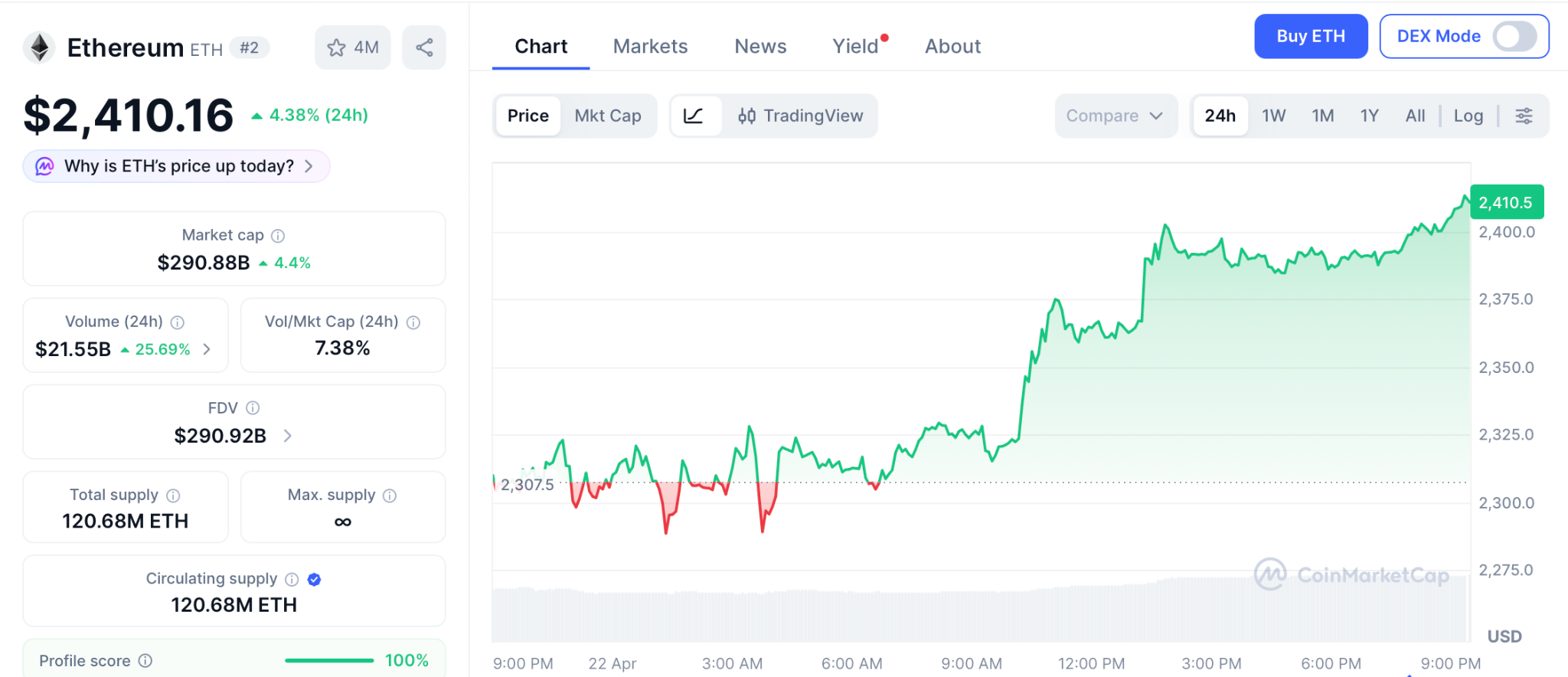
$2,200 anchors the technical base, with a rising trendline from the $1,800 low still intact. Across every prior cycle where ETH cleared a one month peak, memecoins and presales stacked multi x moves on top.
Even a clean run to $7,500 caps ETH gains at 219% across several months, while presale pricing in fractions of a cent maps a different multiplier when the rotation fires.
Closing Thoughts
Ethereum price news now places ETH above $2,410 with Bitmine absorbing 101,627 tokens in one week and corporate treasuries giving the chain a real structural bid, the sharpest read the network has seen in months. From a $285 billion asset, that upside is meaningful for patient books but nothing close to the magnitude that redraws a wallet.
Pepeto is the separate trade because a live exchange paired with round stage pricing produces what ETH at this scale cannot reproduce, and that is precisely why $9.29 million landed inside the round while the rotation was still forming, capital that read the listing outcome long before the wider crowd filed in.
That same pattern is the one Ethereum buyers who entered at $0.31 in 2014 followed, walking out with seven figure positions by the 2021 cycle. Pepeto is where that profile gets built this cycle, with the Pepe builder at the helm, real meme energy wired in, and a Binance listing already booked. Rounds are closing out fast, and every hour that ticks against the bell tightens the window before this entry disappears.
Click To Visit Pepeto Website To Enter The Presale

FAQs
What signal is Ethereum price news flashing for ETH in April 2026?
Ethereum price news shows ETH marked at $2,410 after reclaiming $2,400 on April 22, while Bitmine reported a 4.98 million ETH treasury worth $11.5 billion with 101,627 ETH bought last week per CoinDesk. Spot ETH ETF flows ran positive for five straight sessions per CoinMarketCap.
Which is the top crypto to buy with proven utility and viral meme energy right now?
Pepeto is the top crypto to buy today because the project runs a live SolidProof cleared exchange with zero fee swaps and a cross chain router, built by the Pepe builder. The round pulled $9.29 million at $0.0000001865 with 179% APY staking and a booked Binance listing ahead.
Disclaimer: This is a Press Release provided by a third party who is responsible for the content. Please conduct your own research before taking any action based on the content.


Blockstream CEO Adam Back, the British cryptographer and inventor of Hashcash, said it’s “flattering” that people think he’s Satoshi Nakamoto and was probably the result of his being a little too “talkative” on the cypherpunk mailing list that started it all.
Back was speaking in a fireside chat with Cointelegraph at the recent LONGITUDE event in Paris, co-hosted by crypto exchange OKX, with discussions centered on crypto regulation, market structure and the growth of stablecoins.
Adam Back denies renewed suggestions that he invented Bitcoin
“It is flattering in some sense that they think you could have done it,” Back told Cointelegraph, reflecting on the widely publicized New York Times article on April 8 that suggested he is Satoshi, a claim he has denied.
Back said there is a logical reason people think he’s Bitcoin’s creator. “The problem for me is I was very talkative on the mailing list,” he said, referring to the 1992 Cryptography Mailing List, where Satoshi later introduced the Bitcoin white paper in October 2008.
“So anytime anyone was talking about electronic cash, I was right there, I was the reply guy with something to say about it,” he said.

Back said the mystery behind Satoshi is an “interesting question” that he and others in the industry have pondered but never answered.
Prior to the fireside with Back, the event also featured three panels covering the role of traditional financial institutions in Web3, the need for clearer regulation and the pace of stablecoin adoption, alongside a separate fireside chat with OKX Europe CEO Erald Ghoos.
MiCA is “extremely beneficial,” but brings risks to innovation
Crypto industry executives said recent moves to regulate the industry have been positive for improved clarity, but regulatory fragmentation and overregulation could hurt innovation.
In an onstage interview, Ghoos shed light on the Markets in Crypto-Assets (MiCA) regulation, a framework with which OKX Europe was deemed fully compliant in January 2025.
“I think MiCA is extremely beneficial for the industry,” Ghoos said, explaining that it has helped to build trust in crypto.

“Now it is a fully regulated asset class, which is very important,” Ghoos said, adding that industry participants will be “vetted and held up to the highest standards.”
However, he warned that the “regulatory burden” could slow innovation across Europe.
“Right now, because there is such a big and heavy regulatory overhead for startups, I do fear even more that the innovation and the great entrepreneurship that we have in Europe will start to shift to other jurisdictions around the world,” he said.
CertiK CEO Ronghui Gu said the lack of a unified global framework is a pain point for the industry.
“For developers, for crypto companies in different regions, they are still under different compliance frameworks,” Gu said.
Commenting on the proposed US CLARITY Act, which has been delayed largely because of unresolved issues around stablecoin yields impact on the banking system, Gu said that while the bill aims to bring structure, “many terms are not that clear to be honest, and a little bit vague.”
“I think different firms have different interpretations and so on,” he added.

“But I would say it definitely gives a much more friendly environment to crypto companies, to developers,” he added.
Cardano Foundation CEO Frederik Gregaard said he is “very confident” the CLARITY Act will pass soon, adding: “You feel the vibration from the policymakers saying we are going to adopt this,” he said.
“They are super stoked about it,” Gregaard added.

“When this passes, from the non-TradFi adoption, you are going to see 100X,” Gregaard said, arguing that “classical industries” have been waiting for clarity before embracing the technology.
US Senator Thom Tillis of North Carolina said on Monday that he does not expect the Senate Banking Committee to mark up the legislation, also known as the CLARITY Act, in April and has recommended that Senate Banking Chair Tim Scott schedule it for next month.
Payments industry does a good job of “almost faking” real-time payments
Mastercard’s senior vice president for blockchain and digital assets, Christian Rau, said that stablecoins are “very well suited for payment purposes” during a panel with Stella Development Foundation chief business officer Raja Chakravorti and Ethereum Foundation enterprise lead Matthew Dawson.
“They don’t come with the volatility of other digital assets, given that they enjoy regulatory clarity in a lot of the world,” Rau said.
Rau said the traditional payments industry does a “good job of almost faking real-time payments.”
“When I tap my card, it says transaction approved or payment made…it’s authorization, clearing, and settlement,” he said.
“A lot of the things that work arguably very well today, they still come with time delays, costs, and so forth,” he added.
Related: How Mastercard plans to settle card payments with stablecoins
Meanwhile, Stella Foundation’s Chakravorti pointed to the roughly $317 billion in stablecoin circulation, which is up about 50% from last year, adding that he is starting to see some short-term cooling.
“Although to be clear, over the last two quarters, that’s started to slow down a little bit,” calling it a positive sign as it suggests parts of the underlying infrastructure are starting to mature.
“I think this next transition is local stablecoins, because people are now very focused on creating that opportunity in their economy as super important,” he said.
Chakravorti pointed to the “last mile” as one of the biggest hurdles for adoption, referring to the challenge of turning digital assets into something “workable” inside local financial systems.
“I think it is the absolute key, ultimately, that is where all the friction lies within this system,” he said.
Magazine: Adam Back says current demand is ‘almost’ enough to send Bitcoin to $1M
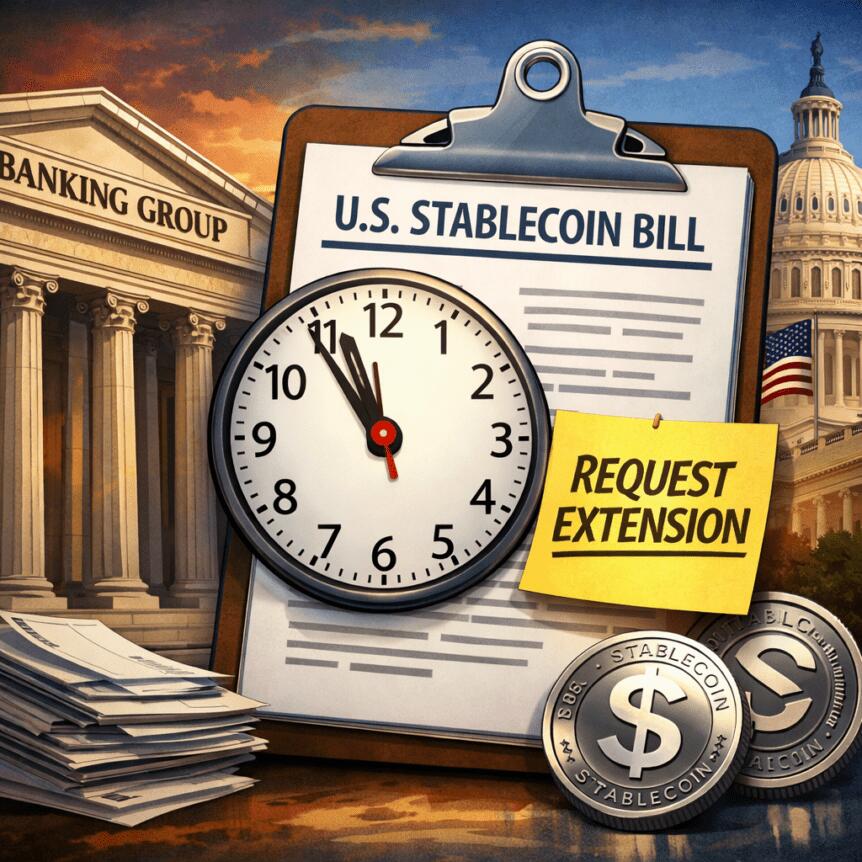
The American Bankers Association (ABA) has urged US government agencies overseeing a forthcoming stablecoin payments framework to extend the public-comment window, signaling that the regulatory process could slip by as much as two months. The request highlights how the GENIUS Act’s implementation hinges on cross-agency rulemaking and the content of the OCC’s forthcoming rule.
In a letter to the Treasury Department, the Federal Deposit Insurance Corporation (FDIC), FinCEN and the Office of Foreign Assets Control (OFAC), the ABA asked for a 60-day extension to submit feedback on proposed rules associated with the GENIUS Act, which was signed into law in July 2025. The ABA argued that the agencies’ final rules will be substantially influenced by the OCC’s rulemaking, and that meaningful public comment is not feasible until the OCC’s content is known.
“The FDIC has stated explicitly in its notice that it ‘has endeavored, in many areas, to align this proposed rule with the OCC’s proposed rule, to the extent relevant,’ and specifically invites comment ‘on the extent to which the primary Federal payment stablecoin regulators should further align in their final rules to promote consistency of regulations applicable to all PPSIs subject to the GENIUS Act,’” the ABA wrote. “Meaningful comment on that question is impossible without knowing the final content of the OCC’s rule.”
Following its enactment, GENIUS-based implementation has shifted to regulators such as the FDIC and the Treasury, which must finalize their own regulations. Under the statute, final rules can trigger enactment 120 days after their issuance or 18 months after enactment, whichever comes first.
Beyond the GENIUS Act, the ABA is engaged in broader policy debates over crypto market structure and the treatment of stablecoin yields. The association recently challenged a White House report that argued banning stablecoin yields would have a negligible impact on banks. The policy dialogue gains urgency as lawmakers in the US Senate consider advancing a separate crypto-market framework known as the CLARITY Act, which previously passed the House of Representatives but has yet to secure traction in the upper chamber. Reports indicate ongoing scheduling considerations by Senate leadership and committee chairs, underscoring continued regulatory uncertainty in this space.
Key takeaways
- The ABA seeks a 60-day extension for public comments on GENIUS Act rulemaking, citing alignment needs with OCC’s forthcoming rule.
- ABA officials argue that meaningful comments depend on the OCC rule’s final content, creating a sequential regulatory dependencies problem across federal agencies.
- GENIUS Act implementation remains tied to a clear regulatory timetable: final rules can trigger enactment within 120 days or within 18 months of enactment, whichever occurs first.
- Debates over stablecoin yields and market structure persist, with the CLARITY Act’s fate in the Senate contributing to ongoing policy uncertainty for banks, exchanges and stablecoin issuers.
- The discussion illustrates heightened cross-agency coordination challenges and signals potential impacts on licensing, supervision and compliance workflows for crypto firms and traditional banks alike.
GENIUS Act rulemaking and interagency alignment
The ABA’s advocacy centers on the interaction between the OCC’s forthcoming stablecoin rule and parallel proposals from the FDIC, FinCEN and OFAC. The core concern is regulatory coherence: should the agencies align their final rules to ensure consistent treatment of all primary Federal payment stablecoin issuers (PPSIs) under the GENIUS Act? The ABA’s position reflects a broader industry demand for predictable, harmonized standards that reduce compliance fragmentation across banking and payments regimes.
From a regulatory design perspective, the unfolding process underscores how a landmark act can produce a multi-year, multi-agency rulemaking odyssey. Agencies argue that alignment is essential to avoid a patchwork of rules that could complicate risk management, AML/KYC controls and supervision of cross-border payment flows. The ABA’s request emphasizes practical consequences for institutions drafting governance, risk and compliance programs that must adapt to evolving standards across several federal agencies, particularly in the payments and stablecoin spheres.
Implementation timing and policy uncertainty in the US framework
The GENIUS Act’s path to effectuation depends on final rule content from multiple agencies. The statute allows enactment 120 days after final regulations are issued or 18 months after enactment, whichever comes first. This construct creates a two-front timeline: (1) regulatory finalize-and-publish cycles at the OCC and sibling agencies, and (2) the practical deployment of supervision and oversight for PPSIs and stablecoin-related payment systems. The ABA’s letter is a bid to ensure that the public comment process is not artificially constrained by uncertainties about the OCC’s final rule.
In parallel, the policy dialogue around crypto market structure remains active. The CLARITY Act—previously advanced in the House and now awaiting movement in the Senate—continues to shape expectations about how yield-bearing stablecoins may be treated within the broader licensing, capital adequacy and consumer-protection regimes. Observers note that even as individual provisions may differ between the House and Senate, the underlying concern is the same: how to balance market innovation with robust oversight and systemic risk mitigation. Senate discussions, including inputs from lawmakers such as North Carolina Senator Thom Tillis, indicate a careful, incremental approach rather than an immediate, sweeping reform.
Regulatory coordination, enforcement and the broader policy context
The GENIUS Act episode illustrates a broader regulatory coordination challenge facing the US financial system as it engages with stablecoins and digital-asset payments. Agencies are weighing alignment on core issues such as KYC/AML controls, cross-border settlement risk, consumer protection and the resilience of payment rails. The interplay between the OCC’s forthcoming rule and the final versions from the FDIC, FinCEN and OFAC has practical implications for bank partners, fintechs and crypto firms that rely on or interact with PPSIs.
From a compliance and enforcement perspective, the ongoing harmonization effort could affect licensing trajectories, supervisory approvals and ongoing audits. Institutions may need to adapt policies to reflect a shared regulatory baseline, reducing the risk of conflicting interpretations across federal authorities. The evolving framework also has cross-border relevance, as global policymakers seek coherence between the United States’ approach and regional regimes—such as the European Union’s MiCA framework—and other jurisdictions evaluating similar stablecoin and payment-token regulations. While the current focus is domestic, observers are watching how interagency coordination and alignment will influence international cooperation, information sharing and enforcement coordination in the longer term.
According to Cointelegraph reporting, the public comment process remains a critical mechanism for industry input, and the ABA’s push for more time signals the stakes attached to regulatory predictability for banks, financial institutions and crypto market participants alike. The outcome of OCC deliberations and the extent of cross-agency alignment will likely shape the early implementation milestones of the GENIUS Act in the months ahead.
Closing perspective: as regulators refine the architecture of stablecoin payments, institutions should prepare for a period of intensified scrutiny and evolving standards. The next developments to watch include the OCC’s final rule content, how other agencies respond to it, and the progress—or stalling—of the CLARITY Act in the Senate, all of which will guide licensing, risk management and compliance strategy for market participants.


Kraken says it filed 56m 2025 crypto tax forms, most under $50, and is urging Congress to create a de minimis exemption and let users defer tax on staking rewards until sale.
Summary
- Kraken says it filed 56 million digital asset tax forms with the IRS for 2025, with roughly one‑third under $1 and nearly three‑quarters under $50.
- The exchange is urging Congress to create a de minimis exemption for small crypto payments and to let taxpayers choose when to recognize staking rewards as income.
- Kraken argues current rules create “massive friction for ordinary users” and misalign tax timing with how staking actually works on-chain.Kraken says it filed 56 million digital asset tax forms with the IRS for 2025, with roughly one‑third under $1 and nearly three‑quarters under $50.
Kraken is using this tax season to put hard numbers behind a long‑running complaint: the US treats trivial crypto transactions like serious taxable events.
According to figures shared with CoinDesk and outlined in its US tax center materials, Kraken generated roughly 56 million crypto transaction tax forms for the 2025 tax year under new Infrastructure Act reporting rules.
The kicker is the distribution. Kraken says about 18.5 million of those transactions — roughly one‑third — involved amounts under $1, around 74% were for trades or payments under $50, and only 8.5% exceeded the $600 reporting threshold that normally triggers IRS information returns like Form 1099‑MISC.
Under current IRS guidance, each swap or spend is potentially a taxable event, regardless of size.
Kraken’s own tax guide notes that “most crypto activities are treated as either ordinary income or a capital gain,” and that trading, NFT purchases, staking rewards, and airdrops “are not tax exempt,” forcing users to track cost basis and fair market value even for micro‑purchases.
Kraken is now asking Congress to step in.
The exchange is calling for a statutory de minimis exemption on everyday crypto payments — essentially a minimum dollar amount beneath which gains and losses would not be taxable — and wants that threshold indexed to inflation so it doesn’t erode over time.
At the same time, Kraken wants lawmakers to fix what it sees as a broken approach to staking rewards.
Revenue Ruling 2023‑14 currently requires taxpayers to include staking rewards in gross income when they gain “dominion and control,” i.e., at the moment they’re credited, even if the holder doesn’t sell tokens and the price later dumps.
Kraken argues that rule both complicates reporting and creates mismatches between paper income and actual liquidity. It is asking Congress to let taxpayers elect between two options: treat staking rewards as ordinary income at receipt (the status quo) or defer recognition until sale, effectively taxing them as part of capital gains when the position is exited.
Practically, the exchange says, this would align US policy more closely with how staking works in DeFi and on centralized platforms like Kraken, where rewards accrue continuously and are often re‑staked rather than cashed out. Unless Congress moves, though, US users face another year where buying a sandwich with crypto generates a line item for the IRS — and staking into a validator can mean owing tax on tokens they never sold.

Calls for Tweaks to Crypto Regulation

New York Mets shortstop Francisco Lindor exits game with left calf tightness

Opera Callas Diva Special Edition Loudspeakers at AXPONA 2026: Understated Italian Design That Doesn’t Care If You Notice

Manchester United reach agreement with Casemiro over contract clause amid transfer speculation

Steven Gerrard disagrees with Gary Neville over ‘shock’ Chelsea and Arsenal claim | Football

US brings back mandatory military draft registration


-

 Sports6 days ago
NWFL Suspends Two Players Over Post-Match Clash in Ado-Ekiti
-

 Fashion5 days ago
Weekend Open Thread: Theodora Dress
-

 Politics5 days ago
Palestine barred from entering Canada for FIFA Congress
-
Entertainment3 days ago
NBA Analyst Charles Barkley Chimes in on Ice Spice McDonald’s Fiasco
-

 Business3 days ago
Powerball Result April 18, 2026: No Jackpot Winner in Powerball Draw: $75 Million Rolls Over
-

 Tech4 days ago
Auto Enthusiast Scores Running Tesla Model 3 for Two Grand and Turns It Into Bare-Bones Go-Kart
-

 Politics4 days ago
Zack Polanski demands ‘council homes not luxury flats for foreign investors’
-

 Crypto World5 days ago
Russia Pushes Bill to Criminalize Unregistered Crypto Services
-

 Politics2 days ago
Gary Stevenson delivers timely reminder to register to vote as deadline TODAY
-

 Politics7 hours ago
Disabled people challenge government SEND proposals over segregation concerns
-

 Politics7 hours ago
Making troops accountable for war crimes threatens US alliance, ex-SAS colonel warns
-
 Business6 days ago
Creo Medical agree sale of its manufacturing operation
-

 Business16 hours ago
Rolls-Royce Voted UK’s Most Iconic Trade Mark as IPO Register Hits 150
-

 Crypto World5 days ago
Russia Introduces Bill To Criminalize Unregistered Crypto Services
-

 Politics8 hours ago
Starmer handler McSweeney to be dragged from shadows by Foreign Affairs Committee
-

 Politics8 hours ago
Zack Polanski responds to home secretary’s taser threat
-
Politics9 hours ago
Wings Over Scotland | How To Get Away With Crimes
-
 Crypto World4 days ago
Kelp DAO rsETH Bridge Hack Drains $292M as DeFi Losses Top $600M in Two Weeks
-

 Politics6 hours ago
‘Iran is still a nuclear threat’
-

 Tech7 days ago
Ford EV and tech chief leaving automaker
You must be logged in to post a comment Login