

Crypto World
Ethereum (ETH) Price Slips Below $2,100 as Bitmine Accumulates 60,000 ETH Amid Market Turbulence

Key Highlights
- Tom Lee’s Bitmine purchased 60,000 ETH valued at $126 million within a 24-hour period, bringing total holdings to over 5.33 million ETH.
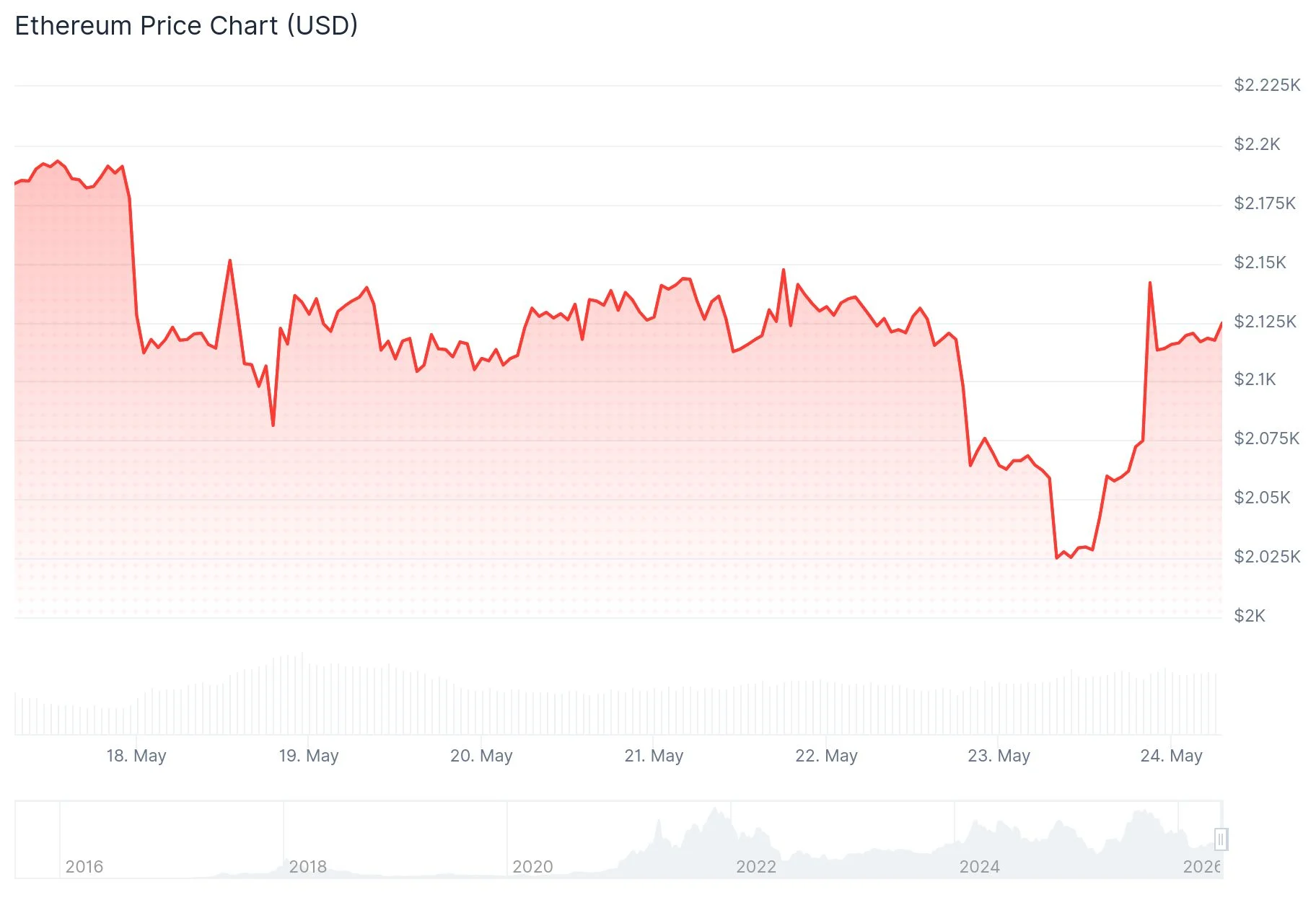
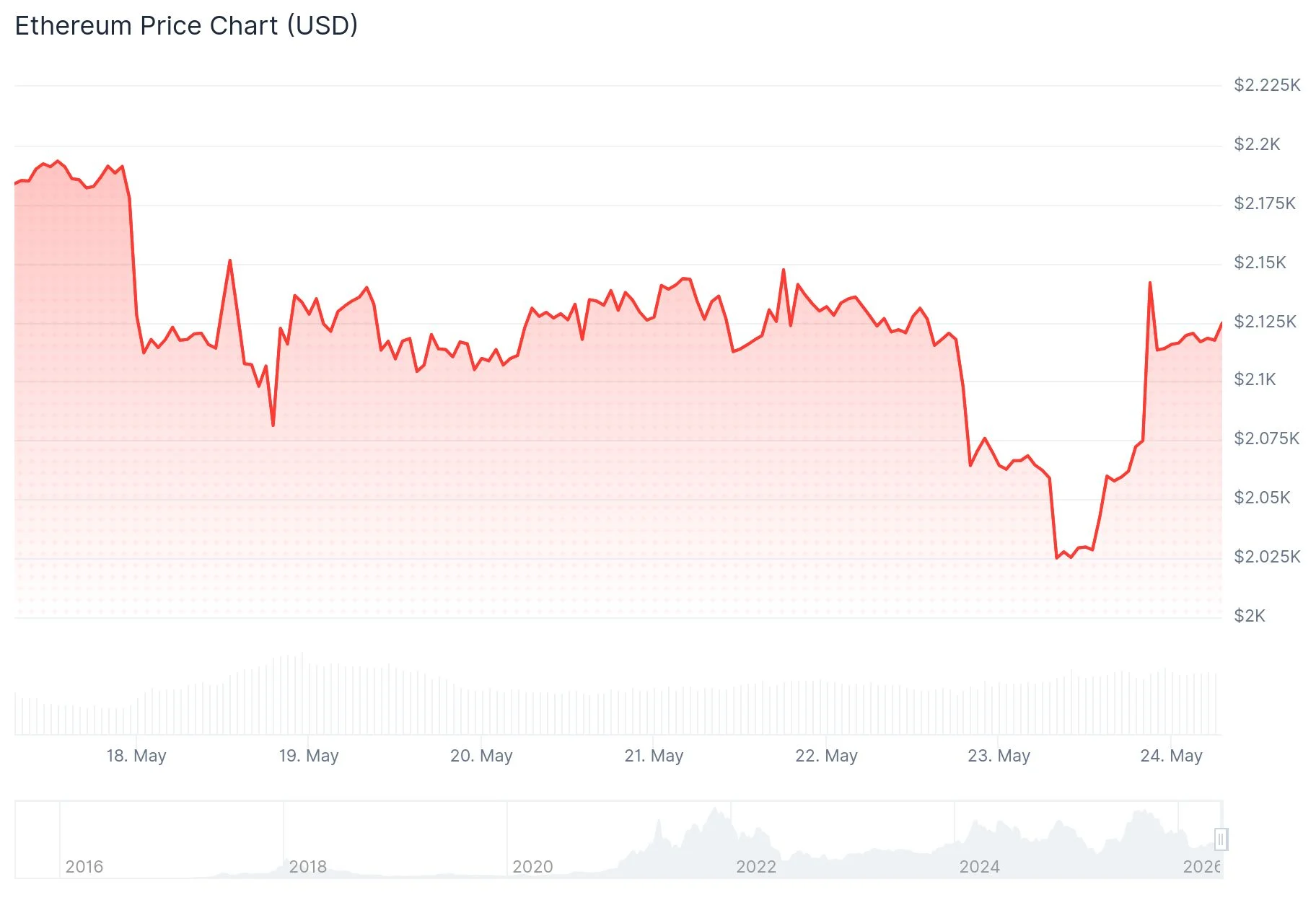
- Ethereum is currently trading near $2,044, facing challenges maintaining support above the $2,000 threshold following the SEC’s postponement on tokenized stock decisions.
- Market analyst Ted identified significant liquidity concentrations between $2,400–$2,600 above current prices and $1,700–$1,900 below.
- Questions surrounding Ethereum Foundation governance are generating uncertainty, although experts emphasize that development remains active across numerous independent teams.
- FTSE Russell’s preliminary index adjustments position Bitmine for potential Russell 1000 entry.
Ethereum is currently changing hands at approximately $2,044 based on recent market data, hovering beneath the crucial $2,000 psychological threshold after experiencing challenging conditions across digital asset markets. The downward movement comes in the wake of the SEC’s decision to postpone its ruling on tokenized securities, dampening a significant bullish narrative that market participants had been monitoring.
However, institutional accumulation patterns remain robust. Tom Lee’s Bitmine executed a substantial purchase of 60,000 ETH — approximately $126 million — within just 24 hours, as reported by blockchain analytics service Onchain Lens. The company’s total position now exceeds 5.33 million ETH, accounting for more than 4.3% of Ethereum’s circulating supply.
This latest acquisition follows Bitmine’s $154 million ETH purchase earlier in the week. Lee has characterized the recent price decline below $2,200 as an “attractive opportunity” for accumulation. The firm is actively staking more than 4.7 million ETH from its holdings, generating approximately $289 million in annualized staking rewards.
Critical Liquidity Zones Identified by Market Analysts
Blockchain analyst Ted has outlined significant liquidity concentrations surrounding ETH’s present trading range. Ted’s analysis reveals short-position liquidity accumulating at the $2,400 and $2,600 resistance levels. Conversely, long-position liquidity is concentrated at $1,700 and $1,900 support zones. These liquidity pockets typically serve as price magnets, and Ted has posed the question to the trading community about which direction ETH will gravitate toward first.
Another market observer, Celal Kucuker, characterized ETH as “coiled like a spring,” suggesting a possible explosive move if the price maintains support above a critical technical level while building short-term buying momentum.
Governance Concerns and Market Sentiment Challenges
An additional headwind affecting ETH stems from increasing scrutiny directed at the Ethereum Foundation. Analyst Papaxem acknowledged that legitimate concerns exist regarding the Foundation’s operational management. The situation gained additional attention when Bankless, a prominent Ethereum-focused media outlet, revealed it had liquidated its ETH position in favor of Zcash.
Papaxem emphasizes that a crucial factor being overlooked is that Ethereum operates independently of sole Foundation control. Organizations such as ConsenSys and numerous autonomous development teams maintain active building efforts on the network, irrespective of Foundation leadership challenges.
Analyst Rios commented on X that ETH’s approximately 19% correction might represent a healthy cycle reset — eliminating overleveraged positions — rather than indicating fundamental deterioration. Rios suggested that if price action stabilizes around current levels, the subsequent recovery phase could demonstrate greater strength than anticipated.
Bitmine appears positioned for Russell 1000 index inclusion following FTSE Russell’s publication of preliminary modifications. Tom Lee observed that BMNR stock’s market capitalization surpasses the $5.7 billion threshold required for large-cap classification, potentially triggering additional passive fund inflows.
Ethereum is presently valued at approximately $2,044, per TradingView data.


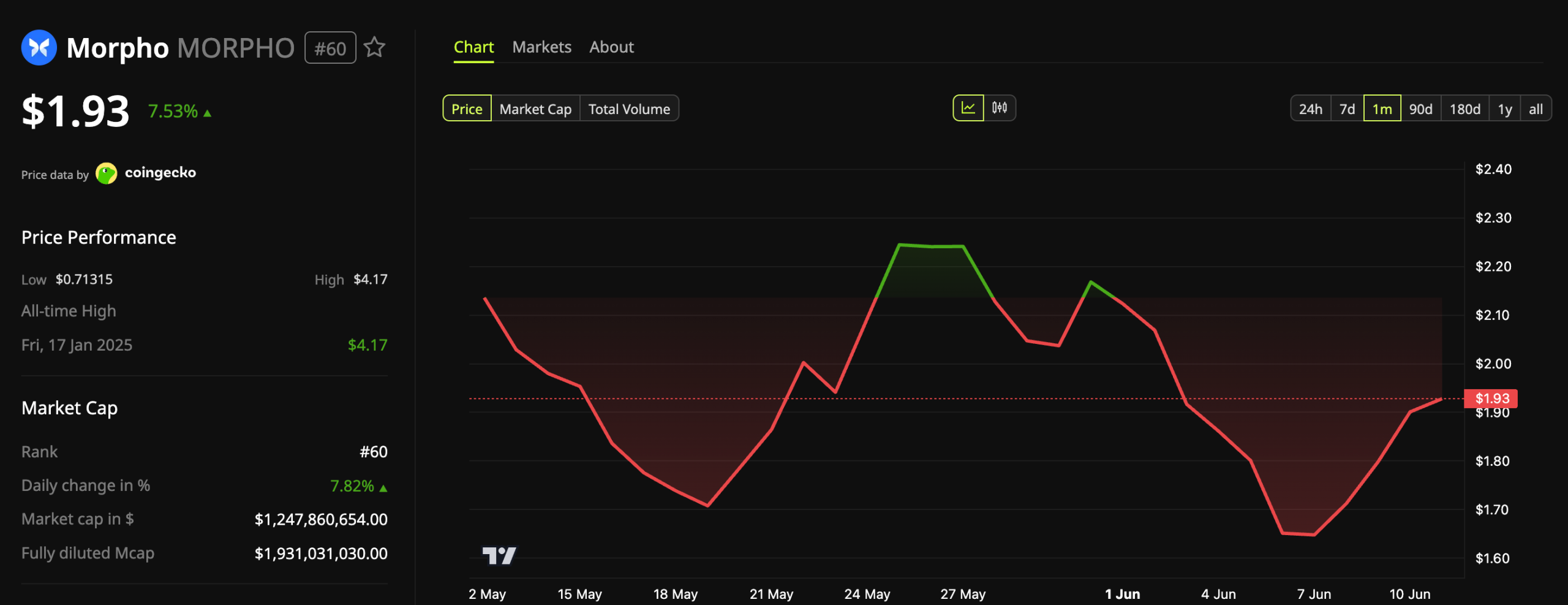
Morpho (MORPHO) gained 7.5% over the past 24 hours, defying a broader market pullback, after Morpho Association announced a $175 million funding round co-led by Paradigm, a16z crypto, and Ribbit.
The raise ranks among the largest in the history of decentralized finance (DeFi). It arrives as institutional demand for onchain lending infrastructure continues to build.
DeFi Lender Morpho Closes $175M Round Led by Paradigm
Morpho Association disclosed the round in a recent blog. Apollo Funds, Circle Ventures, VanEck, Ledger Cathay, Variant, Wintermute Ventures, SBI Group, Bpifrance, and more than 10 other partners also participated.
The protocol holds over $11 billion in deposits. Morpho is already used by leading crypto exchanges, including Coinbase, Kraken, and Binance, as well as by institutional clients Bitwise, Galaxy, and Anchorage Digital.
The financing marks Morpho Association’s fourth institutional raise since 2021. Earlier backers include Coinbase Ventures, Pantera Capital, and Variant. The association said the capital will deepen technical and commercial integrations with partners.
“The true value of finance has always been held back by dated infrastructure, fragmented systems, and extractive intermediaries. We started Morpho to change that. We’re building the open credit network for the world, connecting those with excess capital to those who need financing, globally,” Paul Frambot, Cofounder of Morpho, said.
Follow us on X to get the latest news as it happens
MORPHO Bucks the Broader Downturn
The announcement gave MORPHO’s price a boost. The token’s rally stood out against weak market conditions.
MORPHO traded near $1.93 at press time, up 7.5% over the past 24 hours, while the total crypto market capitalization fell nearly 2%, according to BeInCrypto Markets.

Even so, the token remains down 5.7% over the past week and roughly 12% over the past month. It also sits 54% below its January 2025 all-time high of $4.17.
Whether institutional backing translates into sustained demand for the token may become clearer in the coming weeks.
Subscribe to our YouTube channel to watch leaders and journalists provide expert insights
The post Morpho Token Defies Market Slide After $175M Paradigm-Led Funding Round appeared first on BeInCrypto.
Prediction market regulators should consider a measured approach to insider trading enforcement as opposed to an outright ban, according to research from an academic at the Stevens Institute of Technology.
In a paper released on June 2, assistant professor of finance Balbinder Singh Gill developed a formal economic model to answer the question of how strictly insider trading in prediction markets should be policed.
A paradox exists in that “the same insider trade that improves the accuracy of the price today can reduce the participation that makes the price informative tomorrow,” he said.
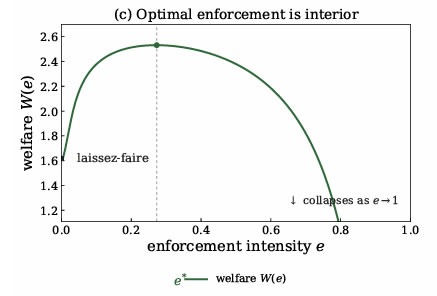
The model showed that prediction market price accuracy is “hump-shaped” in enforcement intensity, with too little enforcement letting insiders crowd out participants, while too much enforcement removes the insider’s genuine informational contribution.
“Tougher enforcement curbs the insider, raising participation, so accuracy is hump-shaped and optimal enforcement is interior, neither laissez-faire nor a ban,” he said.
Insider trading has been a persistent problem for prediction markets, with regulators pushing for crackdowns or banning platforms outright.
The CFTC’s chief enforcement director warned prediction market insider traders in April that violators would face enforcement action. In May, US House lawmakers launched a probe into Kalshi and Polymarket over insider trading.
Different levels of enforcement needed
Singh Gill argued that the level of enforcement should be determined by where the insider information comes from.
Researched information where a trader has worked hard to learn something should have the least, or no enforcement, adding that any crackdown on this level discourages valuable information production.
Related: US House lawmakers launch probe into Kalshi, Polymarket insider trading
Misappropriated information, such as leaked data or classified information, which would be considered insider information, should have a higher level of enforcement.
Meanwhile, cases where the insider can influence the outcome, such as a political candidate betting on their own campaign, should have the most enforcement.
“Trading on a genuine, independently researched edge is the activity society should be most reluctant to punish […] And trading by those who can move the outcome warrants the stiffest enforcement, because their positions invite manipulation.”
Enforcement in a prediction market should be “calibrated rather than maximal,” he concluded.
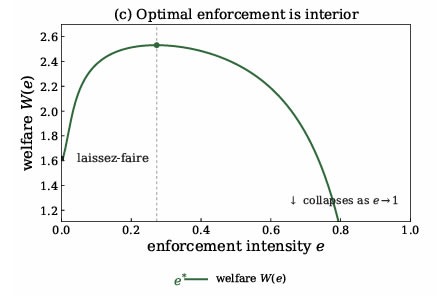
Balanced enforcement provides optimal welfare. Source: Balbinder Singh Gill
Kalshi to check user employment details
The paper came as Kalshi is introducing new measures to combat insider trading by requiring users in some sensitive markets to disclose employment information.
Users betting in sensitive markets, such as company performance or national security, will need to disclose their employer via an online form. It has also developed a “specific risk score” assigned to markets with heightened insider trading or manipulation risk.
The changes follow an audit committee report recommending better data collection and pressure from lawmakers and regulators.
Two recent high-profile insider trading cases involving competitor Polymarket were flagged and also referenced in Singh Gill’s paper.
A Google employee was charged in May with using insider information about the company’s search trends to make $1.2 million on Polymarket, and a US soldier was charged in April with trading on classified knowledge of a military operation.
Magazine: Vietnam preps crypto pilot, HK pushes tokenization: Asia Express
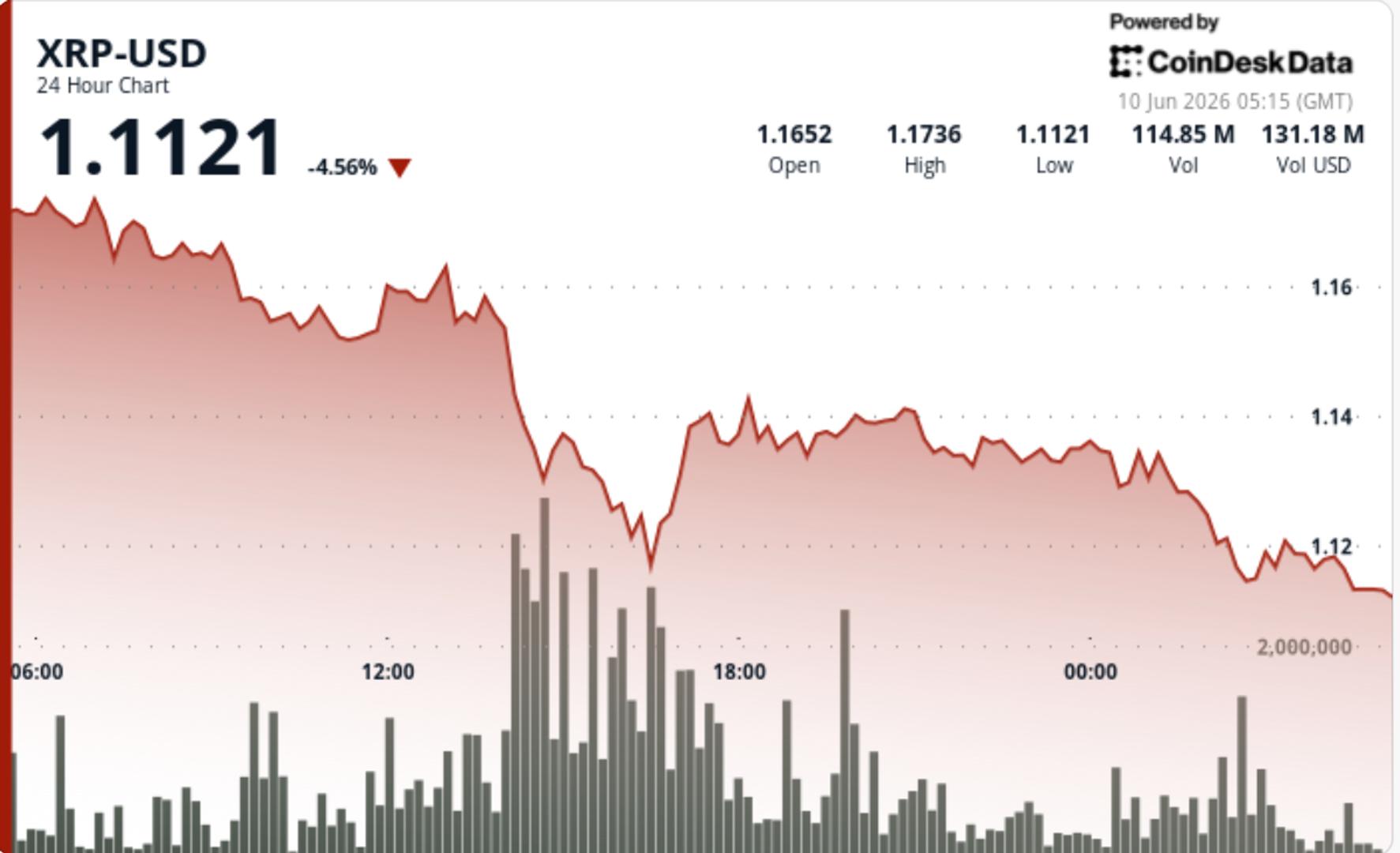
XRP keeps finding buyers near major support, but it keeps losing support anyway. The latest drop pushed the token back toward the same $1.10 area that several analysts had flagged as a key line in the sand, with selling pressure accelerating once $1.13 gave way.
News Background
• Several analysts pointed to the $1.09 area as a major Fibonacci support level that XRP had been approaching for months.
• XRP remains trapped below its 100-day and 200-day moving averages, underscoring the broader bearish trend despite periodic relief rallies.
• Trading activity surged during the selloff before quickly normalizing, suggesting a large repositioning event rather than a steady increase in bearish conviction.
Price Action Summary
• XRP fell from $1.1505 to $1.1248 during the 24-hour session, losing more than 4%.
• The breakdown accelerated after price lost support near $1.13, with volume surging to 109.9 million XRP, more than double the daily average.
• XRP later tested support near $1.1240 before stabilizing into the close as selling momentum began to fade.
Technical Analysis
• The most important development was the loss of $1.13 support, which now becomes the first resistance level on any recovery attempt.
• Volume confirmed the move. The selloff occurred on some of the strongest activity seen in months, suggesting active liquidation and repositioning rather than passive weakness.
• At the same time, momentum indicators are nearing oversold territory. Daily RSI readings have fallen close to levels that historically preceded at least short-term relief rallies.
• The broader structure remains bearish. XRP continues trading inside a descending channel and below every major trend indicator that longer-term traders monitor.
What traders should watch
• $1.10-$1.12 is now the key support zone. A decisive break lower would increase the risk of a move toward $1.00 and potentially the $0.80-$0.90 region.
• $1.13 is the first level bulls need to reclaim to ease immediate downside pressure.
• Beyond that, attention shifts to $1.20 and then the larger $1.35-$1.40 resistance zone where previous recovery attempts failed.
• The setup is becoming increasingly compressed. Either buyers finally defend the current support area with conviction, or XRP risks turning a difficult correction into a much larger breakdown.

TLDR:
- XRP inflows to Binance from wallets holding over 1M tokens have declined sharply since the 2025 peak.
- On-chain data shows no extraordinary inflow spike, ruling out aggressive whale selling or profit-taking now.
- The current XRP price drop is tied to leverage liquidations and broad market weakness, not whale distribution.
- If Binance inflows stay low and demand holds, XRP could realistically revisit the $1.8 to $2.0 price range.
XRP exchange inflows to Binance have declined notably following the 2025 market peak, and on-chain data now points to reduced selling activity among large holders.
Transfers exceeding one million XRP dominated exchange inflow charts between 2021 and 2025, reflecting consistent participation from whale and institutional-scale addresses.
The recent pullback in these flows, despite a price retreat from the $3 region, suggests that major market participants are becoming less inclined to sell.
Whale Activity Shifts as Large-Scale XRP Transfers to Binance Drop
Historically, sharp spikes in the 100K–1M XRP and 1M+ XRP inflow categories have preceded major market downturns.
These surges typically signal that large holders are moving assets to exchanges ahead of selling. However, no such extraordinary spike currently appears at the far right of the inflow chart. This absence is a meaningful contrast to prior bear market conditions.
CryptoQuant analyst PelinayPA noted that the post-ETF approval period coincides with this drop in whale inflows. The reduced exchange activity suggests whales may be holding positions rather than distributing.
That behavioral shift stands out, especially given XRP’s recent price correction. It points to a market structure that differs from previous cycles.
The current price decline appears linked more to leverage liquidations and broader market weakness than to deliberate whale selling. In past severe downturns, exchange inflows rose aggressively as investors rushed to exit positions.
That pattern is not repeating now. The on-chain picture, therefore, does not support the narrative of widespread profit-taking at this stage.
Between 2021 and 2025, large-scale inflows remained consistently elevated, showing that whales actively used Binance as a distribution venue. The recent reversal of that trend is therefore notable.
It reflects a measurable change in behavior among the market’s largest participants. Whether this shift sustains depends on whether inflows stay suppressed in the weeks ahead.
Subdued Binance Inflows Could Reduce Selling Supply and Support XRP Price
PelinayPA stated in the analysis: “If Binance inflows remain subdued, the available selling supply could continue to decrease. Combined with stronger demand, this would make it easier for XRP to revisit the $1.8–$2.0 range.”
That projection rests on the assumption that the current low-inflow environment holds. Any renewed surge in the 1M+ XRP category would challenge that outlook.
XRP’s price stood at $1.11 at the time of writing, with a 24-hour trading volume of $1,754,706,743. The asset recorded a 5.12% decline over the past 24 hours and an 8.28% drop over the prior seven days. Despite these figures, the on-chain data does not yet reflect panic-driven selling from major holders.
Reduced exchange supply, when paired with sustained or growing demand, typically creates favorable conditions for price recovery.
The $1.8–$2.0 range cited in the analysis represents a plausible near-term target if inflows remain low. However, this structure remains sensitive to any sharp reversal in whale behavior. Traders and analysts will likely continue monitoring inflow trends closely.
As long as no renewed surge emerges in the 1M+ XRP inflow category, the current market structure may remain constructive. The broader market environment will also play a role in whether that structure holds.
For now, the declining inflow trend offers a data-backed case for cautious optimism. The next few weeks will clarify whether whales maintain their current stance.


Humanity Protocol has revealed that a compromised employee laptop enabled attackers to obtain control of bridge administration systems across Ethereum and BNB Smart Chain, resulting in the theft and minting of more than $36 million worth of H tokens.
Summary
- Humanity Protocol says a compromised employee laptop enabled attackers to seize bridge controls and steal more than $36 million in H tokens.
- Attackers allegedly compromised multisig keys on Ethereum and BNB Smart Chain, draining 141.2 million H and minting 200 million additional tokens.
- The project has halted bridge activity, is working with exchanges and police, and plans to release a full post-mortem report.
According to a statement shared with crypto.news by Humanity founder and CEO Terence Kwok, the June 8 incident was a coordinated attack that targeted the project’s bridge infrastructure on multiple networks.
“Last night, June 8, 2026, the Humanity was hit by a coordinated attack across Ethereum and BSC,” Kwok said.
Providing the first detailed explanation of how the breach occurred, Kwok said the attacker gained access after compromising an employee device.
“This was a result of a breach that happened after an employee’s laptop was compromised.”
The founder said three of the six Gnosis Safe owner keys controlling the Hyperlane bridge ProxyAdmin on Ethereum were compromised. Humanity Protocol said the attacker transferred ownership of the ProxyAdmin contract to a wallet under their control, upgraded the bridge contract to a malicious implementation, and moved approximately 141.2 million H tokens in a single transaction.
A similar compromise took place on BNB Smart Chain. According to Humanity Protocol, three of five Safe owner keys were compromised, allowing the attacker to seize control of the bridge’s ProxyAdmin contract, deploy a malicious implementation with an unlimited mint function, and mint 200,000,005 H tokens in two separate transactions.
The project currently estimates that more than $36 million has been stolen and sold across both chains.
Compromised multisig keys enabled bridge takeover
Fresh details from Humanity Protocol expand on earlier disclosures from the team, which had initially confirmed only that private keys linked to a Humanity Foundation member were compromised.
Earlier on June 9, on-chain analyst Specter reported that more than 17 wallets associated with Humanity Protocol had been drained. Initial estimates placed losses near $19 million before later blockchain analysis increased the figure to more than $30 million.
Blockchain data cited by Specter indicated that the attacker sold part of the stolen H tokens and converted a substantial portion of the proceeds into Ethereum. According to the analyst’s Telegram update, roughly $23.7 million had been swapped into ETH, while approximately $7.9 million remained in H tokens.
Separate monitoring from blockchain security firm Blockaid had previously suggested that an attacker obtained proxy administrator rights on BNB Smart Chain and minted additional H tokens.
Humanity Protocol’s latest incident report confirms that administrative control of the bridge infrastructure was seized and used to create new tokens on the network.
Questions about the exploit emerged as H experienced unusual trading activity ahead of a scheduled token unlock later this month.
As reported by crypto.news earlier, blockchain investigator ZachXBT had initially considered whether the reported key compromise could have been used to conceal insider selling. However, after reviewing the movement and laundering of stolen funds, he concluded that the available evidence supported Humanity Protocol’s explanation that the exploit stemmed from a genuine private key compromise rather than an insider theft scheme.
Humanity Protocol is scheduled to unlock additional tokens on June 25 under a revised investor vesting plan. Previous reporting by crypto.news showed that some early investors opted for a discounted immediate unlock instead of a longer vesting schedule.
Exchanges and police are assisting recovery efforts
Response efforts remain ongoing as Humanity Protocol works to contain the fallout from the attack and investigate the breach.
“We’ve now halted all deposits and withdrawals to the affected bridges and are working with all related parties, including exchanges, to minimize the impact,” Kwok said.
The project said it is coordinating with exchanges and security partners while conducting an internal investigation into the incident.
“We’re also working closely with the police to investigate this incident and recover some of the stolen funds,” Kwok added.
Market reaction to the exploit was severe. Trading data cited in previous reports showed H falling from its June 2 all-time high near $0.844 to around $0.123 after the attack, erasing most of the token’s earlier rally as trading volume surged above $605 million.
Despite the losses, Kwok said the team remains focused on recovering assets, identifying those responsible, and strengthening the project’s defenses.
“We’re committed to seeing this through by recovering what we can, holding those responsible accountable, and rebuilding our security from the ground up.”
Humanity Protocol said it plans to release a full post-mortem report once its investigation progresses further.
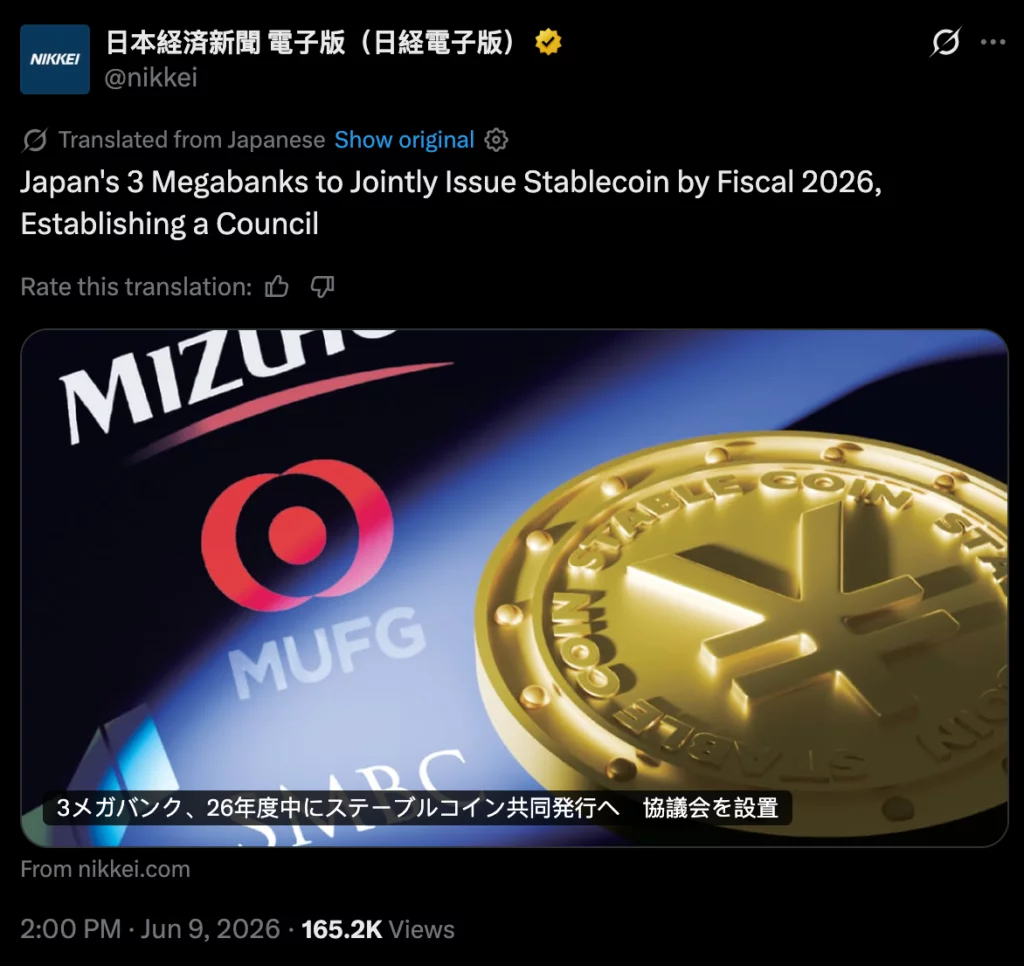
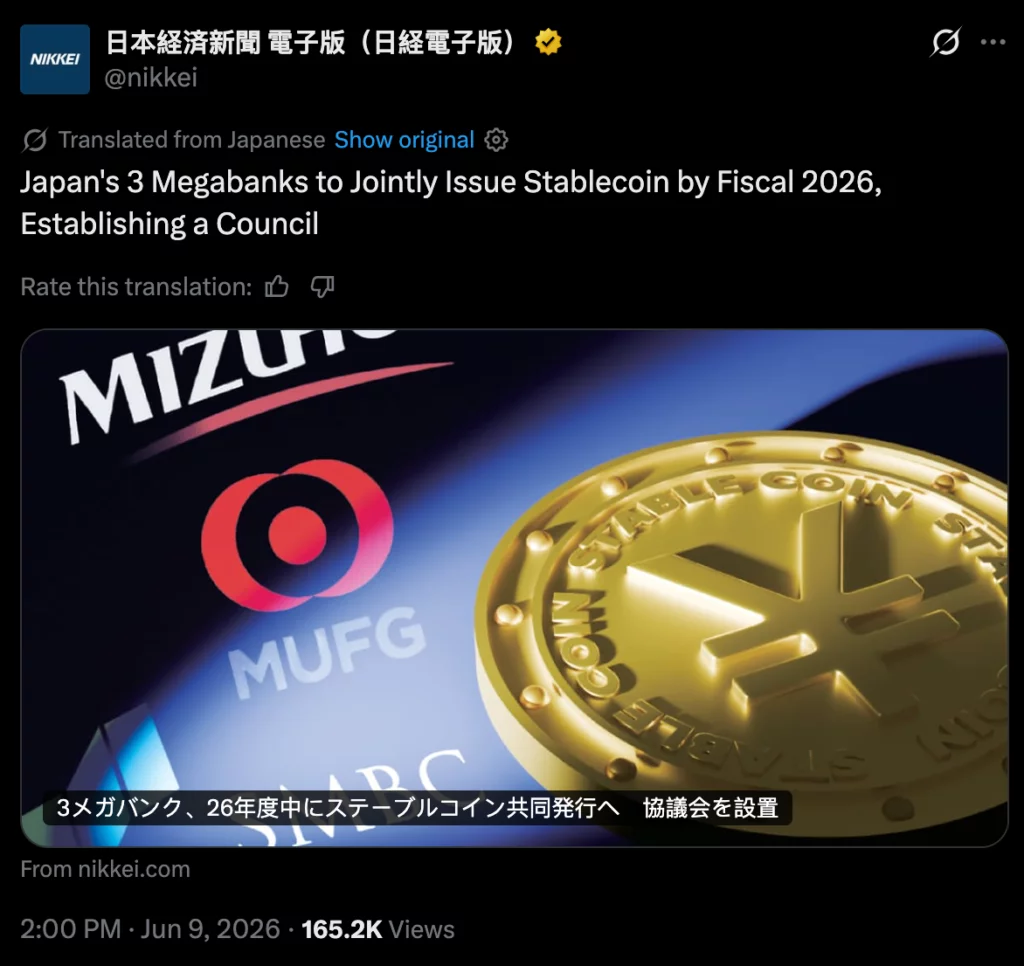
MUFG Bank, Sumitomo Mitsui Banking Corporation and Mizuho Bank plan to start live transactions with a jointly issued stablecoin during fiscal year 2026. Japan’s fiscal year ends in March 2027.
Summary
- Japan’s three megabanks target live stablecoin transactions within fiscal 2026 under a shared banking framework.
- A new council will examine issuance infrastructure, governance, operating rules, systems and future bank participation.
- The FSA-backed pilot tested corporate cross-border payments through a trust structure using Progmat’s blockchain infrastructure.
The banks signed a memorandum to create a voluntary council that will prepare the operating and governance framework. The project follows a regulatory pilot supported by Japan’s Financial Services Agency.
Three banks prepare joint stablecoin transactions
The banks will issue the stablecoin through a trust agreement. They will act as joint settlors, while a trust bank or a similar institution will serve as trustee.
The structure aims to let the banks share one issuance framework instead of developing separate tokens. The official statement did not provide the token’s issue size, blockchain network, retail access terms or precise rollout date.
“The three banks will accelerate their initiatives,” the joint statement said.
In addition, the council will examine issuance infrastructure, system design, governance and operating processes. It will also review Japanese laws and market conditions before live transactions begin.
MUFG, SMBC and Mizuho will establish the council first. The group may later work with other financial institutions and related companies that want to join the stablecoin framework.
The banks aim to support several payment uses rather than one limited test. However, they have not named the first commercial users or confirmed whether initial transactions will focus only on corporate payments.
FSA-backed pilot tested cross-border payments
The FSA supported the proof-of-concept in November 2025. The pilot examined joint stablecoin issuance and cross-border payments involving Mitsubishi Corporation’s Japanese and overseas offices.
Mitsubishi UFJ Trust and Banking Corporation handled the planned trust-based issuance structure. Progmat supplied the blockchain infrastructure, while the three banks developed requirements and assessment standards.
The pilot also reviewed legal compliance and user protection. Japan’s Payment Services Act allows stablecoins to operate as regulated electronic payment instruments when issuers meet the required structure and reserve rules.
Japan expands its yen stablecoin market
The joint bank project enters a market that already includes other regulated yen token plans. JPYC launched a yen-backed stablecoin in October 2025, while SBI Holdings and Startale have also prepared an institutional yen stablecoin.
Japan’s ruling Liberal Democratic Party has called for broader use of yen stablecoins, tokenized deposits and round-the-clock settlement. The plan also supports clearer rules for tax payments, wages and corporate uses.
The three-bank project could add a shared settlement route for major corporate clients. Its progress will depend on the council’s final design, regulatory review and connections with existing payment systems.


Anthropic released Claude Fable 5 on Tuesday, its most capable public model running on Mythos, as it pursues a fall listing it has already filed for confidentially alongside OpenAI, which filed Monday, and SpaceX.
Mythos is Anthropic’s most advanced tier of artificial intelligence models, and Fable is the first publicly released version of this powerful underlying architecture but it comes with strict built-in safety filters.
Bitcoin has spent the past week trading as the high-beta arm of the Nasdaq, sliding with chipmakers and Asian tech as the AI trade unwound. An Anthropic listing, after its $65 billion round at a $965 billion valuation, would hand index funds and retail traders a single AI-lab stock to pile into. Crypto already moves with the AI trade, and giving that trade its own ticker only tightens its grip.
AI-linked tokens caught a modest bid on Fable’s launch while bitcoin barely moved, because model releases are narrative for the sector’s small caps while the majors now trade on what the AI trade does to risk appetite, not on the models themselves.
Ripple has joined Water.org’s Get Blue campaign as its exclusive digital asset and payments partner.
Summary
- Ripple joins Get Blue as exclusive digital asset and payments partner supporting Water.org’s lending model.
- RLUSD will help Water.org move funds faster to microfinance partners serving families across emerging markets.
- Get Blue combines corporate donations with affordable loans for household water and sanitation improvements worldwide.
The blockchain company will provide seed funding and support fund transfers to local finance partners in emerging markets.
Water.org says more than two billion people lack safe water at home. The nonprofit, co-founded by actor Matt Damon and engineer Gary White, uses small loans to help families pay for water and sanitation systems.
Ripple brings RLUSD into the Get Blue campaign
Ripple said Water.org will use its U.S. dollar-backed RLUSD stablecoin to move funds to microfinance partners. Those organizations provide affordable financing for household pipes, pumps, toilets and other basic water systems.
The arrangement builds on Ripple’s existing support for Water.org through Ripple Payments. Water.org says the platform can reduce costs and shorten transfer times when sending capital to partners across different markets.
“We’re proud to join Water.org in support of Get Blue,” Ripple said.
Get Blue named Ripple alongside Amazon, Gap, Starbucks, Ecolab, AccuWeather and TikTok. The campaign first appeared at the World Economic Forum in January and is now moving into a wider consumer rollout.
Ripple-backed WaterCredit turns donations into affordable household loans
Get Blue directs corporate funding and consumer donations into Water.org’s WaterCredit model. Local financial institutions then provide small loans that families use to install safe water or sanitation services at home.
Water.org reports a 98% repayment rate for WaterCredit loans. Repaid funds can support more borrowers, allowing the same pool of capital to finance additional household projects over time.
“When brands join us, they invite their communities into this work,” Water.org CEO Gary White said.
The wider campaign links donations to everyday purchases and services. Gap contributes $5 from each item in its Get Blue collection. Starbucks will donate $0.25 from selected drinks between June 16 and July 7.
RLUSD expands beyond trading and settlement
Ripple launched RLUSD as a stablecoin backed by U.S. dollar deposits, short-term Treasuries and cash equivalents. It operates on the XRP Ledger and Ethereum and supports payments, settlement and other blockchain transactions.
The Water.org partnership adds another humanitarian use for the token. Ripple previously used RLUSD in a drought insurance pilot for pastoral communities in Kenya and committed $25 million to education groups in the U.S.
As crypto.news reported, the education funding supported DonorsChoose and Teach For America. Separate reporting covered RLUSD’s African expansion through Chipper Cash, VALR and Yellow Card for payments and treasury services.
The Get Blue partnership does not disclose how much RLUSD Water.org will receive or which countries will receive the first transfers. Ripple and Water.org have also not published transaction volumes or named the first microfinance recipients.
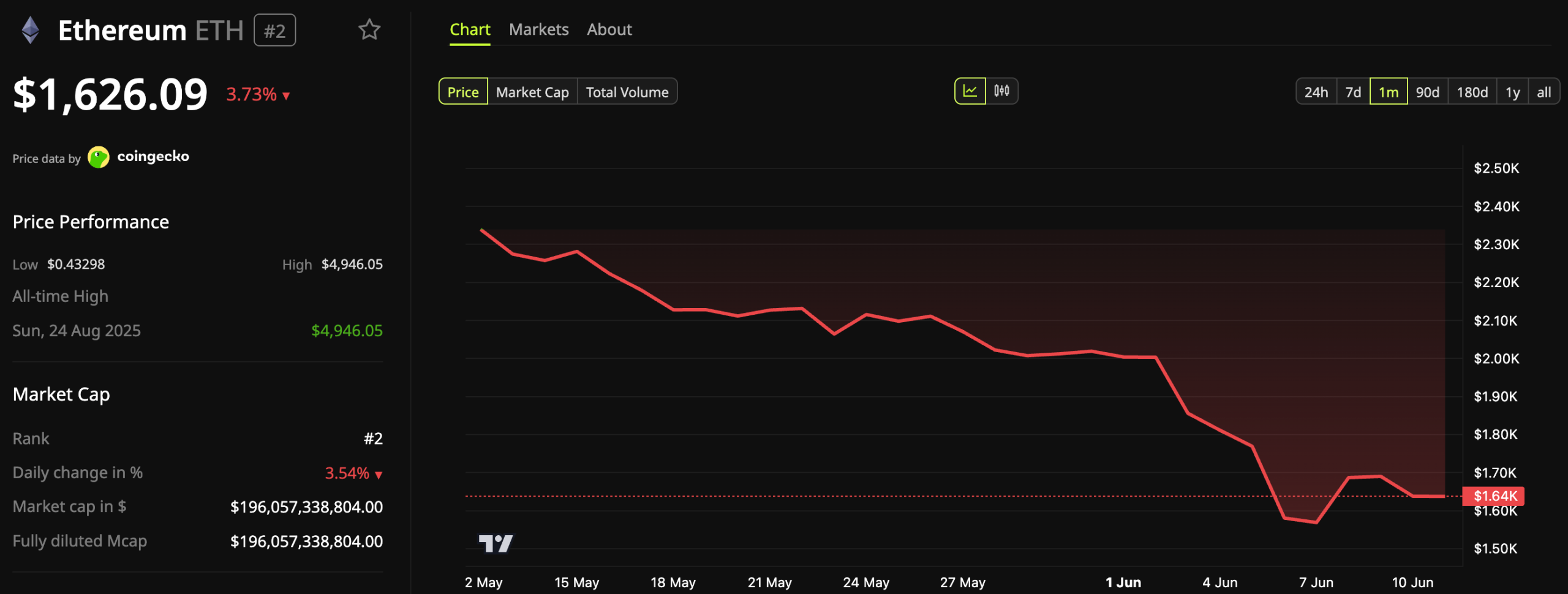
Ethereum (ETH) social sentiment has collapsed into an extreme fear zone as price continues to slip, down 12% over the past week. Bearish posts now dominate social media as the token trades near $1,626.

Santiment data shows the ratio of positive to negative commentary at one of its lowest levels this year. However, the firm suggested this is “where markets become most dangerous for bears.”
Ethereum Fear Reaches the Zone Where Bears Usually Get Trapped
Santiment reported that traders have largely written off Ethereum after months of underperformance against Bitcoin (BTC) and other large-cap assets.
The cryptocurrency re-entered the extreme fear zone on June 9, with the positive-to-negative commentary ratio near 1.09. The firm noted that this zone has historically acted as a buy signal.
Follow us on X to get the latest news as it happens

The contrast with April is stark. On April 22, the crowd flashed extreme greed with Ethereum above $2,400, which Santiment flagged as an ideal sell point. The token has since lost roughly 32% of its value.
“Historically, Ethereum has tended to rebound when social sentiment reaches extreme FUD levels because prices frequently move opposite to the crowd’s expectations. When traders become overwhelmingly convinced that an asset will continue falling, much of the selling pressure has already been exhausted,” the post read.
Sentiment is not the only flag. Trader Ash Crypto also pointed to another key signal. He compared the current breakdown to June 2022, when ETH collapsed before staging a reversal.
“Back in June 2022, ETH broke through every support level and crashed to $880. Everyone gave up on it. That turned out to be the exact bottom of the whole bear market,” he said.
He argued the current drop mirrors June 2022, sharing the same timing, breakdown, and chart structure. After peaking at $4,953 in August 2025, ETH has fallen sharply.
The price has broken below its weekly 200-day moving average at $2,471, leaving $1,500 as the next support to watch.
“Two ways this plays out: If ETH holds $1,500, this could play out exactly like June 2022. The people who bought that bottom made 5x over the next 18 months. If ETH falls below $1,500 on a weekly close, the next support is all the way down near $1,000. Nothing to stop the fall in between,” the analyst added.
ETF Outflows and Oversold Signals Cloud the Rebound Case
Despite these signals, ETH still faces real obstacles. Institutional demand remains weak. SoSoValue data shows ETH spot ETFs have logged outflows for 4 straight weeks, a sign that large investors are still pulling back.
Until those flows turn positive and hold, any rebound risks fade back into the wider downtrend.
Meanwhile, analyst Ardi warned that in prior bear markets, Ethereum bottoms formed after the weekly Relative Strength Index (RSI) broke below 30.
“Each time it spent consecutive weeks there, it marked quite literally the exact bottom of the cycle,” the analyst mentioned.
In 2018, after ETH slipped into the territory, prices dropped 63% from $205 to $75. In 2022, ETH dropped 65% from $2,200 to $750.
Ardi noted that ETH has not yet reached oversold territory, with prices below $1,700. Major macro support sits only 15% lower, leaving little cushion.
“If there is a positive to find, it’s that ETH has spent more time in the lower half of the oscillator this cycle than any prior 4-year period. So there is a small possibility that ETH bottoms without RSI deeply breaking that support in the first place,” Ardi added.
The analyst also noted that ETH never staged a true breakout this cycle. As a result, the chart may not require the same violent correction. Even so, Ardi said ETH typically bottoms only when nobody wants to own it, which, in both prior bear markets, meant oversold conditions.
Subscribe to our YouTube channel to watch leaders and journalists provide expert insights
The post Ethereum Fear Hits 2026 Extreme as History Points to a Rebound appeared first on BeInCrypto.

Kraken has been named the official crypto exchange supporter of the FIFA World Cup 2026, giving the crypto exchange a presence at one of the world’s largest sporting events.
The company said Tuesday that the partnership will include fan activations and product experiences throughout the tournament.
The 2026 World Cup is expected to be the largest in FIFA history, with an expanded field of 48 teams and 104 matches across 16 host cities in the United States, Mexico and Canada. FIFA projects the competition will attract a cumulative global audience of more than 6 billion viewers during its seven-week run.
The partnership places Kraken alongside some of FIFA’s longest-standing corporate sponsors, including Adidas, Coca-Cola, Visa and Hyundai-Kia.
The agreement also expands Kraken’s sports sponsorship efforts, which already include partnerships with Tottenham Hotspur, Atlético de Madrid, RB Leipzig and Atlassian Williams Racing.
The tournament kicks off on June 11 in Mexico City, where Mexico is scheduled to face South Africa at Estadio Azteca.

Source: Kraken
Related: Kraken offers SpaceX IPO access through xStocks
Prediction markets expand their sports presence
The partnership comes four years after the 2022 “Crypto Bowl,” when Coinbase, FTX, Crypto.com and eToro aired advertisements during Super Bowl LVI. Sports marketing activity across the crypto industry slowed following the collapse of FTX later that year and the broader market downturn.
While some digital asset companies have returned to major sporting events, their approach has been more measured. Coinbase aired its first Super Bowl commercial since 2022 during this year’s broadcast, while Crypto.com used the event to launch its AI-focused platform, ai.com.
At the same time, prediction markets, where users buy and sell contracts tied to the likelihood of specific outcomes, have expanded their presence in professional sports.
In November 2025, Polymarket became the official prediction market partner of UFC and Zuffa Boxing under a multiyear agreement that brought prediction market data into live events and broadcasts.

Source: UFC
In January, the company signed a multiyear agreement with Major League Soccer to become the league’s exclusive prediction market partner for MLS and the Leagues Cup. Major League Baseball followed in March, naming Polymarket its official prediction market exchange while signing a separate integrity agreement with the US Commodity Futures Trading Commission.
FIFA’s commercial roster also includes ADI Predict, a blockchain-based prediction market platform backed by Abu Dhabi institutions.
Magazine: Korea probes Polymarket users, crypto PACs sweep primaries: Hodler’s Digest, May 31- June 6

Crypto Market EXPLODES in 3.. 2.. 1.. (Watch Immediately)

UK temperatures forecast to reach 28C – is a heatwave on the way?

Top 10 Teams and Players Poised to Shine at 2026 FIFA World Cup as Tournament Kicks Off



-

 Fashion5 days ago
Weekend Open Thread: Evereve – Corporette.com
-
 Crypto World5 days ago
Jensen Huang Approves Samsung, SK Hynix, and Micron for NVIDIA (NVDA) HBM4 Memory Supply
-

 Crypto World2 days ago
Anatomy of the June crypto crash: Fed, Iran, Saylor
-
 Entertainment3 days ago
The Best Mystery Series of All Time Is Surging on Streaming 30 Years After It Ended
-

 NewsBeat2 days ago
Alexander Zverev wins the French Open to finally earn a 1st Grand Slam title
-
Crypto World3 days ago
Senator Cynthia Lummis Calls CLARITY Act the Most Consequential Financial Legislation of This Generation
-

 Tech4 days ago
Suspicious Polyfill login prompts pop up on Toshiba, Muji websites
-

 Tech5 days ago
Microsoft launches MXC, an OS-level sandbox for AI agents, with OpenAI and Nvidia already on board
-

 Tech3 days ago
Microsoft unveils seven homegrown AI models in new bid for ‘long term self-sufficiency’
-
 Business3 days ago
The Pain Points Taking a Fragile Tech Rally Down a Notch
-
Crypto World5 days ago
LBank Surpasses 25 Million Users Worldwide as AFA Partnership Continues to Drive Global Growth
-

 Business5 days ago
(VIDEO) Justin Bieber Delivers Surprise Happy Birthday Serenade to Diners at Los Angeles Mexican Restaurant
-

 Crypto World3 days ago
Trump’s AI Ownership Plan Could Benefit Anthropic at OpenAI’s Expense
-
 Sports14 hours ago
Bangladesh beat Australia after 20 years in ODIs, register only their second win over six-time world champions | Cricket News
-

 Tech5 days ago
Meta steals a tactic from Tesla and builds data centers in tents
-

 Tech5 days ago
RCS Messages Between iPhone and Android Get End-to-End Encryption With iOS 26.5
-
 Crypto World2 days ago
Eli Lilly (LLY) Stock Surges 4% Following Breakthrough Sleep Apnea Trial Results
-

 Tech4 days ago
Von der Leyen’s AI envoy pick draws conflict-of-interest fire
-

 Tech4 days ago
Hackers now exploit SolarWinds Serv-U flaw to crash servers
-

 Tech2 days ago
Notion restores access to Anthropic after service disruption
You must be logged in to post a comment Login