

Crypto World
Goldman Sachs Dumps XRP and SOL: Altcoins Market Could Crash


Goldman Sachs has reduced exposure to XRP and Solana, according to recent portfolio disclosures. The timing raises an obvious question: is this institutional profit-taking, or something more structural?
Both assets have catalysts on the horizon, but the exit signal from one of Wall Street’s most-watched desks is hard to ignore.
The bank’s exit reflects an institutional shift away from higher-beta altcoins and toward large-cap anchors like BTC and ETH. While XRP’s regulatory overhang has been resolved, SOL’s sharp one-week drawdown of nearly 11% has reignited questions about its dependence on speculative memecoin cycles, even with the Foundation President’s statement on memecoins.
— Solana Community (@SolCommunityy) May 18, 2026
 INSIGHT: Solana Foundation President Lily Liu says, “Memecoins don’t define Solana.” https://t.co/OYMj63YQs4 pic.twitter.com/kSY8jhX9Sc
Neither asset delivered a clear breakout in recent sessions despite windows of opportunity. The data points to a market in transition, with altcoin liquidity thinning and institutional appetite shifting to infrastructure plays closer to Bitcoin’s base layer.
Discover: The best pre-launch token sales
Can XRP and SOL Survive Goldman Sachs Exit?

XRP is holding a narrow range between $1.38 and $1.42, with bulls defending the $1.35 support floor established during recent consolidation. Resistance sits at $1.50, a zone where XRP has stalled repeatedly across the past several weeks.
XRP’s moves remain tightly correlated with altcoin flows rather than any idiosyncratic driver, meaning upside depends heavily on macro risk sentiment flipping positive.

SOL’s picture is sharper and more painful. Down almost 12% on the week, the current $85 level is its last support. A hold there opens a potential rebound toward $95. However, a clean break below $80 would expose prior consolidation zones with limited technical support.
Solana’s roadmap developments, including Alpenglow and MEV design changes, remain longer-term positives, but they do not resolve near-term selling pressure.
Discover: The best crypto to diversify your portfolio with
Bitcoin Hyper Targets Early Mover Upside as XRP and SOL Test Key Levels
When established altcoins face institutional exits and technical stress simultaneously, capital doesn’t disappear; it rotates. SOL’s 12% weekly drawdown and XRP’s range-bound stagnation are exactly the conditions that push active traders to look earlier in the cycle.
Bitcoin’s own price action has been consolidating, but the infrastructure being built on top of it is accelerating.
Bitcoin Hyper is positioning itself at that intersection. The project is the first-ever Bitcoin Layer 2 with Solana Virtual Machine (SVM) integration. It smart contract that executes at Solana-level speeds, secured by Bitcoin’s network.
The pitch is direct: break Bitcoin’s core constraints like slow transactions, high fees, and no programmability, without sacrificing its trust model. The presale has raised more than $32.7 million to date, with $HYPER currently priced at $0.01368. Staking is live alongside the presale buy option at the current rate of 35% APY.
Bitcoin Hyper presale details are available here.
The post Goldman Sachs Dumps XRP and SOL: Altcoins Market Could Crash appeared first on Cryptonews.

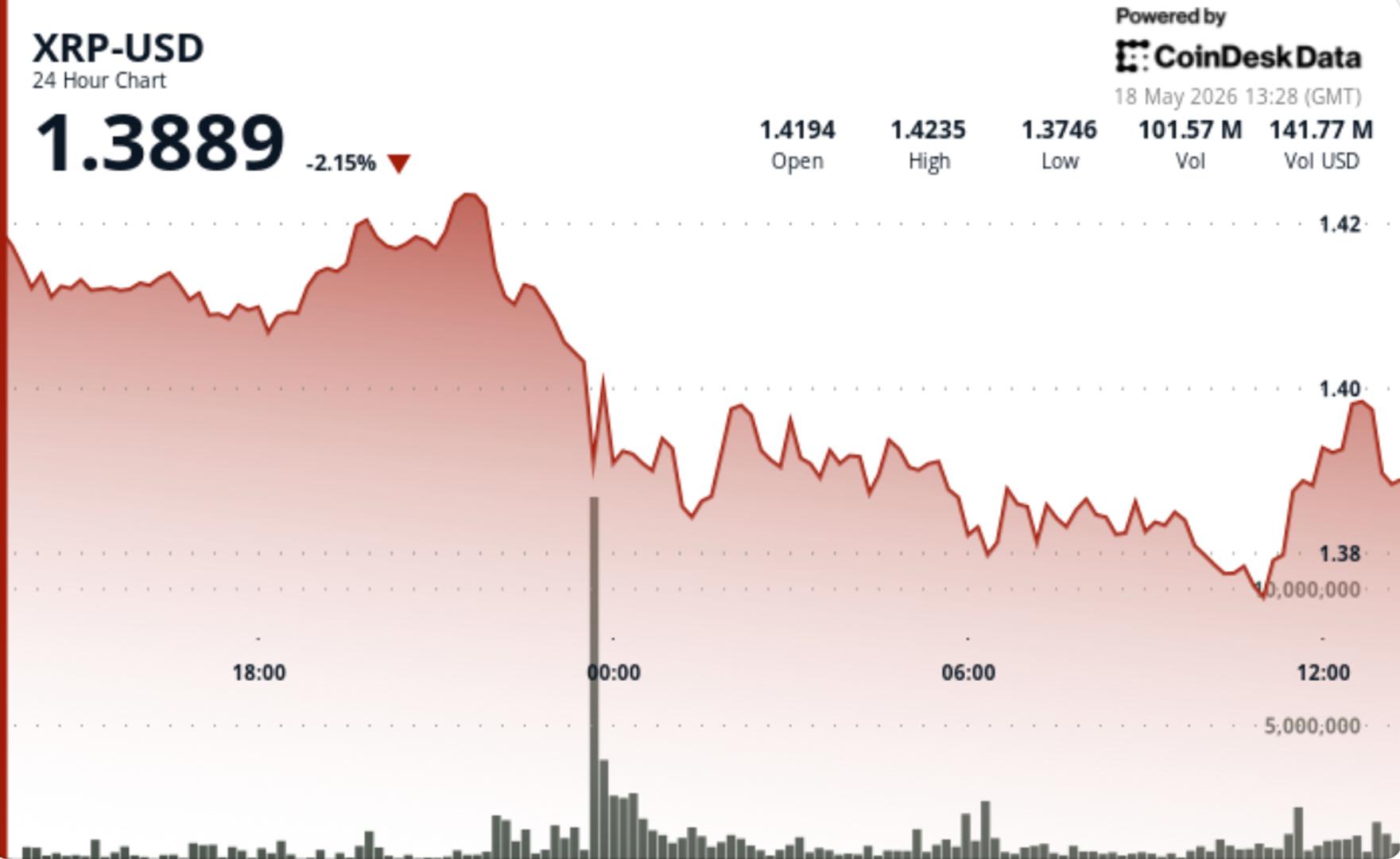
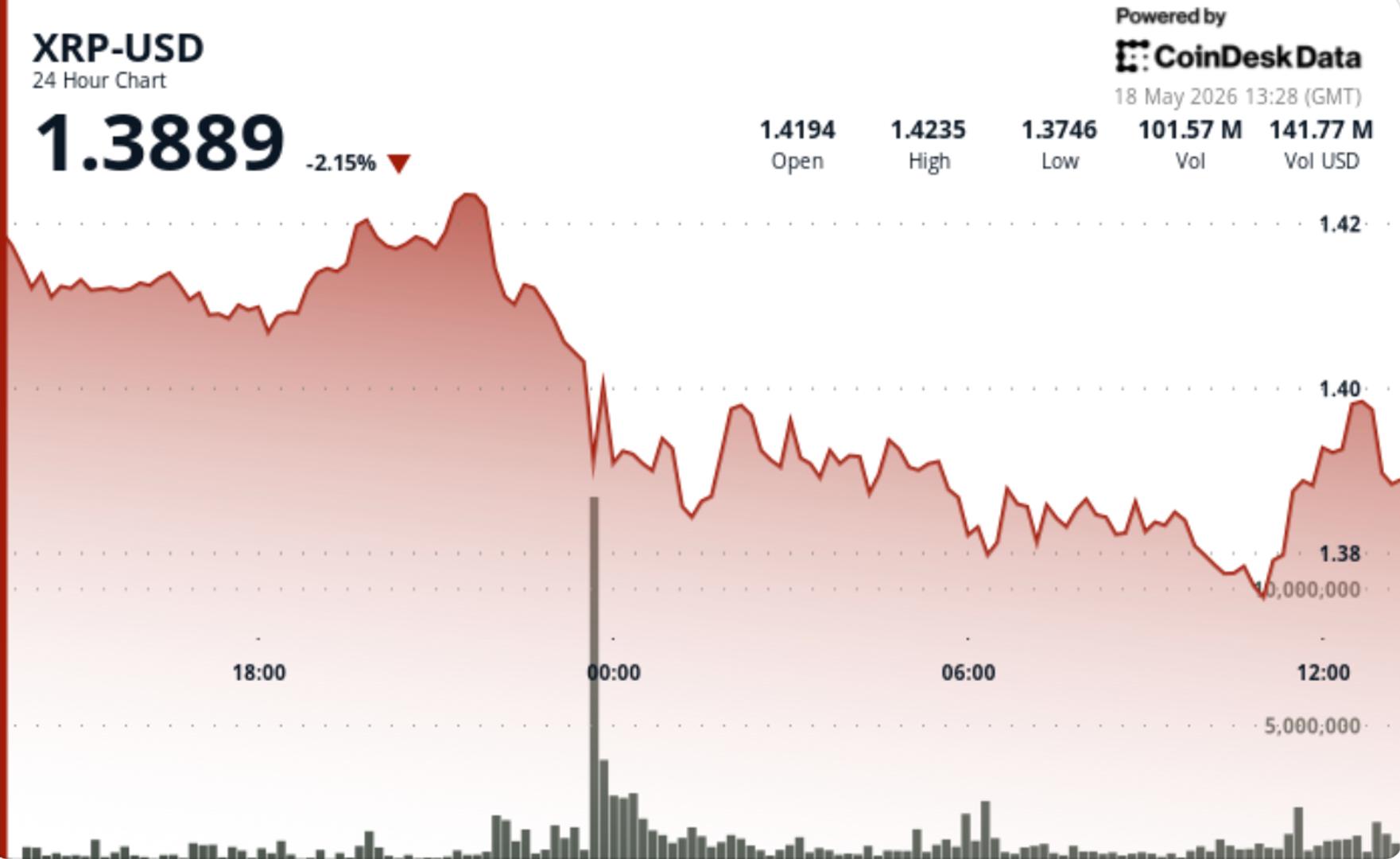
XRP gave back gains after a high-volume selloff erased the latest breakout attempt, though buyers stepped back in near support around $1.38.


The White House says it has achieved a legal and custody “breakthrough” for the US Strategic Bitcoin Reserve, finally giving Washington a compliant way to safeguard billions in seized BTC.
Summary
- White House Digital Assets Executive Director Patrick Witt confirmed legal and custody frameworks for the Strategic Bitcoin Reserve are now in place
- The announcement signals the administration has cleared key regulatory hurdles without requiring immediate congressional action
- Witt described the development as a “breakthrough” that allows proper safeguarding of government-held digital assets
The White House has confirmed a major operational breakthrough for the U.S. Strategic Bitcoin Reserve, with an announcement expected in the coming weeks. Patrick Witt, Executive Director of the President’s Council of Advisors for Digital Assets, revealed during an interview at Consensus 2026 that the administration has successfully established the legal compliance and asset custody structure required to protect government-held crypto assets.
“We’ll have an announcement…It’s a breakthrough as far as getting everything in place, legally sound, properly safeguarding the assets,” Witt said during the interview with Scott Melker. The statement marks the first official confirmation that the reserve framework has overcome regulatory obstacles that previously prevented the government from properly securing seized Bitcoin (BTC) holdings.
Legal framework in place
The breakthrough comes more than a year after President Donald Trump signed an executive order establishing the Strategic Bitcoin Reserve in March 2025. That order directed federal agencies to consolidate Bitcoin obtained through civil and criminal forfeiture into a single reserve account and prohibited the Treasury from selling the assets. Witt emphasized that while executive orders established the initial framework, legislative action remains necessary to ensure long-term protections and permanence.
The administration is working closely with Deputy Harry John and Stephen Miller’s policy team on interagency collaboration for the reserve, even as congressional attention focuses on the CLARITY Act. Witt warned that executive orders alone are vulnerable to reversal by future administrations, citing policy shifts between the Trump and Biden administrations as evidence that congressional codification through the BITCOIN Act and American Reserve Modernization Action Act is essential.
Strategic positioning
According to Wikipedia, the U.S. government is estimated to hold approximately 328,372 BTC as of February 2026, making it the largest known state holder of Bitcoin globally. With Bitcoin trading around $77,277 as of May 18, 2026, the government’s holdings represent approximately $25.4 billion in value. The reserve framework treats Bitcoin as a strategic asset comparable to gold or petroleum stockpiles, rather than a speculative investment.
Witt also highlighted custody failures, noting that losses by U.S. Marshals demonstrate gaps in the current system that require both the BITCOIN and ARMA Acts to properly protect executive orders. The official stressed that failing to establish clear regulatory leadership could force the United States to follow frameworks developed by other nations, potentially benefiting competitors like China in the digital asset race.

Iran is reportedly considering the introduction of a bitcoin (BTC)-based insurance policy for safe passage through the Strait of Hormuz that it believes will make the country $10 billion in revenue.
That’s according to state-backed news outlet Fars News, which reported on Saturday that the system has been in the works since April.
The proposed policy is called “Hormuz Safe,” and its website claims it will provide “Iranian shipping companies and cargo owners with fast, verifiable digital insurance — paid via BTC and settled at the speed of the blockchain.”
Fars News reports that Iran wants to legally control the Strait after the war’s conclusion and commercialise the route to boost its economy.

Read more: Crypto scams are now a threat in the Strait of Hormuz, report
The outlet reports that, “With this plan, various marine insurance policies and financial liability certificates can be issued, which could generate over $10 billion in revenue for the country.”
Iran has also reportedly created a new government body today to help manage the Strait, while peace talks with the US appear to have come to a standstill. Countries in Europe are also holding talks with Tehran over passage through the Strait.
Iran’s previous BTC toll exploited by scammers
Iran has already demanded that ship owners pay BTC tolls. At the time, officials wrongly implied that the crypto would be free from the restrictions of sanctions.
The US has also sanctioned Iran’s BTC wallets and other state-owned entities, so payments in BTC won’t alter these restrictions.
After the first set of tolls were announced, scammers attempted to exploit the news by sending ship masters phony emails pretending to be Iranian authorities and asking for payment.
One ship may have fallen victim to the scammers as the vessel’s crew, thinking they had paid the toll, was still fired upon by Iranian forces.
Got a tip? Send us an email securely via Protos Leaks. For more informed news and investigations, follow us on X, Bluesky, and Google News, or subscribe to our YouTube channel.


Co-CEO Arjun Sethi said the firm kept investing through market weakness, leaning on acquisitions and futures growth to offset softer spot trading.
Crypto World
Vitalik Buterin says AI 'formal verification' could actually make crypto much more secure


The Ethereum co-founder argued that AI-assisted “formal verification” could become one of the most important tools for cybersecurity in a new blog post.
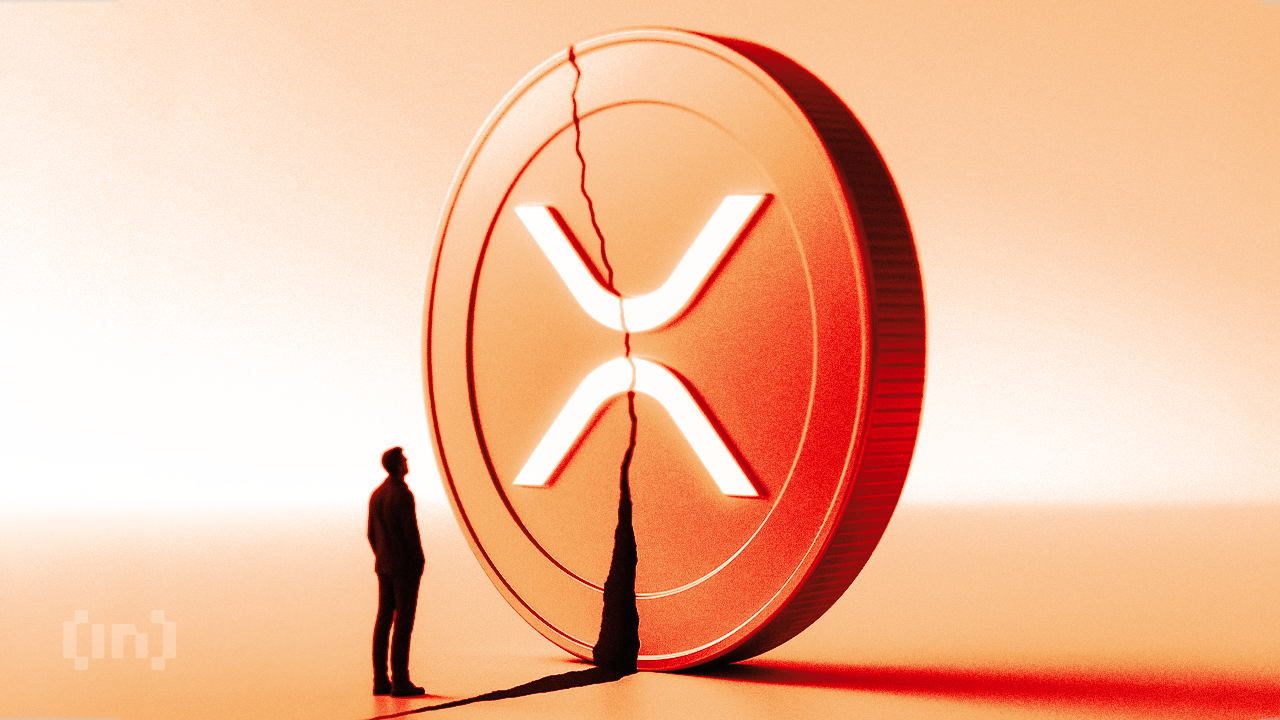
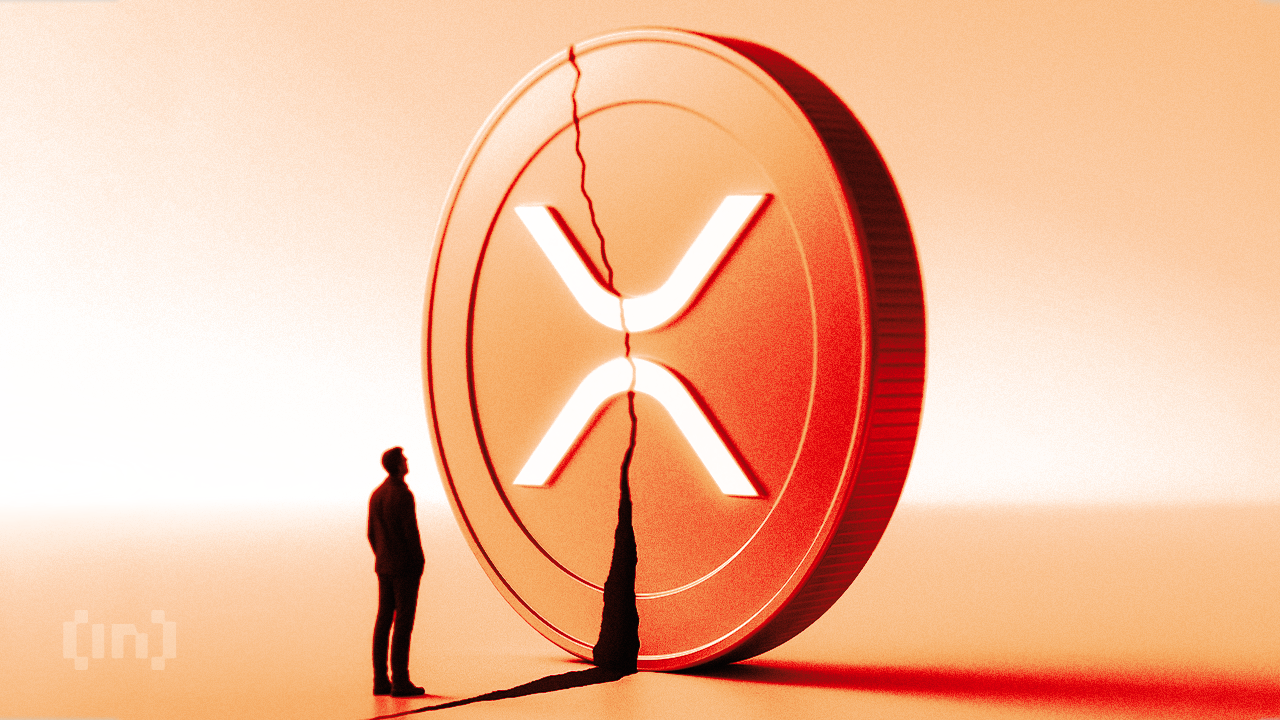
Goldman Sachs fully exited its XRP and Solana (SOL) spot ETF positions during the first quarter of 2026, ending a brief altcoin push that began just months earlier.
The bank’s latest 13F filing with the Securities and Exchange Commission (SEC) also shows Ethereum (ETH) ETF exposure trimmed by about 70% and Bitcoin (BTC) ETF stakes preserved near $700 million for the period ending March 31.
Goldman Sachs Makes A Strategic Altcoin Retreat
The disclosure marks a sharp reversal from late 2025, when Goldman first appeared as one of the largest institutional holders of spot XRP and Solana ETF products.
Earlier filings showed nearly $154 million spread across Bitwise, Franklin Templeton, Grayscale, and 21Shares XRP funds, plus a smaller Solana position concentrated in Bitwise’s staking ETF and Grayscale’s Solana Trust.
Both positions now sit at zero. Remaining iShares Ethereum Trust (ETHA) holdings stand near $114 million, well below the prior quarter.
The bank kept roughly $690 million in BlackRock’s iShares Bitcoin Trust (IBIT) and about $25 million in Fidelity Wise Origin Bitcoin Fund (FBTC), though both were trimmed by close to 10%.
Beyond ETFs, the firm increased exposure to crypto-linked equities including Circle, Galaxy Digital, and Coinbase. It also pared positions in mining and treasury names such as MicroStrategy, IREN, Bit Digital, and Riot Platforms.
The shift suggests Goldman is replacing direct token bets with infrastructure plays tied to stablecoin issuance, prime brokerage, and exchange flows.
Follow us on X to get the latest news as it happens
A Broader Institutional Pattern
Goldman is not the only major allocator rotating out of crypto funds.
Harvard University’s endowment cut its IBIT stake by roughly 43% to about $117 million. It also fully closed an $86.8 million Ethereum ETF position it had added only the prior quarter.
Trading firm Jane Street slashed its IBIT holdings by about 71% and FBTC by roughly 60%, then rotated into Ether ETFs.
Emory University exited its small IBIT position entirely, swapping into the Grayscale Bitcoin Mini Trust.
However, not every institution pulled back. Abu Dhabi’s Mubadala increased its IBIT holdings by about 16% to roughly $566 million, while Dartmouth’s endowment opened a small Bitwise Solana Staking ETF position.
Brown University held its IBIT exposure steady.
Quarterly 13F filings reflect end-of-quarter snapshots and often include market-making or client-driven inventory rather than directional bets.
Still, the volume of altcoin ETF exits tracks the sharp drawdons in XRP and Solana, both down more than 40% year-on-year.
The Q2 disclosures due in August will show whether the rotation continued or whether institutional appetite for altcoin funds returns.
The post Goldman Sachs Dumps XRP and Solana, Cuts Ethereum Exposure by 70% appeared first on BeInCrypto.


The bitcoin mining firm continues on its investment path into AI data centers after raising $115 million to expand its global footprint in the industry.


Galaxy has obtained a BitLicense from the New York State Department of Financial Services, regulatory approval to operate a cryptocurrency business in the state.

Institutional cross-border payment giant Ripple is officially facing a disruptive challenge from high-throughput Layer 2 protocols engineered for the next generation of retail finance. While legacy tokens command massive market valuations due to institutional backing, savvy market participants are executing a major liquidity rotation into decentralized networks that fix immediate, real-world utility gaps. Financial ecosystems combining high-reward incentive architectures with seamless global utility are rapidly shifting to the forefront of the digital sector. Analyzing the structural metrics of automated payment platforms reveals exactly why these advanced networks are positioning themselves at the absolute top of the best cryptos to invest in 2026.
Act immediately to lock in your DOGEBALL position at the historic low price of $0.0005 before the timed presale window closes tightly at 21:00 UTC today and prices automatically spike.
The Brutal Multimillion Dollar Cost of Hesitation: How Early Ripple Investors Locked In Generational Wealth While You Watched From The Sidelines
The historical trajectory of early layer-1 token allocations reveals the devastating financial cost of waiting for mainstream validation. When the foundation of Ripple was first introduced to early participants, native allocations traded for fractions of a single cent before violently compounding by more than 36000% at its historical peak. Skeptics heavily doubted the network’s specialized consensus protocol and its targeted cross-border corporate strategy, yet the action-takers who recognized the payment framework early unlocked life-changing fortunes. That iconic cycle left a permanent mark on the industry, proving that accessing secure transaction utility prior to public listing is the single most effective way to secure exponential portfolio growth.
Letting a definitive, massive window of opportunity slide past because of minor hesitation is a mistake that most retail participants deeply regret. The fluid landscape of blockchain infrastructure continuously introduces secondary chances for disciplined capital to capture elite infrastructure tokens at deep, ground-floor entry levels. Accessing these institutional-grade payment rails at deep developer-level discounts is available right now, but the current opportunity will vanish forever the moment the automated timed contract moves to the next pricing stage.
DOGEBALL Infrastructure: Complete Layer 2 Dominance Combined With Zero Fee Global PayFi Offramps
The DOGEBALL network delivers an advanced, high-velocity infrastructure by deploying a dedicated custom Ethereum Layer 2 scaling engine known natively as DOGECHAIN. This custom network achieves sub-second transaction finality, completely removes expensive gas fee bottlenecks, and ensures total EVM compatibility for decentralized application developers. By integrating a high-reward GameFi environment containing a $1M prize pool directly into a global utility architecture, the ecosystem provides instant rewards, high-frequency transfers, and secure payments backed by a 100% audited smart contract framework.
Global capital allocations are surging into this crypto presale because of the practical transactional utility driven by the DOGEPAY application. This proprietary software allows users to transmit digital assets worldwide while enabling the receiver to collect native fiat directly into their local bank account across 30+ global currencies with zero FX fees. By completely bypassing legacy intermediaries like standard retail banks, PayPal, or Wise, the network secures unmatched transaction speeds. This corporate-grade execution cements the protocol’s position as one of the best cryptos to invest in 2026.
The Final Clock Is Ticking Rapidly: Secure Your Targeted 2900% ROI Matrix Before Prices Explode At 21:00 UTC Today
The platform is experiencing unprecedented traction during its third presale stage, securing over 288K+ in direct funding from more than 1000+ active participants. To optimize long-term scarcity, the development team permanently burned 4bn tokens on Monday 11th May 2026, removing 20% of the entire presale allocation from the market. The project features an accelerated timed presale consisting of 20 distinct stages, with each window lasting a maximum of 7 days before an automatic price spike. All unsold tokens from every stage are instantly burned, putting intense pressure on buyers to act immediately before the available supply shrinks again.
With the current entry price locked at just $0.0005 and the contractually guaranteed exchange launch price fixed at $0.015, early participants are positioned for a clear 2900% ROI prior to public trading. Every stage features an absolute price increase, meaning your potential profit margin drops the longer you wait. Capitalize on this extended window right now, apply your active deposit bonus code to claim your extra tokens, and secure your position before the next automated stage transition triggers at 21:00 UTC today.
Step By Step Guide To Acquire Your DOGEBALL Allocation Prior To The Next Automated Price Surge
Securing your position in the ongoing crypto presale requires only a few seamless, highly secure operational steps:
- Configure an EVM-compatible Web3 wallet such as MetaMask, Trust Wallet, or Coinbase Wallet on your device.
- Fund your wallet balance with Ethereum (ETH), Polygon (MATIC), or USDT from your preferred digital asset exchange.
- Navigate directly to the secure official website dashboard to locate the active Timed Presale Widget.
- Connect your Web3 wallet, choose your desired payment currency, and enter your target allocation amount.
- Apply your active bonus code to claim your extra tokens, authorize the transaction, and safely secure your tokens before 21:00 UTC today.

Conclusion: Locking In Ground Floor Multipliers Before High Utility Infrastructure Reaches The Mainstream
A structural evaluation of legacy market leaders like XRP confirms that the absolute highest wealth-generation velocity belongs to early-stage utility networks. While mature layer-1 assets offer highly stable corporate frameworks, their saturated multi-billion-dollar market caps make it mathematically impossible to achieve short-term exponential multipliers. Conversely, the DOGEBALL crypto presale 2026 provides a unique opportunity by combining high-velocity gaming incentives with a frictionless global remittance engine. Entering the presale before the official exchange launch in partnership with elite Web3 development firms allows disciplined buyers to maximize their upside potential within one of the best cryptos to invest in 2026.

Find Out More Information Here
Website: https://dogeballtoken.com/
X: https://x.com/dogeballtoken
Telegram Chat: https://t.me/dogeballtoken
FAQs for the Best Cryptos to Invest in 2026
Which crypto has the best future for 2026?
High-utility infrastructure protocols built on dedicated scaling layers possess the strongest economic outlook. The DOGEBALL crypto presale 2026 stands out among the best cryptos to invest in 2026 due to its native Layer 2 DOGECHAIN architecture, zero FX fees, and direct fiat bank offramps.
Which crypto will go 1000x in 2026?
Low-cap protocols that offer immediate real-world transactional utility present the highest growth velocity in the digital space. DOGEBALL features a guaranteed 2900% launch trajectory from $0.0005 to its exchange listing price of $0.015, making it a top asset among the best cryptos to invest in 2026.
Which crypto makes me rich in 2026?
Allocating capital to undervalued, hyper-deflationary ecosystems like the DOGEBALL crypto presale 2026 yields massive strategic advantages. Its historic 20% token burn, automated 20-stage timed price increments, and specialized Web3 launch partnership position it among the best cryptos to invest in 2026.
Disclaimer: This is a Press Release provided by a third party who is responsible for the content. Please conduct your own research before taking any action based on the content.

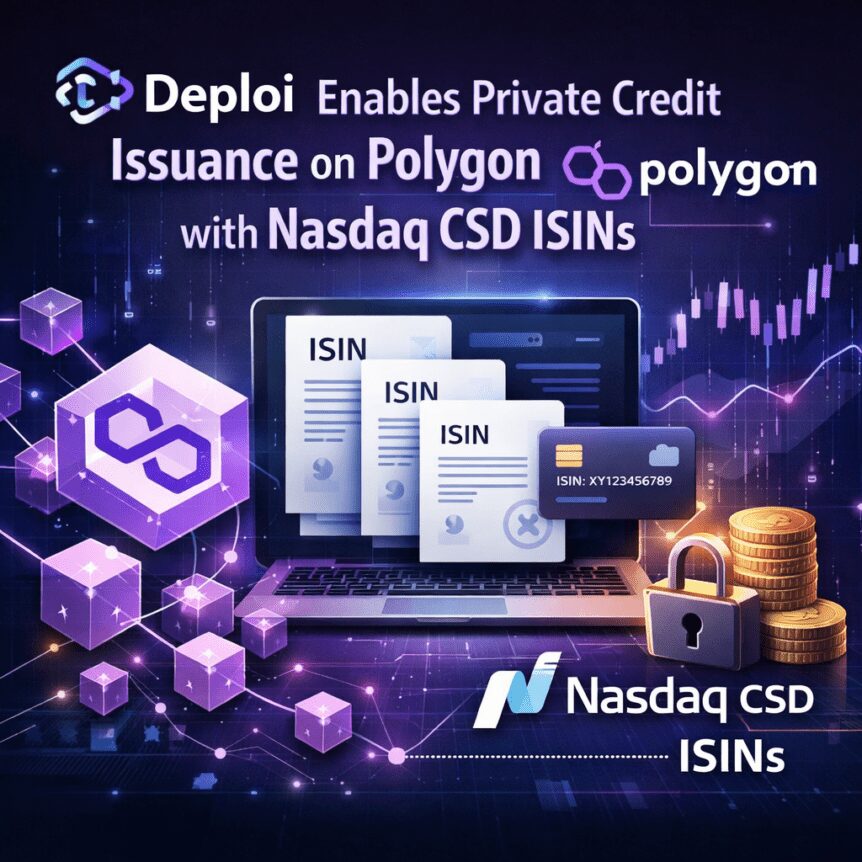
Deploi, the Nordic-led platform building the infrastructure for digital private credit, unveiled a direct issuance framework on Polygon, following ISIN allocations from Nasdaq CSD for its inaugural UK Consumer Credit Notes. The first issuance, Series 2026/CON/001, enables regulated digital debt issuance with individual notes up to EUR 5 million. This placement is a cornerstone of Deploi’s plan for a EUR 1 billion note programme in 2026, with potential capacity to scale to as much as EUR 5 billion once its global issuance infrastructure is completed by the end of Q3 2026. Assetera has already lined up roughly EUR 100 million in additional issuance over the next six months, underscoring early institutional demand for regulated, blockchain-native private credit products.
Deploi’s mission is to modernize the private credit market by moving away from slow, manual fund structures toward programmable issuance, settlement, servicing, and risk management rails that are purpose-built for today’s institutional investors. In remarks accompanying the launch, founder Oskars Jepsis framed the effort as a long-overdue modernization of a market that has historically suffered from fragmentation and opacity.
The legacy private credit model is operationally outdated. Investors and lending partners increasingly expect faster execution, greater transparency, and more flexible access to credit opportunities. Deploi is building the infrastructure to replace fragmented, manual processes with scalable digital issuance and settlement rails purpose-built for modern private credit markets.
Deploi’s issuance and registry infrastructure is anchored on EVM-enabled chains, with Polygon serving as the initial settlement layer ahead of planned expansion to Canton Network infrastructure. Notes are issued and settled through Assetera, the EU-regulated DLT trading platform licensed under MiFID II, enabling compliant access for European investors.
Private credit has long been inaccessible to most European investors due to structural barriers — high minimums, opacity, and illiquidity. By providing the regulated infrastructure for Deploi’s instruments, Assetera removes those barriers while maintaining full MiFID II compliance. This partnership demonstrates precisely what regulated DLT infrastructure makes possible: institutional-grade yield products, compliantly distributed at scale across Europe.
Private credit is a massive market, but it still runs on outdated infrastructure. What Deploi is doing with direct issuance and bringing this onchain with Polygon is a clear step toward making these markets more efficient, transparent, and easier to access for institutional participants.
Key takeaways
- Direct issuance on Polygon: Series 2026/CON/001 marks the first regulated digital debt issuance for Deploi, with notes up to EUR 5 million and a broader EUR 1 billion programme planned for 2026, potentially expanding to EUR 5 billion after the infrastructure is completed by the end of Q3 2026.
- Regulated, EU-facing infrastructure: Assetera acts as Deploi’s licensed trading and settlement venue under MiFID II, while the on-chain registry is anchored to Polygon. Canton Network is planned for future connectivity.
- Early demand and pipeline: Assetera has EUR 100 million in additional issuance lined up over the next six months, reflecting institutional appetite for regulated, blockchain-native private credit.
- Investor access and yields: Target yields are expected to range from roughly 6% to 18%, depending on the underlying asset structure, with buy-side engagement from digital-asset and yield-focused institutions.
- Operational modernization: The project aims to replace fragmented, manual processes with scalable, programmable issuance and settlement rails, offering greater transparency and speed for private credit markets.
Operational backbone and where it fits in the market
Deploi’s framework positions itself at the intersection of private credit origination and regulated digital infrastructure. By combining on-chain issuance, a regulated trading venue, and a robust registry, the company seeks to address long-standing frictions in private credit — notably high minimums, limited transparency, and illiquidity for European investors. The first live product targets UK consumer credit, with notes issued in tranches of up to EUR 5 million. This modular approach enables a staged roll-out across additional asset classes as the global issuance backbone becomes fully operational.
Infrastructure and settlement: a regulated, cross-border path
Anchoring the system on Polygon provides the initial settlement layer, while Canton Network is slated as a later expansion to enable broader interoperability across private markets. Assetera’s role as a MiFID II-compliant trading and settlement venue ensures that institutional and European buyers can access these digital instruments within a familiar regulatory framework. The integration promises faster settlement cycles, improved transparency, and auditable on-chain records that are still legally enforceable in regulated markets.
What the market is watching next
Investors will be watching two intertwined developments: first, the pace at which Deploi scales its 2026 EUR 1 billion programme and whether the infrastructure can handle larger, multi-asset private-credit issuance; second, the breadth of adoption among European institutions as regulatory-compliant, blockchain-native products become more commonplace. The EUR 100 million pipeline with Assetera is an early signal, but the true test will be expansion beyond UK consumer credit and into diverse private-credit asset classes while maintaining MiFID II compliance and enforceability across jurisdictions.
Roadmap and near-term milestones
Deploi signaled that its global issuance infrastructure is targeted for completion by the end of Q3 2026, a milestone that would unlock greater issuance capacity and enable broader cross-border distribution. As the platform scales, industry observers will look for progress on expanding settlement rails to Canton Network, deeper integration with EU-regulated trading venues, and continued engagement with institutional buyers seeking regulated, yield-generating private-credit opportunities.
Deploi describes its mission as delivering a more efficient, transparent, and scalable debt capital market for private credit. If the early traction sustains, the combination of regulated access, on-chain settlement, and a scalable issuance framework could recalibrate how institutional players access private-credit yield in Europe and beyond.
Readers should watch for updates on additional issuances, shifts in yield mechanics as assets vary, and broader regulatory developments that could influence the pace and scope of adoption for blockchain-native private credit infrastructure.

XRP slips 2% as profit-taking knocks token back below $1.40

Brendan Fraser’s New Must-Watch WWII Movie Officially Releases in 3 Weeks

All pensioners over 75 excluded from new HMRC personal allowance help

Manchester United reach agreement with Casemiro over contract clause amid transfer speculation

US brings back mandatory military draft registration

Steven Gerrard disagrees with Gary Neville over ‘shock’ Chelsea and Arsenal claim | Football


-

 Crypto World3 days ago
BloFin War of Whales 2026 Grand Prix opens registration for $5M trading championship
-

 Fashion3 days ago
Weekend Open Thread: Theory – Corporette.com
-

 Crypto World3 days ago
E-Estate Announces 1 Year Live: Washington DC Summit as Real Estate Tokenization Enters Its Next Phase
-

 Fashion7 days ago
Coffee Break: Travel Steam Iron
-

 Politics7 days ago
What to expect when you’re expecting a budget
-

 Tech3 days ago
Tech Moves: Microsoft AI leader jumps to OpenAI; former AI2 exec joins Meta; and more
-
Crypto World5 days ago
Bitcoin Suisse expands with Digital Asset License and Investment Business Act Registration Approval in Bermuda
-

 Tech7 days ago
GM agrees to $12.75M California settlement over sale of drivers’ data
-

 Politics6 days ago
Pakistan to enter Chinese capital market as war inflation bites
-

 Crypto World6 days ago
Bitcoin Suisse expands with Digital Asset License and Investment Business Act Registration Approval in Bermuda
-
 Crypto World4 days ago
Google’s Gemini AI Predicts Incredible Solana Price by the End of 2026
-

 Business3 days ago
H&R Real Estate Investment Trust (HR.UN:CA) Q1 2026 Earnings Call Transcript
-

 Tech3 days ago
Google reimburses Register sources who were victims of API fraud
-

 Sports3 days ago
Napoleonic enters 2026 Doomben 10,000 field via Abounding withdrawal
-

 Politics7 days ago
The geopolitics behind the UK’s South Atlantic hantavirus rescue mission
-

 Politics7 days ago
The Board of Deputies just smeared Polanski to suck up to Farage
-

 Fashion6 days ago
The Best-Kept Makeup Secret for a More Defined Face
-

 NewsBeat6 days ago
Comment on Keir Starmer surviving the day as Prime Minister like a turd that wont flush
-
 Entertainment4 days ago
Zara Larsson Has Blunt Response To Chris Brown Diss
-
 Tech5 days ago
Why AI is making typography a boardroom conversation
You must be logged in to post a comment Login