

Crypto World
Here’s Why Ethereum bears are targeting $1.8K ETH price

Ether’s (ETH) price printed a “bear pennant” on the daily chart, a technical chart formation associated with strong downward momentum. Could a weakening technical setup and a decline in total value locked signal the continuation of ETH’s correction to $1,800?
Key takeaways:
- Ether is forming a bear pennant on the daily chart, with a potential breakdown to $1,800.
- ETH price may see further losses if Ethereum’s total value locked continues to shrink.
Ether bears eye ETH price “dump” to $1,800
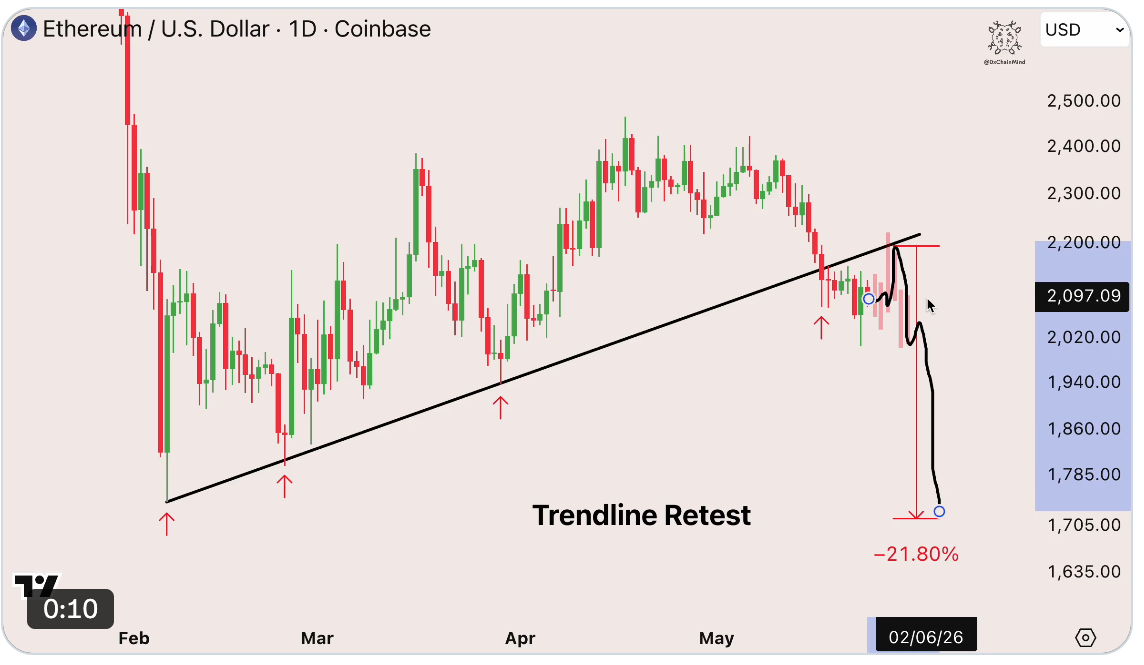
Ether’s 13% drop from its multi-month highs above $2,400 saw it breach a key trend line that has supported the price since early February.
“ETH is going to dump hard soon?” Chain Mind said in a video posted on X, suggesting where ETH/USD might move next after dropping below the ascending trend line.
“This is the crucial moment for ETH,” Chain Mind said, adding that the price was required to reclaim the support level, otherwise a drop to areas below $1,800 was in the cards.
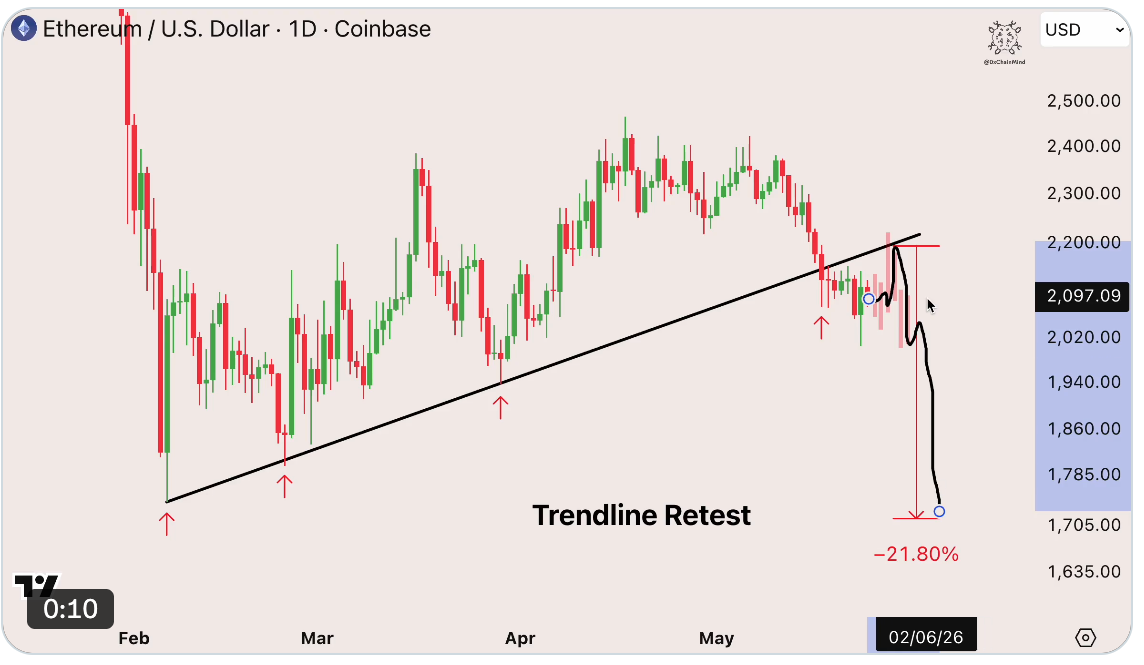
ETH daily chart. Source: X/Chain Mind
Meanwhile, ETH’s price has formed a bear pennant chart pattern on the daily chart, as shown below.
A bear pennant pattern is a bearish setup that forms after the price consolidates inside two converging lines following a sharp price drop.
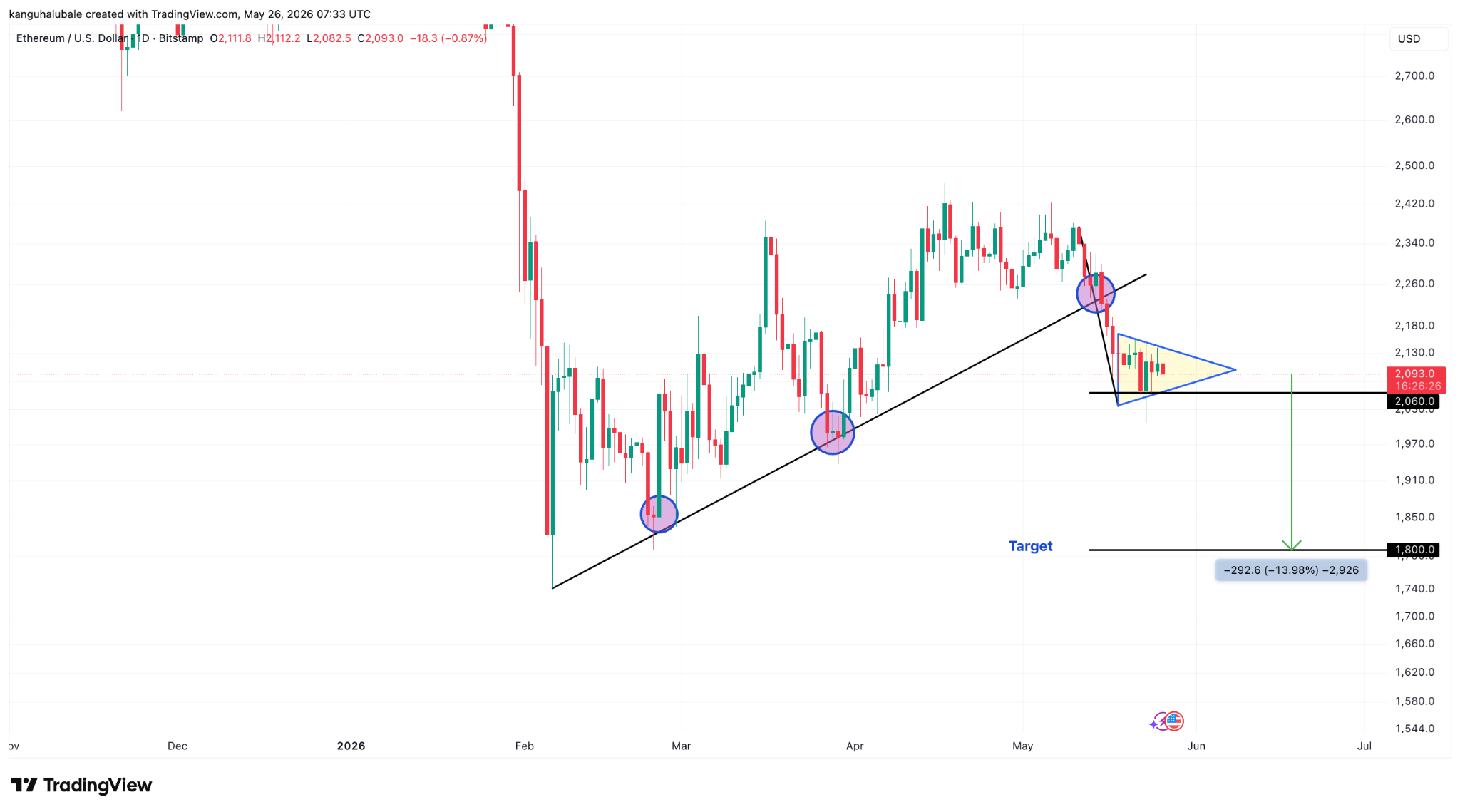
ETH/USD daily chart. Source: Cointelegraph/TradingView
The pennant will resolve once the price breaks below the lower trend line at $2,060, opening the way for a drop equal to the previous uptrend’s height. This puts the lower target for ETH/USD at $1,800, down 14% from the current price.
Crypto analyst Alex Marzell said that if Ether’s price dropped below $2,050, it would increase the chances of a move toward the next support zone at $1,800.
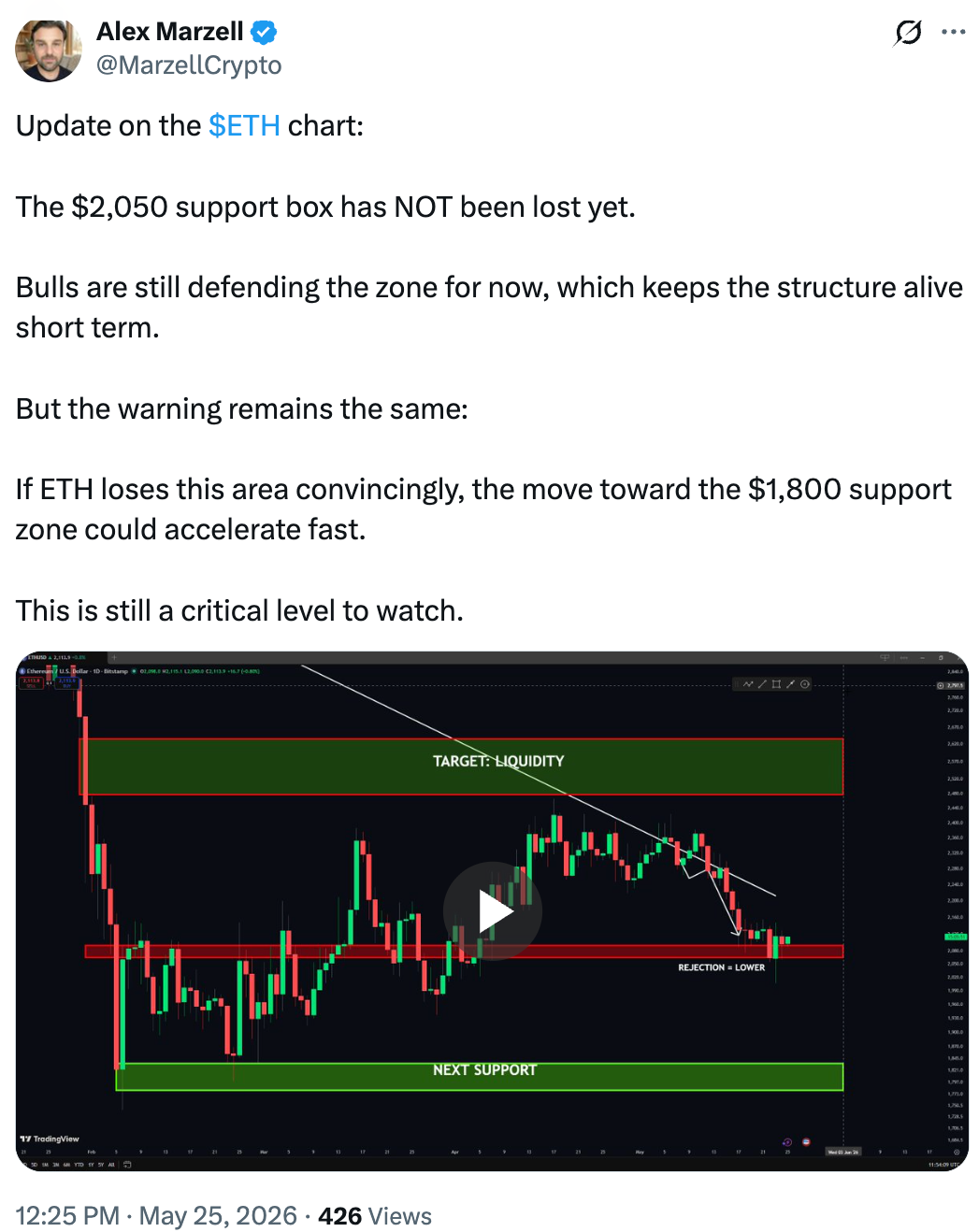
Source: Alex Marzell
As Cointelegraph reported, Ether’s downtrend is likely to continue toward $1,750 in the short term if key support levels do not hold.
Ethereum’s total value locked crashes 55%
Ether’s bearish technical outlook overlaps with several other headwinds, such as recent Ethereum Foundation departures, weakening social media sentiment, and declining total value locked (TVL) across its DeFi protocols.
Ethereum’s TVL has now fallen to $116 billion, levels last seen in April 2025. For comparison, the network’s TVL hit an all-time high of $258 billion on Aug. 14, 2025.
The TVL has therefore more than halved, representing a 55% decline.
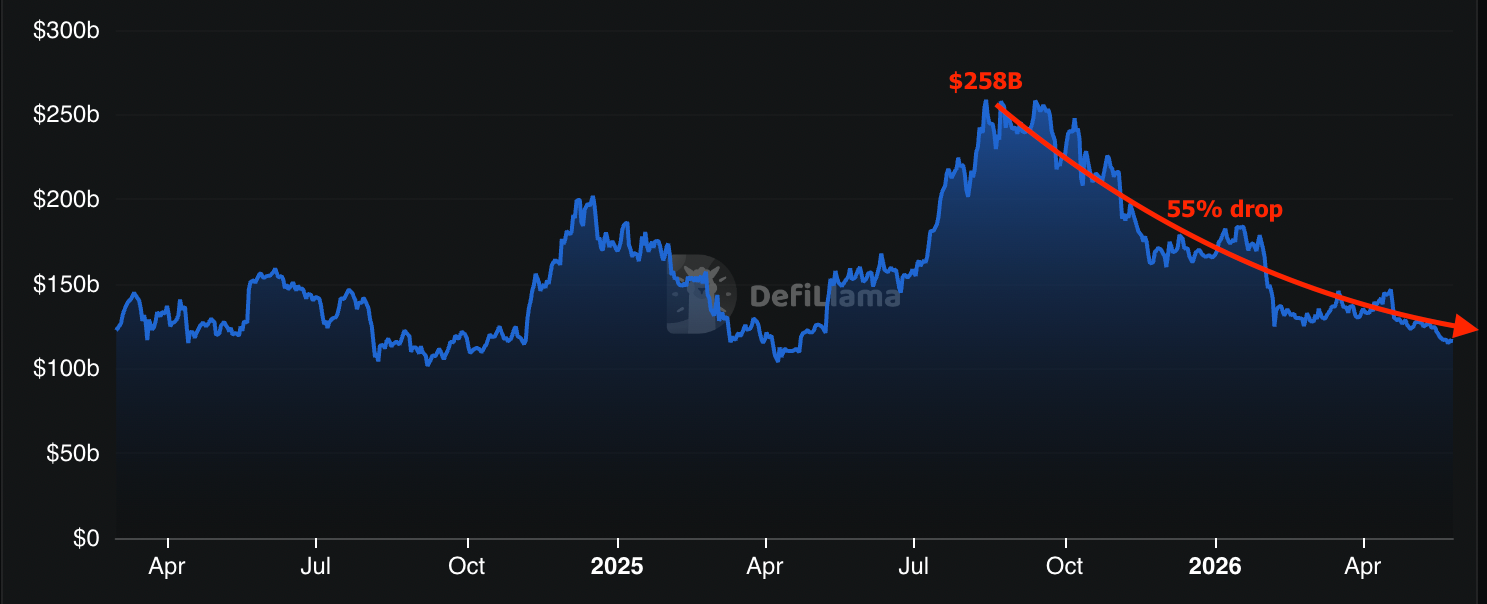
Ethereum total value locked. Source: DefiLlama
Negative TVL growth is more pronounced in Ethereum’s layer-2 (L2) network, led by Ether.fi whose total value locked is down 32% over the last 30 days.
“There is a sustained TVL decline” across Ethereum’s L2 sector, CryptoRank said in its Telegram note on Monday.
The sharpest corrections are seen in Arbitrum (-63%), zkSync (-64%), and Linea (-98%), “pointing to high liquidity sensitivity to incentive programs and short-term reward mechanics,” the crypto analytics platform said, adding:
“This reinforces the broader picture of capital fragmentation in Ethereum’s rollup ecosystem and undermines the ‘unified liquidity pool’ effect that early L2 development models envisioned.”
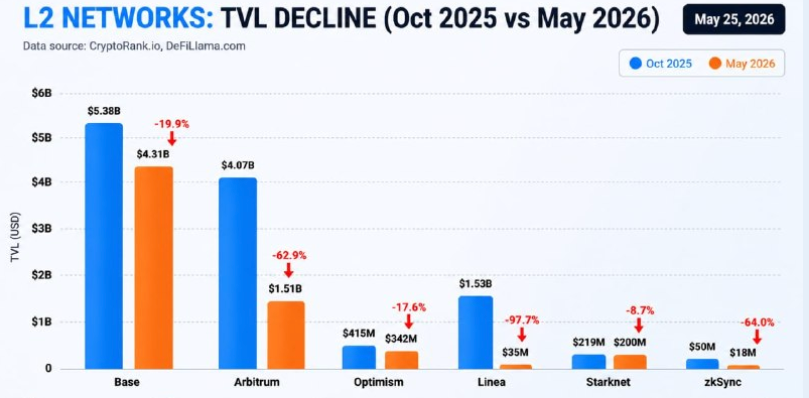
Layer-2 networks: TVL decline since October 2025. Source: CryptoRank
Declining TVL signals weakening onchain demand, adding downside pressure on ETH and increasing the risk of further price declines in the near term.

Crypto World
Ripple News: Squid Raised $6 Million With Ripple Backing, Then Lost Half of It to a Hack Less Than 24 Hours Later

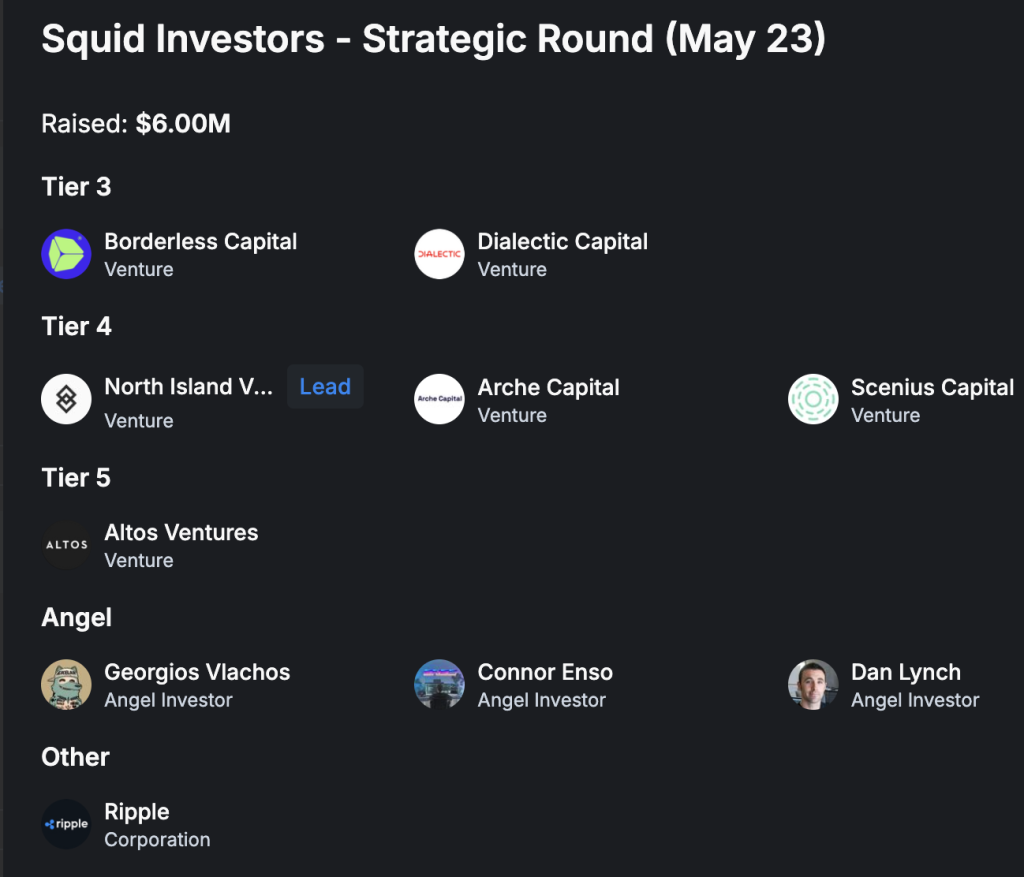
Ripple News: Squid Crypto closed a $6 million strategic funding round led by North Island Ventures with participation from Ripple on May 25, 2026, and within less than 24 hours, an attacker drained $3 million from the protocol.
The exploit hit a third-party liquidity aggregation module integrated into Squid’s cross-chain swap infrastructure, not the audited core contracts.
Squid’s official response has been to distance itself from the breach entirely, stating the team does not know who deployed the specific module responsible for the drain.
— Blockaid (@blockaid_) May 25, 2026
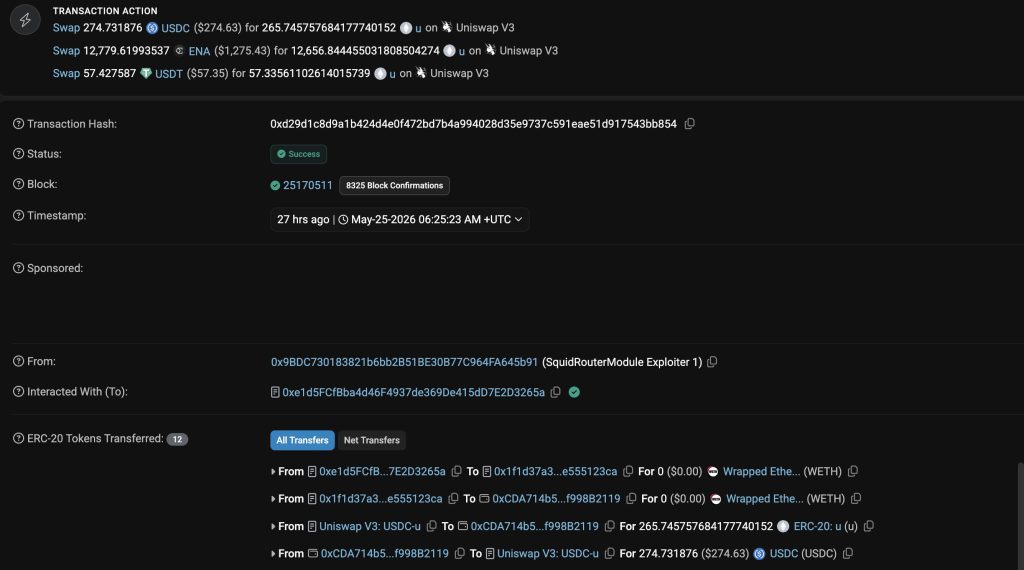
 Blockaid detected an ongoing exploit targeting the SquidRouterModule on Ethereum and Base.
86 Gnosis Safes drained for ~$3M in ~2 hours.
All stolen tokens swapped to DAI via attacker-controlled Uniswap V3 pools.
More details in 
Squid operates as a meta-DEX and chain-abstraction protocol, routing cross-chain swaps across multiple networks through aggregated liquidity layers.
The $6M raise was positioned as a catalyst for expanding that interoperability infrastructure, with Ripple’s involvement framed as a strategic alignment with its broader cross-chain and payments roadmap. That narrative collapsed inside a single news cycle.
Discover: The Best Crypto to Diversify Your Portfolio
Ripple News: How the Squid Crypto Exploit Worked: The Third-Party Module Vulnerability
The attack vector was a peripheral liquidity aggregation module that Squid had recently integrated to facilitate cross-chain swap routing, a component sitting outside the protocol’s audited core contract suite.
The attacker exploited manipulated price feeds or misconfigured access permissions within this module to siphon assets directly, bypassing the security controls that governed Squid’s primary contracts.
This is a structural pattern that has surfaced repeatedly across DeFi exploit history: audits cover submitted components, not the full dependency tree.
The module in question was a third-party integration layer, meaning its trust assumptions, permission logic, and oracle dependencies were never subjected to the same scrutiny as Squid’s native code.
Squid Router’s ResponseSquid Router quickly issued a statement distancing itself from the exploit. The team clarified that the drained funds came from a third-party Gnosis Safe module called
SquidRouterModule, which was neither built, deployed, nor operated by them. They emphasized that their core router contract remained unaffected and that all standard Squid users and integrators were safe.
The team noted the module had integrated with Squid alongside other protocols without any direct involvement from Squid, and urged the community to avoid conflating the two due to similar naming. No action was required from Squid users.
Discover: The Best Token Presales
The post Ripple News: Squid Raised $6 Million With Ripple Backing, Then Lost Half of It to a Hack Less Than 24 Hours Later appeared first on Cryptonews.
Crypto World
The Reason Why Bitcoin’s Largest Corporate Holder Chose Bonds Over BTC This Week (Analyst)

Michael Saylor announced this week that Strategy bought back its own convertible bonds rather than adding more Bitcoin, a move that may have seemed puzzling at first but makes sense once you understand the financial logic behind it.
According to crypto analyst Darkfost, the decision reflects a broader warning signal in equity markets: the gap between what stocks and bonds pay has narrowed to its lowest level since the dot-com bubble.
The Equity Risk Premium and What It Means for Bitcoin
The equity risk premium is the extra return investors expect for holding stocks instead of bonds, and when it shrinks, stocks become less attractive relative to supposedly safe fixed-income assets.
Per Darkfost’s analysis, that premium has just hit its lowest reading since 2000. He also added that the situation is not purely about irrational exuberance, considering that yields are elevated while the S&P 500 is trading in price discovery territory, which has compressed the return advantage of equities.
“A capital rotation is coming,” wrote the analyst. “This chart does not say when or how, but it signals the growing risk in the equity market.”
His argument about Saylor is that buying bonds reflects strategy, not second-guessing Bitcoin. The notes being repurchased are Strategy’s own 0% convertible senior notes due 2029, and buying them back at a discount, roughly $1.38 billion for $1.5 billion in face value, reduces future share dilution and improves the balance sheet.
Strategy had agreed to buy back approximately $1.5 billion of these notes, with Bitcoin sales listed as one possible funding source, with Saylor himself not ruling out selling some Bitcoin before year-end during a May 21 interview with Natalie Brunell.
Accumulation on Pause After a Huge Week
The bond repurchase follows one of Strategy’s biggest buying weeks of the year. As CryptoPotato reported, the company acquired 24,869 BTC for about $2.01 billion on May 18.
That buy brought its total holdings to 843,738 BTC acquired at an average cost of around $75,700 per coin.
Bitcoin is currently trading around $77,000, down roughly 0.8% over 24 hours and about 39% below its all-time high above $126,000 set in October 2025.
In Darkfost’s view, assets like BTC could benefit if capital does rotate out of equities, although he also pointed out that the same flow could just as easily move toward bonds given their current yield dynamics.
However, what he didn’t question is Saylor’s intention, suggesting that buying your own bonds at a discount, with a clear-eyed read on equity market risk, is not the behavior of someone who has lost the plot.
The post The Reason Why Bitcoin’s Largest Corporate Holder Chose Bonds Over BTC This Week (Analyst) appeared first on CryptoPotato.


Staking accounted for 60% of disclosed revenue across publicly listed Ethereum (ETH) treasury firms in 2025, according to a new study from staking provider Everstake released Tuesday.
The finding runs counter to massive combined net losses booked by ETH treasury firms.
Staking Drives 60% of ETH Treasury Revenue
Among companies that separately disclosed staking-related revenue, yield generation has become a key operational signal. For example, Bit Digital reported $7 million in ETH staking rewards for 2025, up 287% year over year.
Everstake said staking is now a “major contributor to reported top-line performance.” The yield uplift arrives just as net losses pile up on the income statement.
Follow us on X to get the latest news as it happens
Treasury firms in with available FY2025 results lost a combined $1.41 billion as the broader crypto market slid. Specific filings illustrate the damage.
- Sharplink Inc posted a $734.6 million net loss on $28.1 million in revenue.
- Bit Digital recorded an $80.3 million net loss against $113.6 million in revenue.
- BTCS Inc. logged a $33.4 million net loss on $16.5 million in revenue.
BitMine Immersion Technologies booked a $9.02 billion net loss across the six months ending February 28. Other firms in the cohort posted similarly heavy losses.
Everstake Co-Founder and COO Bohdan Opryshko said passive holders face structural repricing. He explained that revenue is now being generated primarily from actively deployed assets rather than idle holdings, a shift he believes could help sustain the business model.
“Those that actively deploy capital are setting the new standard. That deployment is no longer limited to standard protocol staking. It includes liquid staking, integration into DeFi lending markets, and more advanced validator-level strategies such as optimized block construction and MEV capture,” he said.
Everstake based its findings on regulatory filings and earnings disclosures from 15 publicly listed ETH treasury companies through May 2026.
Historically, DATs offered the only regulated path to crypto exposure for public-market investors. Spot ETH ETFs have stripped that monopoly, leaving yield as a key differentiator.
On the individual level, many DAT stocks are traded at a discount to their crypto holdings. This suggests an emerging shift in investor behavior, with investors becoming less willing to pay a premium for passive exposure alone. …Put simply, staking has become a structural floor for all DATs seeking to remain relevant in 2026 and beyond,” the study reads.
Whether passive accumulators can survive a repriced market is now an open question.
Subscribe to our YouTube channel to watch leaders and journalists provide expert insights
The post Staking Now Drives 60% of Revenue at Ethereum Treasury Firms appeared first on BeInCrypto.

Decentralized perpetual futures exchange Grvt will work with Plume to launch three tokenized real-world asset (RWA) yield products, offering users access to fixed-income and structured credit strategies through self-custodial wallets.
According to Tuesday’s announcement, the products will be integrated directly into Grvt’s platform and include exposure tied to tokenized institutional-grade assets, including the $2.2 billion in assets iShares AAA CLO Active ETF.
The integration adds three investment products, the Base Yield Fund, Balanced Fund and Opportunistic Fund, to Grvt’s trading platform, allowing users to access tokenized yield strategies from the same self-custodial balance they already use for trading, without transferring assets across separate wallets, brokerage accounts or custody providers.
Plume is a blockchain platform focused on tokenized real-world assets. According to the announcement, the products combine tokenized fixed-income exposure with onchain yield infrastructure built through Plume’s network.
Perpetual futures contracts, or perps, are financial instruments that traders use to speculate on price changes of an asset without actually owning the underlying asset. Unlike traditional futures contracts, perps have no expiration date and investors can maintain their positions for as long as they want.
The total perpetual DEX trading volume in the 24 hours through 8 p.m. UTC on Monday, was $15.2 billion, according to CoinGecko. Grvt’s trading volume was $1.23 billion.

Source: CoinGecko
In February, Grvt integrated the Aave lending protocol to let traders earn yield on margin collateral while keeping perpetual futures positions open.
Related: Banks will run RWAs on two blockchain rails, says RedStone co-founder
Platforms increasingly integrate tokenized RWAs
Data from RWA.xyz shows the tokenized real-world asset sector has grown to more than $34 billion in onchain value, up from about $5.8 billion at the start of 2025.
That growth has coincided with moves by crypto exchanges, trading platforms and tokenization companies to bring blockchain-based versions of traditional financial products onchain.
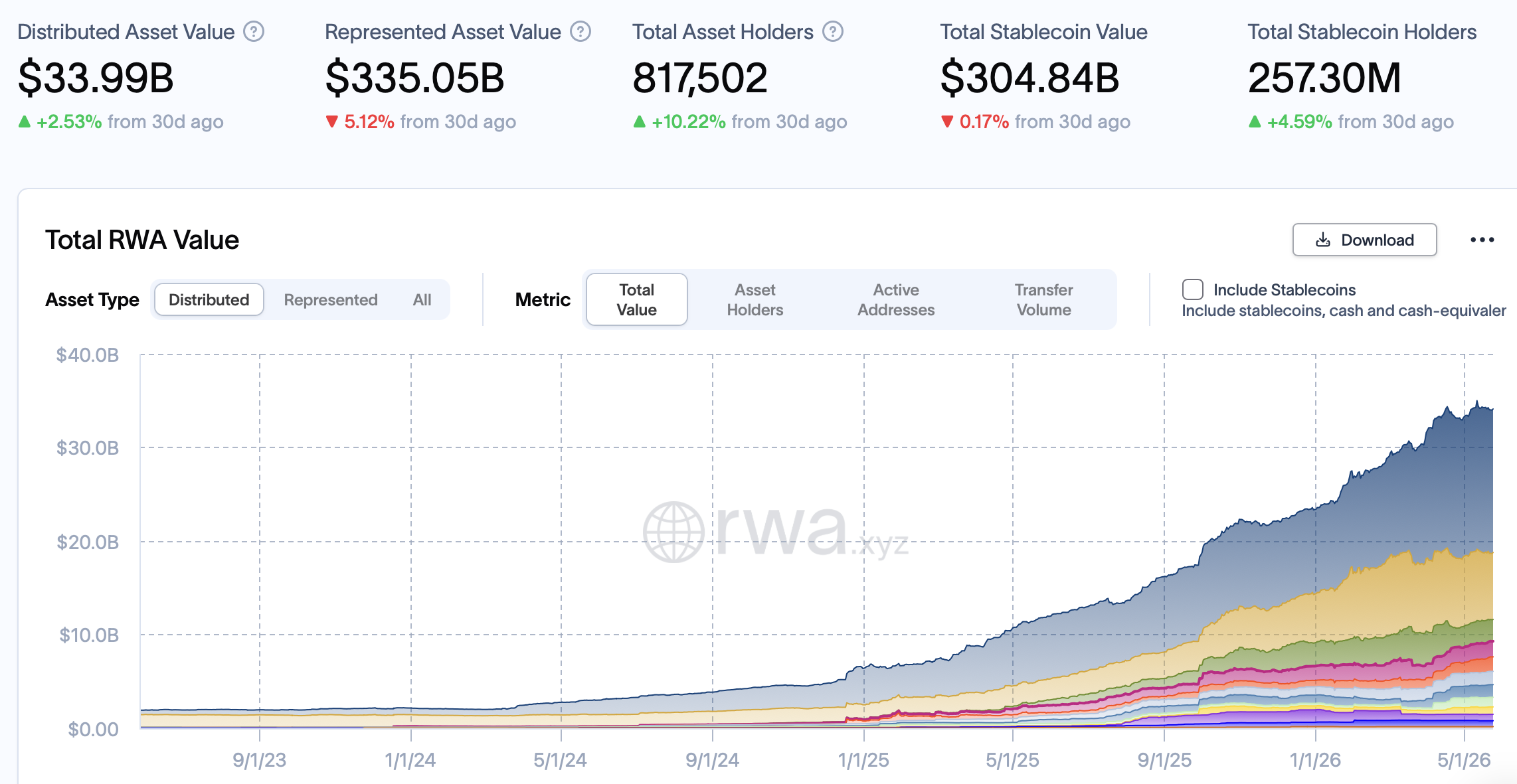
Source: RWA.xyz
In March, EtherFi allocated $25 million to Plume’s Nest protocol to give users exposure to tokenized yield strategies tied to institutional assets and government securities. The same month, Australian crypto exchange BTC Markets said it notified the country’s securities regulator of plans to apply for a markets license to offer tokenized real-world assets, including equities and bonds.
In February, Binance added tokenized equities and exchange-traded funds from Ondo Finance to its Binance Alpha platform, including blockchain-based versions of stocks, ETFs and commodities. Also in February, Securitize partnered with Hamilton Lane, OKX Ventures and stablecoin infrastructure company STBL to launch a stablecoin backed by tokenized private credit assets.
Boston Consulting Group said in a report earlier this month that tokenized funds, collateral and fixed-income products are among the blockchain-based financial products most likely to see broader institutional adoption over the coming decade.
The report said digital assets are increasingly shifting beyond speculative trading toward infrastructure tied to payments, settlement and capital markets.
Magazine: Crypto scammers face death, Aussie CGT makes Asian hubs attractive: Asia Express
Bitcoin’s rebound is running into a demand problem.
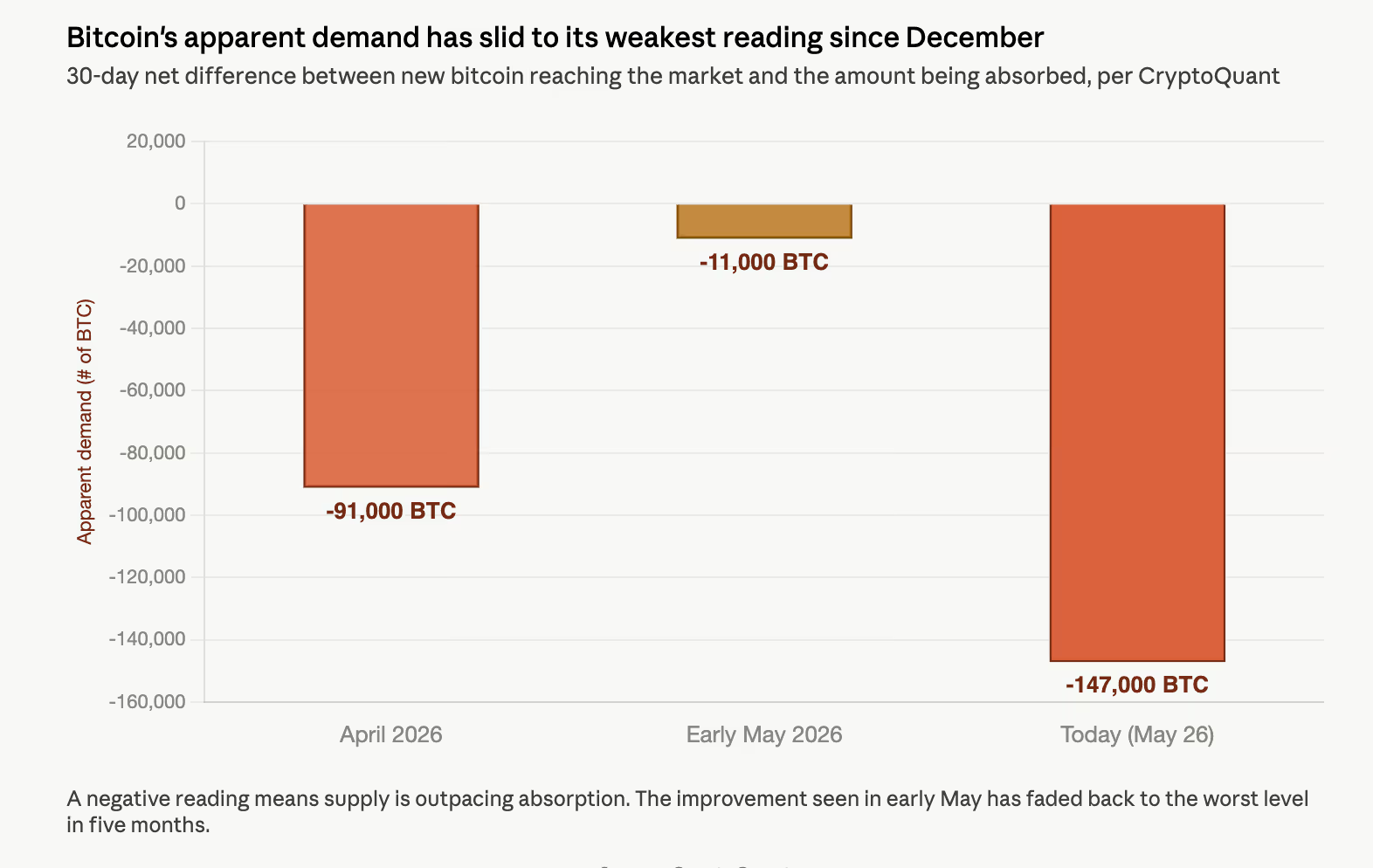
CryptoQuant’s 30-day apparent demand metric has fallen to minus 147,000 BTC, its weakest reading since December 2025, even as bitcoin holds in the mid-$70,000s after bouncing from its April lows near $65,000.
The metric compares new miner supply and older coins returning to circulation with the amount of bitcoin the market is absorbing. A positive reading means buyers are taking down new and reactivated supply, while a negative reading means more coins are coming to market than buyers are absorbing on-chain.
The latter is the issue with the current rally.
Bitcoin has recovered sharply from April, but the move has not yet produced the kind of spot demand that usually supports a more durable uptrend. Earlier this month, data showed apparent demand had improved from -91,000 BTC in April to roughly -11,000 BTC, close to balance. The latest slide back toward -147,000 BTC suggests that improvement has faded.

Other signals have been suggesting the same. The Coinbase Premium has stayed negative since late April, showing U.S. spot buyers have been less aggressive than offshore traders.
It means futures market buyers have largely led the price bounce from $65,000. It matters because futures-led rallies are easier to unwind. Perpetual positions can close quickly when funding shifts or liquidations start. Spot accumulation is usually stickier because buyers put up full capital and take actual BTC, making that demand less likely to disappear on the first pullback.
None of this means bitcoin has to break lower immediately. Weak demand can sit under a range for days or weeks. But it does make the market more dependent on fresh spot buying if bulls want to push beyond the current zone.
If that bid does not show up, the $70,000 area remains the level to watch. CryptoQuant identifies it as the short-term trader realized price, where recent buyers’ paper gains largely disappear, and the incentive to take profit starts to fade.


Pope Leo XIV has released his first encyclical calling for binding international regulation of artificial intelligence, including a direct prohibition on machines making lethal or irreversible decisions.
Anthropic co-founder Christopher Olah appeared at the Vatican as a lay presenter, placing a prominent AI safety researcher alongside the Catholic Church at the center of the global AI governance debate.
The nearly 43,000-word document, “Magnifica Humanitas” (Magnificent Humanity), was released May 25. It warns that the biggest AI developers are private, often transnational entities whose resources exceed those of many governments. Leo argues that concentrated power tends to evade public accountability and can generate new forms of dependency and inequality.
The Vatican’s Case for Slowing AI Down
The encyclical targets disinformation, autonomous warfare, and worker displacement. On AI in combat, Leo is unambiguous.
“It is not permissible to entrust lethal or otherwise irreversible decisions to artificial systems.”
Leo also warns that AI-driven disinformation could steer democracies slowly toward totalitarianism. He calls for clear legal frameworks and independent oversight rather than voluntary ethics pledges from industry.
On employment, Leo argues automation is reshaping the structure of work in ways that do not automatically benefit workers. Greater profits, he writes, cannot justify choices that systematically eliminate jobs.
Anthropic Places Itself at the Vatican’s Table
Olah’s appearance was more than symbolic. As Anthropic’s co-founder, he leads interpretability research focused on understanding how large language models form decisions internally. That work maps directly onto Pope Leo’s demand for AI systems that are transparent and accountable to human oversight.
Anthropic has held a firm stance on AI safety throughout 2026. The company fought US defense restrictions in court and advanced a US-China AI strategy that preserves safety guardrails. Its researchers exposed AI agents exploiting crypto flaws without human instruction, demonstrating what autonomous AI can produce without accountability. BeInCrypto reported on the planned Anthropic-Vatican meeting weeks before the event.
Pope Leo does not oppose AI development outright. His encyclical frames a slower, more deliberate adoption as an act of responsible care, a position that now carries the weight of the world’s largest religious institution.
The post Pope Leo Just Called Out the AI Giants Bigger Than Most Governments appeared first on BeInCrypto.


CME Group has rolled out new futures contracts tied to Avalanche and Sui, extending Wall Street’s regulated crypto derivatives beyond Bitcoin and Ethereum and deeper into the high-throughput layer-1 trade.
Summary
- CME Group rolled out futures contracts tied to Avalanche and Sui, extending Wall Street’s regulated crypto derivatives beyond Bitcoin and Ethereum into high-throughput layer-1s.
- AVAX contracts are sized at 5,000 tokens with 500-token micro contracts, while SUI futures are 50,000 tokens with 5,000-token micros, targeting institutions and retail traders.
- The listings slot Avalanche and Sui alongside existing CME contracts on Bitcoin, Ether, Solana, Cardano, Chainlink, and Stellar, tightening altcoin-TradFi derivatives links.
CME Group, the world’s largest regulated derivatives marketplace, has confirmed that it has launched futures contracts on Avalanche and Sui, after first flagging the products in an April 7 announcement. According to CME’s launch materials, the new contracts are available in both standard and micro sizes: AVAX futures at 5,000 AVAX and Micro AVAX at 500 AVAX, SUI futures at 50,000 SUI and Micro SUI at 5,000 SUI.
Like CME’s other crypto products, the Avalanche and Sui futures are cash‑settled against their respective CME CF Reference Rates, rather than physically settled in tokens, and are cleared through CME’s existing infrastructure. CME says the contracts are designed to give “capital‑efficient exposure” to the underlying networks, allowing traders to hedge spot holdings, run basis trades or express directional views without having to manage custody on offshore exchanges.
Altcoin derivatives move into the same lane as BTC and ETH
The Avalanche and Sui contracts join a growing suite of CME crypto products that now includes Bitcoin and Ether futures and options, as well as more recent listings on Solana (SOL), Cardano (ADA), Chainlink (LINK) and Stellar (XLM). CME has said that beginning May 29, its cryptocurrency futures and options will trade on a continuous 24‑hour, seven‑day schedule, a shift clearly aimed at matching the always‑on nature of spot crypto markets and making its products more usable for global funds.
In a detailed explainer titled “Introducing Avalanche and Sui Futures,” CME pitched the new contracts as tools for relative‑value and inter‑commodity spreads, noting that traders can pair AVAX or SUI futures against Solana or against Bitcoin and Ether to “isolate specific architectural risks and capture performance divergence driven by network adoption.” The same document highlights arbitrage and basis trading as key use cases, with centrally cleared futures offering “a transparent benchmark for basis trading, capturing the spread between spot market prices and the futures curve.”
The first block trades in AVAX and SUI futures were reportedly executed between digital‑asset specialists FalconX and G‑20 Group in early May, signaling that at least some institutional desks are willing to use regulated altcoin derivatives rather than rely solely on offshore venues. A KuCoin analysis framed the launch as “a new era for regulated crypto derivatives,” arguing that the move could draw more conservative investors into Avalanche and Sui by giving them tools to manage risk without touching unregulated spot platforms.
For Avalanche and Sui themselves, the symbolism is obvious. Being listed on CME does not magically stabilize token prices, but it does place both networks in the same risk‑management toolkit as Bitcoin, Ether and Solana for macro funds, CTAs and market‑neutral shops. In a market where regulatory status and access to traditional derivatives matter almost as much as technology, that signals that AVAX and SUI have graduated—at least in the eyes of one key piece of TradFi infrastructure—from speculative side bets into assets that deserve a line item on institutional risk screens.

Key Takeaways
- AST SpaceMobile’s stock climbed approximately 17% on renewed enthusiasm for satellite-to-smartphone connectivity
- Rocket Lab achieved record highs following its Q1 2026 earnings, climbing over 400% year-over-year
- Redwire shares leaped more than 22% riding broader industry tailwinds
- SpaceX IPO anticipation and a Starship test mission fueled widespread space sector optimism
- Major wireless carriers AT&T, Verizon, and T-Mobile revealed plans for a satellite collaboration, strengthening the direct-to-device market outlook
The space industry is capturing renewed attention from Wall Street. Following an extended period of cautious investor sentiment, businesses specializing in satellite technology, orbital launch platforms, and space-related infrastructure are experiencing significant upward momentum.
Three companies have emerged as frontrunners: AST SpaceMobile, Rocket Lab, and Redwire. Each posted substantial gains in recent trading sessions, offering investors distinct exposure to the expanding commercial space marketplace.
Much of the sector enthusiasm stems from growing speculation surrounding a potential SpaceX public offering. The company shared IPO-relevant information and successfully executed another Starship test mission within a similar timeframe, directing market attention squarely toward space-focused investments.
While the Starship trial produced varied results — including both anticipated achievements and certain setbacks — market participants responded favorably to the demonstration of ongoing technological advancement in launch capabilities.
AST SpaceMobile’s Direct-to-Smartphone Strategy
AST SpaceMobile has emerged as a focal point in the current space stock momentum. The enterprise is constructing a satellite constellation engineered to communicate directly with standard mobile devices — eliminating the need for specialized equipment.
This approach distinguishes the company from conventional satellite communications providers. Rather than marketing proprietary terminals or antenna systems, AST pursues partnerships with wireless network operators to expand service availability in regions beyond terrestrial tower coverage.
The carrier partnership strategy received validation when AT&T, Verizon, and T-Mobile unveiled their intention to establish a satellite-focused collaboration targeting U.S. coverage deficiencies. Given AST’s pre-existing agreements with both AT&T and Verizon, market observers interpreted the development as confirmation of legitimate demand for direct-to-device satellite services.
Shares appreciated roughly 17% during the recent sector rally. However, significant challenges remain. The company requires additional satellite deployments, regulatory clearances, and demonstrated commercial revenue generation to validate its business approach.
Rocket Lab’s Momentum and Diversified Operations
Rocket Lab has delivered exceptional performance for shareholders. The company’s stock reached unprecedented levels this month following a substantial 40%-plus spike in just several trading sessions after releasing Q1 2026 financial results.
During the trailing twelve-month period, shares had appreciated more than 400% at that juncture, per Investing.com data.
Rocket Lab initially established itself as a launch service provider but has systematically expanded into spacecraft manufacturing, defense contracting, and space infrastructure development. This diversified operational profile positions it as considerably more than a single-service launch operator.
Market participants view Rocket Lab as among the most transparent pathways to gaining exposure to commercial space activities through publicly traded securities. Its demonstrated operational history and expanding contract pipeline provide legitimacy that many developmental-stage space ventures lack.
A successful SpaceX IPO commanding premium valuations could create positive spillover effects for Rocket Lab through sector comparison, potentially channeling increased capital toward publicly accessible space companies.
Redwire Gains on Infrastructure Expansion
Redwire manufactures subsystems, mission-critical hardware, and specialized technology deployed in spacecraft, satellite platforms, and defense applications. The company represents a distinct category within space stocks — emphasizing infrastructure rather than the launch or connectivity models of AST or Rocket Lab.
Company shares surged beyond 22% in recent sessions despite the absence of significant company-specific announcements. The Motley Fool observed that the appreciation derived primarily from sector-wide enthusiasm following Redwire’s quarterly business update.
Such price action illustrates how rapidly smaller-capitalization, growth-oriented stocks can move when their sector attracts concentrated investor interest.
Redwire is positioned to capitalize on expanded government, defense, and commercial space spending. Yet like comparable smaller space-focused enterprises, it experiences heightened volatility and remains substantially dependent on contract awards and funding schedules.



Cardano's Developer Experience Initiative has been ratified following a closely watched treasury vote, according to AdaStat data. The proposal, a treasury withdrawal request tied to developer tooling and onboarding, received 67.90% Yes support against 32.10% No votes. Approximately ₳3.72 billion in… Read the full story at The Defiant


TeraWulf (WULF) surged 13% early Tuesday as the company unveiled plans for a new large-scale AI and high-performance computing (HPC) campus in Kentucky.
The company said it acquired a hyperscale development site capable of supporting more than 1 gigawatt of AI and HPC infrastructure over time. The so-called Muskie Data Campus is expected to deliver an initial 500 megawatts starting in the second half of 2028, with another 500 megawatts targeted by 2030.
The firm said the Kentucky project underscores how access to electricity and transmission infrastructure has become one of the key battlegrounds in the AI boom.
“The defining constraint in this market is no longer computing hardware,” Prager said. “It is power, transmission infrastructure, and execution certainty.”
The rally also tracked the broader strength in AI-linked stocks, including bitcoin miners that have increasingly repositioned themselves as data center and AI infrastructure operators. The sector has become one of the hottest corners of crypto-linked equities over the past year as investors bet that the massive power needs of AI models could create a more lucrative long-term business line beyond mining tokens.
Hut 8 (HUT) climbed 7%, while Keel Infrastructure (KEEL), formerly known as Bitfarms, rose 6.5%. IREN (IREN) gained nearly 5%, and Cipher Mining (CIFR) advanced 5.5%.
Memory chipmaker Micron (MU) jumped 15% to fresh record highs above $870, as global investment bank UBS lifted its target to $1,625 citing strong AI demand for memory, while Advanced Micro Devices (AMD) gained 5%, also reaching new highs.
Raunchy, R-Rated Fantasy Comedy Teams Firefly And Game Of Thrones Cast

Cooking Once A Week Could Slash Dementia Risk

Venkatesh Iyer holes out for 19 right after hitting a sublime scoop shot for 6 against Kagiso Rabada in RCB vs GT IPL 2026 Qualifier 1 match [Watch]


-

 Crypto World5 days ago
Blockchain.com files with SEC for U.S. IPO
-

 Fashion4 days ago
Holiday Weekend Open Thread – Corporette.com
-

 Business4 days ago
Dell Technologies DELL Stock Surges 15% on AI Server Momentum and Analyst Upgrades in 2026
-

 Crypto World4 days ago
Bitcoin Accumulation Weakens as BTC Realized Losses Hit $600M
-

 Crypto World4 days ago
Space X IPO Is ‘Bad News’ for Tech Stocks: But What About Bitcoin?
-

 Crypto World3 days ago
Robinhood crypto COO Tanya Denisova exits
-

 Politics4 days ago
Makerfield: a tale of two social-media histories
-

 Business2 days ago
NYT Strands Answers May 24 2026 Revealed for Puzzle No. 812 Theme Summer Essentials
-
 Crypto World5 days ago
MicroStrategy’s Saylor Says Miners No Longer Set Bitcoin Price, Another Force Has Taken Over
-

 Tech5 days ago
WhatsApp ads could make Irish debut after discussions with DPC
-

 Crypto World4 days ago
AI infrastructure race heats up as IREN pitches full-stack strategy, WhiteFiber lands $160M deal
-
 Tech4 days ago
A 0.12% parameter add-on gives AI agents the working memory RAG can’t
-

 Tech5 days ago
You Can Now Add ChatGPT To PowerPoint
-
 NewsBeat5 days ago
Charity run by Reform leader Malcolm Offord accused of ‘law breaking’ over Scottish registration
-

 Business4 days ago
Trump Invests $1M-$5M in Kura Sushi USA Chain With 27 California Locations
-

 Sports5 days ago
2026 CJ Cup Byron Nelson leaderboard: Brooks Koepka finds putting stroke in Round 1
-

 Crypto World6 days ago
Exa Labs raises $250 million in funding led by a16z
-
Business4 days ago
Goldman Sachs reinstates Ageas stock coverage with neutral rating
-

 Tech1 day ago
Microsoft’s quiet Claude Code retreat and the real cost of enterprise AI
-
 Crypto World4 days ago
Verus Bridge Hacker Returns $8.5M ETH, Keeps $2.8M as Bounty
You must be logged in to post a comment Login